WW1 Trenches You Can Visit in France: Vimy and the Somme
WW1 trenches you can visit in France: see what survives at Vimy Ridge, how Beaumont-Hamel and Lochnagar Crater fit in, and what to check before going.
In this guide
Last updated November 2026: among WW1 trenches you can visit in France, start with Vimy Ridge, where visitors can walk through preserved Allied and German front lines. On the Somme, add the Beaumont-Hamel trail, with Lochnagar Crater as a related stop that is a mine crater rather than a trench. This guide is a France shortlist, not a complete list of surviving trenches in Europe.
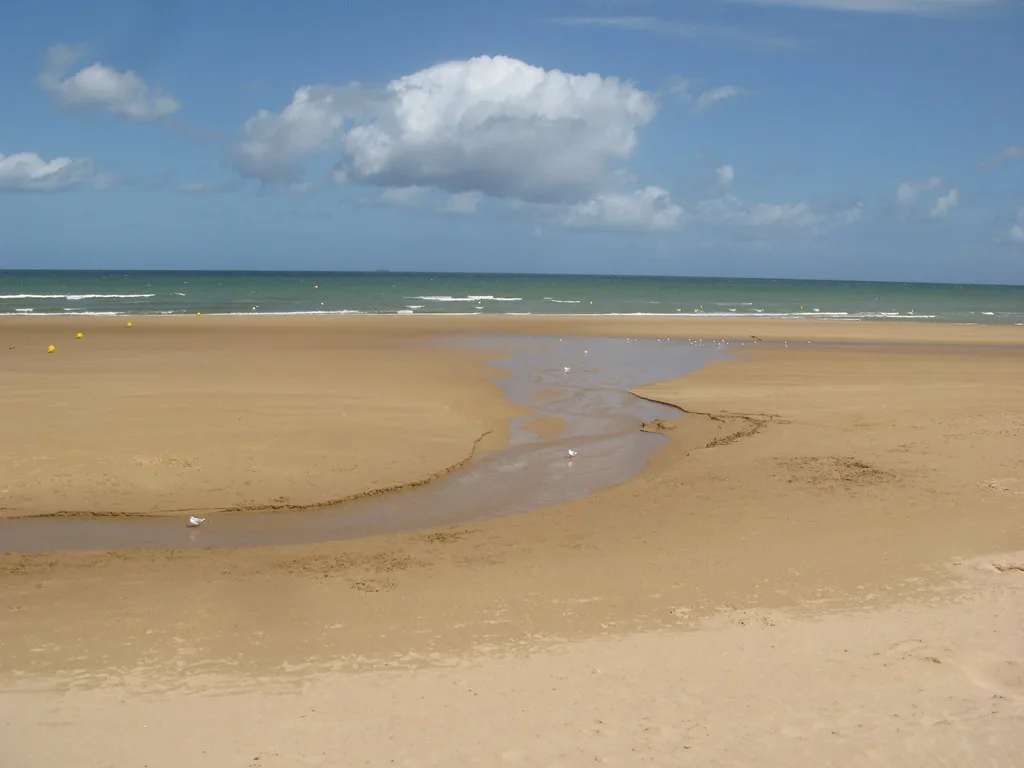
Featured image: MatteoNL97, CC BY 4.0, via Wikimedia Commons.
WW1 Trenches You Can Visit: Quick Comparison
Choose Vimy if walking a trench line is your priority. Pick Beaumont-Hamel for a memorial landscape explored by trail, tied closely to Newfoundland's war history. Add Lochnagar to understand mine warfare on the Somme. For sites beyond trenches, use the wider WW1 battlefields guide.
| Site | Area or setting | Why go | What to know |
|---|---|---|---|
| Vimy Ridge Memorial Park | Vimy Ridge | Walk preserved Allied and German front-line trenches; Grange Subway tunnel on site | Concrete sandbags and duckboards are part of the preservation; check tunnel access separately |
| Newfoundland Memorial Park | Beaumont-Hamel, Somme | Follow the trail through a memorial landscape | Check current trail and trench access before travel |
| Lochnagar Crater | La Boisselle area, Somme | See a memorial mine crater with information panels | A crater, not a trench site |
Original, Preserved or Reconstructed Trenches?
Trench labels matter because they tell you what you are looking at. An original layout follows the wartime line. Preservation can add later materials that hold that line in shape. A reconstruction is a later build that shows how a trench may have worked.
- Original layout: the line follows wartime earthworks, although surfaces and walls may have changed.
- Preserved: later work protects or stabilizes surviving features.
- Reconstructed: modern builders have recreated a trench or shelter.
- Related feature: a crater, tunnel, cemetery or memorial adds context but is not itself a trench.
Vimy Ridge: Preserved Front-Line Trenches and Tunnels
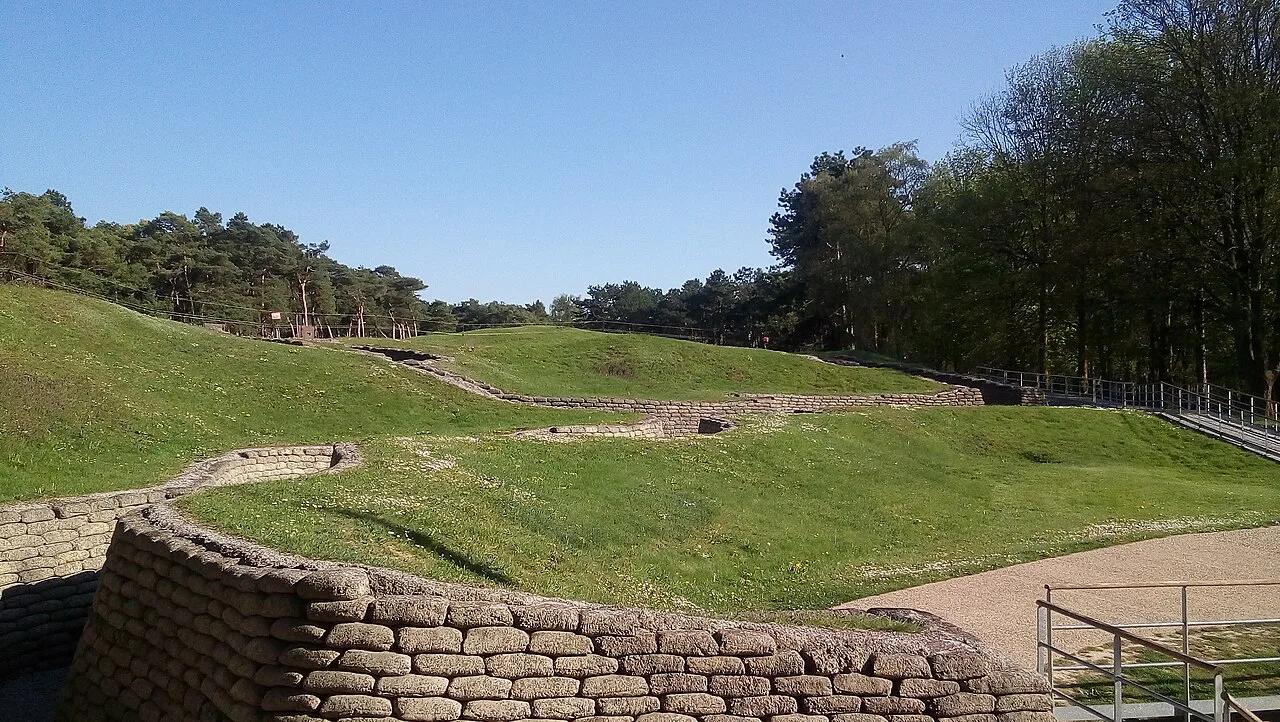
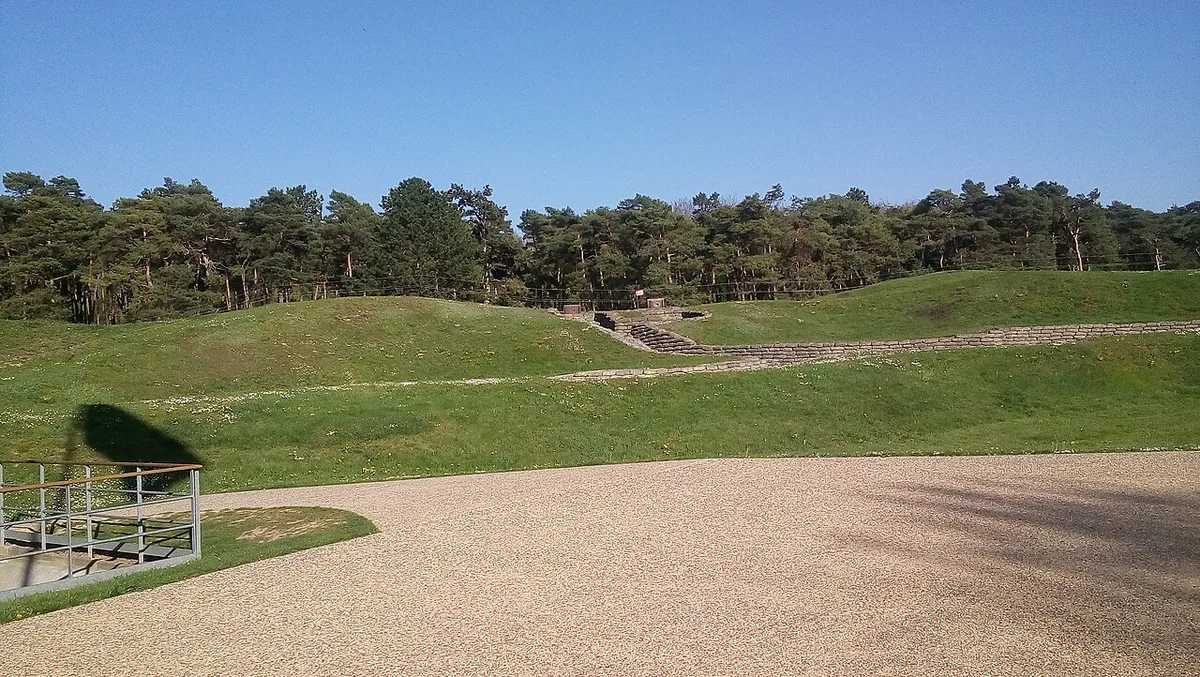
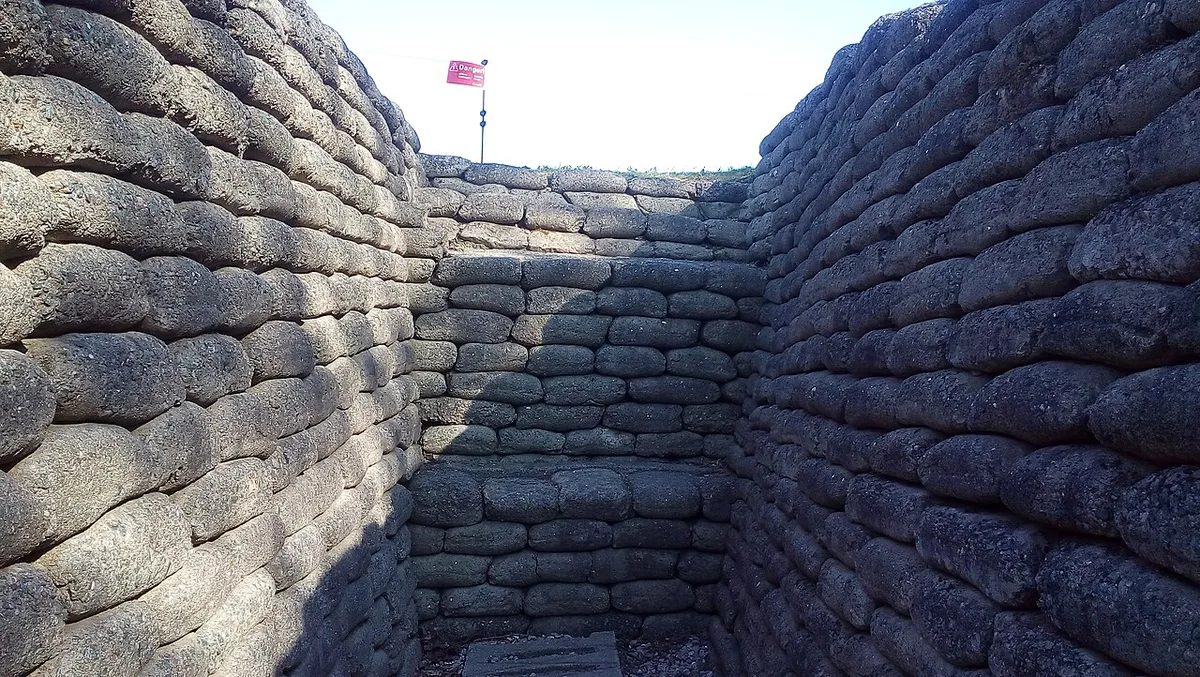
At Vimy, a section of original Allied and German trenches has been preserved with concrete sandbags and duckboards. You can walk through front-line positions from both sides. Read the concrete as preservation work, not as the cloth sandbags and timber of an active front. Veterans Affairs Canada administers the memorial park. Its story centers on the Canadian Corps, which recaptured this high ground in the fighting of 9–12 April 1917.
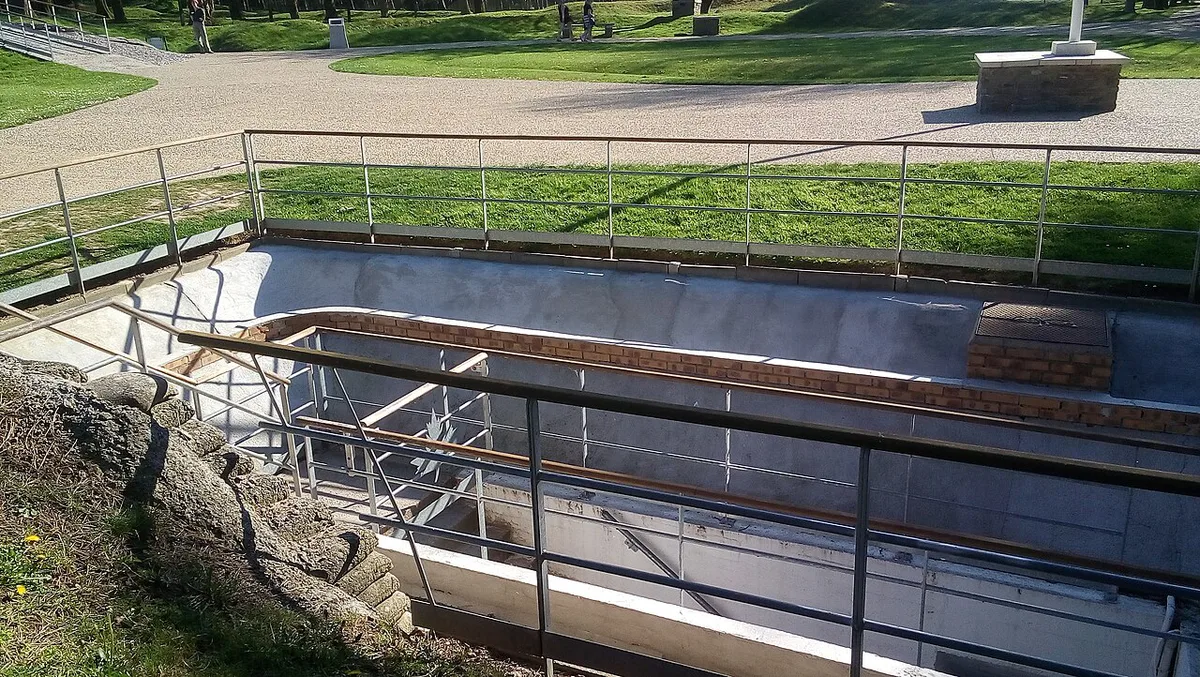
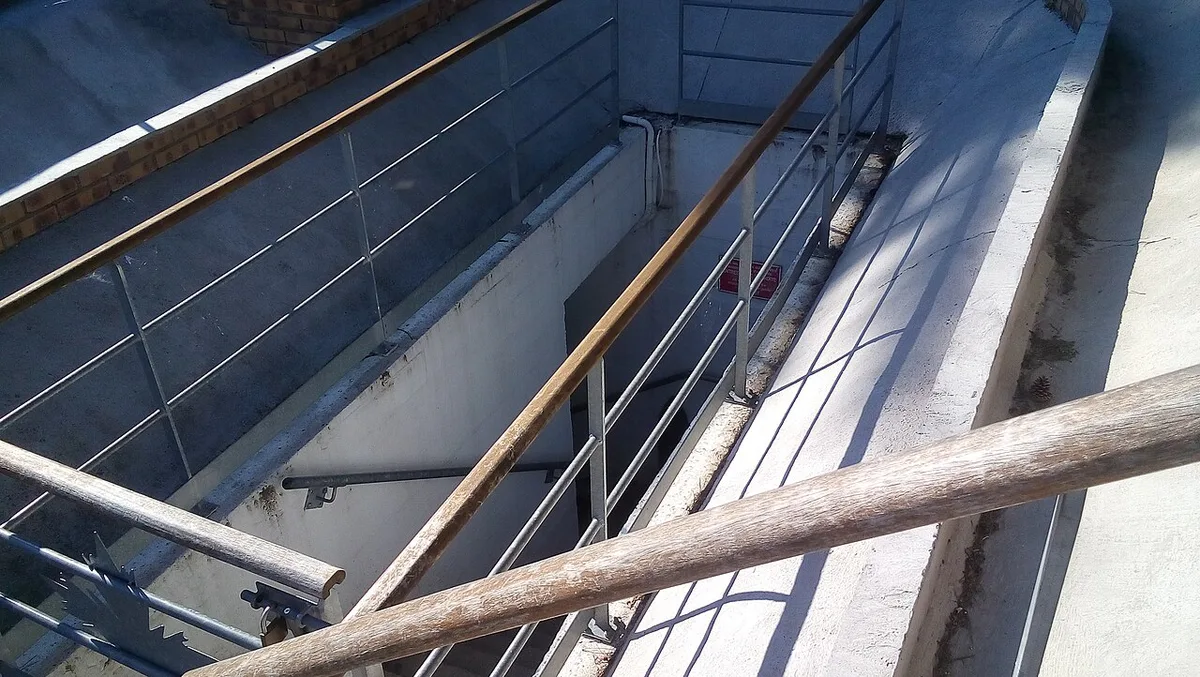
Grange Subway belongs to an underground tunnel network dug in preparation for that battle. A Visitor Education Centre officially opened on 10 April 2017. Open grounds do not guarantee access to trenches, tunnels or buildings. Before travel, check current hours, closures and tunnel booking rules with Veterans Affairs Canada. If enclosed spaces are difficult for you, ask whether your visit can stay above ground. For related places, see our guide to Canadian WW1 Sites in France: Vimy Ridge and Where to Go Next.
- Best for: walking preserved Allied and German front-line trenches.
- Underground element: Grange Subway, which is a tunnel rather than a trench.
- Also on site: the Canadian National Vimy Memorial, which commemorates Canadians who served in the war.
- Memorial role: its inscriptions name Canadians killed in France whose remains were not found or identified.
Beaumont-Hamel Trail on the Somme
Newfoundland Memorial Park at Beaumont-Hamel preserves land bought by the Dominion of Newfoundland after the war. Its name honors the Royal Newfoundland Regiment, which provided a battalion of 800 men to serve with British and Commonwealth forces. The park remembers their part in the action of 1 July 1916, the opening day of the Battle of the Somme. It also commemorates all Newfoundlanders who fought, particularly those with no known grave.
Use the trail to read the ground slowly, and treat the whole park as a place of mourning. Before choosing it mainly for trenches, ask which sections you can enter and which you view from paths. Check surfaces and step-free routes too if mobility affects your plans. For wider area planning, Somme tourism's Great War pages are a useful official starting point.
Lochnagar Crater: A Related Stop, Not a Trench
Lochnagar Crater, also called the Grand Mine, helps explain the war fought with explosives beneath the lines. Do not choose it expecting to walk a trench. Richard Dunning bought the site on 1 July 1978 from a French farmer who wanted to fill it in. Around the crater, the Lochnagar Labyrinth has 20 information panels about the site and people connected with it. Another mine, Y-Sap, lay on the far side of La Boisselle and was filled in. Pair Lochnagar with Beaumont-Hamel if you want trail walking and mine-warfare history on a Somme-focused route. Check travel time between them before fixing your schedule.
Verdun, Chemin des Dames and Other French War Areas
Verdun, Chemin des Dames and the Meuse-Argonne can widen a French battlefield trip. This shortlist does not confirm walk-in trench access in those areas. A fort, museum or memorial should not be counted as a trench visit without clear information about surviving or rebuilt lines.
For Verdun, you can ask the Verdun tourism office about current trench access. Museum context is another option at the Mémorial de Verdun. Meaux has the Musée de la Grande Guerre, a Great War museum to consider separately from outdoor trench sites. Our WW1 museum guide can help with that choice. Read about visiting Chemin des Dames if that sector interests you. For more French stops, browse WW1 places across France.
Which Trench Site Should You Choose?
Base your choice on the experience you want, then check access. A longer list of stops is not automatically a better day. Give yourself time to read the ground and visit memorials respectfully.
Vimy's ridge fighting ran 9–12 April 1917, while Beaumont-Hamel remembers 1 July 1916. Combining both stops means covering two different years of the war.
- Preserved trench walking: choose Vimy Ridge.
- Newfoundland's war history: choose Beaumont-Hamel.
- Mine warfare: add Lochnagar Crater, knowing it is not a trench.
- Avoiding enclosed spaces: leave Grange Subway out and ask about above-ground access at Vimy.
- Only one stop for trenches: put Vimy first.
- Somme focus: plan Beaumont-Hamel with Lochnagar.
How to Plan a Trench Visit in France
Arras is one possible base for guided Western Front touring, including days focused on Vimy Ridge or the Somme. Independent travel gives you control over your pace. A guided tour can arrange transport and explain the ground, but its route may include many stops without trenches. Compare each itinerary and ask how long you will have at the trench site itself.
Without a car, work out the outward journey, final walk and return before booking any timed visit. Do not assume that a nearby town has a suitable bus connection. Drivers should check parking and road access for each stop. Compare tunnel or guided-visit availability with your arrival time. Admission, guided access and transport may involve separate arrangements, so price the whole outing rather than just entry. If your trip extends to the war's end, read about the Compiègne Armistice clearing as a separate historical stop, not a trench visit. For later reading, see these WW1 centenary places.
Access, Safety and Respect at Trench Sites
Former battle lines are also places connected with death and remembrance. Follow posted conduct rules, keep your voice low near memorials and graves, and give people space to mourn. Stay on permitted routes. Never climb protected earthworks, cross barriers or enter closed ground. Leave every object where you find it, including metal fragments. Do not touch anything that could be ammunition; move away and alert site staff or emergency services.
Wear shoes suited to uneven or wet surfaces. Families should decide whether children can follow barriers and stay close on paths. Ask directly about steps, narrow passages, toilets and assistance if those affect your visit. Around 11 November, review local event information and our France Remembrance Day guide. Ceremonies may change the atmosphere and your plans.
Keep planning
Guides on the same trip