
9 Best Somme Battlefields Sites, Routes & Planning Guide
Plan your visit to the Somme battlefields: key memorials, trenches and museums, 1-day and 2-day routes, tours, and how to get there.
In this guide
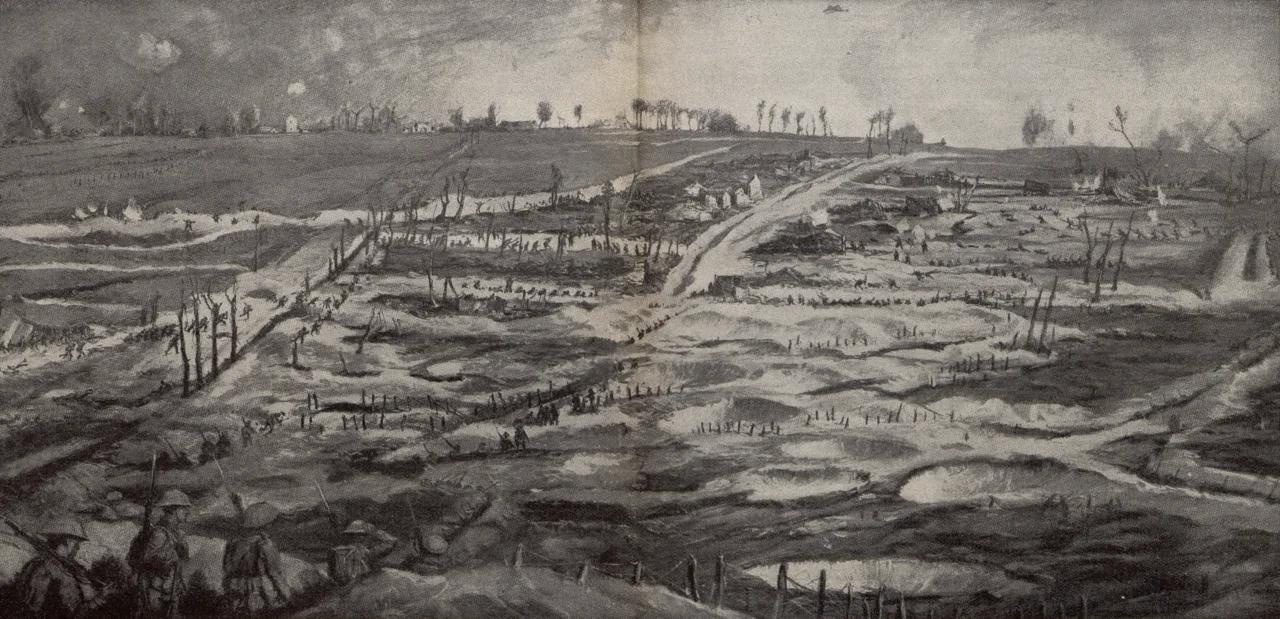
Last updated November 2026: the Somme battlefields are the Western Front sites of the Anglo-French offensive that began on 1 July 1916, clustered around Albert, Thiepval and Pozières in the Somme département. First-timers should start with Thiepval and Lochnagar, while visitors with a Newfoundland, Ulster, South African, Australian or American link can go straight to their own memorial. Plan at least a half-day for two or three stops, ideally a full day, and use a car or a guide because the sites sit in open farmland.
Featured image: Unknown authorUnknown author, Public domain, via Wikimedia Commons.
Somme Battlefields at a Glance
Nine stops cover the main national stories of the 1916 offensive, plus two museums for wet days. Match your own family or national connection to the table, then read the numbered entries that follow.
| Site | What you see | Story focus | Effort | Best for |
|---|---|---|---|---|
| Thiepval Memorial to the Missing | Memorial and visitor centre | Missing of the 1916 offensive | Medium | First-timers |
| Lochnagar mine crater | Mine crater at La Boisselle | Mines of 1 July 1916 | Short stop | Everyone |
| Newfoundland Memorial park at Beaumont-Hamel | Preserved trenches and memorial | Newfoundland | Medium | Families, Newfoundland descendants |
| Ulster Tower memorial | Memorial tower | 36th Ulster Division | Short stop | Irish and Ulster visitors |
| South African memorial at Delville Wood | Memorial in a wood | South African service | Short to medium | South African visitors |
| Australian National Memorial at Villers-Bretonneux | Australian memorial | Australian story, 1918 context | Medium | Australian and New Zealand visitors |
| American war cemetery on the Somme | War cemetery | American service | Short to medium | American visitors |
| Historial museum in Péronne | Indoor museum | French, British and German views | Long | Rainy days, depth |
| Albert's Somme 1916 museum | Indoor museum | Offensive overview | Medium | Rainy days, Albert base |
9 Best Somme Battlefield Sites and Museums
Prices and hours checked November 2026. Open-air memorials and cemeteries are typically free to enter, while museums and visitor centres set their own seasonal hours.
1. Thiepval Memorial and Visitor Centre
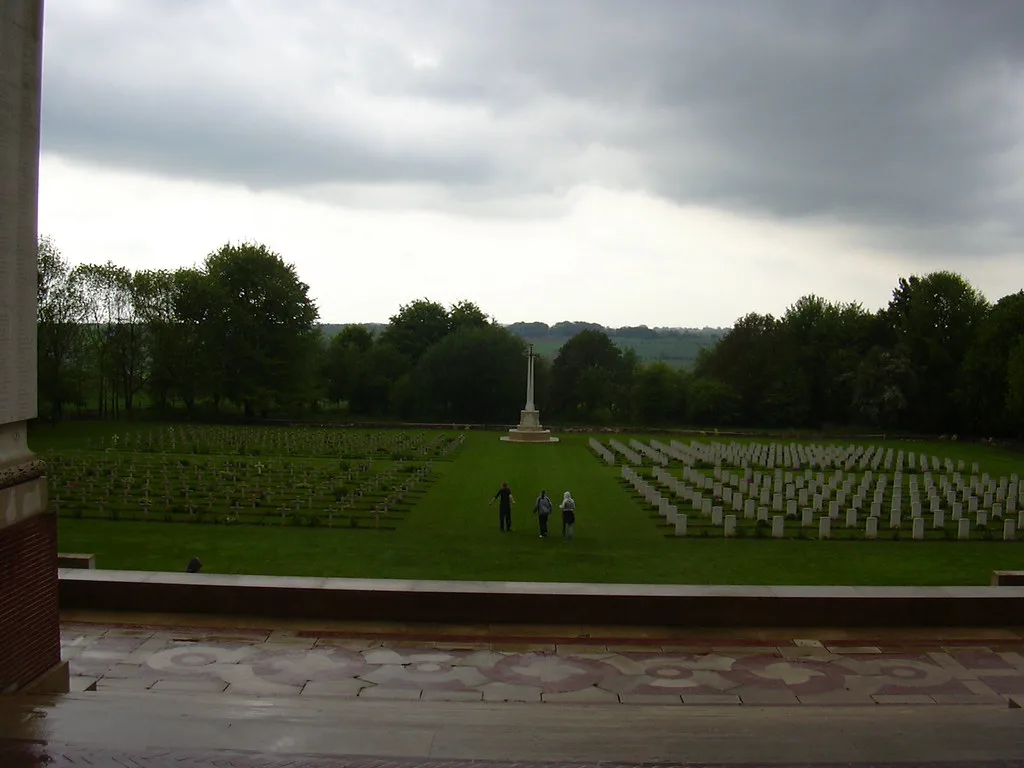
Thiepval Memorial to the Missing is the natural first stop for anyone new to the Somme. The memorial and its visitor centre sit together, so one visit gives you both the commemoration and the explanation. Read the displays first, then walk out to the memorial to see how the offensive that began on 1 July 1916 left so many men without known graves.
Expect a commemorative site rather than a trench experience, with open ground around it and little shelter from wind. Open-air access is typically free, while the visitor centre sets its own opening times. Skip it only if you want preserved trench lines, which Beaumont-Hamel offers instead.
2. Lochnagar Crater, La Boisselle
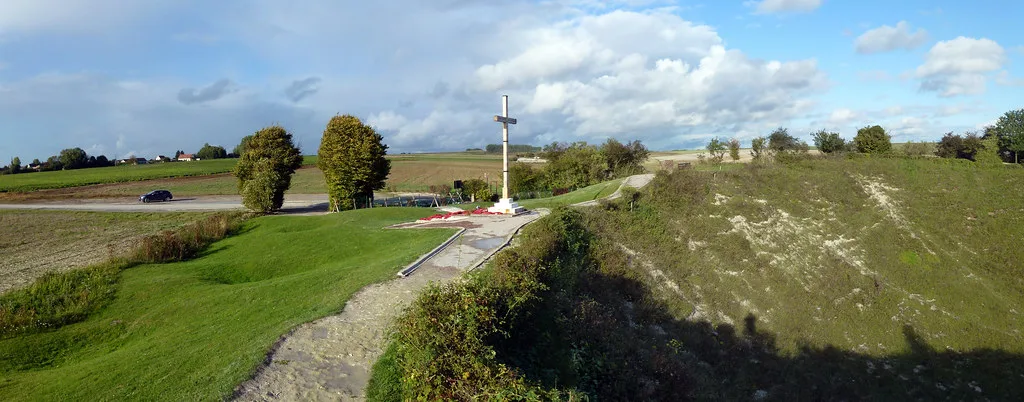
Lochnagar mine crater at La Boisselle marks one of the mines detonated around 7:28 am on 1 July 1916. You can walk the rim and judge the scale of the hole in the farmland for yourself. The Lochnagar Crater Foundation looks after the site and publishes visiting information.
Allow a short stop, and pair it with Thiepval for a compact half-day from Albert. Skip it if you expect indoor displays, since the stop is an open-air crater.
3. Beaumont-Hamel Newfoundland Memorial
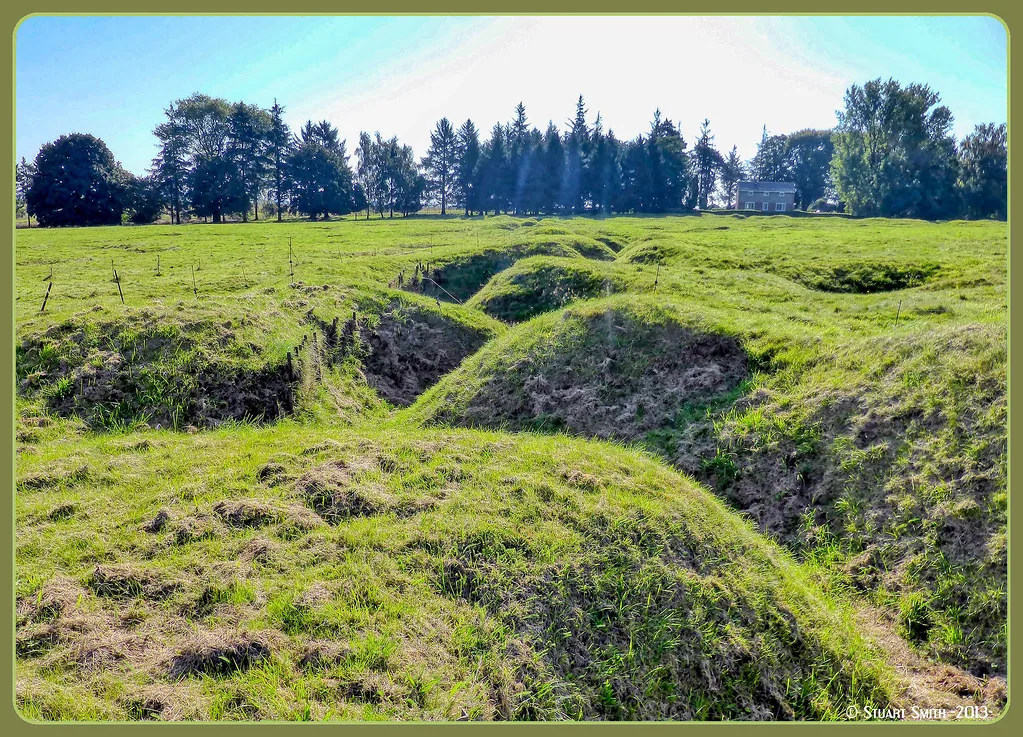
Newfoundland Memorial park at Beaumont-Hamel keeps trench lines preserved on the ground, which makes it the clearest stop for seeing how the front looked. The Newfoundland Regiment attacked here on 1 July 1916, and accounts of the day put its casualties at about 91 percent. Stay on marked paths, because the ground is uneven and turns muddy after rain.
Families with older children get the most from it, since the trenches make the story physical. Skip it in heavy rain if you only have thin shoes.
4. Ulster Tower
Ulster Tower memorial honours the 36th Ulster Division. Its battalions advanced at 7:30 am on 1 July 1916 and took a long section of the first German line. Irish and Ulster family-history visitors should put it high on the list.
It fits naturally into a northern loop with Thiepval and Beaumont-Hamel. Check the tower's seasonal hours before you rely on going inside. Skip it if you have no Irish connection and only a half-day.
5. Delville Wood
South African memorial at Delville Wood is the stop for visitors tracing South African service on the Somme. Delville Wood lies in the southern and eastern part of the battlefield, so it suits a second day better than a first. Pair it with Péronne and the Historial rather than driving to it separately from Albert.
Allow a short to medium visit, depending on how much of the wood you walk. Skip it on a one-day trip focused on the 1 July 1916 sites.
6. Villers-Bretonneux
Australian National Memorial at Villers-Bretonneux is the best-known Australian national memorial abroad. The Sir John Monash Centre adds interpretation of the Australian story. Its main context is 1918, not the 1916 offensive.
Australian and New Zealand visitors often time a trip for ANZAC Day on 25 April. Plan it for a second day, because it sits away from the Albert cluster. Skip it if 1 July 1916 is your only interest.
7. Somme American Cemetery
The American war cemetery on the Somme is the stop for American visitors tracing US service in the region. It relates mainly to later fighting in 1918 rather than the 1916 offensive. Treat it as a place of quiet remembrance, not a photo stop.
It counts among the far-flung sites, so group it with other distant stops on a second day. Skip it if your time is limited to the 1916 sites around Albert.
8. Historial de la Grande Guerre, Péronne
The Historial museum in Péronne tells the war through French, British and German perspectives. Unlike most memorials, which follow a single national story, it lets you compare all three. Choose it for a rainy day or for a second day around Péronne.
Current hours and tickets are on the Historial's official site. Skip it if you want open ground and have only one day.
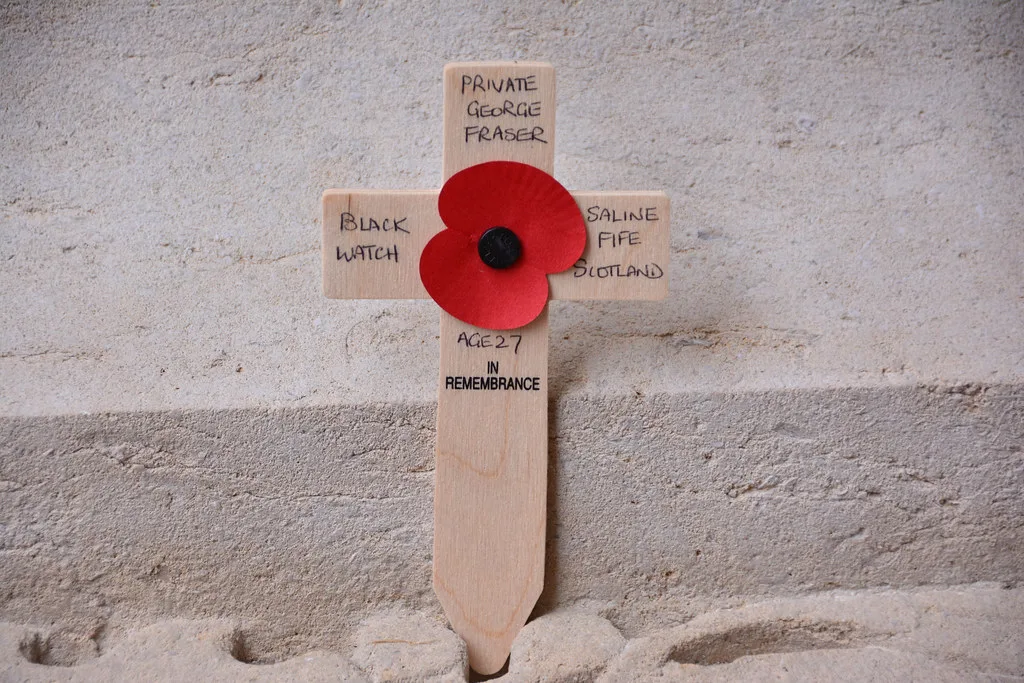
9. Somme 1916 Museum, Albert
Albert's Somme 1916 museum gives an indoor introduction in the town that serves as the hub for the northern sites. Albert is where the offensive's main axis began, running along the old road toward Bapaume about 19 km away. Use the museum as a rainy-day option or as your first stop on arrival.
Opening times and tickets are on the museum's official page. Skip it if you prefer open-air sites and have limited time.
How to Plan Your Time: Half-Day, 1-Day and 2-Day Routes
Route logic follows geography. Albert is the hub, the north holds Beaumont-Hamel, Thiepval and the Ulster Tower, and Delville Wood and Péronne lie to the south and east. Villers-Bretonneux and the American cemetery are far-flung, so open a Somme battlefields map and check real driving gaps before you commit. Follow the Circuit of Remembrance route if you want a ready-made driving sequence.
| Time | Stops | Logic |
|---|---|---|
| Half-day | Lochnagar, then Thiepval | Compact start from Albert |
| 1 day | Lochnagar, Thiepval, Ulster Tower, Beaumont-Hamel | Northern loop, with the Albert museum if it rains |
| 2 days | Day one as above; day two Delville Wood, Péronne and the Historial | Adds the south and east |
| 2 days, extended | Add Villers-Bretonneux or the American cemetery to day two | Far-flung sites need their own time |
Self-Drive, Guided Tour or Day Trip from Amiens or Paris
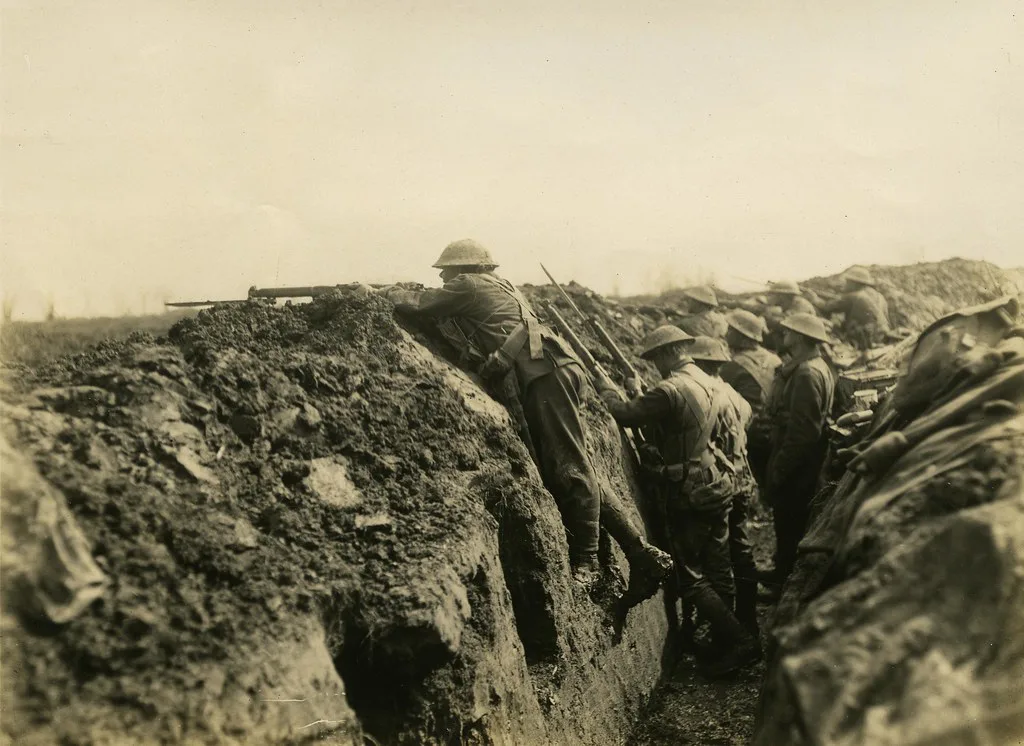
Sites sit in rural farmland with few services between them, which is why a car or a guide is close to essential. Book guided battlefield tours if you want depth without navigating. Choose a day trip from Amiens if you are staying in the city. Public transport between sites is sparse, so the Amiens tourism office is the place to confirm current options. Day trips from Paris are possible, but one day allows only a few stops.
| Option | Cost level | Flexibility | Depth |
|---|---|---|---|
| Self-drive | Medium | High | Medium |
| Guided tour | High | Low | High |
| Day trip from Amiens | Medium | Medium | Medium |
Costs, Tickets and Opening Hours
Open-air memorials and cemeteries are typically free to enter. Museums, visitor centres and tours set their own prices and seasonal hours, which Somme Tourisme and each venue's official page publish.
Where to Stay and Getting Around
Albert works as the base for the northern sites and holds the Somme 1916 museum. Amiens is larger and has trains, which suits car-free visitors. Péronne sits near the Historial and suits a second-day base. Fuel up and carry water before heading out, because services between sites are limited.
Etiquette, Safety and Common Mistakes
Treat every cemetery and memorial as a place of mourning. Speak quietly, keep to paths, and follow any rules a site publishes at its entrance. Unexploded ordnance still surfaces in French farmland, a legacy locals call the iron harvest. Never touch metal objects, and stay off field boundaries and private farmland. Weather matters too, since Beaumont-Hamel's preserved trenches turn muddy after rain.
| Mistake | Better approach |
|---|---|
| Trying to see too many sites | Pick three or four stops that match your story |
| Ignoring seasonal closures | Read each site's official page before you leave |
| Treating cemeteries as photo stops | Pause quietly and keep to the paths |
Best Time to Visit and Commemorations
1 July is the main commemoration date at the Commonwealth memorial sites in the Somme, so expect events and larger crowds. Read the current programme on Somme Tourisme before booking rooms. ANZAC Day on 25 April matters at Villers-Bretonneux. Remembrance season brings visitors in November, and the offensive ended on 18 November 1916. Winter and wet spells leave trench sites muddy, so wear waterproof boots.
The Battle in Brief: Context for Your Visit
British, Commonwealth and French forces fought German forces along the Somme in 1916. The offensive began on 1 July 1916 at 7:30 am, after mines detonated around 7:28. A commonly cited figure puts British dead that day at 19,240. Germany attacked at Verdun on 21 February 1916, which reduced the French role and made relieving pressure there a goal. Tanks first went into battle on 15 September 1916 at Flers-Courcelette. Fighting ended on 18 November 1916.
Frequently Asked Questions
Did any Americans fight in the Somme?
The 1916 offensive was fought by British Empire, French and German armies. American forces fought in the region later, in 1918. The American war cemetery on the Somme commemorates them.
What was the bloodiest battle of WW1?
Sources differ, so no single answer is certain. One French reference ranks the Somme behind the Brusilov Offensive and ahead of Verdun, with about 1,061,117 casualties across all sides. Treat that figure as an estimate.
Explore More Guides
Keep planning your trip with these guides.
Guides
- Thiepval Memorial: Visitor Guide to the Somme Memorial to the Missing
- Lochnagar Crater: Visiting Guide, History & Tips
- Beaumont-Hamel Newfoundland Memorial
- Historial de la Grande Guerre: Péronne Museum Visit Guide
- Villers-Bretonneux
- Delville Wood Visitor Guide
- Ulster Tower, Thiepval
- Somme 1916 Museum, Albert
- Somme Battlefield Tours: Which Format and Route Fit You
- Somme Battlefields from Amiens
- Circuit of Remembrance Somme
- Somme American Cemetery: Visitor Guide & Tips
Keep planning
Guides on the same trip






