8 Best Omaha Beach Sites to Visit, in Order
Plan a visit to Omaha Beach: 8 sites in order, a decision table, half-day to two-day routes, no-car options and mistakes to avoid.
In this guide
Last updated November 2026: Omaha Beach is the American D-Day landing sector on the Calvados coast, running from Vierville-sur-Mer to Colleville-sur-Mer. Most visitors combine the beach, the Normandy American Cemetery, one museum and Pointe du Hoc, and this guide shows how to order those stops. If you are still choosing between landing sites, read how Omaha differs from Utah first.
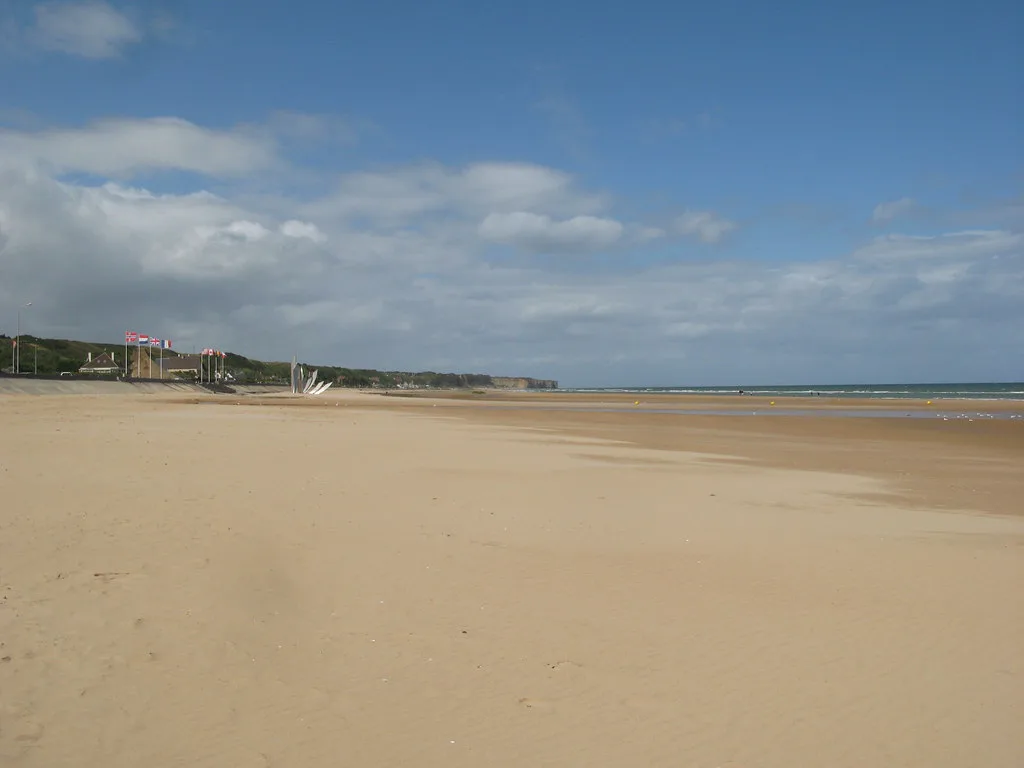
Featured image: ho visto nina volare, CC BY-SA 2.0, via Flickr.
Omaha Beach at a Glance
Omaha lies between Gold to the east and Utah to the west. Wikipedia measures the sector at 8 km (5 miles), from west of Sainte-Honorine-des-Pertes to east of Vierville-sur-Mer. Normandy Tourism describes a 6 to 7 km indentation before Vierville, Saint-Laurent and Colleville, so treat 8 km as the outer span. On 6 June 1944, V Corps landed here with the 1st and 29th Infantry Divisions. Facing them was the German 352nd Infantry Division, which Wikipedia counts at 12,020 men holding a 53 km (33 mile) front. Visiting today means linking several separate stops. They sit in Vierville-sur-Mer, Saint-Laurent-sur-Mer, Colleville-sur-Mer and, to the west, Pointe du Hoc. Sections below rank eight sites and show how to sequence a half day, a full day or two days.
Which Omaha Beach Sites Should You Visit First?
With one morning, start with the American cemetery and one museum. Add Pointe du Hoc when you have a car or a guided tour. Times in the table are planning estimates, not published figures, and each site's official page holds its current hours and tickets.
| Site | What it is | Best for | Planning estimate | How reached | Tickets and hours |
|---|---|---|---|---|---|
| Pointe du Hoc | Cliff-top Ranger battery with shell craters | Terrain and scale | About 1 hour | Drive, taxi or tour | See official site |
| Omaha Secret D-Day Museum | Artefact museum in Vierville-sur-Mer | Original objects | About 1 hour | Drive, taxi or tour | See official site |
| Omaha Beach Memorial Museum | Museum 200 m from the beach in Saint-Laurent-sur-Mer | Pairing with a beach walk | 1 to 1.5 hours | On foot from the beach | See official site |
| Overlord Museum | Vehicle and artefact museum at the cemetery roundabout | Tanks and life-size displays | About 1.5 hours | Drive, taxi or tour | See official site |
| Normandy American Cemetery | 9,387 graves above the beach | Every first visit | 1.5 to 2 hours | Drive, taxi or tour | See ABMC page |
| Maisy Battery | Excavated German battery at Grandcamp-Maisy | A second day | About 2 hours | Drive or tour | See official site |
| WN 89, Géfosse-Fontenay | Intact German bunker | Sunday visitors | About 1 hour | Drive | Sunday 10 am tour listed |
| German cemetery, La Cambe | Over 21,200 German burials | Both sides of the fighting | About 45 minutes | Drive or tour | See official page |
8 Best Omaha Beach Sites to See
Entries run roughly west to east along the coast, then to the sites further afield. Each one says what it holds, how long it takes and who can leave it out.
1. Pointe du Hoc
Pointe du Hoc is a cliff-top battery, about 5 km (3 miles) west of Omaha, that the 2nd Ranger Battalion stormed on the morning of 6 June 1944. Rangers scaled cliffs of 30 m (about 100 ft) and found wooden beams in the gun pits instead of cannons. Of 225 Rangers engaged, only 90 were still fit to fight afterward.
Our Ranger assault site at Pointe du Hoc guide covers the full story. Shell craters still mark the ground, and Normandy Tourism says conservation works are under way while the site stays open. Allow about an hour, and see it early in a west-to-east day. Drop it if your day is limited to the cemetery side of Omaha.
2. Omaha Secret D-Day Museum, Vierville-sur-Mer
This museum fills an authentic period American building in Vierville-sur-Mer, between the American cemetery and Pointe du Hoc. Thousands of original artefacts are on display, including an Enigma machine, the FG42 and Resistance equipment. Pointe du Hoc lies to its west and the cemetery to its east, so it works as a pause between the two halves of the coast.
Budget about an hour here. It suits visitors who want original objects rather than large exhibits. Choose another museum if one indoor stop is enough, since the Saint-Laurent museum and the Overlord Museum also cover the landings.
3. Omaha Beach Memorial Museum, Saint-Laurent-sur-Mer
This museum stands in Saint-Laurent-sur-Mer, just 200 m (about 650 ft) from the beach. Its exhibition area covers 1,400 m² (about 15,000 sq ft), with dioramas, photographs and thematic display panels. Normandy Tourism says it has paid tribute to the soldiers who landed here for more than 25 years.
Our Saint-Laurent museum guide covers the visit in detail. Current hours appear on the museum's own site. Set aside 1 to 1.5 hours, and pair it with a walk on the sand. Give it a miss if you only have time for one indoor stop.
4. Overlord Museum, Colleville-sur-Mer
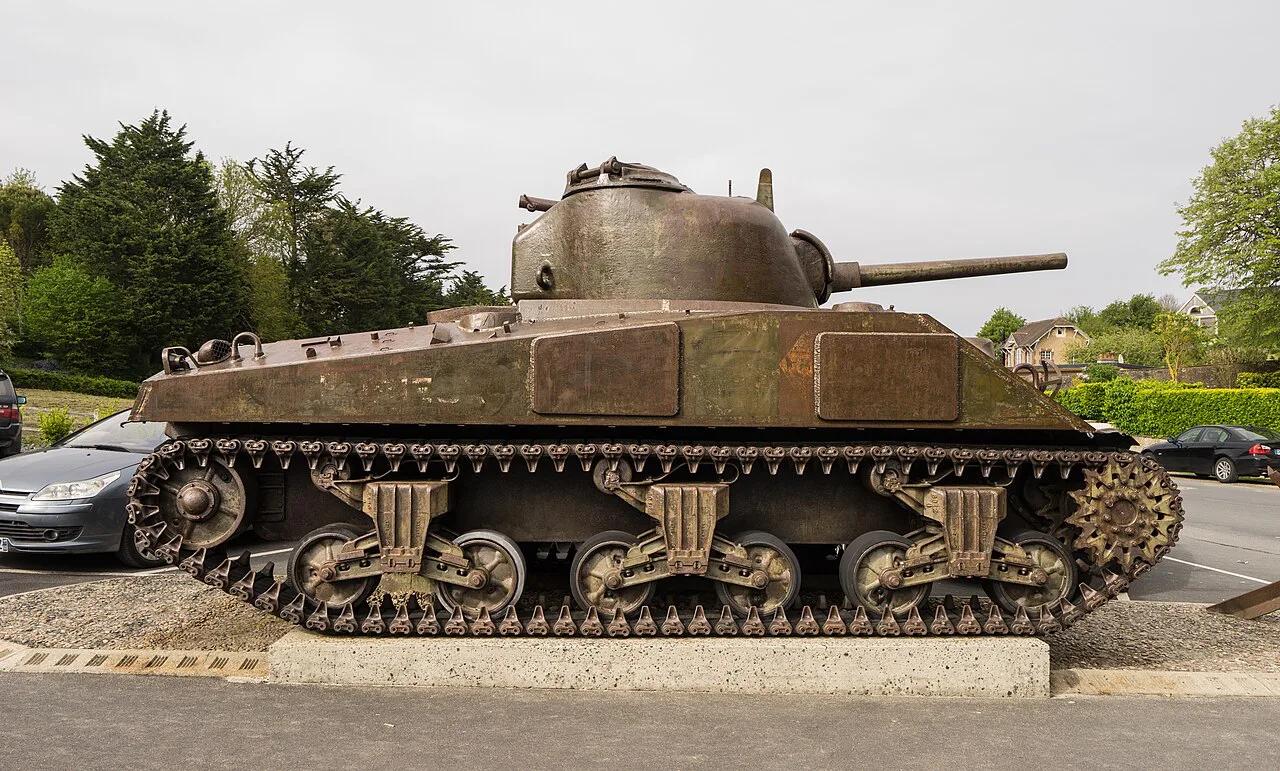
Overlord Museum sits at the roundabout leading to the Normandy American Cemetery, near Omaha Beach. Its collection holds over 10,000 exhibits, including 35 vehicles, tanks and guns. Life-size displays retrace the major phases of the Normandy landings, up to the liberation of Paris.
Our museum visit guide covers what to see inside. Official details are on the Overlord Museum site. Expect about 1.5 hours, and pair it with the cemetery visit that follows. Leave it out if vehicles and uniforms do not interest you.
5. Normandy American Cemetery and Visitor Center, Colleville-sur-Mer
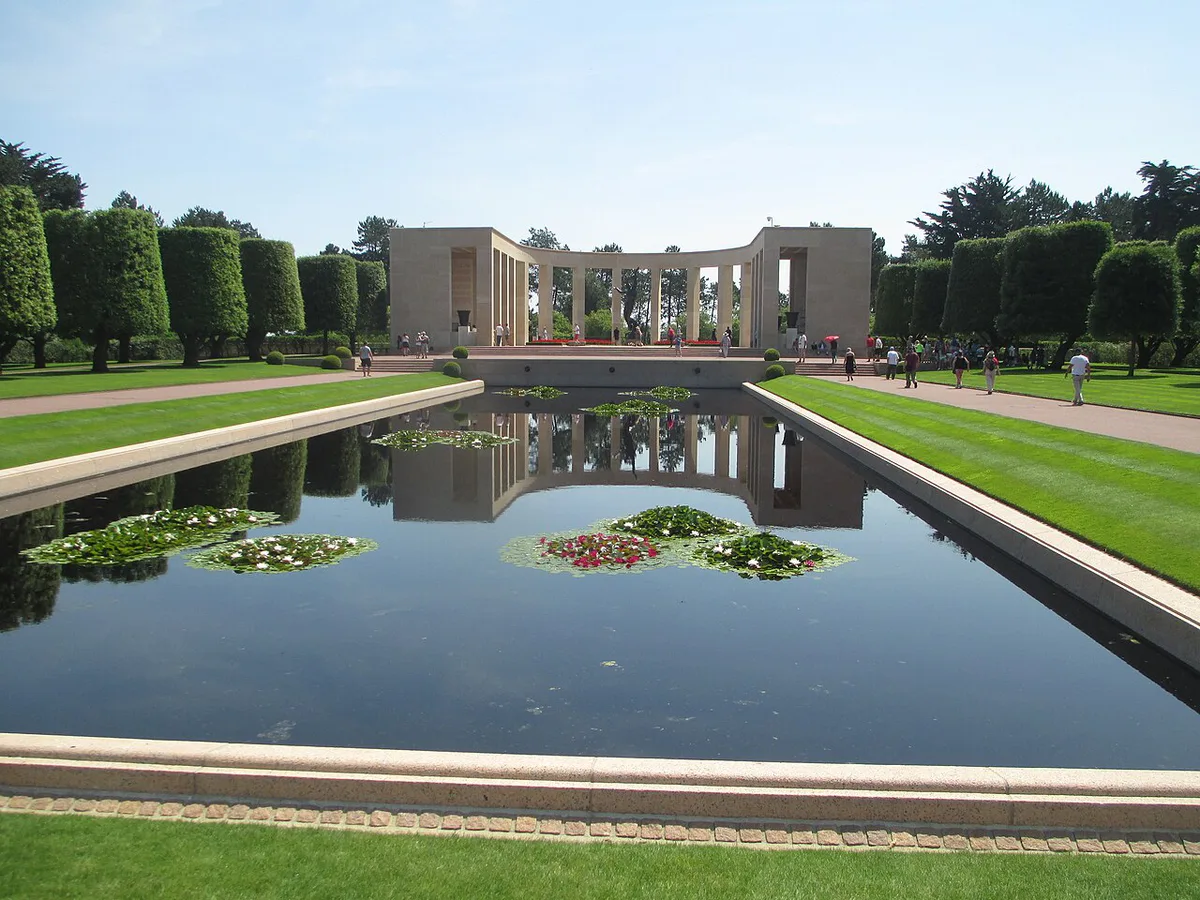
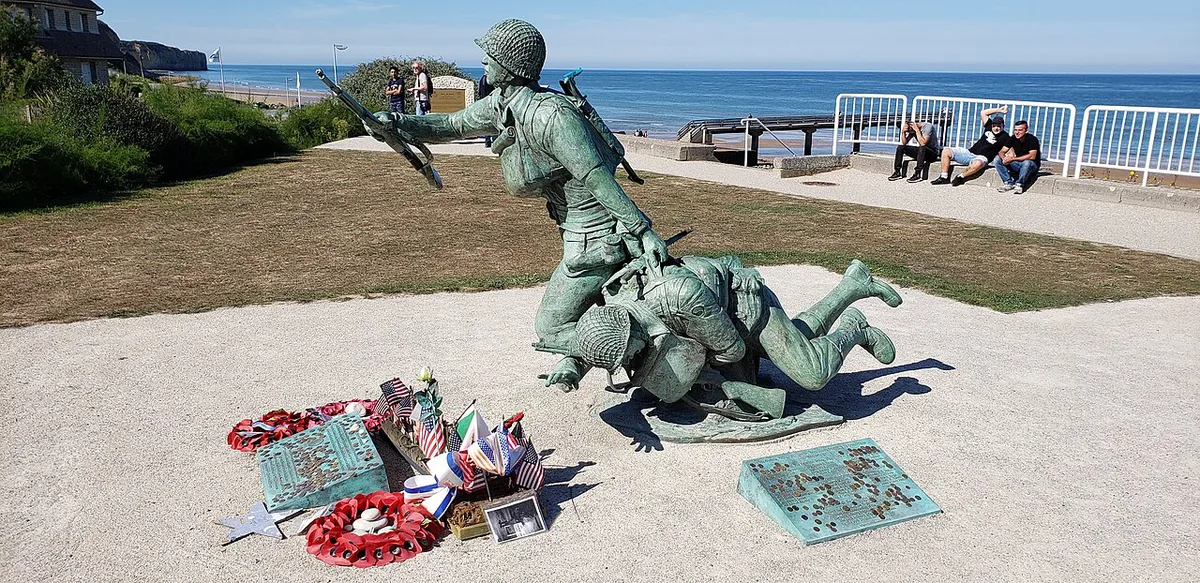
Overlooking Omaha Beach in Colleville-sur-Mer, this cemetery holds 9,387 graves of Americans who fell in the D-Day landings and the Battle of Normandy. Most first itineraries here should include it. Current hours and visitor center details are on the ABMC Normandy page.
Our Colleville village guide covers the surrounding area. Plan 1.5 to 2 hours, and arrive when you can be unhurried. Speak quietly, follow staff and signage, and treat the grounds as the burial place they are.
6. Maisy Battery, Grandcamp-Maisy
Maisy Battery was a German battery buried for 60 years, part of a military zone that fired on Allied troops at Utah and Omaha. Rangers of the 5th and 2nd Battalions took it on 9 June 1944 in an assault that lasted 5 hours. Its official listing mentions 3 km of trenches, so confirm the current walking route on the Maisy Battery site.
Give it about 2 hours. It fits a second day, away from the Omaha strip. Pass on it if you want only beachfront sites in a single day.
7. WN 89 Bunker, Géfosse-Fontenay
WN 89 is a former German bunker in Géfosse-Fontenay, part of the Atlantic Wall. Isigny Omaha Tourisme describes it as totally intact today. A guided tour with Luc Le Gleuher is listed for 10 am every Sunday, billed as free.
Confirm that the Sunday tour is still running before you build a day around it. Count on about an hour, and expect to see a strongpoint's layout at close range. Visits outside Sunday morning miss the guided tour.
8. German Military Cemetery, La Cambe
La Cambe is the final resting place of over 21,200 German soldiers who fell between June and August 1944. Visiting after the American cemetery puts both sets of losses in view. Treat it as you would any burial ground, with quiet voices and attention to posted signs.
Normandy Tourism lists it among the main sites of the American sector. Stop for about 45 minutes. Anyone with only a half day can drop it.
What You Can Still See on Omaha Beach Today
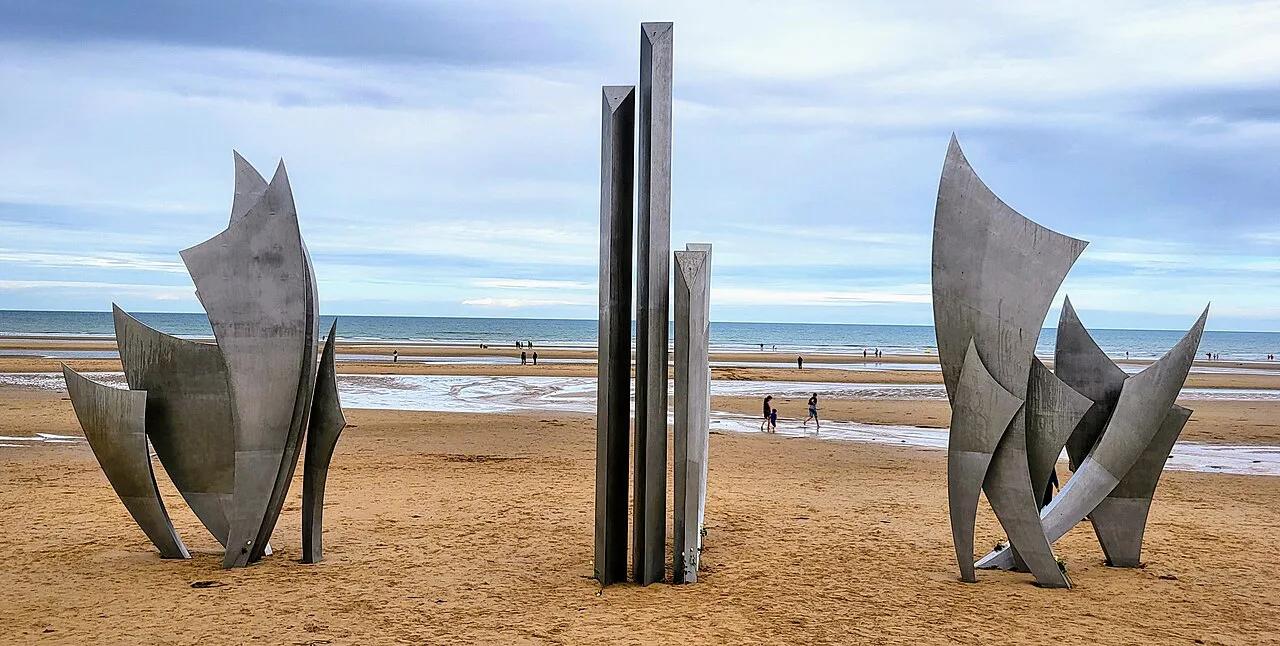
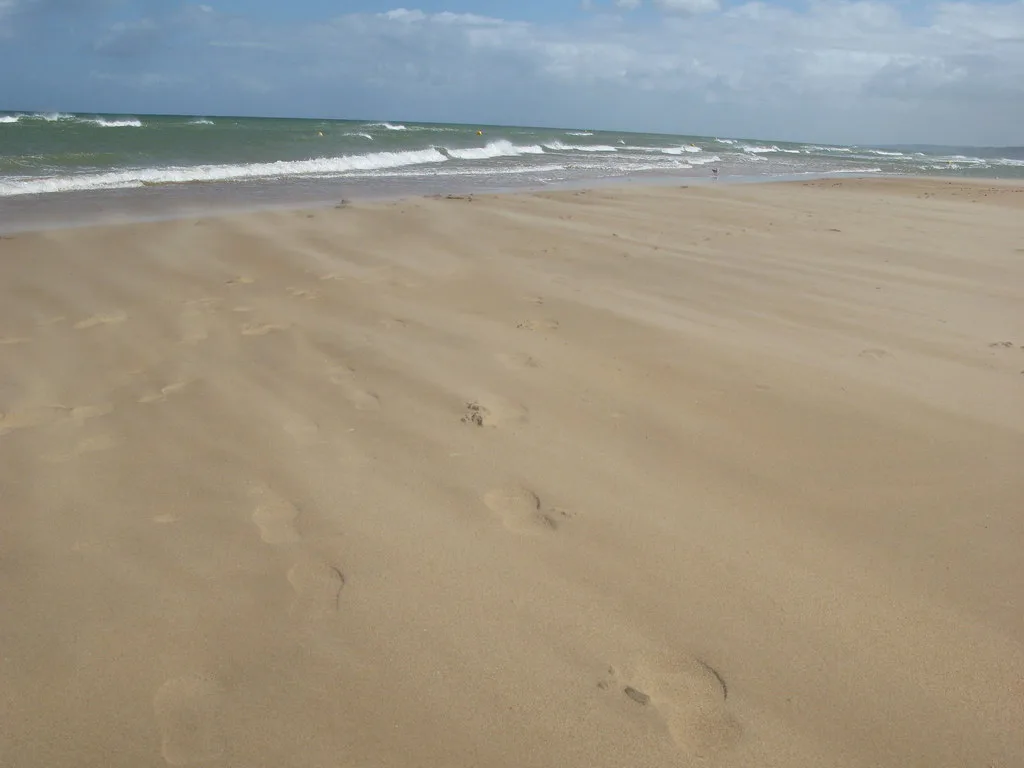
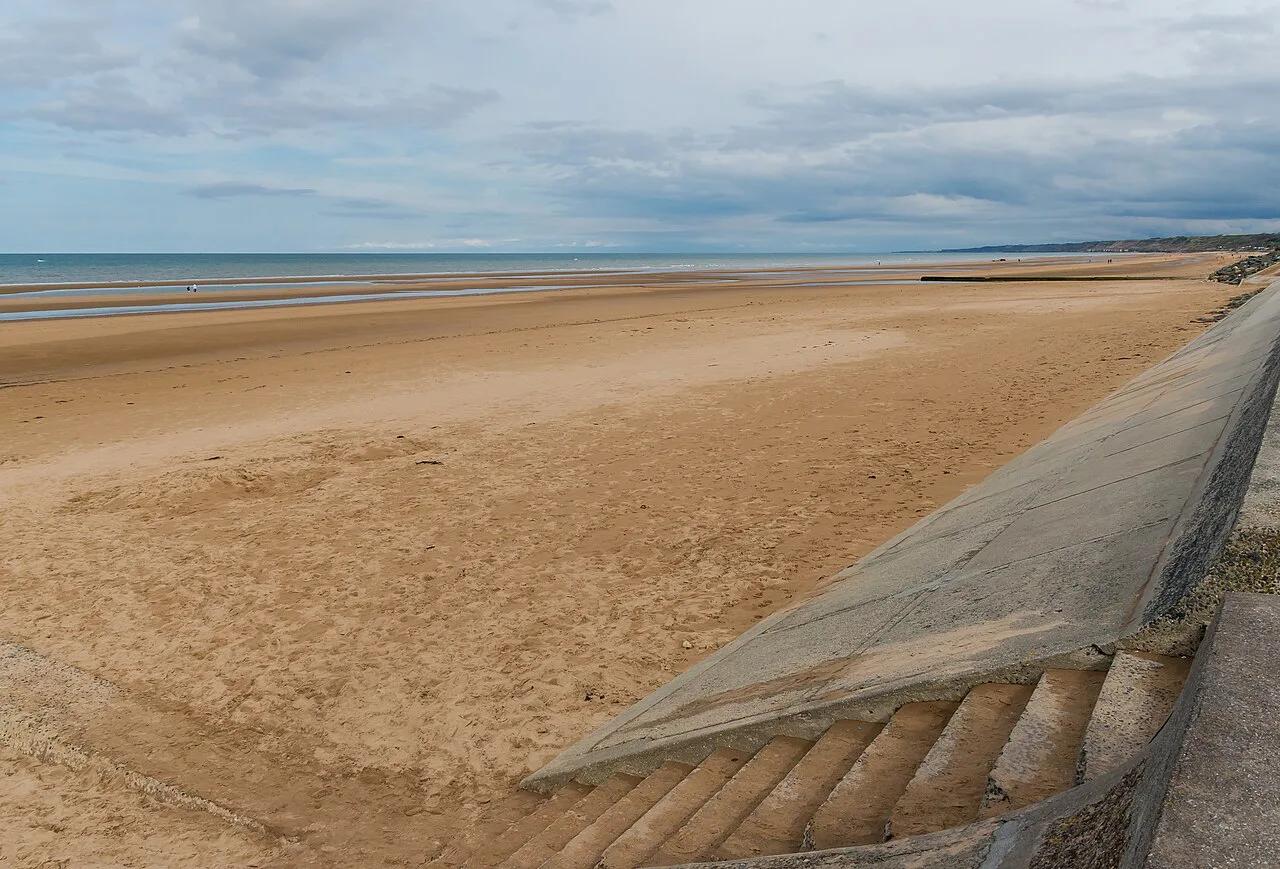
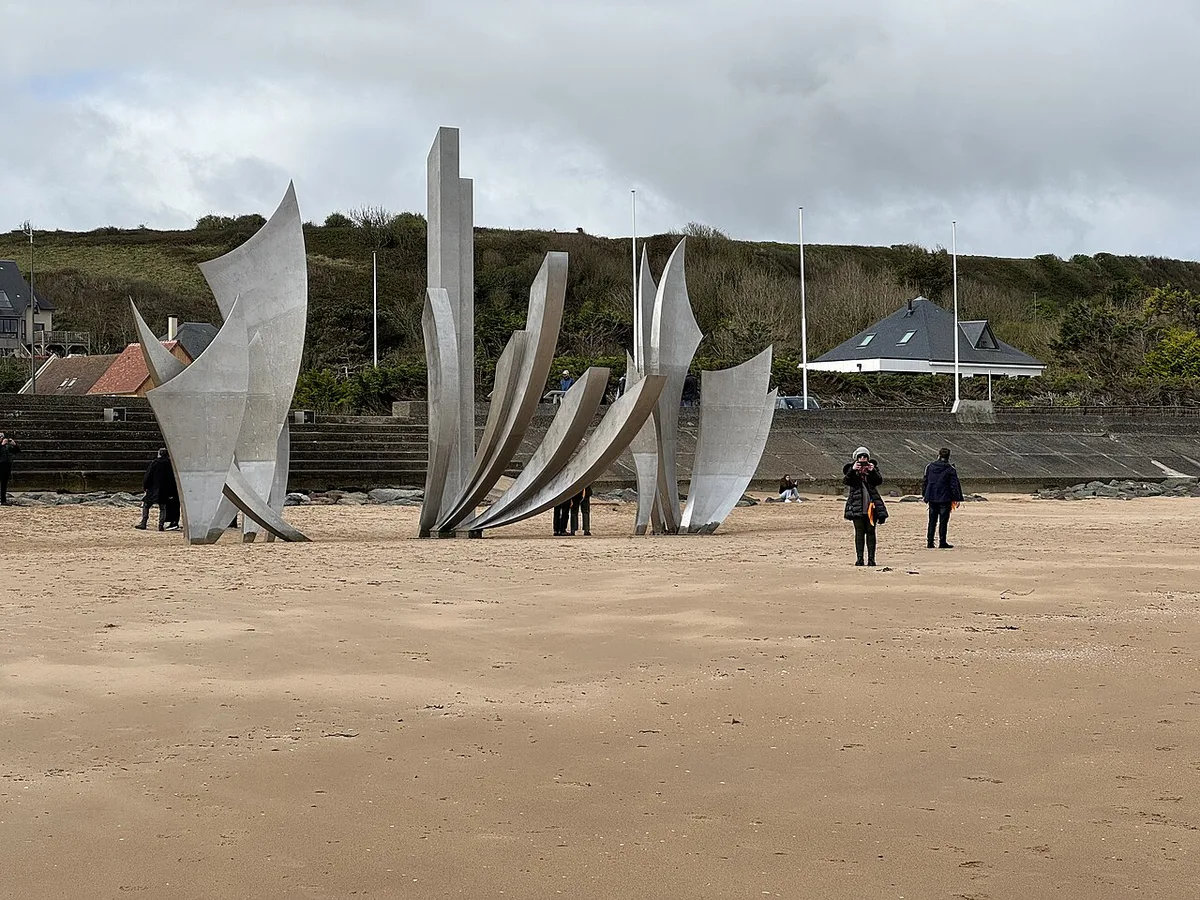
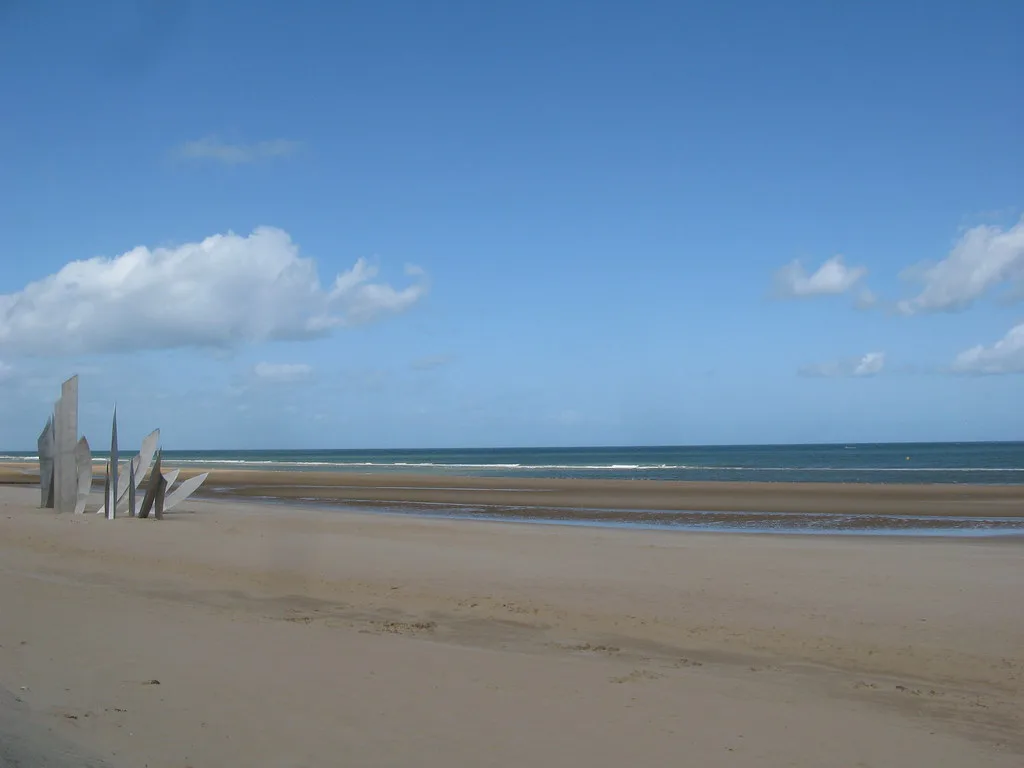
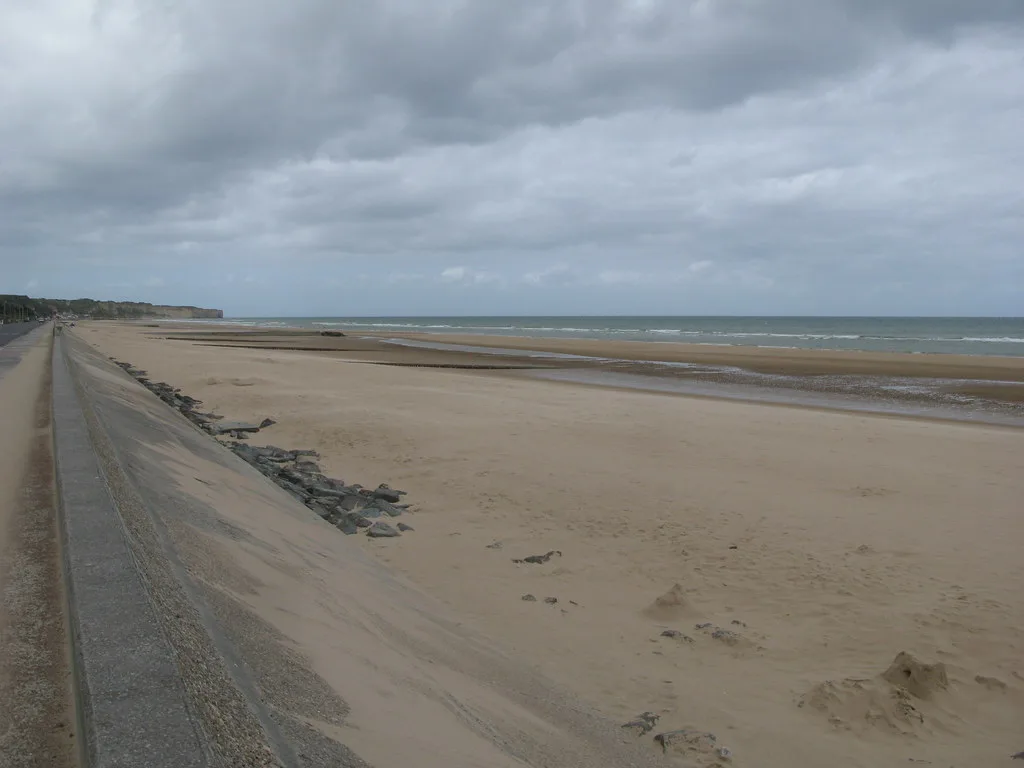
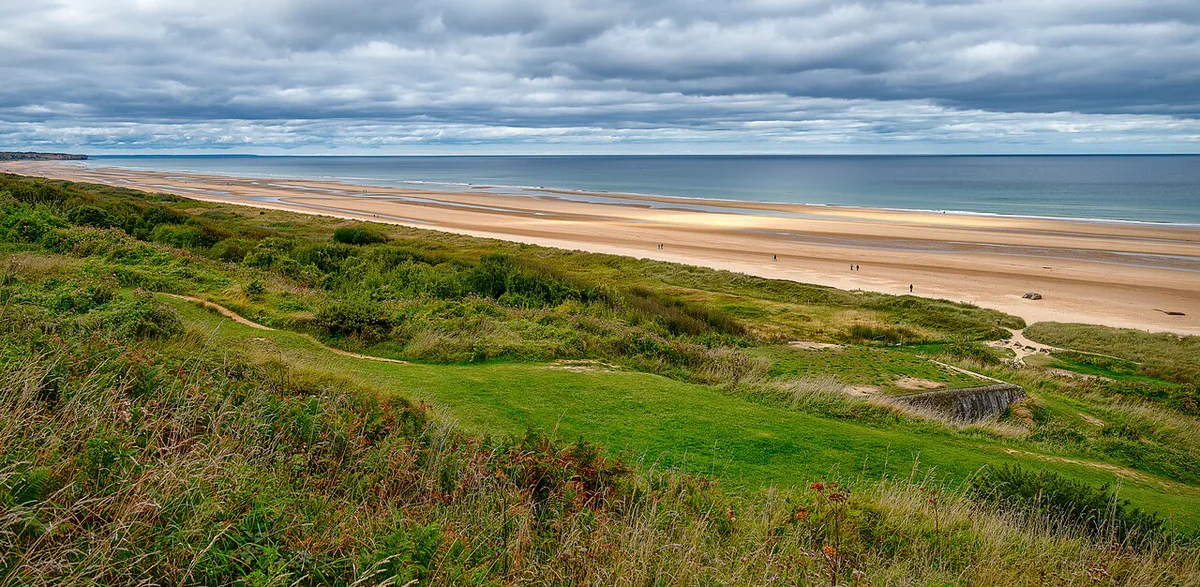
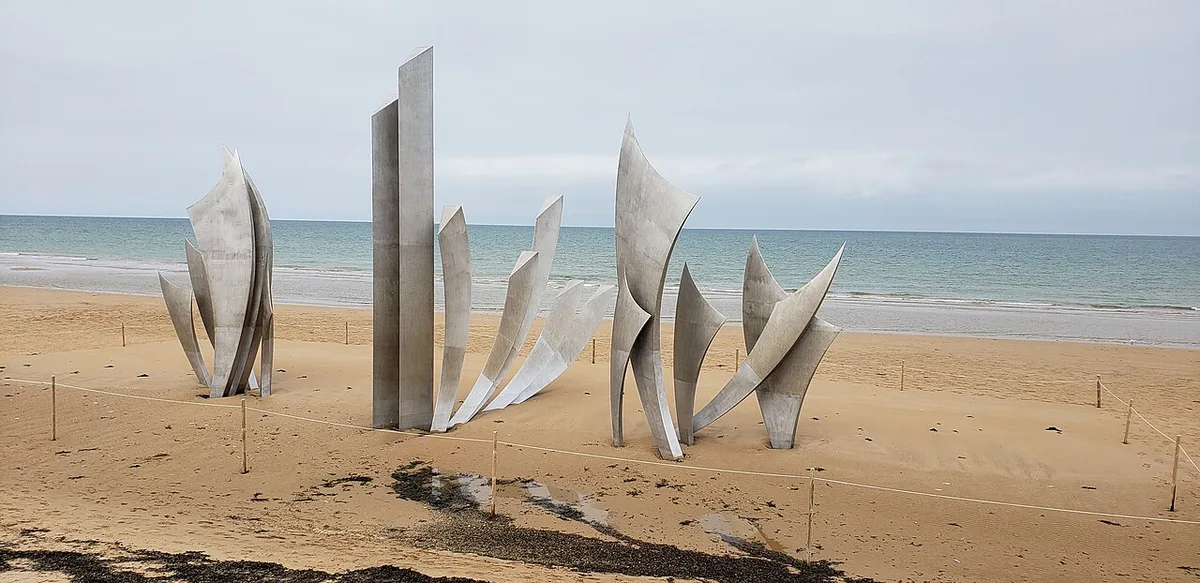
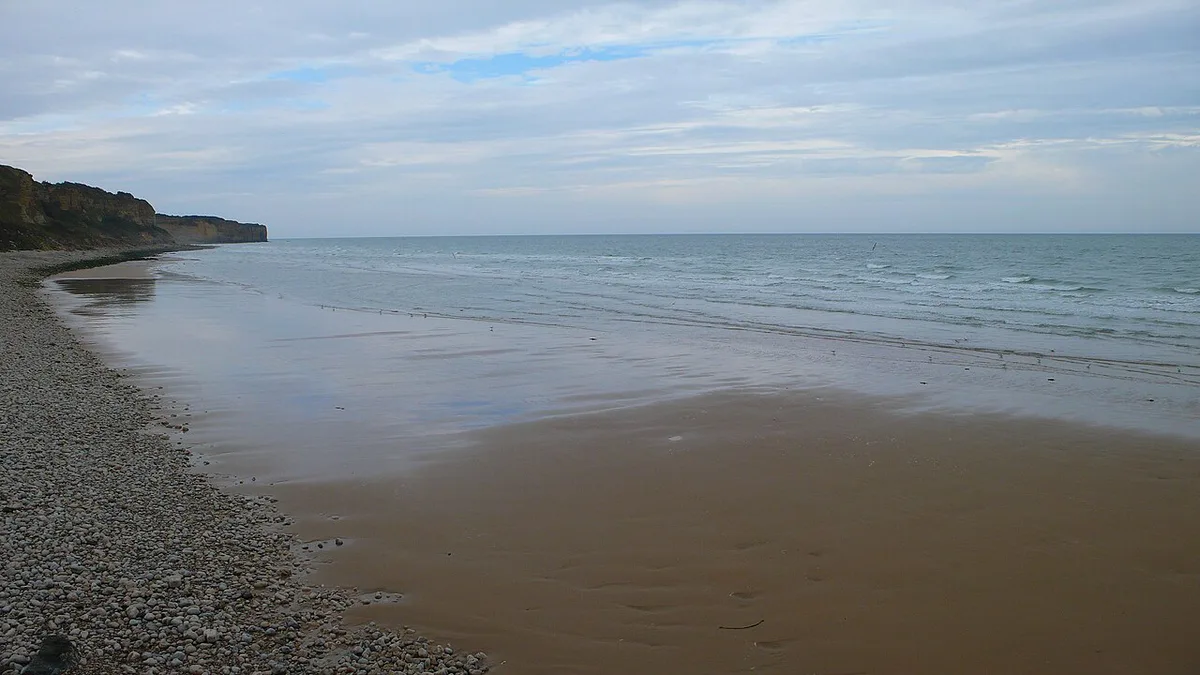
Omaha Beach is a crescent of sand backed by a shingle bank about 2.5 m (8 ft) high. Wikipedia gives the tidal area as averaging 300 m (330 yd) between low and high water, so the beach looks very different at each end of the tide. Check tide times before you walk out. Behind the sand, bluffs of 30 to 50 m (roughly 100 to 165 ft) rise above the beach. Small wooded valleys, called draws, cut through them at five points, coded west to east as D-1, D-3, E-1, E-3 and F-1. German strongpoints stood at the mouths of those draws. Standing on the sand, you can match the slope of the bluffs to accounts of small groups climbing between strongpoints. Do not expect wartime obstacles on the sand; look for the bluffs and draws instead. Our beach memorial guide covers the commemorative sites on the shore. Normandy Tourism also lists a guided electric fat-bike tour along Omaha Beach.
Behind Omaha's sand, bluffs rise 30 to 50 m, so the 30 m cliffs at Pointe du Hoc sit at the low end of that range.
A Short History of the Landings
Allied planners split the Normandy coast into sectors with code names. This stretch was first designated X-Ray, and it was renamed Omaha on 3 March 1944. Landings began at 06:30, H-Hour, on a flooding tide. German defences were strongest at the draws, in strongpoints called Widerstandsnester, or resistance nests. Almost all the amphibious tanks sank before reaching shore, and the rising tide narrowed the beach as the morning went on. By late morning, small groups had climbed the escarpment between the strongpoints and flanked the defenders. The plan called for a beachhead 8 km (5 miles) deep. By the end of the day, 34,000 to 34,250 men had landed, and the beachhead ran no more than 2 km (1.2 miles) inland. Fuller battle narratives exist elsewhere. This section only explains what you will see on the ground.
RAF at Omaha Beach
Wikipedia's list of units at Omaha includes the Royal Air Force, alongside the US Navy, Coast Guard, Royal Navy, Royal Canadian Navy and Free French Navy. Its plan scheduled a 30-minute aerial bombardment before H-Hour. Normandy Tourism says the bombing and naval fire proved largely ineffective against the German defences.
How to Plan Your Time: Half-Day, Full-Day and Two-Day Routes
Coast order matters. Run from Pointe du Hoc to the Vierville end of the beach, on to Saint-Laurent, and finish at the cemetery above Colleville. Pointe du Hoc sits 5 km (3 miles) west of Omaha, so crossing back costs time. A half day needs about 4 hours and a full day about 7 hours, all planning estimates. Two-day visitors add the Maisy trench complex on day two. That day also suits La Cambe, plus WN 89 if it falls on a Sunday at 10 am.
| Plan | Route in order | Cut first if short | Backtracking to avoid |
|---|---|---|---|
| Half day, about 4 hours | Overlord Museum, American cemetery, short beach walk at Saint-Laurent | Overlord Museum | Driving out to Pointe du Hoc and back |
| Full day, about 7 hours | Pointe du Hoc, Vierville museum, Saint-Laurent beach and museum, Overlord Museum, cemetery | One of the three museums | Crossing between the cemetery and Pointe du Hoc twice |
| Two days | Day 1 as the full day; day 2 Maisy Battery, La Cambe, WN 89 on a Sunday | WN 89 outside Sunday | Mixing western and eastern sites on the same day |
Costs, Tickets and Opening Hours
Prices and hours checked November 2026. Each site publishes its own current hours and ticket prices, so this guide repeats none it cannot support. Use the official page of each site before you set the order of the day. The Explore Normandy Pass gives free access to exclusive content and, for €1, discounts at over 70 D-Day sites and museums. Which of the sites above accept it varies, so check the pass terms for each one.
Getting Around and Where to Stay
Bayeux is the nearest major city to Omaha Beach, and Normandy Tourism says it is easily reached by train. Bayeux Bessin Tourisme lists local visitor information. Travelers from the UK can take a ferry from Portsmouth to Ouistreham, close to Caen and Bayeux. Without a car, guided tour options are the simplest way to cover several sites in one day. Bus, taxi and bike links change, so ask the tourist office about current options before relying on them. Drivers should read where to park along the beach before setting out. For beachside lodging, Normandy Tourism lists the Maison de la Libération, a holiday cottage in Saint-Laurent-sur-Mer 800 m (about half a mile) from the beach. Commemorations around 6 June can affect access, so check each site's page in early June.
Mistakes to Avoid and Visitor Etiquette
Treating Omaha as a single stop is the commonest error. Sites spread across four villages, and Pointe du Hoc alone lies 5 km (3 miles) west. Skipping the tide check can leave the beach looking nothing like the photographs. Mixing up Omaha with Utah, the other American landing site, is also easy. The Utah Beach Museum belongs to that separate beach. Eight stops in one day leaves no time at any of them, so four stops with unhurried time beat eight rushed ones. At the American cemetery, with its 9,387 graves, and at La Cambe, speak quietly and follow staff instructions and posted signs. Both are burial grounds. At Pointe du Hoc, follow site signage, because conservation works are under way.
For the other American war cemeteries abroad, see our overview of American cemeteries in Europe.
Frequently Asked Questions
How many died on Omaha Beach on D-Day?
Sources differ, so no single figure is reliable. Normandy Tourism puts American casualties above 3,000, with officially around 1,000 dead, and gives 4,100 killed, wounded or missing in its FAQ. Wikipedia gives 2,400 American casualties on 6 June and about 1,200 German casualties.
Can you walk on Omaha Beach in Normandy?
Normandy Tourism lists a guided electric fat-bike tour along the beach, so visitors do use the sand. Check tide times first, because the tidal area averages 300 m (330 yd) wide, and follow any local signs.
Why was D-Day called Omaha Beach?
Planners renamed the sector X-Ray as Omaha on 3 March 1944. Sources differ on the origin. Normandy Tourism cites the hometowns of two American non-commissioned officers, while Wikipedia says Omar Bradley probably chose Omaha, Nebraska and Provo, Utah for two privates at his London headquarters.
Did anyone survive the first wave of Omaha Beach?
Yes. Small groups of survivors climbed the bluffs between the best-defended strongpoints by late morning. By the end of the day, 34,000 to 34,250 men had landed.
Explore More Guides
Keep planning your trip with these guides.
Guides
- Omaha Beach Memorial: Which Site to Visit and Getting There
- Overlord Museum, Omaha Beach
- Omaha Beach Museum
- Pointe du Hoc: Visitor Guide, What to See & How to Visit
- Vierville-sur-Mer
- Colleville-sur-Mer Guide
- Maisy Battery: Hours, Tickets & Visit Guide
- Omaha Beach Parking: Where to Park by Site
- Omaha Beach Tour: Formats, Time on the Sand and Costs
- Omaha vs Utah Beach: Which D-Day Beach to Visit
Keep planning
Guides on the same trip