
Pointe du Hoc: Visitor Guide, What to See & How to Visit
Visiting Pointe du Hoc in Normandy? See what remains of the Ranger battlefield, how to get there, how long to allow and how to fit it into a D-Day day.
In this guide
Last updated November 2026: Pointe du Hoc is a 100-foot cliff headland between Omaha and Utah beaches, where the 2nd Ranger Battalion climbed on D-Day 1944 to attack a German gun position. Today it is a 30-acre battlefield of bomb craters and broken bunkers, maintained by the American Battle Monuments Commission. This guide covers what you can see, how to get there and where it fits in a D-Day day.
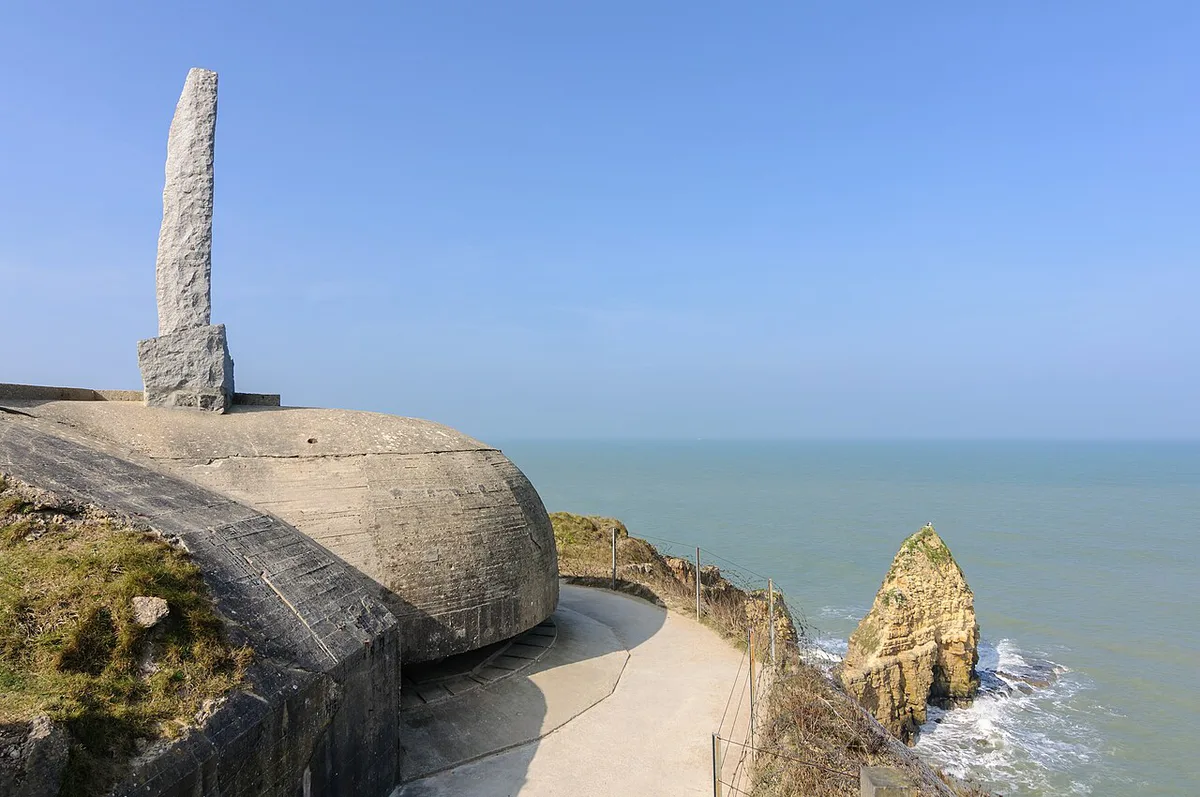
Featured image: Jebulon, CC0, via Wikimedia Commons.
Pointe du Hoc at a Glance
Pointe du Hoc suits first-time D-Day visitors and anyone interested in the Rangers. Its cratered 30-acre ground sits on a 100-foot cliff, with concrete German positions still standing. Visitors short on time may put 8 Best Omaha Beach Sites to Visit, in Order and the cemetery first. This is a memorial as well as a battlefield, so visit quietly and follow any posted site rules.
Covering the 30-acre ground takes one to two hours, and a quick photo stop would skip the craters and bunkers.
- Go if: it is your first D-Day trip, or the Ranger story is why you came.
- Allow extra time if: you want to read the markers, walk the whole site and photograph the coast.
- Skip or shorten if: you have a single half-day and must choose between this site and the Omaha Beach area.
What Happened at Pointe du Hoc on D-Day
German forces placed 155 mm guns on this headland, which has a commanding view of both Utah and Omaha beaches. Lt. Col. James E. Rudder led about 225 Rangers of the 2nd Ranger Battalion to land below the cliffs and climb them with specially designed equipment. At the top they found empty gun positions among the bomb craters. Two Rangers then located the camouflaged guns inland and destroyed them with thermite grenades. Cut off, the force held out for two days against counterattacks. Only about 90 combat-effective men remained when V Corps units relieved them. The site passed to the American government on 11 January 1979. On 6 June 1984, President Reagan spoke here on the 40th anniversary and called the Rangers "the Boys of Pointe du Hoc". Both landing beaches lay within range of the point, which is why it mattered. Our Omaha and Utah beach comparison explains how the two differ.
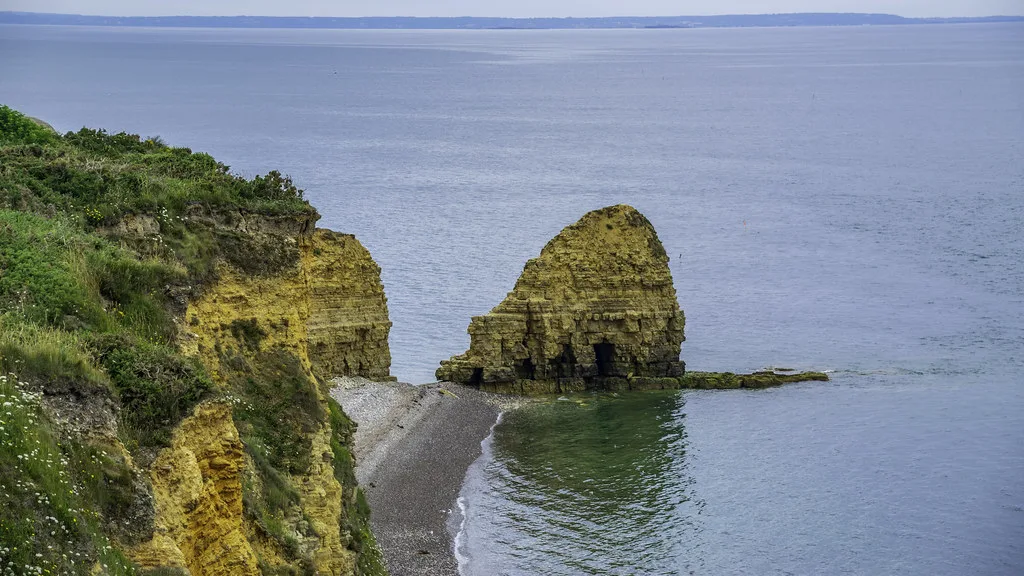
How the Rangers' Cliff Assault Unfolded, Step by Step
Knowing the order of events helps you make sense of the ground. The climbing force at the point came from Companies D, E and F of the 2nd Ranger Battalion.
- The approach: The landing was planned for about 6:30 a.m. on 6 June. The leading craft first headed toward Pointe de la Percée, to the east. Correcting the course meant running along the German-held coast, and the Rangers landed roughly 40 minutes late.
- The lost reinforcements: More Rangers were waiting offshore for a signal to follow. When it did not arrive in time, they went in at Omaha Beach instead, leaving Rudder's men at the point without that planned support.
- The climb: Rockets fired grappling hooks carrying ropes and rope ladders toward the clifftop. Some lines, heavy with seawater, fell short. The Rangers used those that held, along with sections of ladder, while defenders fired and dropped grenades from above. Allied destroyers, including USS Satterlee and HMS Talybont, gave fire support.
- The guns: After reaching the top, the men pushed inland to cut the coast road. First Sergeant Leonard Lomell and Staff Sergeant Jack Kuhn were the two who found the hidden guns that morning.
- The defense: The Rangers then held their ground against counterattacks, with limited food, ammunition and reinforcement, until the relief force reached them on 8 June.
As you walk the site, keep two places in mind: the cliff face, where the assault began, and the land toward the road, where the mission continued. The empty gun positions were not the end of the job. For a fuller account to read before your visit, see the Pointe du Hoc history on Wikipedia. View the cliffs only from places open to visitors, and do not cross barriers for a better angle.
What You Can See at Pointe du Hoc Today
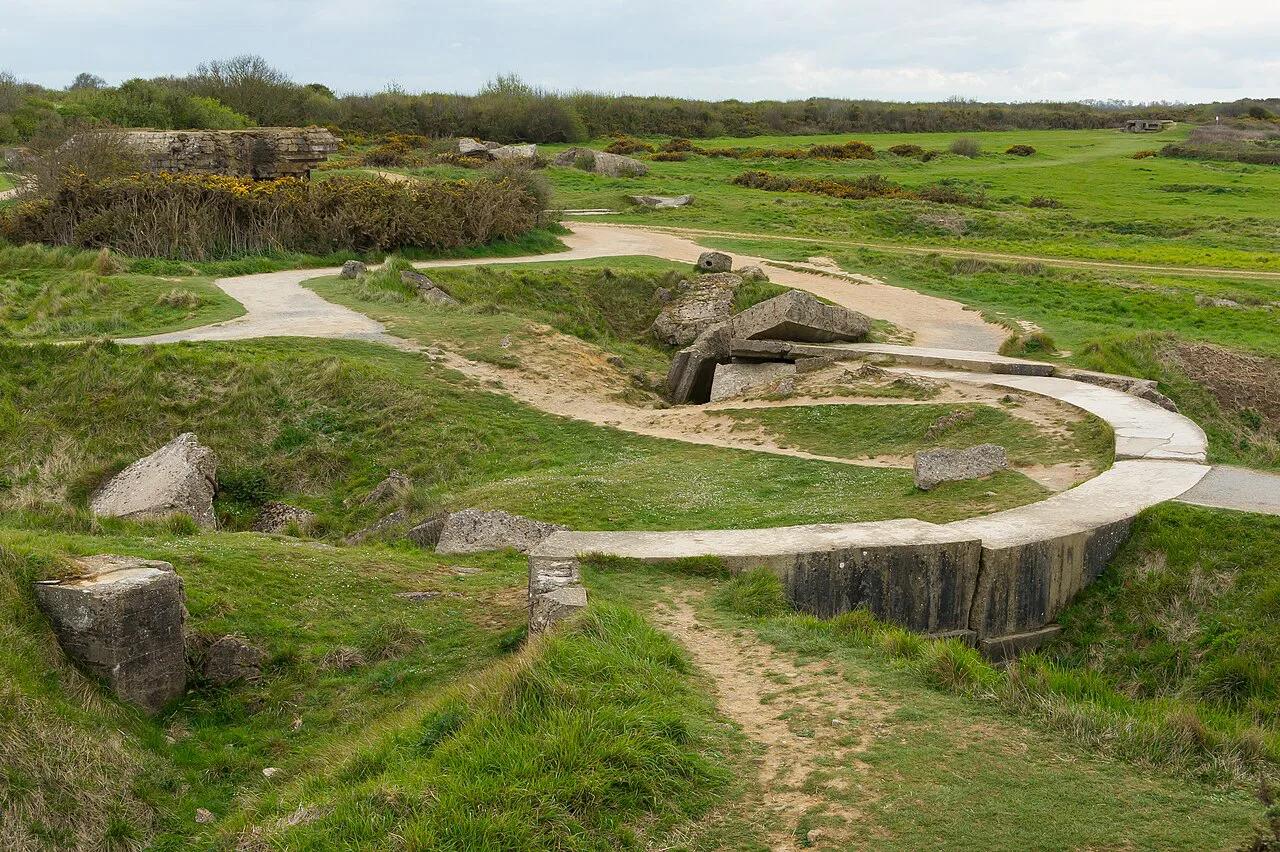
Walk the grounds and you cross a moonscape of deep craters left by the pre-invasion bombardment. Broken German bunkers and casemates sit between them. You can find the pits that held the 155 mm guns, and the observation post near the cliff edge. A Ranger memorial stands on the headland. From the cliff top, the coast runs away toward both landing beaches. Bring time for the craters and bunkers rather than treating the memorial as the only stop.
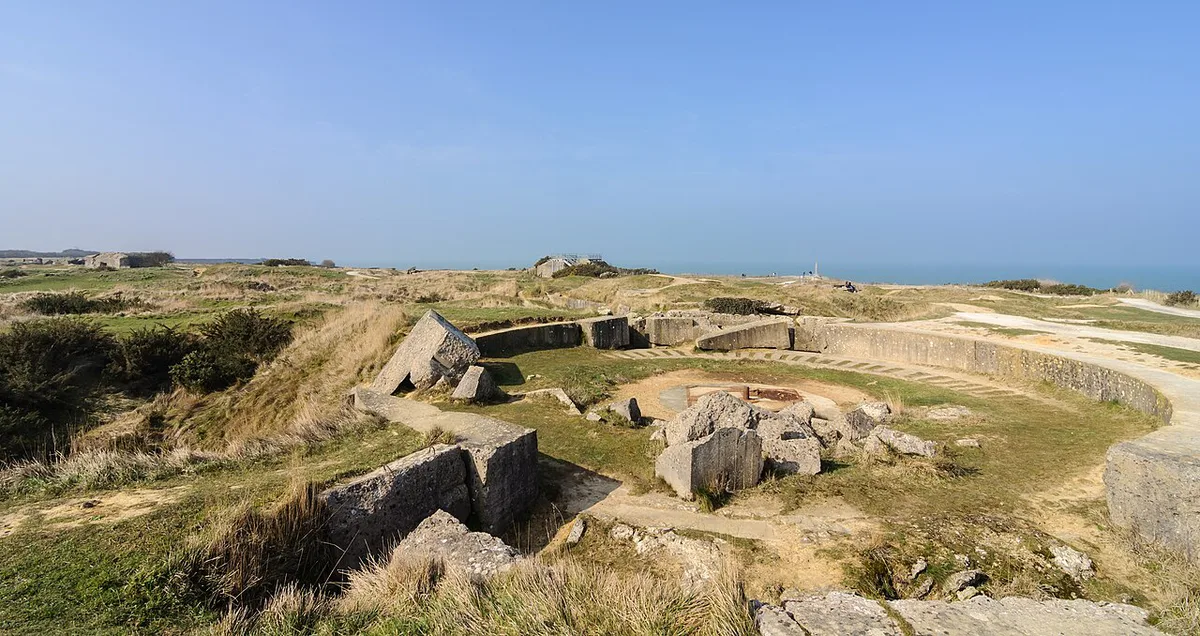
Getting to Pointe du Hoc and Parking
A car is the simplest way to reach Pointe du Hoc. Our guide to parking near Omaha Beach covers nearby stops on the same coast road. Public transport along this coast is limited, so check timetables before relying on it. If you would rather not drive, guided Omaha Beach tours are the alternative. Regional visitor details are on the Normandy Tourism site. Bases such as Vierville-sur-Mer put you close to the coast road.

Hours, Entry and Accessibility
No hours, entry fee or parking charge is listed here, because they can change. Check the ABMC page for current hours, closures and access details.

Terrain and Who May Find It Hard
Expect uneven ground, craters and open bunker interiors on top of a 100-foot cliff. Wind and exposure are normal on a coastal headland. Wet weather makes the ground harder going, so wear sturdy shoes. Visitors with limited mobility and families with young children should check current access details before arriving. Keep to marked paths and stay back from cliff edges.
Wind and exposure are normal here, and the 100-foot cliff is the same one the Rangers scaled in 1944.
How Long to Spend and How to Fit It Into a D-Day Day
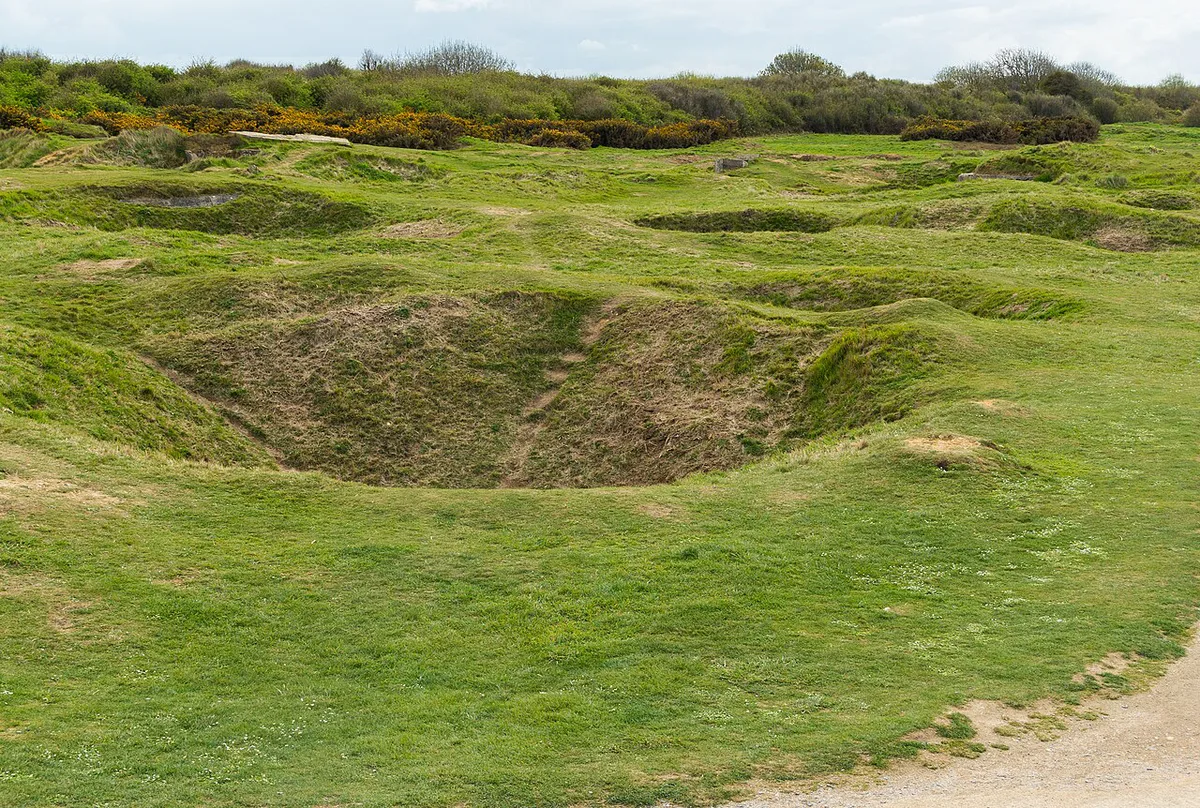
Our planning estimate is one to two hours, depending on how much you read and walk. Pointe du Hoc sits west of Omaha Beach, toward Utah. A logical order runs from Pointe du Hoc to the Omaha Beach area, then a museum. Arriving early may help you avoid tour groups, which are likely to peak mid-day. In the Omaha area, the Omaha Beach memorial and cemetery context come next. Colleville-sur-Mer is the nearby village for that stretch. For the story of the landings, the Omaha Beach museum is a closer match than a general collection. Avoid adding more than two or three stops to one day.
Pointe du Hoc vs Other D-Day Stops
Each stop answers a different question. Maisy Battery: Hours, Tickets & Visit Guide is another battery site, while the Overlord Museum, Omaha Beach: Hours, Tickets & Worth It? gives wider context indoors. The table gives a qualitative comparison.
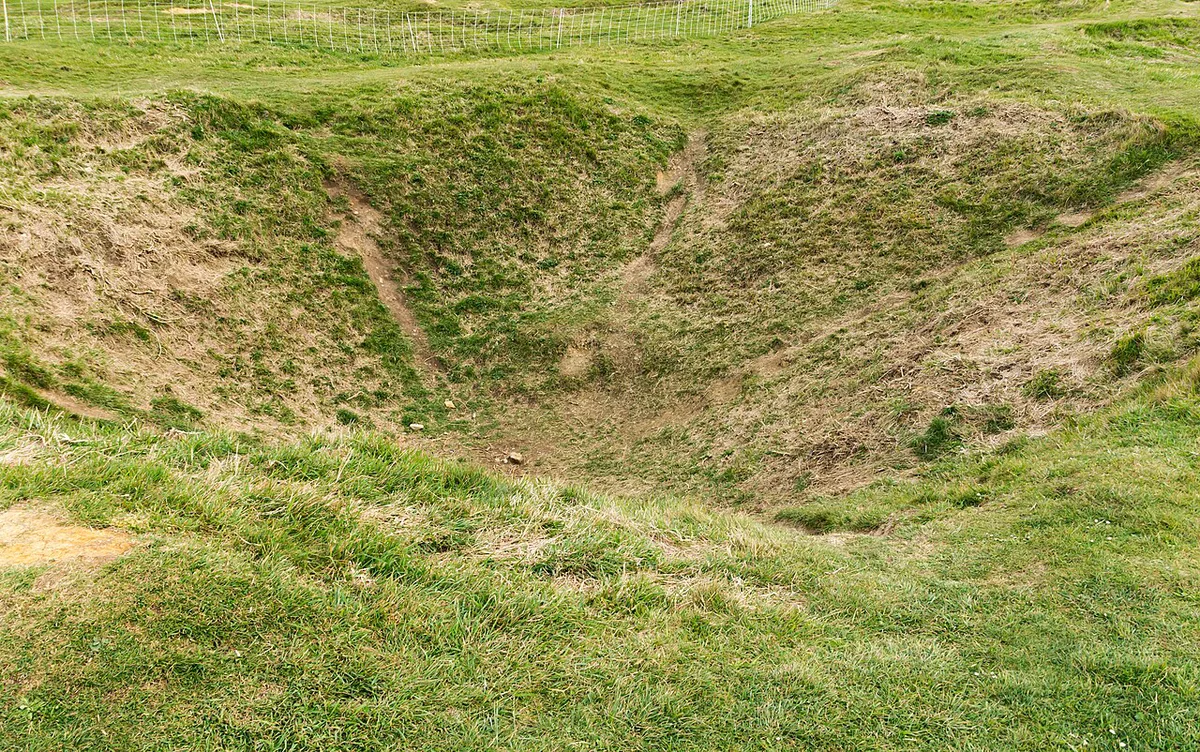
| Stop | What it is | Best for | Time and effort | Fit |
|---|---|---|---|---|
| Pointe du Hoc | Cliff-top Ranger battlefield | Craters, bunkers, the cliff story | Outdoor walking on uneven ground | First stop of the day |
| Omaha Beach | Landing beach and cemetery area | Understanding the landings | Mostly flat, flexible length | Core stop for any visitor |
| Maisy Battery | Another German battery site | Seeing a second battery | Check the official site for visit details | Add if time allows |
| Overlord Museum | Indoor collection | Context and rainy weather | Indoor, low effort | Good afternoon stop |
Mistakes to Avoid
Most problems come from rushing or poor preparation.
- Treating it as a quick photo stop and skipping the craters and bunkers.
- Wearing smooth-soled shoes on uneven, wet ground.
- Arriving without checking the ABMC page for closures.
- Combining too many sites in one day.
Frequently Asked Questions
Why is Pointe du Hoc famous?
Rangers of the 2nd Ranger Battalion scaled its cliffs on D-Day 1944 to destroy German guns that threatened both Omaha and Utah beaches. President Reagan's 1984 speech here also named them the Boys of Pointe du Hoc.
What happened to the guns at Pointe du Hoc?
Rangers reached the top and found the gun positions empty. They later located the 155 mm guns inland and destroyed them with thermite grenades.
How many Rangers survived Pointe du Hoc?
About 225 Rangers took part in the assault. Only about 90 were combat-effective when V Corps units relieved them two days later.
Keep planning
Guides on the same trip






