Omaha Beach Memorial: Which Site to Visit and Getting There
Which Omaha Beach memorial to visit: Les Braves, the American Cemetery or the museums. What is free, how to reach them from Bayeux, and how long to allow.
In this guide
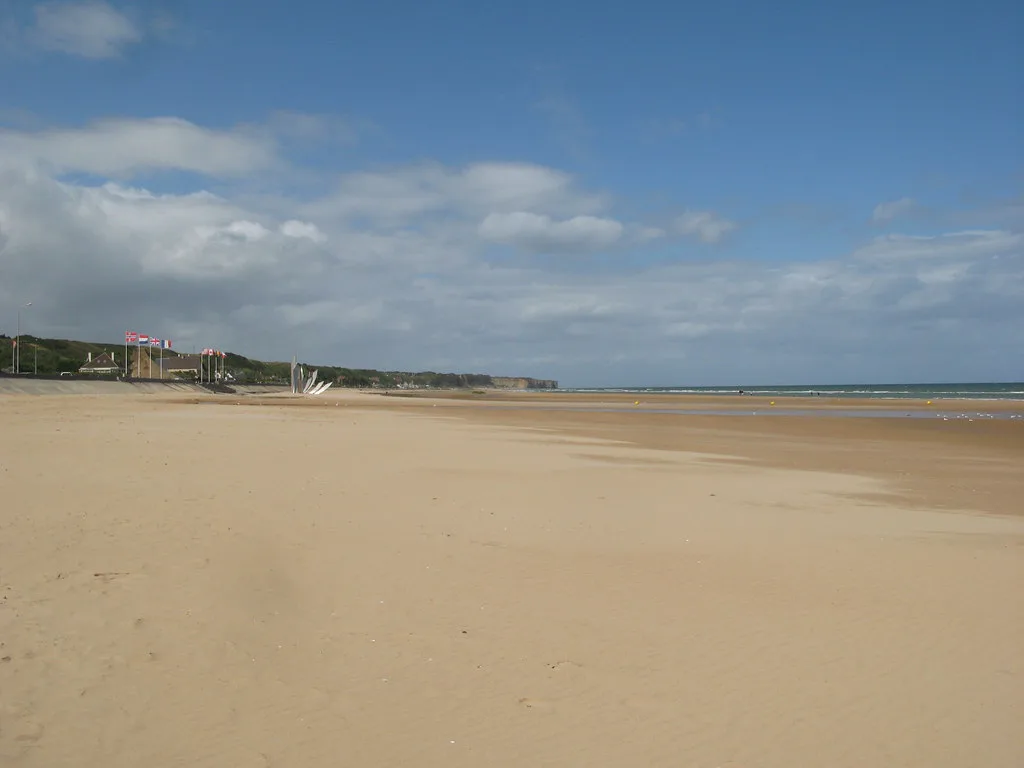
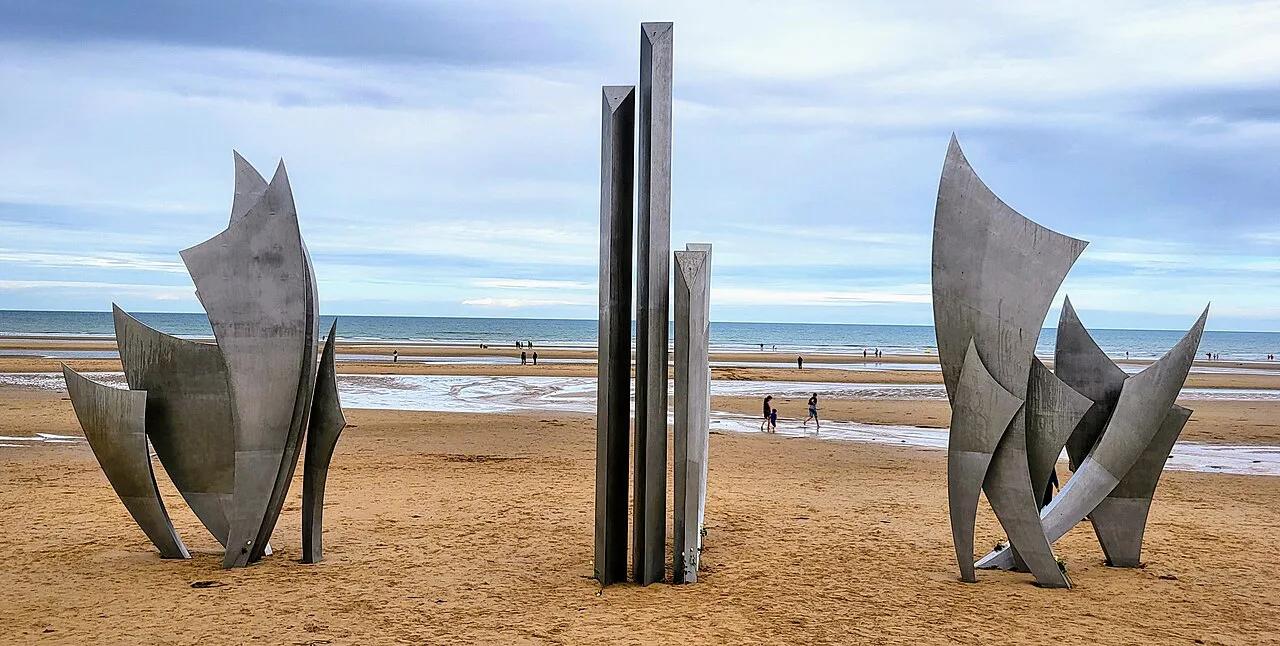
Last updated November 2026: the main memorial on Omaha Beach is Les Braves, a three-part steel sculpture by Anilore Banon at Saint-Laurent-sur-Mer. It is free and open-air, and it is the omaha beach memorial most visitors mean when they stand on the sand. Many searchers instead want the Normandy American Cemetery or the paid museum nearby, so the table below separates them.
Featured image: Nicolas Fressengeas, CC BY-SA 4.0, via Wikimedia Commons.
Omaha Beach Memorial: which site do you want?
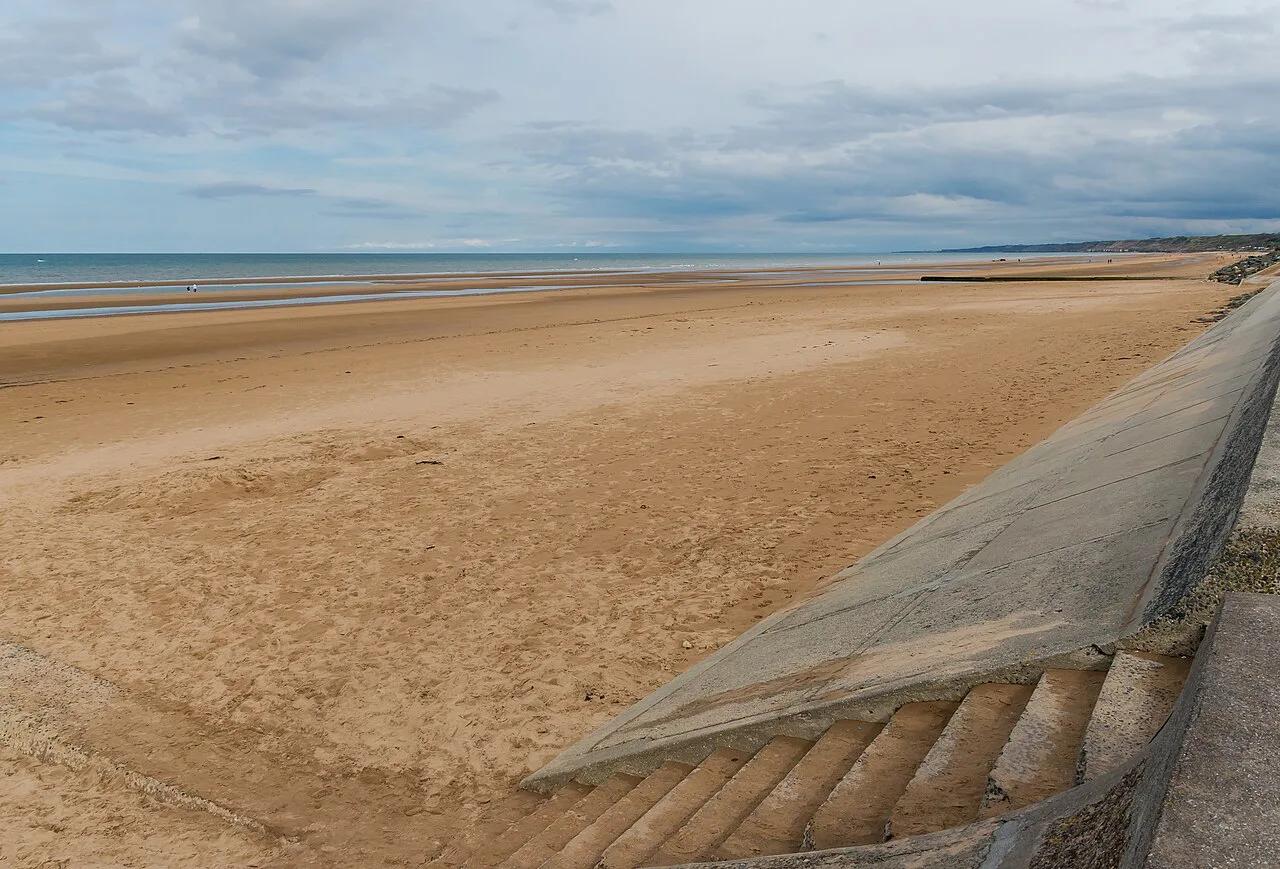
Omaha Beach was one of the D-Day landing sectors on 6 June 1944. Memorials, a cemetery and several museums now sit along this stretch of coast. The names overlap, which is why plans often go wrong. Use the table to pick the site that matches what you came for.
| Site | Location | What it is | Cost | Best for |
|---|---|---|---|---|
| Les Braves sculpture | On the beach, Saint-Laurent-sur-Mer | Open-air steel monument by Anilore Banon | Free | A quiet first stop on the sand |
| Normandy American Cemetery and Memorial | Colleville-sur-Mer | Cemetery, memorial and visitor center run by the American Battle Monuments Commission | Free | Paying respects and understanding the scale of losses |
| Omaha Beach Memorial Museum | Saint-Laurent-sur-Mer, near the sand | Museum of objects, reconstructed scenes and a film | Paid | First-timers wanting an introduction |
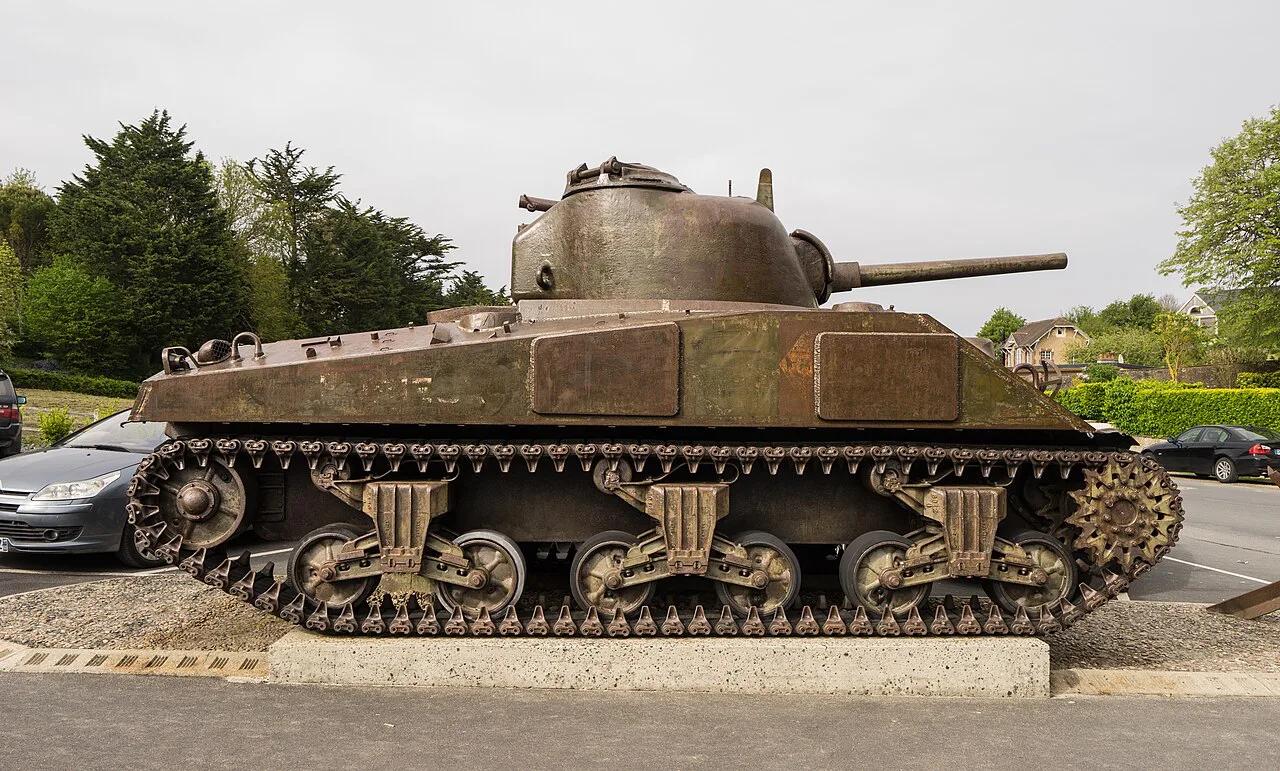
| Overlord Museum | Colleville-sur-Mer | Museum of vehicles and equipment | Paid | Armour fans and families |
What to see at the memorial sites
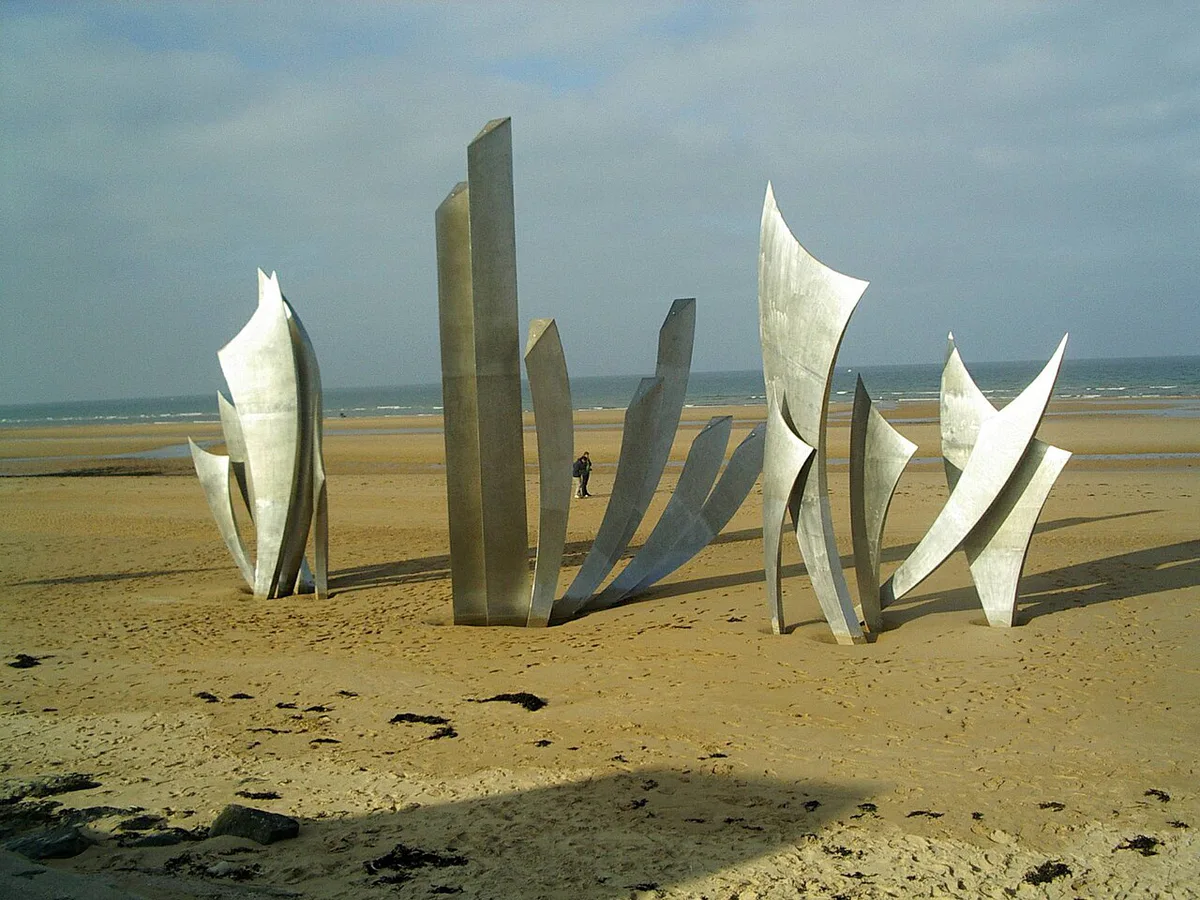
Start on the beach itself. Les Braves stands on the sand at Saint-Laurent-sur-Mer and needs no ticket. Read the background to the landing sector before you walk, so the open shoreline makes sense. The cemetery is a different kind of visit. The American Battle Monuments Commission maintains it, and entry is free. You will find it at the cemetery village of Colleville-sur-Mer, set back from the water. Treat the beach as open shoreline and the cemetery as a place of mourning with its own rules.
Les Braves Meaning and Other Memorials Along Omaha Beach
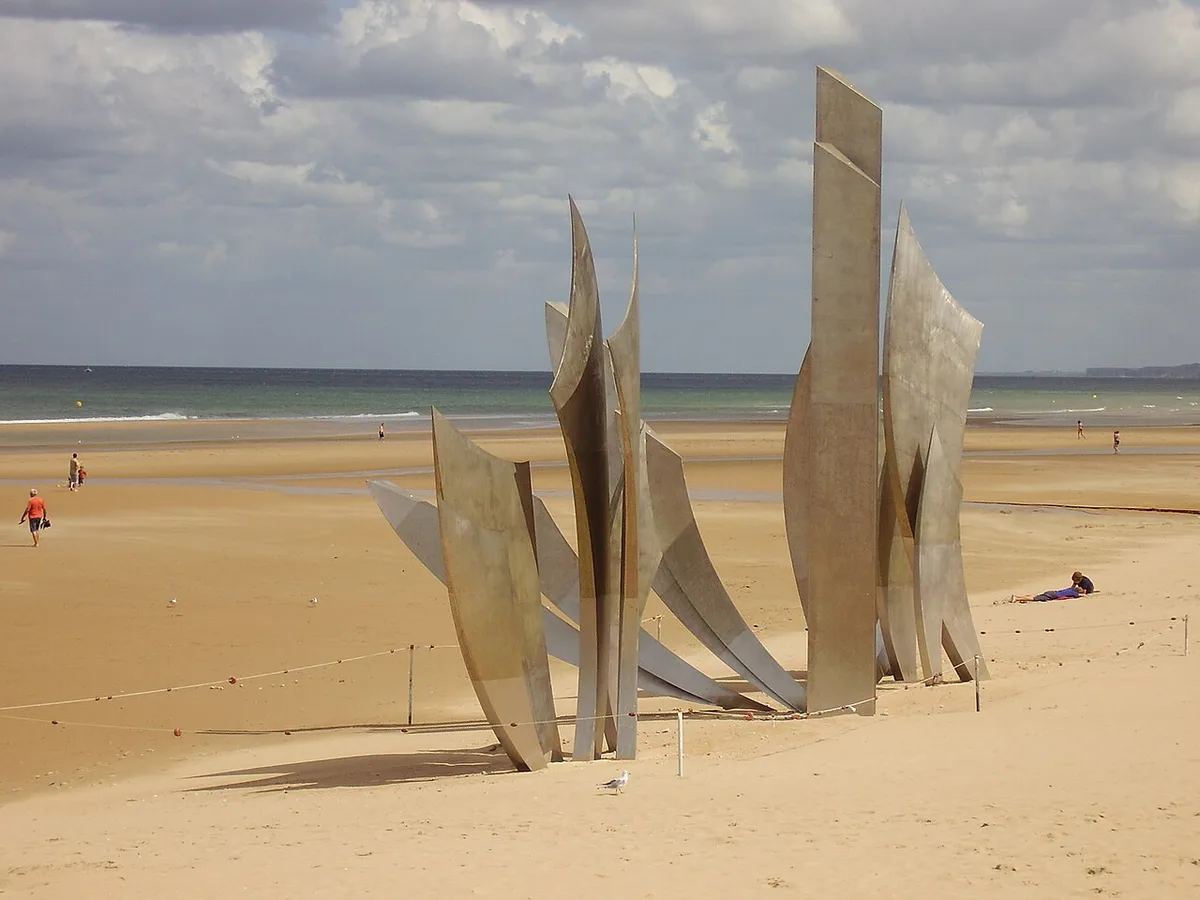
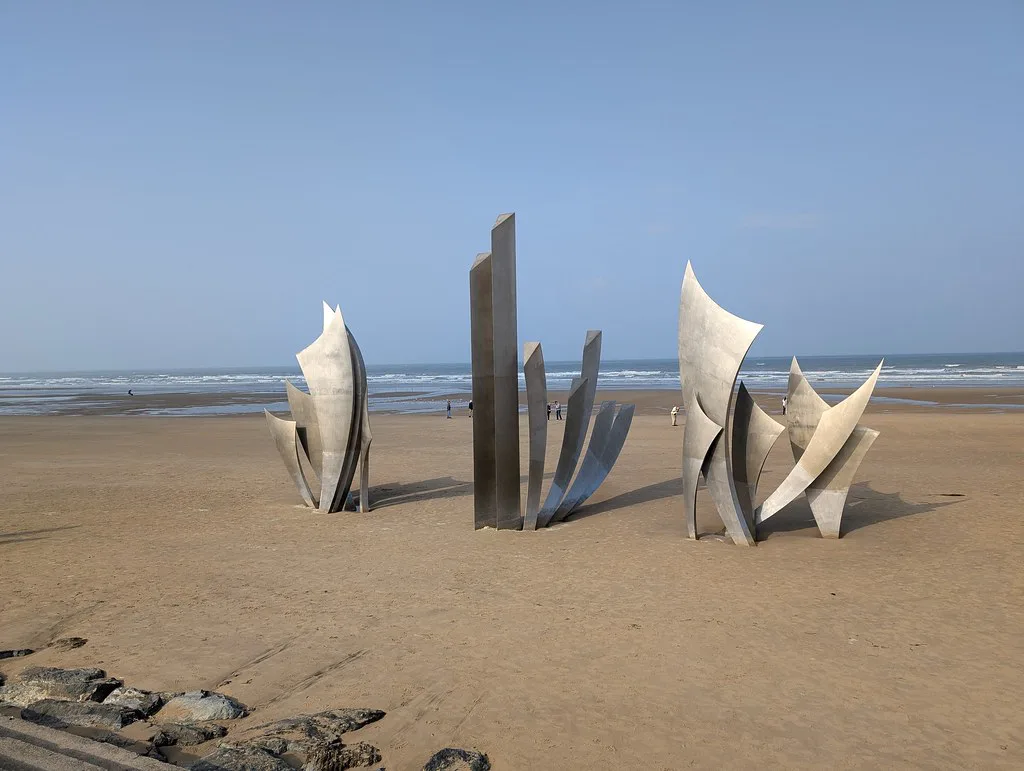
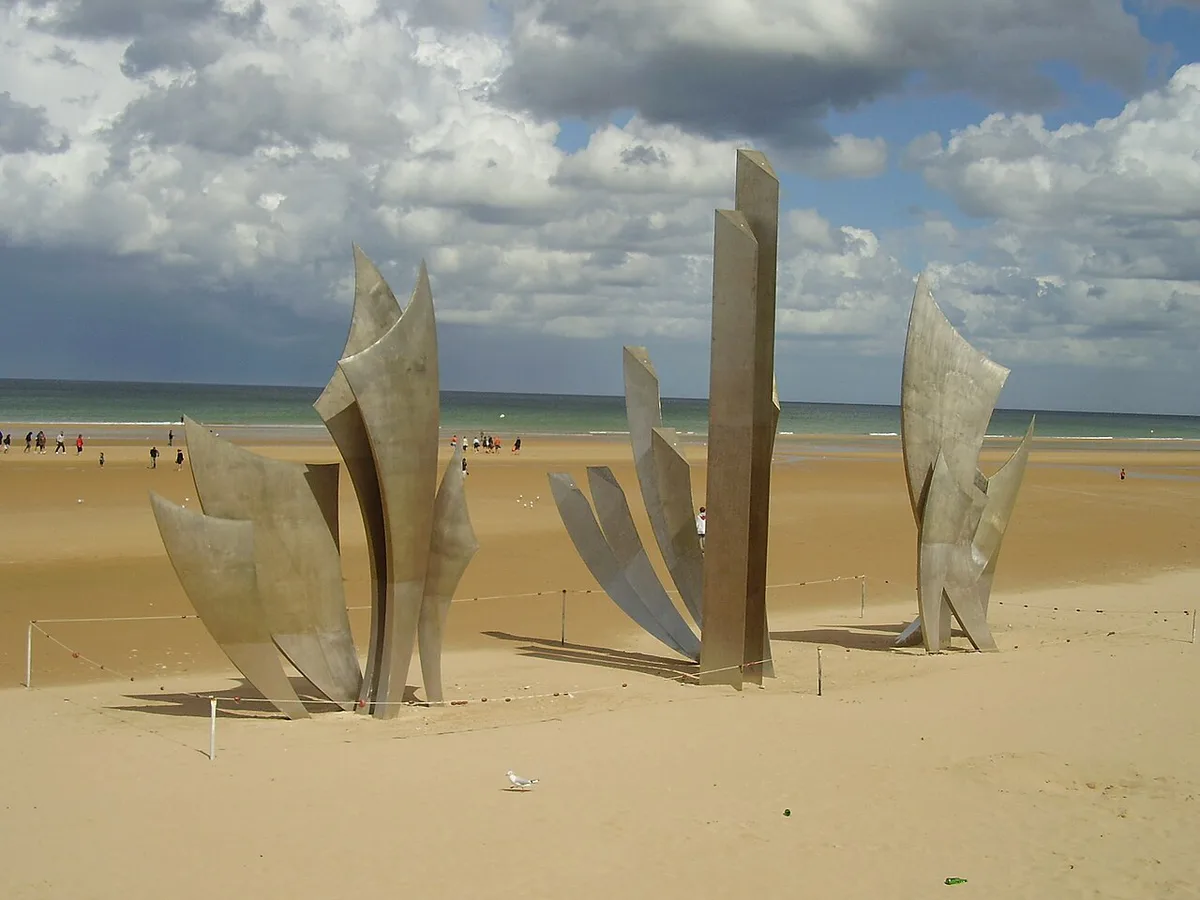
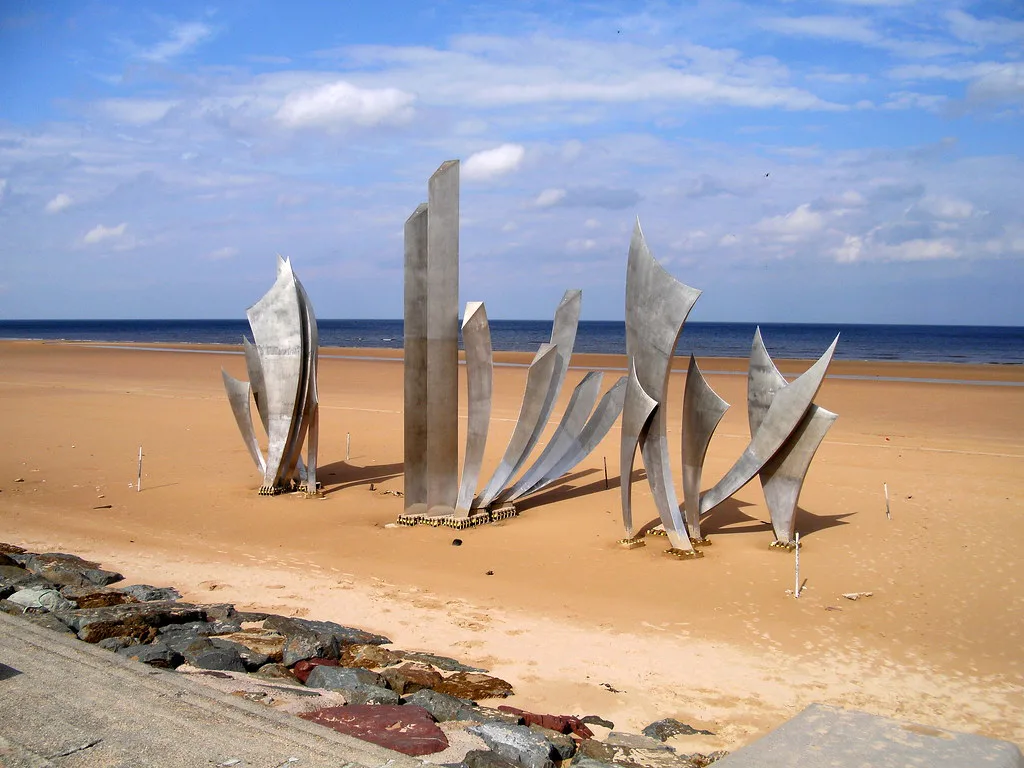
Anilore Banon created Les Braves for the 60th anniversary of D-Day in 2004. Its three stainless steel groups each carry a theme. The Wings of Hope and The Wings of Fraternity flank the central group, Rise, Freedom! Together they speak of hope, liberty and the bond between people, rather than portraying a particular unit or moment of the battle. The tide changes how close you can get and how the steel looks against the water.
Several other memorials are easy to miss if you stop only at the sculpture. They are spread between different villages and access points, so choose them on a map before setting out.
| Memorial | Area | Why stop |
|---|---|---|
| National Guard Memorial | Vierville-sur-Mer | Stands on a former German strongpoint at a key exit from the western part of the beach |
| 29th Infantry Division memorial | Vierville-sur-Mer | Remembers a division that landed in the first assault, including on this western sector |
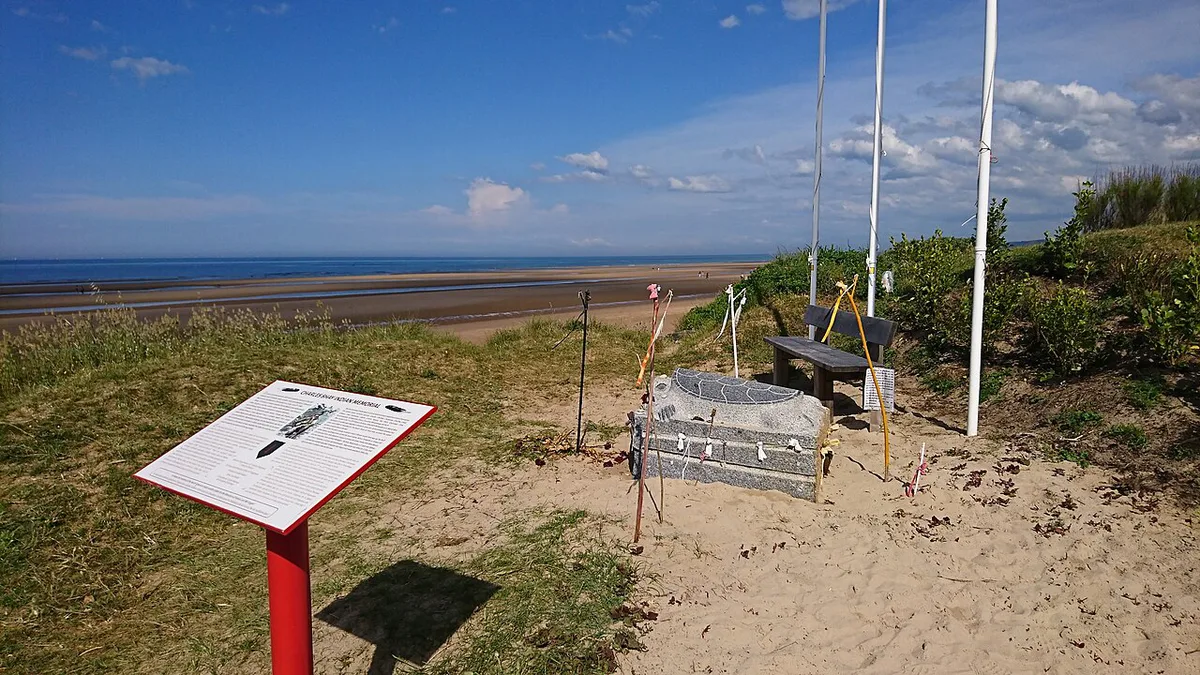
| Charles Shay Indian Memorial | Saint-Laurent-sur-Mer | Honours Native American service; Shay, a Penobscot, served as a combat medic on Omaha on D-Day |
| 1st Infantry Division monument | Bluffs near Colleville-sur-Mer | Commemorates the "Big Red One" near the WN62 German strongpoint overlooking the eastern sector |
With limited time, pair Les Braves with the Charles Shay memorial, then pick either the Vierville end or the WN62 area. Seeing both ends adds to your route, so allow more than the shortest two-hour plan. Stay on marked paths around the bluffs and surviving fortifications, and use signed parking instead of stopping on narrow verges.
Inside the Normandy American Cemetery: What to Look For
The cemetery holds more than 9,300 American military dead, many of whom were killed on D-Day or in the campaign that followed. It is not only an Omaha Beach burial ground. Knowing the layout helps you see more than the rows of white marble Latin crosses and Stars of David.
- The memorial colonnade: large maps show the landings and later military operations. At its centre stands the bronze statue The Spirit of American Youth Rising from the Waves.
- Walls of the Missing: the semicircular garden behind the memorial records 1,557 names. A rosette beside a name means that person has since been recovered and identified.
- The reflecting pool and chapel: the central path leads from the memorial past the pool and between the grave plots to the circular chapel.
- The overlook: viewpoints on the seaward side help you relate the bluffs to the beach below.
- Individual graves: Brigadier General Theodore Roosevelt Jr., who led troops ashore at Utah Beach, is buried here. So are two of the Niland brothers, whose family story helped inspire Saving Private Ryan.
If you are looking for a relative or another particular person, search the American Battle Monuments Commission database before you travel and save the plot, row and grave number. Staff can also help you locate a grave. The official ABMC cemetery page has visitor information and current notices.
The flag lowering near the end of the day is a moving time to be there. Check the day's timing when you arrive, stand quietly while it takes place and follow staff directions. Do not plan on walking straight from the cemetery down to the sand. Check which paths are open, and allow for a separate drive to Les Braves.
Memorial museum and nearby museums compared
Four museums cover the area, and each suits a different visitor. The museum near the sand is the gentlest introduction, with a film and reconstructed scenes. Armour fans should choose the museum of vehicles and equipment at Colleville. Collectors' displays sit at the west end of the beach, where the D-Day Omaha Museum stands. For the wider campaign, Bayeux has a Battle of Normandy museum, listed by Bayeux Bessin Tourisme. Pick one or two rather than all four.
| Museum | Style | Best for |
|---|---|---|
| Omaha Beach Memorial Museum | Objects, scenes and a film | First-timers and families |
| Overlord Museum | Vehicles and equipment | Armour fans |
| D-Day Omaha Museum | Private collection | Repeat visitors |
| Battle of Normandy museum, Bayeux | Whole campaign | Broader context |
How much time to allow, with sample routes
Sites are spread along the coast, so sequence them rather than chasing everything. Pointe du Hoc is an optional add-on: the clifftop battery site adds driving time. Another option is the restored battery complex, which suits a full day only. Cut stops, not respect, when time runs short.
Plan a 2-hour visit around Les Braves and the cemetery, and add slack around 6 June when crowds gather.
| Plan | Stops in order | Trade-off |
|---|---|---|
| Two hours | Les Braves, then the cemetery | No museum |
| Half day | Les Braves, museum near the sand, cemetery | No clifftop stop |
| Full day | Museum, Les Braves, cemetery, Overlord Museum, then one optional battery site | Needs a car or a guided day |
Getting there and parking
A car gives the most freedom between Saint-Laurent-sur-Mer and Colleville-sur-Mer. Read the guide on where to park before you set off. Without a car, public transport from Bayeux is limited and timetables change, so check the regional operator for current routes. Another route is a guided tour option from Bayeux or Caen, which removes the logistics. Do not assume everything sits in one spot.
| Option | Flexibility | Effort |
|---|---|---|
| Car | High | Low once parked |
| Public transport | Low | High, with limited timetables |
| Guided tour | Fixed itinerary | Lowest |
Costs, hours and what is free
The beach and Les Braves are free. The American cemetery is free too, according to the ABMC. Museums charge admission, and so do guided tours. Each museum publishes its own prices and hours, including the Overlord Museum and the Musée Mémorial d'Omaha Beach. Check them before you go, especially for winter hours.
Visiting respectfully: etiquette and practical tips
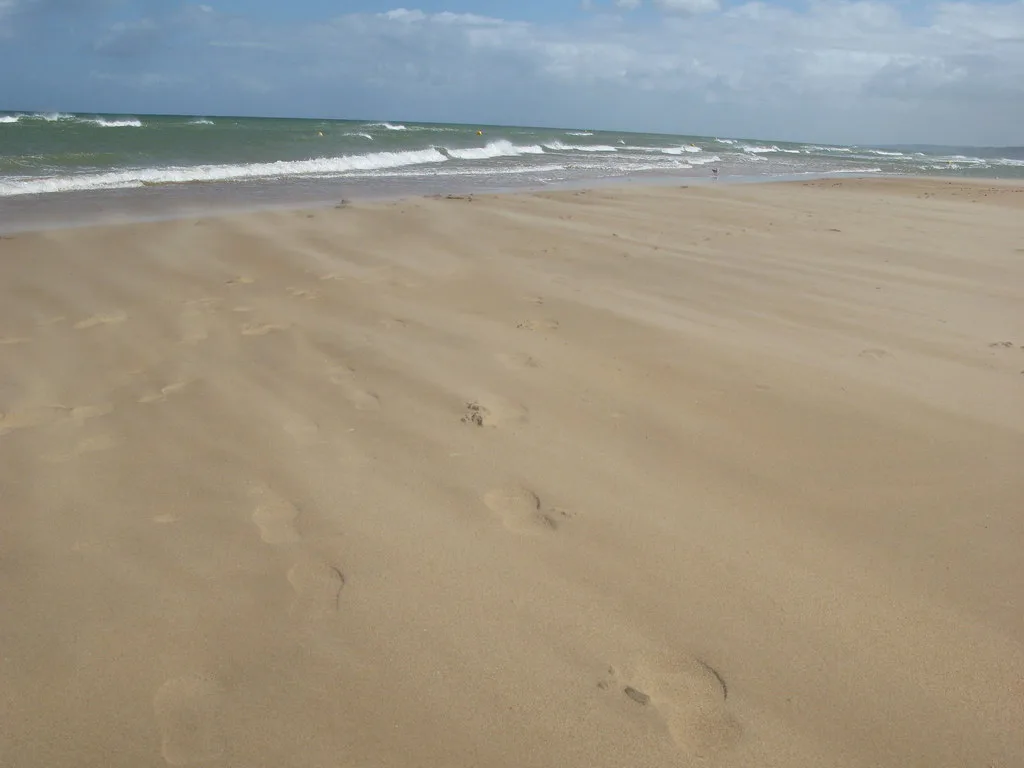
Keep voices low and dress simply at the cemetery. Wear sturdy shoes for sand and uneven ground. Check tide times before walking the shoreline, and bring a wind layer.
- Follow the cemetery's posted rules on photography, drones and pets.
- Do not climb on monuments or remove objects from the sand.
- Arrive well before closing at museums and the cemetery.
- Expect crowds around 6 June, the anniversary of D-Day.
Omaha or Utah Beach?
Readers still deciding can read how the two beaches compare. Utah Beach has its own museum, described on the Utah Beach Museum site. Omaha suits those who want the cemetery and several memorials close together.
Visiting around the 6 June anniversary
Omaha Beach commemorations peak around 6 June, the anniversary of the 1944 landings. Expect larger crowds at the beach and Normandy American Cemetery during this period. Build extra time into every stop, especially if you are driving between Saint-Laurent-sur-Mer and Colleville-sur-Mer.
A 2-hour visit works best when you focus on Les Braves and the cemetery. Do not add a museum unless you can stay longer. A fuller day gives room for one museum and a coastal site such as Pointe du Hoc.
Keep the tone of the day respectful. The cemetery is an active place of remembrance, while the beach remains exposed to wind, sand and changing tides. Check each museum’s opening hours before leaving, as seasonal schedules can limit a planned stop. Arrive well before closing rather than treating the cemetery or a memorial as a quick final call.
Keep planning
Guides on the same trip