Normandy American Cemetery: 6 Stops, Entry Checks and Etiquette
Plan a visit to the Normandy American Cemetery at Colleville-sur-Mer: entry and reservation checks, getting there, six stops inside, how long to allow and nearby cemeteries.
In this guide
Last updated November 2026: the Normandy American Cemetery is the American Battle Monuments Commission's World War II cemetery and memorial at Colleville-sur-Mer, above Omaha Beach. Families looking for a relative's grave, history readers following the landings and travelers based in Bayeux will all find a clear route through the site below. Entry and reservation rules are the main planning point, so read the official ABMC page before you travel.
Featured image: Nilington at English Wikipedia, Public domain, via Wikimedia Commons.
What the Normandy American Cemetery Is
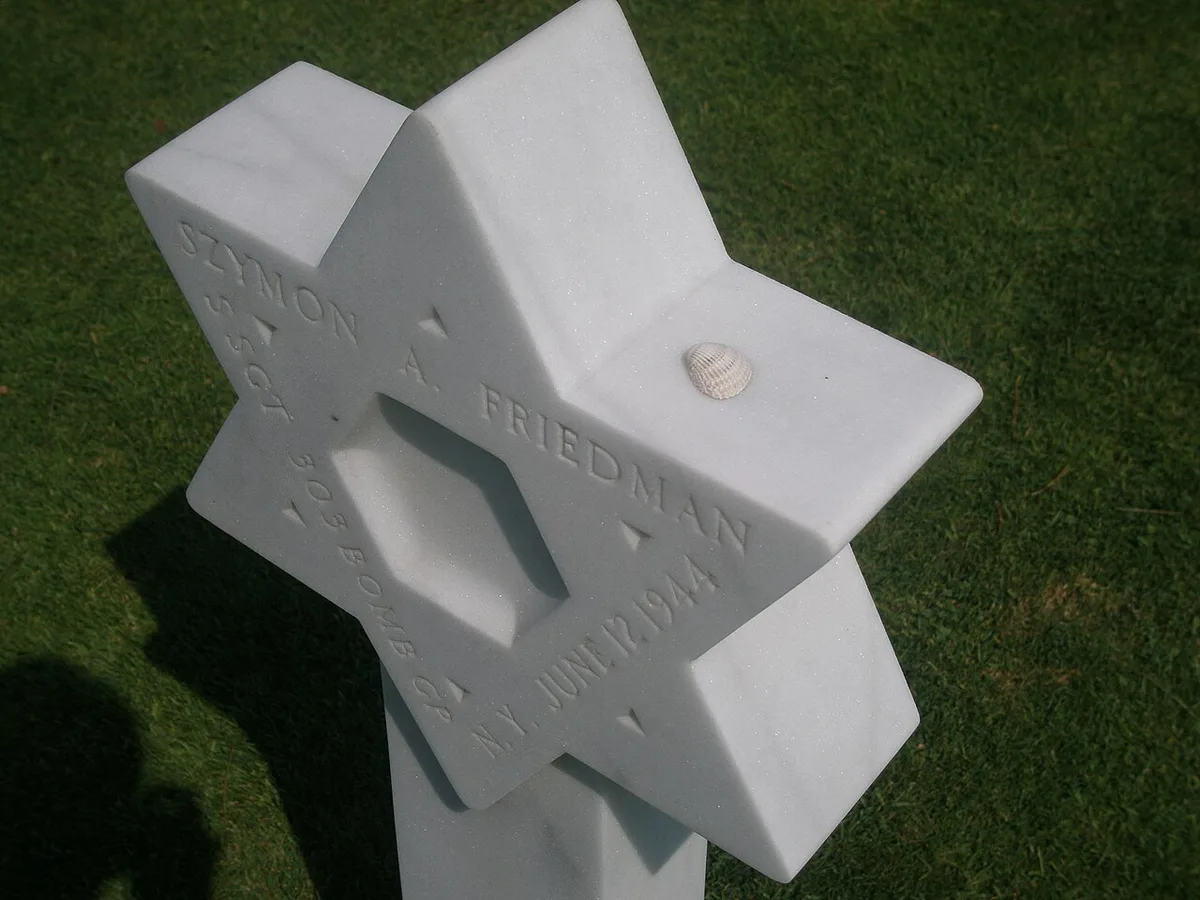
Normandy American Cemetery and Memorial honors American troops who died in the Normandy landings and the Battle of Normandy that followed. It sits next to the site of the temporary St-Laurent battlefield cemetery. The grounds cover 172.5 acres and hold 9,389 gravesites. Dedication took place in 1956, and the site is a burial ground first and a visitor attraction second.
| Fact | Detail |
|---|---|
| Location | Colleville-sur-Mer, Normandy, above Omaha Beach |
| Managed by | American Battle Monuments Commission (ABMC) |
| Area | 172.5 acres |
| Gravesites | 9,389 |
| Dedicated | 1956 |
| Visitor center opened | 2007 |
Before You Go: Entry, Reservations and Opening Checks
Reporting before 2026 said a reservation system would be introduced during 2026 because crowding had led to visitors being refused entry. Its current status is not confirmed here, so treat the ABMC Normandy page as the only live source. Roughly one million people visit each year, which makes this the busiest of the ABMC cemeteries. Arriving without checking the entry system is the single avoidable mistake on this trip.
- Check before you travel
- Entry system: whether a reservation or timed entry is required.
- Visitor center hours and any seasonal changes.
- Security screening at the entrance.
- Closures for ceremonies, weather or maintenance.
- Flag lowering and folding times at the flagpoles.
- Whether entry is free, which is widely believed but should be confirmed on ABMC.
Getting There and Getting Around
Bayeux is the common base for visiting Normandy's war sites, though you should confirm current transport options before booking. Each way of reaching Colleville-sur-Mer trades control against effort.
- By car
- Driving gives the most control over arrival time, which matters if you want to avoid midday crowds.
- Check ABMC for current parking arrangements, because none are confirmed here.
- Budget extra time if you want to combine the cemetery with other sites.
- By public transport
- Public routes to Colleville-sur-Mer are limited, and no timetable is quoted here.
- Check the current operator before you plan around a bus or rail connection.
- Normandy Tourism publishes regional visitor information that can help you check options.
- By guided tour from Bayeux
- A guided tour removes the logistics and usually combines several D-Day sites.
- Time at the cemetery is set by the group, so ask in advance how long you will have.
- Local planning help is available through Bayeux's tourist office.
6 Stops Inside the Normandy American Cemetery
Walking the site in this order follows what most visitors meet first. Entry and opening details are on ABMC, and the stops below are descriptive rather than a set route.
1. Visitor center
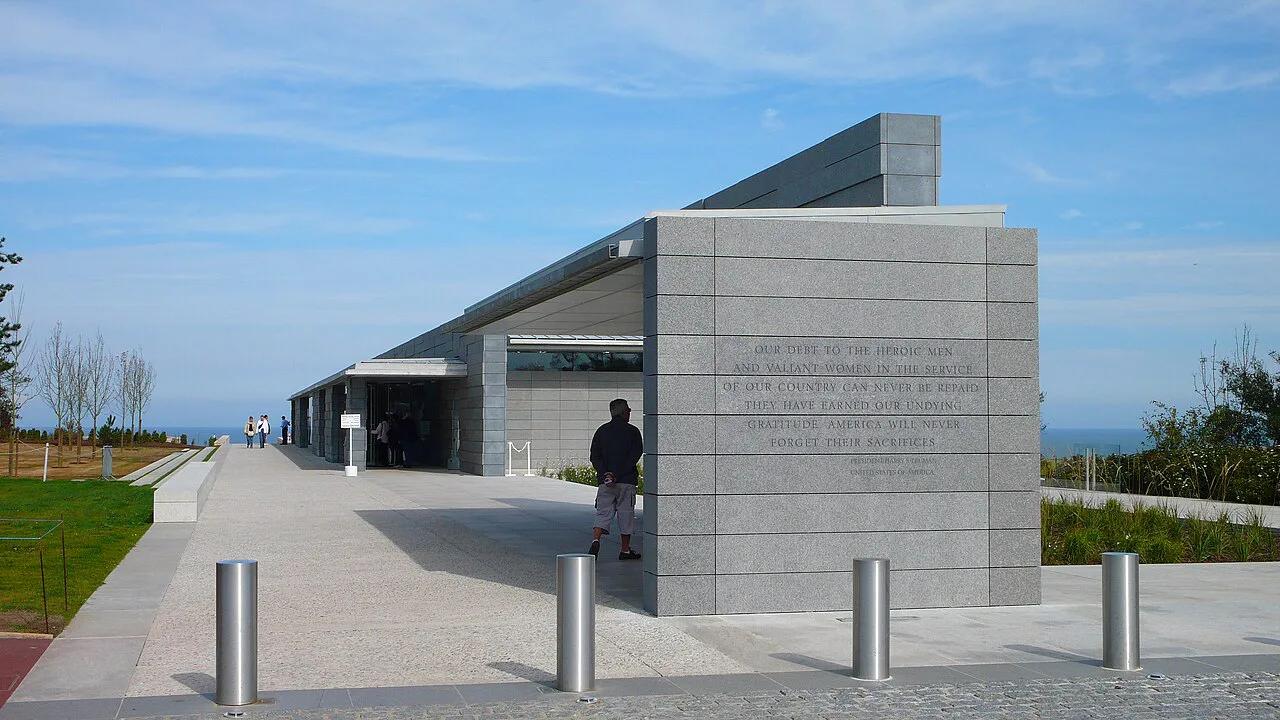
Opened in 2007, the visitor center explains the global significance of Operation Overlord and sets out the story before you walk the grounds. Starting here gives context for the maps and names you meet later. Exhibits are indoors, so it suits a wet or windy day.
Families and first-time visitors benefit most, while a visitor looking only for a single grave may prefer to go straight to the burial areas. Our visitor center guide covers the exhibits in more detail.
2. Memorial and landing maps
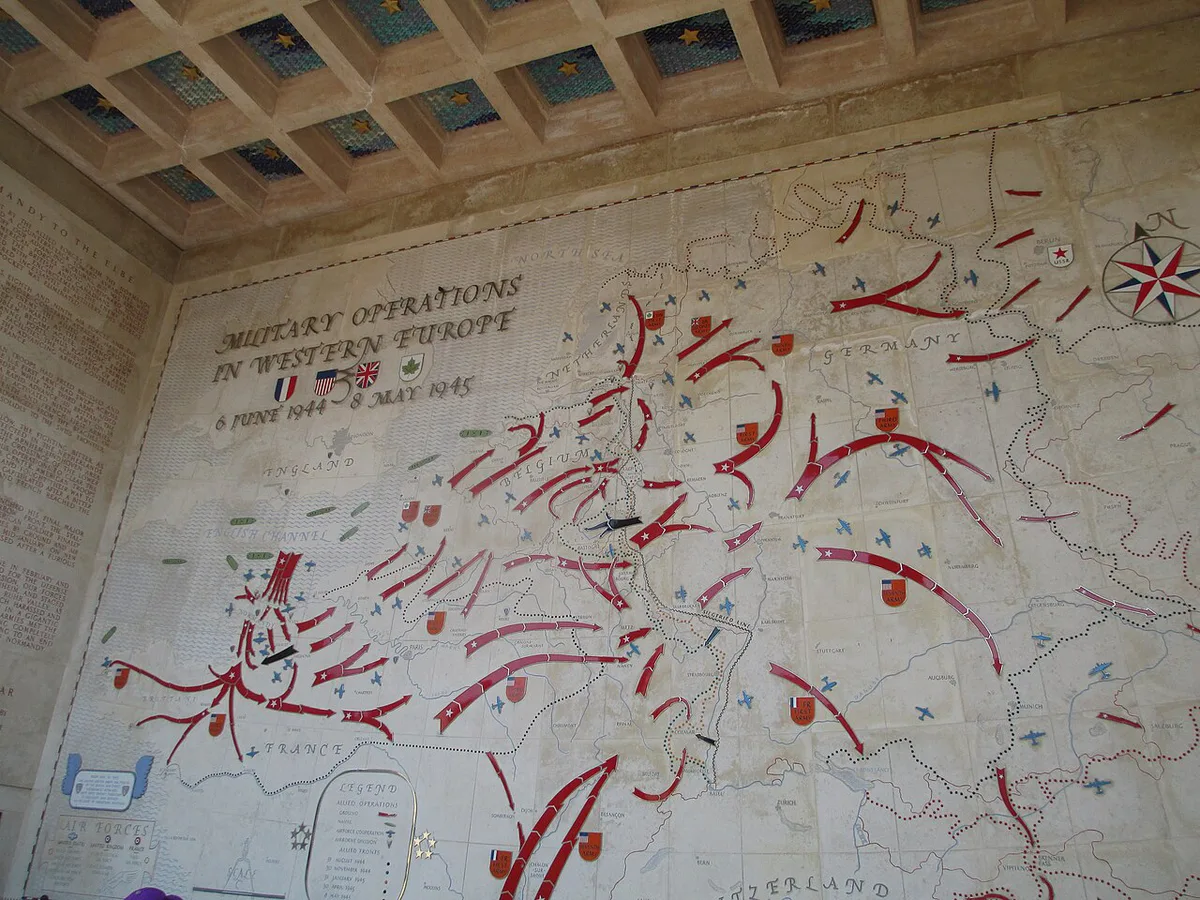
A memorial within the cemetery carries maps and details of the Normandy landings and the military operations that followed. The maps help you place Omaha Beach and the wider campaign.
Read them before walking to the graves if you want the geography fixed in your mind. Skip a long study of them if you are short of time, because the visitor center covers similar ground.
3. Spirit of American Youth Rising from the Waves
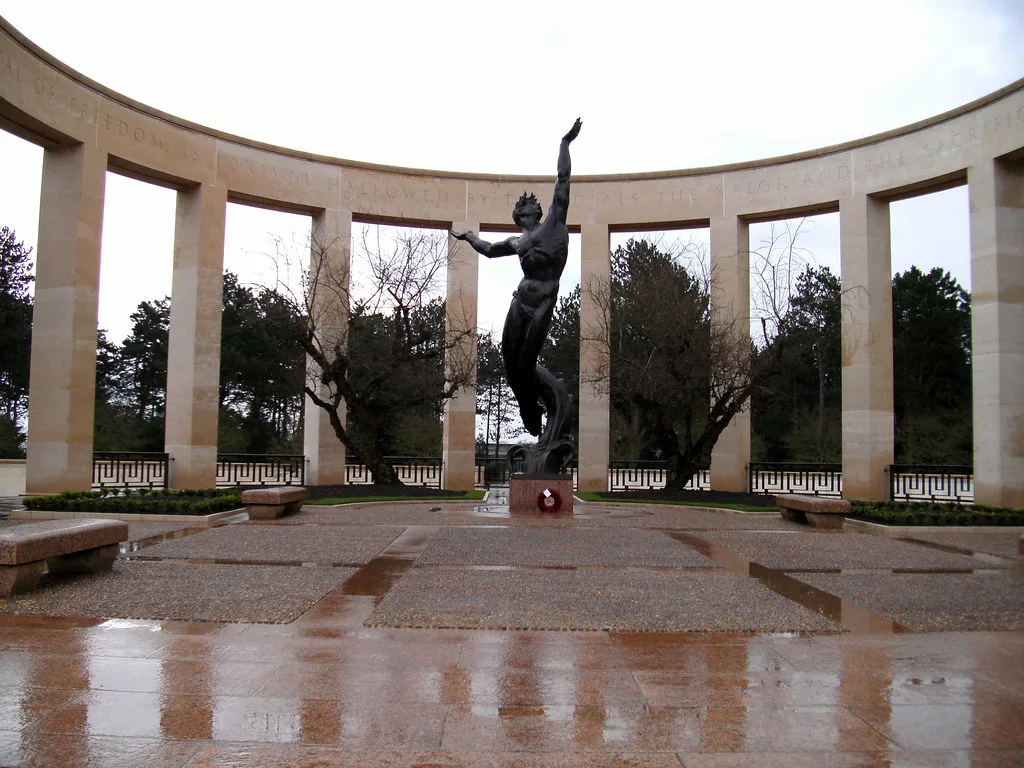
At the center of the memorial stands this bronze statue by Donald De Lue. It is a quiet place to pause rather than a photo stop.
Visitors tend to come here after the maps and before moving to the garden. Keep voices low, because other families may be standing close by.
4. Garden of the Missing and Walls of the Missing
The Walls of the Missing commemorate service members whose remains were not recovered or identified. Expect to read names slowly, and give relatives space if someone is searching for a particular name.
ABMC offers a burial and commemoration search on its website, so look up a name before you arrive. This stop is worth extra time for family visitors and is easily rushed by tour groups.
5. Chapel
A chapel stands within the memorial area and offers a quiet interior away from the open grounds. Enter respectfully, remove hats and keep conversation to a minimum.
Use it as a short pause between the memorial and the graves. Visitors on a tight schedule can walk past it without losing the main narrative.
6. Graves area and overlook toward Omaha Beach
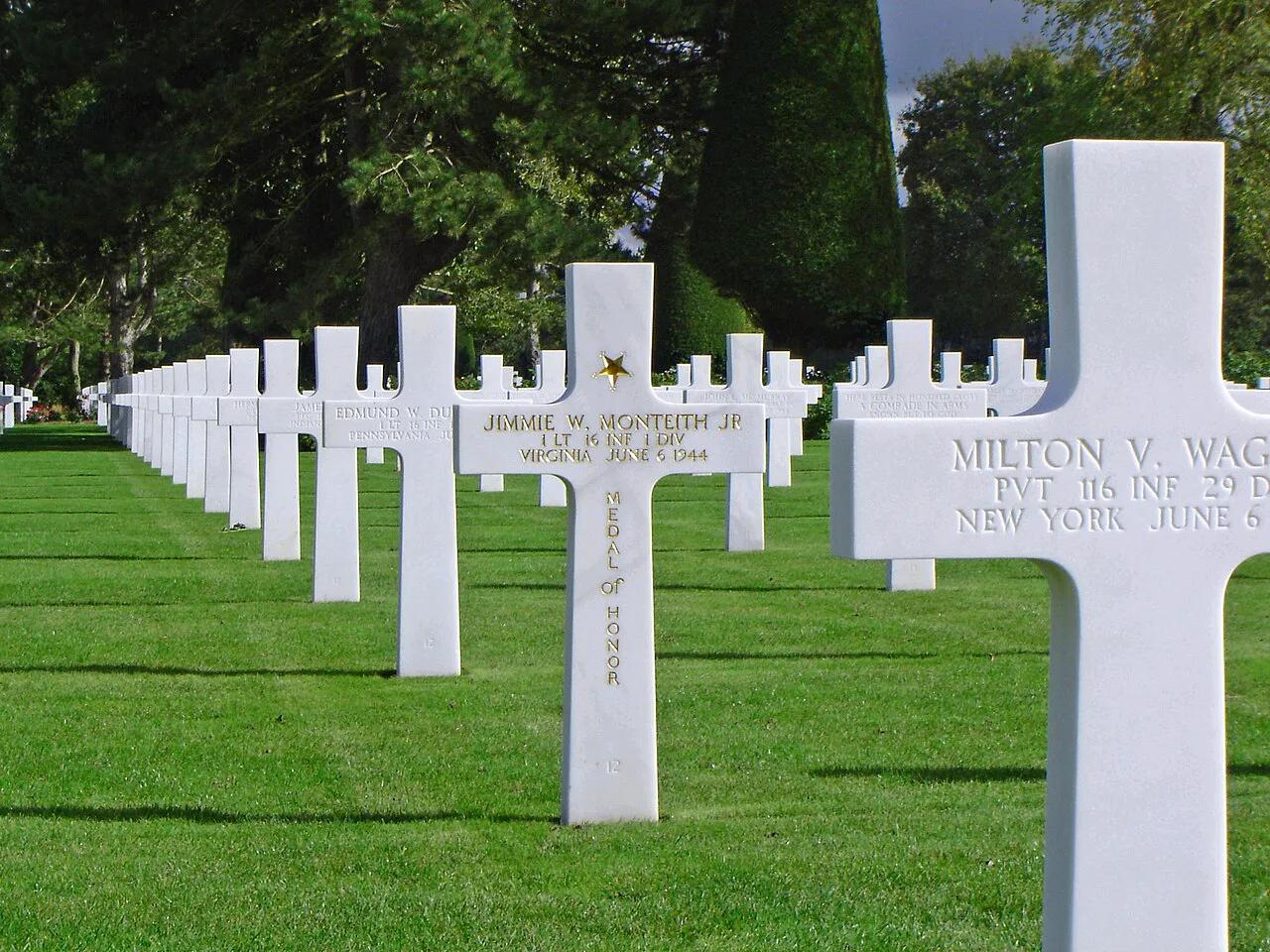
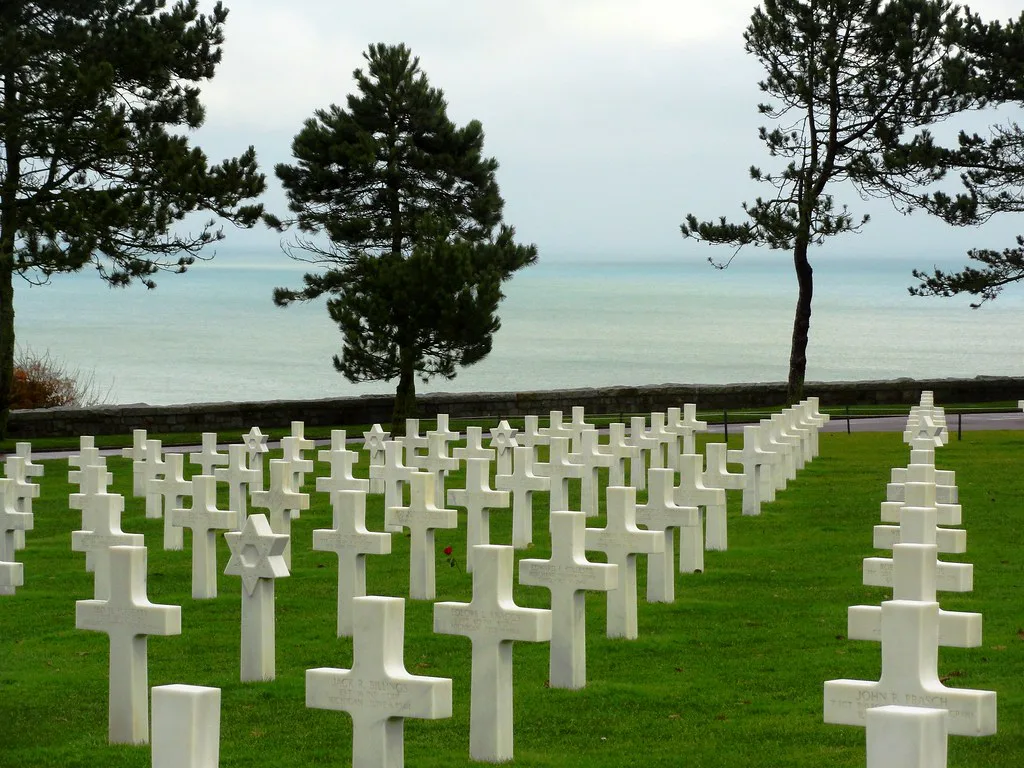
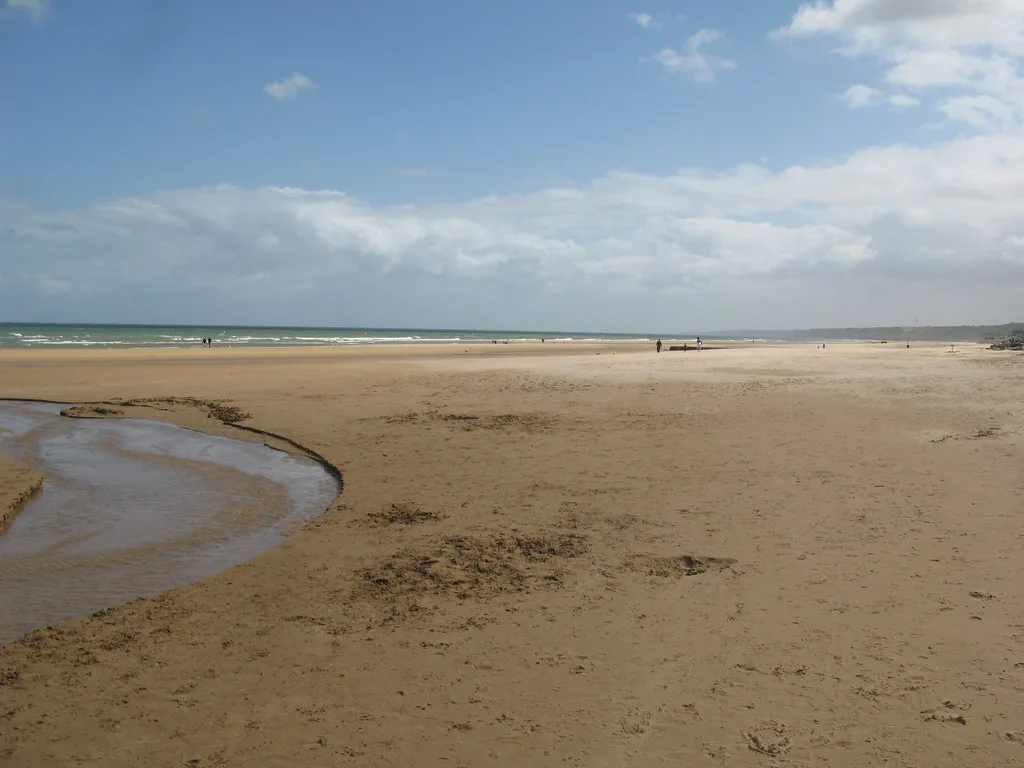
Rows of headstones make up most of the 9,389 gravesites across the 172.5-acre grounds. An overlook looks toward Omaha Beach below the cemetery, tying the burial ground to the landings. Stay on paths, do not step between graves and avoid leaning on headstones.
At the flagpoles, visitors gather to watch the American flags lowered and folded; confirm the timing on ABMC. Children are welcome if they understand this is a place for quiet.
How Long to Allow
These time estimates are editorial judgement, not sourced figures. A quick respectful visit of about 1 hour covers the memorial, statue and a walk past the graves. A fuller visit of 2 to 3 hours adds the visitor center, the Walls of the Missing and the overlook. Allow more if you are searching for a specific name, and less on a day with heavy crowds.
Plan 2 to 3 hours if you want the visitor center, Walls of the Missing and overlook, since a one-hour visit skips them.
Visitor Etiquette and Mistakes to Avoid
Dress simply and behave as you would in any cemetery. Photography and drone rules should be verified on ABMC before you carry equipment, because they are not confirmed here. Children are welcome when kept close and quiet.
Across 9,389 gravesites and 172.5 acres, looking up one name on ABMC before you arrive saves walking the rows blind.
- Mistakes to avoid
- Cramming the cemetery between beach stops and arriving with no time to walk the grounds.
- Arriving without checking the entry or reservation rules.
- Treating headstones or memorial walls as photo backdrops.
- Raising your voice near families at the Walls of the Missing.
- Assuming a tour's stop length matches your own needs.
Plan Your Day: Three Sample Routes
Pick the plan that matches your time and transport. Each trades depth at the cemetery against coverage of other sites.
| Plan | Best for | Time pressure | Transport | Who should skip or shorten |
|---|---|---|---|---|
| Cemetery only | Families and grave visits | Low | Car or tour | Skip if you want beach context |
| Cemetery plus Omaha Beach area | First-time visitors | Medium | Car or tour | Shorten if you have young children |
| Full D-Day day with other sites | History enthusiasts | High | Car or guided tour | Skip if you want a reflective visit |
Other Normandy War Cemeteries to Compare
Normandy holds cemeteries for several nations, and each serves a different purpose. Our overview of Normandy's war cemeteries compares them side by side.
- Commonwealth: Bayeux
- The Commonwealth cemetery in Bayeux is the closest to the common base town.
- German: La Cambe
- Readers who want the German perspective can visit the German war cemetery at La Cambe.
- Volksbund publishes general information on its cemeteries.
- Canadian: Bény-sur-Mer
- The Canadian cemetery at Bény-sur-Mer suits Canadian family interest.
- The Juno Beach Centre adds context.
- British and airborne: Ranville
- The Ranville cemetery for airborne troops suits British and airborne interests.
- Memorial Pegasus covers the same theme.
- End of the campaign: Mont-Ormel
- The Falaise Pocket memorial at Mont-Ormel marks the end of the campaign.
- See also the Mémorial de Montormel.
- Another American site: Brittany
- Travelers continuing west can visit the American cemetery in Brittany, a separate American site.
It is one of several American war cemeteries overseas; our overview of American cemeteries in Europe covers the others.
Frequently Asked Questions
How many US soldiers are buried in Normandy?
The Normandy American Cemetery has 9,389 gravesites. Other nations maintain their own cemeteries across Normandy, so that figure covers this site only.
Can you provide a list of American soldiers buried in Normandy?
ABMC maintains burial records for its cemeteries. Use the search tools on the ABMC Normandy page to look up a name before you travel.
Explore More Guides
Keep planning your trip with these guides.
Guides
- Normandy American Cemetery Visitor Center: Booking & Tips
- La Cambe German Cemetery: Visiting Guide, History and Tips
- Bayeux War Cemetery: Visiting Guide & Finding a Grave
- Bény-sur-Mer Canadian War Cemetery
- Ranville War Cemetery: Visiting the D-Day Airborne Cemetery
- Brittany American Cemetery: Visitor Guide & Location
- Normandy War Cemeteries: Which to Visit and How to Plan
- Mont Ormel Memorial: Visit Guide, Hours & Tips
Keep planning
Guides on the same trip