
La Cambe German Cemetery: Visiting Guide, History and Tips
Plan a visit to La Cambe German war cemetery in Normandy: what to expect, how it differs from Allied cemeteries, access and respectful-visit tips.
In this guide
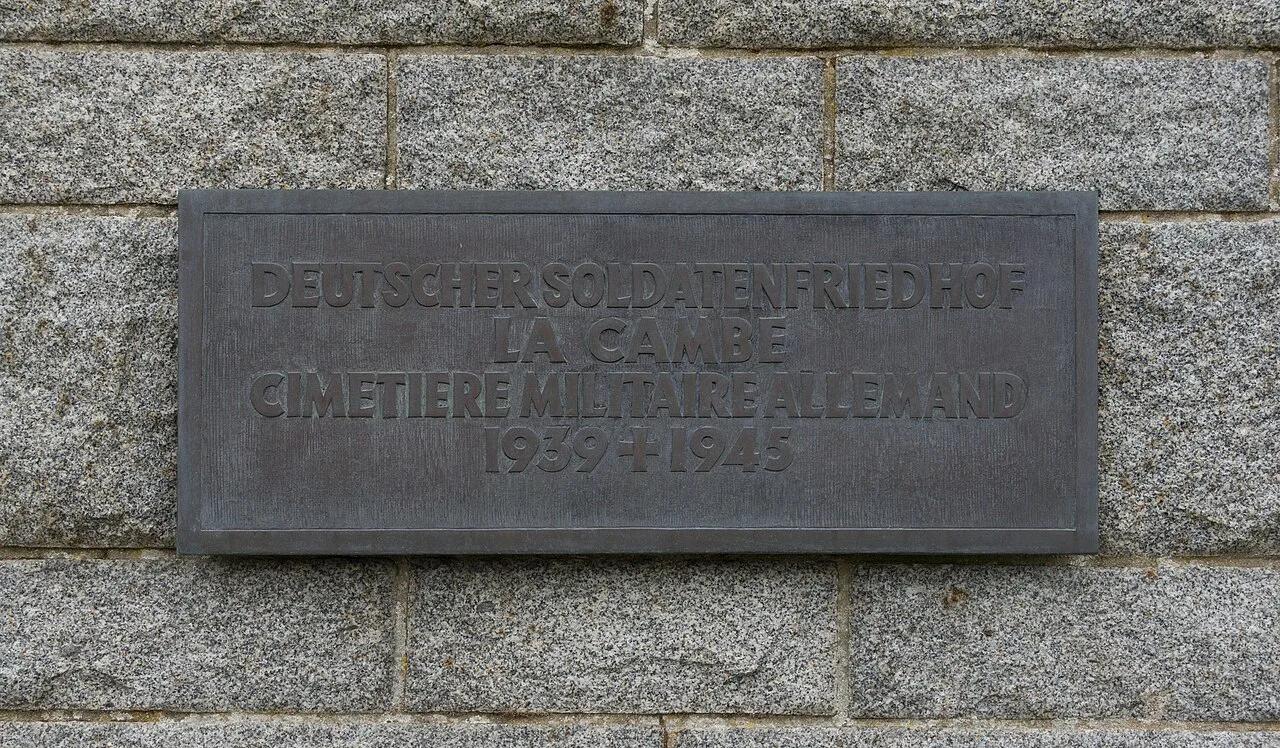
Last updated November 2026. La Cambe German cemetery is a war cemetery for German soldiers near Isigny-sur-Mer and Bayeux, and the Volksbund Deutsche Kriegsgräberfürsorge maintains it. It holds the graves of 21,160 German soldiers and sits quietly apart from the interpretive sites along the landing coast. Our guide covers its history, the layout, how it compares with the Allied graves in the Normandy War Cemeteries: Which to Visit and How to Plan, and how to fit a visit into a D-Day day.
Featured image: Jebulon, CC0, via Wikimedia Commons.
La Cambe German Cemetery at a Glance
La Cambe is a German war cemetery, not a monument to a regime. Its 21,160 graves hold soldiers who died in the Normandy fighting, many of them conscripts. The Volksbund, the German War Graves Commission, cares for the site. Entry cost and opening hours are published by the operator, so read the current details on the Volksbund site before you set out.
- Location: near the village of La Cambe, between Isigny-sur-Mer and Bayeux
- Operator: Volksbund Deutsche Kriegsgräberfürsorge
- Burials: 21,160 German soldiers
- Hours and entry: see the Volksbund's official page for La Cambe
History and Why It Looks Different
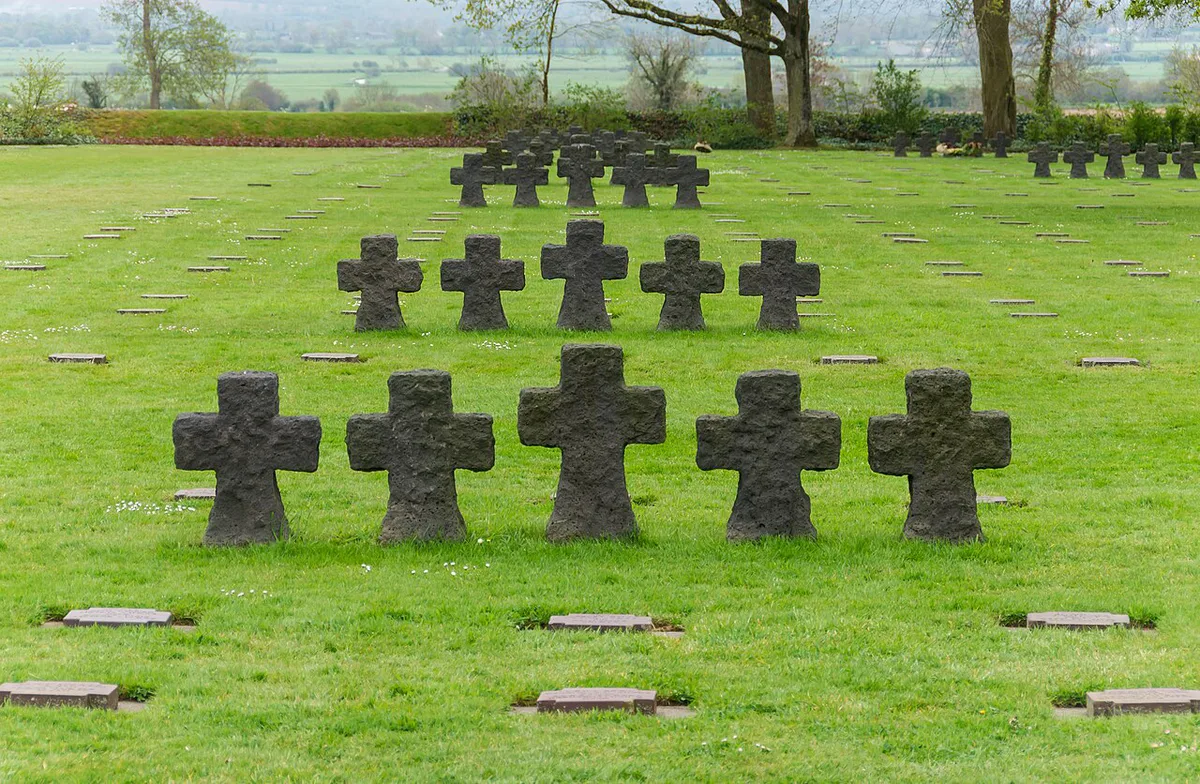
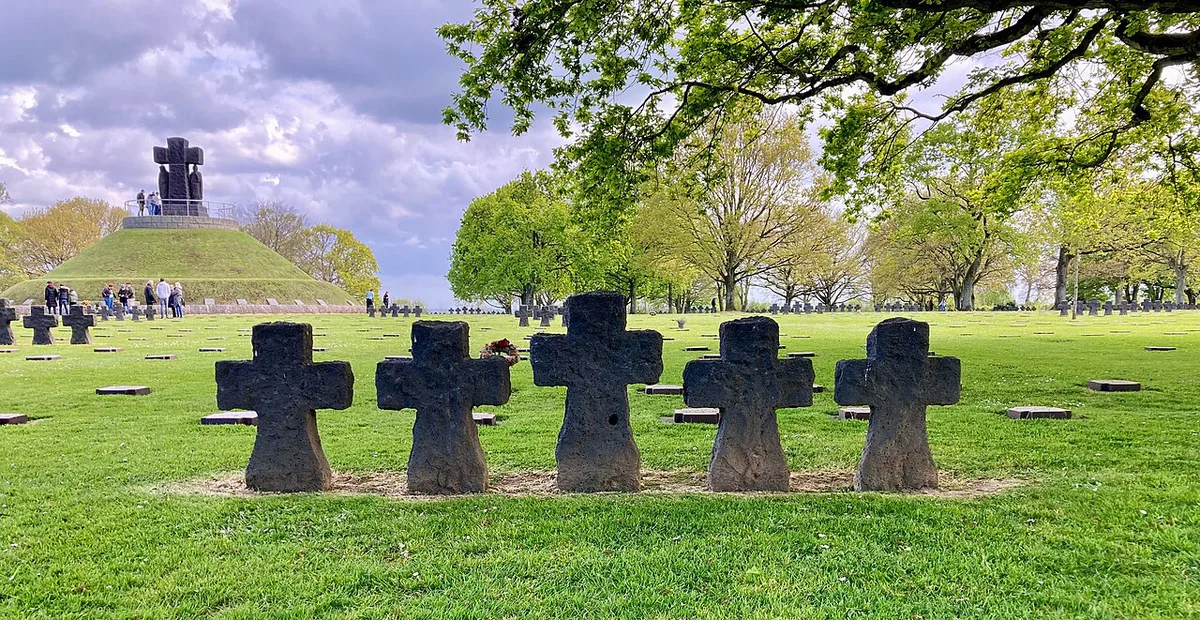
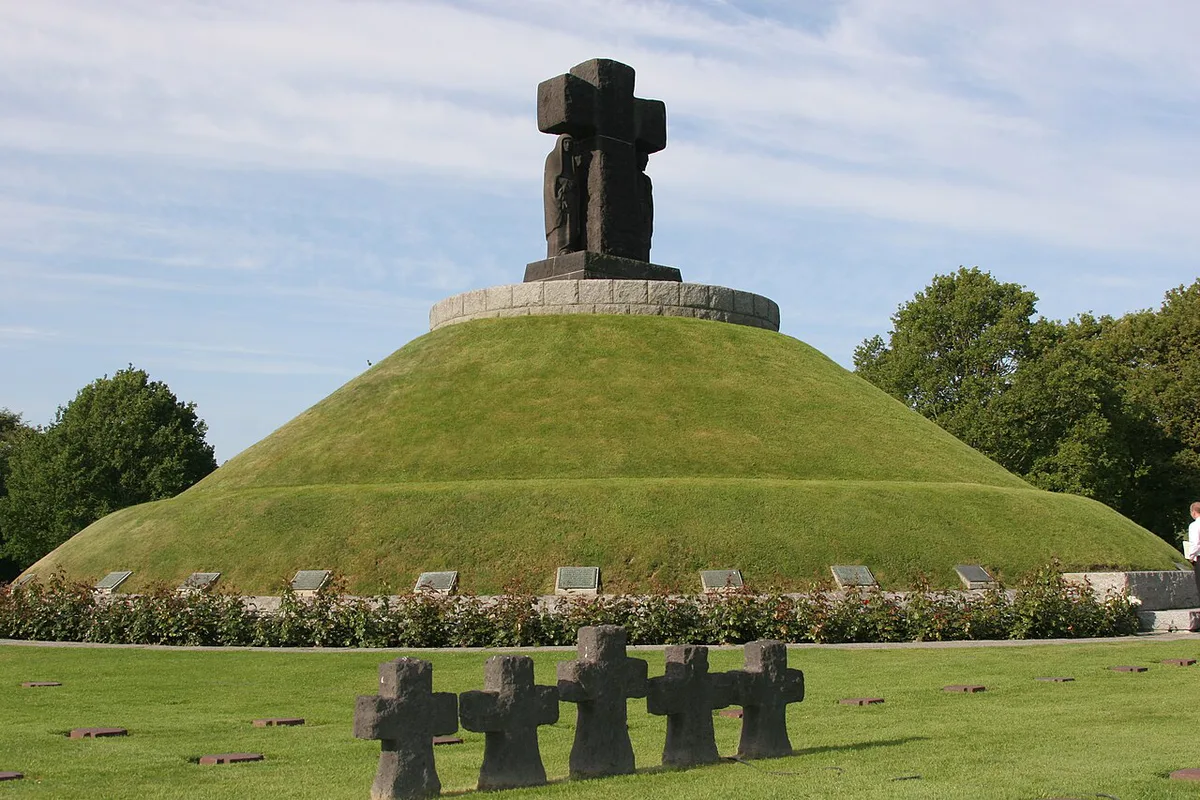
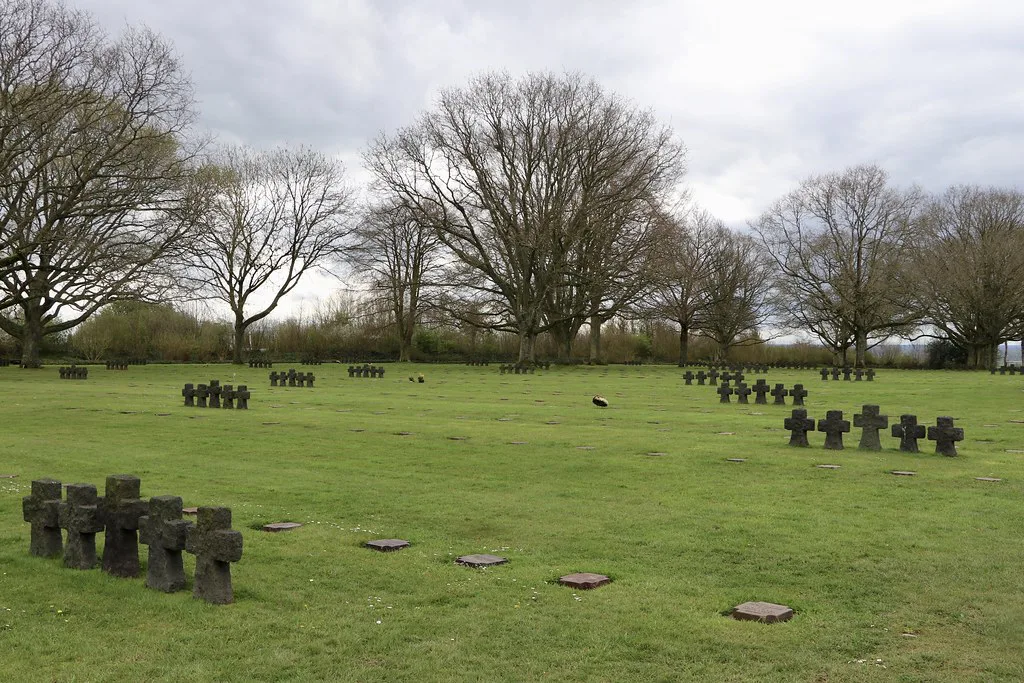
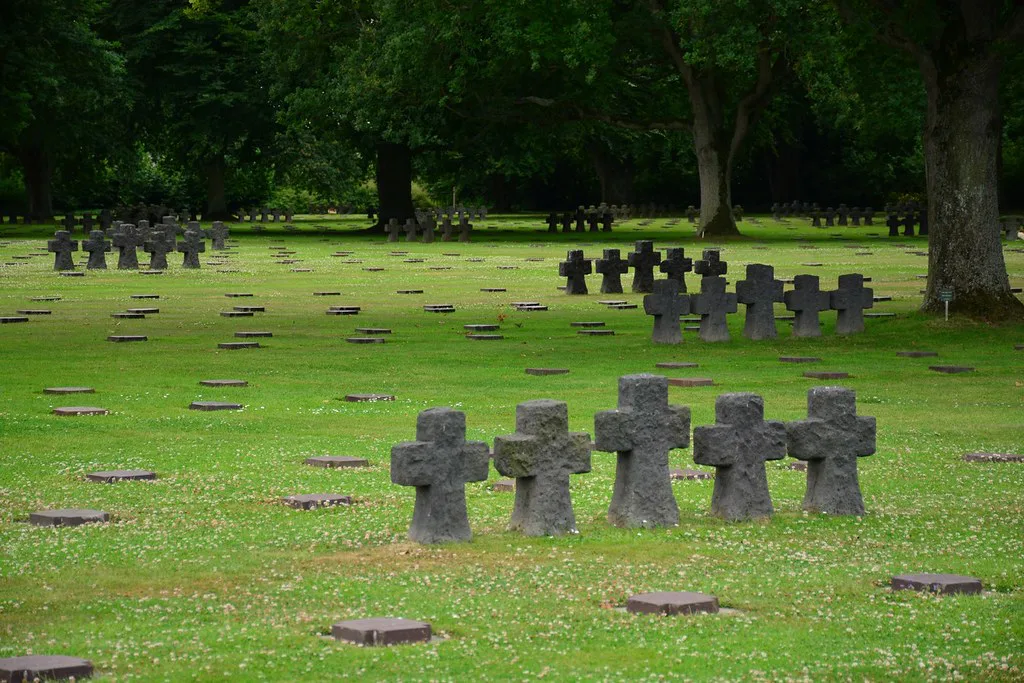
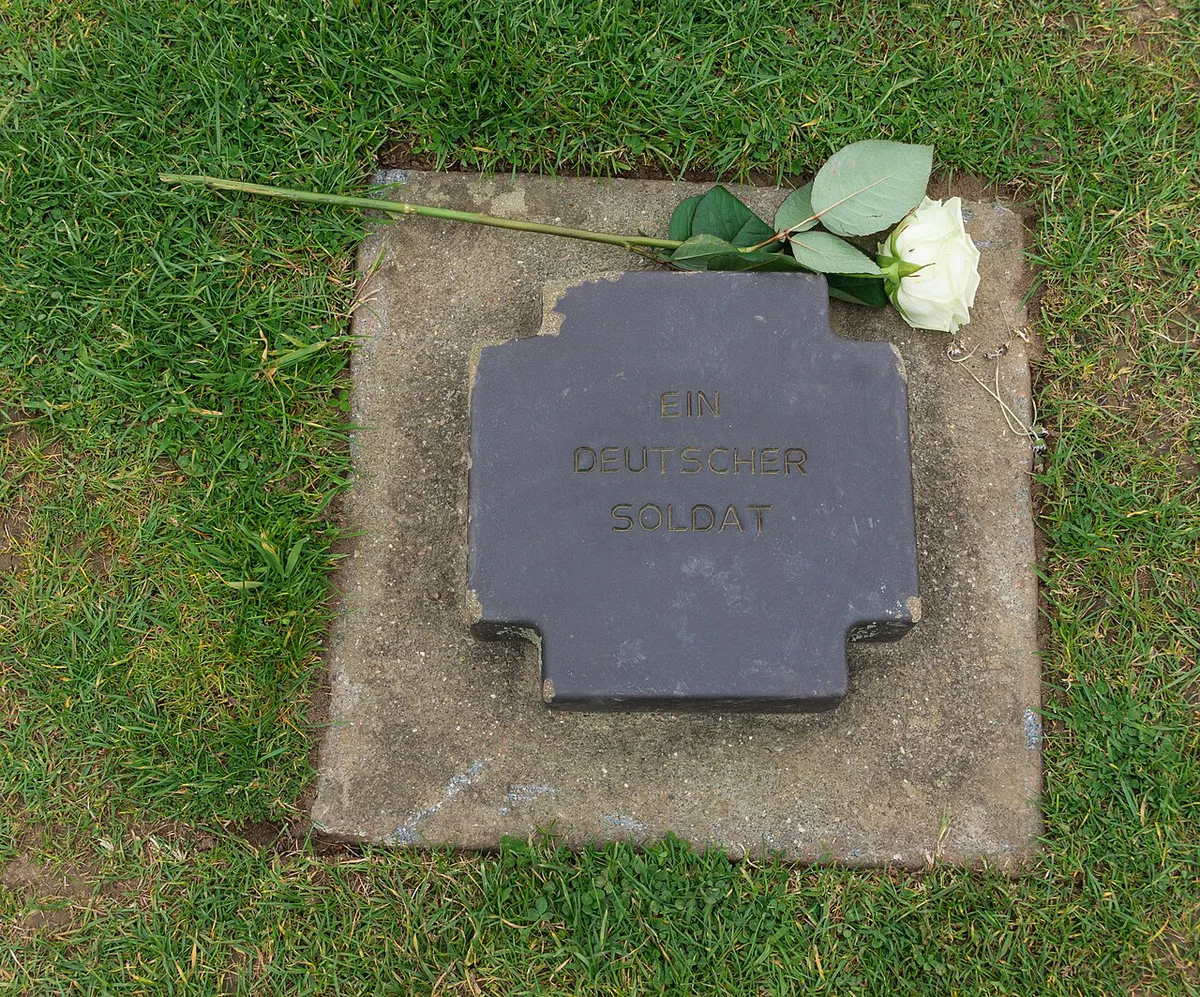
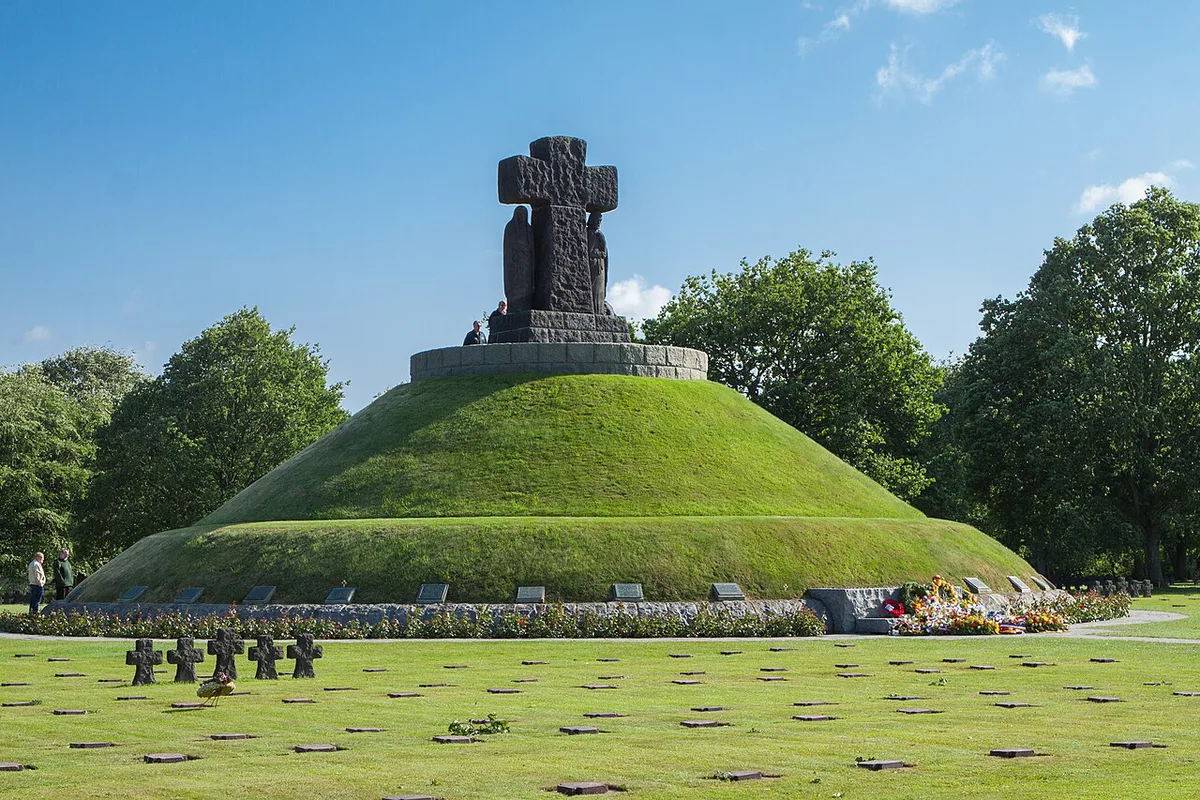
The burial ground began as a makeshift site used in 1944, and local accounts say both German and US troops buried their dead there. Permanent landscaping and reburial work followed in the 1950s. Today the plan is deliberately plain. Maple trees shade the grass, and 49 squares each carry five dark stone crosses, with flat tiles marking further remains. A cross on the hill carries the German words "Gott hat das letzte Wort", meaning "God has the last word". Sources differ on whether the crosses are basalt or lava, so this guide calls them dark stone.
What You'll See and How Long to Allow
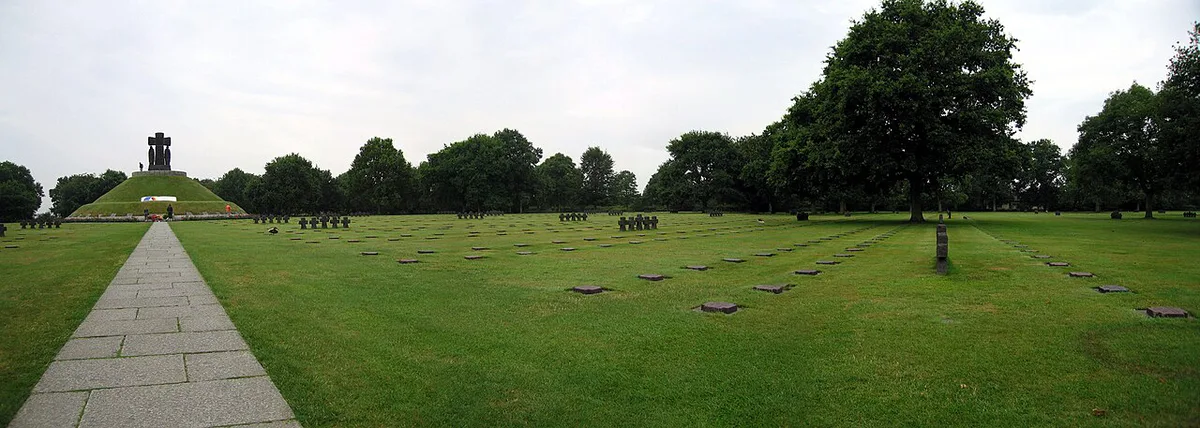
Start at the entrance and walk the grass paths between the squares before climbing the hill. Read the names on the tiles and crosses slowly. Then look back over the grounds from the hill cross. Most visitors need under an hour for a quiet walk, which is our editorial estimate rather than an official figure. Expect no tanks, weapons or battle maps. The focus stays on grief and reconciliation, which makes La Cambe a contrast to sites with large exhibitions.
The Central Mound, Information Centre and Peace Garden
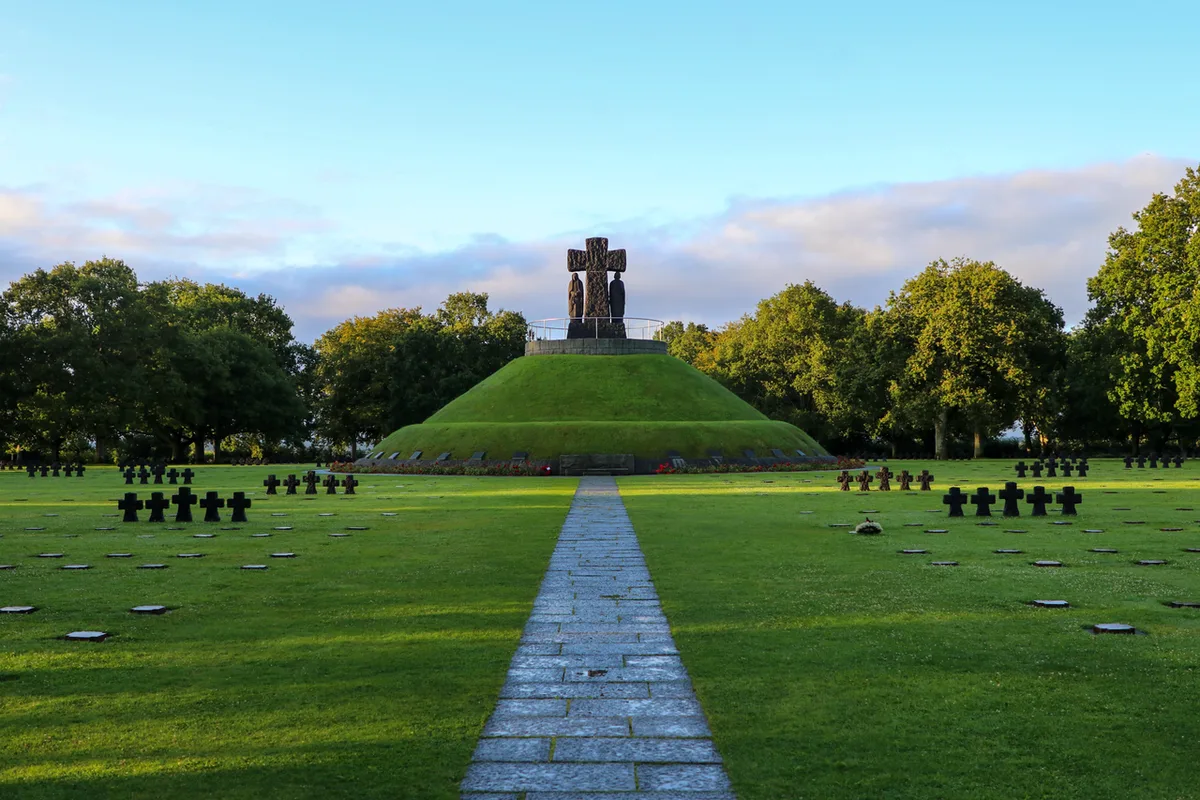
The large grassed mound in the middle of the cemetery is also a grave. It holds the remains of 296 soldiers, both identified and unknown, and the tall dark cross on top is flanked by two standing figures. If you climb it, use the steps and remember that you are standing on a burial place.
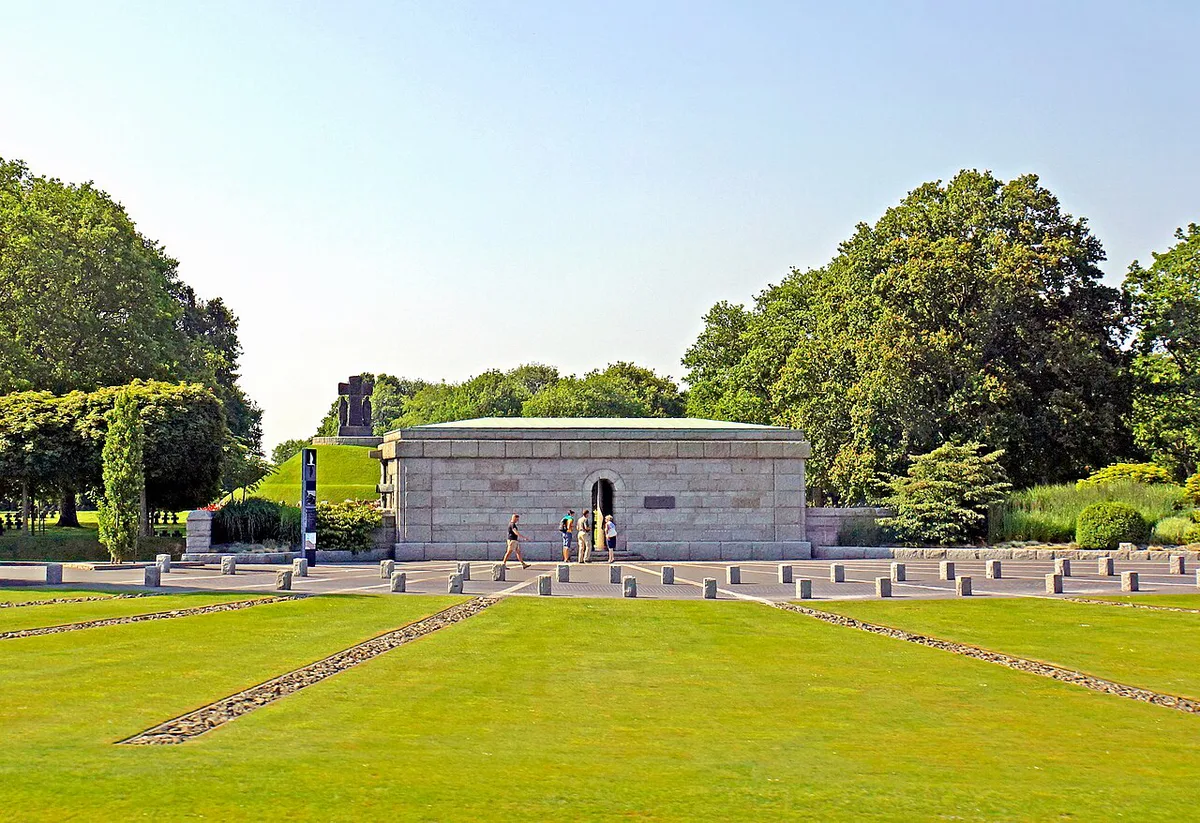
Near the entrance, the Volksbund has an information centre. It is modest beside the large visitor center at Colleville, but it gives useful background on war graves, individual lives and the organisation's peace work. See it before your walk if you want context, or afterwards if you would rather see the graves first. Check its current opening times separately before you travel, and don't assume they match access to the burial ground.
Also leave a few minutes for the Peace Garden (Friedensgarten) beside the cemetery. About 1,200 maples were planted for this living memorial, which links remembrance of the dead with a wish for reconciliation. These trees are a separate feature from the burial squares.
La Cambe is one part of the Volksbund's work outside Germany. If your travels take you elsewhere, our guides to the German war cemetery at Sandweiler in Luxembourg and the German cemetery at Maleme on Crete cover two other German burial grounds.
How It Compares With the Allied Cemeteries
Allied cemeteries in Normandy use white headstones and open lawns, and several have visitor centers. La Cambe is darker and more enclosed, with low crosses under trees. Use the table to choose which stops suit your day.
| Cemetery | Who is buried | Feel and interpretation |
|---|---|---|
| La Cambe | German soldiers, 21,160 graves | Wooded, dark stone crosses, little interpretation |
| Colleville-sur-Mer | American service members | Open lawns, large visitor center |
| Bayeux | British and Commonwealth soldiers | Town setting, traditional headstones |
| Bény-sur-Mer | Canadian soldiers | Smaller, close to Juno Beach sites |
Getting There, Parking and Opening Hours
La Cambe lies near the main road between Isigny-sur-Mer and Bayeux, so a car is the simplest way to reach it. Tours of the landing sites sometimes include a stop. Check the operator before relying on public transport, because no timetable is confirmed for this site. Parking, accessibility and seasonal hours are listed on the Volksbund site, and Normandy Tourism covers regional logistics.
Fitting It Into a D-Day Day Trip
La Cambe works well as a quiet stop between the beach sites. Many itineraries pair it with the American cemetery at Colleville. Read the history there first if you want interpretation, and the Colleville visitor center adds exhibits that La Cambe lacks. On the Commonwealth side, add Bayeux War Cemetery: Visiting Guide & Finding a Grave. Eastern routes can include the Canadian cemetery at Bény-sur-Mer or Ranville War Cemetery: Visiting the D-Day Airborne Cemetery. Skip La Cambe only if time is tight and you want exhibitions rather than reflection. Take drive times from a mapped route for your own start point.
Even with 21,160 graves, most visitors spend under an hour, an editorial estimate, so it fits a packed D-Day day.
Finding a Grave and Understanding Who Lies Here
If you are looking for a relative, search before you leave home. The Volksbund website offers an online grave search (Gräbersuche online) for German war dead.
- Start with the surname and add other details, such as the first name or date of birth, to separate people with similar names.
- Try alternative spellings, especially for names with umlauts or ß.
- Save the full burial reference, including the block, row and grave number where given. Take a screenshot in case your phone signal is weak.
- Contact the Volksbund if a record is unclear or you can't find the person. Don't assume that every German soldier who died in Normandy is buried at La Cambe.
At the cemetery, match the block first, then the row and grave number. The markers lie flat, so allow extra time and clear leaves gently only where needed to read a plaque, following any site rules.
Visitors also ask about wartime records. The dead include members of the Waffen-SS as well as other German forces. Among them is Michael Wittmann, a tank commander often singled out in military history writing. Adolf Diekmann is also buried here. He was the SS officer commanding the troops who carried out the Oradour-sur-Glane massacre of French civilians. A war grave is not an honour or a verdict of innocence. The presence of conscripts and young soldiers does not erase the crimes committed by others, so avoid treating any grave here as a place of celebration.
Visiting Respectfully
Treat La Cambe as a grave site. Speak quietly, stay on the paths and keep to the operator's published rules. Dress simply and avoid loud or playful behavior. Children are welcome when they understand it is a burial ground. Photography is usually accepted for personal use, but never photograph other visitors who are grieving.
- Walk, do not run, between the squares
- Keep phones silent and voices low
- Leave nothing behind, and do not touch the graves
Frequently Asked Questions
What does Volksbund mean?
Volksbund Deutsche Kriegsgräberfürsorge is the German War Graves Commission. It is a charity that cares for German war graves abroad, including La Cambe.
Where are German WWII soldiers buried in Normandy?
La Cambe holds 21,160 German soldiers. The Volksbund also manages other German war cemeteries in France, and its site lists them.
Where are the British soldiers buried in Normandy?
Many lie in Bayeux War Cemetery: Visiting Guide & Finding a Grave. Others rest at Ranville and in smaller local plots.
Keep planning
Guides on the same trip






