German War Cemeteries: Visiting, Finding Graves, Etiquette
Visit German war cemeteries respectfully: how they differ from Allied sites, how to search the Volksbund grave database, and what to plan before you go.
In this guide
Last updated November 2026: German war cemeteries are mostly cared for by the Volksbund Deutsche Kriegsgräberfürsorge, and many are open to visitors. This guide covers two senses of the term. One is cemeteries inside Germany, and the other is German military cemeteries abroad, such as those in the Artois area of northern France. For wider routes, start at our WWII sites in Germany hub.
Featured image: Wernervc, CC BY-SA 4.0, via Wikimedia Commons.
German War Cemeteries: What They Are and Who Maintains Them
The Volksbund, often shortened to VDK, was created by veterans of the Great War. Its motto is "Versöhnung über den Gräbern", which means reconciliation beyond the graves. It commemorates the dead of both world wars and the victims of tyranny. Its own grave database acknowledges that inconceivable crimes were committed by German politics and warfare, especially during the Second World War. Those buried include conscripts and men who served a criminal regime. Visit with that in mind. The cemeteries are places of mourning and documentation, not monuments to a cause.
How to Find a Grave Before You Go
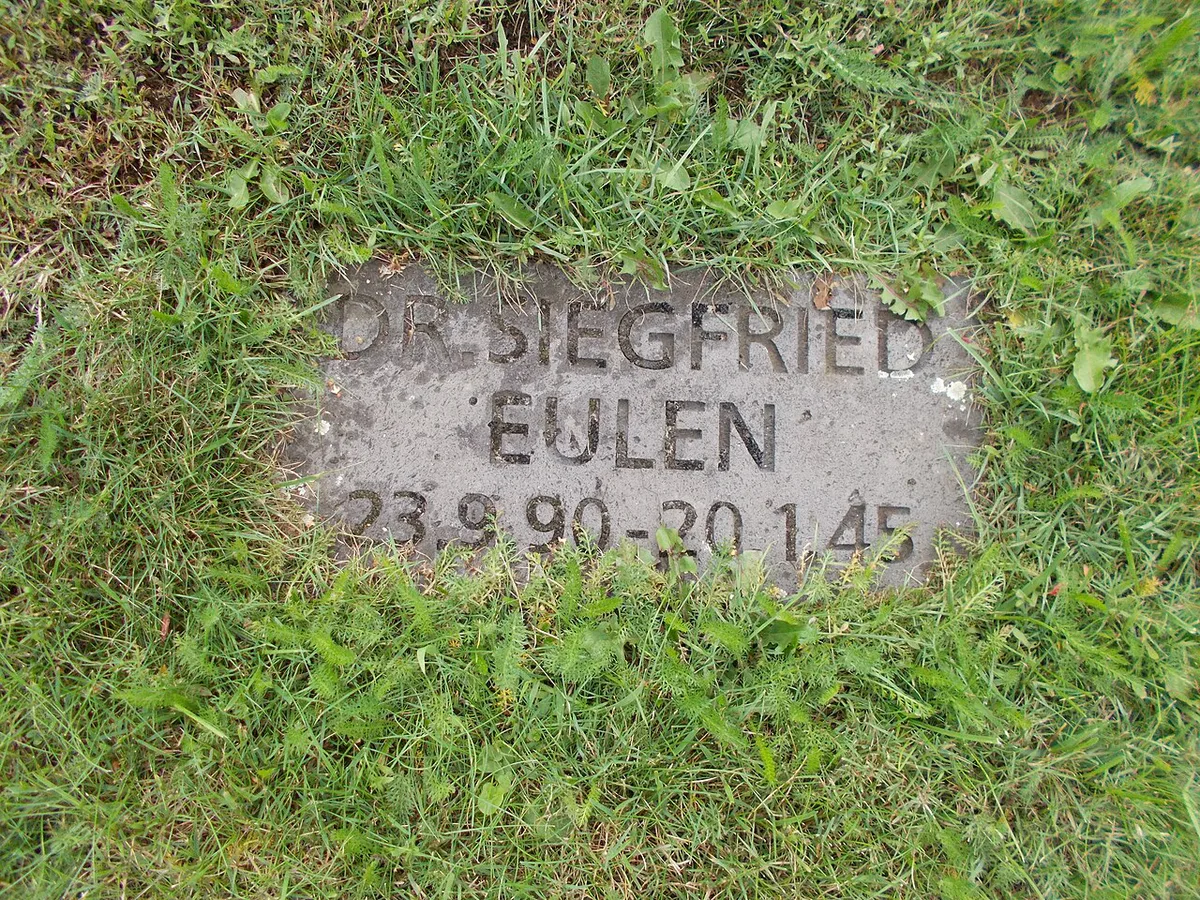
If you are searching for a relative, use the Volksbund grave search before booking anything. It lists more than five million German war dead and missing from both world wars. Gather the full name, the birth date or birthplace, and the unit if you know it. The place of birth is not recorded for every casualty, so results can be incomplete. Data collection is also unfinished, and roughly 450,000 more names are expected in the next few years. If your person is not listed yet, the site offers a search form for people not yet recorded. Note the cemetery name and plot details from any result, because small sites can be hard to locate on arrival.
What You Will See: Crosses, Stelae, and Comrades' Graves
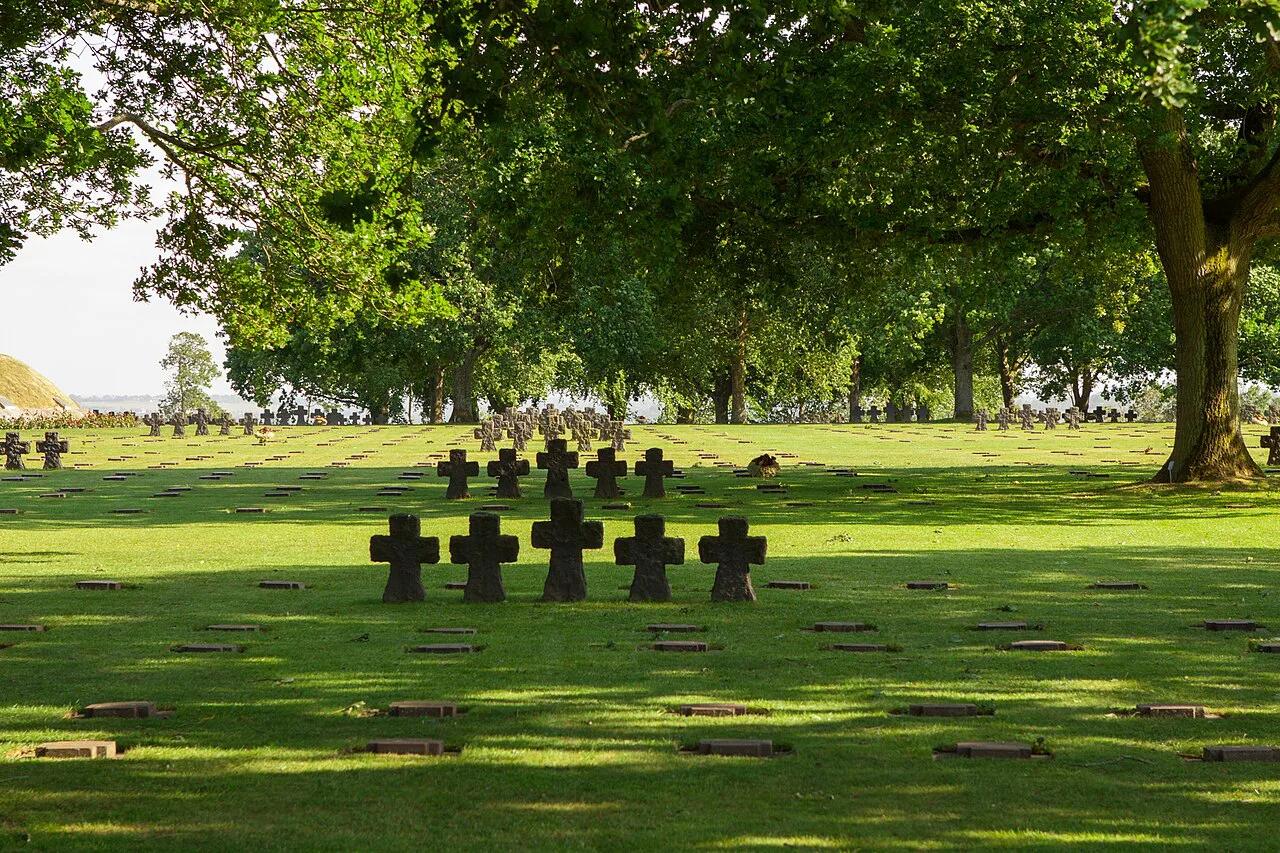
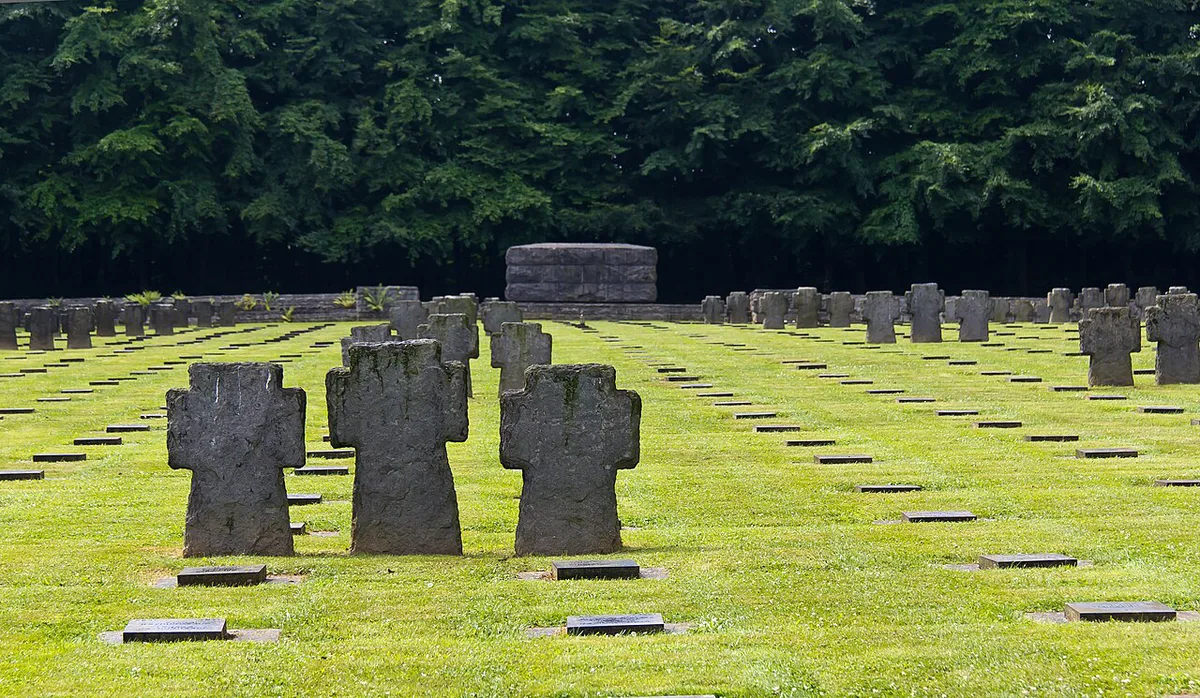
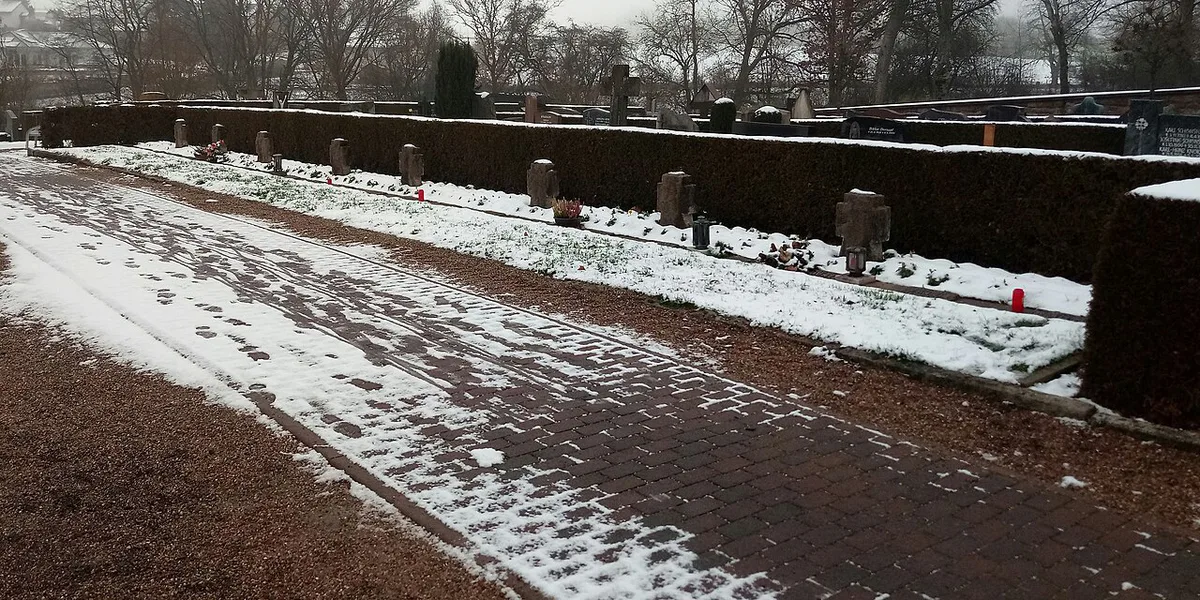
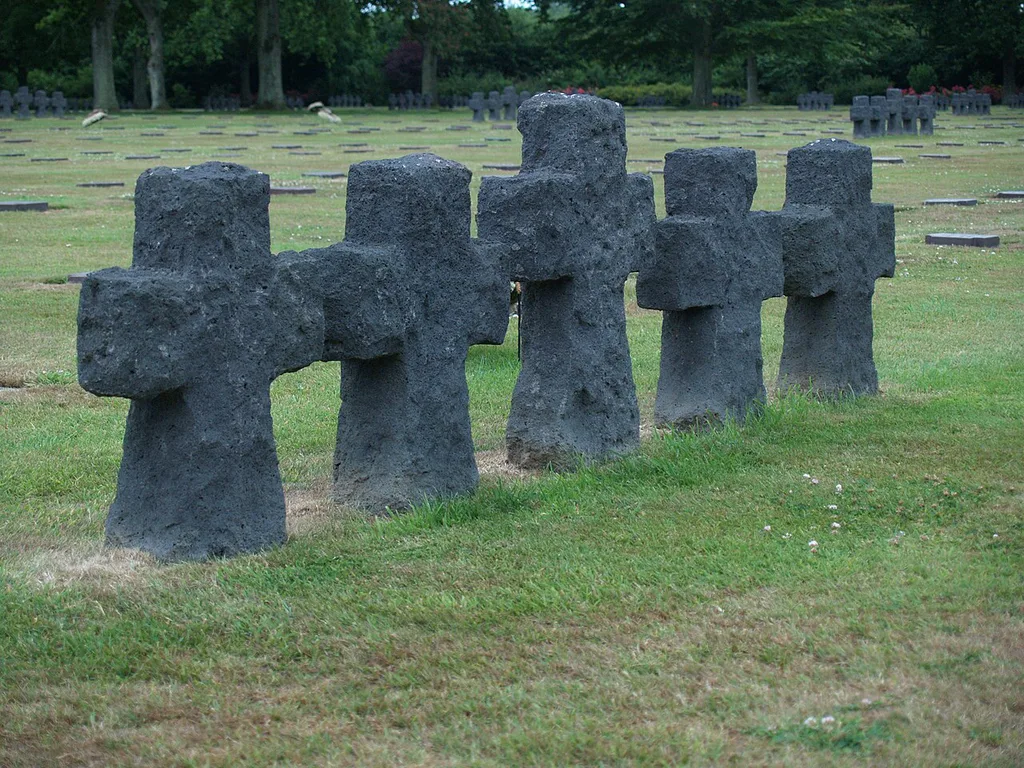
German military cemeteries are often wooded, with large trees among the graves. Markers vary by location. Christian soldiers are marked with crosses of black metal or of white or pink sandstone. Stelae carrying the Star of David stand between them for Jewish soldiers. Some cemeteries also hold Kameradengräber, or comrades' graves, where mostly unidentified soldiers were buried together. Examples in the Artois area of France include Neuville-Saint-Vaast and Saint-Laurent-Blangy. Layouts differ from the long white rows typical of American cemeteries abroad, which the American Battle Monuments Commission maintains. Treat the comparison as a difference in design, not in dignity.
Major German Military Cemeteries Abroad, Country by Country
If you are planning a trip outside Germany, these sites are useful starting points. They differ widely in period, setting and scale. Burial figures are rounded.
| Cemetery | Country and area | War | Approximate German burials |
|---|---|---|---|
| Neuville-Saint-Vaast | France, near Arras | First World War | More than 44,000 |
| Langemark | Belgium, near Ypres | First World War | More than 44,000 |
| Vladslo | Belgium, near Diksmuide | First World War | More than 25,000 |
| La Cambe | France, Normandy | Second World War | More than 21,000 |
| Ysselsteyn | Netherlands, Limburg | Mainly Second World War | More than 31,000 |
| Sandweiler | Luxembourg, near Luxembourg City | Second World War | More than 10,000 |
| Futa Pass | Italy, Apennines between Florence and Bologna | Second World War | More than 30,000 |
| Maleme | Greece, western Crete | Second World War | Nearly 4,500 |
| Cannock Chase | England, Staffordshire | Both world wars | About 5,000 |
At Vladslo, look for Käthe Kollwitz's sculpture The Grieving Parents. Her son Peter, killed in 1914, is buried there. At Langemark, a large comrades' grave holds many of the dead together, so a relative's name may appear on a memorial panel and not on an individual marker.
For the Second World War sites, our guides to La Cambe German cemetery in Normandy and Maleme German cemetery on Crete can help you plan those visits. Elsewhere, check the Volksbund's page for the individual cemetery to confirm access and directions.
Which Cemetery Visit Fits You?
Your purpose, location and transport decide the shape of the day. As a planning estimate, allow 30 to 60 minutes for a single cemetery. A battlefield route with museums can fill a full day.
| Your purpose | Where to look | Transport | Time budget |
|---|---|---|---|
| Visiting a specific grave | Volksbund grave search, then the named cemetery | Rural sites often need a car; check access first | 30-60 minutes |
| General remembrance in Germany | A cemetery near a battlefield or city you are already visiting | Often reachable with a short local trip | 30-60 minutes |
| Remembrance abroad | German cemeteries in northern France, such as Neuville-Saint-Vaast | A car is usually easier in rural Artois | Half day with a nearby WWI site |
| Historical study | Cemetery plus battlefield and museum | Plan the route in advance | Full day |
German War Graves Inside Germany: Places With Context
War graves in Germany range from separate military cemeteries to plots within ordinary municipal and church graveyards. Under the German War Graves Act (Gräbergesetz), protected graves also include many victims of tyranny. Public authorities carry responsibility for these graves, so the local municipality is often the practical contact for access questions.
Vossenack, Hürtgen Forest
The military cemetery at Vossenack, in the northern Eifel, holds more than 2,000 war dead. It sits in a landscape fought over in the autumn and winter of 1944-45. Field Marshal Walter Model is among those buried there. A car makes it much easier to combine the cemetery with other places in the forest.
Halbe Forest Cemetery, Brandenburg
Waldfriedhof Halbe, south of Berlin, is one of the largest war cemeteries in Germany, with more than 20,000 burials. Many died in the Halbe pocket in April 1945. The grounds also hold other groups, including civilians, forced labourers and people who died in the Soviet special camp at Ketschendorf. Many of the dead remain unidentified.
Kolmeshöhe, Bitburg
This cemetery became internationally known in 1985, when US President Ronald Reagan visited with Chancellor Helmut Kohl. The visit caused strong protest because members of the Waffen-SS are among the dead. It shows why a German war grave site should be read with its history, including who is buried there and how it has been commemorated.
Before visiting any of these places, look for information boards or local documentation, and allow extra time if you want to read them. The names and dates on the graves alone do not explain what individuals did during the war.
Visiting Etiquette and What to Avoid
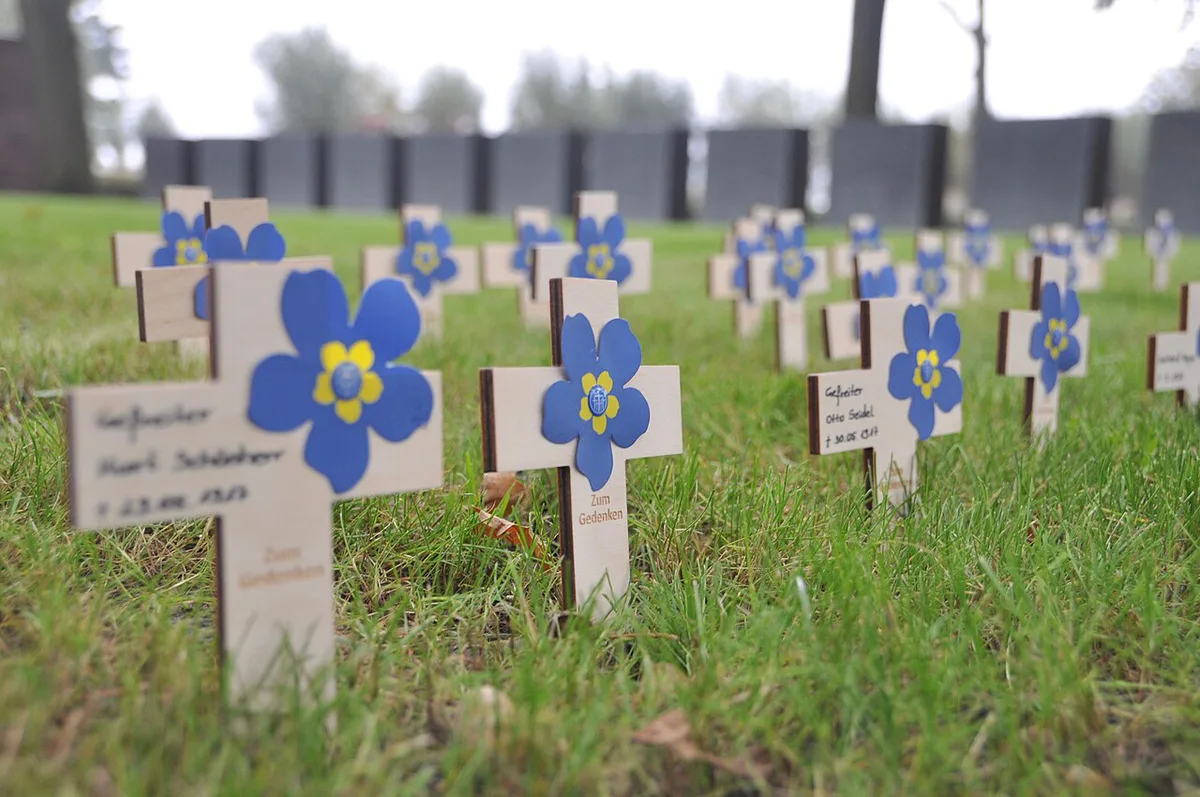
Treat every cemetery as a working place of mourning. Keep your voice low and stay on paths. Ask before photographing other visitors who are paying respects. Where a cemetery posts its own rules, follow them. The Volksbund is the place to check for any published visitor rules. Avoid any gesture or caption that could read as glorifying the regime the dead served.
- Do not picnic, play music or let children run between graves.
- Do not photograph mourners or post images of named graves without thought.
- Do not step on graves or move flowers and markers.
- Do not read the wooded setting as a romantic story about warriors; that is an interpretation, not a fact.
- Do not use cemetery photos as props for political symbols.
Costs, Opening Hours, and Getting There
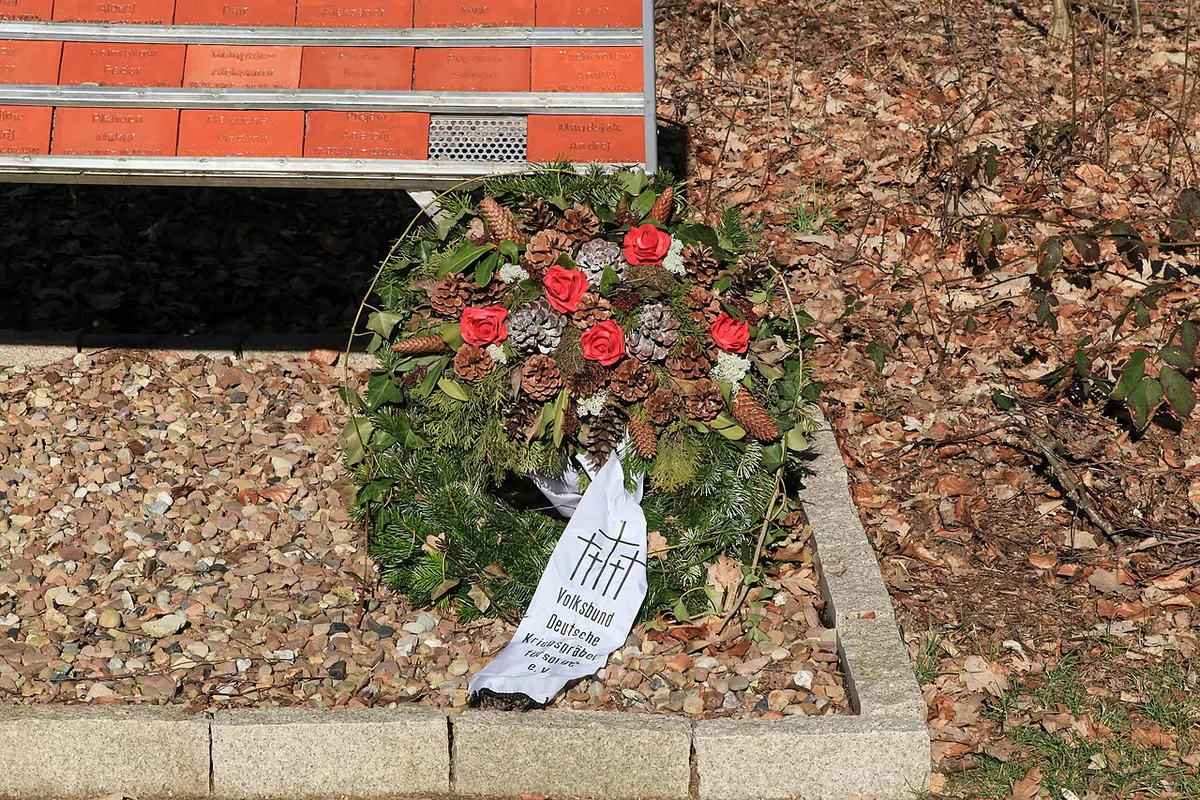
Cemetery visits are normally free to enter, but the rule can differ by site. Opening hours, parking and public transport are not the same everywhere. Rural cemeteries may lack toilets, cafés or marked car parks. Check the Volksbund page or the local municipality before you set out. Lodging is best found in the nearest town, not at the cemetery.
Pairing a Cemetery Visit With WWII Sites in Germany
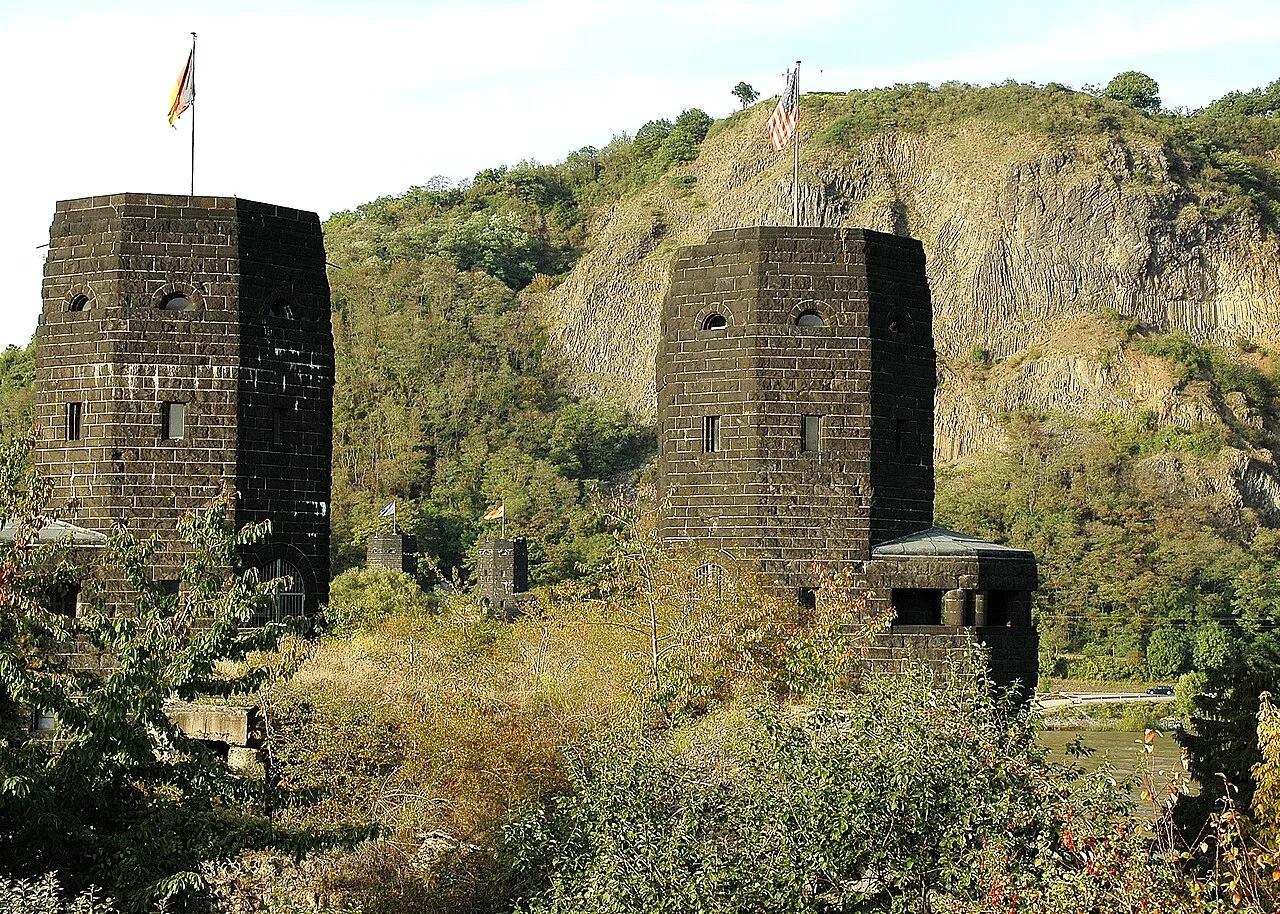
A cemetery stop works best beside a site that explains the fighting. The Vossenack cemetery sits within the area covered by our Hürtgen Forest battlefield guide. In the east, Seelow Heights: Visit the 1945 Battlefield from Berlin gives context for the 1945 fighting near Berlin. On the Rhine, the Remagen bridge site suits a shorter day. Defensive lines are covered in our Siegfried Line guide. For city history, see Hamburg's WWII sites or Dresden's wartime history.
Keep planning
Guides on the same trip