Hamburg WW2 Sites: Flak Tower, Memorials & What's Worth Visiting
Which WW2 sites in Hamburg can you actually visit? A practical guide to the flak tower, the St. Nikolai ruins and Neuengamme, with planning tips.
In this guide
Last updated November 2026. Hamburg WW2 sites fall into three groups: a concrete flak tower at Heiligengeistfeld, the ruined St. Nikolai church, and the Neuengamme concentration camp memorial. Each asks something different of you, so this guide says what you see at each one and who should skip it. It also sits inside our wider Germany WW2 sites guide for anyone building a longer route.
Featured image: Dietmar Rabich, CC BY-SA 4.0, via Wikimedia Commons.
Hamburg WW2 Sites at a Glance
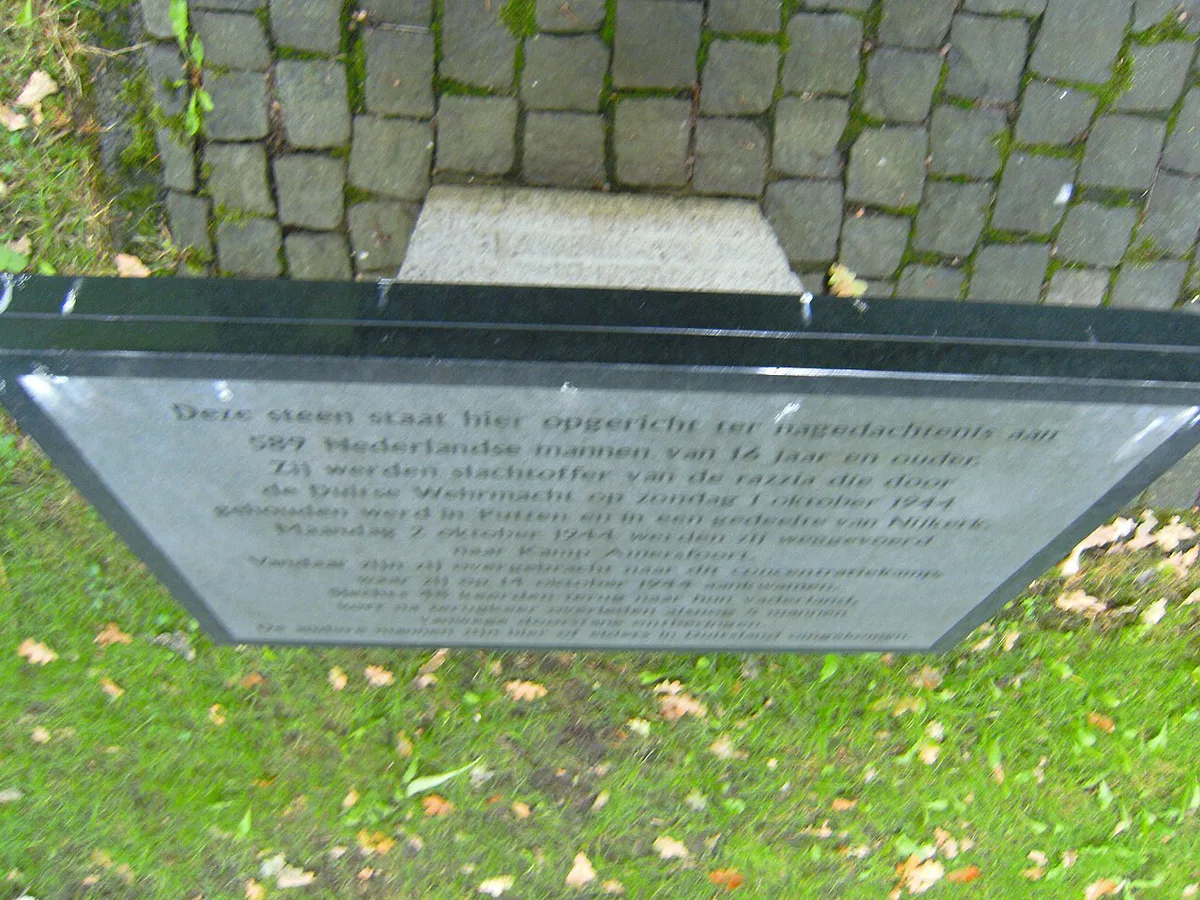
Hamburg was heavily bombed in 1943, and little of the wartime city survives intact. What remains is a small number of deliberate survivors and memorials. None of them is a Berlin-scale museum experience, so set expectations accordingly. Choose by interest: military architecture, the story of the bombing, or remembrance of camp victims.
| Site | Type | What you actually see | Best for |
|---|---|---|---|
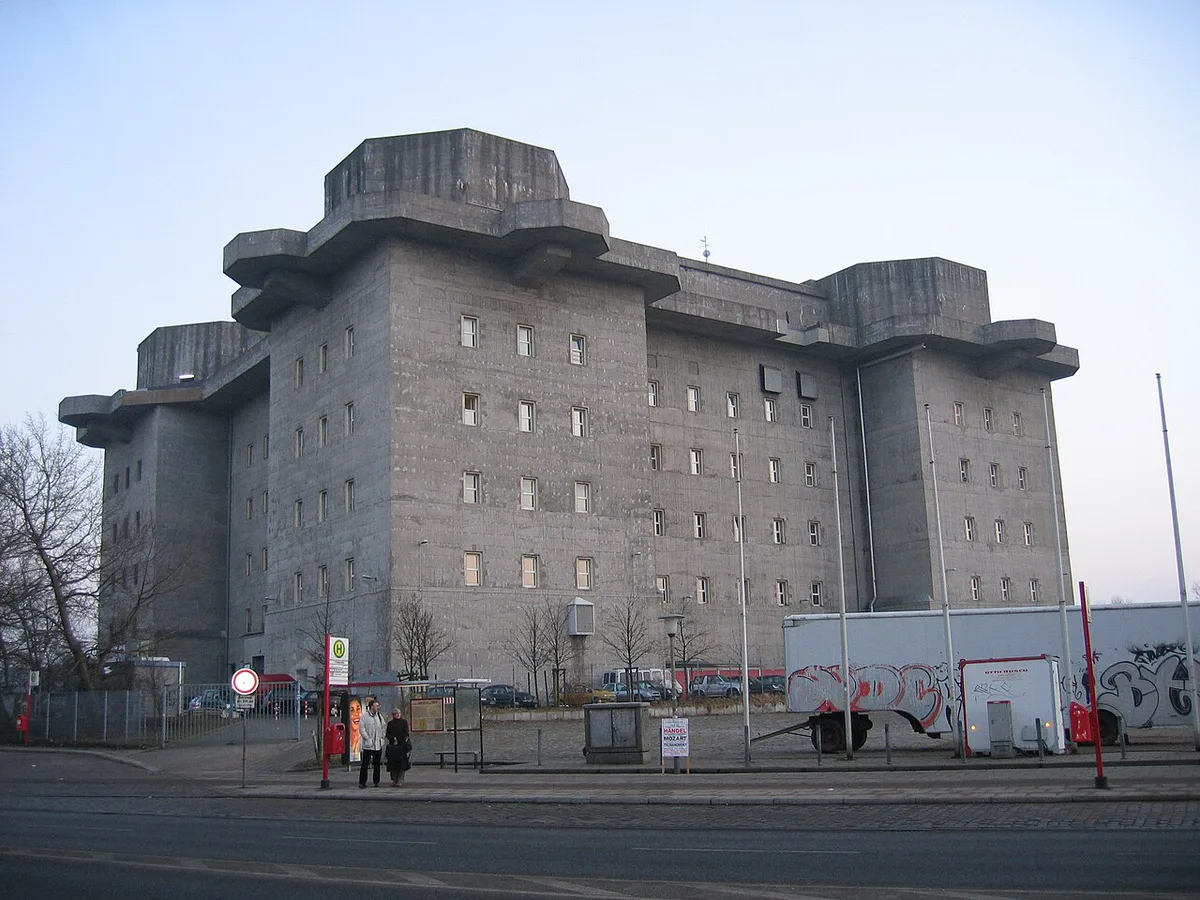
| Hochbunker, Heiligengeistfeld | Flak tower | A large concrete tower seen from street level | Military architecture, short stops |
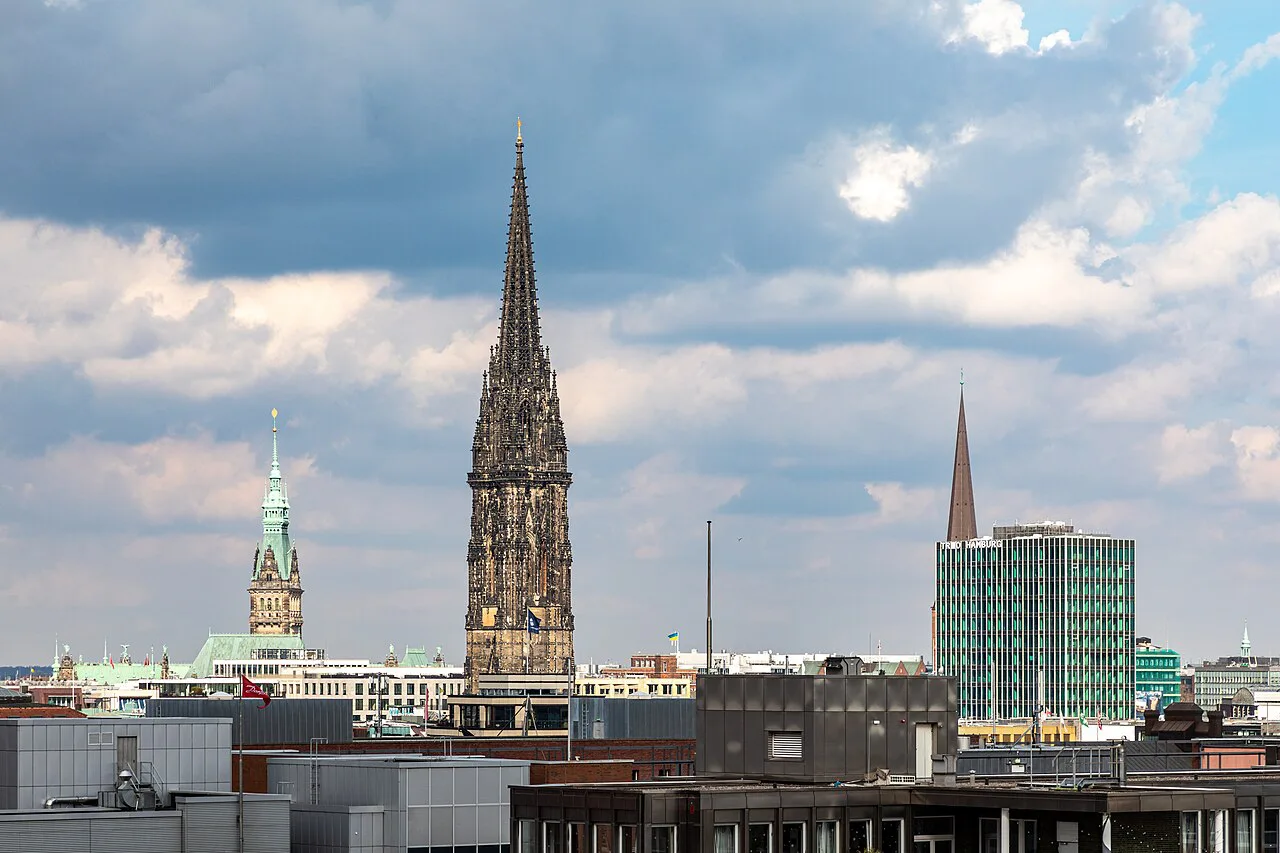
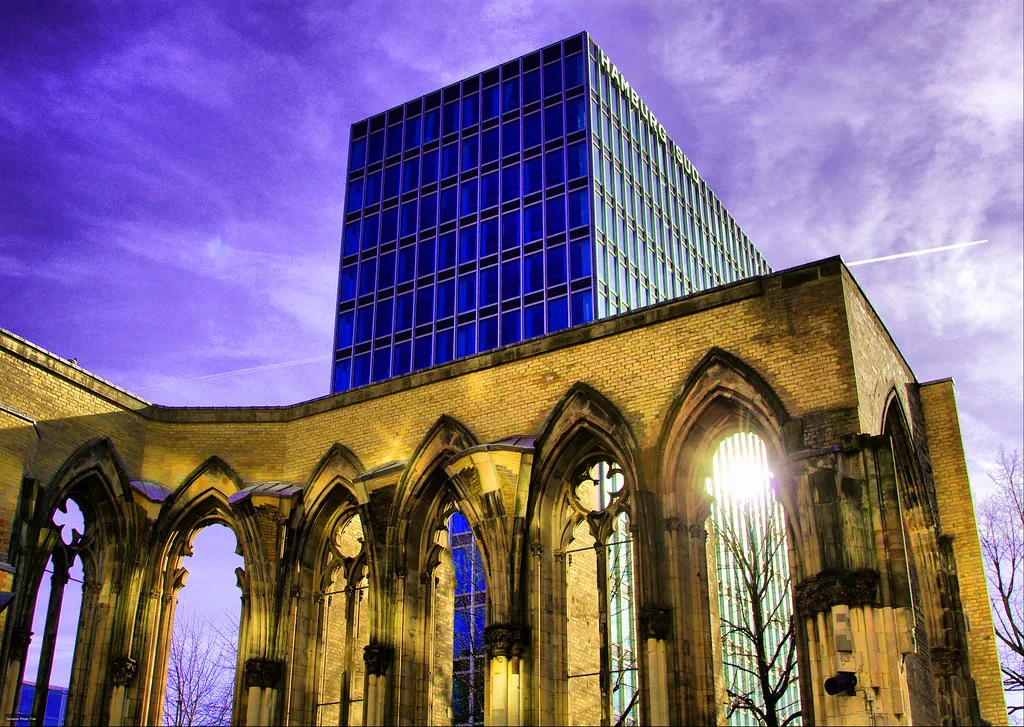
| St. Nikolai ruins | Bombing memorial | A ruined church kept as a memorial to the 1943 bombing | The story of the air raids |
| KZ-Gedenkstätte Neuengamme | Concentration camp memorial | A memorial site on the former camp grounds | Remembrance, a serious half-day |
Operation Gomorrah: What Happened to Hamburg
Knowing the outline of the air raids makes the surviving sites much easier to read. Operation Gomorrah was the Allied code name for a series of heavy raids from late July into early August. Britain's Royal Air Force attacked by night, and the US Army Air Forces flew daylight raids.
- Blinded defences: At the start of the operation, RAF crews dropped bundles of foil strips, code-named Window, to swamp German radar.
- The firestorm: The worst night was 27 to 28 July. In hot, dry weather, fires merged into a firestorm that swept through densely built districts east of the centre, including Hammerbrook and Hamm. Many people died in cellars and shelters from heat and poisonous gases.
- The toll: Death estimates vary, but figures of roughly 34,000 to 40,000 are commonly cited. Hundreds of thousands of residents fled or were evacuated.
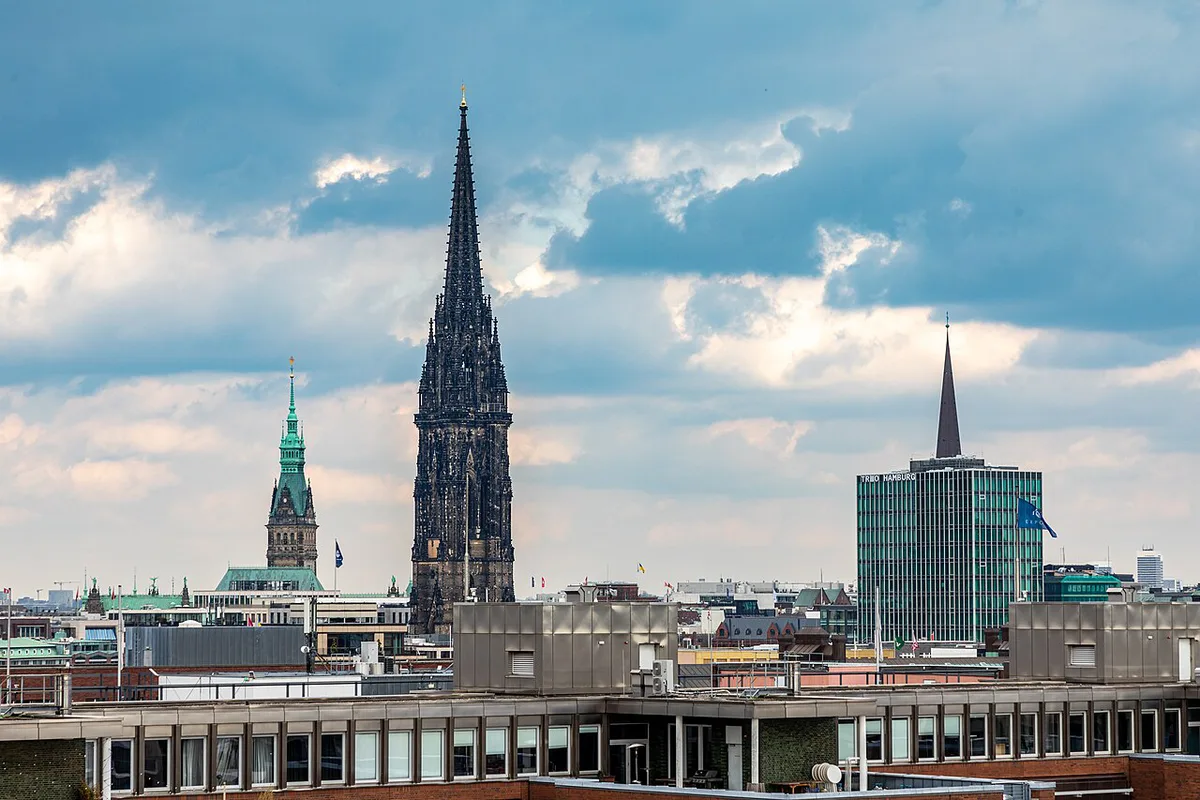
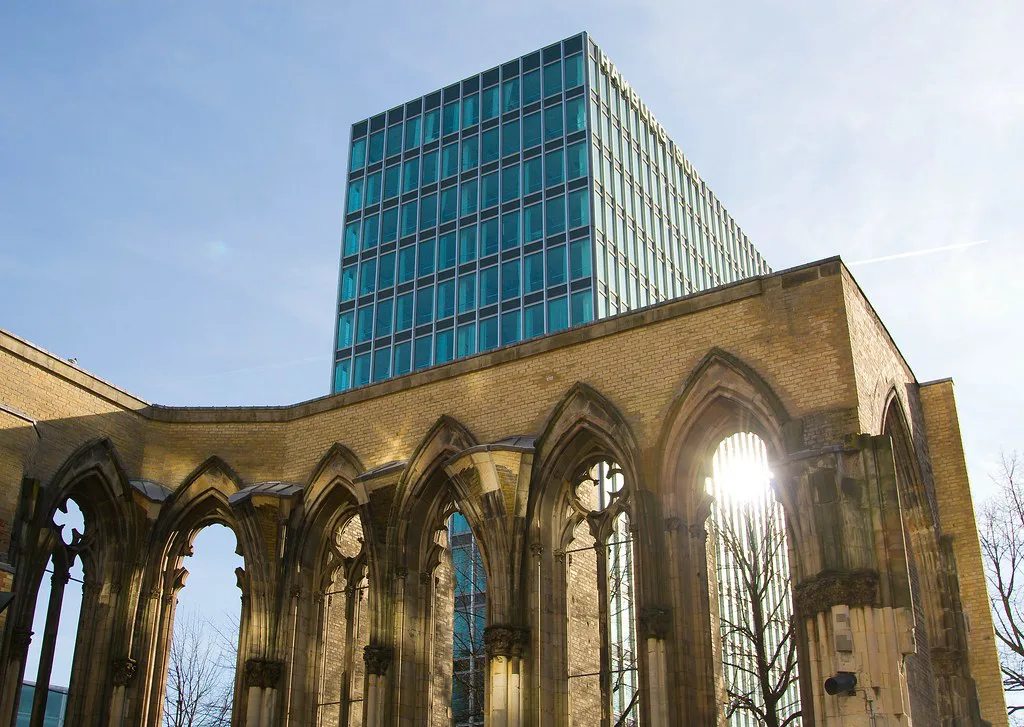
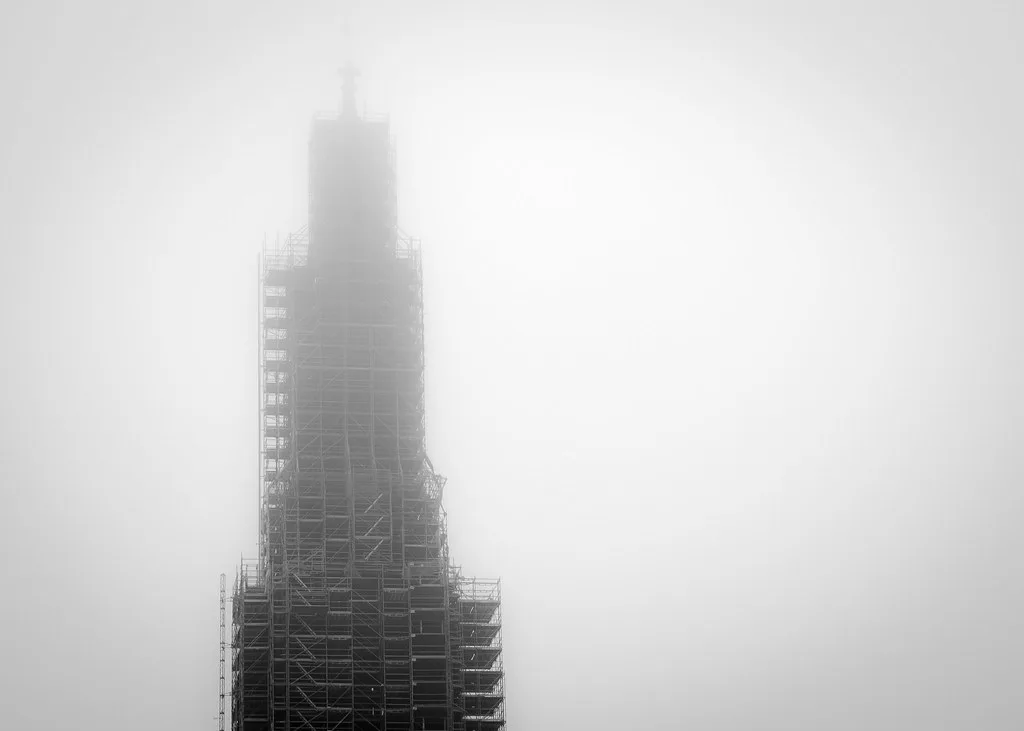
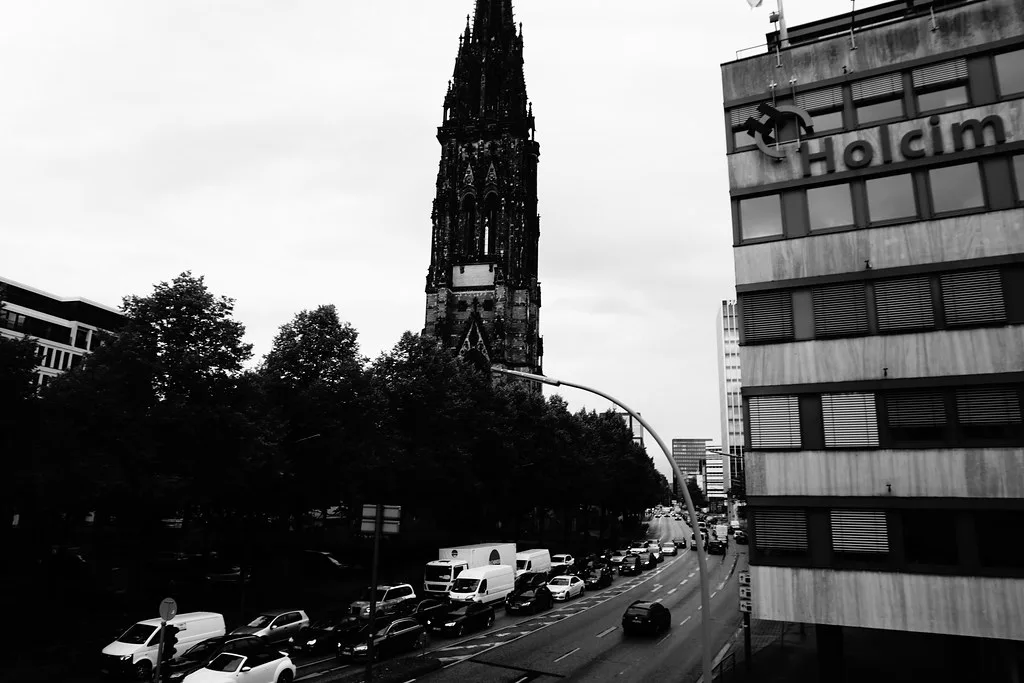
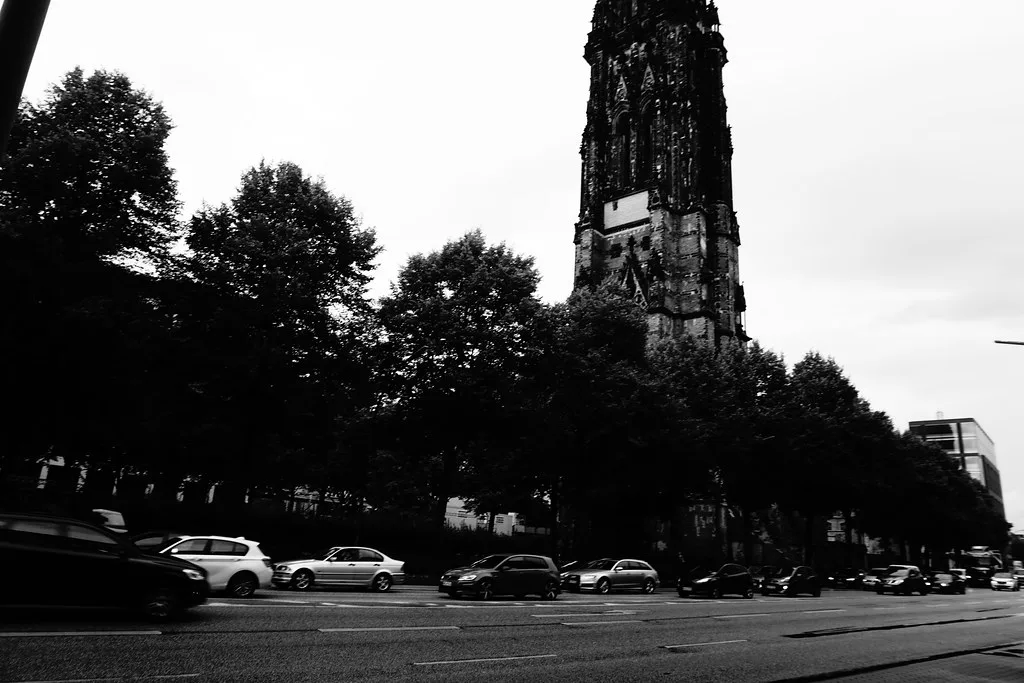
St. Nikolai connects directly to this story. Its very tall spire served as a landmark for bomber crews. The church was wrecked, while the tower remained standing above the ruins. As you visit, look at both the height of the surviving spire and the open space where the enclosed nave once stood.
To follow the history further, go to Ohlsdorf Cemetery in the north of the city. A large cross-shaped mass grave holds many of the victims of the firestorm. At its centre, a memorial building contains Gerhard Marcks's sculpture of a ferry crossing the River Styx. It is an active cemetery, so visit quietly. It also needs its own journey and is not part of the short central outing.
Flak Towers and Wartime Bunkers
Hamburg, like Berlin, was fortified with two concrete flak towers (Flaktürme) between 1942 and 1944. The tower you can find most easily is the Hochbunker at Heiligengeistfeld. Expect a massive concrete block rather than a preserved military site with displays. From the street, you see the mass of the structure and little else. Interior access depends on how the building is used today, so ask Hamburg's visitor information before planning your visit around going inside. Treat it as a short stop, not a destination for a whole morning.
Memorials and Museums
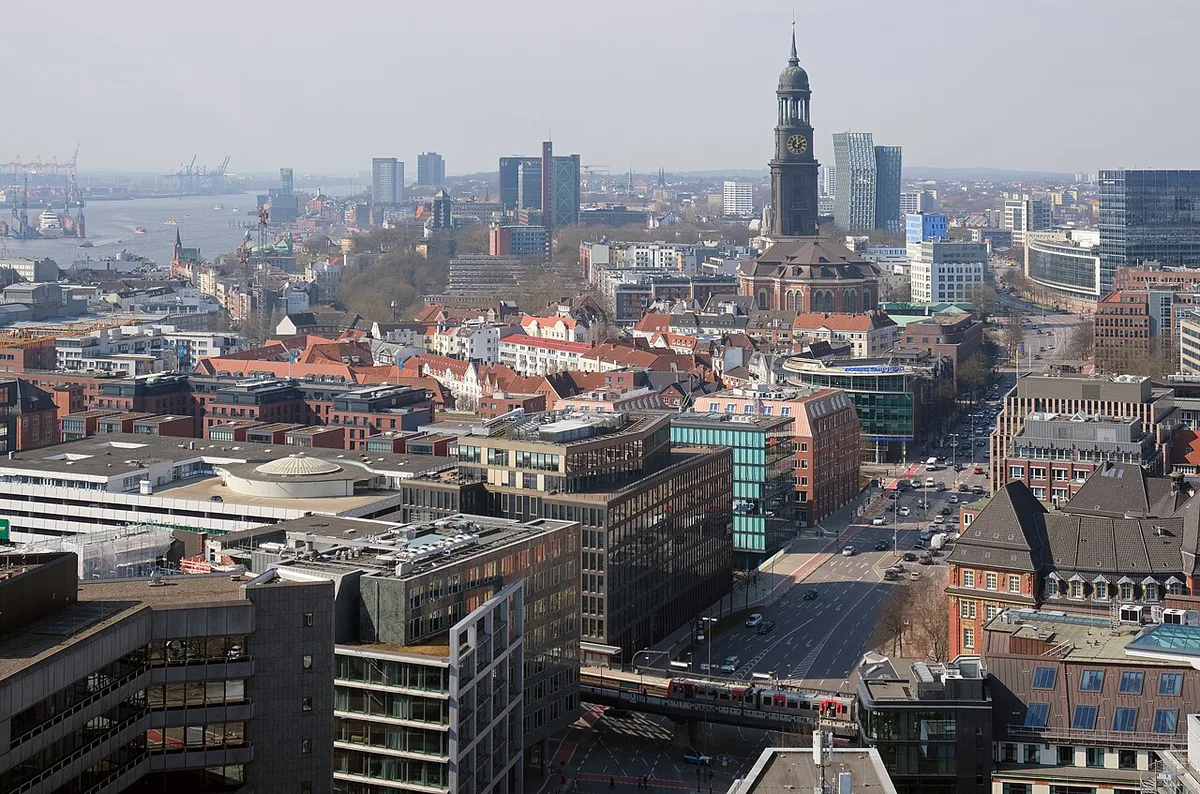
St. Nikolai is the place most visitors link to the 1943 bombing. Its ruined shell stands as a memorial, so it works as a quiet reflective stop rather than a photo backdrop. Neuengamme is a different kind of visit. The Neuengamme memorial's official site is the place to read visiting rules, opening times and any guided-tour options before you go. Behave as you would at any cemetery: keep voices low, follow the posted conduct rules, and do not use the grounds for casual photos. Our guide to German War Cemeteries: Visiting, Finding Graves, Etiquette covers remembrance etiquette further.
Deportation, Prison and Victim Sites Across Hamburg
The bombing is only part of Hamburg's wartime history. These smaller places deal with persecution under Nazi rule. Some have limited opening times or are mainly outdoor memorials, so check current access with the operator before you travel.
- Hannoverscher Bahnhof memorial, Lohsepark: In today's HafenCity, this marks the former station area from which thousands of Jews, Sinti and Roma were deported to ghettos and camps. It is the easiest of these to add to a central sightseeing day.
- Bullenhuser Damm memorial, Rothenburgsort: This former school commemorates 20 Jewish children who were subjected to medical experiments at Neuengamme and then murdered here near the end of the war. Adults who had cared for them and Soviet prisoners were also killed. The subject is extremely distressing, so think carefully before bringing children.
- Fuhlsbüttel memorial: The site recalls the people held and abused in the Fuhlsbüttel concentration camp and prisons, including political opponents of the regime.
- Stolpersteine: Small brass plaques set into pavements name individual victims, usually outside their last freely chosen home. You will find them in many neighbourhoods. Pause to read the names as you walk.
If you have only one extra hour in the centre, choose Lohsepark. If this history is the focus of your trip, read up on the Neuengamme memorial's related sites and plan them separately instead of crowding them into the same day as the main camp memorial. For remembrance sites in other countries, see our guide to WW2 sites in Europe.
How to Plan Your Time
This routing is our own planning logic, not an official itinerary. For a city break, pair the Heiligengeistfeld tower with St. Nikolai in one short outing. Both sit inside the city, so you can reach them on foot or by public transport without a dedicated trip. Give Neuengamme its own block of time, because a memorial visit should not be squeezed between other stops. A full day can hold all three sites if you start with the city sites and leave the memorial for last. Take a break afterwards rather than moving straight to leisure sightseeing.
- Short on time: St. Nikolai and the flak tower only.
- History traveler: all three, with Neuengamme as the centerpiece.
- Family or mobility needs: check access details on each official page first.
Costs, Tickets and Opening Hours
Entry terms and hours change, and none are listed here. Read them on the memorial's own page and on the visitor pages at Hamburg Tourism.
Getting Around and Where to Base Yourself
Hamburg's operator for buses, trains and ferries publishes current routes and fares, so plan each leg there. The flak tower and St. Nikolai are both in the city, which makes a central base the easiest choice for them. Neuengamme lies outside the central sights and needs its own journey. Look up the route before you set out, and allow extra time for the return.
Who Should Skip What
Skip the flak tower if bunkers and concrete architecture do not interest you. Skip Neuengamme if you only have an hour or want a light afternoon, because the site deserves unhurried attention. Do not expect preserved ruins everywhere, since most of wartime Hamburg was rebuilt. Anyone who wants a large, exhibit-rich war museum will find more in other German cities.
Extend Your Germany WW2 Trip
If the bombing story is what draws you, Dresden's wartime history is the natural next comparison. For northern Germany, Peenemünde's rocket history is one route extension. Another is the Prora coastal complex. Our full Germany WW2 guide lists more stops across the country.
Keep planning
Guides on the same trip