Canadian WW1 Sites in France: Vimy Ridge and Where to Go Next
Visit Canadian WW1 sites on the Western Front: Vimy Ridge, memorials and cemeteries, with access, tour and route tips for planning your trip.
In this guide
Last updated November 2026. Canadian WW1 sites in France centre on the Canadian National Vimy Memorial and the preserved trenches of Vimy Ridge in Pas-de-Calais. Other Canadian places lie across the Western Front, so a good visit starts with choosing a route. Our guide ranks the main stops, then covers access, planning and tracing a relative. For the wider picture, start with our Western Front overview.
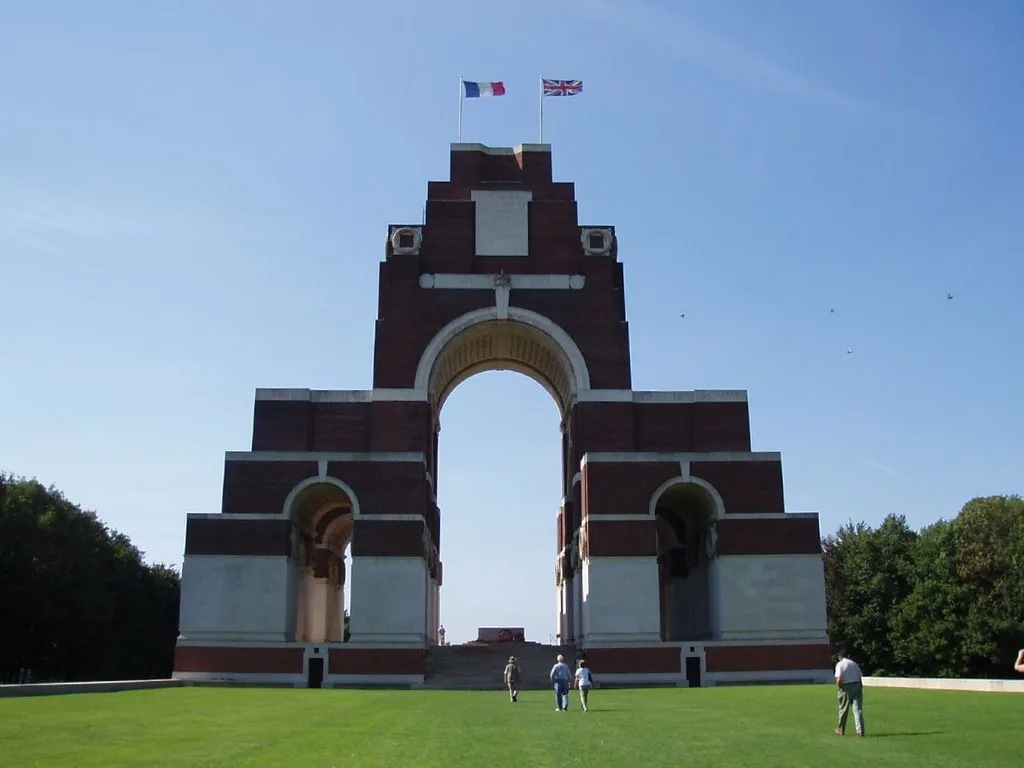
Featured image: paularps, CC BY 2.0, via Flickr.
Quick answer: the Canadian WW1 sites worth a trip
Vimy Ridge is the first stop for almost every visitor. It combines a national memorial, preserved trenches and a visitor centre in one place. Dury and Bourlon Wood are quieter and suit travellers who want a cemetery or a smaller memorial. The table compares them by what you see and who they suit.
| Site | What you see | Access | Time needed | Best for |
|---|---|---|---|---|
| Canadian National Vimy Memorial, near Vimy | Memorial, visitor centre, preserved trenches and tunnels | Staffed; tours run on a schedule | Half a day | First-time visitors |
| Dury Crucifix Canadian cemetery area | Cemetery and crucifix landmark | Open ground, no staff | Short stop | Quiet reflection |
| Bourlon Wood | Canadian memorial in the wood | Open ground, no staff | Short stop | Following the Canadian Corps route |
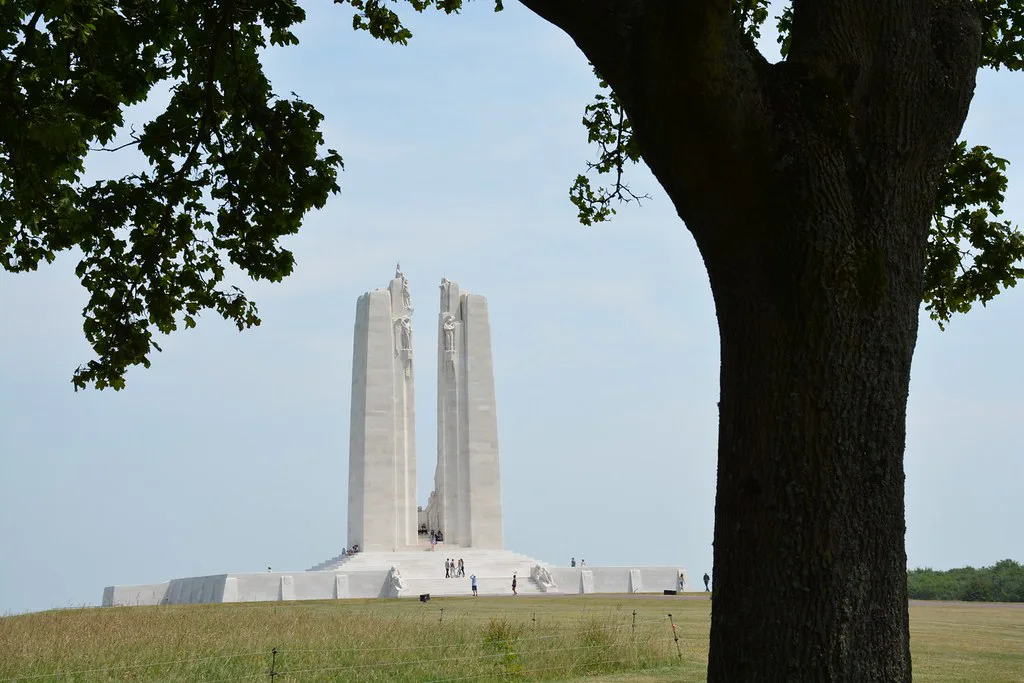
Vimy Ridge: the Canadian National Vimy Memorial
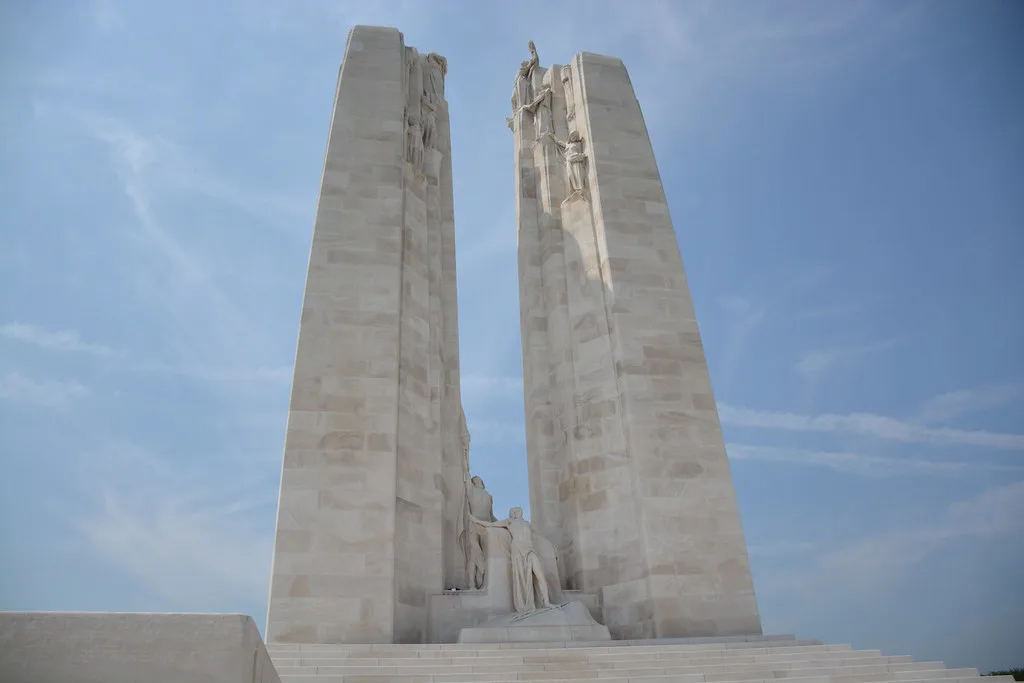
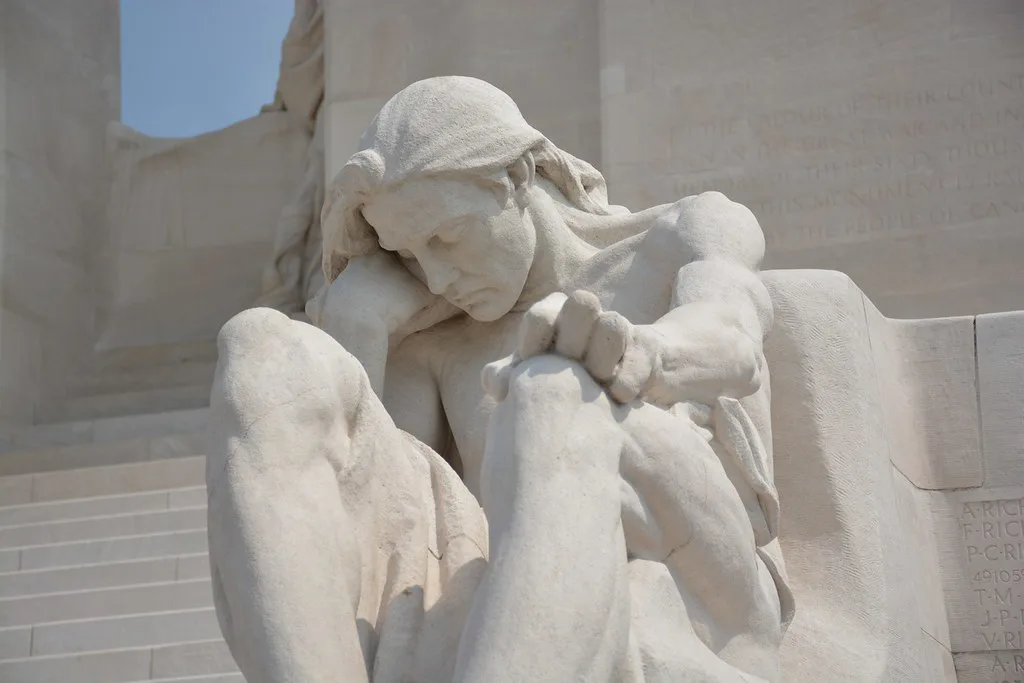
Vimy Ridge is the anchor of any Canadian First World War trip. The battle ran from 9 to 12 April 1917. It was the first time the Canadian Corps fought as one force, with the 1st, 2nd, 3rd and 4th Divisions side by side. The 5th Division was not fully formed at the time. Today the site has the memorial, a visitor centre, preserved trenches and tunnels.
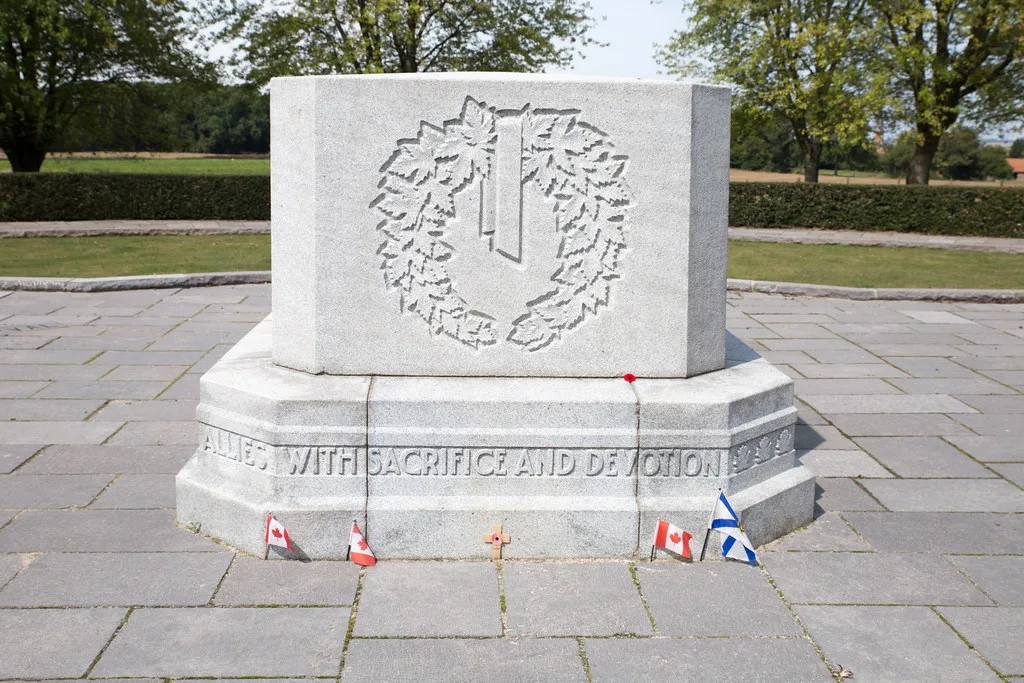
Tunnel visits are normally done on a guided tour, so check tour times before you travel. Some ground is fenced off because of unexploded ordnance. Stay on marked paths at all times. For comparison with other preserved lines, see our guide to WW1 Trenches You Can Visit: Preserved vs Rebuilt Sites. Treating Vimy as a five-minute photo stop is the most common mistake. Allow at least half a day to cover the memorial, the trenches and the visitor centre.
Other Canadian sites on the Western Front
Two smaller stops pair well with Vimy. Dury Crucifix Canadian cemetery area sits on ground fought over by the Canadian Corps in 1918. Bourlon Wood holds a Canadian memorial near Cambrai. Neither has the facilities of Vimy, so bring water and check the route first.
For non-Canadian stops on the same trip, browse our list of WW1 Sites in France: Top Battlefields, Memorials & Planning Guide. Canadian sites also exist in Belgium. Confirm each Belgian stop on its own official page before adding it to a route.
How to plan your route and time
Match the plan to the time you have. With two hours, see the Vimy memorial and walk the surface trenches. With half a day, add a tunnel tour and the visitor centre. With a full day, add Dury and drive on to Bourlon Wood. A second day can take in Arras and its wider Great War sites.
On a short trip, skip Bourlon Wood and keep Vimy unhurried. If rain stops outdoor walking, an indoor stop from our WW1 museums guide works well. Extending the trip, you can reach the Chemin des Dames: What to See, Walks and Planning Guide or the Armistice clearing at Compiègne, though neither is Canadian-focused.
Costs, tickets, opening hours and tours
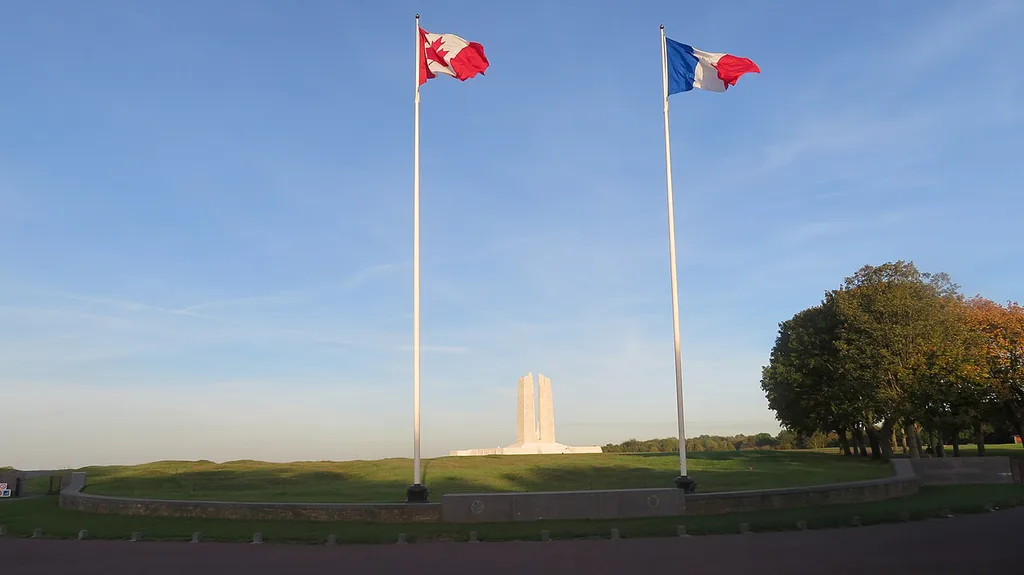
Walking the memorial grounds is open to all, and the visitor centre and tunnel tours are staffed. Prices were not confirmed at the time of writing. Hours and tour slots change by season. Use Northern France tourism and the official Vimy pages from Veterans Affairs Canada for current details. Cemeteries and open memorials such as Dury and Bourlon Wood are unstaffed.
Getting there and where to stay
Arras makes the best base. Trains reach Arras and Lens, but the last stretch to Vimy needs a taxi or a car. Driving is the most flexible option. Train plus taxi is the cheapest for a single day. A guided tour is the simplest if you want no logistics. Check SNCF timetables for current services and book any taxi ahead, since local supply is limited.
Finding a relative: graves, names and records
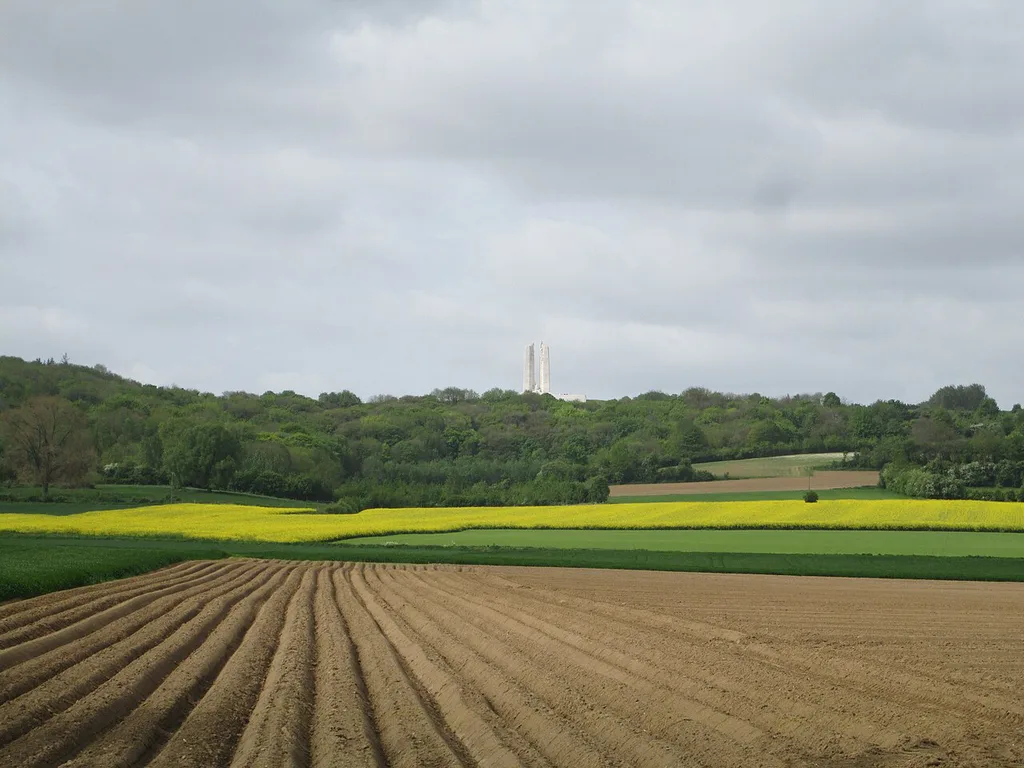
Start with the Commonwealth War Graves Commission database. Search by surname and note the cemetery name and plot reference. For names on the Vimy Memorial, record the panel number. The Canadian Virtual War Memorial from Veterans Affairs Canada gives the same details and often a photograph. Library and Archives Canada holds service files that show a soldier's unit. Write the details down before you go, because open cemeteries have no staff to help you search. If your relative served in a specific battalion, the service file is the best next step.
Visiting respectfully and common mistakes
These are places of remembrance, not attractions. Keep to paths, keep voices low and leave nothing behind. Wear sturdy footwear, since trench paths turn muddy after rain. Do not enter fenced zones. Another common error is underestimating distances between sites. If you plan around 11 November, read our notes on Armistice Day in France: 11 November Guide. Our page on WW1 Memorials in France: Where to Go and How to Visit covers commemorative places in more detail.
Frequently Asked Questions
Does Canada still own Vimy Ridge?
The land remains in France. Canada maintains the memorial park and its trenches. Check Veterans Affairs Canada for the current arrangements.
Was Canada involved in WW1?
Yes. The Canadian Expeditionary Force fought on the Western Front as the Canadian Corps. Its four divisions first fought together at Vimy Ridge in April 1917.
Keep planning
Guides on the same trip