Armistice Day in France: 11 November Guide
What happens on Armistice Day in France, where to attend a ceremony, what is closed, and how to plan 11 November as a visitor.
In this guide
Last updated November 2026: Armistice Day in France, called Jour d'armistice or simply le 11 novembre, is a national public holiday on 11 November that marks the 1918 ceasefire. Our slug says Remembrance Day, but French usage is Armistice Day. Visitors will see the bleuet (cornflower) where British and Canadian visitors expect the poppy.
Featured image: Jorge Lascar, CC BY 2.0, via Flickr.
Armistice Day in France: the date and what it means
11 November is fixed, but the weekday changes every year. Check the calendar before you plan, because a weekend date changes how towns organise their ceremonies. At 11:00 on 11 November 1918, the ceasefire on the Western Front took effect. The agreement was signed in a railway carriage in the forest of Compiègne, at the Rethondes signing site. The Treaty of Versailles, signed on 28 June 1919, formally ended the war. A law of 24 October 1922 then made 11 November a public holiday. This guide covers mainland France only.
What happens on 11 November
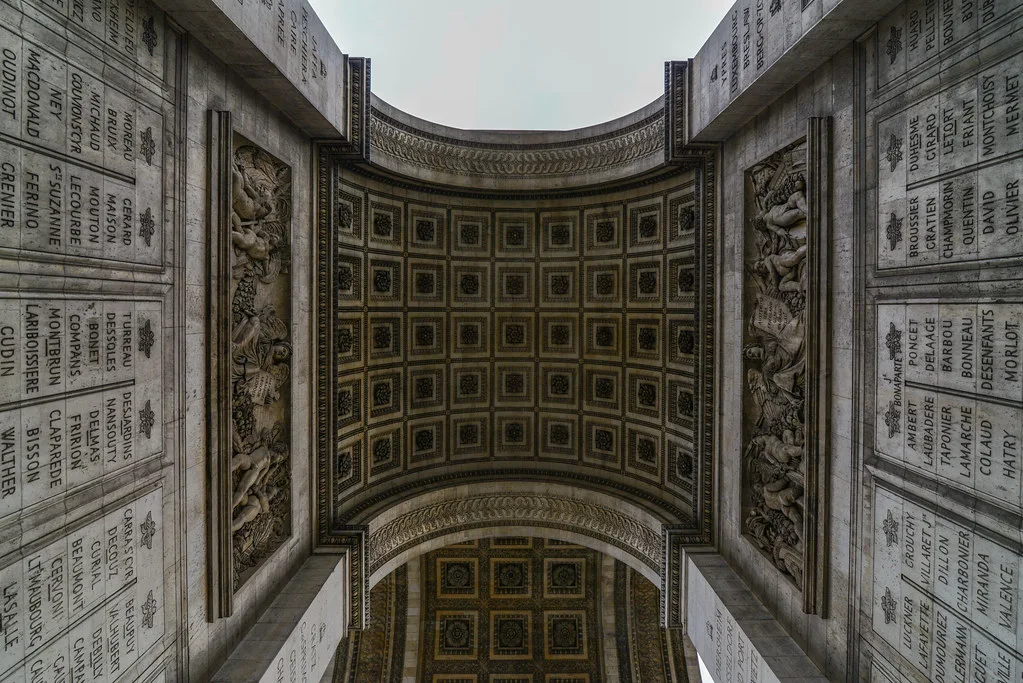
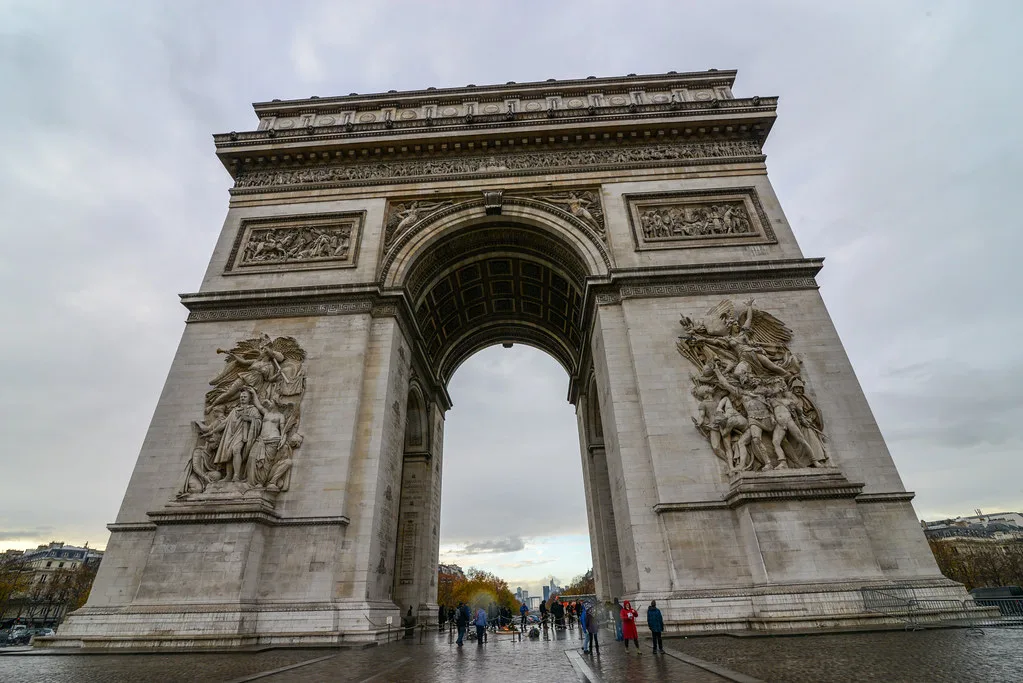
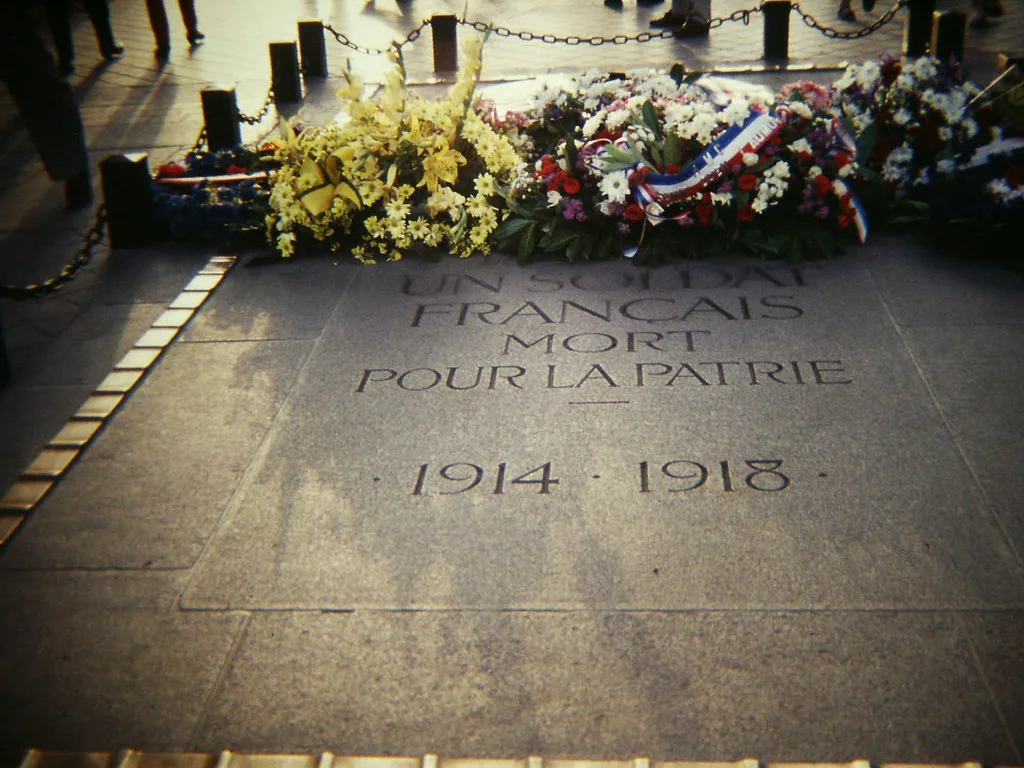
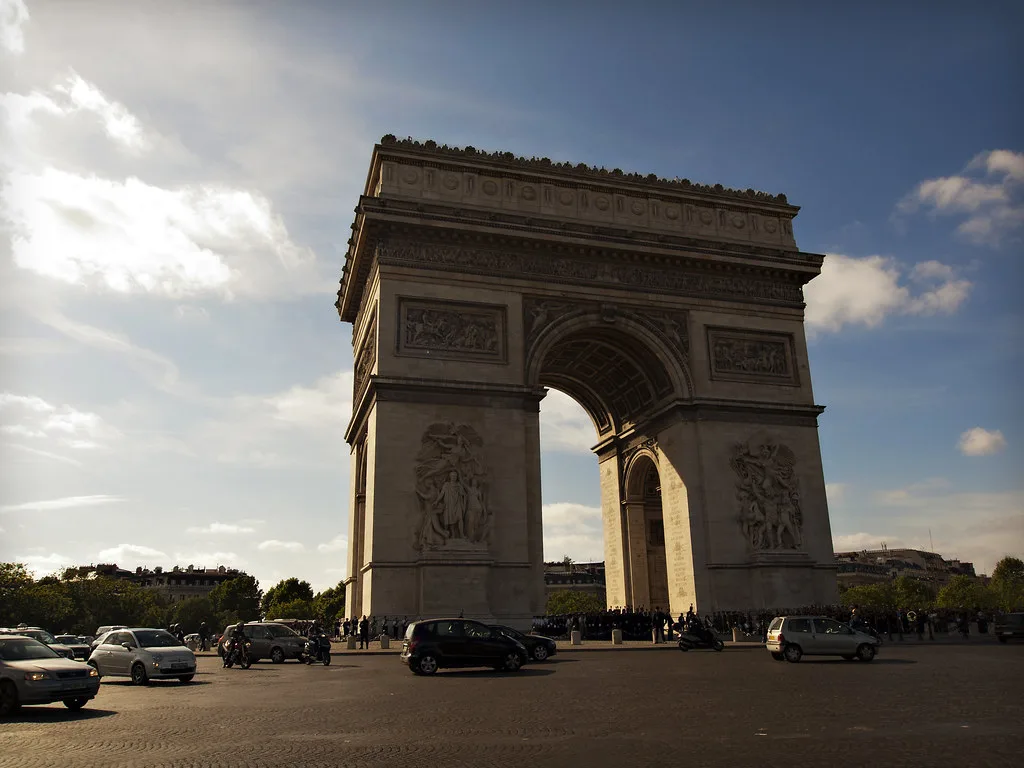
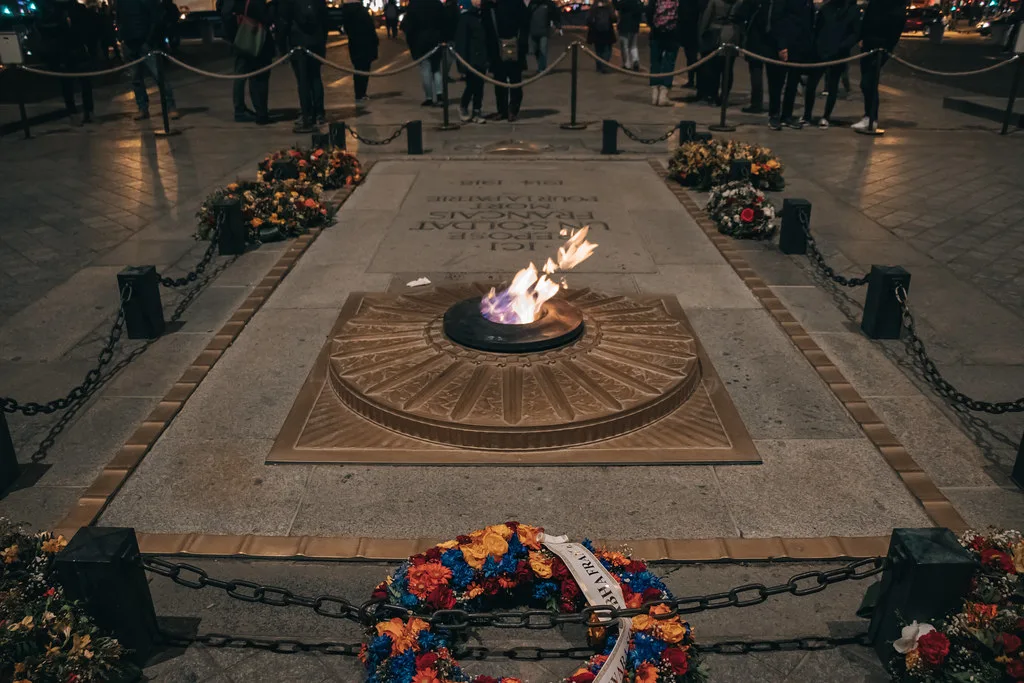
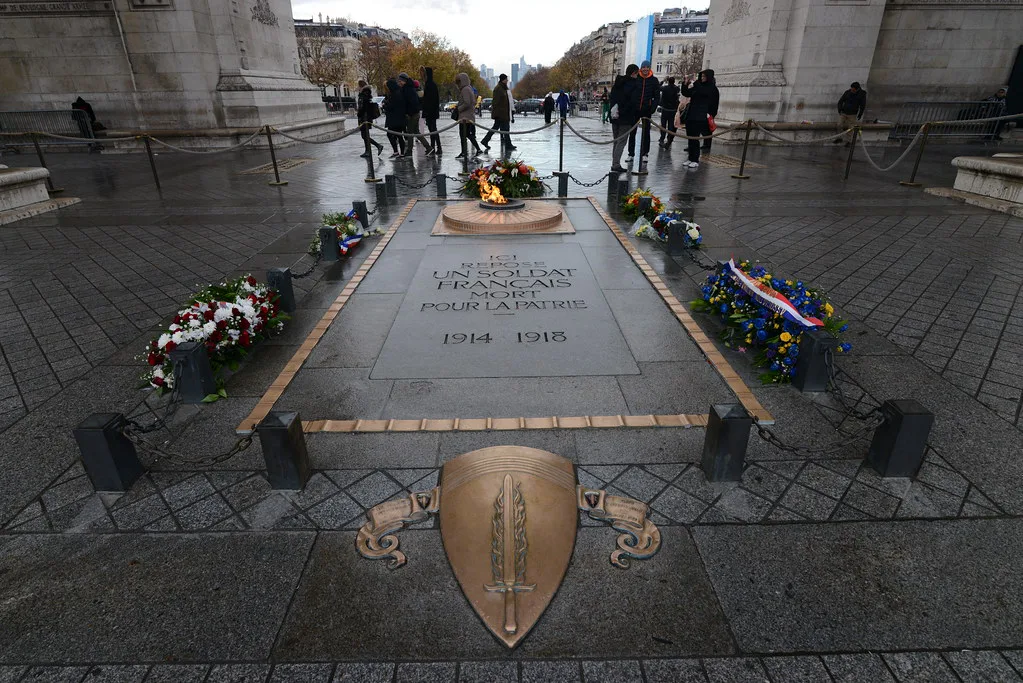
Most communes hold a short ceremony at their monument aux morts, usually with a wreath and a reading of local names. Paris hosts the national ceremony at the Arc de Triomphe, where the president lays a wreath at the Tomb of the Unknown Soldier. That soldier was buried beneath the arch in 1920, and the Flame of Remembrance is part of the ritual there. Many ceremonies observe a one-minute silence at 11:00, but timings differ by site. The cornflower, or bleuet, is the French remembrance symbol, and sales support veterans and war victims through ONACVG, the national veterans' office. Many shops, banks and services close or run reduced hours, so buy food the day before.
Where to mark Armistice Day in France: Paris, Compiègne, the battlefields or a village
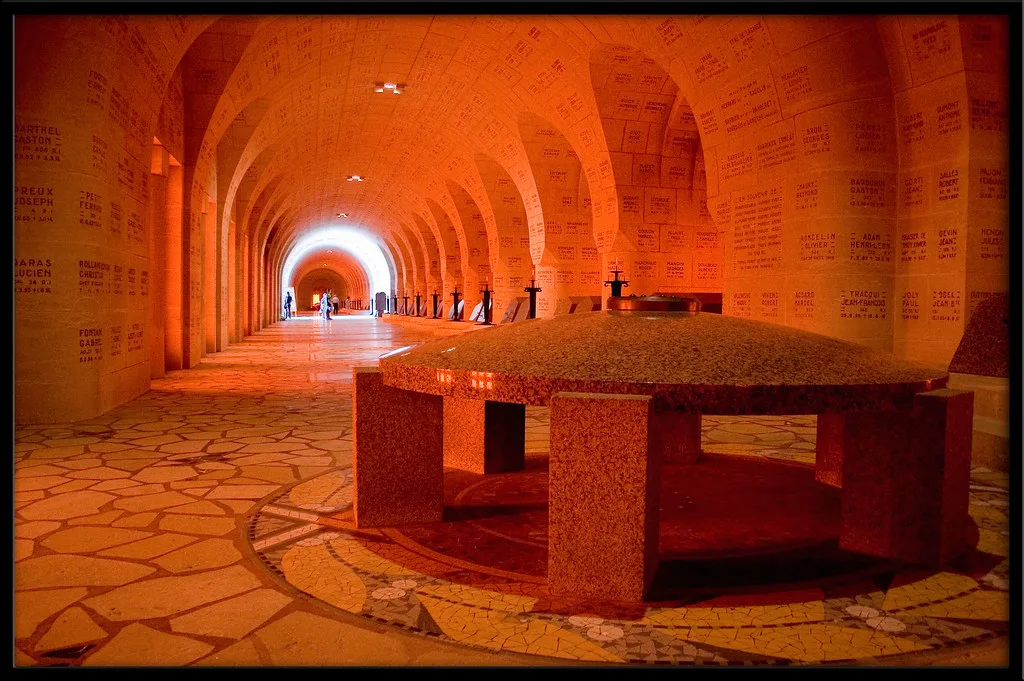
Each option suits a different traveller. Paris is the easiest, while a village ceremony is the quietest. The Armistice Clearing memorial marks the signing site itself, and its opening arrangements for 11 November are set by the museum each year. Western Front sites are the most atmospheric but depend on a car. Our guides to the Chemin des Dames ridge and to preserved trench lines show what each site offers. Check every site's own announcement, because not all of them open on the day.
| Option | Crowd and effort | Tone | Who should pick this |
|---|---|---|---|
| Paris, Arc de Triomphe and the Champs-Élysées | Largest crowds, most security and road closures, easiest transport | Formal and national | First-time visitors with limited time |
| Armistice Clearing, Compiègne | Day trip from Paris, needs a train or car plan | Historic, tied to the signing | History-focused travellers |
| Western Front battlefields | Car-dependent, limited rural transport | Atmospheric and reflective | Visitors who can stay overnight nearby |
| Village monument aux morts | Smallest crowd, lowest cost, found via the mairie or town website | Local and personal | Travellers already staying in a small town |
| Museums | Opening and admission vary by museum | Educational | Anyone who books ahead and confirms the day's hours |
How to plan the day
Decide how much time you have, then pick one place rather than trying to see two. Ceremonies are built around 11:00, so arrive well before that time and expect security checks in Paris. Many restaurants close or serve limited menus, so do not rely on a lunch stop. If you want a museum visit, read our WW1 museums guide and check each museum's 11 November hours and booking rules. Town centres near memorials may close to cars, so park outside and walk in.
- Half day in Paris: attend the Arc de Triomphe ceremony, then spend the afternoon in a museum or at a quieter memorial.
- Full day to Compiègne: travel from Paris, visit the signing site and allow buffer time for trains.
- Overnight on the Western Front: base yourself near the sites, book accommodation early, and plan driving routes in advance.
- Mistake to avoid: arriving at 10:55 without checking security perimeters.
- Mistake to avoid: assuming museums or restaurants are open.
- Mistake to avoid: treating the ceremony as a photo event.
- Mistake to avoid: applying British or Canadian Remembrance Day and poppy habits to France.
Etiquette for visitors
Dress simply and quietly, as you would for a memorial service. Stay silent during the minute at 11:00, and put your phone away. Stand behind the crowd line and do not walk through a formation of veterans or officials. Photograph from a distance without flash, and keep children close and quiet. If a local ceremony is small, you are welcome to attend as an observer, but let residents take the front.
Make it a longer WW1 trip
Armistice Day works well as one stop on a wider route. Start with our overview of WW1 sites in France to map the main areas. The Western Front battlefields guide covers longer itineraries. Canadian visitors who expect Remembrance Day customs can read our Canadian WW1 sites guide. For the 2018 anniversary context, see our centenary sites note. Compiègne's tourist office can help with local access.
Frequently Asked Questions
What actually happened on Armistice Day?
On 11 November 1918, an armistice signed in a railway carriage at Rethondes, in Compiègne forest, halted fighting on the Western Front. The ceasefire took effect at 11:00. The Treaty of Versailles on 28 June 1919 formally ended the war.
Is November 11 a French holiday?
Yes, 11 November is a national public holiday in France, set by a law of 24 October 1922. Many shops and services close or run reduced hours. The weekday changes each year, so check the calendar.
Keep planning
Guides on the same trip