WW1 Memorials in France: Where to Go and How to Visit
Which WW1 memorials in France are worth the trip? Compare the Somme, Arras, Verdun and Aisne sites by route, time and who they suit.
In this guide
Last updated November 2026. The main WW1 memorials in France cluster in four areas: the Somme, Arras and Vimy, Verdun, and the Aisne and Marne. Thiepval and the Ring of Remembrance make the strongest two-day pairing, and Verdun repays a separate trip by car. For the wider picture, start with our guide to Western Front battlefields.
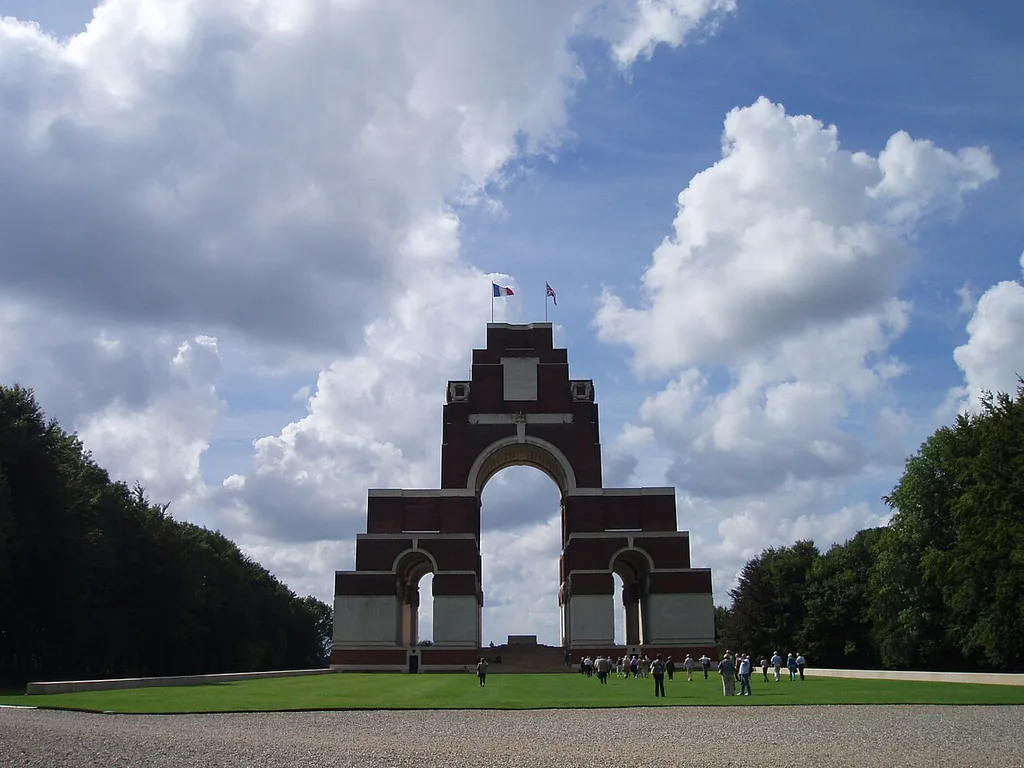
Featured image: Vasnic64, CC BY 2.0, via Flickr.
Which WW1 memorials in France to see first
Pick the area that matches your reason for going. The Somme suits Commonwealth visitors, because Thiepval, Beaumont-Hamel, Delville Wood and Mametz Wood sit within a short drive of each other. Arras and Vimy suit Canadians, and the Ring of Remembrance at Notre-Dame-de-Lorette suits anyone who wants every nationality named in one place. Verdun is the French and German story, centred on the Douaumont Ossuary. For a broader overview of everything in the country, see our guide to WW1 Sites in France: Top Battlefields, Memorials & Planning Guide.
- First-timer with one day: Thiepval Memorial plus Beaumont-Hamel.
- Searching for an ancestor: start with the databases at the end of this guide, then choose the cemetery or memorial.
- Canadian: Vimy first, then the Ring of Remembrance.
- Australian: Villers-Bretonneux and the Sir John Monash Centre.
- American: Belleau Wood and the Aisne-Marne American Cemetery.
- No car: base yourself in Arras or Amiens and book a guided tour.
Memorial, cemetery, museum or battlefield: what each is
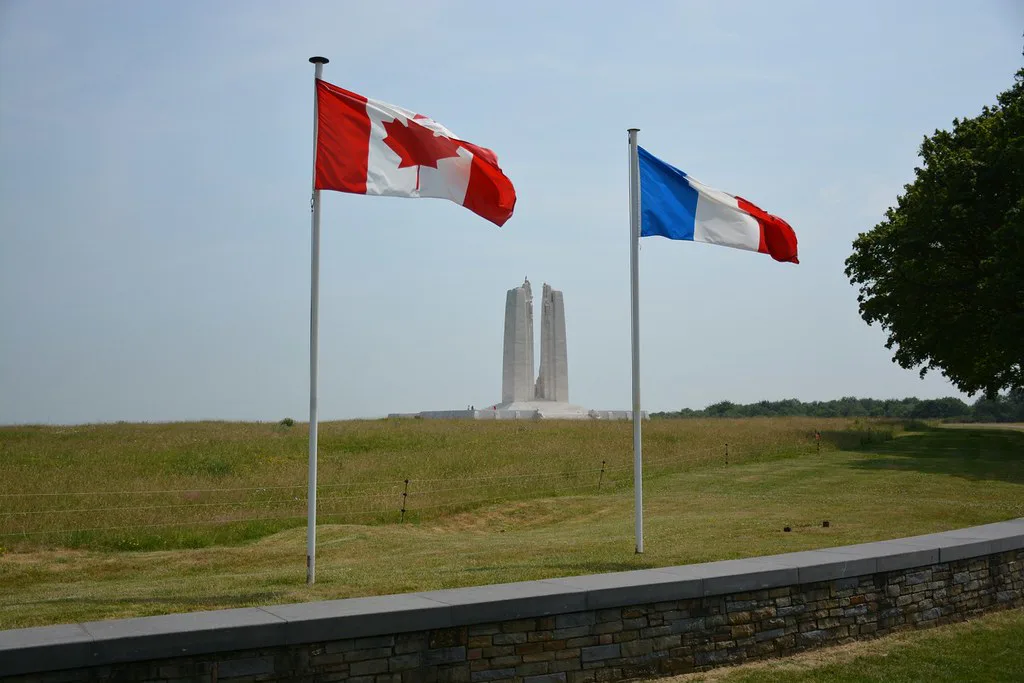
Visitors often mix these four up, and each asks something different of you. A memorial to the missing carries names of men with no known grave. A cemetery holds graves, and many hold both marked and unidentified burials. Museums charge entry and explain the story. Preserved ground shows how the land was shaped by the fighting.
- Memorial to the missing: Thiepval, the Arras Memorial and the Canadian National Vimy Memorial.
- Cemetery or necropolis: Étaples, Delville Wood Cemetery and the Notre-Dame-de-Lorette necropolis.
- Ossuary: Douaumont, where the remains of French and German soldiers lie together.
- Preserved ground: Beaumont-Hamel and Lochnagar Crater.
- Museum: Thiepval's museum, the Sir John Monash Centre and Wellington Quarry.
Somme memorials
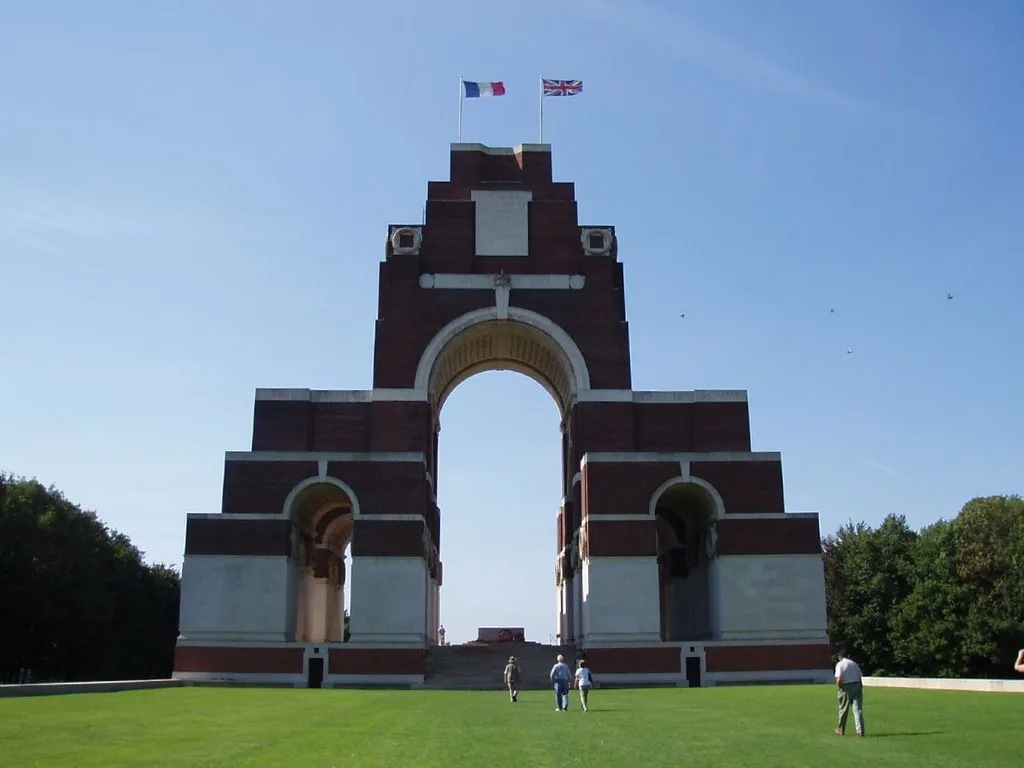
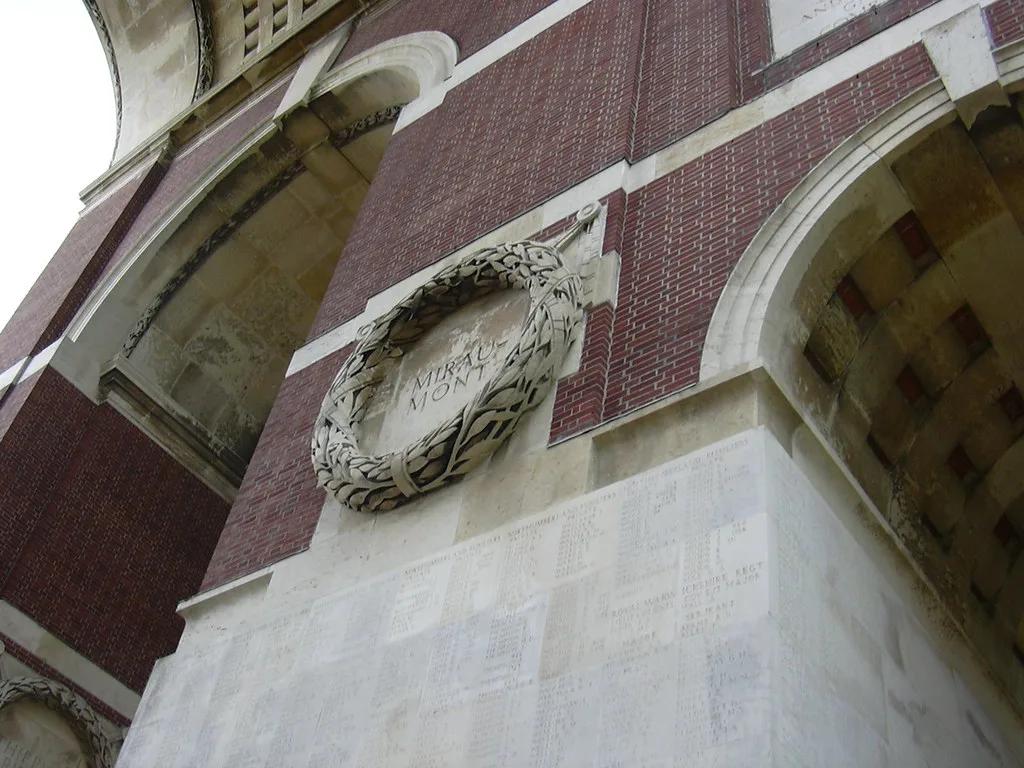
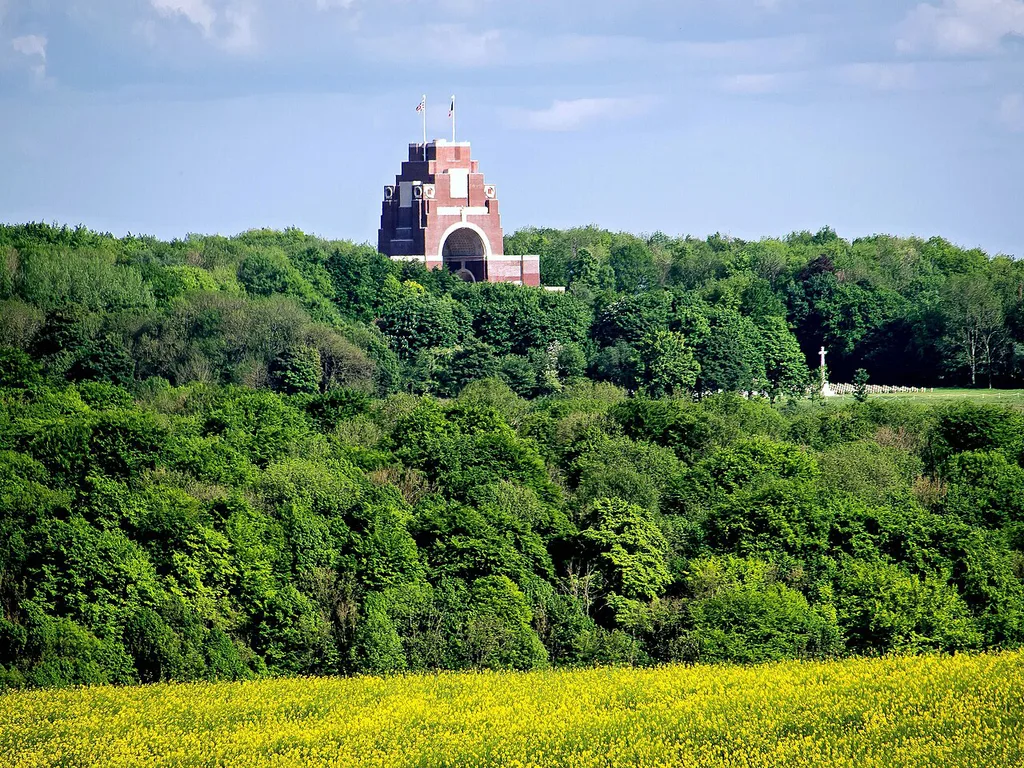
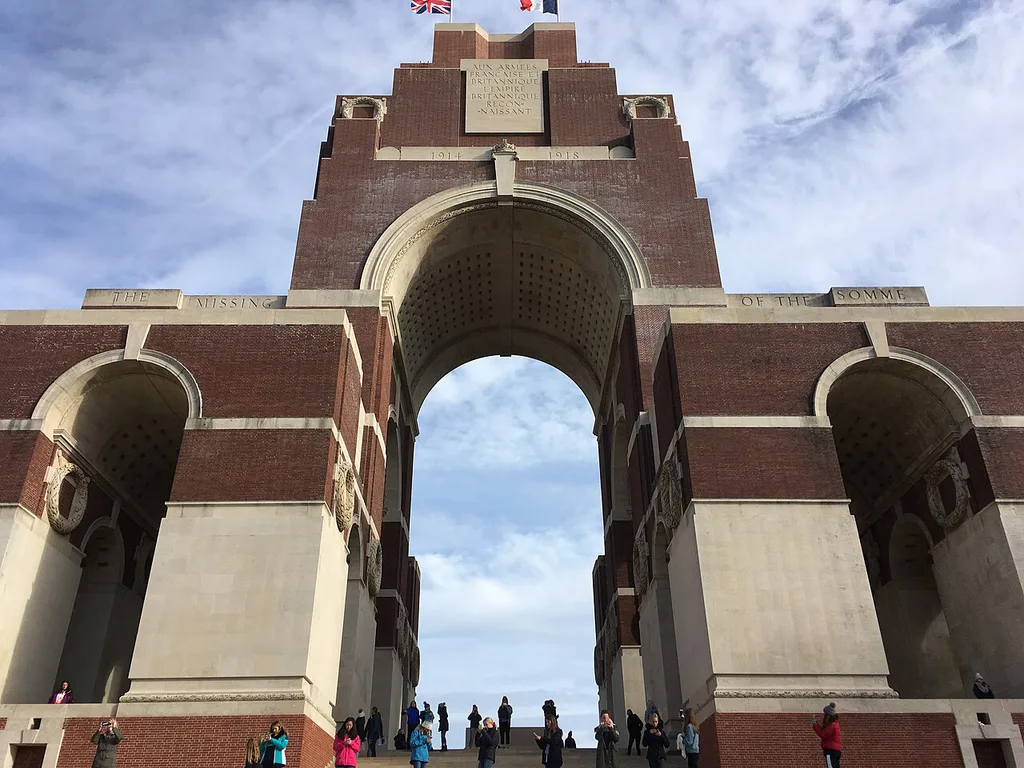
Thiepval is the anchor of the Somme. Sir Edwin Lutyens designed the memorial for the Commonwealth War Graves Commission, and it was inaugurated in 1932. Its 64 stone panels carry roughly 72,000 names of men missing from the Somme, mostly British and South African. Hauts-de-France tourism describes it as the largest British memorial in the world. A museum stands a few metres away, and our guide to WW1 museums in France covers it in more detail. Beaumont-Hamel is the place to see preserved ground. The Newfoundland park covers 39 hectares, and the trench lines are still visible. On 1 July 1916, 710 Newfoundlanders died in the Somme offensive. More on walkable ground is in our guide to WW1 Trenches You Can Visit: Preserved vs Rebuilt Sites. Delville Wood at Longueval honours the South African Brigade. Of 3,155 men who started the battle on 14 July 1916, 1,080 were killed. The cemetery beside it holds 5,521 men. Nearby, a New Zealand column marks the Battle of Flers on 15 September 1916. Mametz Wood has a red dragon memorial to the 38th (Welsh) Division, unveiled on 11 July 1987. Lochnagar Crater is a private memorial, set up in 1986 after Richard Dunning bought the land in the 1970s. Villers-Bretonneux, a few kilometres from Amiens, holds the Australian National Memorial with about 11,000 names. The Sir John Monash Centre there was inaugurated in 2018.
| Site | Who it commemorates | What you see | Planning allowance | Access note |
|---|---|---|---|---|
| Thiepval | British and South African missing | Lutyens arch, 64 panels, museum | 1.5 to 2 hours | Rural; car or tour |
| Beaumont-Hamel | Newfoundland | 39-hectare park, caribou, trenches | 1 to 1.5 hours | Rural; car or tour |
| Delville Wood, Longueval | South African | Memorial, museum, cemetery | 1 hour | Rural; car or tour |
| Mametz Wood | 38th (Welsh) Division | Red dragon memorial | 30 minutes | Rural; car or tour |
| Lochnagar Crater | Mine crater, private memorial | Crater at La Boisselle | 30 minutes | Rural; car or tour |
| Villers-Bretonneux | Australian | National Memorial, Monash Centre | 2 hours | Near Amiens; check transport |
Arras, Vimy and Notre-Dame-de-Lorette
The Ring of Remembrance sits at Chemin de la Chapelle in Ablain-Saint-Nazaire, about 15 minutes north of Arras. It opened on 11 November 2014 and is open year-round. The ellipse is 345 metres (about 1,130 ft) long, built of 500 steel plates. Roughly 580,000 names run in alphabetical order, with no distinction of nationality, rank or religion. The Arras Pays d'Artois tourist office details the design. Next door lies the Lorette necropolis, the biggest French military cemetery, with roughly 40,000 burials. Vimy is a short drive away. The Canadian National Vimy Memorial bears 11,169 names of missing Canadians and was unveiled on 26 July 1936. Our guide to Canadian WW1 Sites in France: Vimy Ridge and Where to Go Next covers the park and tunnels. In Arras itself, the Arras Memorial lists 34,785 missing from the British, New Zealand and South African forces. Wellington Quarry recalls the 20-kilometre tunnel network where 24,000 soldiers waited on 8 and 9 April 1917.
Set against Thiepval's roughly 72,000 names, the Ring's 580,000 names make it the larger list, with no nationality sorting.
Verdun and the east
Verdun is the one stop on this list that is mainly about French and German losses. The Douaumont Ossuary opened on 7 August 1932 and holds the remains of French and German soldiers. It commemorates roughly 230,000 dead of the battle. The adjacent cemetery has 16,142 graves, and the Verdun tourism office lists nearby sites and opening details. A separate Mémorial de Verdun museum exists, and its own site gives current hours and prices. Verdun lies far east of the Somme, so treat it as its own trip rather than a day add-on.
Aisne and Marne: Chemin des Dames and Belleau Wood
The Aisne has a different feel, more ridge and woodland than open fields. The World Rugby Memorial near the Chemin des Dames was inaugurated on 16 September 2017. Its plaque honours 2 Scots, 6 English and 44 French players. Our guide to the Chemin des Dames ridge covers the wider story. Belleau Wood is the American site. Its ABMC cemetery has 2,289 graves, and the chapel wall carries 1,060 names of the missing. Château-Thierry, 25 miles from Paris in 1918, is close by, and the Côte 204 visitor centre tells the American story.
Also in the north: Étaples and the Armistice clearing
Étaples is a Lutyens cemetery, set where British camps and hospitals stood from 1915 to 1918. It holds nearly 11,400 graves, from both world wars. Pair it with a Channel-coast arrival or departure. The Compiègne clearing, where the Armistice was signed, has its own guide: see the Armistice clearing at Compiègne. Its museum site gives current opening details.
How to plan a route
Group stops by area and check a map for drive times between them. Rural roads and stops at cemeteries slow every day, so plan fewer sites than you expect.
Allow 1.5 to 2 hours at Thiepval, then add Beaumont-Hamel, before rural drives eat into a one-day Somme plan.
- One day: Thiepval, then Beaumont-Hamel, with a lunch break in Albert. Stay within the Somme cluster.
- Two days: Day one is the Somme cluster including Delville Wood and Mametz Wood. Day two is Arras, Vimy and the Ring of Remembrance.
- Three days: Add Villers-Bretonneux and Lochnagar on the Somme day, or devote day three to Verdun if you have a car.
- Non-driver: base in Arras or Amiens and book a guided tour, because most sites are rural.
Costs, access and etiquette
Memorials and cemeteries are outdoor sites, and the CWGC manages the Commonwealth cemeteries and memorials. Museums and visitor centres charge entry, and the CWGC Experience in Beaurains, near Arras, is one of them. Each venue's own site gives current prices and hours. Dress and behave as you would in a place of worship.
- Keep voices low and do not step on graves or walk between headstones.
- Photograph without posing or climbing on memorials.
- Be aware that school groups can crowd Thiepval and Vimy in spring and autumn.
- Mistake to avoid: treating the sites as a day trip from Paris without a car.
- Mistake to avoid: assuming every site is free or open daily.
- Mistake to avoid: packing too many stops into one day.
Finding a relative or a named soldier
Search before you travel so you know which names or graves to look for. The CWGC database covers Commonwealth burials, and ABMC covers American ones. For French soldiers, use the Mémoire des hommes database. Ceremonies and dates are covered in our guide to Armistice Day in France: 11 November Guide.
Planning a visit around remembrance dates
Commemorative dates can make major memorials busier, especially on the Somme around 1 July. That date marks the opening of the 1916 offensive and the loss of 710 Newfoundlanders at Beaumont-Hamel. Arrive early and allow time to walk the 39-hectare park rather than treating it as a quick roadside stop.
For a quieter, year-round alternative, visit the Ring of Remembrance at Notre-Dame-de-Lorette. It opened on 11 November 2014 and remains accessible throughout the year. Its 345-metre ellipse is large enough to reward an unhurried circuit. The 500 steel plates list roughly 580,000 names alphabetically, without separating nationality or rank.
Check each memorial’s official website before travelling for ceremony access arrangements. Keep the day flexible around formal services, and allow extra time for parking, security measures, and visitors paying respects.
Frequently Asked Questions
Where to see WW1 trenches in France?
Beaumont-Hamel on the Somme is the best-known preserved ground, where trench lines are still visible in a 39-hectare park. Vimy also has preserved ground.
What is the best war memorial to visit in France?
It depends on your goal. Thiepval is the largest British memorial, and the Ring of Remembrance names 580,000 dead of every nationality. Douaumont Ossuary is the key site for French and German losses.
Keep planning
Guides on the same trip