6 Commonwealth War Graves Sites in France to Visit First
What the Commonwealth War Graves Commission maintains, how to find a grave, and 6 France sites to visit first, with etiquette and planning advice.
In this guide
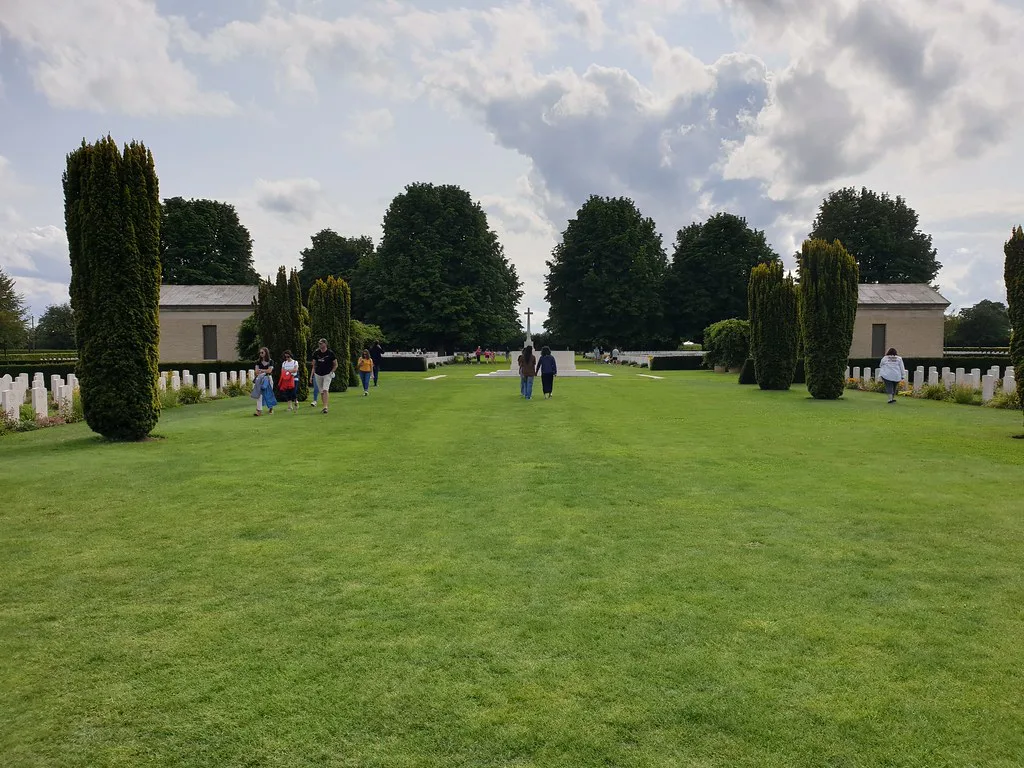
Last updated November 2026: commonwealth war graves are the cemeteries and memorials that the Commonwealth War Graves Commission (CWGC) maintains for service members who died in the two world wars. CWGC cares for over 23,000 separate burial sites, and most are open-access cemeteries rather than ticketed attractions. Below, you will learn how to find a grave, which 6 sites in France to start with, and how to visit respectfully.
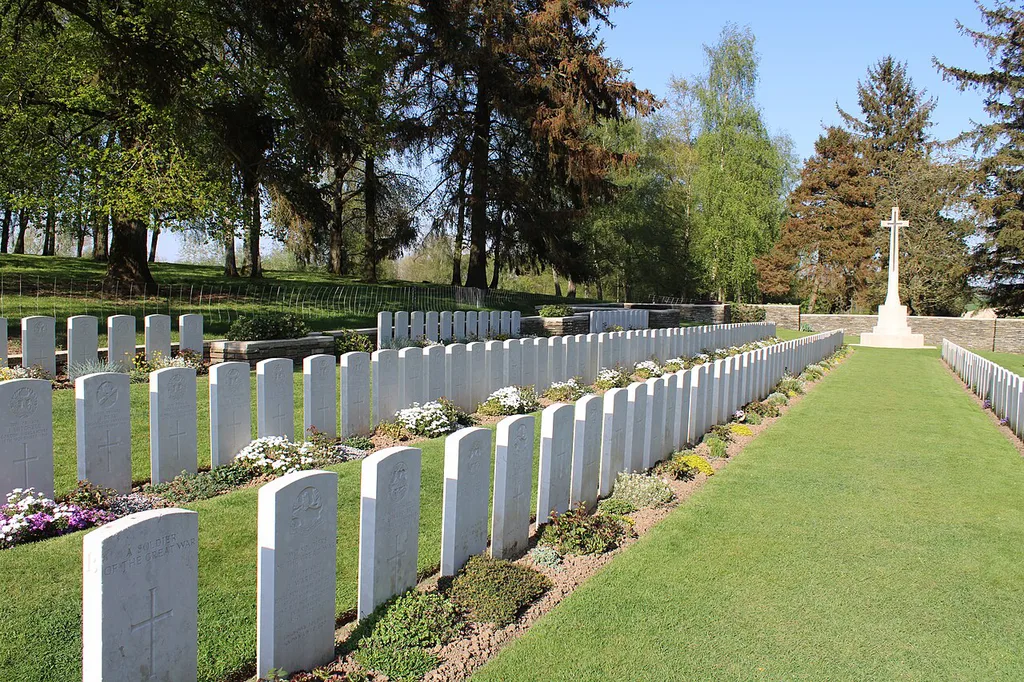
Featured image: amandabhslater, CC BY-SA 2.0, via Flickr.
What the Commonwealth War Graves Commission is
Sir Fabian Ware founded CWGC as the Imperial War Graves Commission, constituted by royal charter on 21 May 1917. Renamed in 1960, it is now an intergovernmental body with 6 member states. Today it commemorates about 1.7 million Commonwealth service members in more than 150 countries and territories. Care covers over 23,000 separate burial sites and more than 200 memorials. Commemoration is individual and equal, whatever a person's rank, race or creed. Since its founding the Commission has built approximately 2,500 war cemeteries. Scale figures are in the table below.
| Fact | Figure |
|---|---|
| Member states | United Kingdom, Canada, Australia, New Zealand, India, South Africa |
| People commemorated | About 1.7 million Commonwealth service members |
| Burial sites in care | Over 23,000 |
| Memorials in care | More than 200 |
| Countries and territories | More than 150 |
| War cemeteries built by CWGC | Approximately 2,500 |
Cemeteries versus memorials to the missing
Every search starts with one question: does the person have a known grave? A named grave means a cemetery, with a plot, row and grave reference. Where a casualty has 'no known grave', a name appears on a memorial to the missing. By 1918, some 587,000 graves had been identified and a further 559,000 casualties were registered as having no known grave. Thiepval Memorial on the Somme is the largest of the memorials to the missing. Searching a memorial name for a buried person is the most common planning mistake. Canada, Australia, India, South Africa and Newfoundland each erected their own memorials to the missing.
| Memorial | Erected for |
|---|---|
| Vimy Memorial | Canada |
| Villers-Bretonneux Memorial | Australia |
| Neuve-Chapelle Memorial | India |
| Delville Wood Memorial | South Africa |
| Beaumont-Hamel Memorial | Newfoundland |
How to find a specific grave or name
Search the CWGC database before you travel. Note the cemetery, plot, row and grave reference for a buried casualty. For a missing casualty, note the memorial name and panel instead. Our guide to searching the CWGC database covers the workflow step by step. Look for a visitor register or location notes on the record too. CWGC also offers an official CWGC War Graves app, which lists names and burial places at 23,000 locations.
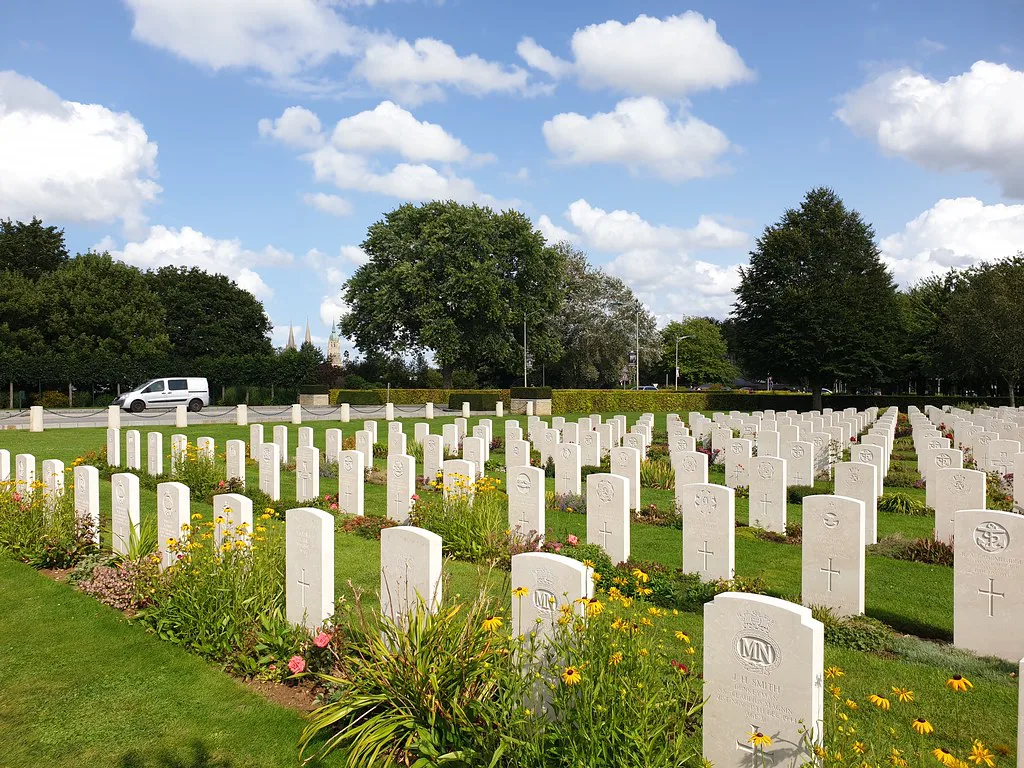
6 Commonwealth War Graves Sites to Visit First in France
Details checked November 2026. These 6 sites run from the experimental cemeteries of 1920 to the post-war Dieppe cemetery of 1949. Visits cluster around the Somme, Arras and Normandy. Entry to CWGC sites is generally free, so your main costs are transport and time. For a ranking by size, see the largest war cemeteries.
1. Thiepval Memorial to the Missing, Somme
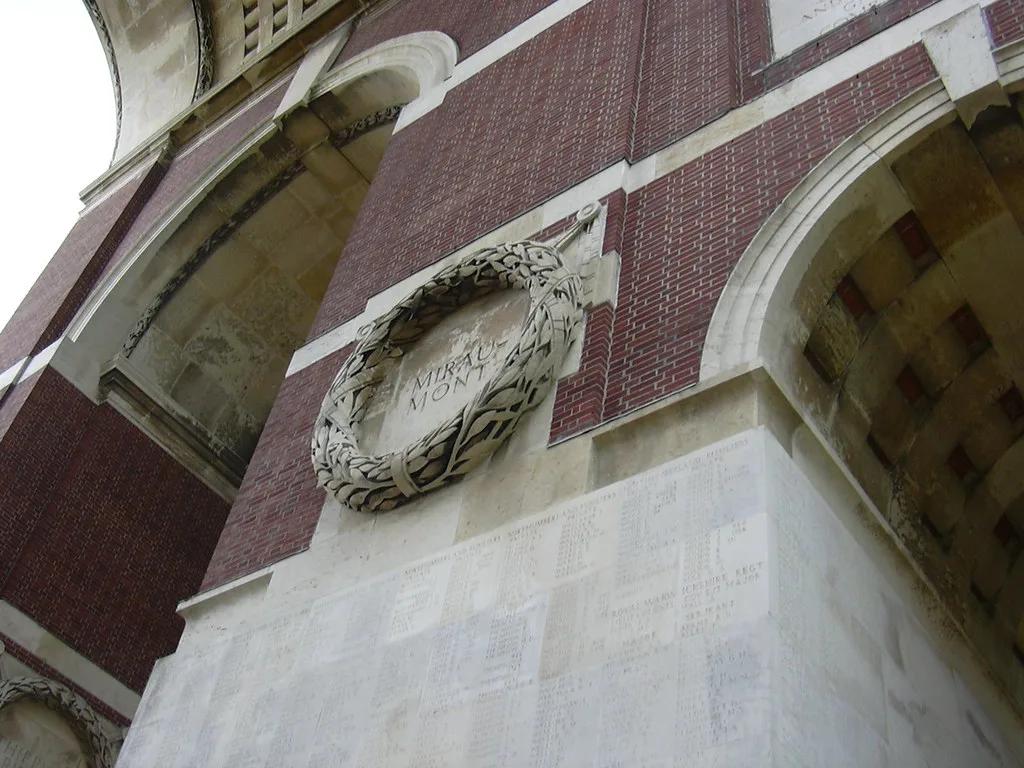
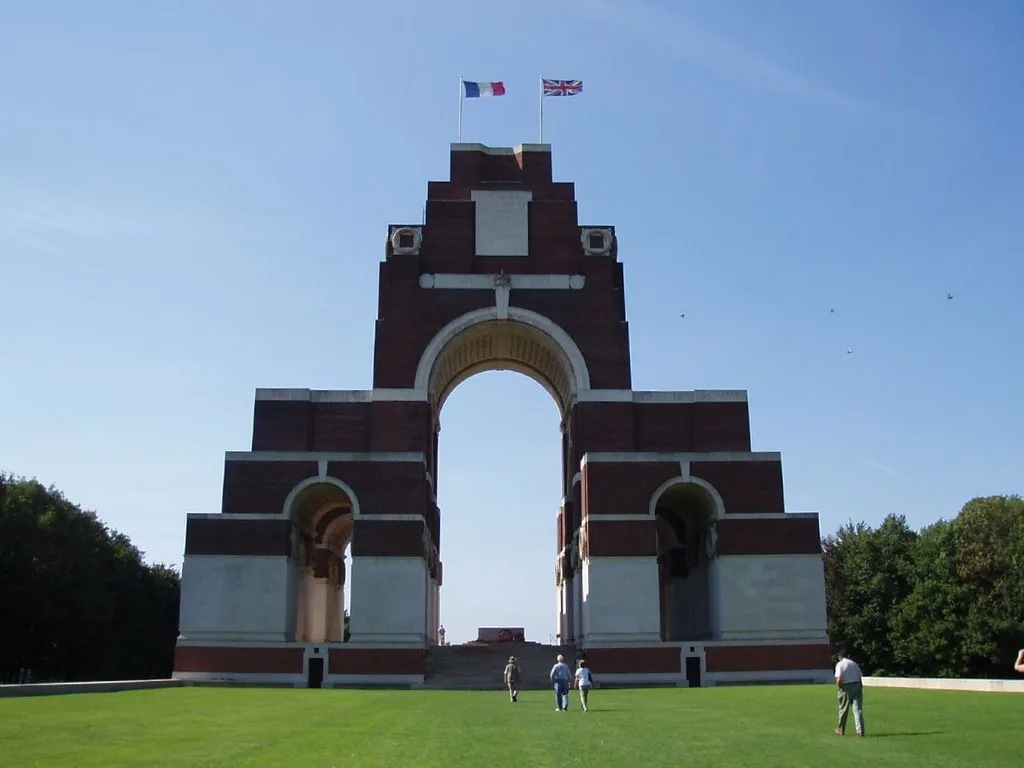
Thiepval Memorial is the largest of the memorials CWGC built for casualties with no known grave. Sir Edwin Lutyens designed it, and its inauguration in 1932 marked the essential completion of the First World War commemoration programme. Visit when the database lists Thiepval as the place a relative is commemorated, and bring the panel reference.
Tracing a missing relative here means working from that panel reference rather than a grave number. Visitor information for the area is on the Somme Tourism site. Skip it if your relative has a named grave, since a cemetery visit will serve you better.
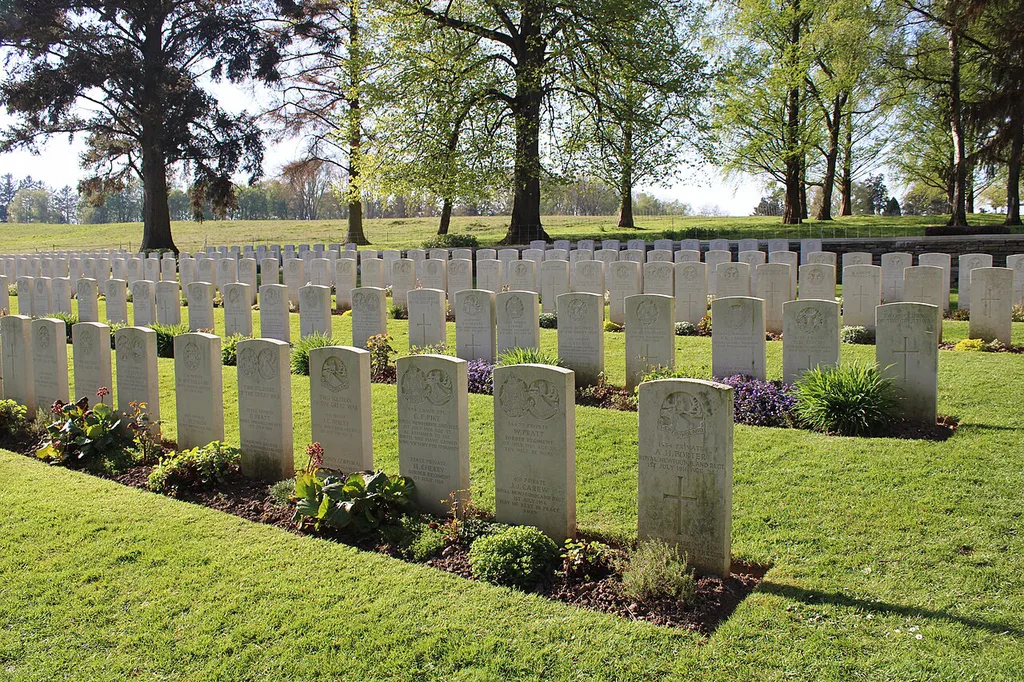
2. Forceville Communal Cemetery and Extension
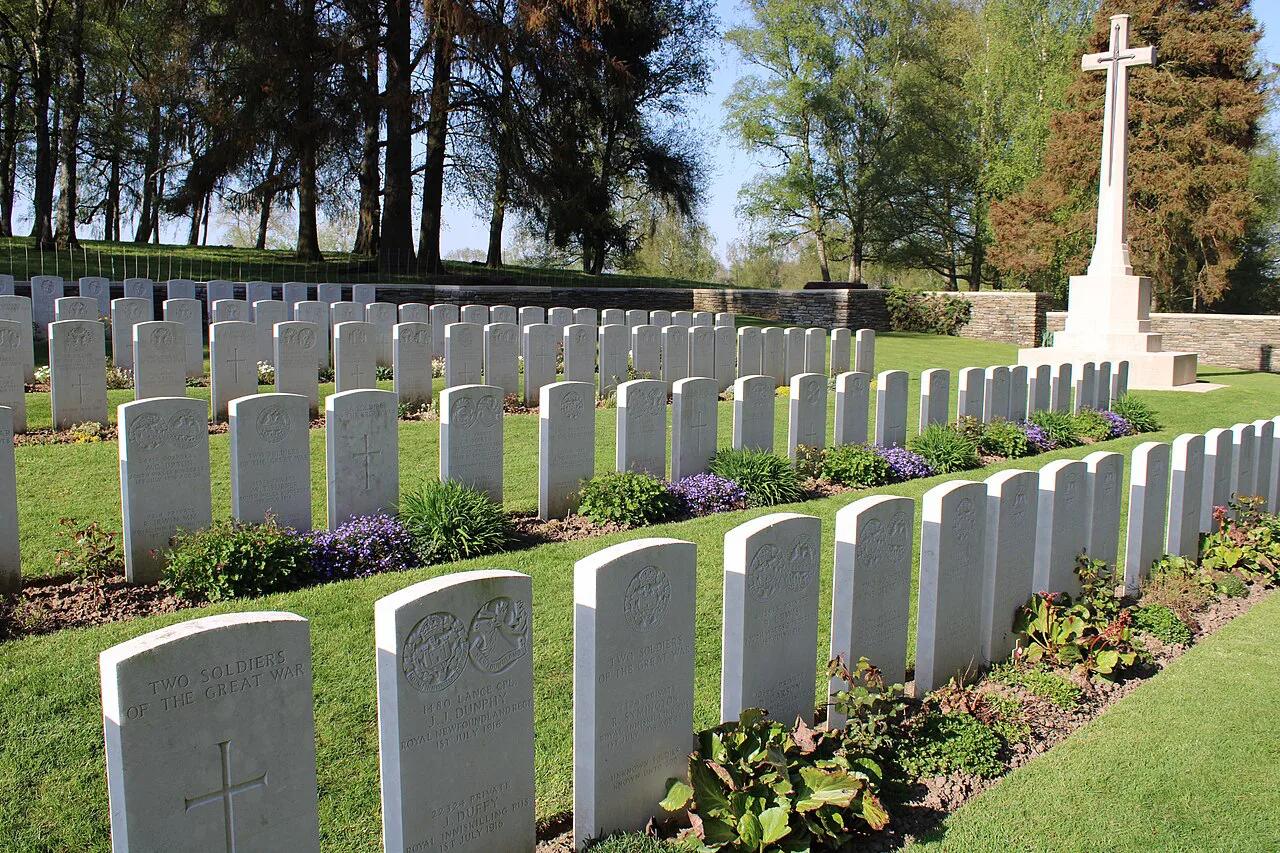
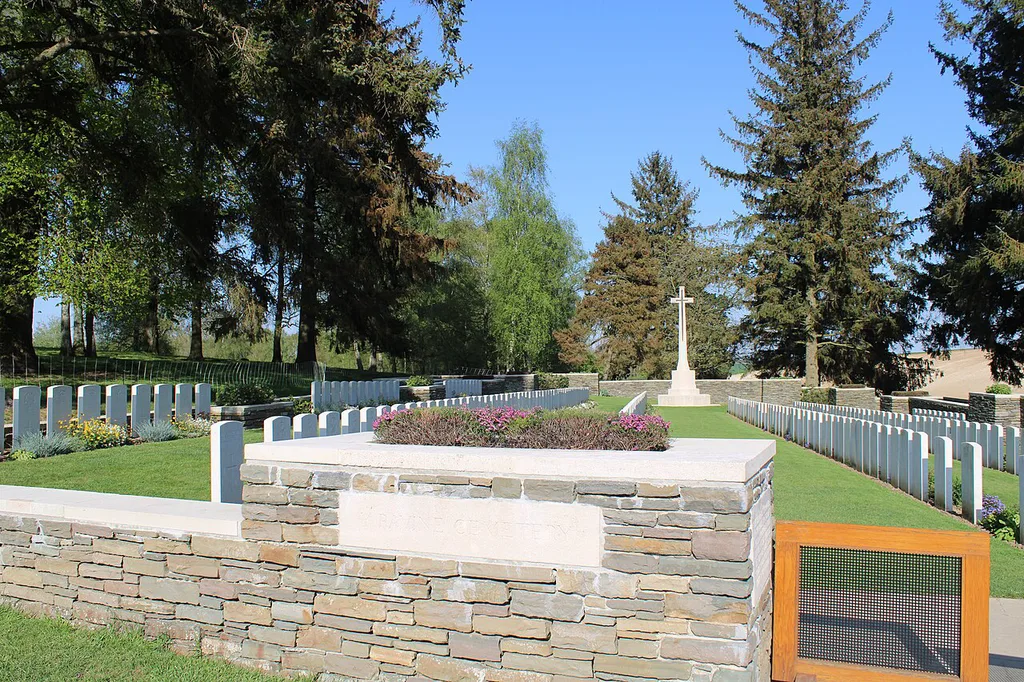
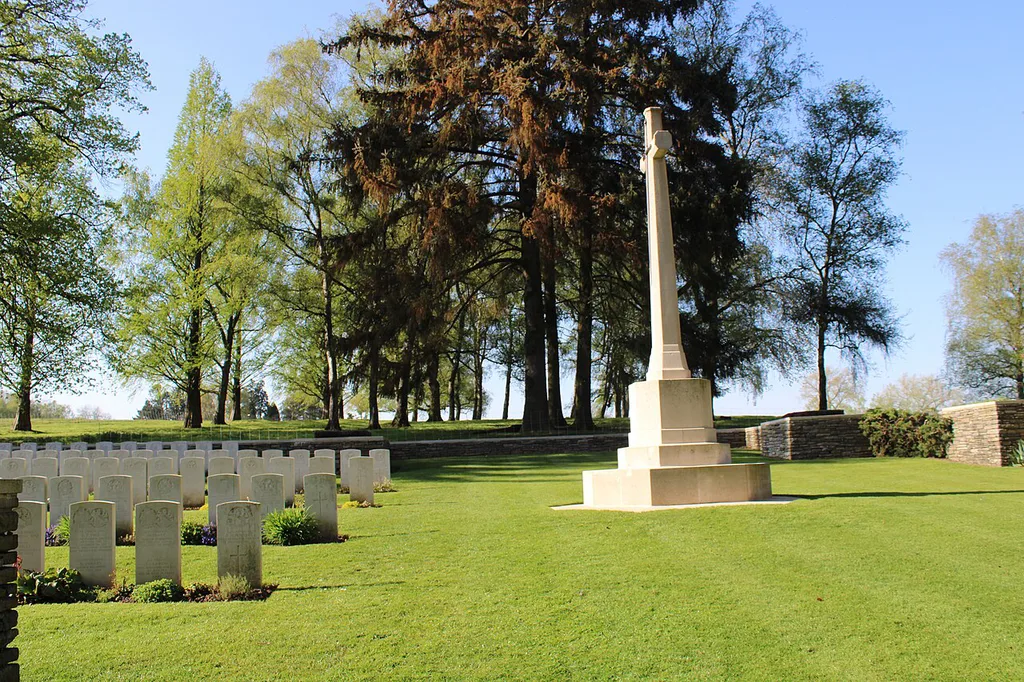
Forceville Communal Cemetery and Extension was one of 3 experimental cemeteries CWGC built in 1920, alongside Le Tréport and Louvencourt. It was judged the most successful and became the template for the Commission's building programme. After consulting garden designer Gertrude Jekyll, the architects built a walled cemetery with uniform headstones in a garden setting.
Cost overruns at all 3 sites forced adjustments, including a 1 metre limit on cemetery wall height. Blomfield's Cross of Sacrifice and Lutyens' Stone of Remembrance complete the pattern that later cemeteries repeat. Choose it to understand why the cemeteries look the way they do, and skip it if you want a memorial on the scale of Thiepval.
3. Vimy Memorial, Canada's memorial to the missing
Vimy Memorial is Canada's memorial to the missing in France. Canada, like Australia and India, built its own memorial for its missing rather than relying on a shared one. Work finished in 1936, 4 years after Thiepval was inaugurated. It suits visitors whose database search returns a memorial name instead of a plot and row.
Check the record first to confirm a name appears here and on which panel. Descendants of Canadian soldiers will find wider routes in our Canadian war sites guide. Skip it if the casualty has a named grave in a cemetery elsewhere.
4. Villers-Bretonneux Memorial, Australia's memorial to the missing
Villers-Bretonneux Memorial is Australia's memorial to the missing in France, and it was not completed until 1938. It follows the principle that every name is commemorated individually, whatever the rank. Australian visitors can add the Sir John Monash Centre in Villers-Bretonneux, a visitor centre that sets its own opening hours.
Search the database for the panel reference before you go. Further stops are covered in our Australian war sites guide. Skip it if your family search points to a named grave, such as at Fromelles.
5. Fromelles (Pheasant Wood) Military Cemetery
Fromelles (Pheasant Wood) Military Cemetery is the most recently dedicated CWGC cemetery. An exploratory excavation in 2008 found mass graves at the edge of Pheasant Wood outside Fromelles. 250 British and Australian bodies were excavated from 5 mass graves and interred in the newly built cemetery.
It was the first new CWGC cemetery in more than 50 years. Visit if you want to see a cemetery created after 2008, and treat it as a place of mourning, as with every CWGC site. Skip it if you are looking for a memorial to the missing, because this is a cemetery.
6. Dieppe Canadian War Cemetery, Normandy
Dieppe Canadian War Cemetery, completed in 1949, was the first of 559 new cemeteries CWGC built after the Second World War. That programme also included 36 new memorials. CWGC erected over 350,000 new headstones in this period, many from Hopton Wood Stone.
A five-year horticultural renovation programme had addressed wartime neglect by 1950. Normandy visitors can add the Juno Beach Centre, which covers Canada's role in the Second World War. Skip it if your focus is the First World War, because the Somme sites above fit better.
Which commonwealth war graves site fits your purpose
Pick your purpose first, then the site. Lutyens designed both Thiepval and the Arras Memorial, so they suit a route linking the Somme and Arras.
| Visitor | Start with | Why |
|---|---|---|
| Family search for a named grave | The cemetery listed in the CWGC database | A named grave means a cemetery, not a memorial |
| First-time visit | Thiepval Memorial, then Forceville | One shows scale, the other shows the design template |
| School or group | Thiepval plus Forceville | Compare a memorial to the missing with a template cemetery |
| New Zealand descendant | Our New Zealand war sites guide | Routes grouped by nationality |
| Indian descendant | Neuve-Chapelle Memorial and our Indian memorials guide | Neuve-Chapelle commemorates the forces of India |
| Wreath-laying visit | A cemetery with a named grave | See the etiquette section below |
Why the cemeteries look the way they do
A committee under Frederic Kenyon reported in November 1918 that bodies should not be repatriated and that uniform memorials should avoid class distinctions. Sir Herbert Baker, Sir Reginald Blomfield and Sir Edwin Lutyens became principal architects in 1918, with Rudyard Kipling as literary adviser. Public outcry followed, and Parliament debated the policy on 4 May 1920 before the Commission's principles were backed. Between 1920 and 1923, CWGC shipped 4,000 headstones a week to France. By 1927, over 500 cemeteries had been built, with 400,000 headstones. Blomfield designed the Cross of Sacrifice, and Lutyens designed the Stone of Remembrance.
Cost overruns at the 1920 experimental sites produced a 1 metre limit on cemetery wall height. Look for the walls at Forceville, the template site.
Planning a visit: access, timing and costs
CWGC cemeteries are generally free to enter, so transport, a guide and accommodation are your real costs. Check hours and ceremony dates on cwgc.org, then see cemetery routes in France for planning.
| Option | Access | Best for | Who should skip |
|---|---|---|---|
| Car or taxi | Reaches rural Western Front cemeteries | Visiting several cemeteries and memorials | Anyone uncomfortable driving abroad |
| Public transport | Sparse near rural cemeteries | One named destination with time to spare | Anyone planning remote cemeteries without a car |
| Guided tour | Handles route and access for you | First-time visitors and groups | Visitors who want to stay as long as they like at one grave |
| Around Anzac Day or Remembrance Day | Busier sites and tighter accommodation | Joining a ceremony | Anyone wanting a quiet visit to a single grave |
Etiquette and laying a wreath
CWGC publishes visiting guidance on cwgc.org, and its rules take priority over general advice. Treat each cemetery as a place of mourning: keep voices low and dress simply. Ask CWGC about photography, grave rubbings and flowers before you go. Commission gardeners look after the planting, so leave the grounds as you find them. For flowers or a wreath, read our guide on how to lay a wreath respectfully.
Common mistakes to avoid
Most wasted trips come from the same four errors.
| Mistake | Fix |
|---|---|
| Searching a memorial name for a buried person | Check whether the record shows a grave reference or a memorial panel |
| Relying on public transport for rural sites | Arrange a car, taxi or guided tour |
| Arriving during a ceremony without checking | Look up ceremony times on official sites first |
| Treating the site as a photo stop | Treat it as a place of mourning and follow CWGC guidance |
Frequently Asked Questions
Who can be buried in a Commonwealth War grave?
Anyone who died in Commonwealth military service, or of causes attributable to service, during the designated war years is commemorated. Those periods run from 4 August 1914 to 31 August 1921 for the First World War. For the Second World War they run from 3 September 1939 to 31 December 1947. Civilians killed by enemy action in the Second World War are recorded in the Civilian War Dead Roll of Honour.
What are the Commonwealth War graves?
Most burial sites are pre-existing communal cemeteries and parish churchyards, many in the United Kingdom. Alongside these, CWGC has built approximately 2,500 war cemeteries and maintains more than 200 memorials. Each casualty is commemorated by name on a headstone or on a memorial.
Explore More Guides
Keep planning your trip with these guides.
Guides
- CWGC Find War Dead: How To Search And Plan A Visit
- Commonwealth War Graves in France: Visiting Guide
- Largest Commonwealth War Cemeteries in Europe
- Canadian War Sites in Europe: Vimy, Normandy and More
- Australian War Sites in Europe: Western Front Guide
- New Zealand Memorials in France
- Neuve-Chapelle Indian Memorial
- Laying a Wreath at a War Grave: A Visitor's Guide
Keep planning
Guides on the same trip