Commonwealth War Graves in France: Visiting Guide
How to find, plan and respectfully visit Commonwealth war cemeteries and memorials in France, region by region, from the Somme to Normandy.
In this guide
Last updated November 2026. Commonwealth war graves in France are cemeteries and memorials kept by the Commonwealth War Graves Commission (CWGC), mostly along the Western Front, with a second group in Normandy. Start with the person or battle you are visiting for, then plan by region. Our Commonwealth war graves overview covers the wider picture.
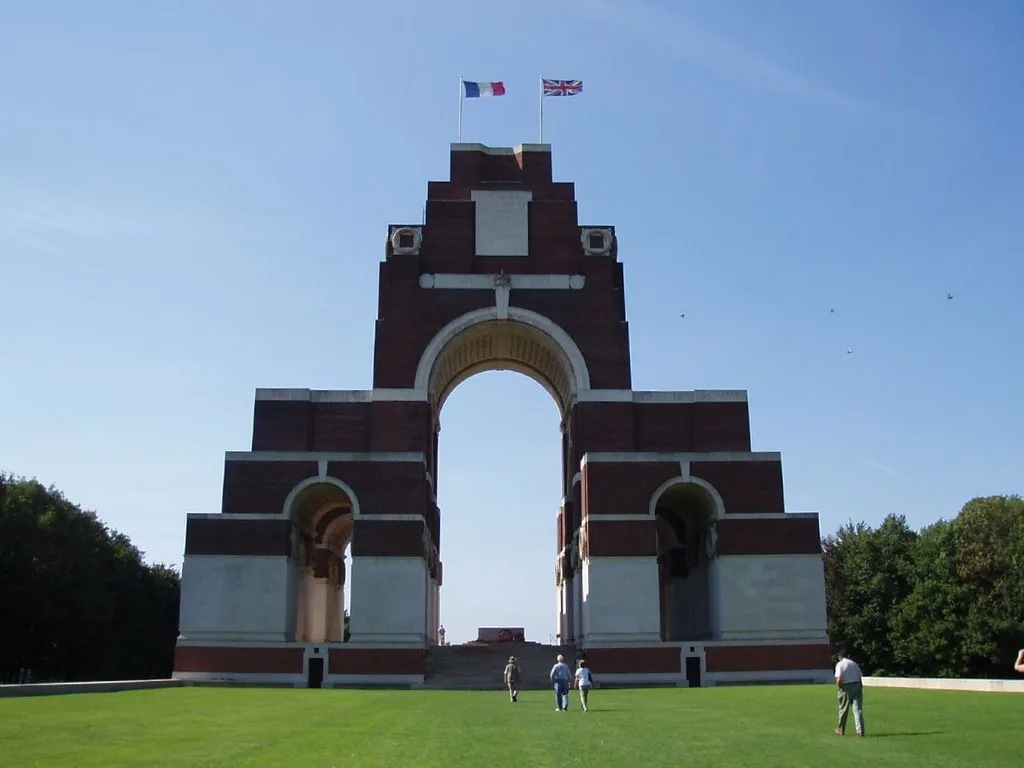
Featured image: René Hourdry, CC BY-SA 4.0, via Wikimedia Commons.
What Commonwealth war graves in France are, and who maintains them
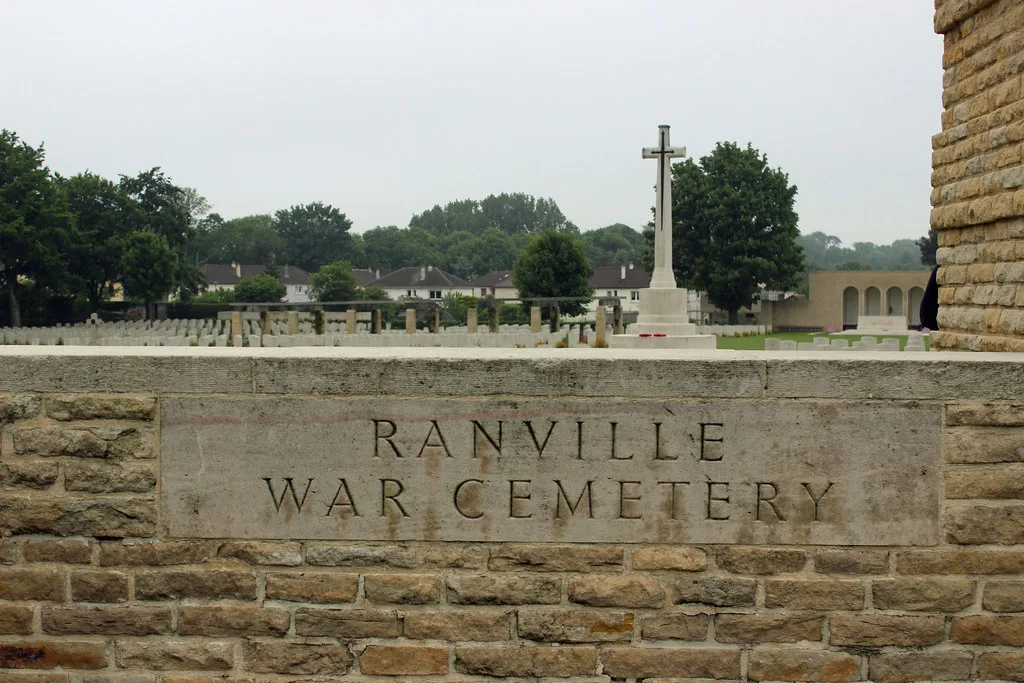
France holds the largest concentration of Commonwealth war graves in Europe from both world wars. Most lie in the Somme, Pas-de-Calais and Nord, with a WWII group in Normandy. The CWGC looks after about 23,000 sites worldwide. They commemorate more than 1.7 million people from the two World Wars. In the Grand Arras area alone, the CWGC cares for about 80 sites. Its French production workshops are at Beaurains, where staff engrave headstones in-house.
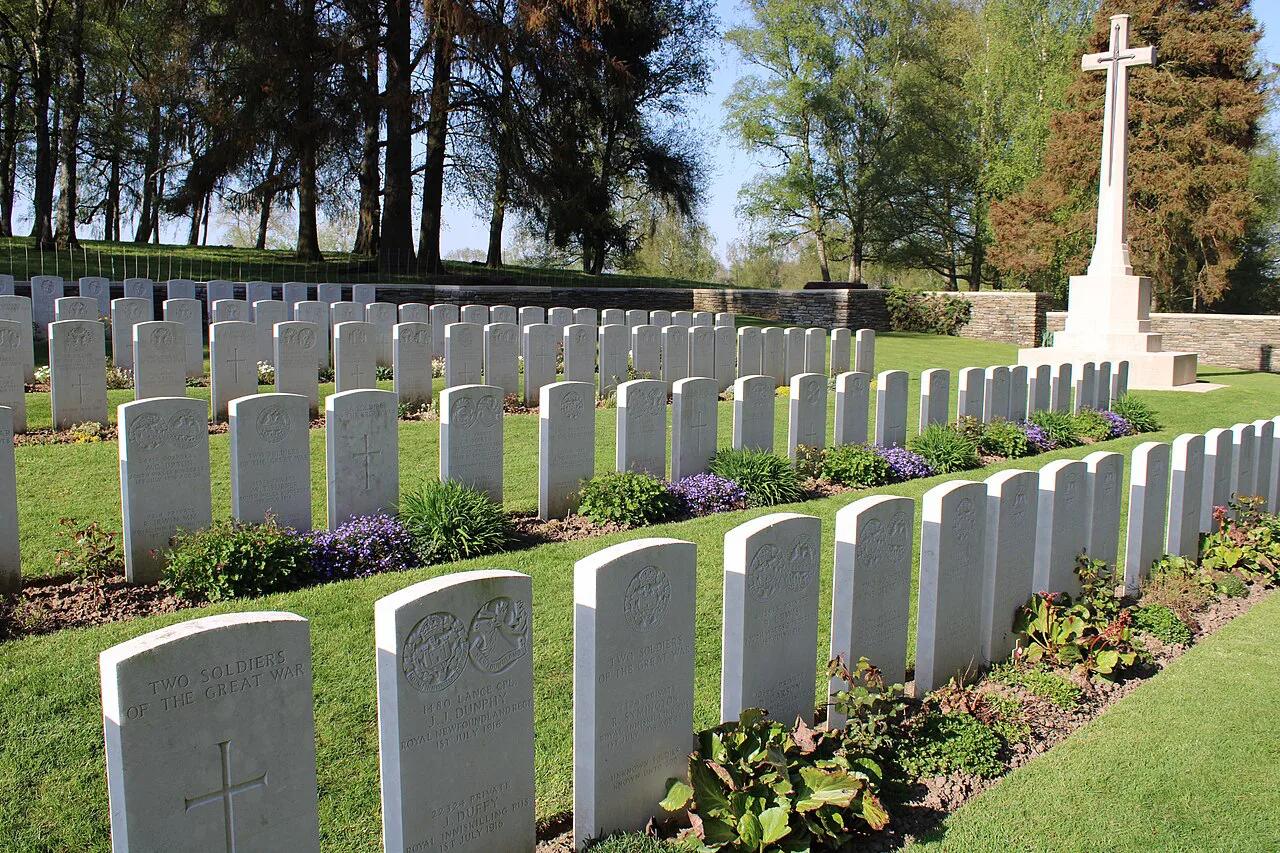
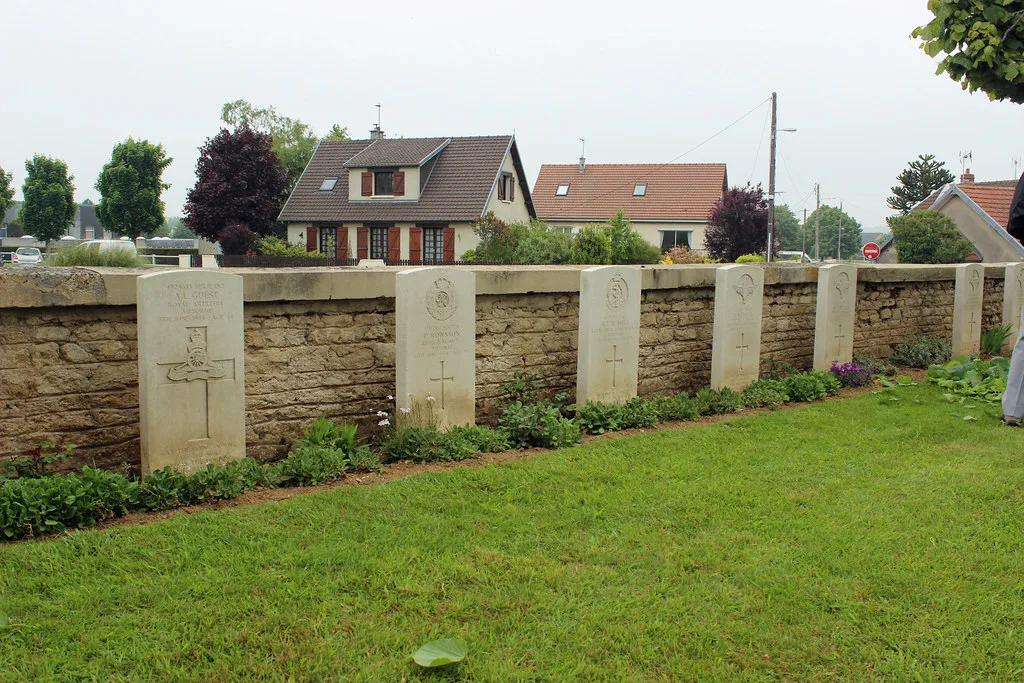
- Cemetery: individual headstones, each marking a named or unnamed burial.
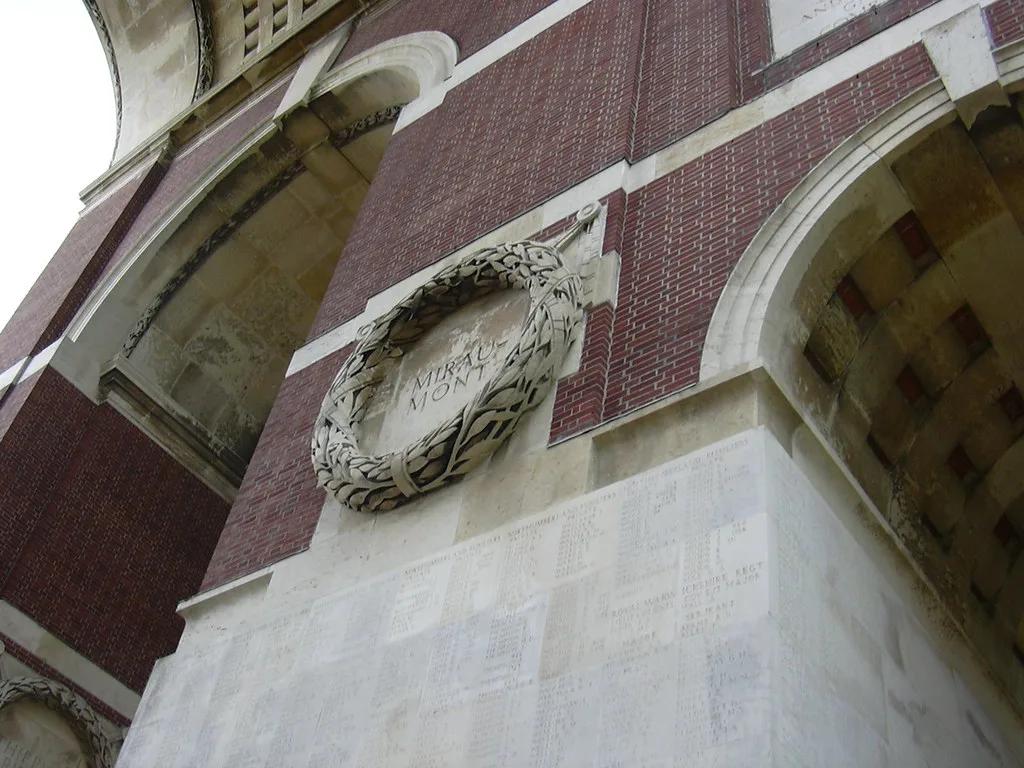
- Memorial to the missing: names carved on walls for people with no known grave.
- French or German national cemetery: a separate category, not maintained by the CWGC.
Find the person or battle you're visiting for
Search the CWGC record first if you are looking for a relative. The record gives a cemetery or memorial, a plot and a grave reference. That reference decides the whole trip. Our guide to finding a war dead record explains how to read it. If you have no named person, plan by region instead and pick a battle or sector that matters to you.
| Record shows | What it means for your visit |
|---|---|
| Cemetery, plot, row and grave number | You can walk to one named headstone. Save the reference before you leave. |
| Name on a memorial | No known grave exists. You visit a wall of names, not a headstone. |
| Special memorial headstone | Burial is believed to be in the cemetery, but the exact spot is uncertain. |
Main regions and what each is known for
Region shapes the trip more than any single cemetery. Somme and Arras are WWI landscapes dense with small and large cemeteries. Normandy is the WWII counterpart. For the biggest sites, see our list of the largest Commonwealth war cemeteries. Local visitor information for the Somme is on the Somme Tourism site.
| Region | Main period | Typical site types | Access note |
|---|---|---|---|
| Somme | WWI | Village cemeteries, large cemeteries, memorials to the missing | Many sites sit on rural roads, so a map pin matters. |
| Arras area (Grand Arras) | WWI | About 80 CWGC sites, plus the Beaurains workshops | Dense cluster, so a short hop between sites is common. |
| Nord / Pas-de-Calais | WWI | Cemeteries in farmland and former mining country | Small sites may be far from public transport. |
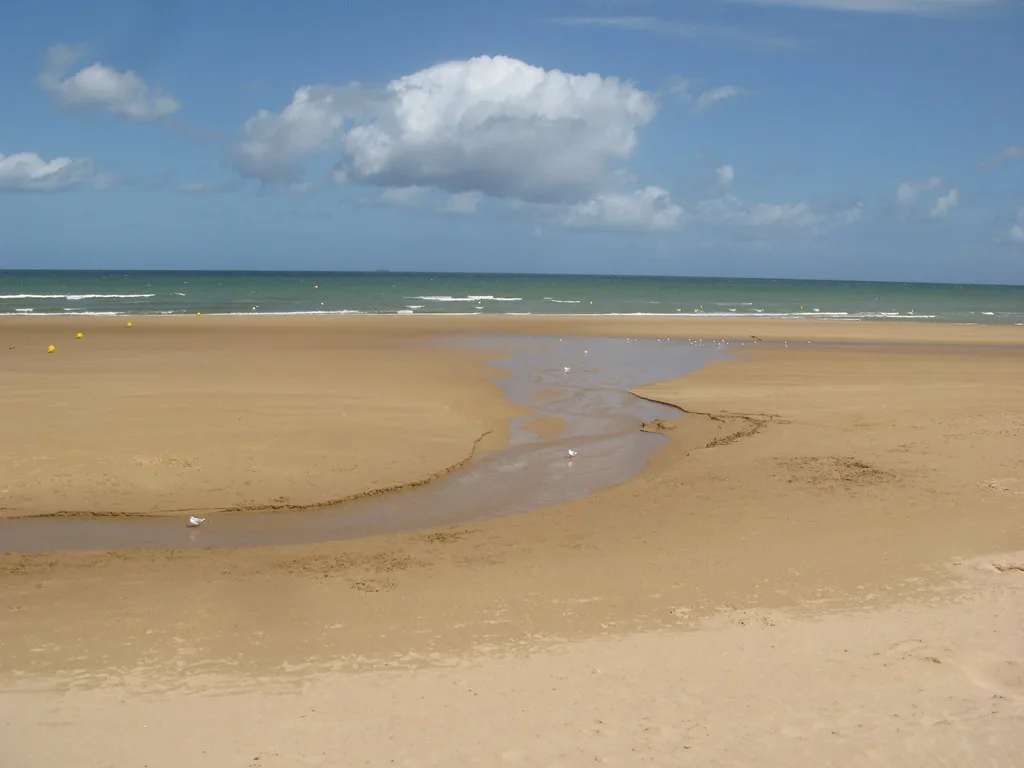
| Normandy | WWII | Cemeteries linked to the 1944 landings | Often combined with museum visits on the coast. |
Planning a visit: time, transport and access trade-offs
A car gives the most freedom. Many small cemeteries are rural and are often not on public transport. A guided tour trades flexibility for local knowledge and a driver. Rail works for towns such as Arras, but you will usually need a taxi or a bike for the last stretch. As an estimate, 2 to 4 sites make a realistic day if you want time at each. A drive-through of more sites leaves little room to stand quietly. Many cemeteries are unstaffed and open to walk into, with a register at the entrance. Winter light fades early, so start in the morning. A lodging base in Arras suits the Arras area. The Beaurains interpretation centre was announced to open at the end of June in a year not stated by the local source, so check its status with Grand Arras tourism before building a day around it.
Visiting respectfully
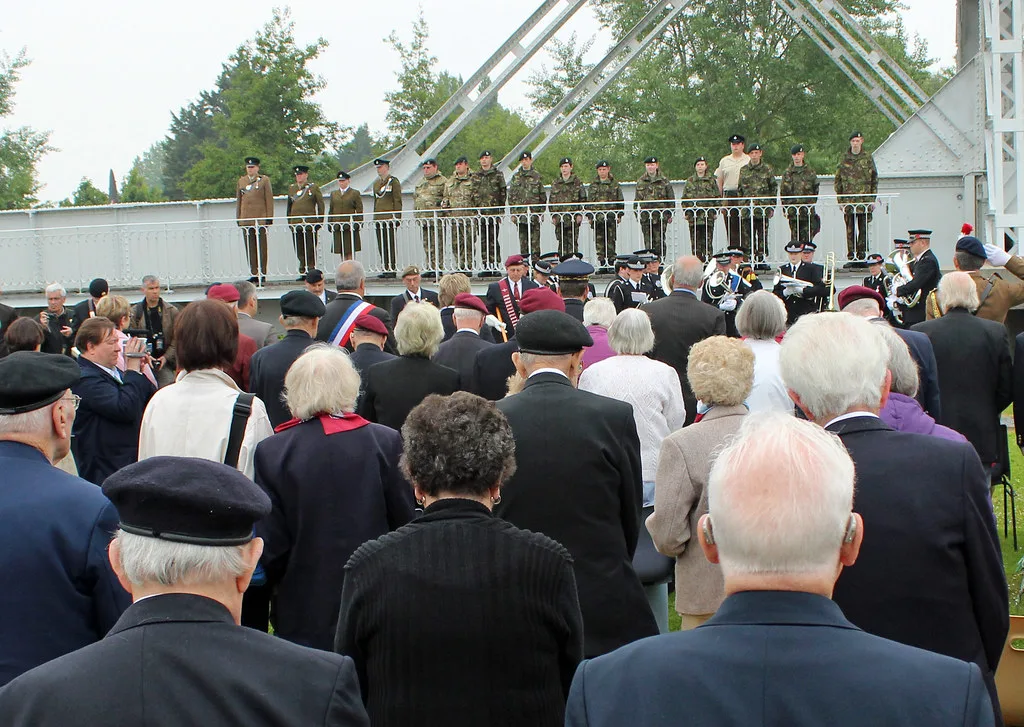
These are graves, so keep voices low and walk along paths rather than between headstones. Do not touch, lean on or move headstones. Photograph the landscape and headstones with care, and avoid posing on or beside graves. Leave any entrance register or visitor book as you found it, and sign it if you wish. If you plan a tribute, read our guide to Laying a Wreath at a War Grave: A Visitor's Guide. The Royal British Legion is the usual source for poppy crosses in the UK.
Visiting for your country
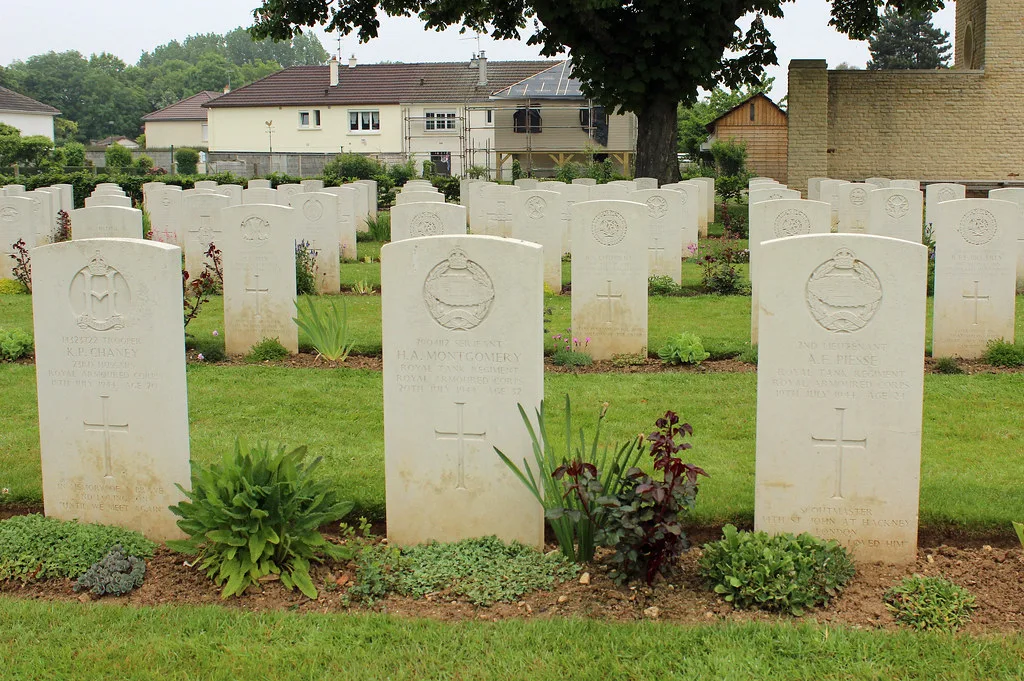
Each nation has its own memorials and commemorations in France. Pick the page that matches your family history.
- Canada: see Canadian War Sites in Europe: Vimy, Normandy and More. In Normandy, the Juno Beach Centre tells the Canadian story of D-Day.
- Australia: see Australian War Sites in Europe: Western Front Guide. The Sir John Monash Centre is the Australian interpretive centre on the Western Front.
- New Zealand: see New Zealand Memorials in France: Le Quesnoy & Where to Visit.
- India: see Neuve-Chapelle Indian Memorial: Visitor Guide & Context.
Mistakes to avoid
A few errors cause most wasted trips. Notre Dame de Lorette is a French national cemetery, not a CWGC site, so do not use it as a stand-in for a Commonwealth grave.
Cap the route before you set out: 2 to 4 sites make a realistic day, so overpacking is the easiest error to avoid.
- Confusing CWGC sites with French or German national cemeteries.
- Assuming a named grave exists when the person is on a memorial to the missing.
- Driving to a rural cemetery without a map pin or grave reference.
- Overpacking the day with too many sites.
Frequently Asked Questions
What is a Commonwealth War grave?
It is a burial or memorial for a Commonwealth service member of the First or Second World War, maintained by the CWGC. Headstones mark named burials, and walls of names mark the missing.
Where are war graves in France?
Most Commonwealth war graves in France lie along the Western Front, in the Somme, Pas-de-Calais and Nord. Normandy holds the main WWII group. French and German national cemeteries are separate sites.
Keep planning
Guides on the same trip