
Trench of Bayonets (Tranchée des Baïonnettes): Verdun Guide
What the Trench of Bayonets is, which parts are legend and which are documented, and how to visit it with the Douaumont ossuary and Fort Douaumont.
In this guide
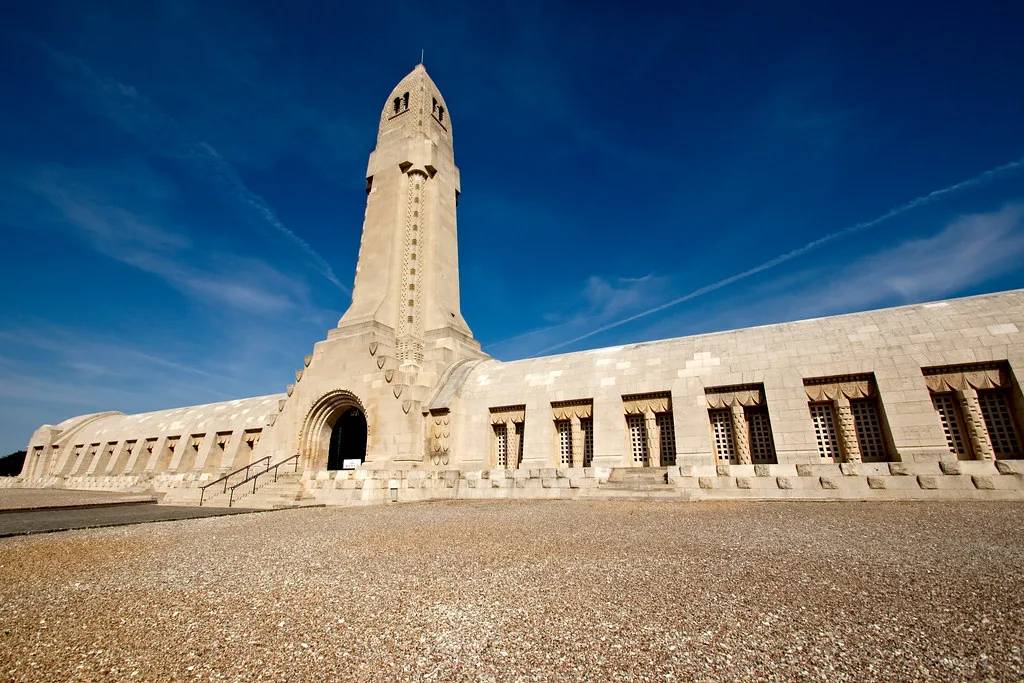
Last updated November 2026: the Trench of Bayonets (Tranchée des Baïonnettes) is a protected First World War memorial near Douaumont, on the Verdun battlefield. You see a covered concrete shelter with rifle tips showing, and a visit takes about 15 to 30 minutes in our editorial estimate. Most visitors stop here after the Douaumont Ossuary: Visiting Guide and What to See on a loop of the wider 7 Best Sites on the Verdun Battlefield: What to See and How Long You Need.
Featured image: Hotel Kaesong, CC BY-SA 2.0, via Flickr.
What the Trench of Bayonets (Tranchée des Baïonnettes) is
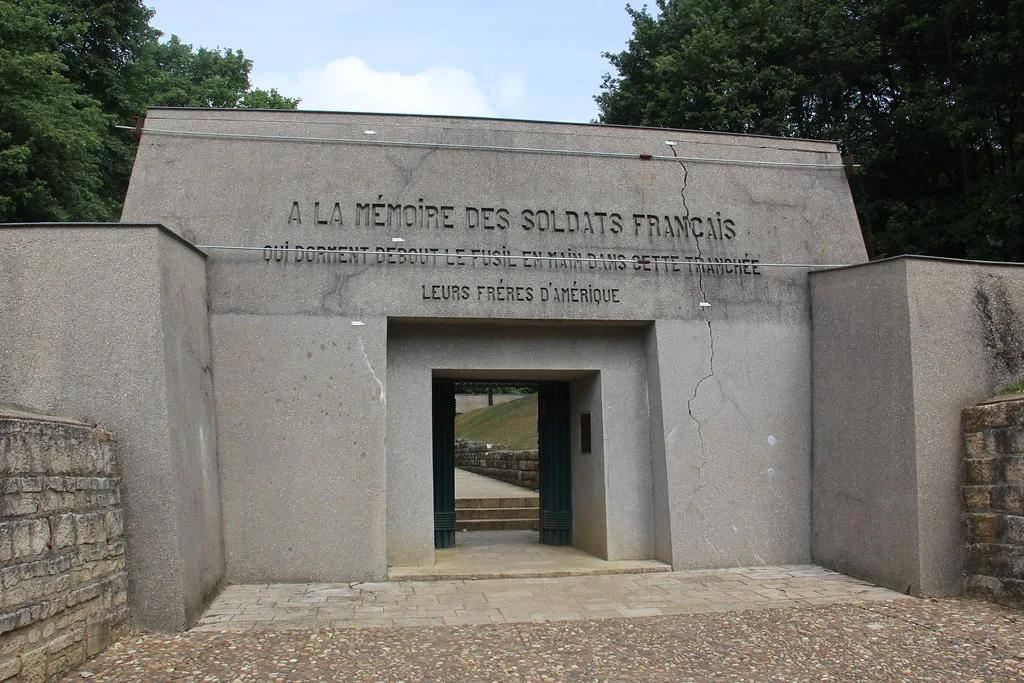
It is a memorial built over a stretch of front-line trench from the 1916 Battle of Verdun. A long covered structure protects the ground, and rifles with bayonets stand upright inside. Sources place the site on the D913 at Douaumont-Vaux, about 10 km (6 miles) north of Verdun. Nothing here is an open trench you can walk through. It is a memorial you look into, so set expectations accordingly.
- Location: D913, 55100 Douaumont-Vaux, close to the Douaumont ossuary.
- Time needed: 15 to 30 minutes (editorial guidance).
- Hours: listings differ, so see the hours section below.
- Cost: see the official Verdun tourism page for current access terms.
The story: legend versus the record
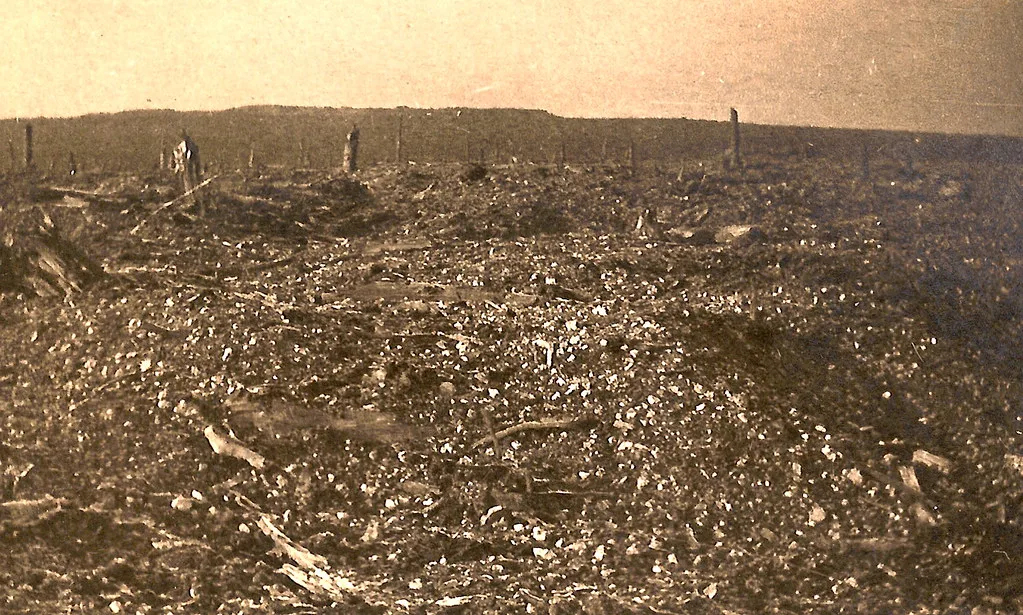
According to the traditional account, two companies of the 137th Infantry Regiment were sheltering with bayonets fixed on 12 June 1916. A heavy bombardment is said to have buried them alive where they stood. Their rifle tips are said to have been noticed sticking out of the ground about three years later. That version is the one you will hear most often. It rests on tradition, and military historians question parts of it.
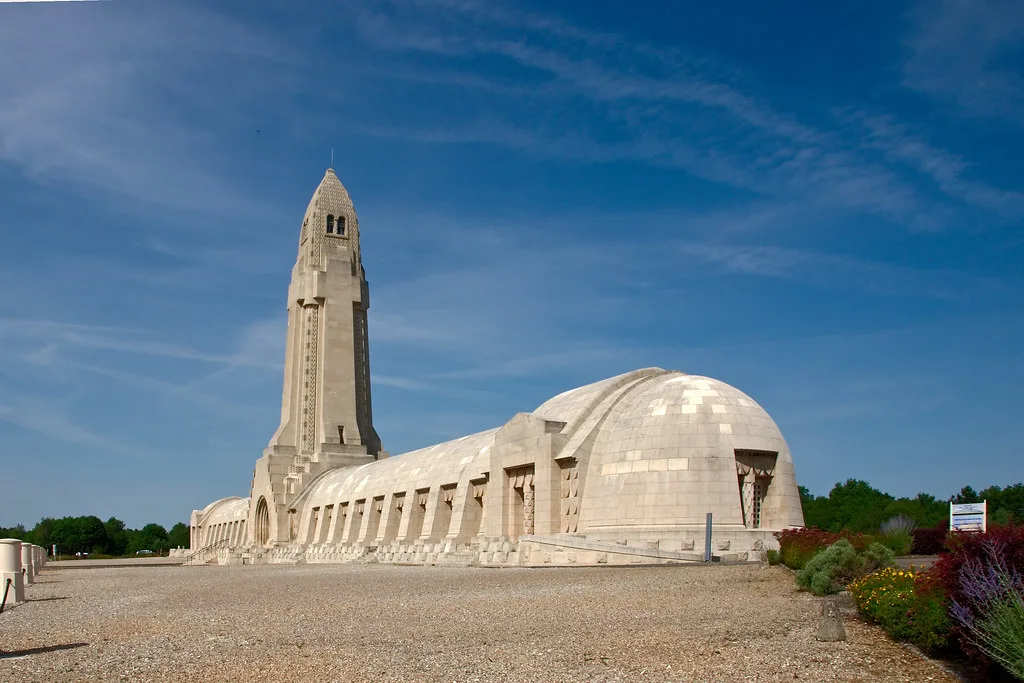
Several details are better documented. A trench was found with rifles and bayonets pointing up from the soil, and burials were identified there. After excavation, fourteen named soldiers are said to have been moved to the Fleury cemetery, and seven unidentified men remain. Accounts also say the rifles were repositioned during restoration. So the bayonets you see are a restored arrangement, not an untouched scene. A covered shelter was added after the war, said to have been funded by an American donor. The memorial's official opening is given as 8 December 1920, and André Ventre is credited as architect. Treat these dates and names as leads until you have checked them against the official Verdun tourism office page.
What you see today
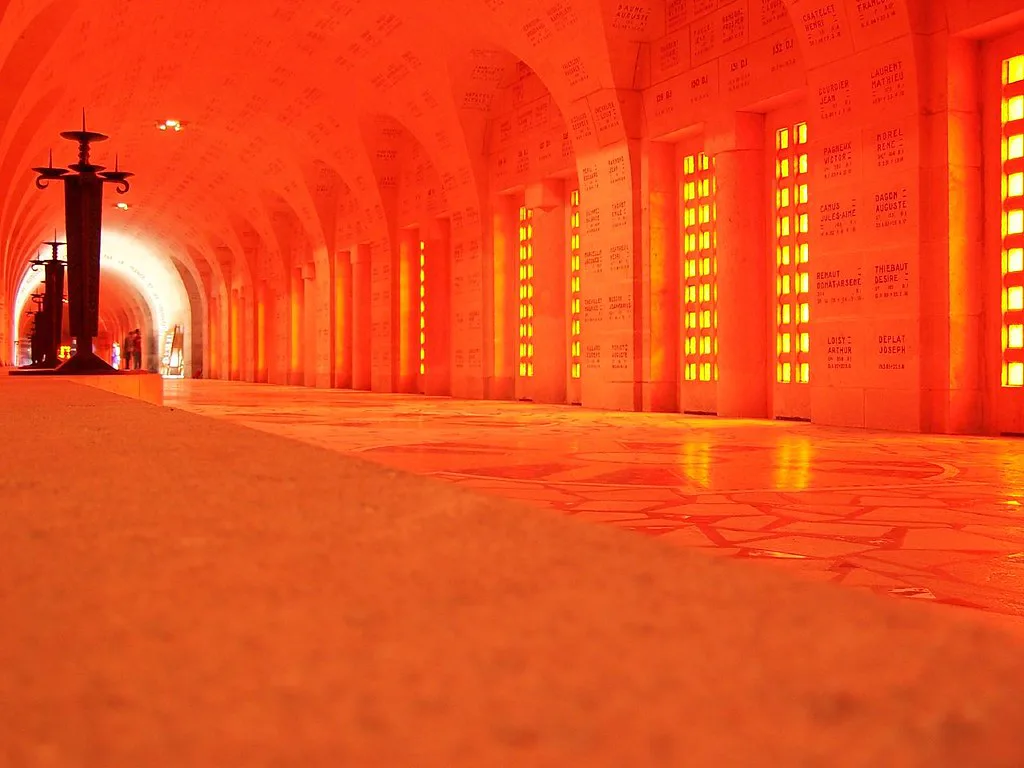
A long concrete roof covers the trench. Inside, bayonet tips rise from the ground along the line where the soldiers were found. Visitors view the area from the entrance and the structure's edge rather than walking along the trench itself. Steps near the shelter can be slippery in rain, so wear shoes with grip.
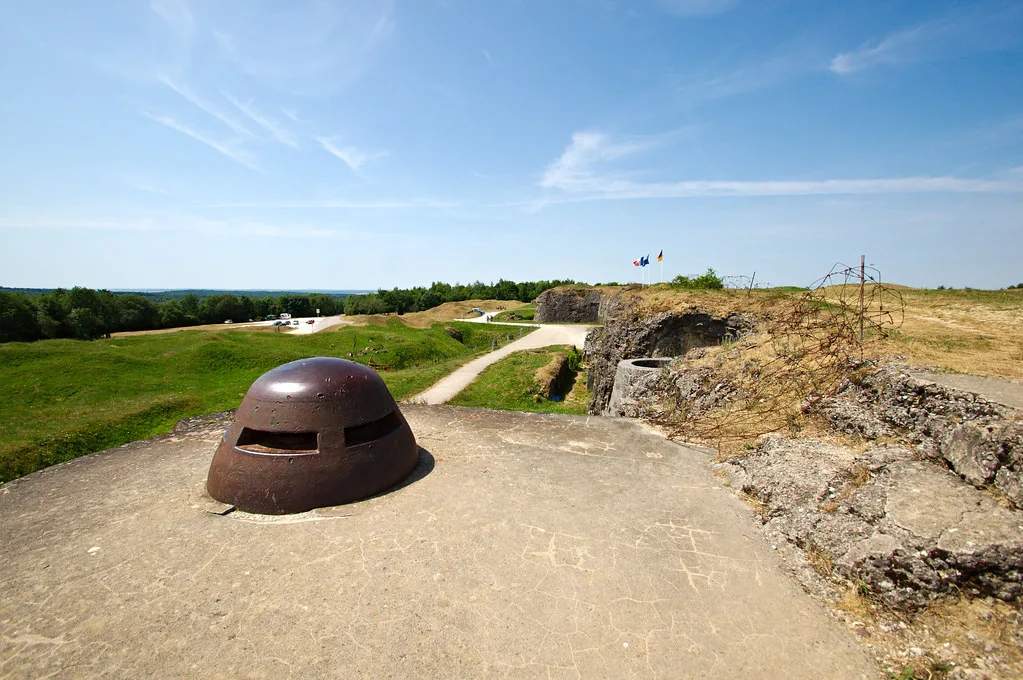
The visit works best as context. For the wider history, the Verdun Memorial Museum: Visit Guide and Plan explains the 1916 battle. The story of Fleury-devant-Douaumont connects to the destroyed villages of Verdun, one of which lies about 1.8 km from the shelter.
How to get there and how long to stay
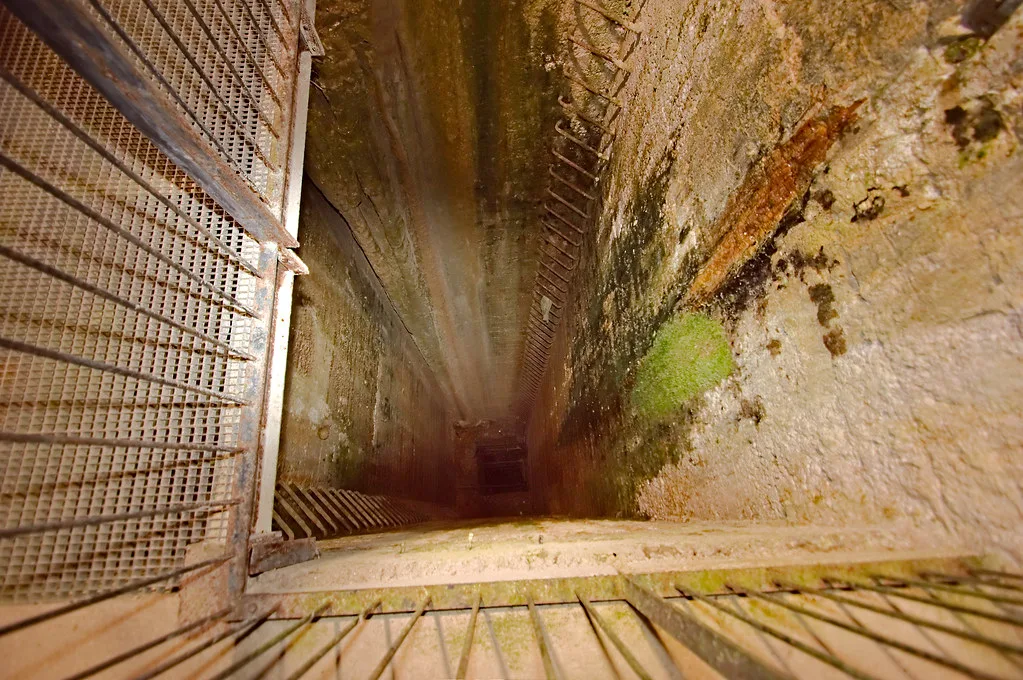
Reaching the memorial is simplest by car from Verdun along the D913. The Douaumont ossuary lies about 679 m away, a short walk or drive. Public transport to the battlefield is limited, so ask the tourist office about current options. Without a car, consider the Verdun Battlefield Tour: Guided, Self-Drive or Day Trip or a taxi. If you are coming from the capital, the Verdun day trip from Paris covers train and driving logistics.
| Option | Best for | Time at the trench |
|---|---|---|
| Own car on the D913 | Flexible loop with several stops | 15 to 30 minutes |
| Guided battlefield tour | Visitors without a car | Set by the tour; usually a brief stop |
| Taxi from Verdun | Short, single-purpose trips | 15 to 30 minutes plus waiting time |
| Walk from the ossuary | Visitors already at Douaumont | About 679 m each way |
Visiting well: hours, access, etiquette and weather
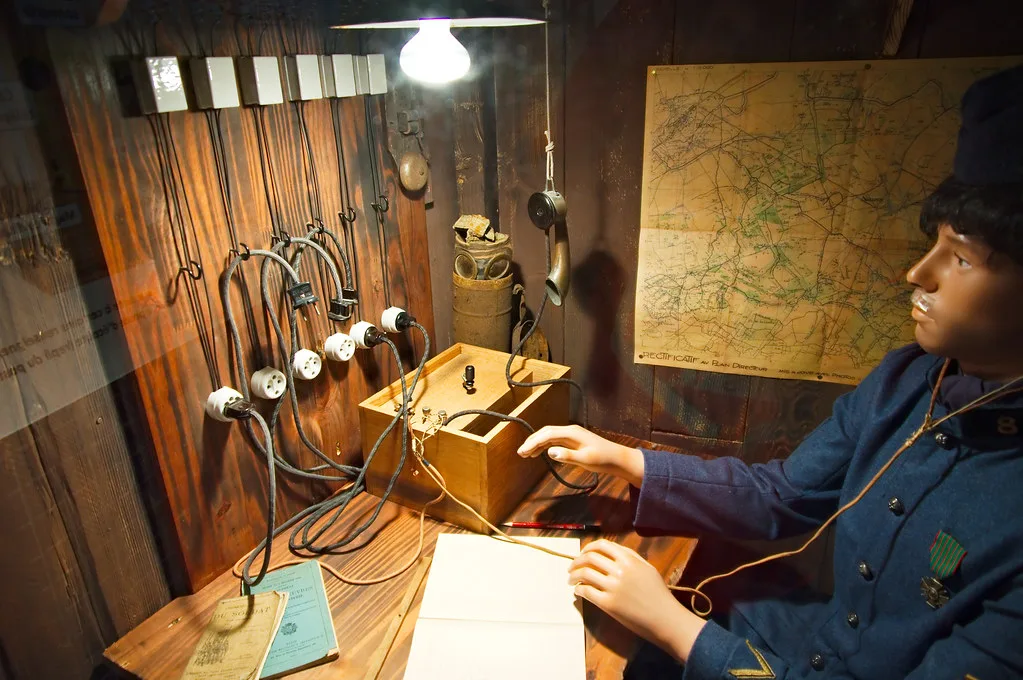
Published hours conflict. One listing says the memorial is always open, while another gives daily 10:00 to 18:00. Check the Verdun tourism page before you go, and do not rely on a single listing. This is a place of remembrance where soldiers remain buried, so keep voices low and avoid climbing on barriers. Photography is possible, but be discreet around other visitors. Rain makes the steps slippery, and winter days are short. Plan outdoor stops around daylight.
Combine it with nearby sites
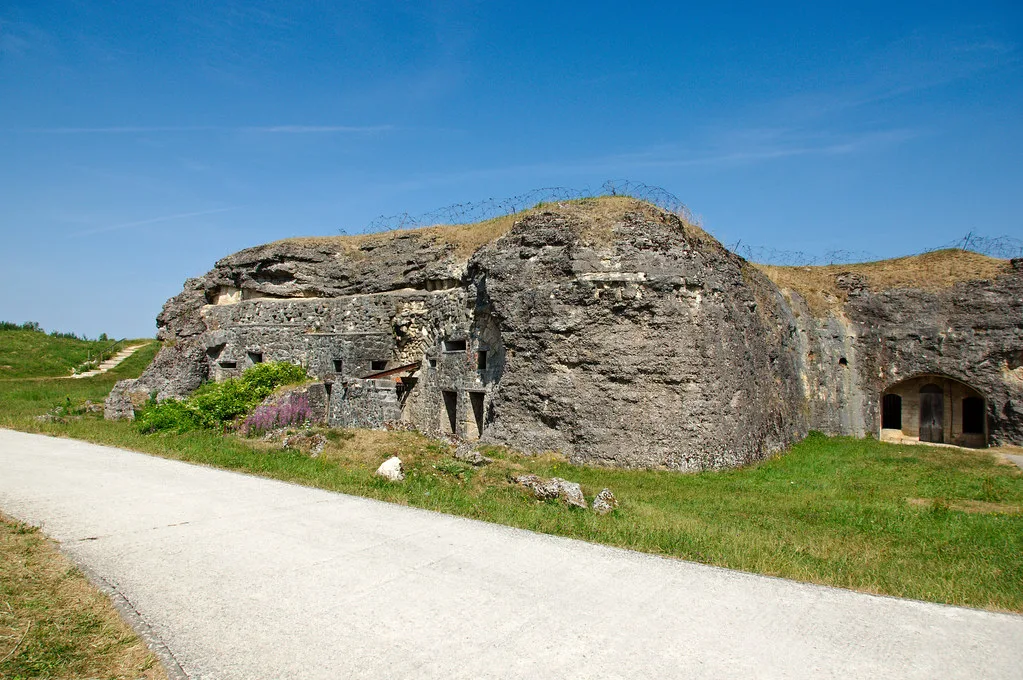
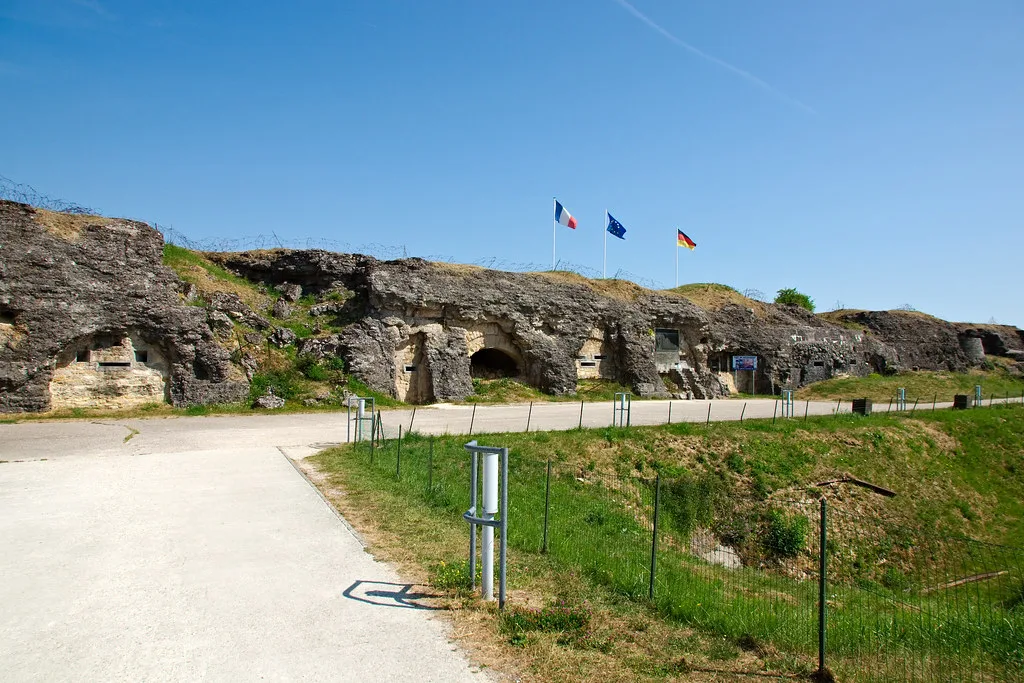
Treat the Trench of Bayonets as one stop in a half-day or full-day loop. Start at the ossuary, then continue to Visit Fort Douaumont: History, Access and Planning. Add Fort Vaux Guide: 1916 Siege, Tickets and Planning for a fuller day. If you stay in town, the Verdun citadel works as an evening add-on. Anyone extending the trip can look at the St. Mihiel American Cemetery: Visitor Guide & What to See or the Butte de Vauquois: Mine Craters, Tunnels and Visiting Guide.
| Site | Who should prioritize it |
|---|---|
| Douaumont ossuary | First-time visitors; the main anchor stop |
| Fort Douaumont | Readers who want to see the fortifications |
| Fort Vaux | Those with a full day and a car |
| Destroyed villages | Visitors interested in the civilian story |
| Verdun Memorial Museum | Anyone who wants context before or after |
Common mistakes to avoid
A few simple errors spoil this short stop.
- Expecting an open, walkable trench. The site is a protected shelter you view from outside.
- Repeating the legend as proven fact. Separate the traditional account from the documented record.
- Trusting one hours listing. Listings conflict, so use the official page.
- Skipping the ossuary. The two stops are close and work together.
- Wearing smooth soles in wet weather. The steps can be slippery.
Keep planning
Guides on the same trip





