
St. Mihiel American Cemetery: Visitor Guide & What to See
Visiting St. Mihiel American Cemetery near Thiaucourt: what to see, how it fits with Verdun, and what to confirm before you go.
In this guide
Last updated November 2026: St. Mihiel American Cemetery stands at the west edge of Thiaucourt in Meurthe-et-Moselle and holds 4,153 American burials from World War I. We'd send American heritage visitors, people tracing an ancestor and road-trippers between Metz, Nancy and Verdun here. If your day is reserved for Verdun's French and German sites, we'd save this stop for a longer trip.
Featured image: Rutger van der Maar, CC BY 2.0, via Flickr.
St. Mihiel American Cemetery quick facts and who it suits
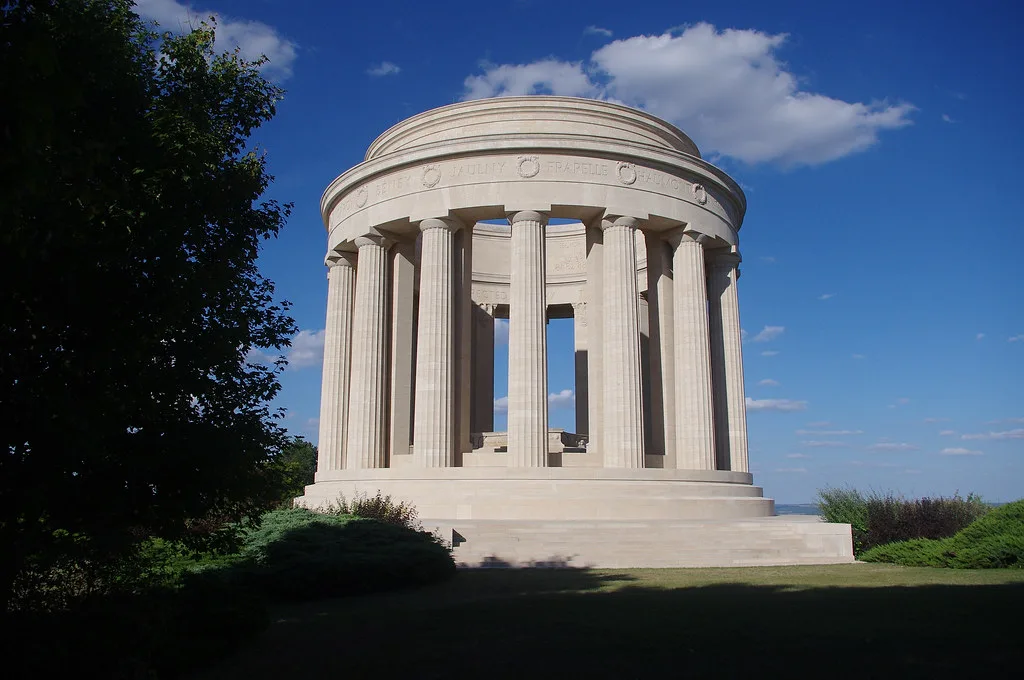
ABMC lists the cemetery at 40.5 acres, with 4,153 burials and 284 names of the missing. Dedication came in 1937, while the architecture was finished in 1934. Those are separate milestones, so you will see both years in print. Most of the dead fell in the St. Mihiel offensive of September 1918, which reduced the salient that threatened Paris. The site also belongs to the UNESCO listing for the funerary and memory sites of the First World War on the Western Front, inscribed in 2023.
| Fact | Detail |
|---|---|
| Location | West edge of Thiaucourt, Meurthe-et-Moselle, Lorraine |
| Area | 40.5 acres |
| Burials | 4,153 |
| Missing | 284 names on the museum walls |
| Dedicated | 1937 |
| Designed by | Architect Thomas Harlan Ellett with sculptor Paul Manship |
Why it's here: the St. Mihiel offensive in brief

Americans fought at St. Mihiel as an independent army for the first time. A General Order of 10 August 1918 established General Pershing's First U.S. Army, and this salient was its first target. Historical summaries record 1,481 aircraft, most borrowed from British and French forces, and more than 555,000 American and 110,000 French soldiers in the attack. They also describe it as the first combat use of American armor and aviation. Shelled ground slowed burial details, and the permanent cemetery was later placed in the middle of the old battleground.
What to see at St. Mihiel American Cemetery, in visit order
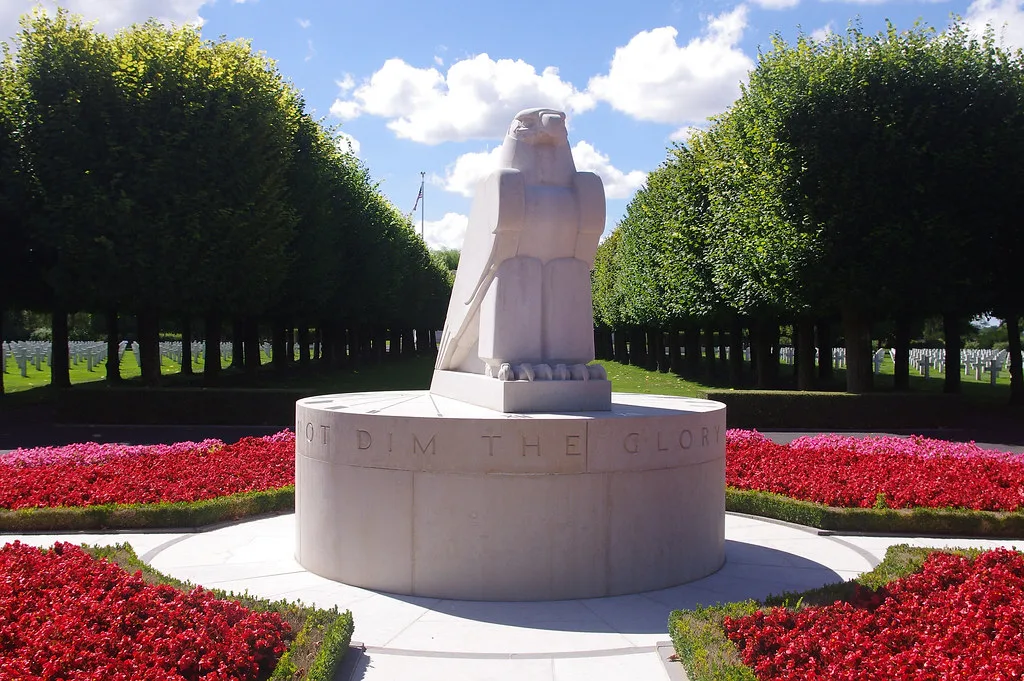
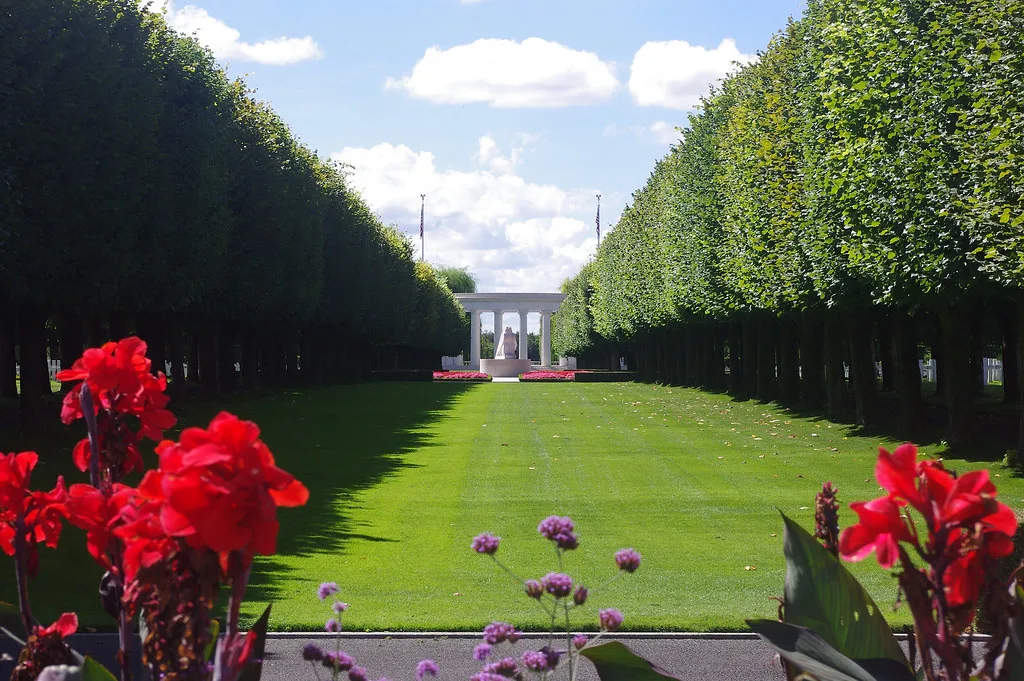
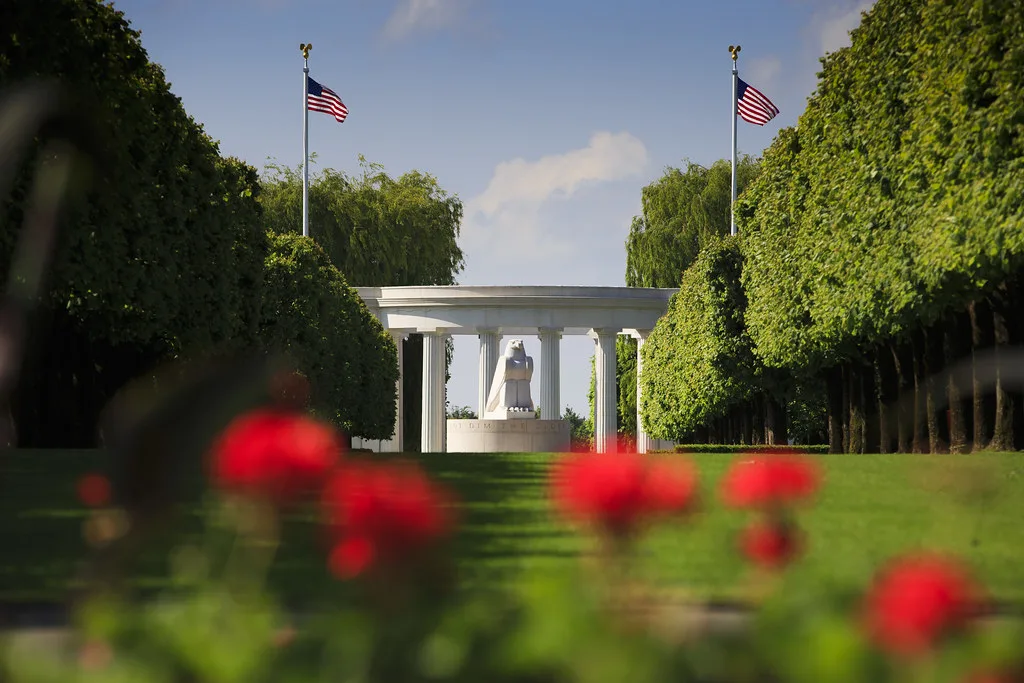
Start at the entrance and walk the burial area, which linden-lined paths divide into four equal plots. Our rough estimate for the whole visit is 60 to 90 minutes, and that is an estimate, not an official figure. Save the buildings for last, because the map room and chapel explain the offensive better once you have seen the graves.
- Burial plots: 4,153 graves across four plots, cited by plot, row and grave.
- Sundial and eagle: a large sundial topped by an American eagle marks the center.
- West axis: a statue of a World War I soldier by Paul Manship ends the path.
- East overlook: a semicircular terrace with a sculpted victory vase ends the east axis.
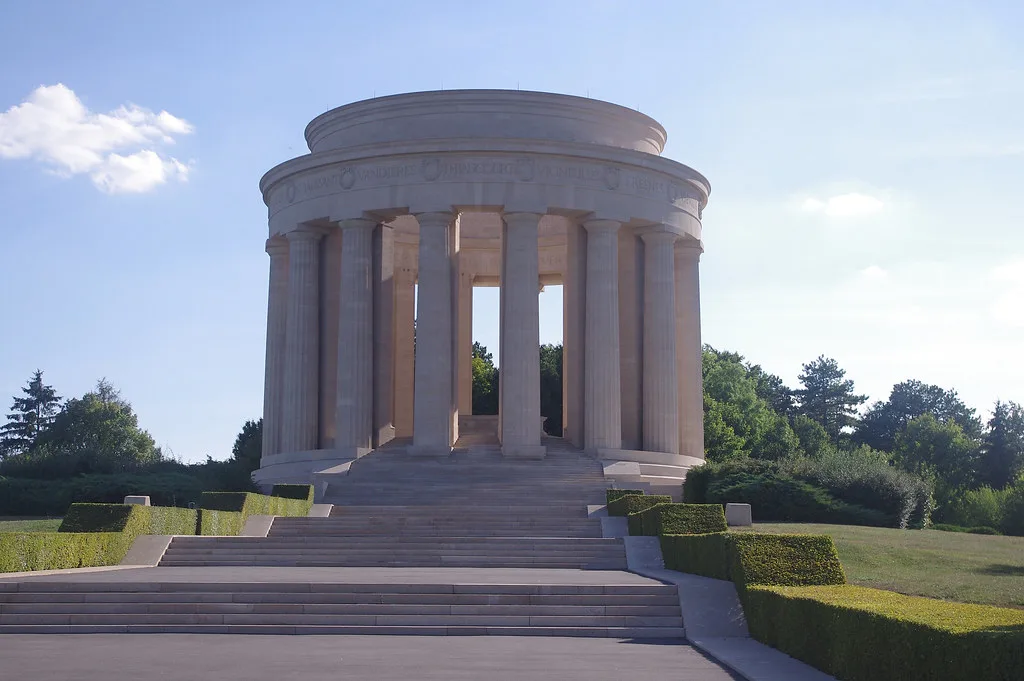
- Peristyle: white stone with fluted Doric columns and a rose-granite urn carved with a winged horse.
- Map room: Barry Faulkner's inlaid marble map of the offensive faces the door, and 284 missing are named on the walls.
- Chapel: a mosaic of St. Michael sheathing his sword sits above the altar, flanked by doves and shields in U.S. and French colors. Two weeping willows planted in 1934 stand behind it.
Is St. Mihiel American Cemetery worth the detour from Verdun?
Thiaucourt lies away from the main Verdun sites, so treat this as a separate leg, not a stop between them. We'd add it if the 1918 American story is why you came. We'd skip it if one day must cover Visit Fort Douaumont: History, Access and Planning and the rest of the Verdun battlefield loop. For a French and German memorial of a different kind, see the Douaumont Ossuary: Visiting Guide and What to See.
Allow 60 to 90 minutes here, and count the drive from Verdun as extra time before deciding it fits one day.
| Traveler | Verdict | Why |
|---|---|---|
| Ancestry or pilgrimage visit | Add it | 4,153 graves and 284 names to search, with plot, row and grave references |
| American-focused WWI traveler | Add it | First independent U.S. Army action, told through the map room and chapel |
| Quiet memorial seeker | Add it | Formal grounds, with the buildings kept for the end of the visit |
| One day for Verdun only | Skip it | Extra driving takes time from the Verdun forts and ossuary |
| Traveler without a car | Plan carefully | Do not assume public transport reaches Thiaucourt |
Planning your visit: hours, access, parking
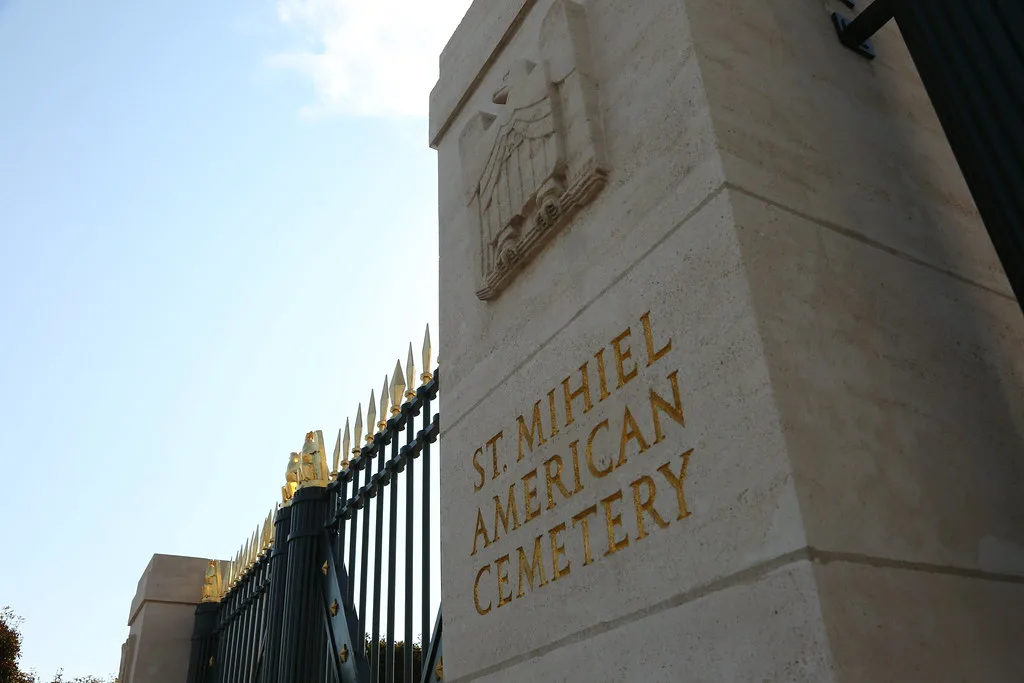
ABMC publishes hours, closures, parking and accessibility details on its Plan Your Visit page, linked from the official St. Mihiel page. Check it before you drive, because we have no verified figures to give you here.
Finding a name or grave
ABMC's website carries a burial search for the names it commemorates. Graves are cited by plot, row and grave, so 1st Lt. John L. Mitchell is listed at Plot D, Row 1, Grave 4. The 284 missing are named on the museum walls, and a rosette marks each man since recovered and identified. Write down the reference before you arrive, so you can walk straight to the right plot.
Stories behind the stones
ABMC's April 2025 feature on the site records several personal stories. Three stand out.
Read the chapel mosaic knowing its designer, Barry Faulkner, trained at Seicheprey, 8.7 miles from the cemetery.
- Pvt. Howard A. Heil, a 22-year-old Marine, died Sept. 15, 1918. A French civilian found his remains in 1971, about 3.7 miles from the cemetery. He was buried with full military honors on Jan. 21, 1972, 52 years later.
- On May 17, 1940, staff left after a week of German bombing nearby. Superintendent George C. Gorham asked French gardener Laurent Jacquat to serve as acting superintendent. Jacquat's son Denis was born in the cemetery quarters on May 29, 1944.
- Barry Faulkner, who designed the chapel mosaic, served in a WWI camouflage company. It trained with the 1st Division at Seicheprey, 8.7 miles from the cemetery.
Where it fits on a WWI itinerary
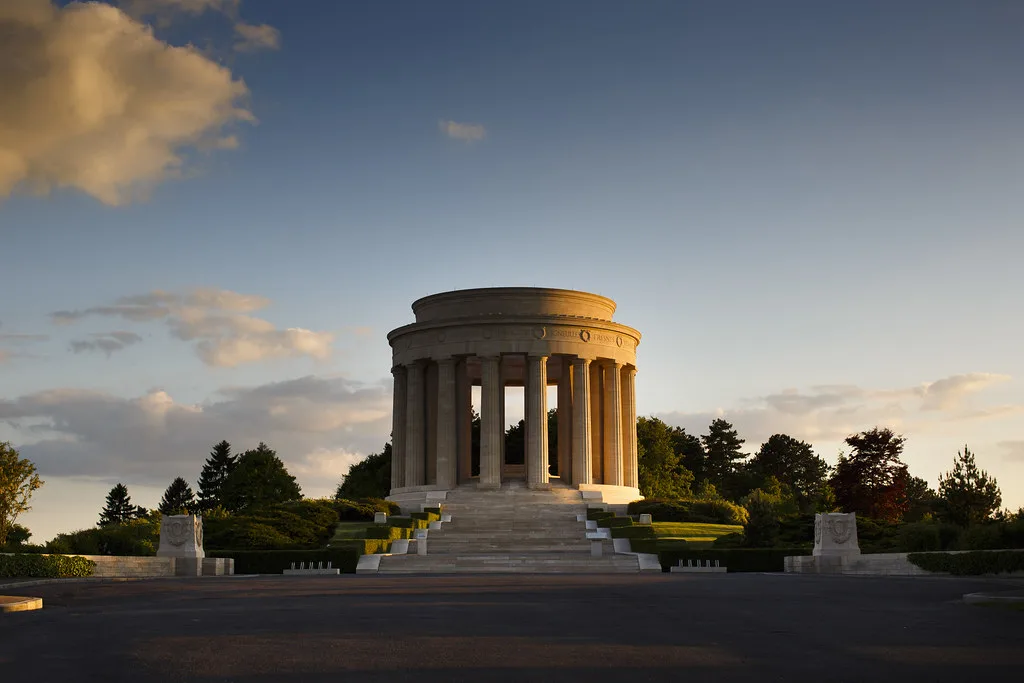
ABMC names Meuse-Argonne American Cemetery at Romagne-sous-Montfaucon as a related World War I site. Oise-Aisne American Cemetery at Seringes-et-Nesles is the other related ABMC site on its page. Serious American-focused itineraries can add both. Our suggestion is to give Verdun its own day, starting with the Verdun battlefield guide. Butte de Vauquois: Mine Craters, Tunnels and Visiting Guide offers a different style of WWI site and deserves its own stop. Readers planning from the capital can start with Verdun from Paris: Train, Tour or Car Day Trip Guide. Guided options are covered on our Verdun Battlefield Tour: Guided, Self-Drive or Day Trip page. Verdun Tourisme lists local visitor information.
Etiquette and mistakes to avoid at a working memorial
This is a working cemetery and memorial, not an attraction. Keep voices low, ask before photographing other visitors, and tell children where they are before you go in.
- Treating it like a sightseeing stop and rushing the burial plots.
- Skipping the map room, which holds the offensive's only large-scale map.
- Arriving without checking ABMC's current hours.
- Assuming a train or bus will get you to Thiaucourt.
Keep planning
Guides on the same trip





