
Arromanches Guide: Mulberry Harbour, D-Day Museum and Visit Planning
Plan Arromanches: the D-Day Museum, the Mulberry Harbour caissons, the 360 cinema, tides, costs and how long to stay.
In this guide
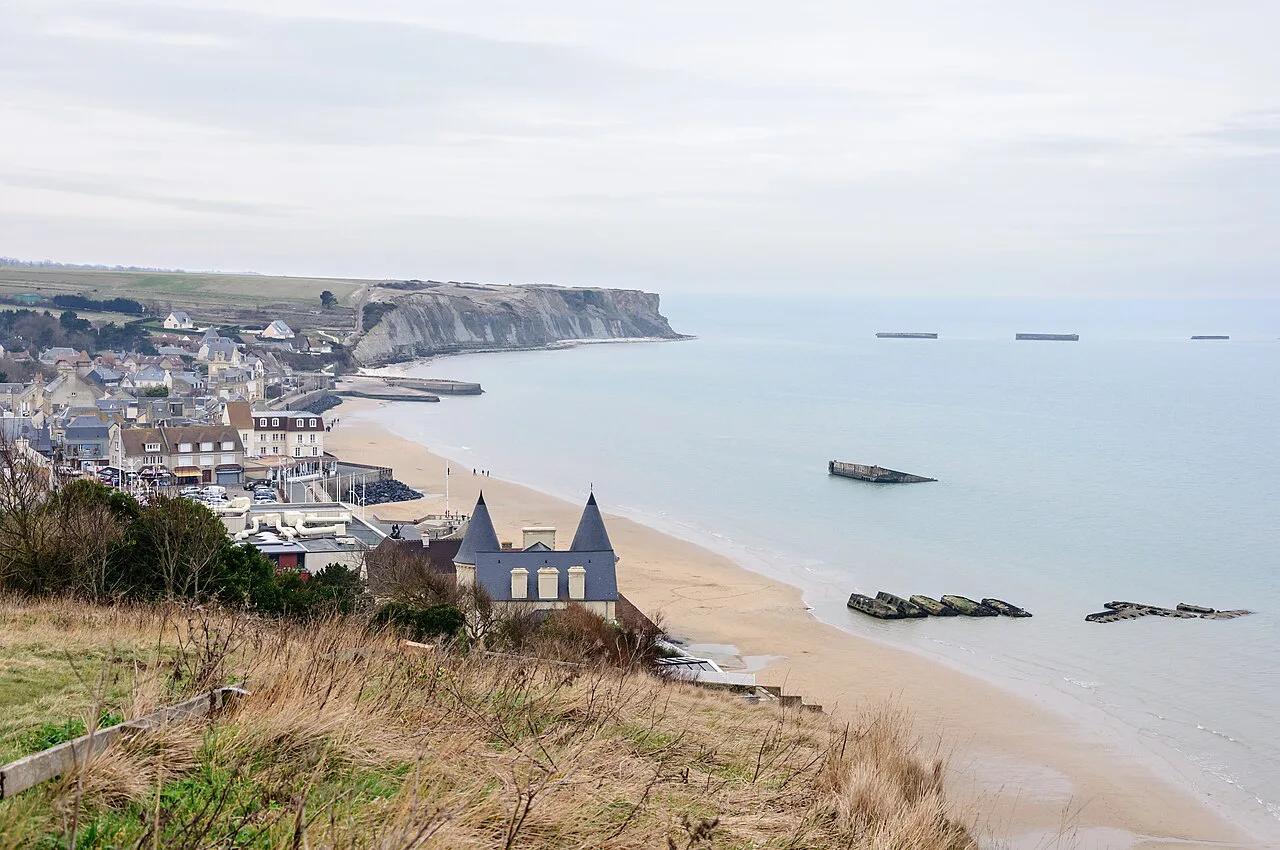
Last updated November 2026. Arromanches-les-Bains is the Gold Beach town where the remains of Mulberry Harbour B still sit in the shallows, and it is the reason most people stop here. Most visitors build a half day around the D-Day Museum, the beach caissons and the clifftop 360 cinema. Our guide covers who should go, how long to stay and how Arromanches fits into the wider British D-Day sites.
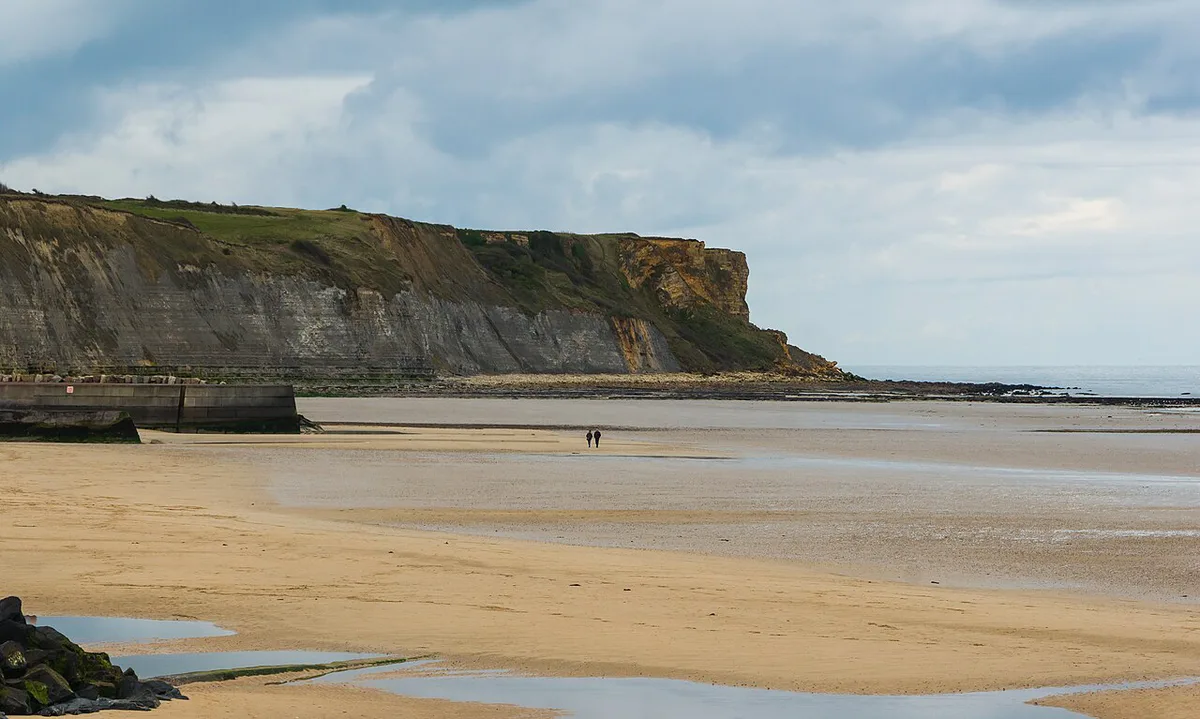
Featured image: Myrabella, CC BY-SA 3.0, via Wikimedia Commons.
Arromanches at a glance
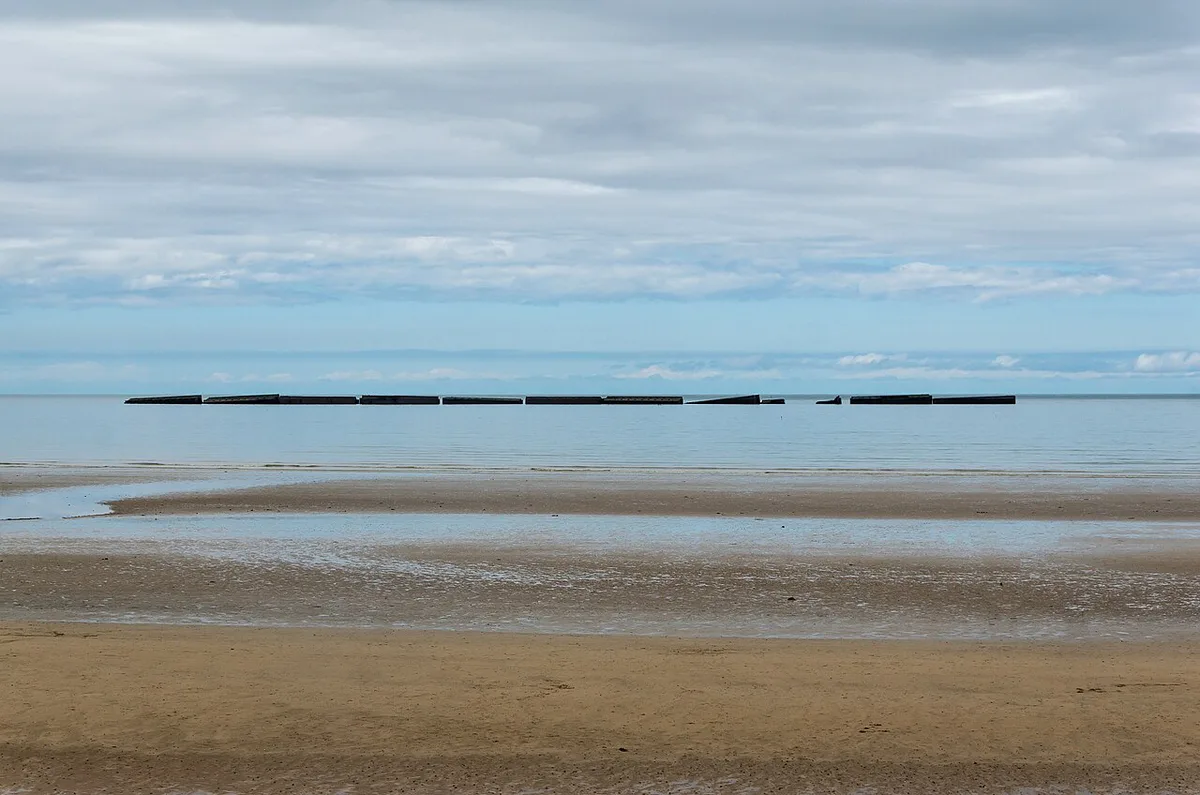
Arromanches is worth the stop if you want to see how the Allies kept an invasion supplied. It is a small seafront town on the Calvados coast, with the museum on Place du 6 Juin and the caissons just offshore. Our verdict: go if you care about logistics and engineering as much as the landings themselves. You can skip it if you only want a single beach with a cemetery or a memorial. Arromanches is about a harbour, not a battlefield.
- Best for: first-time D-Day visitors, engineering and logistics fans, and families who want something visible rather than only text panels.
- Main sights: the beach caissons, the D-Day Museum and the 360 cinema on Rue du Calvaire.
- Time needed: one hour for the beach alone, or a half day with the museum and the film.
- Currency: euro.
Why Arromanches matters: the Mulberry Harbour in brief
Allied planners knew the Germans held every major Channel port. They solved it by building two artificial harbours and towing them across the Channel after D-Day on June 6, 1944. Mulberry B at Arromanches was the British harbour. It survived the storm of June 19 to 22, 1944, which wrecked the American harbour at Omaha Beach. Planners intended Mulberry B to last about 90 days, but it operated for roughly 10 months. At its peak it handled up to 7,000 tons of equipment per day. Over 2.5 million troops, 500,000 vehicles and 4 million tons of supplies passed through it. The concrete Phoenix caissons you see today were sunk to form the breakwater. Individual caissons could weigh up to 6,000 tons. Floating piers called Whales and roadways called Beetles carried cargo from ship to shore. We keep the engineering story short here because our Mulberry Harbour deep dive covers it properly.
Best things to do in Arromanches
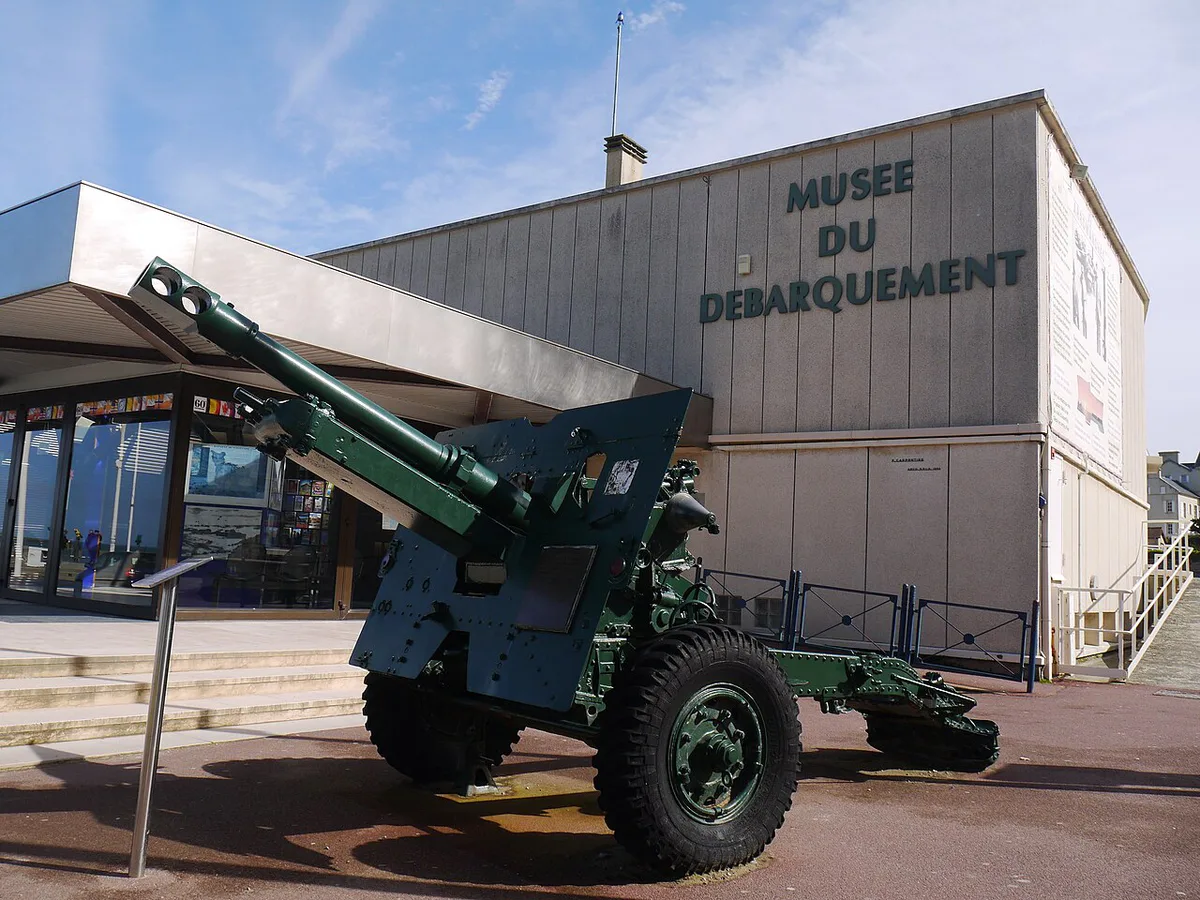
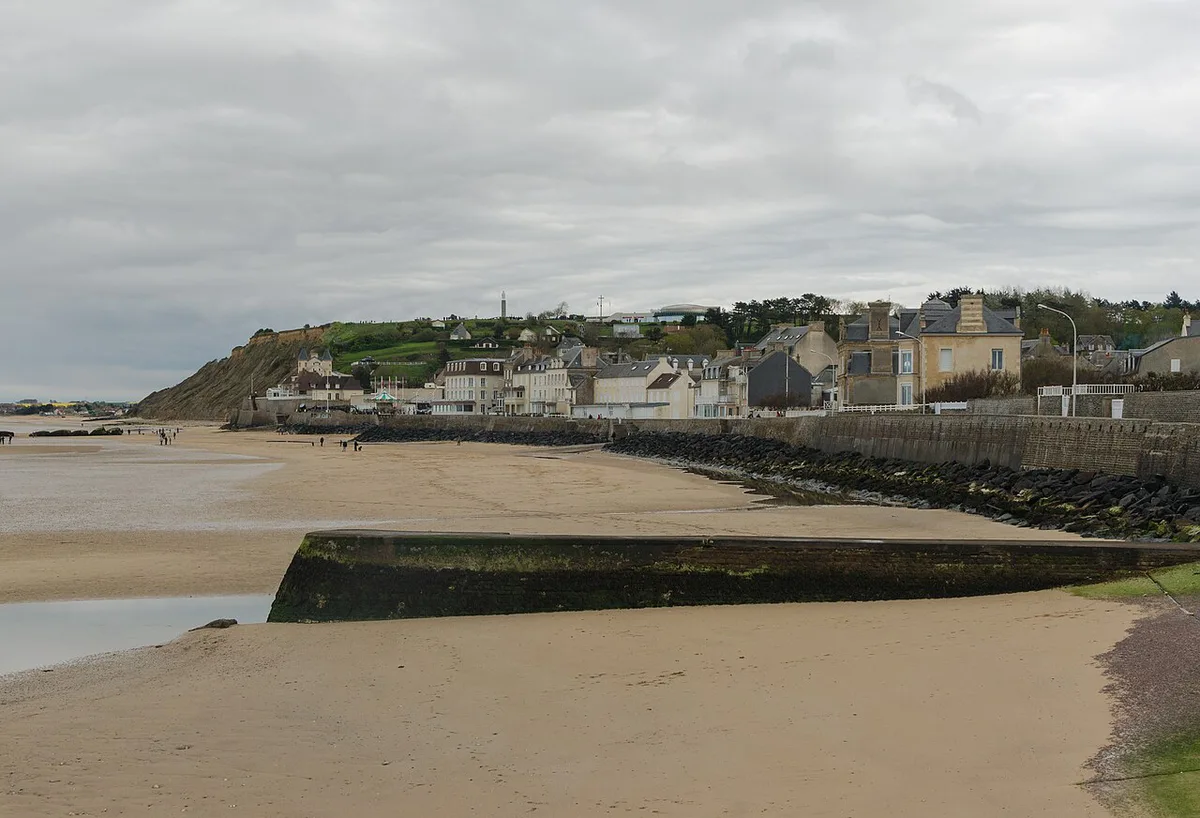
We'd order the visit the way you meet the town: sea first, then the museum, then the hill. Start with the beach caissons from Quai du Canada. Look closely at the nearest units, where some still show faint stenciled numbers, patched concrete and bolted steel plates. Next comes the D-Day Museum, which sits right on Place du 6 Juin. Reviewers describe an audio guide in English, about 1,200 m² across 7 sequences, and a rooftop terrace overlooking the caissons. Reviewers name low lighting and no café as the drawbacks, so eat first. Our D-Day Museum guide goes room by room. Finish at the 360 cinema, which sits up a steep climb from the seafront on Rue du Calvaire. The film runs about 20 minutes and is said to play every 30 minutes. Opinions are split. Some visitors call it deeply moving, while one found it light on context. Our 360 cinema guide has the full trade-off.
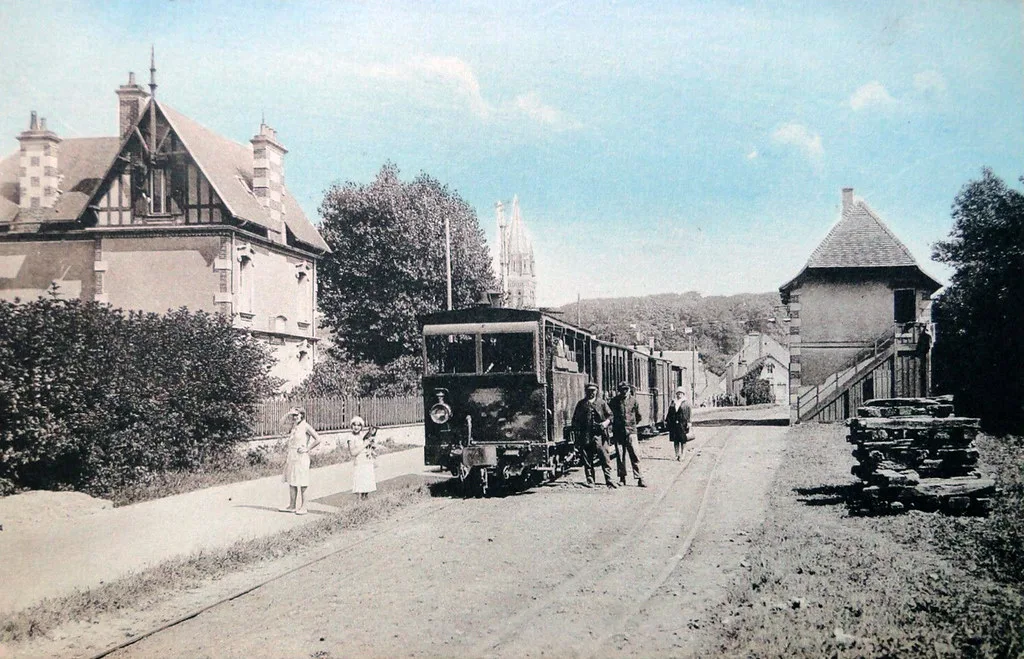
- Beach caissons: the free-to-see highlight, best at low tide.
- D-Day Museum: our pick for understanding how the harbour worked.
- 360 cinema: short and immersive, with a view over the town.
- Town walk: the lanes between Rue Maréchal Joffre and the seafront take minutes.
- Skippable: the militaria shop, where reviews are mixed and one visitor found it closed despite an online listing.
How long to spend in Arromanches
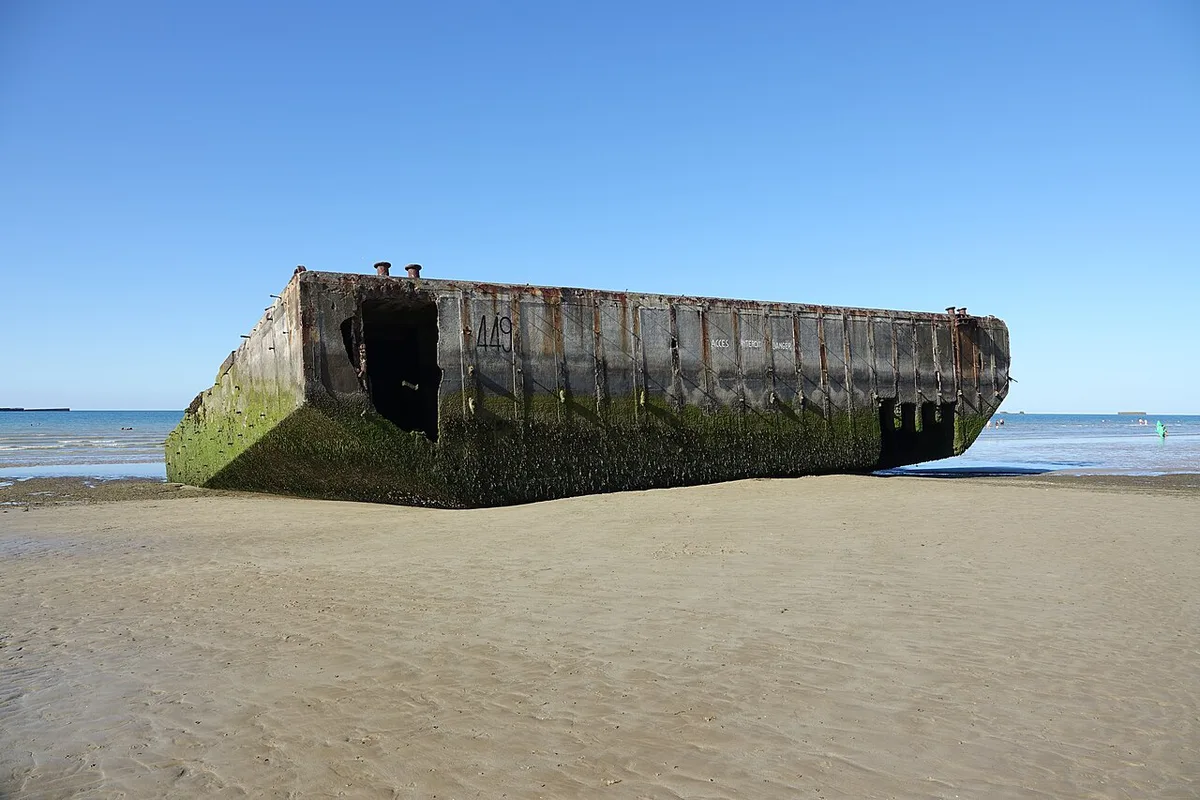
Pick your length by interest, not by a generic itinerary. Our table shows what fits in each block. We'd treat a full day as the ceiling, because a town this size runs out of new things.
Slot the 360 cinema between the museum and the caissons, since its film runs about 20 minutes and plays every 30 minutes.
| Time | What fits | What to skip | Best for |
|---|---|---|---|
| 1 hour | Beach caissons and a seafront walk | Museum and film | Drivers passing between sectors |
| Half day | Caissons, D-Day Museum and the 360 film | Shopping, long lunches | First-time visitors |
| Full day | All of the above, a museum lingering visit, a slow meal and an evening walk | Nothing essential | History and engineering fans |
Costs, tickets and opening hours
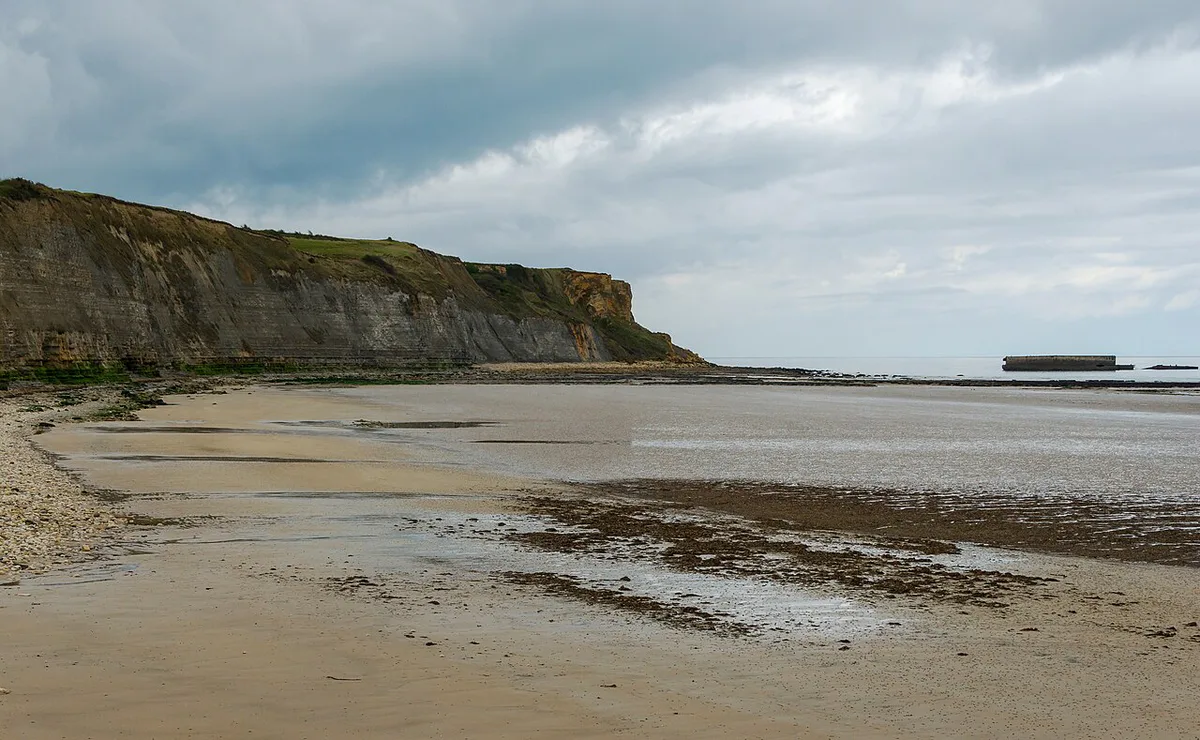
Arromanches has no single combined ticket that we can quote, and hours shift by season. Check current rates on the museum's official site and the cinema's official page. An English audio guide is said to be included with museum entry.
Tides, weather and the best time of year
Low tide is the better time for the caissons. One museum visitor advised planning around an outgoing tide to see the prefabricated structures properly. Check a Calvados tide table the day before, and arrive about an hour before low water. Beach lifeguards from the SNSM were posted from July 5 to August 31 in 2025, and dogs are not allowed on the beach. Expect similar summer dates, but look up the current season. Spring and autumn suit the town best if you dislike crowds. Pack a windproof layer in any month, because the museum terrace and the cinema hill are exposed.
Getting there, parking and getting around
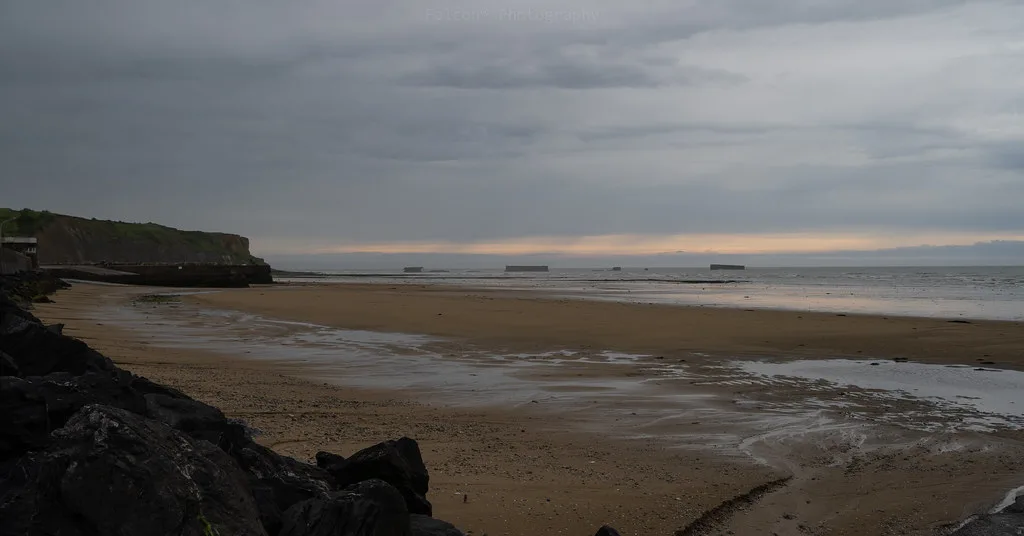
Arromanches works best as a drive-in stop from Bayeux, the usual base for this coast. The Bayeux-Bessin tourist office is the right place to ask about current buses and shuttles. Once you arrive, everything on the seafront is walkable. The cinema is the exception. It sits up a steep climb on Rue du Calvaire, and one reviewer called the walk long and hot. Parking at the cinema is paid, and a reviewer said it is free from 19:00 to 9:00. Treat that as a tip, not a rule. The museum is said to have lockers, so you can leave bags before the hill.
Cinema parking is said to be free from 19:00 to 9:00, so an evening walk in town after the day-trippers leave pairs well with it.
Where to stay and eat
Bayeux is our default base. It has far more rooms and restaurants than Arromanches, and it puts you within a short drive of most of the sectors. Staying in Arromanches itself suits an evening beach walk once the day-trippers leave. For food, the seafront and Rue Maréchal Joffre offer crêperies, brasseries and a bakery, such as the Clair de Lune bakery on Boulevard Gilbert Longuet. Brasserie d'en Face on Rue du Petit Fontaine is another option. We would not plan a long lunch around any one venue, because the museum has no café. Eat before you go in.
Arromanches in a wider D-Day itinerary
Arromanches pairs well with the clifftop guns just west. Our Longues-sur-Mer battery guide explains why they make a natural morning stop. If you continue east, you reach the Canadian sector. The beach town of Courseulles-sur-Mer is the base for that stretch. Its Canadian museum at Juno tells the Canadian story. Our Juno Beach overview covers the sector as a whole. If you can only choose one beach for a short trip, our beach comparison helps. Farther east lie Pegasus Bridge Visit Guide: History, What to See and Planning, Merville Battery: D-Day History and Visit Planning and the Grand Bunker at Ouistreham. We'd leave those for a second day.
Common mistakes to avoid
Most problems come from timing, not from the town.
- Arriving at high tide and seeing little of the caissons.
- Skipping a check of museum and cinema hours, which change by season.
- Walking up to the cinema in midday heat without water.
- Trying to see every beach in one day.
- Expecting a café at the museum.
Frequently Asked Questions
Is Arromanches worth visiting?
Yes, if you want to understand how the Allies supplied the invasion. The caissons are visible from the beach, and the museum explains the harbour in detail. Skip it if you only want a single memorial stop.
What happened at Arromanches?
The Allies assembled Mulberry Harbour B here after D-Day on June 6, 1944. It survived the storm of June 19 to 22 and kept running for roughly 10 months.
What is the D-Day Museum at Arromanches-les-Bains?
It is the Musée du Débarquement on Place du 6 Juin. It tells the story of the landings and the artificial harbour, with an English audio guide and a rooftop terrace overlooking the caissons.
Keep planning
Guides on the same trip






