
Best Time to Visit the Normandy D-Day Beaches: Month-by-Month Guide
Choose the best month for the Normandy D-Day beaches. Weather, crowds, 6 June commemorations, opening hours and tour availability, compared by season.
In this guide
Last updated November 2026: the best time to visit Normandy beaches is late May to mid-June or September, when mild weather, long daylight and manageable crowds overlap. Here, Normandy beaches means the D-Day landing beaches of Utah, Omaha, Gold, Juno and Sword, because that is what most people searching this phrase want. Our D-Day beaches guide covers the sites themselves, and this page helps you choose the month.
Featured image: iBlume, CC BY-SA 2.0, via Flickr.
Short answer: the best time to visit Normandy beaches
Our verdict: go between late May and mid-June for the best overall balance. September is our fallback when June hotels are full. Daylight is long in both windows, and most visitor sites run fuller seasonal schedules. Winter works if budget and solitude matter more than daylight. Ceremonies centre on 6 June, so that week is the busiest of the year.
- Best overall: late May to mid-June, with typical afternoon highs near 16°C (61°F) and light past 9 pm.
- Best for quiet: October and early spring weekdays, when tour groups thin out.
- Best for budget: November to March, when rooms are cheapest in our estimate.
- Best for ceremonies: around 6 June, with the most events and the busiest sites.
- Best for weather: July and August, with highs near 21°C (70°F) but no promise of dry days.
Best time to visit by what you want
Decide your priority first, then pick the month. This table is general guidance built on typical weather and crowd patterns, not a forecast.
| Priority | Best window | Trade-off |
|---|---|---|
| First-timers | Late May to mid-June | Busier sites and higher room rates |
| History buffs | September to early October | Fewer evening hours than summer |
| Families | July and August | Peak crowds, higher prices, cold sea |
| Photographers | Late September and October | Shorter days, changeable cloud |
| Short trip (1 to 2 days) | June or September | Book rooms and tours early |
| Ceremonies | Around 6 June | Road restrictions and scarce beds |
| Budget | January to March | Early dusk and some closures |
Season by season: spring, summer, autumn and winter
Each season trades weather against crowds and opening hours. The comparison table shows the pattern in words, and the list adds who each season suits.
| Season | Weather | Daylight | Crowds | Price pressure | Opening risk |
|---|---|---|---|---|---|
| Spring (Mar to May) | Cool, windy, showers; 10°C (50°F) to 16°C (61°F) | Medium, then long | Low, rising in May | Medium | Low to medium |
| Summer (Jun to Aug) | Mildest; near 21°C (70°F) | Longest | High | High | Low |
| Autumn (Sep to Nov) | Mild, then damp; 19°C (66°F) to 11°C (52°F) | Medium, then short | Medium, then low | Medium, then low | Medium |
| Winter (Dec to Feb) | Cold, wet; near 7°C (45°F) | Shortest | Low | Low | High |
- Spring: highs climb from about 10°C (50°F) in March to 16°C (61°F) in May. Crowds stay light until May holiday weekends. Skip March if cold wind on open sand puts you off.
- Summer: days run about 16 hours and opening hours are at their longest. Tour groups and hotel rates also peak. Skip July and August if you want quiet at Omaha Beach.
- Autumn: September highs near 19°C (66°F) fade to roughly 14°C (57°F) by October. Crowds fall once school holidays end. Skip November if you need late closing times.
- Winter: highs hover near 7°C (45°F) and daylight drops to about 8 hours in December. Beaches are nearly empty, but some venues shorten hours. Our winter D-Day guide covers what stays open. Skip winter if you want a packed multi-stop day.
Month-by-month snapshot
Temperatures here are approximate typical afternoon highs for the Normandy coast. Treat them as general guidance, and look at Météo-France forecasts before you travel.
| Month | What to expect | Our take |
|---|---|---|
| January | Cold and wet, near 7°C (45°F) | Cheapest, quietest, shortest days |
| February | Similar, with early light improving | Good for budget trips |
| March | Windy, near 10°C (50°F) | Bring a windproof shell |
| April | Showers, near 12°C (54°F) | Fine if you keep plans flexible |
| May | Near 16°C (61°F), longer evenings | Strong choice, late May best |
| June | Near 18°C (64°F), long light | Best overall, busy near 6 June |
| July | Near 21°C (70°F), peak season | Longest hours, biggest crowds |
| August | Near 21°C (70°F), sea near 18°C (64°F) | Busy, but easy daylight |
| September | Near 19°C (66°F), calmer | Our fallback pick |
| October | Near 14°C (57°F), damp | Quiet, soft light |
| November | Near 10°C (50°F), short days | Quiet, closing early |
| December | Near 8°C (46°F), about 8 hours of light | Quiet, with seasonal closures |
The 6 June anniversary week: go or avoid?
6 June marks the 1944 landings, and commemorations around that date bring the year's largest events and crowds. Expect security checks, road restrictions near ceremony sites and very full hotels in Bayeux and Caen. Go if you want the atmosphere and can book far ahead. Avoid it if you want to walk Omaha Beach in silence. Our 6 June anniversary guide covers the ceremonies in detail. A calmer alternative is the weeks either side, when most sites are open and rooms are easier to find.
- Pros: ceremonies, veterans' events and a strong sense of occasion.
- Cons: crowds, restrictions, peak room rates and fewer spontaneous options.
- Logistics: fix dates early, arrive the day before, and keep a flexible day for closures.
Tides, daylight and weather: planning a beach-by-beach day
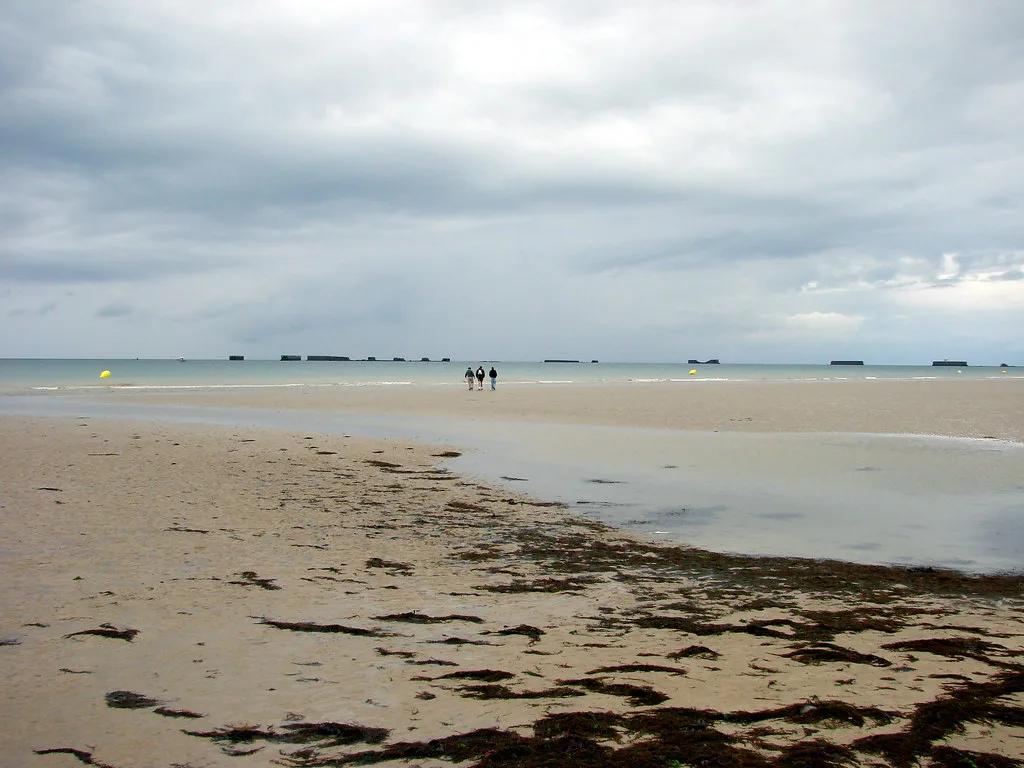
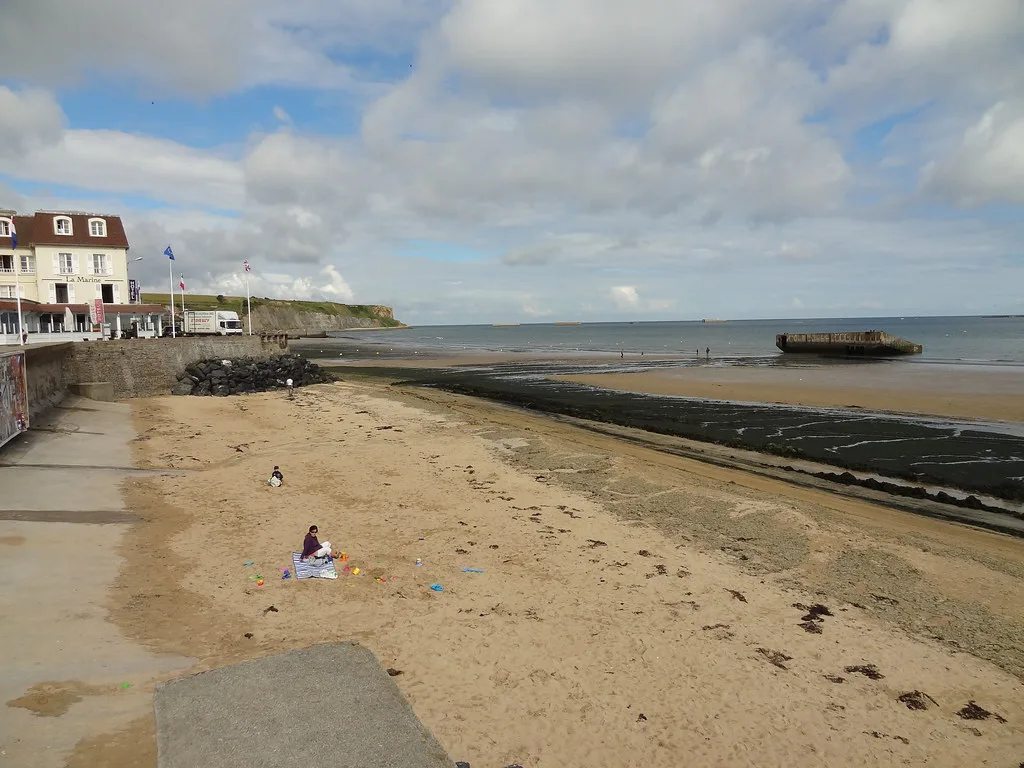
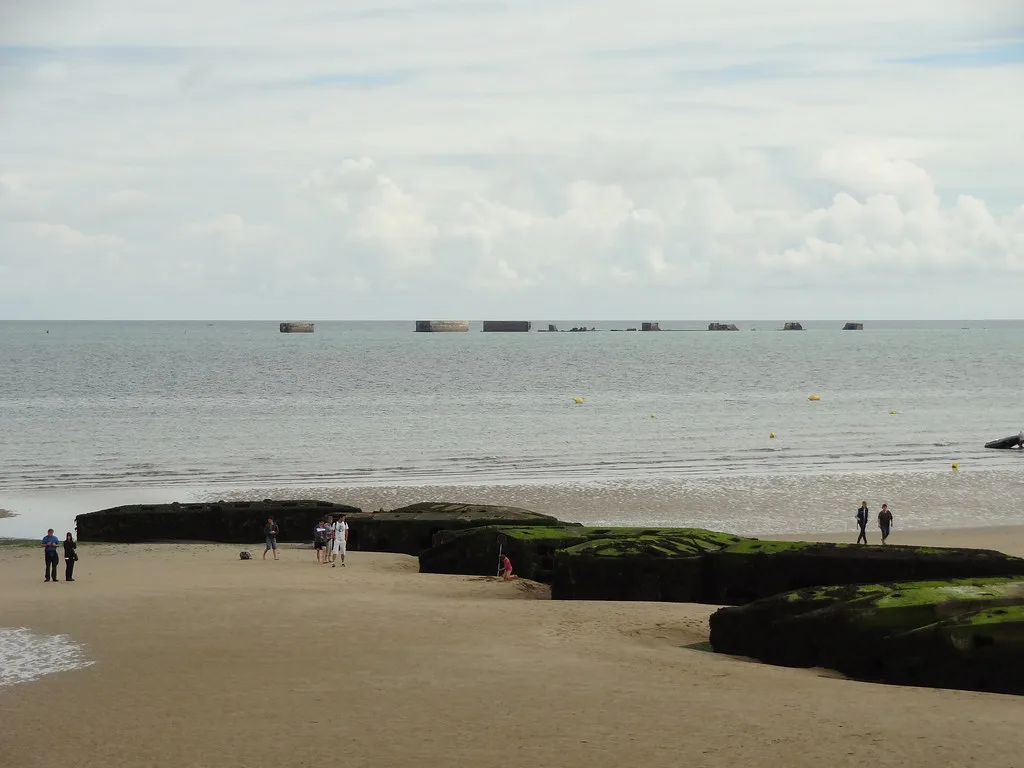
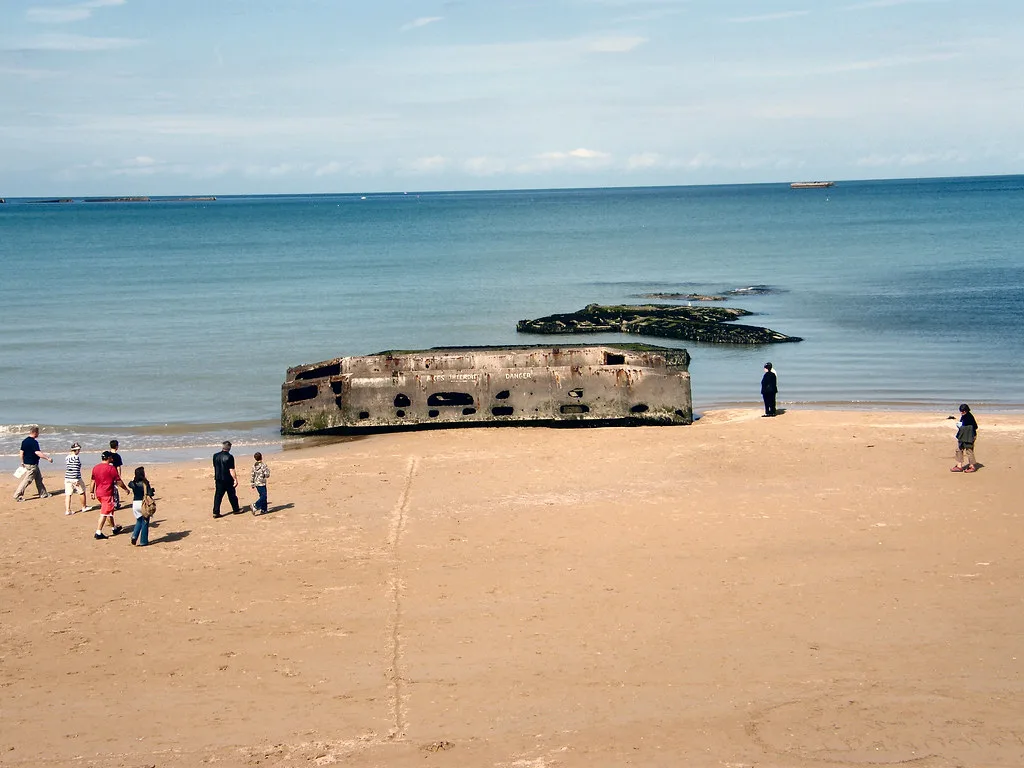
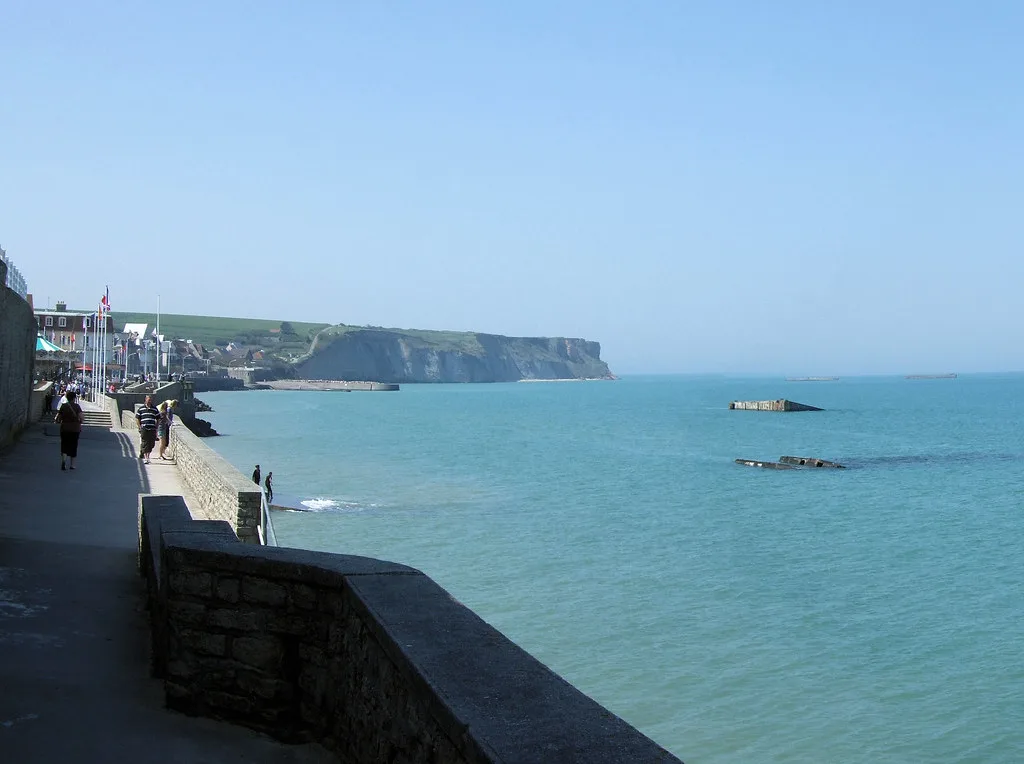
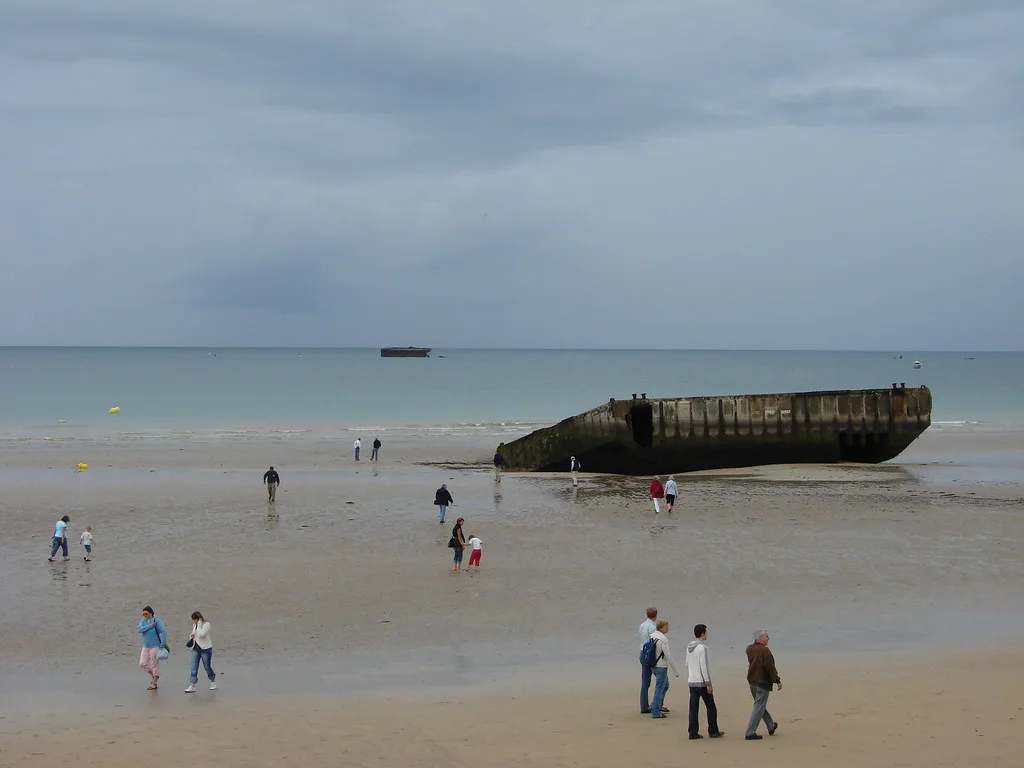
These beaches are wide, exposed and tidal. Low tide reveals the full sand width and the Mulberry harbour remains at Arromanches. High tide narrows the beach and hides those remains. Use an official tide table such as SHOM's, and build the beach walk around low water. Our D-Day beaches map helps you order stops from Utah to Sword. Wind matters as much as rain, because Omaha in a March gale feels very different from June. In winter, put museums at midday and beaches in the brightest hour. In summer, save beach walks for the evening, when light is long and groups have left. Sunset falls near 4:50 pm in December. Looking for swimming instead? The sea peaks near 18°C (64°F) in August, so swimming is secondary here. Resort towns such as Deauville suit sunbathing better, because the landing beaches are memorials.
Opening hours and seasonal closures to check before you go
Hours shift between summer and winter, and some sites close on set days. We don't quote hours that change, so use each venue's own page. Plan around the earlier winter closing times if you visit between November and February.
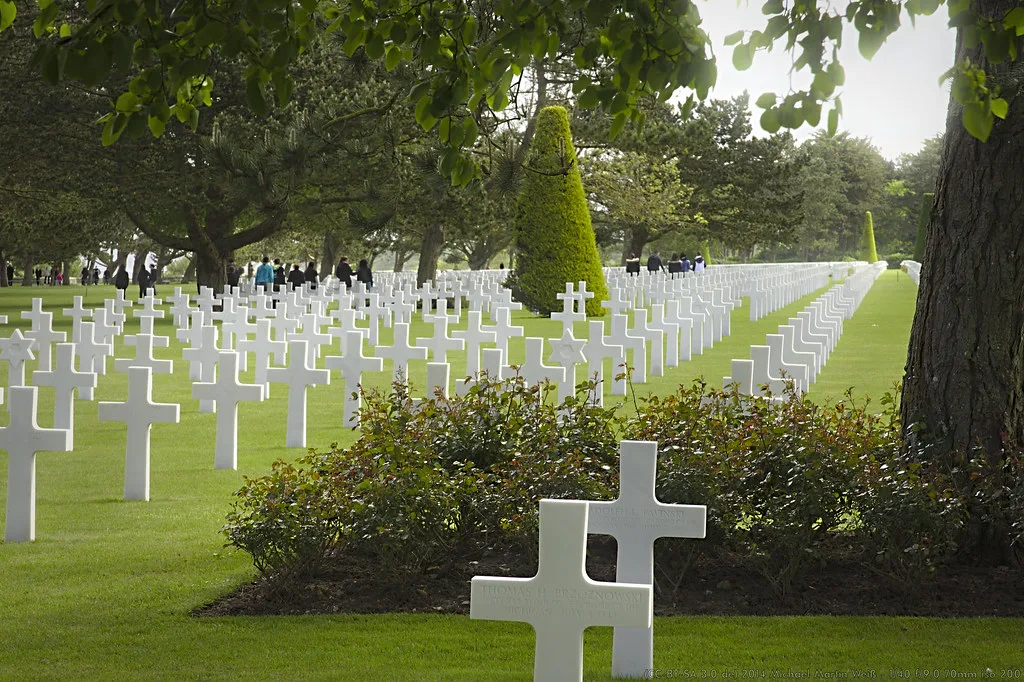
- Normandy American Cemetery: the American Battle Monuments Commission page lists current visiting hours.
- Caen Memorial: the Mémorial de Caen site publishes seasonal opening times.
- Juno Beach Centre: the Juno Beach Centre site shows hours and winter closures.
- Bayeux Museum: the Bayeux Museum site gives hours for a wet-day stop.
- Airborne Museum, Utah Beach Museum and Arromanches 360: use each venue's own site.
- Regional events and updates: Normandy Tourism lists current dates.
Cost and booking: when it gets expensive
These rates are our editorial planning estimates as of November 2026, not quotes. A Bayeux double room often sits near €90 in February and €150+ in July or around 6 June. Tours run more often in summer and thin out in winter. Car hire follows the same pattern. Book as soon as dates are fixed, and months ahead for 6 June. Our D-Day beaches stay guide compares areas. For base choice, read Bayeux versus Caen before you reserve.
Bayeux doubles jump from near €90 in February to €150+ in July or around 6 June, so fix dates early.
How many days and from where, by season
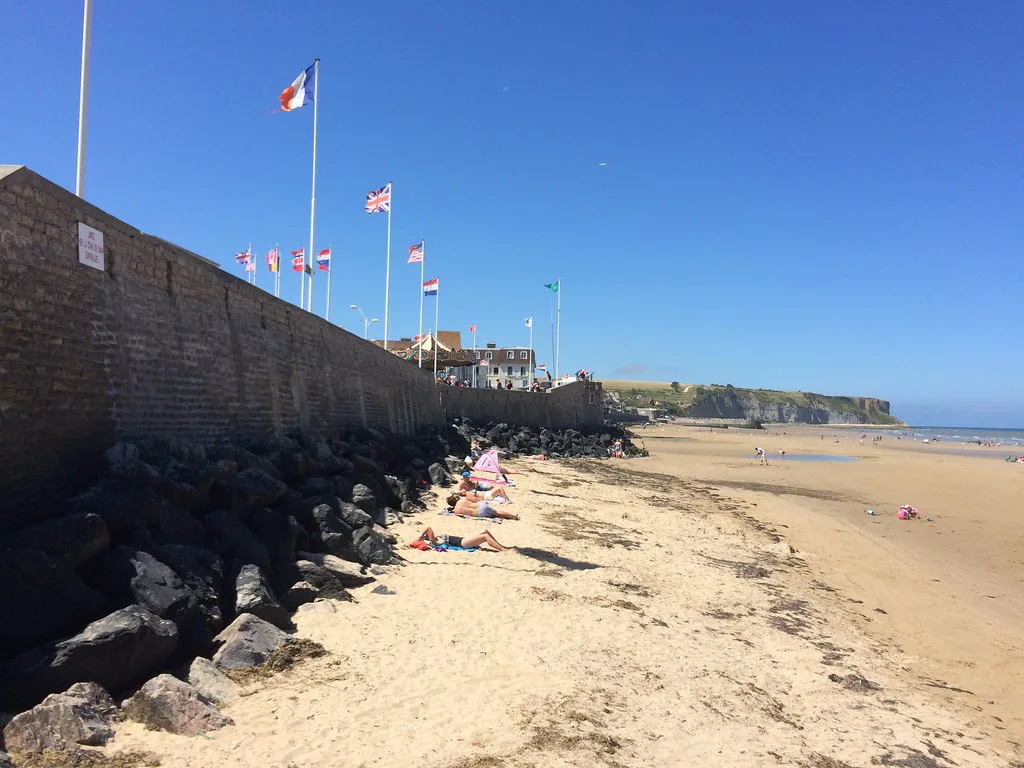
In summer, about 16 hours of light lets one long day cover Omaha, Pointe du Hoc and Arromanches, though two days feel calmer. In December, with roughly 8 hours of light, plan fewer stops. Our days needed guide gives a fuller breakdown. Use the D-Day beaches itinerary to pace each day. From the capital, D-Day beaches from Paris compares rail, tours and driving, and winter has fewer tour departures.
With about 16 hours of light in summer, one long day can cover three major stops; in December, plan fewer.
Mistakes to avoid
Most seasonal regrets come from five avoidable errors.
- Booking late for June, when rooms and tours sell out first.
- Assuming everything is open in winter, when hours shorten.
- Ignoring tides, and missing the Arromanches harbour remains.
- Treating it as a swim holiday, when the sea stays cold and the beaches are memorials.
- Over-packing the schedule, especially on short winter days.
If you can only go once
We'd choose the first half of June, avoiding 6 June itself unless ceremonies are your goal. September is our fallback month. If you are still undecided about the trip, Is Normandy Worth Visiting? Verdict, Days and Costs gives a wider view. Our Normandy D-Day beaches hub links every site.
Frequently Asked Questions
What is the cheapest time of year to visit France?
Across France, winter outside holiday weeks is usually cheapest. On the Normandy coast, January and February are our pick, with rooms near €90 in our estimate. Days are short, so plan fewer stops.
Does it rain a lot in Normandy, France?
Showers can arrive in every season, and Channel wind makes them feel colder. Pack a waterproof layer even in June. Our winter guide suggests indoor stops for wet days.
Which is the best Normandy beach to visit?
Omaha is the most visited, partly because the Normandy American Cemetery overlooks it. Utah is flat and quieter. Juno suits visitors interested in the Canadian story, and the Juno Beach Centre is the place to start.
Keep planning
Guides on the same trip





