
Sainte-Mère-Église Guide: What to See & How Long to Stay
Plan Sainte-Mère-Église: the church, Airborne Museum, nearby D-Day sites, time needed, tickets and parking tips, with trade-offs for each stop.
In this guide
Last updated November 2026. Sainte Mere Eglise is a village in the Manche department of Normandy's Cotentin peninsula, and it is the town most visitors link with the US paratroopers who landed on the night of 5–6 June 1944. It works as the paratrooper hub for the wider Utah Beach area, with a church, a museum and several battlefield stops within a short drive. This guide shows what to see, how much time each option needs and how to fit the village into a D-Day day.
Featured image: Raimond Spekking, CC BY-SA 4.0, via Wikimedia Commons.
Why Sainte-Mère-Église matters
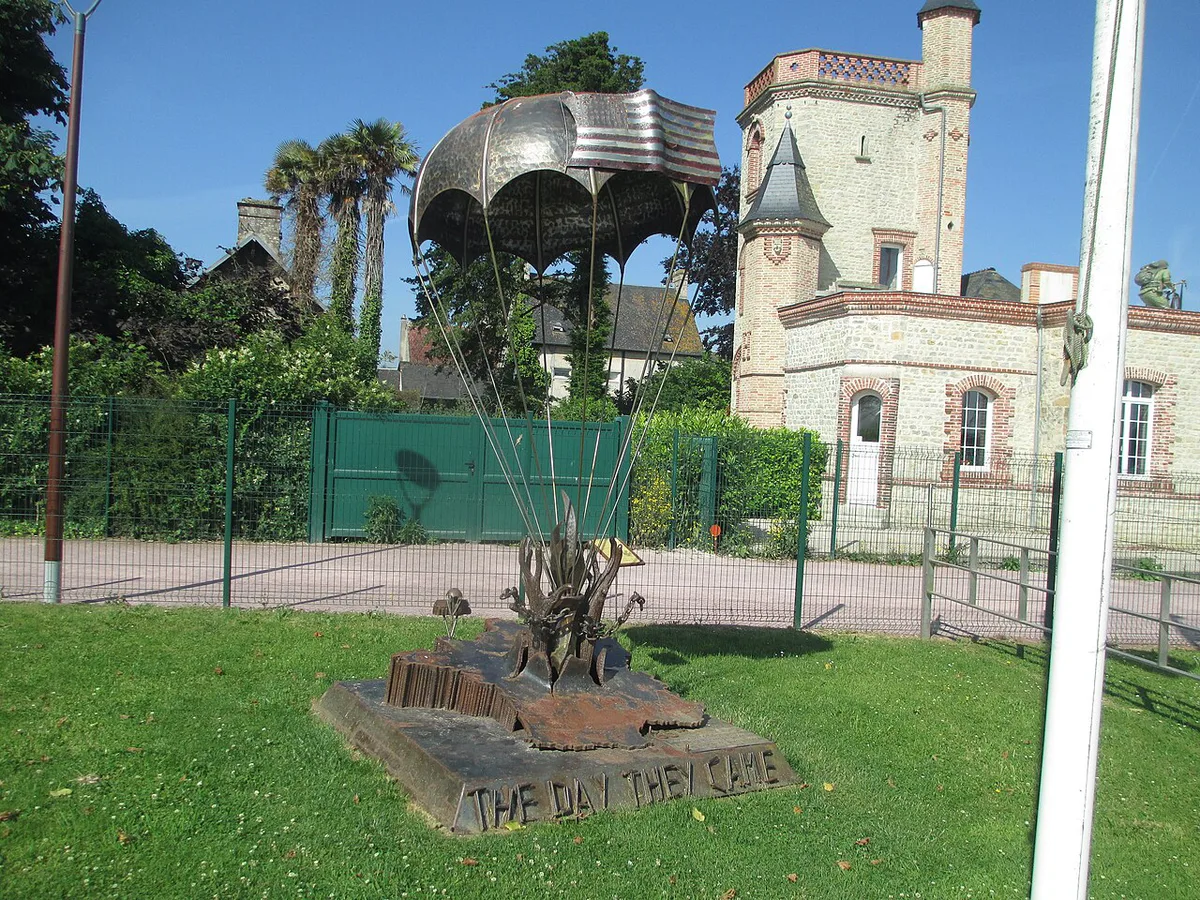
Paratroopers dropped on and around the village during the night of 5–6 June 1944, as part of Operation Overlord. Local memory of that night is still the main reason people stop here. The village centre is compact, and the story is told in the church, the square and one large museum. Most visitors arrive from a beach or battlefield itinerary and use the village as the place where the airborne story comes together.
John Steele and the Night the Village Was Taken
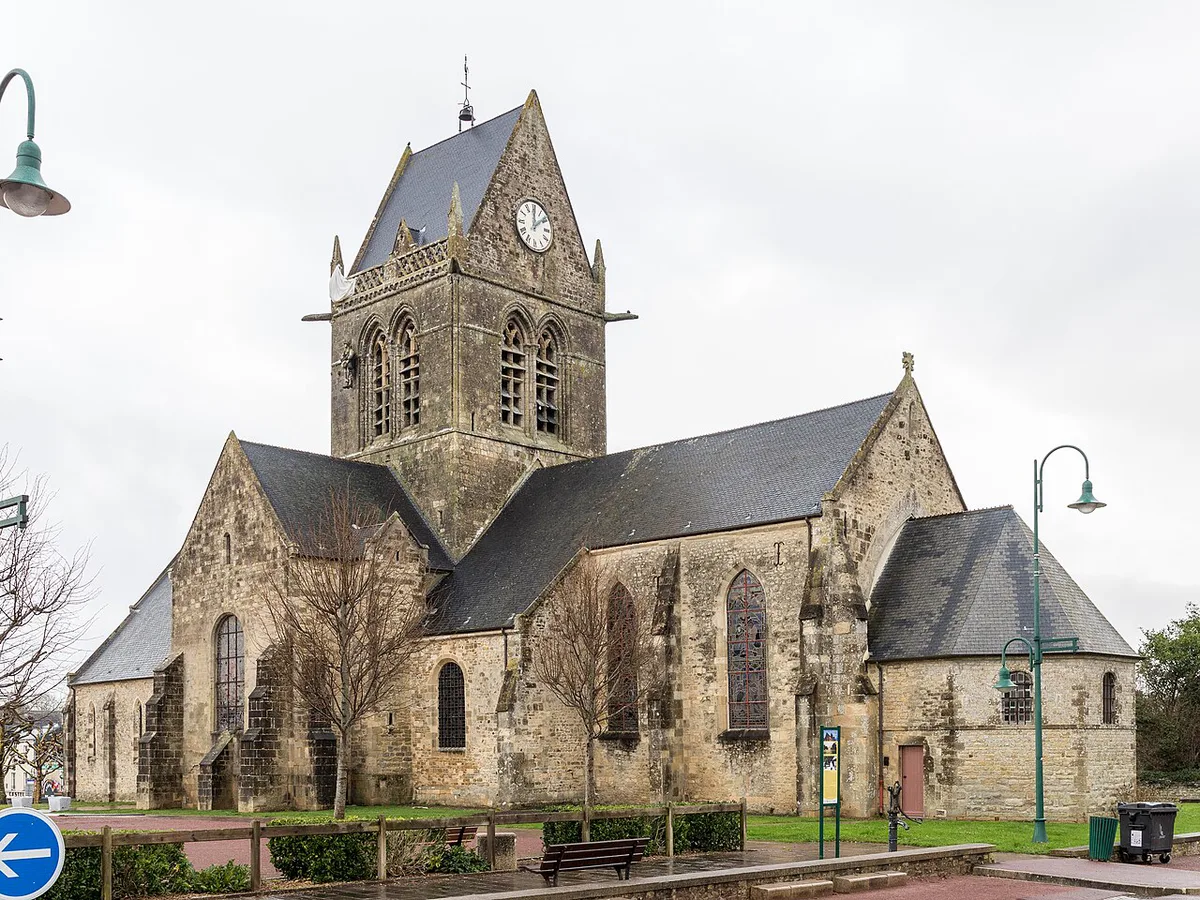
The figure on the church recalls Private John Steele of the 505th Parachute Infantry Regiment, part of the 82nd Airborne Division. In the early hours of 6 June 1944, his parachute caught on the church while fighting went on below. Wounded in the foot, he hung there and played dead, by most accounts for about two hours, until German soldiers brought him down and took him prisoner. He later escaped and rejoined Allied forces.
The jump over the village was especially dangerous. A building near the square was on fire, residents were out trying to fight the blaze under German guard, and some paratroopers came down within sight of armed troops. Several were killed before they could get free of their parachutes.
Later that night, men of the 505th's 3rd Battalion, led by Lieutenant Colonel Edward Krause, took the village and raised an American flag. Holding it mattered because of the road running through Sainte-Mère-Église, a route German forces could use to move against the Utah Beach landings. The paratroopers fought off counterattacks until troops advancing from the coast reinforced them.
Steele's story became widely known through the 1962 film The Longest Day, in which Red Buttons played him. When you stand in the square, keep in mind that he was one of many airborne soldiers in the fight. The figure overhead is a memorial and shouldn't be read as an exact reconstruction of where and how he hung.
What to see in the village
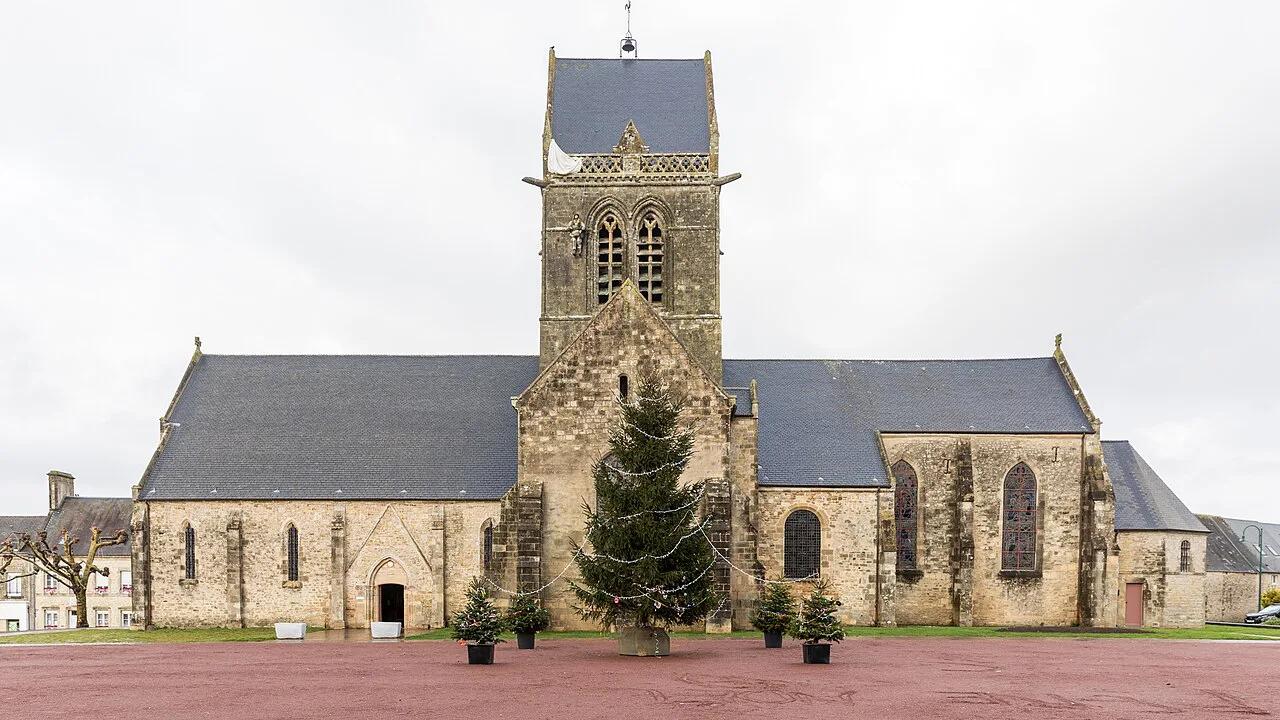
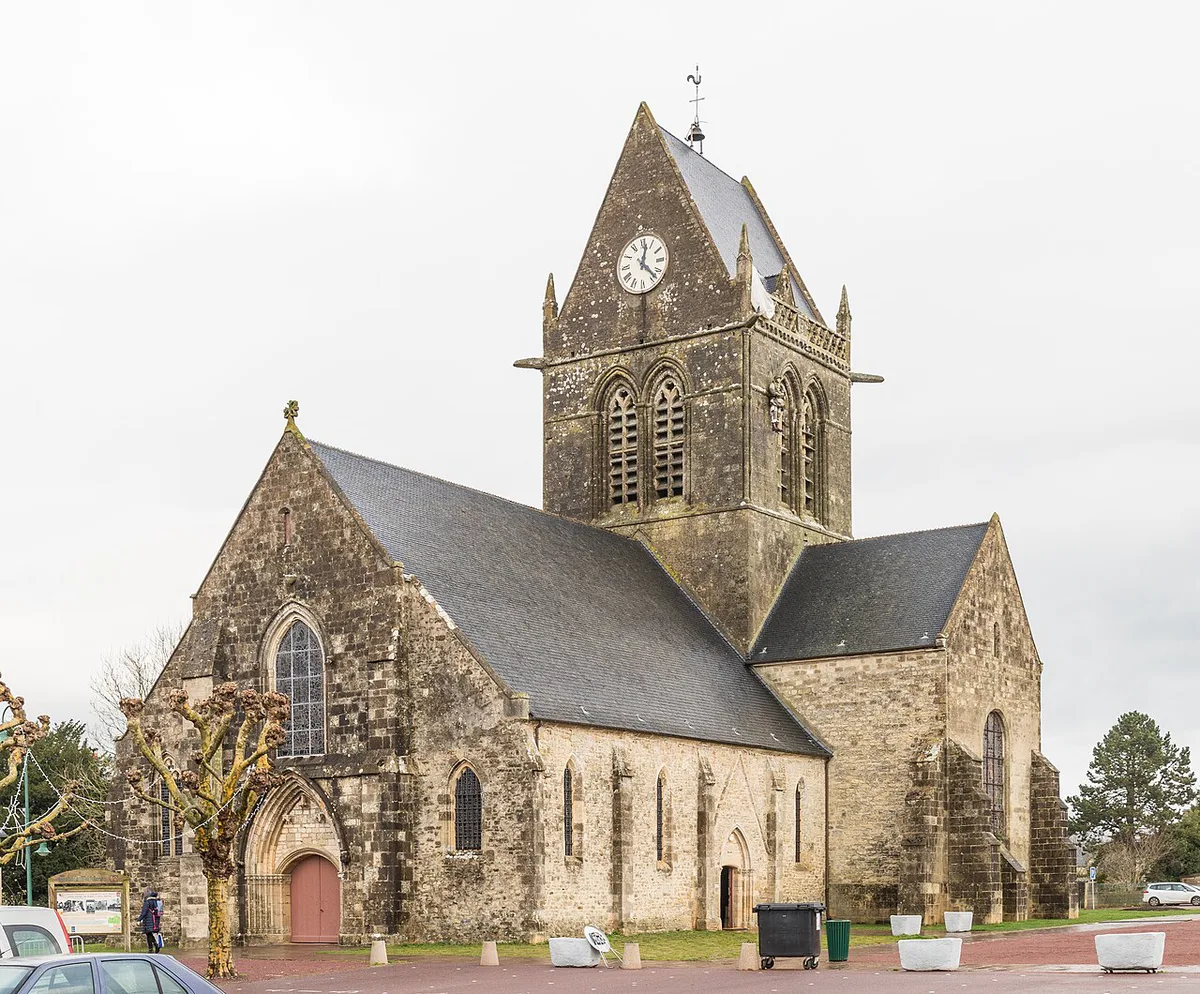
Start on the Place du 6 Juin 1944 and look at the church. A paratrooper figure on the church is the best-known image of the town, and it commemorates the airborne landings. The church also holds a stained-glass tribute to the paratroopers. The town's tourism pages list what is open and how to find it.
The Airborne Museum sits in the village centre. It opened in 1964 and is dedicated to the US 82nd and 101st Airborne Divisions in Operation Overlord. Its official site gives current opening details. Treat the museum as the main indoor stop, and the church and square as a short walk before or after it.
Beyond the war story, the village has old buildings, wash-houses and fountains. Cotentin farm produce and the surrounding marshes also reward a slower stop.
Kilometre Zero and a Short Walk Around the Square
Look near the town hall for the Borne 0, the Kilometre Zero marker of the Liberty Road (Voie de la Liberté). This line of commemorative markers follows the Allied advance, particularly that of General Patton's US Third Army, across France toward Bastogne in Belgium. It is easy to walk past if you only look up at the church. Utah Beach has its own starting marker, numbered 00, so you may see both on the same day.
A simple order keeps the village visit easy to follow:
- The square: begin outside the church and find the paratrooper figure on the tower side of the building.
- Inside the church: look for the stained-glass windows linked to the airborne troops, including one showing the Virgin and Child with paratroopers around them. This is a working place of worship, so wait or return later if a service is under way.
- Town hall: find the Kilometre Zero marker.
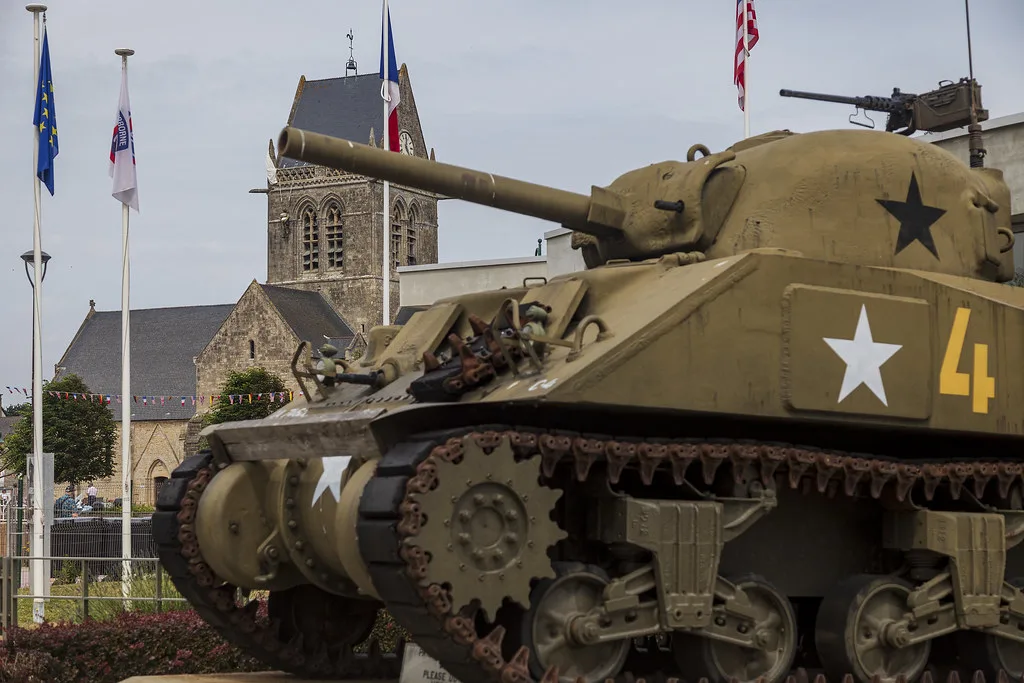
- Airborne Museum: finish here when you are ready for the longer indoor visit. Its displays include a C-47 transport aircraft and a Waco glider, which help explain the two ways airborne troops reached Normandy.
If you want photographs of the church and square with fewer people in them, try arriving early in the day. You can then go into the museum once you have seen the outdoor points.
How much time to plan in Sainte-Mère-Église
Your time depends on how much of the museum you want and how many outlying sites you add. Use the table to choose a tier. Museum-heavy visitors should protect the half-day option. Visitors with limited interest in exhibits can stay with the first tier and move on to the coast.
| Time available | What it covers | Best for |
|---|---|---|
| 1 hour | Church, Place du 6 Juin 1944 and a short walk | Travelers passing through on another route |
| Half day | Village stop plus the Airborne Museum | Readers who want the paratrooper story in depth |
| Full day | Village, museum and several nearby sites such as La Fière, Brécourt Manor, Dead Man's Corner and Utah Beach | Readers building a one-day D-Day circuit |
- Museum-focused visitors: give the museum its own block of time and add one nearby site at most.
- Light-history visitors: take the church and square, then go to the coast.
- Fortification enthusiasts: skip the second museum and add the coastal batteries.
Nearby D-Day sites by interest
Choose by interest rather than trying to see everything. For the landing beach, head to the landing beach and pair it with its museum on the coast. For paratrooper action, the La Fière causeway and Brécourt Manor are the closest-linked stops. Another option is the Dead Man's Corner stop, which also sits in the airborne story.
Fortification fans can add the Azeville and Crisbecq batteries. For overnight bases, see Carentan as a base, or consider Cherbourg in the north as an arrival or onward point.
| Interest | Where to go |
|---|---|
| Landing beach | Utah Beach and its museum |
| Paratrooper action | La Fière, Brécourt Manor, Dead Man's Corner |
| Coastal batteries | Azeville and Crisbecq |
| Bases | Carentan, Cherbourg |
Getting there and getting around
A car makes this area far easier. The sites are spread across rural Cotentin, and public transport is limited, so check with the Normandy tourism board before planning a car-free day. Car hire is available from Cherbourg, Caen and Bayeux. Parking in the village depends on the day, so allow extra time near the square on busy dates. Once you park, the village centre is walkable on foot.
Tickets, hours and costs
Museum prices, hours and last-entry times change by season, so read them on the Airborne Museum's official site before you set off. Prices and hours checked November 2026 were not published here as fixed figures. Expect the church and square to cost nothing, and the museum to be the main paid stop. Cost a full day by adding each paid site you choose. The Utah Beach museum site lists its own entry details.
Where to stay
Stay options include small hotels, B&Bs and gîtes. The village puts you next to the church and museum. Carentan is another practical base for the wider area, and Bayeux suits readers who want a larger town with more choice. The trade-off is simple: the village saves driving time, while larger bases offer more places to eat. Book early around the early-June anniversary period, when demand rises.
Best time to visit and mistakes to avoid
Early June draws the biggest crowds because of the anniversary of the landings, so book lodging and expect busy roads. Summer is busy too. Shoulder seasons are quieter, though some sites follow seasonal hours and winter can bring closures. Treat memorials with respect: keep voices low, follow posted rules and leave the grounds as you found them. The American Battle Monuments Commission maintains the American cemeteries in the region.
- Treating the village as a beach stop: it sits inland, and the beaches are a separate drive.
- Arriving without checking museum hours and last entry.
- Driving the area without a car plan.
- Visiting on a day when parking in the square is hard.
Keep planning
Guides on the same trip






