
Crisbecq Battery: Visiting Guide and Nearby Stops
What Crisbecq Battery was, what you can still see at Saint-Marcouf, and how to pair it with Azeville and Utah Beach. Check current hours first.
In this guide
Last updated November 2026: Crisbecq Battery at Saint-Marcouf was a German naval coastal battery on the northern flank of 9 Utah Beach Stops: What to See, Plan and Skip, and Azeville is a second battery a few kilometers away. Crisbecq is the stronger stop for naval-gun history, with 19 numbered points to walk. Azeville works best as a short add-on once Crisbecq is done.
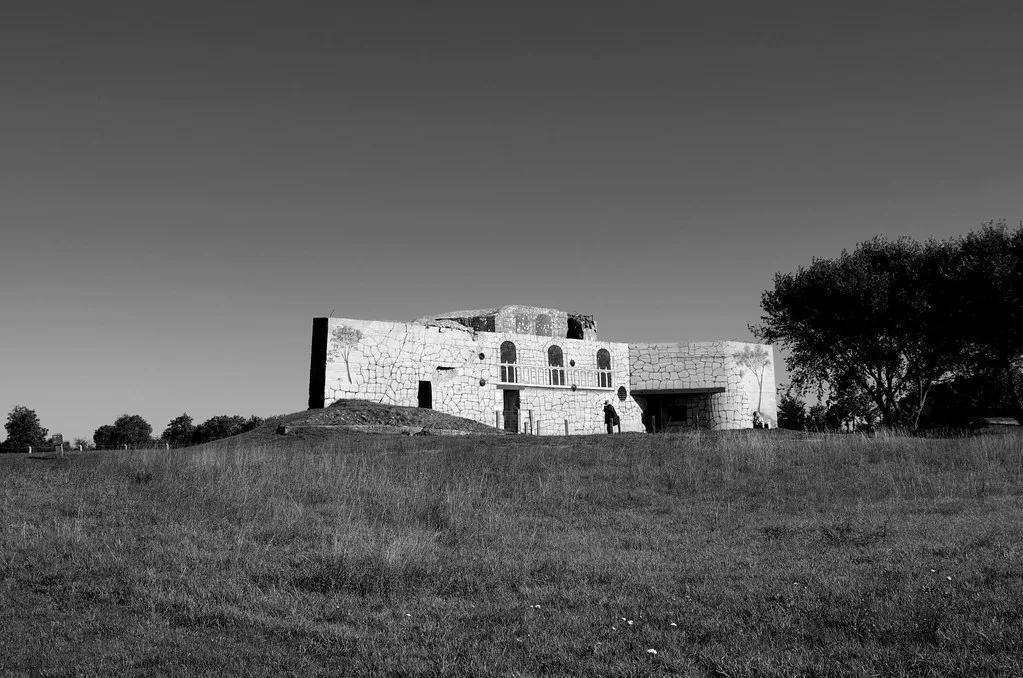
Featured image: Pentolaro, CC BY-SA 2.0, via Flickr.
Crisbecq Battery at a glance
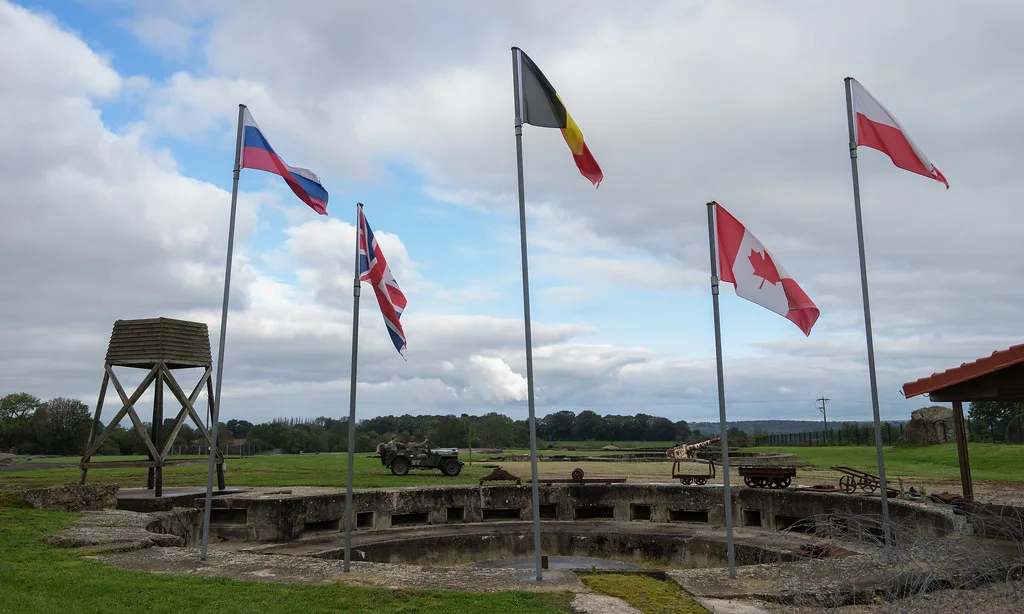
Crisbecq sits on Route des Manoirs in Saint-Marcouf, in the Manche department of Normandy. German crews began building it in 1942, and it was still unfinished on D-Day. Accounts credit it with four 210 mm guns that could reach more than 30 km (about 19 miles). Visitors today walk a site of 19 numbered points.
- Location: Route des Manoirs, 50310 Saint-Marcouf (GPS 49.47996, -1.29689).
- Type: Marineküstenbatterie (MKB), a naval coastal battery.
- Best for: fortification and naval-gun enthusiasts who already know the Utah Beach story.
- Skip if: you have one short stop and want only the landing-beach narrative.
Why Crisbecq mattered on D-Day
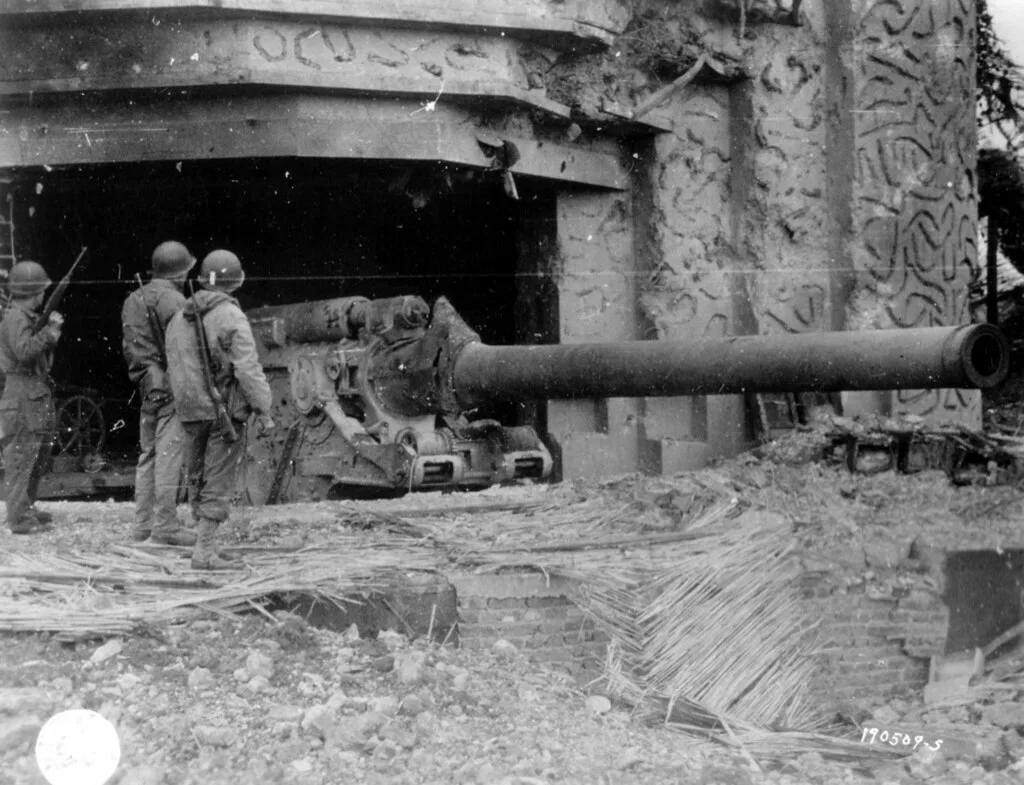
Bombers are said to have dropped 598 tons on the position on the night of 5–6 June 1944. Even so, Crisbecq is said to have opened fire at 5:52 am on ships off Utah Beach. Accounts credit its guns with sinking the destroyer USS Corry. According to the same accounts, battleships Nevada, Texas and Arkansas answered, and the last two active guns were silenced at about 9 am. One gun was restored the next morning.
Work began in 1942 and the site was still unfinished on D-Day, yet guns are said to have opened fire at 5:52 am.
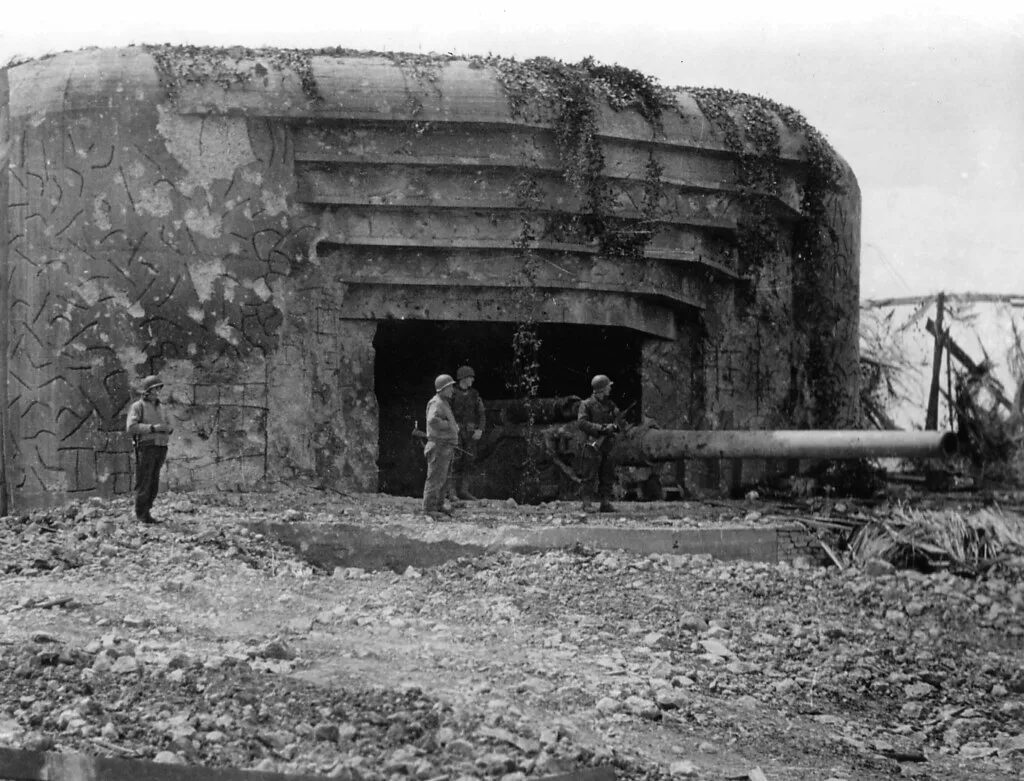
Paratroopers of the 502nd PIR, 101st Airborne, landed too far south and attacked without success. About 20 of them were taken prisoner. On 8 June the 4th Infantry Division also failed to take the battery. Commander Oberleutnant zur See Walter Ohmsen is said to have asked Azeville to fire on his own position. Ohmsen was ordered out around 10–11 June, and US troops found the battery empty on 12 June. Casualty and prisoner figures differ between accounts, so this guide leaves them out.
What you can see on site
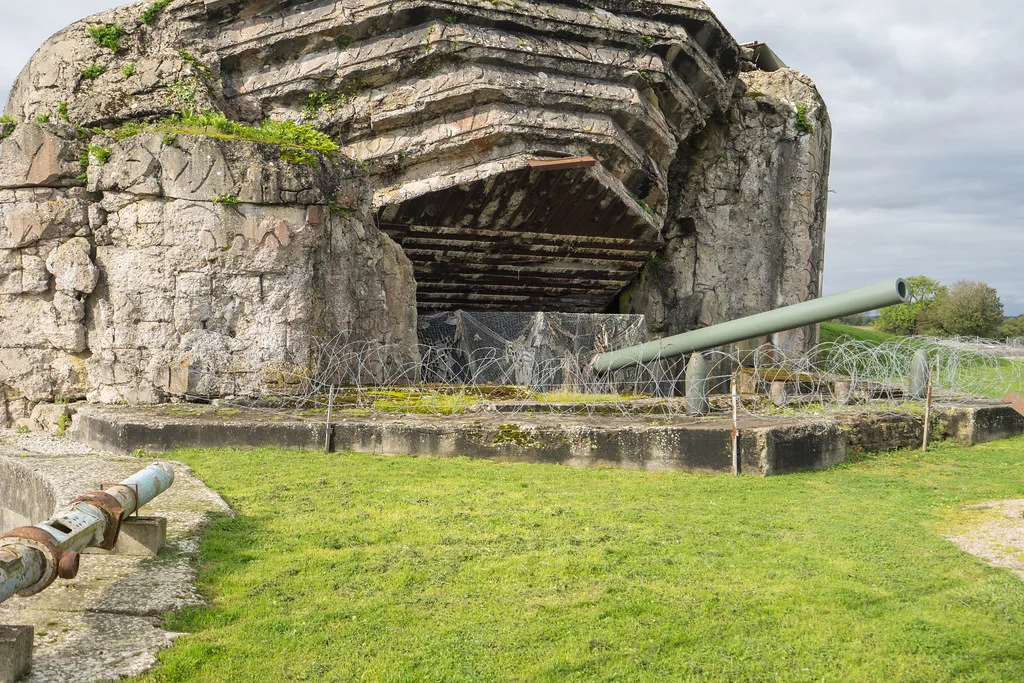
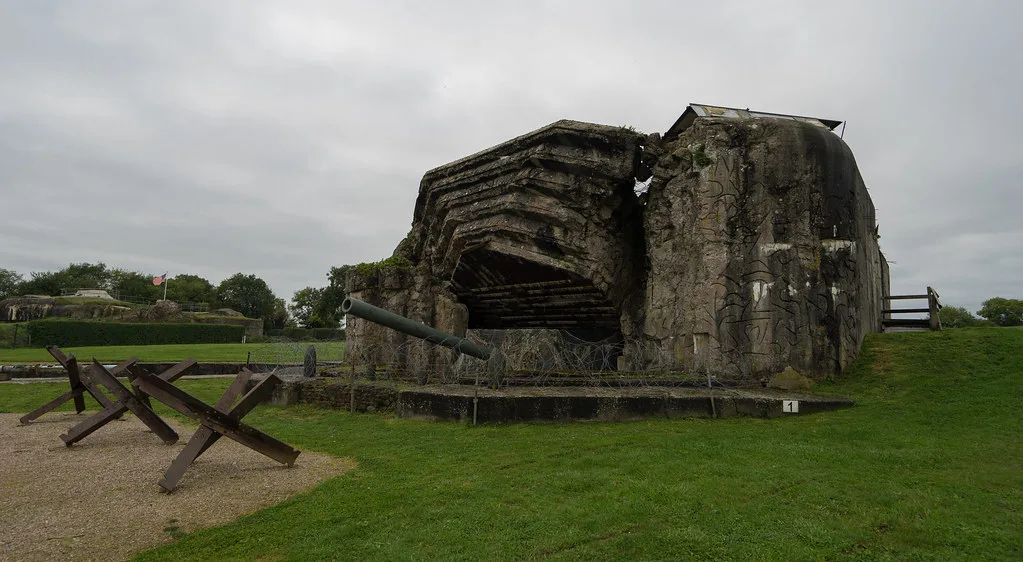
The 19 numbered points fall into four groups. Reading them this way explains how a battery worked, not just where the concrete sits.
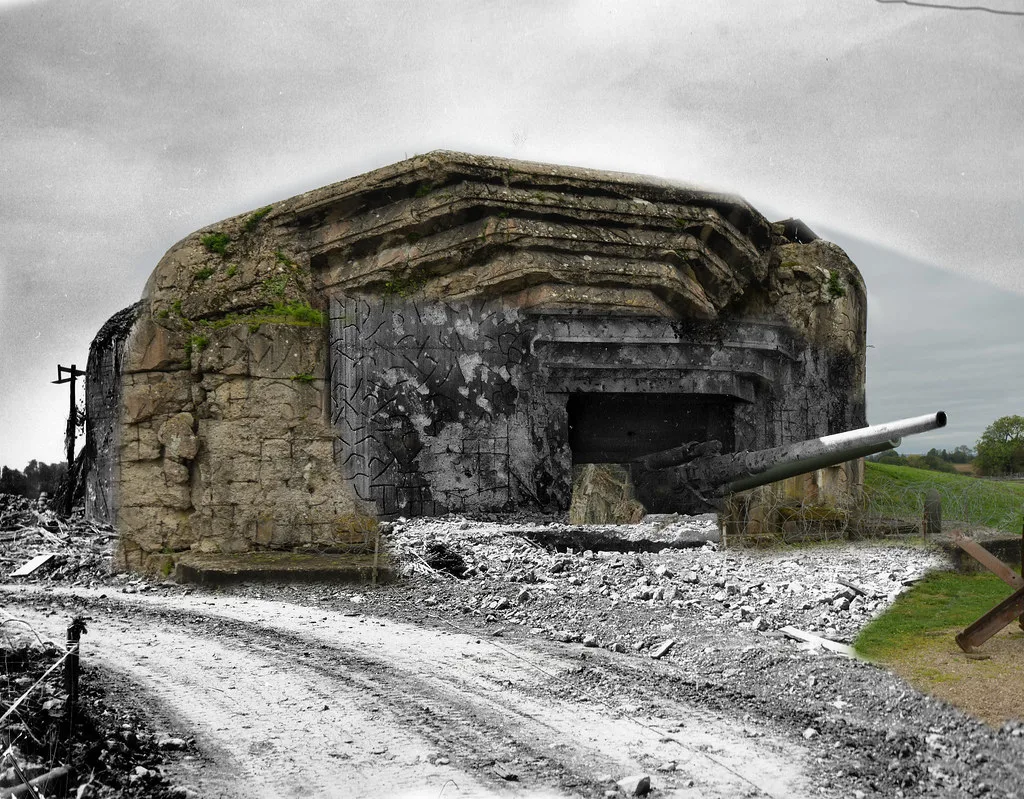
- Guns and casemates: a type R683 casemate for a 210 mm gun, an unfinished R683 casemate, and several 155 mm enclosures. Postwar explosive tests by US engineers are reported to have caused more damage than the D-Day shelling.
- Ammunition and supply: a type 134 magazine and an ammunition locker. Concrete storage kept shells and charges close to the 210 mm guns, so it shows how long the guns could keep firing.
- Shelters and medical: type 622, 502 and 621 shelters, including a sick bay, plus a kitchen and storeroom. One type 622 shelter holds a reconstructed interrogation of an American soldier.
- Defense and utilities: an anti-aircraft enclosure, a Tobruk, a water pump shelter and a water tank.
Crisbecq and Azeville: how to combine them
Azeville lies a few kilometers from Crisbecq, which is why the two work as a half-day coastal-battery loop. A type 502 shelter at Crisbecq carries a 105 mm shell attributed to Azeville. That link makes Crisbecq first and Azeville second a logical order. Azeville's own details, hours and tickets belong on its official page.
Walk the 210 mm gun casemates first, then look for the type 502 shelter, which carries a 105 mm shell attributed to Azeville.
| Stop | Focus | Best for | Time and checks |
|---|---|---|---|
| Crisbecq Battery | Naval coastal battery, 210 mm guns, 19 numbered points | Fortification enthusiasts | Time depends on how many points you walk; check season first |
| Azeville battery | Neighboring battery a few kilometers away | Pairing with Crisbecq | Check its official site for hours and tickets |
| Utah Beach Landing Museum | Landing story on the beach itself | Beach context | Check hours on the museum's official site |
Tickets, Hours and Opening Season
Opening season, ticket prices and tour languages change by year, and no 2026 figure is published here. Start with Normandy Tourism for current details. For the beach-side stop, the official Utah Beach museum site lists its own hours.
- Mistake to avoid: assuming the site is open all year.
- Mistake to avoid: wearing smooth soles on uneven concrete and grass.
- Mistake to avoid: treating Crisbecq as only ruins, when it includes a reconstructed interrogation scene.
- Skip if: you have little time and want only the beach story.
Getting there and where to base yourself
Crisbecq is on a rural stretch, so a car is the realistic way to reach it. Check drive times with a map service before you plan a loop. Sainte-Mère-Église is the natural base for the airborne side. Its Airborne Museum suits a full day built around the paratroopers.
Carentan is an alternative base to the south. From there you can reach Dead Man's Corner Museum. Related Utah-area stops include Brécourt Manor and La Fière Bridge. If you are working north through the peninsula, Cherbourg's wartime sites make a base for that side of the story.
Keep planning
Guides on the same trip





