Colditz Castle: WW2 POW Camp, Tours and Getting There
Colditz Castle visitor guide: how to get there from Leipzig, museum and tour options, the Oflag IV-C escape history and staying in the castle hostel.
In this guide
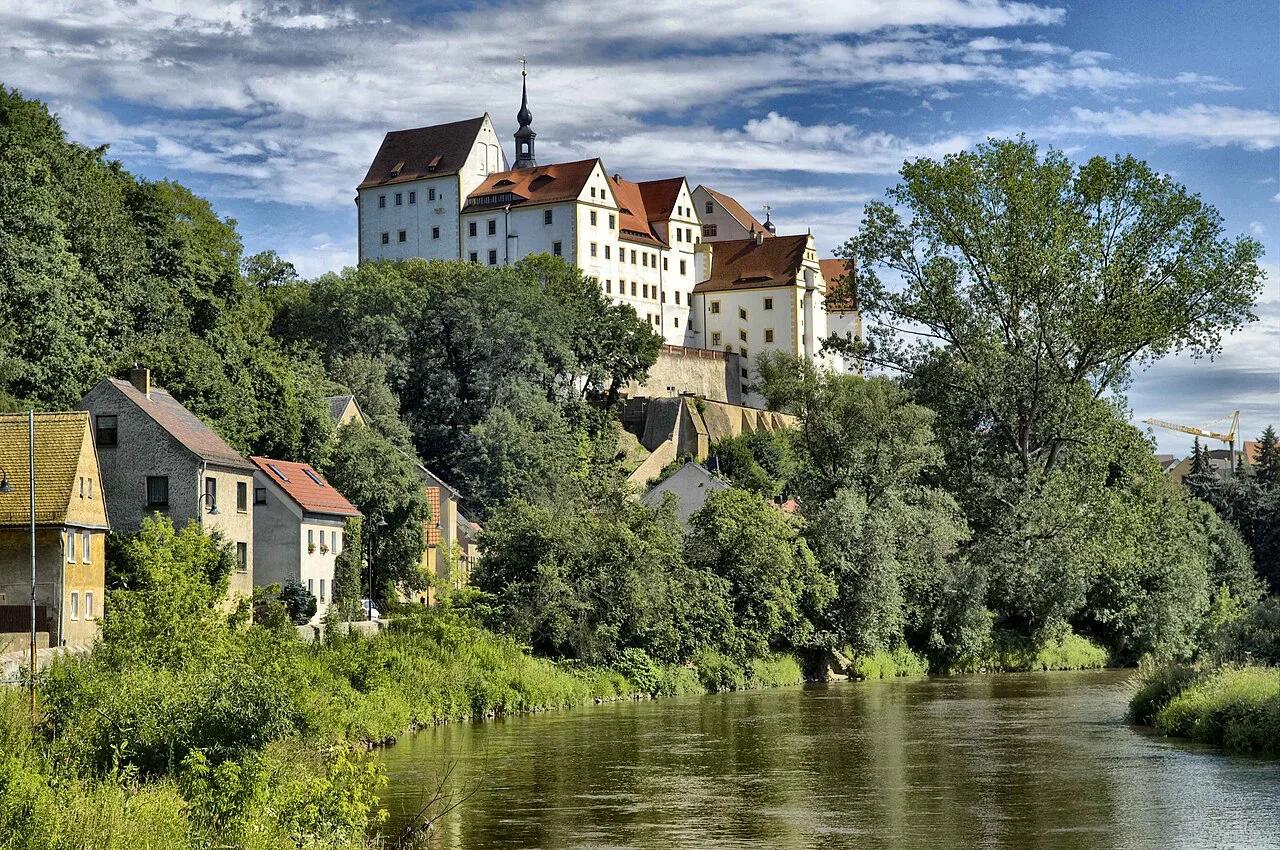
Last updated November 2026: Colditz Castle is a Renaissance castle in Saxony that held Oflag IV-C, the Second World War camp for "incorrigible" Allied officer escapers. You can visit it as a museum and guided-tour site, and part of it still works as a youth hostel, so you can also sleep inside. It stands roughly 25 miles south of Leipzig and is not on a practical rail route.
Featured image: SKOMP46866, CC BY 3.0, via Wikimedia Commons.
Colditz Castle at a Glance
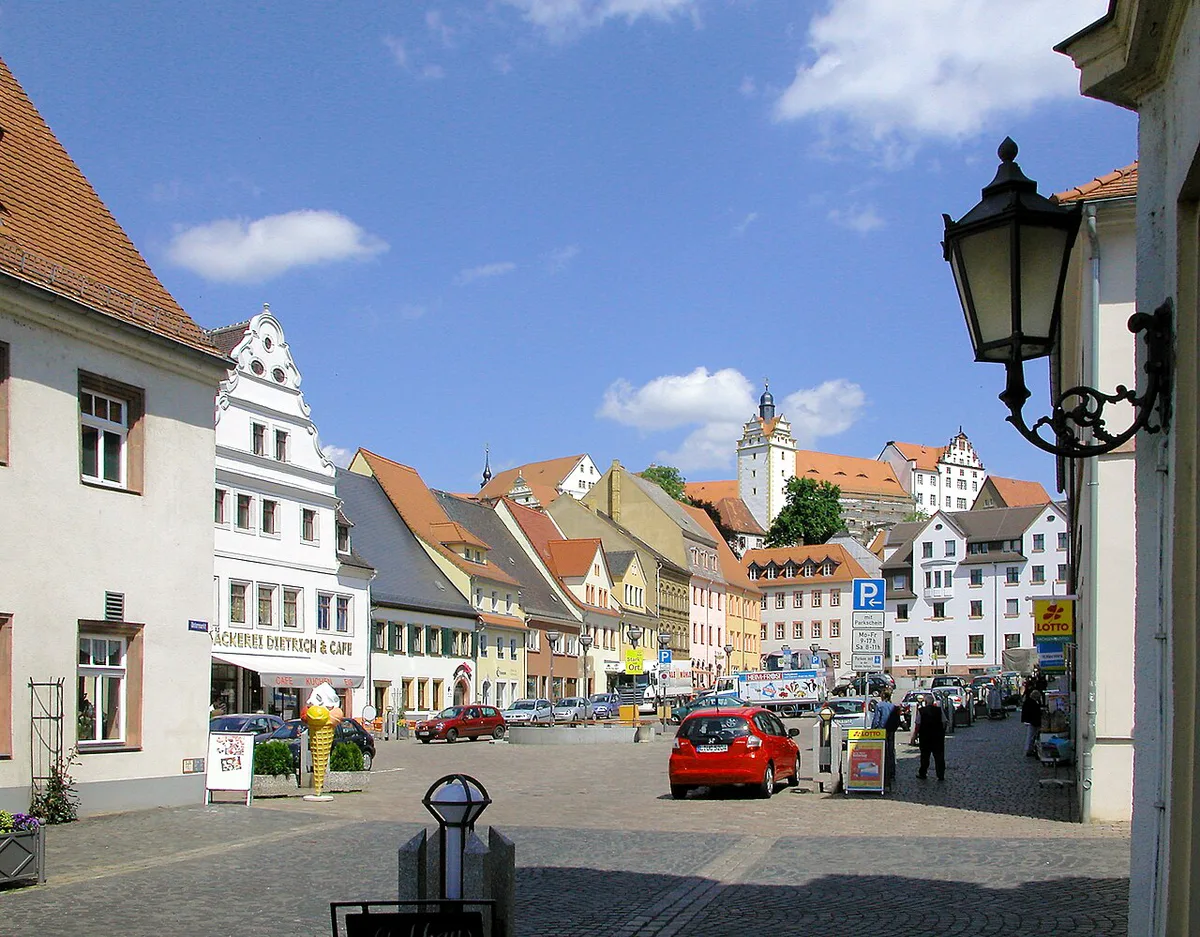
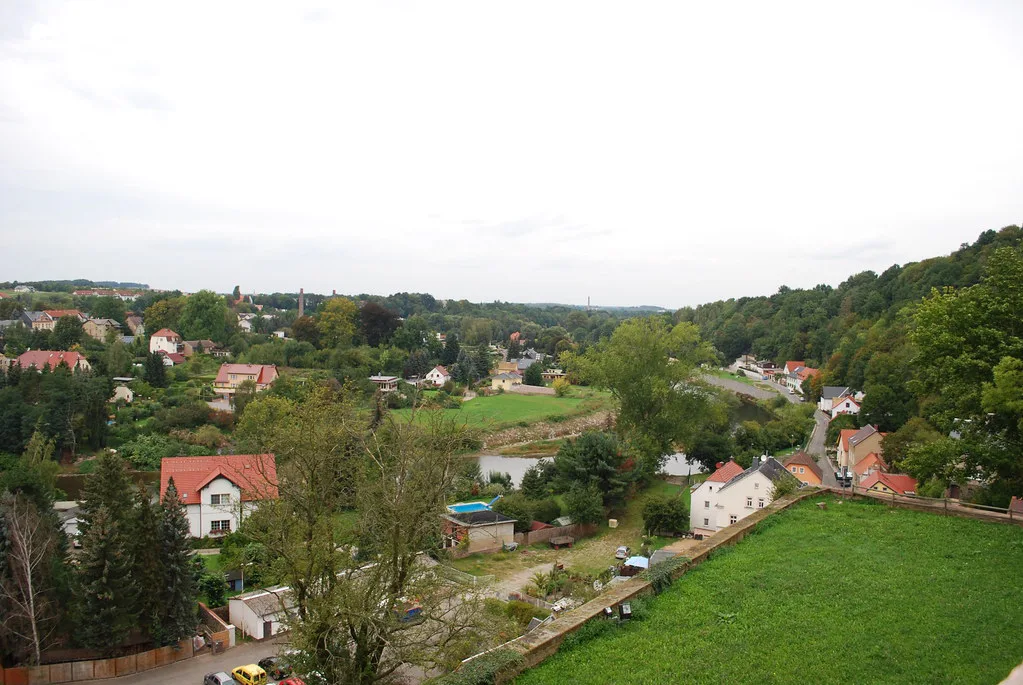
Schloss Colditz stands on a rock spur above the Zwickauer Mulde river in the Saxon town of Colditz. Renaissance rebuilding between 1577 and 1591 gave it its present look. In the Second World War it served as Oflag IV-C, a high-security camp for Allied officers who had tried to escape elsewhere. Today it holds an escape museum, guided tours and a hostel. Our guide to WW2 sites in Germany shows where it fits among the country's other wartime places. Current visitor details sit on the Schloss Colditz official site. Most visitors choose one of three ways in.
| Fact | Detail |
|---|---|
| Location | Colditz, Saxony, above the Zwickauer Mulde |
| Wartime role | Oflag IV-C, camp for Allied officers |
| Peak prisoner numbers | About 800, per the UK National Archives |
| Distance from Leipzig | About 25 to 30 miles; roughly 1 hour by road |
| Owner | State Palaces, Castles and Gardens of Saxony |
- Self-guided museum: walk the Allied officers' Renaissance wing and the escape display at your own pace.
- Guided tour: a tour of roughly 2 hours covers areas from the attic to the cellar that the free walk-round does not.
- Overnight stay: the hostel occupies the former German officers' area, so you can sleep inside the castle.
How to Get to Colditz Castle
Colditz lies about 25 miles south of Leipzig, according to the UK National Archives. A 2019 travel blog puts it 30 miles southeast of Leipzig and 50 miles west of Dresden. Treat 25 to 30 miles as the working range and allow about 1 hour by road from Leipzig. That same blog gave a drive from Berlin of about 3 hours. Trains do not practically reach the town, so a car is the easy option. Without one, check Deutsche Bahn and regional bus timetables for the last leg before you commit to a day trip.
| Starting point | By car | Without a car |
|---|---|---|
| Leipzig | About 1 hour; roughly 25 to 30 miles | Check Deutsche Bahn and regional buses for the final leg |
| Dresden | About 50 miles; check your route time | Travel via Leipzig and check the final leg |
| Berlin | About 3 hours as reported in 2019 | Go via Leipzig and plan an overnight stop |
- Do not follow the sat-nav into Schloßgasse. A 2019 report describes it ending at a gate for pedestrians only.
- Do not arrive without checking the tour schedule. Tours are the only way into the attic and cellar areas.
- Do not plan around a train. Hire a car in Leipzig or Dresden instead.
- Look up current parking guidance on the official site before you drive.
Tickets, Opening Hours and Guided Tours
The most recent prices and hours found date from 2019, so treat the figures below as a guide only. That year a travel blog listed museum entry at €9, open 10am to 5pm. It listed 2-hour tours at €12, running at 10:30am and 3pm on Sundays and Mondays, with English tours available. It also listed hostel rooms from €25 per person, with hostel reception open 7am to 10pm. Cost levels run in a clear order: museum entry is cheapest, a tour costs more, and an overnight stay costs most. Confirm current rates, tour days and English availability on the official castle website before you set out.
Attic and cellar areas need a booked tour, so budget the €12 guided tour, a 2019 price, for those rooms.
| Option | Reported in 2019 | Best for |
|---|---|---|
| Museum, self-guided | €9; 10am to 5pm | Short visits and casual castle fans |
| Guided tour | €12; about 2 hours; English reported | Anyone who wants the attic and cellar areas |
| Hostel stay | Rooms from €25 per person | Overnight visitors and families |
| Last entry and seasonal changes | Not reported | Ask the castle before you travel |
What to See Inside Colditz Castle
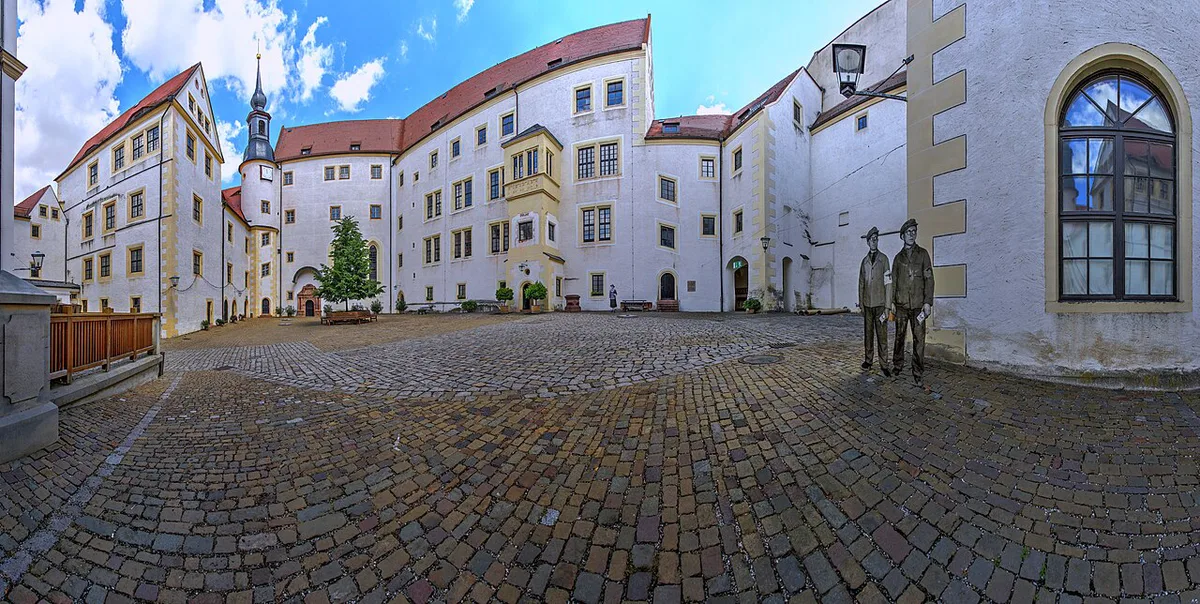
Escape history is the draw. The restored castle chapel has glass panels set into the flagstone floor, which reveal an escape tunnel dug by French prisoners. A small museum shows how food tins and other everyday objects became digging tools. Dummies and disguises, which guards even photographed for the castle's own escape museum, give a sense of how prisoners worked. The attic is where prisoners built the Colditz Cock glider in the winter of 1944 to 1945. It was never flown, because the camp was liberated shortly after it was finished. An American war correspondent, Lee Carson, took the only known photograph of it on 15 April 1945. Channel 4 commissioned a full-size replica in 1999, which was test-flown at RAF Odiham in 2000. A 2019 report places a glider replica in the attic, but ask whether it is on your tour. Attic-to-cellar areas need a booked tour, while the museum and escape display can be walked freely.
Visit, Tour or Sleep Over? A Decision Guide
Match the option to your time and your knowledge of the story. Visitors who know the books, films and TV series get the most from the museum. A general castle visitor may find the museum less engaging without a guide. Teenagers often enjoy the escape objects and the hostel. Cost levels below are relative only.
| Traveler type | Best option | Time | Cost level | Effort |
|---|---|---|---|---|
| History buff | Guided tour plus museum | Half a day plus travel | Medium | Book the tour ahead |
| Family with teens | Museum or tour, then an overnight stay | One to two days | Medium to high | Easier with a car |
| Budget traveler | Hostel stay with a museum walk | Overnight | Lowest bed cost | Plan meals ahead |
| Short day trip | Self-guided museum | 2 to 3 hours plus about 1 hour each way from Leipzig | Lowest | Check opening hours |
Staying in the Castle Hostel
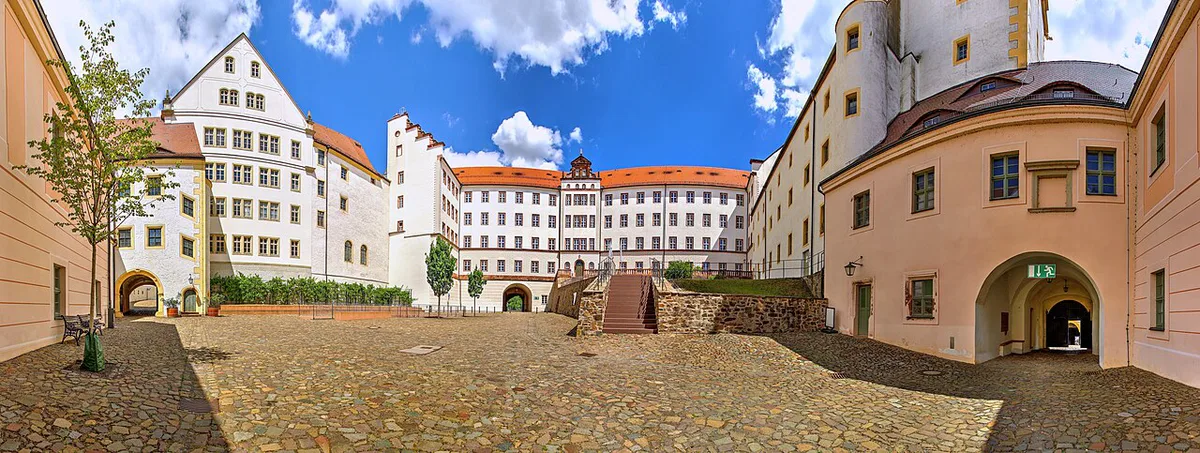
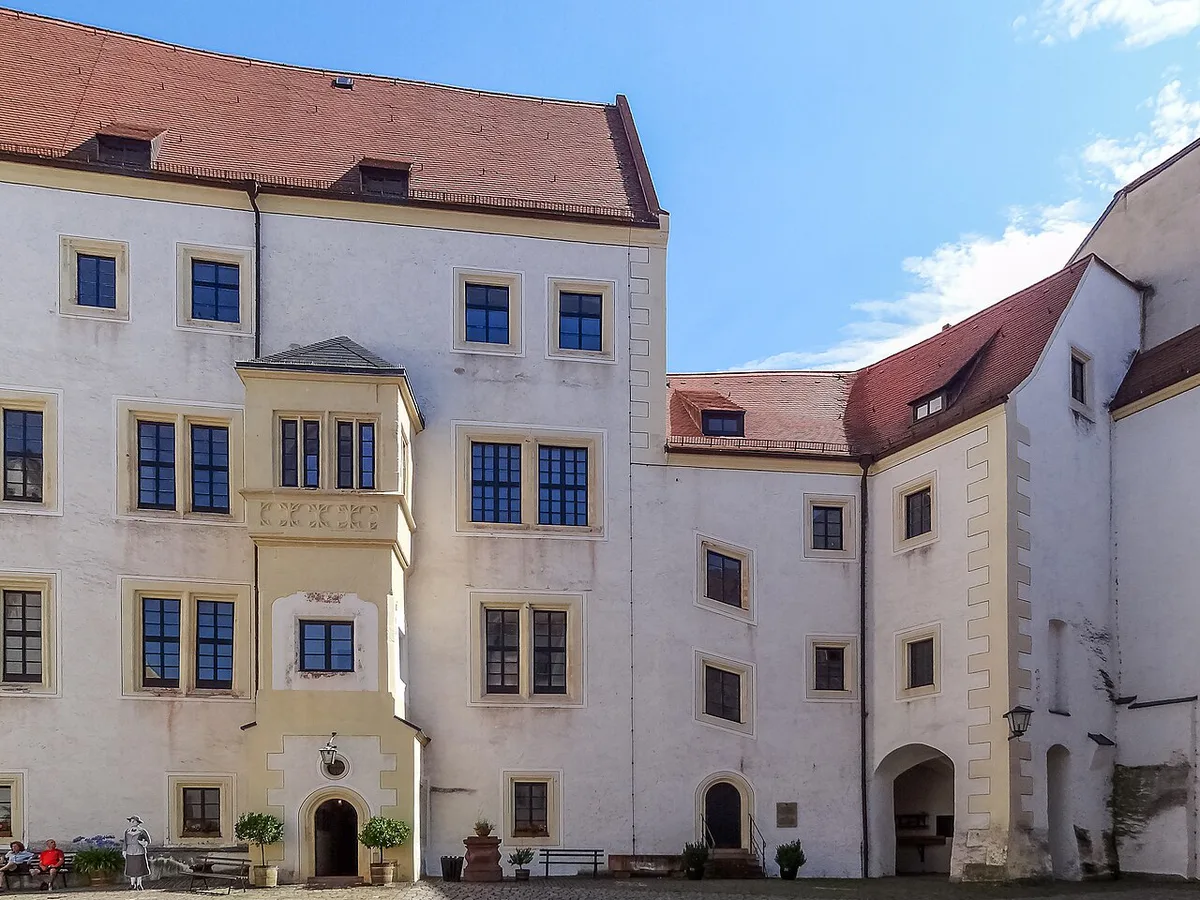
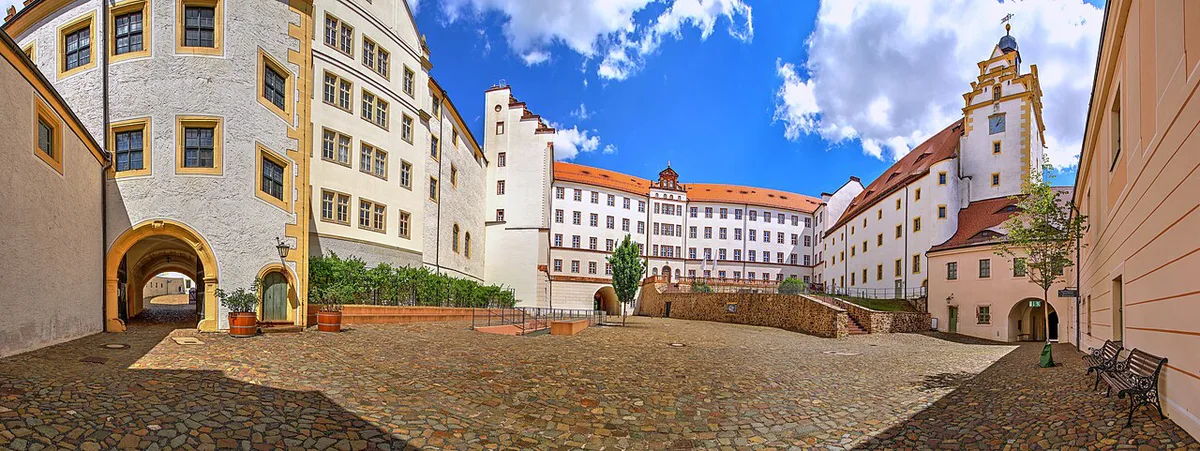
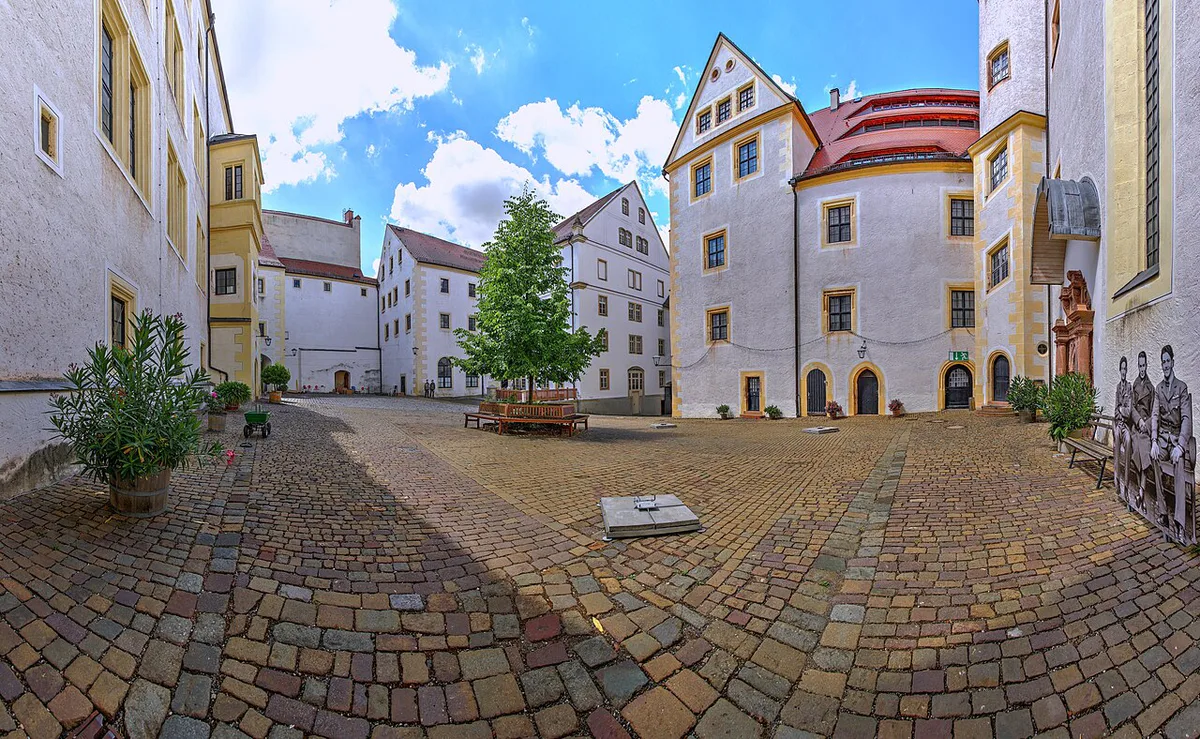
The hostel occupies the outer courtyard and the former German Kommandantur. The Allied officers' older Renaissance wing is kept as the museum. A 2019 stay described en suite dorm rooms with bunk beds for four or six people, plus a few family rooms with a double bed. Breakfast was a self-service buffet. Lunch and dinner could be eaten there if arranged in advance. Public areas had table tennis, table football and wifi. The hostel suits teenagers and budget travelers who want to sleep inside the castle. Hotels in Colditz town or in Leipzig suit visitors who want private rooms and more flexible meals. Compare current room types and rates on the official site before you book.
The Story: How a Renaissance Castle Became Oflag IV-C
A short timeline shows how many lives the castle has had. The wartime chapter is the best documented through primary records. The UK National Archives holds an International Red Cross report on the camp, reference WO 361/1838. Its inspector wrote that "the place is not suitable for a prisoners' of war camp", citing a site too small for recreation and exercise. The report links these conditions to low morale and a stronger drive to escape. The first prisoner escape attempt in NOVA's 2001 chronology dates from 12 April 1941. US troops captured the castle on 16 April 1945.
- 1046: first documented settlement at the site.
- 1404: the Lords of Colditz sold the castle for 15,000 silver marks to the Wettin ruler of Saxony.
- 1504: a fire burned the castle, much of the town and the town hall.
- 1523: the castle park became one of the largest menageries in Europe.
- 1803 to 1829: workhouse.
- 1829 to 1924: sanatorium and hospital.
- 1933: political prison under the Nazis.
- 1939 to 1945: prisoner-of-war use, with Oflag IV-C holding Allied officers.
- 2006 to 2007: restoration paid for by the state of Saxony.
Escape Attempts and Famous Prisoners
NOVA lists 25 attempts between 1941 and 1944, with a glider plan added for April 1945. Methods included dummies in December 1941 and the "Mussolini's office" attempt on 9 September 1942. Lieutenant Airey Neave made the best-documented escape, on 5 January 1942, according to his MI9 account (WO 208/3308/676). He left with three other officers, one English and two Dutch. They dressed in German uniforms and walked out in pairs. Neave and Lieutenant Luteyn reached Switzerland, and Neave became the first British officer to escape Colditz. The other pair were recaptured in Ulm, some 300 miles southwest. Parcels sent by IS9 hid maps, money and forged identity papers for prisoners, as the Archives' record WO 208/3288 shows. Captain Pat Reid, who escaped in 1942, later wrote the book that made the camp famous. Prisoners also included Group Captain Douglas Bader, Desmond Llewelyn, later Q in the James Bond films, and David Stirling, who founded the SAS.
Making a Day of It
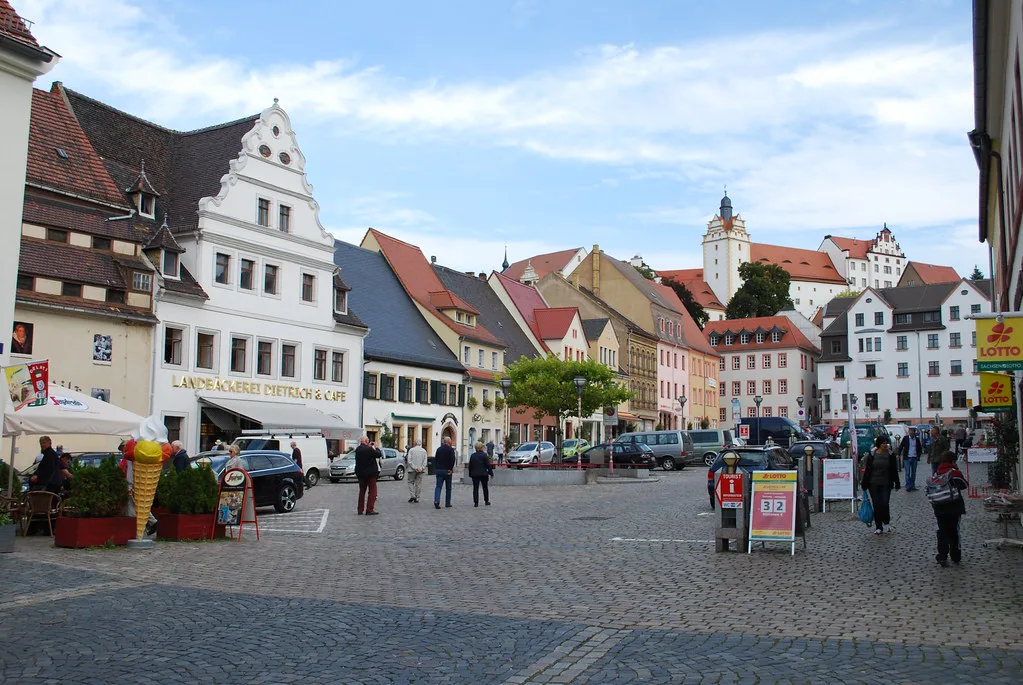
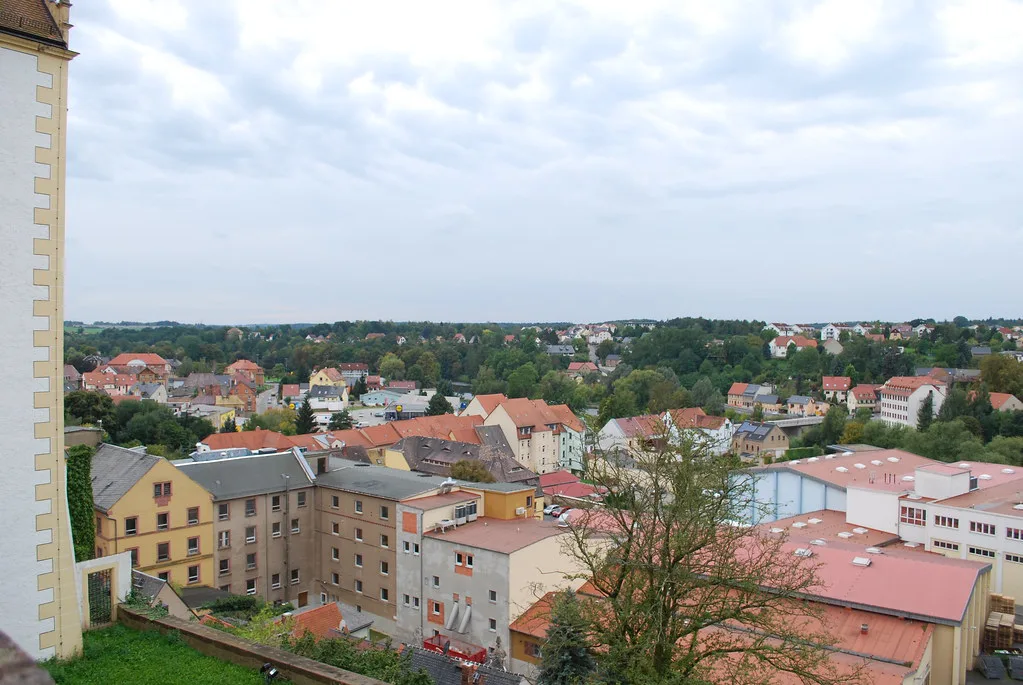
Colditz town sits at the foot of the castle and has a central square with cafés. A 2019 visitor described it as half-timbered and quiet. For a longer trip, pair the castle with Leipzig, about 1 hour away by road. In Leipzig, the Battle of Nations Monument covers an earlier chapter of German military history. Dresden is about 50 miles from Colditz, and our Dresden WW2 guide covers its wartime history. For a reflective follow-on, read about German War Cemeteries: Visiting, Finding Graves, Etiquette. Other Nazi-era sites include Peenemünde, where the Historical Technical Museum tells the rocket-development story. Prora is a vast Nazi-era seaside complex, now with a documentation center. Wewelsburg is a castle the SS used. The Obersalzberg Documentation Center: Hours, Access & Visit Guide covers the Nazi leadership's mountain retreat. Battlefield visitors can read about the Hürtgen Forest and the Remagen Bridge: What Remains, Museum & Visiting Guide on the western front. The Siegfried Line (Westwall) Today: What Remains and Where to Visit belongs to that same story. Seelow Heights: Visit the 1945 Battlefield from Berlin is on the eastern front. None of these sit near Colditz, so plan them as separate trips.
Frequently Asked Questions
How many prisoners escaped from Colditz?
Sources count differently. NOVA (January 2001) says at least 130 got out of the castle but only 30 got clean away. The UK National Archives says more than 30 attempts succeeded.
What is Colditz Castle used for now?
Part of Colditz Castle is a museum with guided tours of escape sites. Another part works as a youth hostel. The Colditz Castle historical society, founded in 1996, has offices on site.
Who was imprisoned in Colditz Castle?
Allied officers who had repeatedly escaped from other camps were sent there, from Britain, France, Poland, Belgium, the Netherlands, Canada and America. Group Captain Douglas Bader and Airey Neave were held there. Desmond Llewelyn, later Q in the James Bond films, was also a prisoner.
Keep planning
Guides on the same trip