
Strasbourg WW2: Liberation Sites & Day Trips Guide
Plan a Strasbourg WW2 visit: liberation traces in the city, Natzweiler-Struthof, the Alsace-Moselle Memorial, and how to fit them into your time.
In this guide
Last updated November 2026: a strasbourg ww2 visit rests on two dates, the 1940 annexation and the liberation of 23 November 1944. Most memorial sites sit outside the city, so this guide sorts them by the time you have. For the wider region, start with our hub on Alsace's WWII sites.
Featured image: michelsimeonidis, Public Domain Mark 1.0, via Flickr.
Strasbourg WW2 at a glance
Germany annexed Alsace after the 1940 armistice, and Strasbourg became part of the Third Reich rather than an occupied French city. French and American forces took it back in November 1944. Inside Strasbourg, the traces are modest: the cathedral, Place Kléber and a plaque near the cathedral. The deeper sites are a short trip away, and the table below shows which one fits your day.
- 1940: Alsace is annexed to the Third Reich after the armistice.
- 1942: Alsatian men are conscripted into the German army.
- 23 November 1944: Leclerc's 2nd Armoured Division liberates Strasbourg.
- 25 November 1944: the last German garrison in Fort Ney surrenders.
- January 1945: German offensives threaten the city, and French forces hold it.
Annexation, the Malgré-nous and resistance
Alsace was annexed, not occupied. Gauleiter Robert Wagner ran a civil administration that answered directly to Hitler. French language, names and symbols were suppressed, and the removal of the Kléber statue from its Strasbourg square angered residents. From 1942, Alsatian men were drafted into the Wehrmacht. They are known as the Malgré-nous, meaning "against our will". Some were sent to the Russian front, and many deserted or escaped.
Between 1871 and 1945 residents changed nationality four times, a backdrop to the 1942 drafting of Alsatian men.
The Musée protestant's account of Alsace in the war puts the drafted at about 130,000, with roughly 32,000 killed. Treat these as estimates and check them against a current history before quoting them. Resistance began as passive refusal and grew into escape networks and armed groups. This grey zone explains why local memory differs from the rest of France, and why the regional museums spend so long on it.
The liberation of Strasbourg and where to see its traces
The Ministry of the Armed Forces memorial pages date the liberation to 23 November 1944. US forces opened the Saverne Gap on 22 November. At 7 a.m. the next day, Leclerc's 2nd Armoured Division advanced in five columns guided by local resistance fighters. One column broke through along the Marne-Rhine Canal and reached the Kehl bridge over the Rhine.
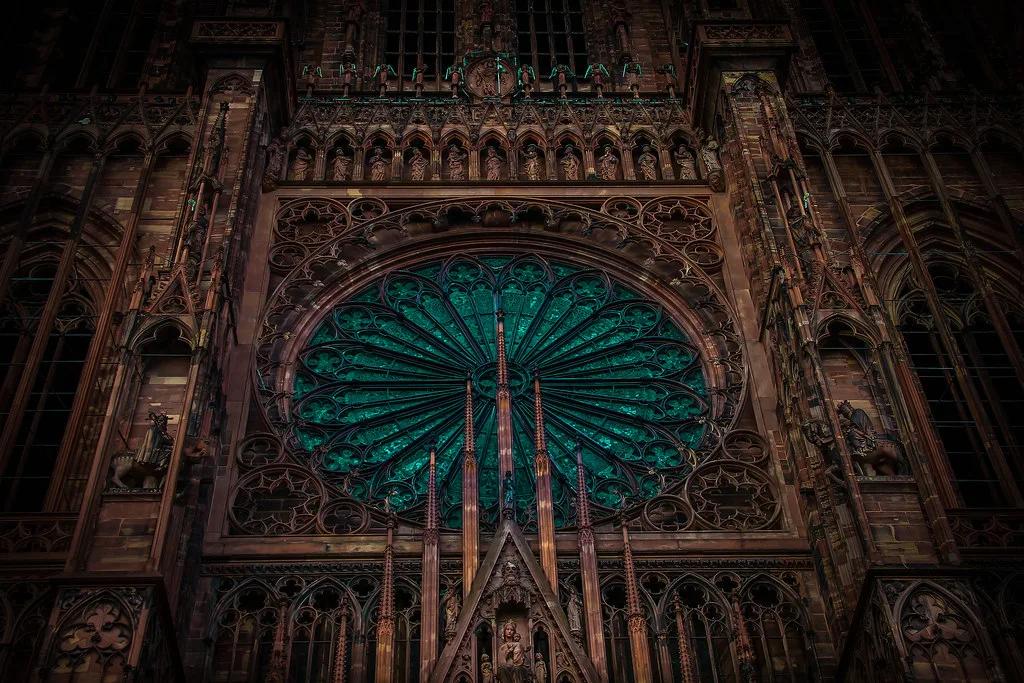
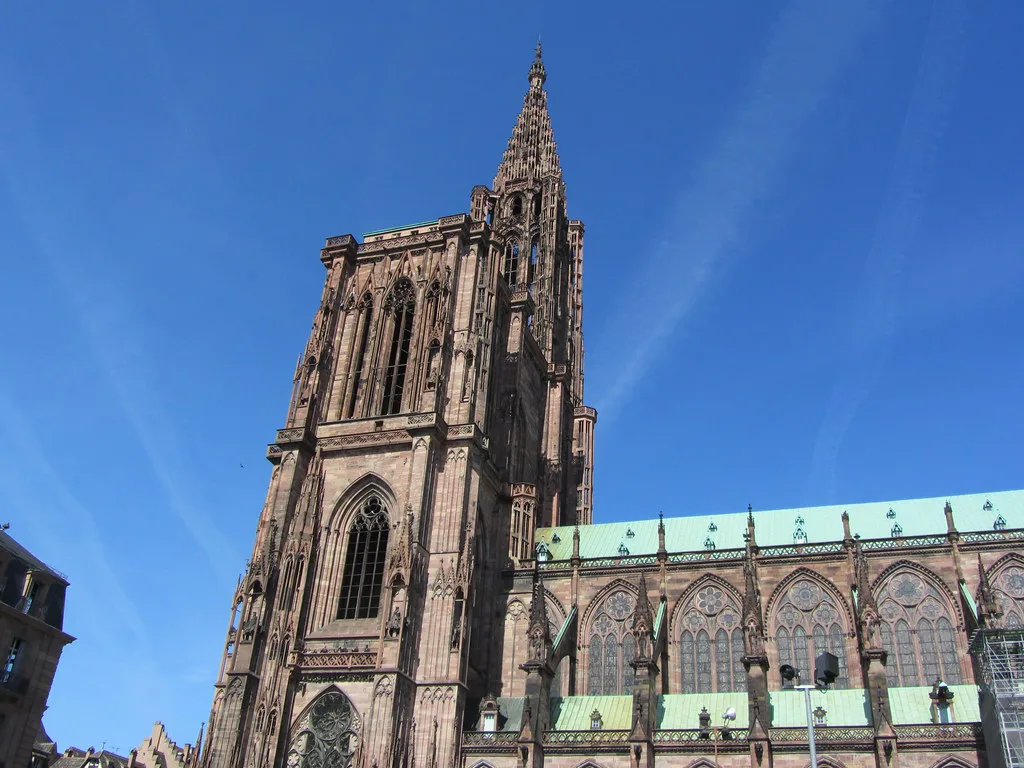
At 2:20 p.m., the French flag was raised on the cathedral. Fort Ney held out until 25 November, when 626 men surrendered. Leclerc and his men had sworn the Oath of Kufra to fight on until the colours flew over the cathedral. A plaque near the cathedral commemorates it.
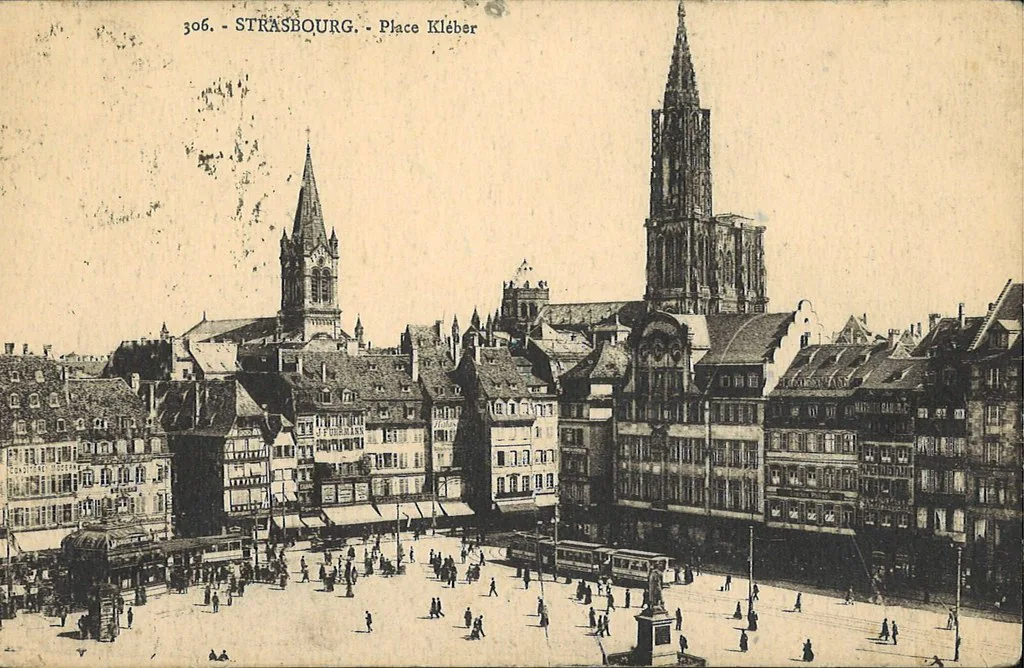
Plan 2–3 hours for the city itself. Walk from the cathedral to Place Kléber, where tanks paraded after the liberation. Then browse the City of Strasbourg museums for current exhibitions. The Strasbourg tourist office lists guided city walks.
Which WW2 site should you visit from Strasbourg?
Match the site to your time and your appetite for heavy material. Entries marked "check official site" depend on seasonal opening and current transport, which change year to year.
| Site | Best for | Time needed | Without a car | Emotional weight | Verify |
|---|---|---|---|---|---|
| Strasbourg city traces | First-time visitors, liberation story | 2–3 hours | Yes, on foot | Low | Museum hours |
| Natzweiler-Struthof | Concentration camp history | Check official site | Check official site | High | Opening days, visitor centre access |
| Alsace-Moselle Memorial, Schirmeck | Annexation and the Malgré-nous | Check official site | Check official site | Moderate | Opening days, ticket prices |
| Colmar Pocket sites | Winter 1944–45 battle | Half day or more | Limited | Moderate | Museum hours |
| Maginot forts | Fortification history | About 2.5 hours for Schoenenbourg's underground tour | Limited | Low | Tour schedule |
| Metz and Lorraine | Cemeteries, US campaign | Full day | Check official site | Moderate | Cemetery hours |
Natzweiler-Struthof: what to expect and how to get there
Natzweiler-Struthof was the Nazi concentration camp on French soil, set on a hillside in the Vosges. The official Struthof site describes a place of national memory, and the European Centre of Deported Resistance Members opened there in 2005. Our camp visitor guide covers the grounds in detail.
This is not a half-hour stop from Strasbourg. Set aside a half-day at minimum. The hillside is exposed, so bring layers and sturdy shoes. Check whether the visitor centre and the camp grounds have separate entry arrangements. Transport for the last leg may need a car or taxi, so confirm it before you set out.
Alsace-Moselle Memorial in Schirmeck: who it suits
The Schirmeck memorial museum covers regional history from 1870 to the present. It highlights the Second World War, when Alsace and Moselle were annexed to Germany. Between 1871 and 1945, the people of these regions changed nationality four times. That makes it the best place to understand the Malgré-nous and the annexation. It suits readers who want context more than a single site, and it is less raw than a camp visit. Pair it with Struthof only if you have a full day.
Colmar Pocket and the wider Alsace war sites
After Strasbourg fell, German forces still held a pocket around Colmar until early 1945. The winter 1945 fighting around Colmar is told in a dedicated museum. MM Park's museum adds a wider Alsace liberation context. Travelling in the same day as Struthof and Schirmeck is unrealistic. Give Colmar its own day.
Two First World War sites suit longer stays. The Linge ridge battlefield and the Vosges WWI summit memorial are optional extras.
Some visitors add a Maginot fort. Fort Schoenenbourg was built between 1931 and 1935. A garrison of 600 men lived there, with galleries of nearly 3 kilometres about 22 metres underground. The visit takes about 2.5 hours. These forts lie in northern Alsace, well away from the city, so check the distance before planning a day around them.
Sample itineraries: half-day, full day, two days
Use these three plans as a starting point and adjust them to your transport.
Within 2–3 hours you can cover the cathedral and Place Kléber, but Natzweiler-Struthof alone needs a half-day at minimum.
- Plan A, 2–3 hours: cathedral, the Oath of Kufra plaque, Place Kléber, then one city museum.
- Plan B, half-day: Schirmeck memorial museum or Natzweiler-Struthof, not both unless you have a car.
- Plan C, one to two days with a car: Day 1 for Schirmeck and Struthof; Day 2 for the Colmar Pocket sites and, if time remains, one of the First World War summits.
Tickets, hours and practical tips
Prices and hours checked November 2026 against the official sites; none are quoted here, because they change by season. Check each venue's own page, including the Struthof site linked above, before you travel. Expect a cost ladder: memorials and outdoor sites are the cheapest to see, museums charge entry, and private guided tours cost the most.
Keep the tone quiet at Struthof. Ask before photographing exhibits. Teenagers can usually handle the material, but younger children may find it hard. Check the venue's own guidance for conduct rules.
- Treating Struthof as a half-hour stop from Strasbourg.
- Ignoring weekday and seasonal closures.
- Assuming the Maginot forts are near the city.
- Trying to fit the Memorial, Struthof and Colmar into one day.
Getting around: train, bus, car, guided tour
Strasbourg itself is easy on foot. For Schirmeck and Struthof, check the regional transit operator's timetable before you plan. The last leg to Struthof may need a taxi or your own car. A hire car gives the most flexibility for two-day plans. A private tour is the high end of the cost ladder but removes the logistics. For readers continuing into Lorraine, Metz in the Second World War is a natural next stop. Two cemeteries follow: the American cemetery in Lorraine, run by the American Battle Monuments Commission, and the US cemetery at Épinal.
Frequently Asked Questions
Was Strasbourg ever part of Germany?
Yes. Alsace was annexed to the German Reich by the Treaty of Frankfurt on 10 May 1871 and returned to France after 1918. Germany annexed it again in 1940, and the city was liberated on 23 November 1944.
Is Strasbourg more German or French?
Strasbourg is French, though its history sits between the two countries. Annexed twice by Germany, Alsace kept regional particularities after 1945, such as the worship concordat and its own school statutes.
Keep planning
Guides on the same trip





