Sachsenhausen Memorial and Museum: History and Visitor Guide
What Sachsenhausen was, what the memorial holds today, and how to plan a respectful visit from Berlin, with official sources for hours and access.
In this guide
Last updated November 2026: Sachsenhausen Memorial and Museum stands in Oranienburg, about 35 km north of central Berlin, on the site of a Nazi concentration camp that operated from 1936 to 1945. The grounds and exhibitions are open to visitors as a place of mourning and commemoration. A Frankfurt district shares the name, but this guide covers only the Oranienburg memorial, which our overview of memorials across Germany places among the country's other sites.
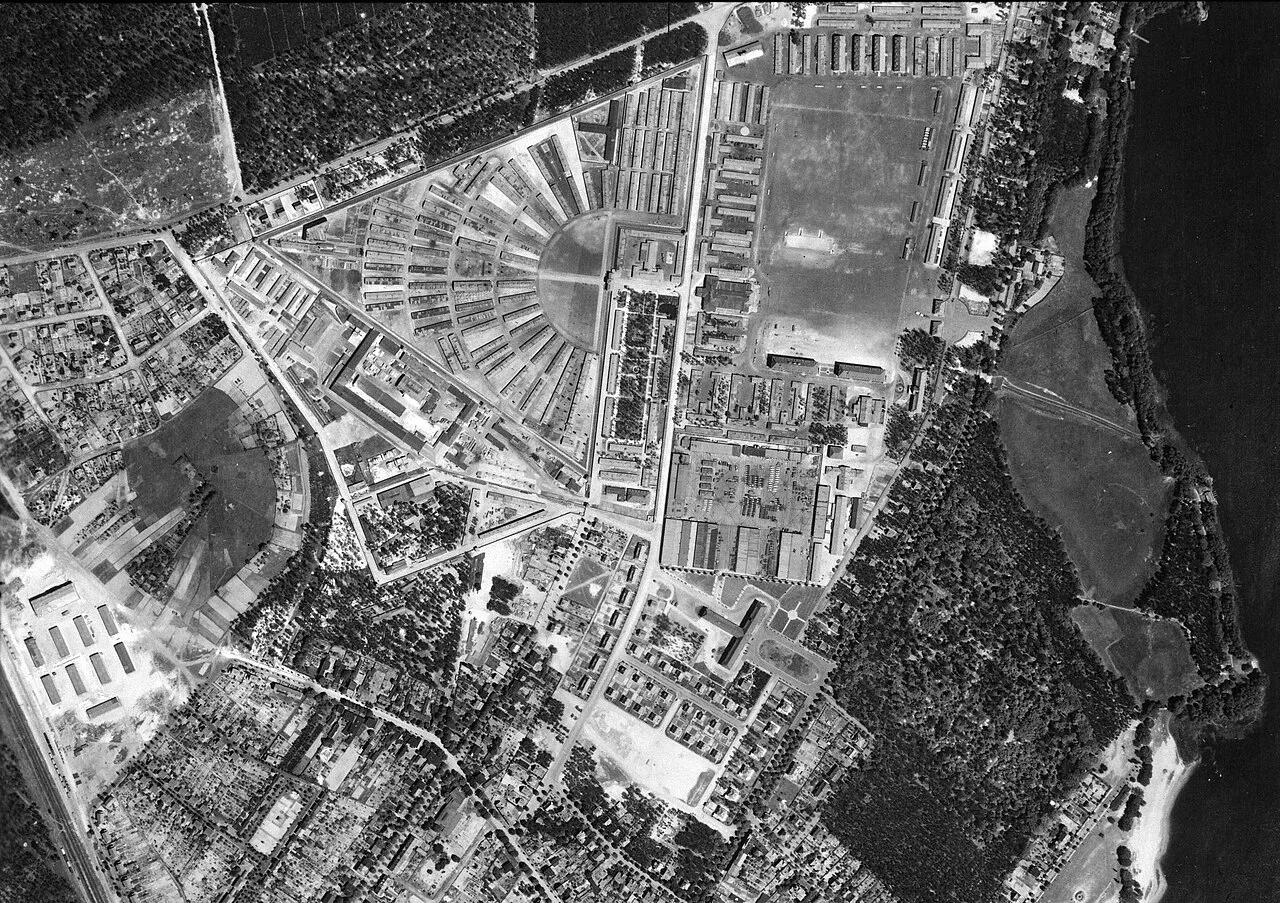
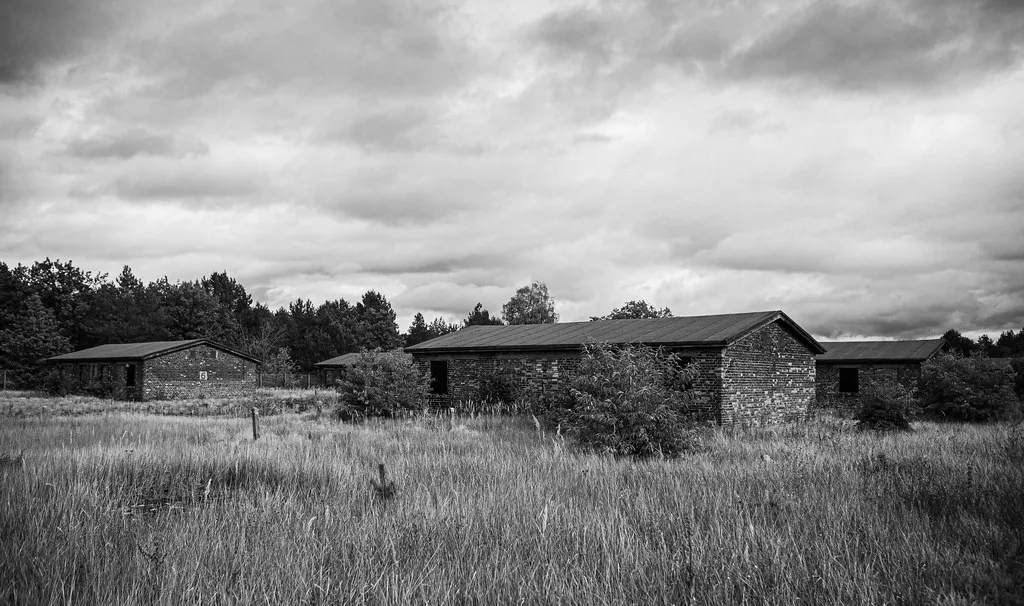
Featured image: RAF, Public domain, via Wikimedia Commons.
What Sachsenhausen was and what it is today
Sachsenhausen concentration camp was built in the summer of 1936 as a model and training camp for SS guards. Its position beside the capital gave it a special status. In 1938 the "Inspection of the Concentration Camps", the central administrative office for all camps, moved from Berlin to Oranienburg. Today the site is run by the Brandenburg Memorials Foundation as the Gedenkstätte und Museum Sachsenhausen. Its official description calls it a place of mourning and commemoration that also works as a modern museum of contemporary history. Many visitors do not know the site had two periods of use, first under the SS and then under the Soviet secret police. Both are explained on site.
Sachsenhausen history in brief, 1936 to 1950
The memorial's own history pages divide the site's past into distinct phases. Each phase left physical traces that you can still read in the landscape.
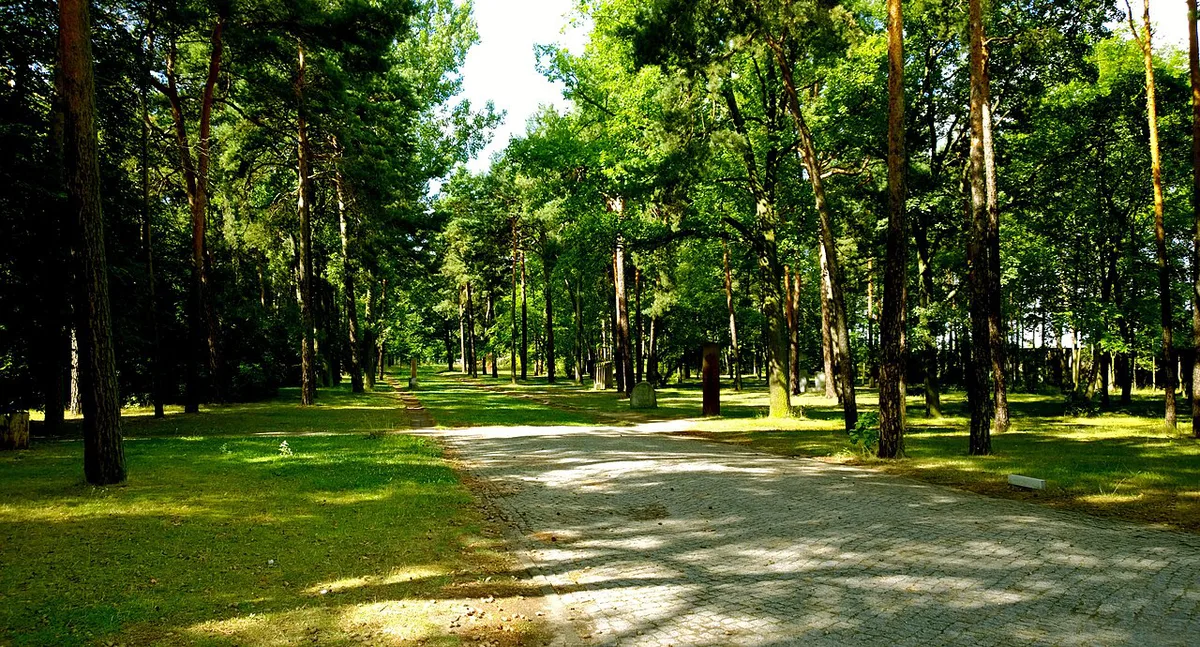
- 1933-1934: the SA set up an early camp in a vacant factory in the centre of Oranienburg, before the 1936 camp existed.
- 1936-1945, Nazi camp: more than 200,000 people were interned, including around 20,000 women. In 1944 about 90% of internees were foreigners, with citizens of the Soviet Union and Poland the largest groups.
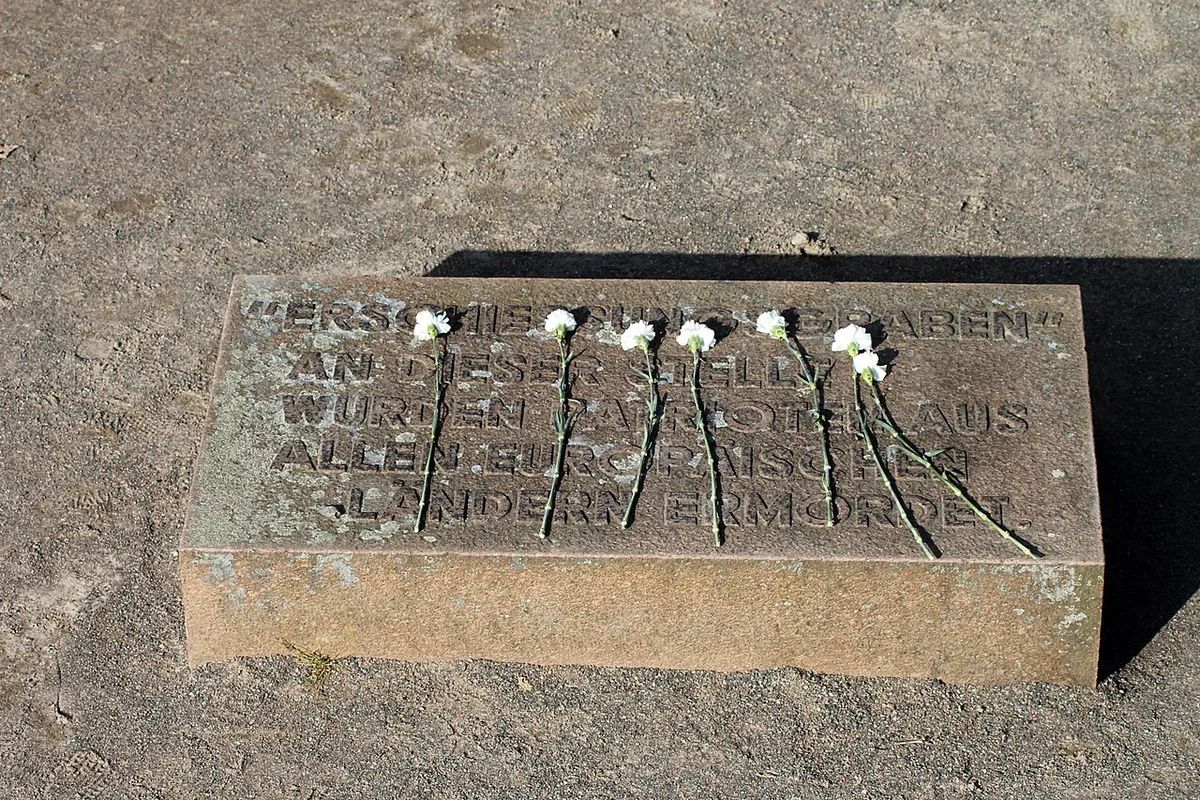
- Autumn 1941: the SS murdered at least 10,000 Soviet prisoners of war, many of them Jews.
- 21-22 April 1945: more than 30,000 prisoners were marched out on the death march. Soviet and Polish units liberated about 3,000 sick prisoners, with nurses and doctors, on 22 April 1945.
- 1945-1950, NKVD Special Camp No. 7: the Soviet secret police interned 60,000 people in the former camp, and 12,000 of them died of hunger and disease.
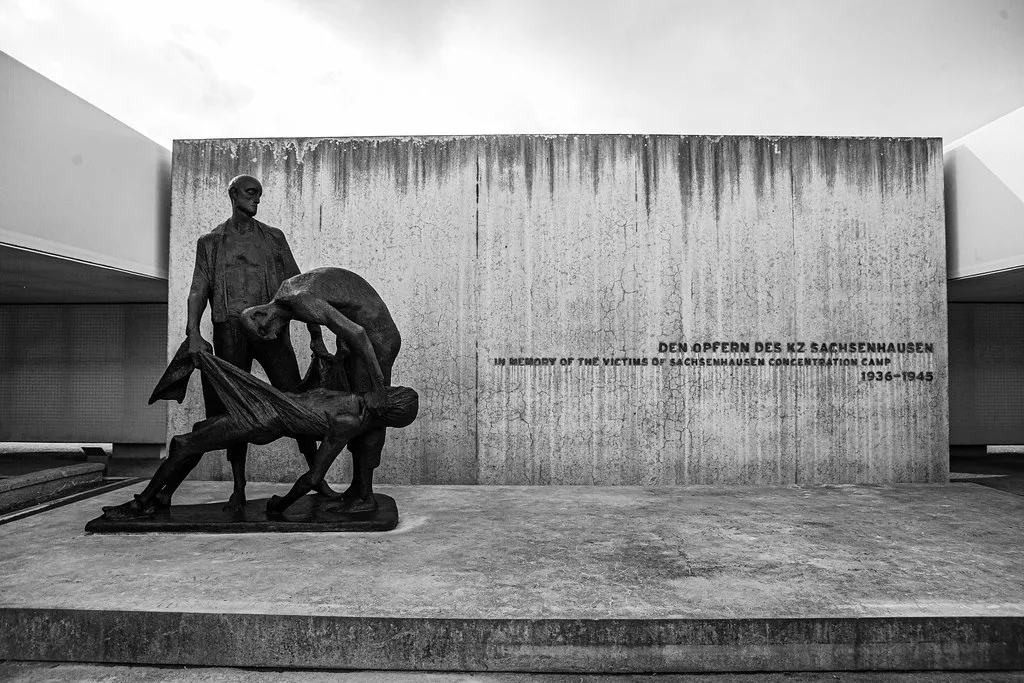
- 1961 onward: the Sachsenhausen National Memorial was inaugurated on 23 April 1961, after planning began in 1956. Since 1993 the site has operated as a memorial and museum.
How many people died at Sachsenhausen
Sources give different totals, and the exact figure cannot be fixed because records were destroyed. The memorial states that tens of thousands of internees died from hunger, disease, forced labour, medical experiments and mistreatment. The Holocaust Memorial Day Trust estimates that 30,000 people were murdered there. It adds that Soviet prisoners of war killed on arrival were never registered. Read each number as the estimate of the source that gives it.
What you will see at Sachsenhausen
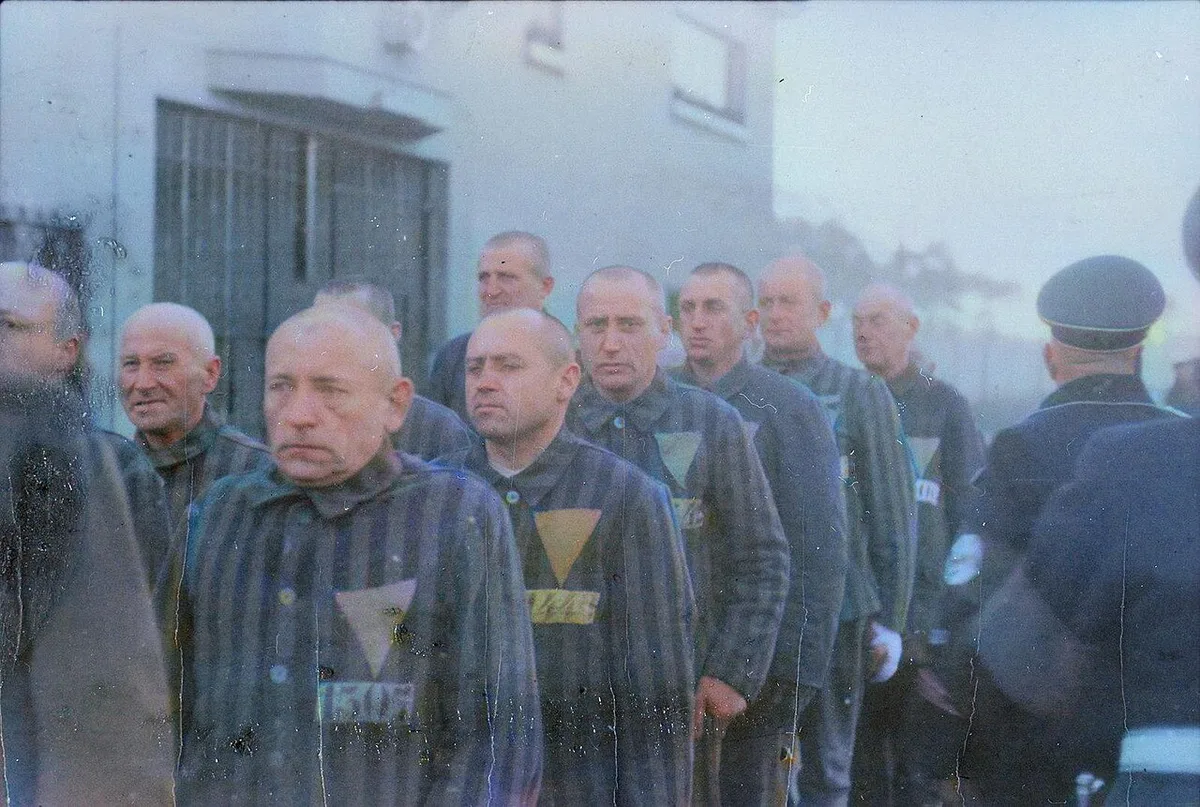
The camp was planned on a triangular layout, with Tower A, the entrance gate, as the control point. The SS gave the name "Station Z" to the extermination unit built in the industrial yard in 1942. It held a crematorium and a neck shot unit, and a gas chamber was added in 1943. Outside the camp, internees were forced to work at the Klinkerwerk brickworks near the Lehnitz lock. Up to 2,000 were marched there each day. A shoe-testing path around the parade ground, set up in 1940, forced internees to march for days with full packs. The Soviet special camp occupied the centre of the former camp from August 1945. The memorial holds thirteen smaller permanent exhibitions on different aspects of the place. Few visitors have time for all of them, so choose by time and interest.
| Time available | Prioritise | Why |
|---|---|---|
| Under 2 hours | Tower A, the roll-call area, Station Z | Covers the camp's design and the extermination unit |
| Half a day | Add the exhibitions on Nazi-era prisoner groups | Gives the names and stories behind the numbers |
| Full day or return visit | Add the Soviet special camp and the Klinkerwerk history | Shows the site's second use and the forced labour system |
Prisoners and their stories
The official history names several prisoner groups. They include political opponents of the Nazi regime, Jews, Sinti and Roma, and people persecuted as homosexuals. Later came foreign forced labourers and Allied prisoners of war. The pastor Martin Niemöller was held at Sachsenhausen, and the Holocaust Memorial Day Trust links his poem "First they came" to the camp. Inmate artisans were also forced to forge British and American banknotes in Operation Bernhard. From 1942 more than 100 satellite camps supplied labour to arms factories, including the Heinkel works in Oranienburg.
Planning your visit to Sachsenhausen Memorial
Allow a half day as an editorial estimate, and more if you want the smaller exhibitions. The grounds are large and mostly outdoors, so weather matters. Opening hours, admission, guided tours, audio guides, accessibility and children's age guidance are all on the memorial's visitor information page. Check there before you travel, because it is the only source that stays current. The same page sets the photography and conduct rules, which you should follow. This is a cemetery-like place of mourning, so keep voices low and treat the mass graves by the former infirmary wall with respect. Our official brief for families is simple: read the memorial's own age guidance before bringing children, and prepare them for the subject.
- Dress for the weather and wear sturdy footwear for long walks on open ground.
- Plan food and drink before you arrive, and check what the memorial offers on site.
- Decide in advance which exhibitions to see, using the table above.
- Allow quiet time afterwards, because the material is heavy.
Getting to Sachsenhausen and practical logistics
The address is Straße der Nationen 22, 16515 Oranienburg. Most independent visitors take the S1 S-Bahn from Berlin and walk the short remaining distance, with timetables on the VBB transport site. Our day trip from Berlin covers the route step by step. Local information is also available from Oranienburg's town site. As announced on 9 September 2026, tour buses can no longer park on Schäferweg from 22 September 2026. Two drop-off bays there are for disembarking only, and buses then park on Carl-Gustav-Hempel-Straße. Passengers re-board at the new parking area, so the departure point differs from the arrival point. Public buses and private cars are not affected. After a ransomware attack, the memorial restored email and telephone contact on 21 August 2026. The official telephone number is +49 3301 200-200. Confirm booking details with the memorial before you travel.
Tour groups get off at Schäferweg bays but re-board on Carl-Gustav-Hempel-Straße, a different spot, from 22 September 2026.
| Option | Best for | Trade-off |
|---|---|---|
| Independent train (S1) and walk | Visiting at your own pace | You plan the day and any tour booking yourself |
| Guided tour from Berlin | Having transport and context arranged | Fixed departure and return times; buses use the Schäferweg drop-off bays |
| Car | Flexible timing | Private cars are unaffected by the bus change; check parking before you go |
Combining Sachsenhausen with other German memorials
Sachsenhausen sent 13,000 sick prisoners to Bergen-Belsen in February 1945, so the two sites are historically linked. Visitors can read about the memorial at Bergen-Belsen, run by the Lower Saxony memorials foundation. If you are based in Lower Saxony, see the guide for visiting from Hanover. The same Brandenburg foundation that runs Sachsenhausen also runs Ravensbrück, a memorial museum. Further afield are Neuengamme, Flossenbürg and Dora-Mittelbau, each with its own guide. The Brandenburg foundation also lists a memorial to the victims of the euthanasia murders, and the Hadamar euthanasia memorial belongs to that thread. For the Berlin context of the persecution, the Wannsee villa is a separate stop.
Bergen-Belsen's liberation on 15 April 1945 followed 13,000 sick prisoners arriving from Sachsenhausen in February, so pair both visits.
| Memorial | Operated by | What it adds |
|---|---|---|
| Ravensbrück | Brandenburg Memorials Foundation | A memorial museum on the camp where women were held |
| Bergen-Belsen | Lower Saxony memorials foundation | Liberation by the British Army on 15 April 1945 |
| Neuengamme | Neuengamme Concentration Camp Memorial | A separate camp memorial with its own foundation |
| Flossenbürg | Bavarian Memorials Foundation | A Bavarian camp memorial with its own visitor information |
Keep planning
Guides on the same trip