Wannsee Conference House: Visitor Guide to the Memorial (Berlin)
Plan a visit to the House of the Wannsee Conference in Berlin: what the memorial shows, how to get there, free entry details to verify, and how it compares with Sachsenhausen.
In this guide
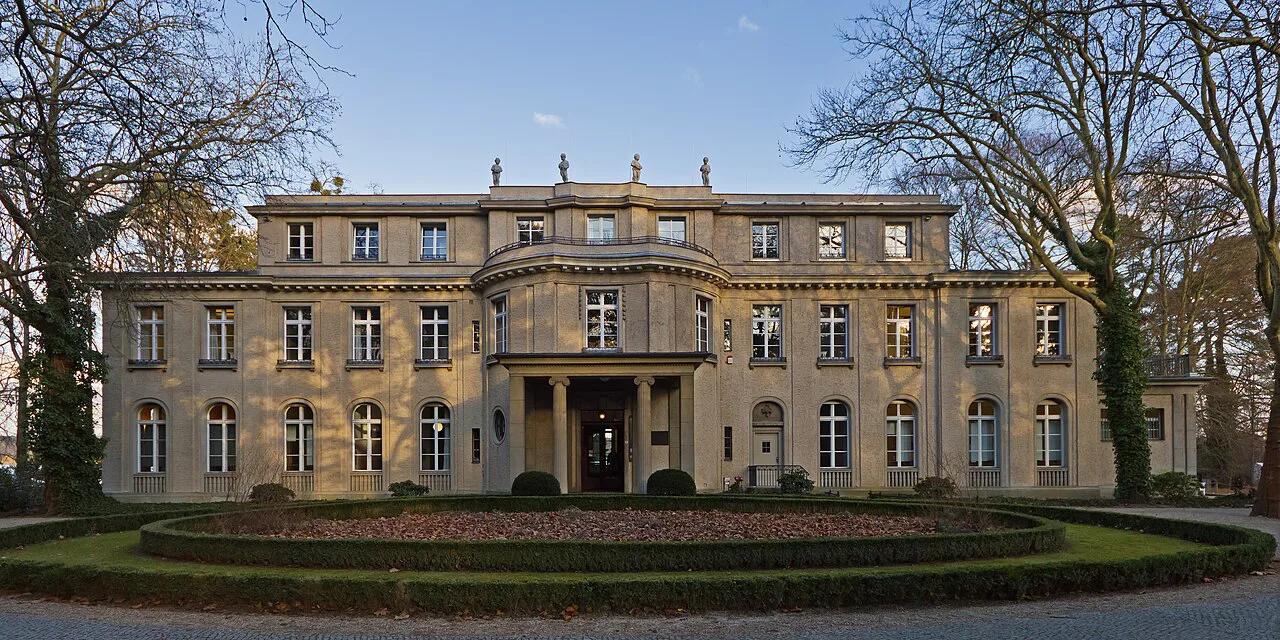
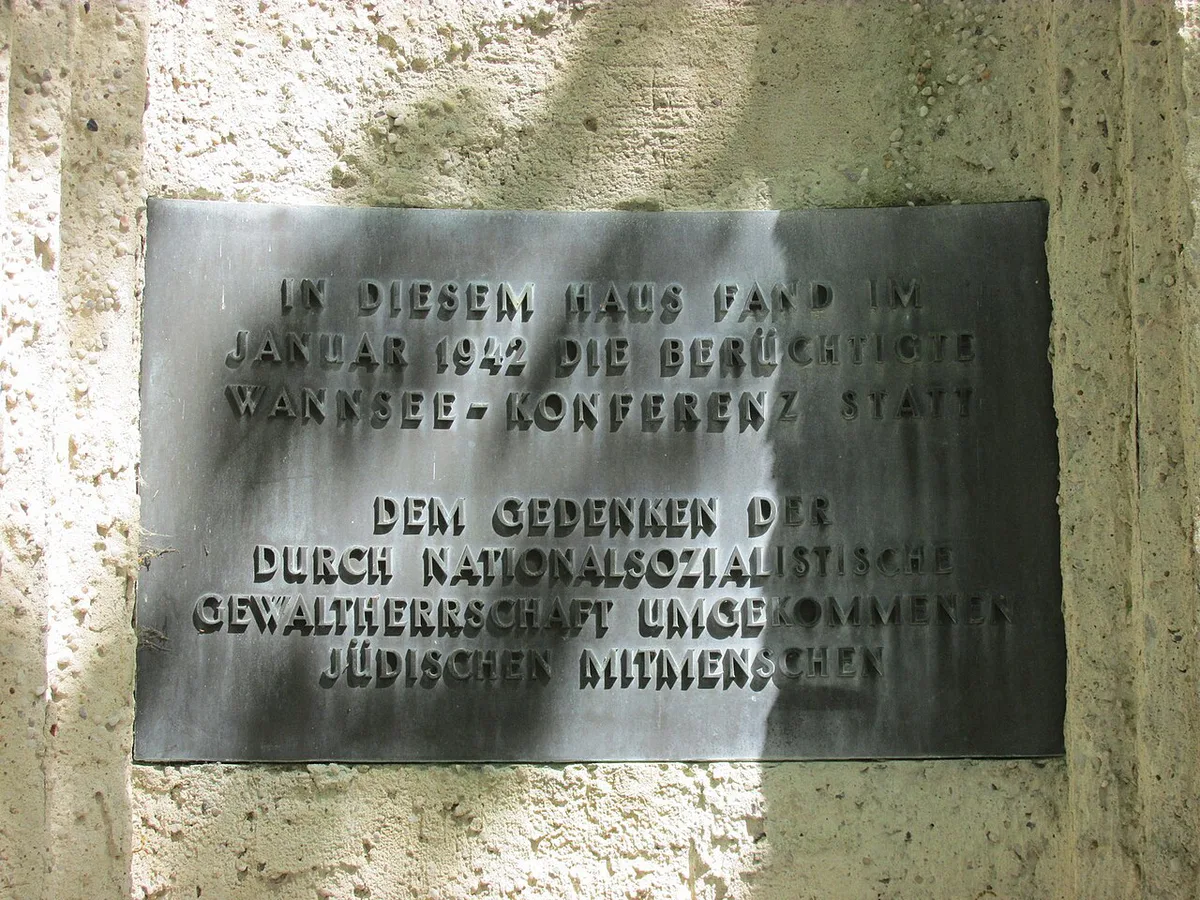
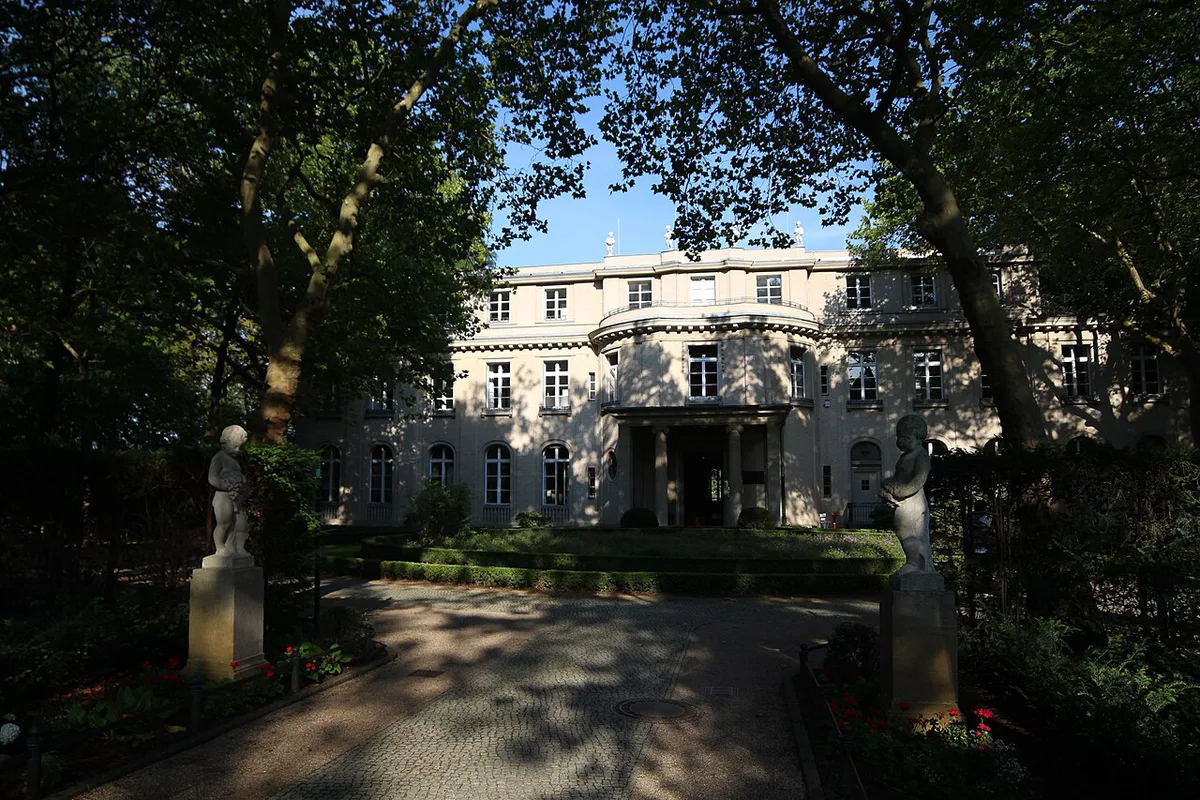
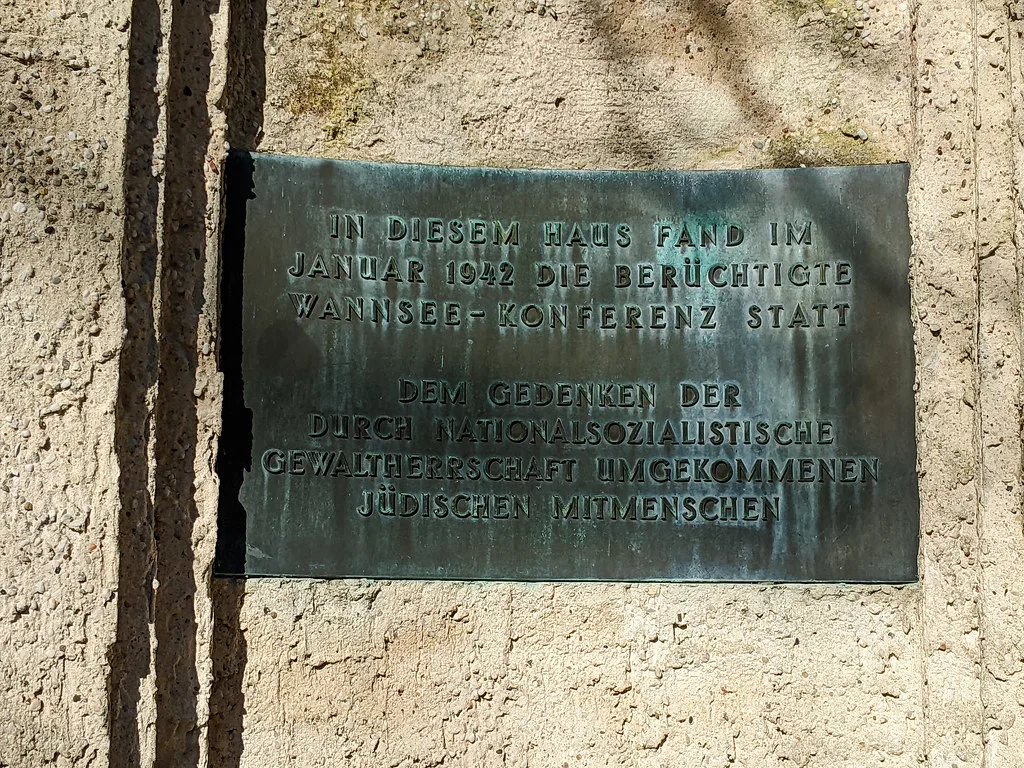
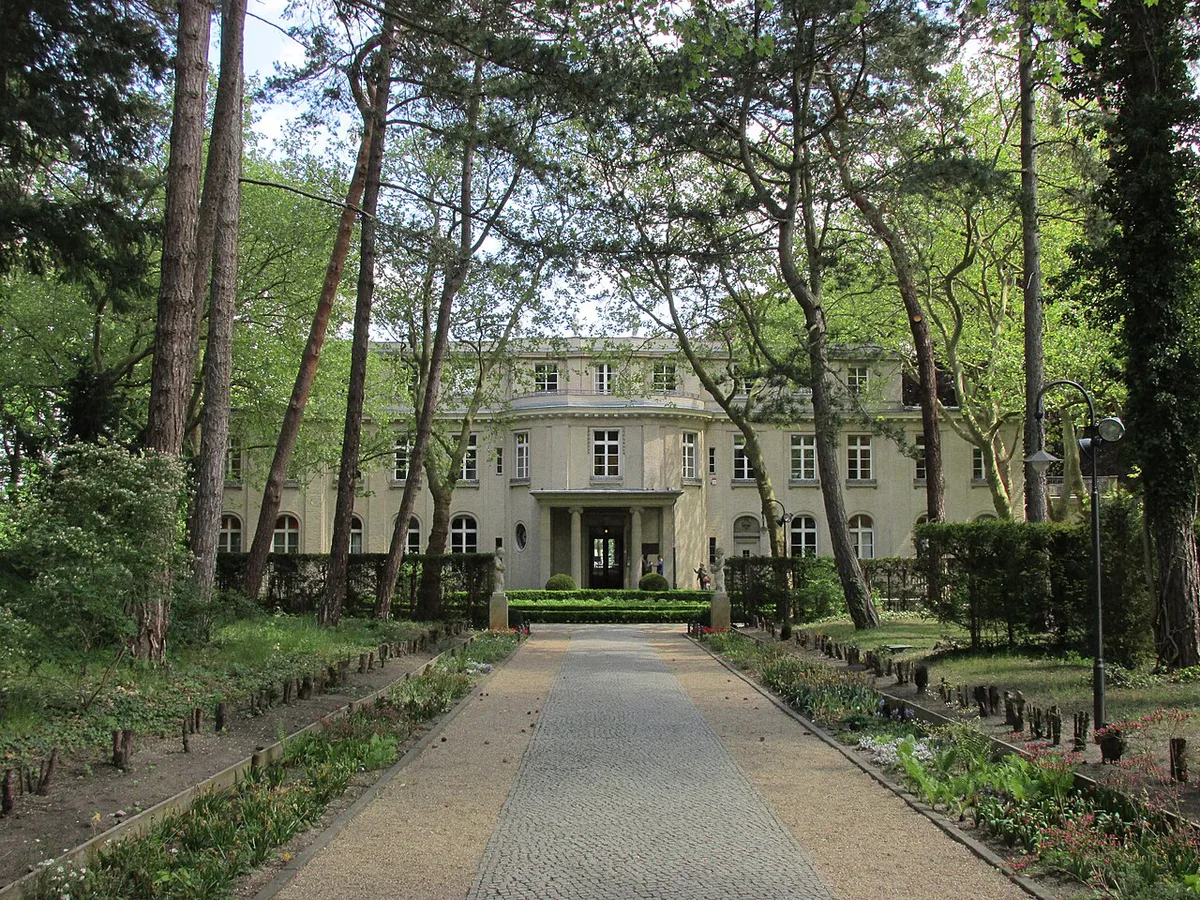
Last updated November 2026: the Wannsee conference house is a memorial and education site in a lakeside villa at Am Großen Wannsee 56-58 in Berlin. Fifteen high-ranking SS, Nazi party and Reich ministry representatives met here on 20 January 1942 to discuss their cooperation in the planned deportation and murder of European Jews. Entry to the exhibition is reported free, and you should know before you go that this is a documentation centre rather than a former camp.
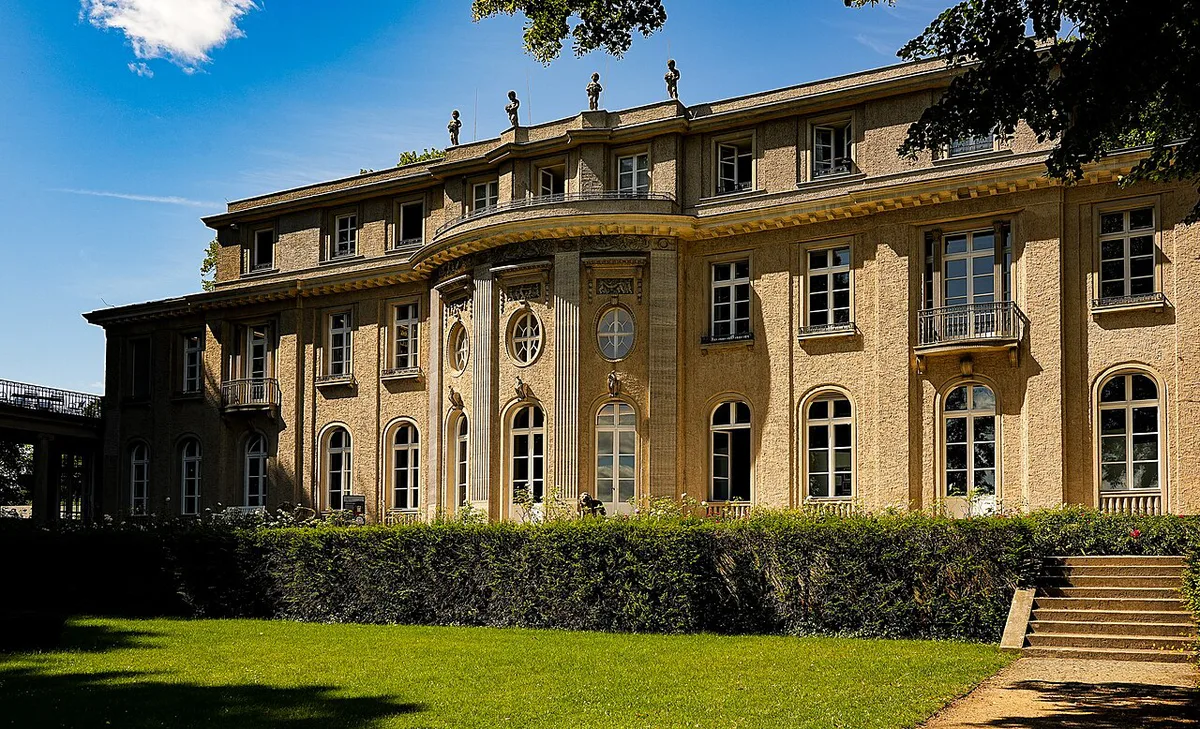
Featured image: A.Savin, CC BY-SA 3.0, via Wikimedia Commons.
What the Wannsee Conference House is (and isn't)
Haus der Wannsee-Konferenz is the German name of the memorial, and the official site describes a memorial and educational site built around one meeting. Its exhibition, education programs and library all examine the persecution and murder of European Jews and the wider history of National Socialism. On 20 January 1942, fifteen men gathered in this villa to talk about how the ministries and the SS would work together.
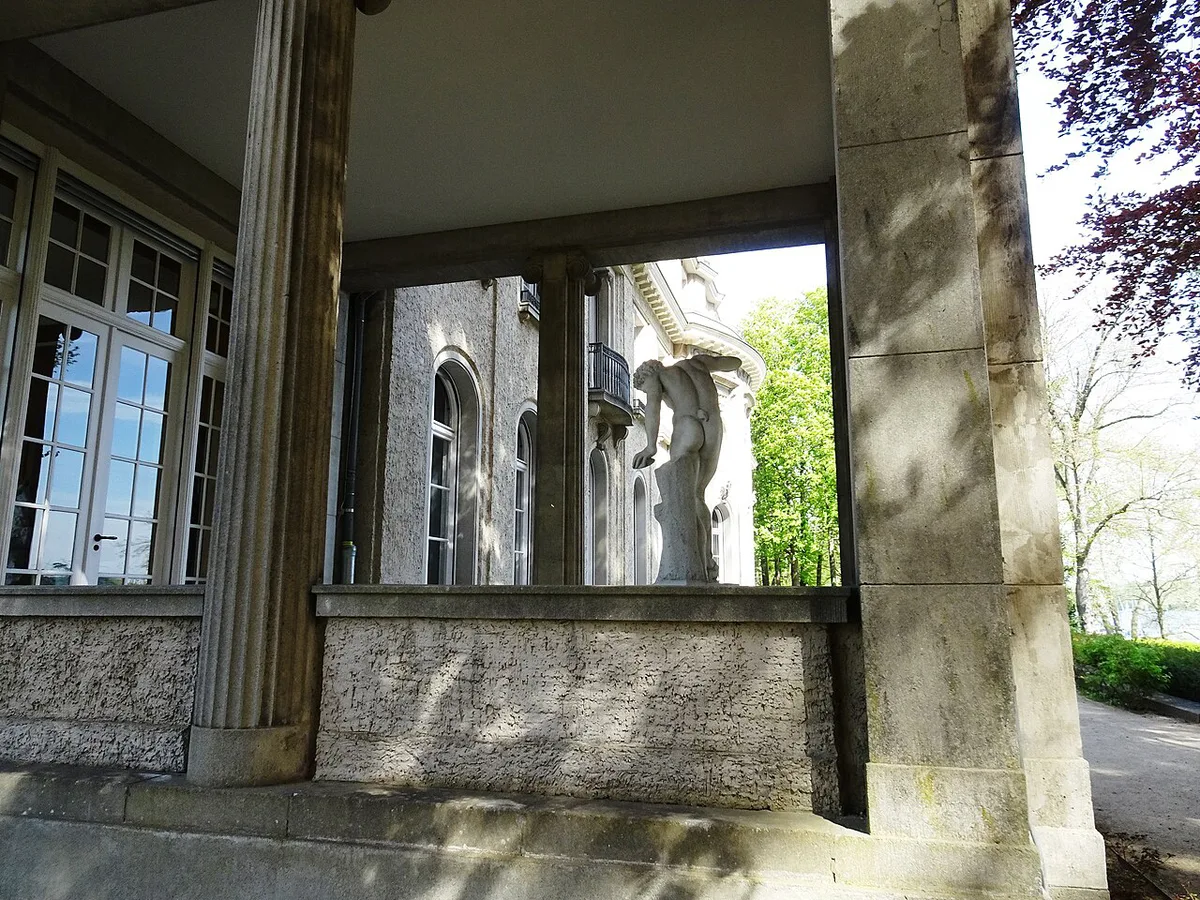
Nothing here is a camp. There are no barracks, no gate and no remains of prisoner housing, so expectations set by camp memorials will not carry over. Berlin's official tourism site notes that the rooms are well lit and give no hint of the events that happened inside. Documents carry the story instead. If you want a physical site of imprisonment, start with our guide to camp memorials in Germany and treat Wannsee as the planning-and-bureaucracy chapter of the same history.
The history in brief
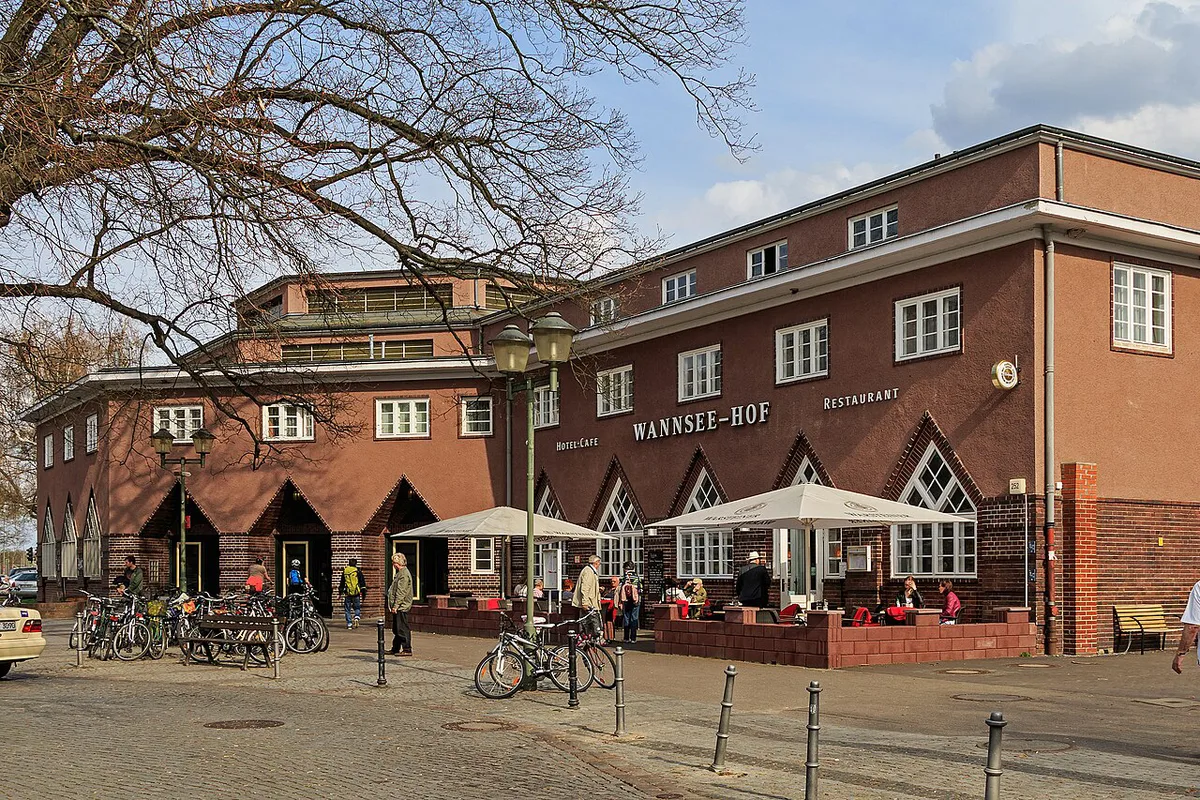
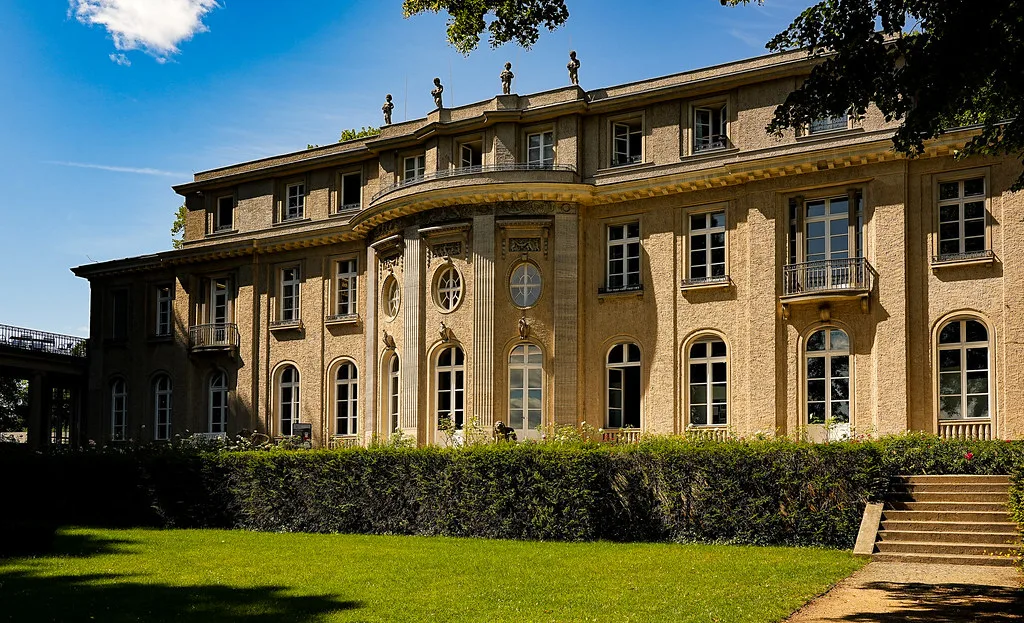
Pharmaceutical manufacturer Ernst Marlier built the villa in 1914. An SS foundation bought it in 1941 for use as a guest house, according to visitBerlin. After the war it served as a school from 1952 to 1982. Berlin's mayor designated it a memorial in 1982, and in 1992, the 50th anniversary of the meeting, it became an official museum and educational centre. Accounts of earlier ownership differ between sources, so this guide leaves those details out.
Historians now stress that mass killing of Jews had begun well before January 1942. A Yad Vashem podcast with Christoph Kreutzmueller of the Jewish Museum Berlin says over a million Jews had already been murdered by the time the group met. In his account, the conference matters because it shows how state secretaries and SS officials organized the murder as an administrative task. Heydrich invited the participants, and Kreutzmueller stresses that those who came wanted to be there.
Only one of the 30 printed copies of the meeting protocol is known to have survived, per the same podcast. Kreutzmueller describes the document as about 15 pages long. Please do not repeat the older claim that the Holocaust was decided at this table. The accurate framing is coordination of a process already under way.
What you will see in the exhibition
According to the House of the Wannsee Conference, the exhibition uses the meeting as a prism for the history of exclusion, definition and classification that led to systematic deportation and genocide. Expect to read. Visitors who prefer objects and spaces to text will find the display demanding.
visitBerlin describes the first room as covering the people who attended, along with documents on antisemitism and racism in the 1920s. Further along are Third Reich propaganda posters and leaflets. Three more rooms deal with collaboration with the Nazi leadership and include archive material from Eastern Europe that has only been on public display since the 1990s. Check the current layout and available languages with the memorial before you travel.
- Original documents from the conference and information about the participants.
- Audiovisual presentations on the history of Jewish persecution.
- Photos and books about the ghettos, their function and daily life in them.
- Detailed information on deportation and extermination.
- A multimedia centre for the study of National Socialism.
Opening hours, tickets and tours
Hours differ between listings, so go to the official site on the day you plan to visit. visitBerlin's schedule block shows 10:00 to 18:00 every day of the week. A listing for Peacock Island on the same page shows 10:00 to 16:00, which is a different venue, so do not mix the two.
VisitBerlin reports that exhibition entry is free. It also reports free public guided tours at weekends, with no tour times given, so look up the schedule on ghwk.de. Adults pay extra for seminars, while students and young people go free. Groups can book education programs, and the memorial says its tours and seminars are aimed at teenagers and adults.
Two extras are worth knowing about. The Joseph Wulf Library offers access to more than 75,000 media items, including books, magazines, film and audio recordings. A special exhibition titled "On the Roof of Himmler's Guesthouse" covers the U.S. Army in Wannsee in 1945 and runs in German and English. It was featured on the homepage at the time of writing, so confirm it is still on.
How to get there from central Berlin
Take the S1 or S7 S-Bahn to Wannsee station, then change to bus 114, which runs from the station to the house. VBB's journey planner shows live departures and any replacement services. Check the fare zone for your ticket before you board, because Wannsee lies at the far southwestern edge of the city.
Exhibition entry is free, so the Berlin WelcomeCard from €29 matters for transport, not admission.
Berlin's tourism site lists the Berlin WelcomeCard from €29, with free public transport in Berlin. Check that your card's zones reach Wannsee before relying on it. Visitors who use a wheelchair or have other access needs can look at the memorial's accessibility page, where visitBerlin notes a "Travel for All" certification.
Allow for a connection at Wannsee station and the bus ride. Aim to arrive with the exhibition's full opening window ahead of you, not minutes before closing.
How long to plan and how to build the day
The exhibition is text-heavy, and rushing it defeats the purpose. No official visit duration is published, so plan on a half day at minimum and treat the memorial as the main event. Add other stops only if you will still have energy for reading.
Liebermann Villa is about 400 m from the house, per visitBerlin, at Colomierstraße 3. It shows paintings by Max Liebermann in his original studio, and its exhibition also covers the fate of his family under Nazi persecution. Peacock Island (Pfaueninsel) is a separate stop. Visitors walk through the Düppel Forest to a jetty on Lake Wannsee and take a ferry. The island's castle opens from April to October, so a winter visit means the park only.
| Option | Effort | What you get | Best fit |
|---|---|---|---|
| Wannsee house alone | Low: S-Bahn plus bus 114 | A focused look at the bureaucracy of persecution and the library | Short stays and history-focused readers |
| Wannsee house plus Liebermann Villa | Low to medium: about 400 m on foot | Memorial, then an art museum tied to Nazi-era persecution | A half-day itinerary |
| Wannsee house plus Peacock Island ferry | Medium: forest walk and ferry | Memorial, then parkland; castle open April to October | A full day in good weather |
| Sachsenhausen day trip instead | Higher: a longer trip from Berlin | A former camp site with physical remains | Readers who want a camp, not a meeting-room history |
Wannsee or a camp memorial? Choosing what fits
Wannsee shows how officials planned and coordinated persecution on paper. A camp memorial shows where people were imprisoned and killed. Both belong to the same history, but they answer different questions. If you can only manage one in Berlin, the list below should settle it.
Our Sachsenhausen day trip from Berlin covers the transport and timing. The Sachsenhausen Memorial guide covers what you will see on site. Women's camp history north of Berlin is covered in our Ravensbrück Memorial guide. Other regions are mapped on the German memorial overview, including Neuengamme near Hamburg.
- Choose Wannsee if you want documents, context on the participants and a short, central-Berlin-region trip.
- Choose Wannsee if you are visiting with a school or adult education group, since programs are built for them.
- Choose Sachsenhausen if you want to stand in a real site of imprisonment and killing.
- Choose Sachsenhausen if you have a full day and can handle a long, physically demanding visit.
- Pick both only with separate days, so that each visit gets proper attention.
Visiting respectfully and mistakes to avoid
Treat the villa as a memorial, not a lakeside villa tour. Keep your voice low, read at a measured pace and give yourself time afterward. Photography rules are set by the memorial, so ask staff or check the official site before using a camera. Lake Wannsee is also a summer swimming area. Keep a swim or café stop separate from your visit in both time and tone, and do it afterward rather than between rooms.
Pace yourself emotionally. The material is documentary and sober, and a long reading session can be tiring. Step outside when you need to, and leave the hardest displays for last if you prefer.
- Assuming it is a camp: there are no camp ruins or barracks here.
- Assuming the "Final Solution" was decided here: killing had already begun, and the meeting coordinated it.
- Arriving late: the exhibition needs hours of reading, not a quick look.
- Mixing up addresses: the house is Am Großen Wannsee 56-58, Liebermann Villa is Colomierstraße 3 and Peacock Island is Nikolskoer Weg.
- Treating it as a lakeside photo stop: this is a memorial and education site.
Before you go: sources and further reading
Start with the official memorial site for hours, tours, accessibility and the current special exhibition. The homepage also points to the Wannsee Conference protocol, with a German original and an English translation. Read it before or after your visit rather than relying on summaries.
For historical framing, listen to the Yad Vashem podcast "Inside The Wannsee Conference", featuring Christoph Kreutzmueller. Berlin's tourism office has a short visitBerlin overview of the area for planning the rest of your day. For other regions, see Bergen-Belsen in Lower Saxony and Flossenbürg in Bavaria.
Keep planning
Guides on the same trip