Mittelbau-Dora Memorial Visit Guide: Nordhausen
What Mittelbau-Dora was, what you can see at the memorial near Nordhausen, and how to plan a respectful visit, including tunnels, tours and transport.
In this guide
Last updated November 2026: Mittelbau-Dora was an SS concentration camp near Nordhausen in Thuringia, where prisoners dug tunnels in the Kohnstein and built V-2 rockets. Anyone planning a Mittelbau Dora visit can see a permanent exhibition and a publicly accessible part of the tunnel system. Allow about half a day as our own estimate, and check guided-tour availability on the memorial's site first.
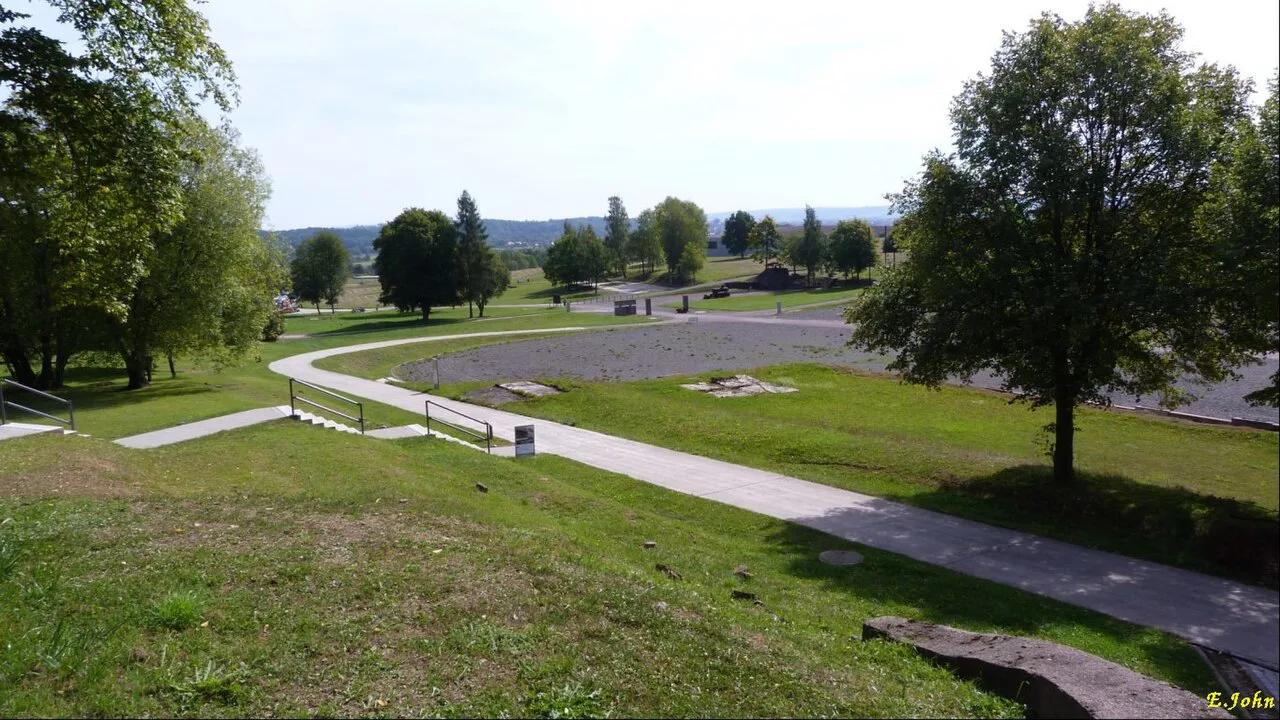
Featured image: Eckie22 Eckbert John, CC BY 3.0, via Wikimedia Commons.
What Mittelbau-Dora Was
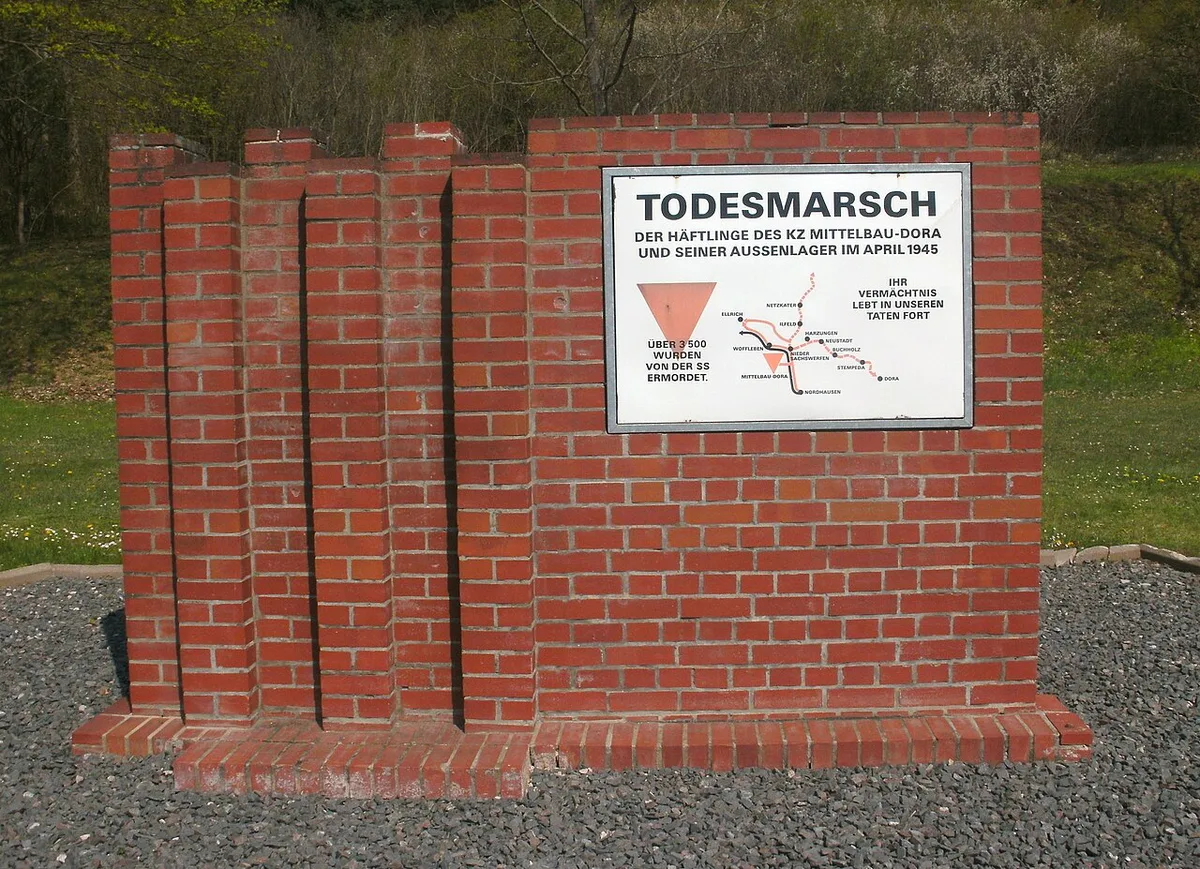
Mittelbau-Dora began on 28 August 1943 as Arbeitslager Dora, a subcamp of Buchenwald. The first 107 prisoners arrived from Buchenwald that day, according to standard historical accounts. After the RAF raid on Peenemünde, Nazi planners wanted rocket production moved underground. The Kohnstein near Nordhausen already held a fuel depot, and prisoners were forced to extend its tunnels. In January 1944 the Mittelwerk factory began delivering V-2 rockets from those tunnels. Mittelbau-Dora became an independent camp in 1944, but sources disagree on whether that happened in summer or October, so the memorial's own chronology is the safest reference. US forces, including the 3rd Armored Division and 104th Infantry Division, reached Nordhausen on 11 April 1945. By then most prisoners had been sent on death marches or trains, some towards the Bergen-Belsen site.
- Housing: the first prisoners slept inside the tunnels in sleeping galleries (Schlafstollen) with four levels of beds. The above-ground camp opened in January 1944, yet some prisoners still slept underground until May 1944.
- Scale: estimates put the number of prisoners who passed through the camps at about 60,000. About 20,000 are estimated to have died, roughly one in three, although the exact toll cannot be fixed.
- Early deaths: historians record almost 2,900 deaths among 17,500 forced labourers between October 1943 and March 1944.
What You Can See at the Memorial
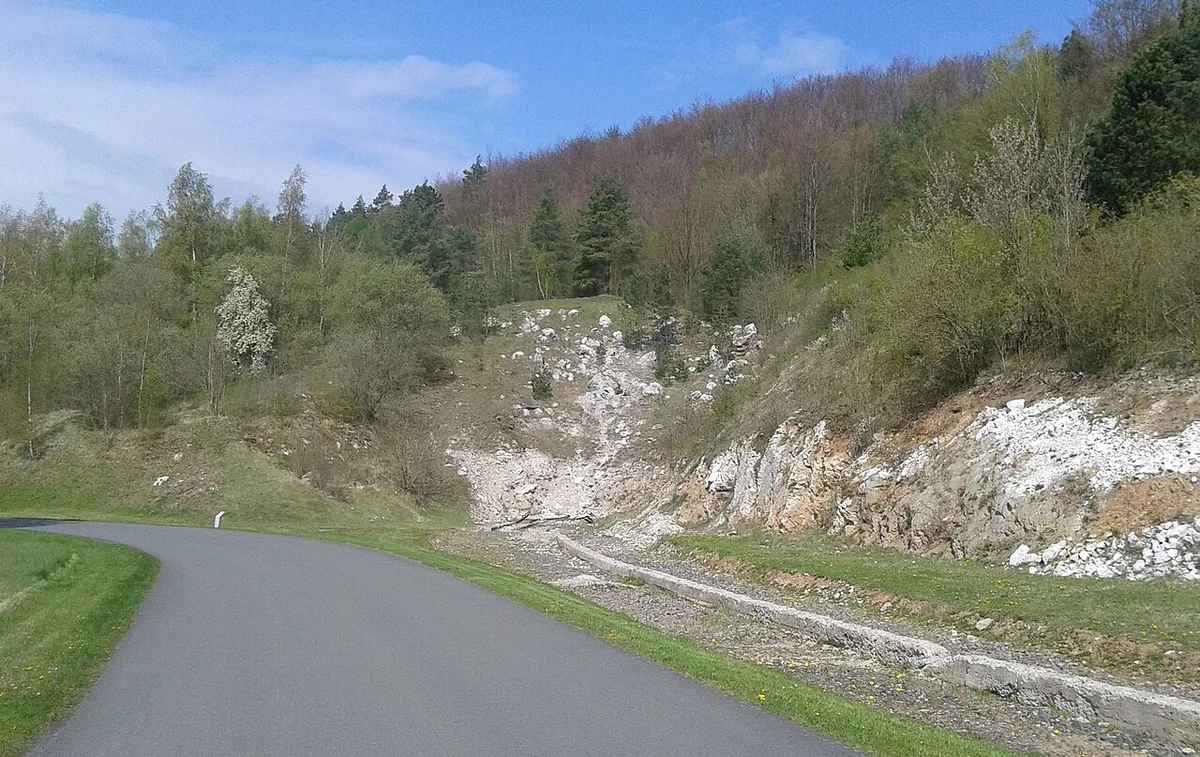
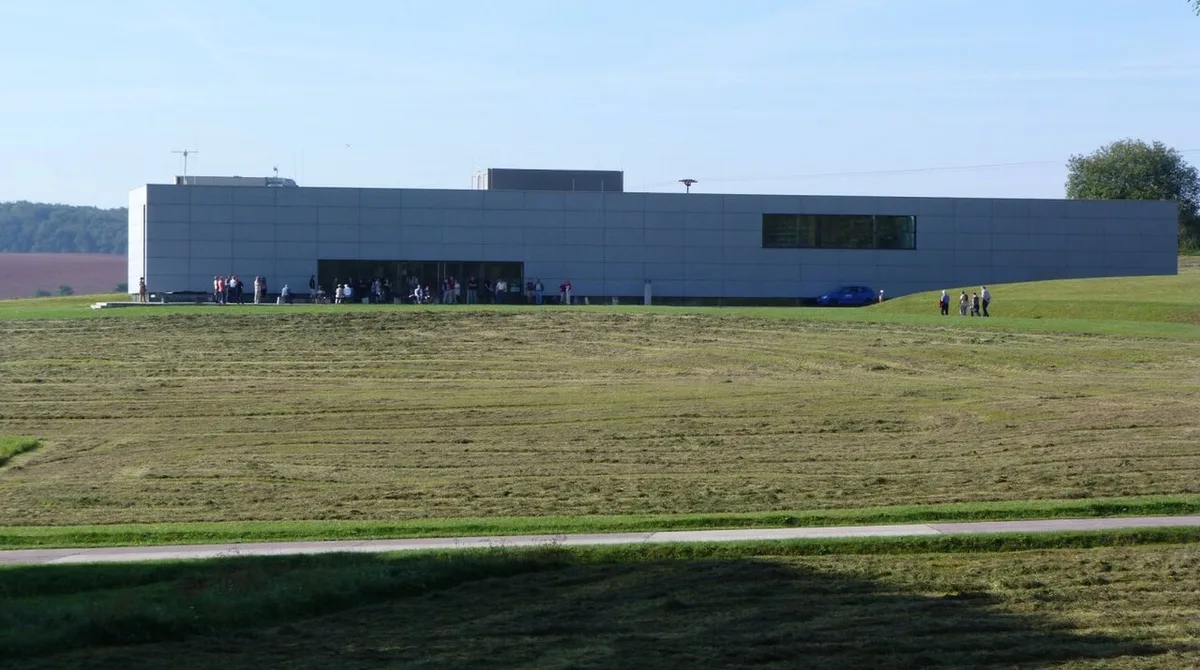
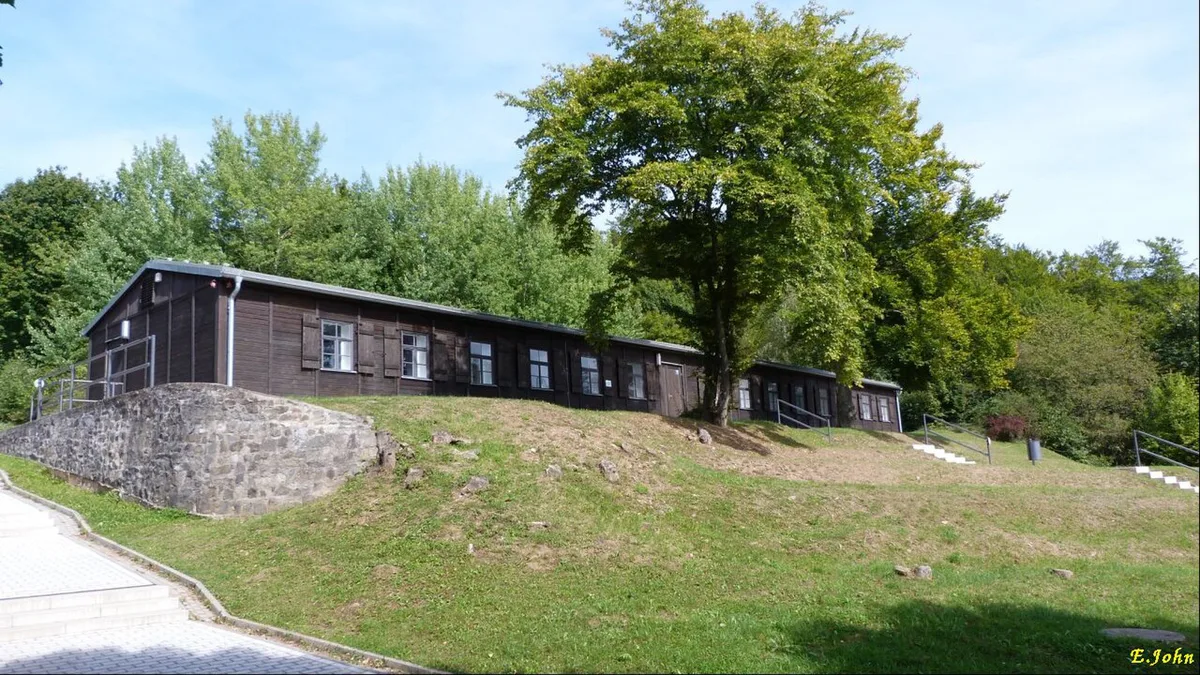
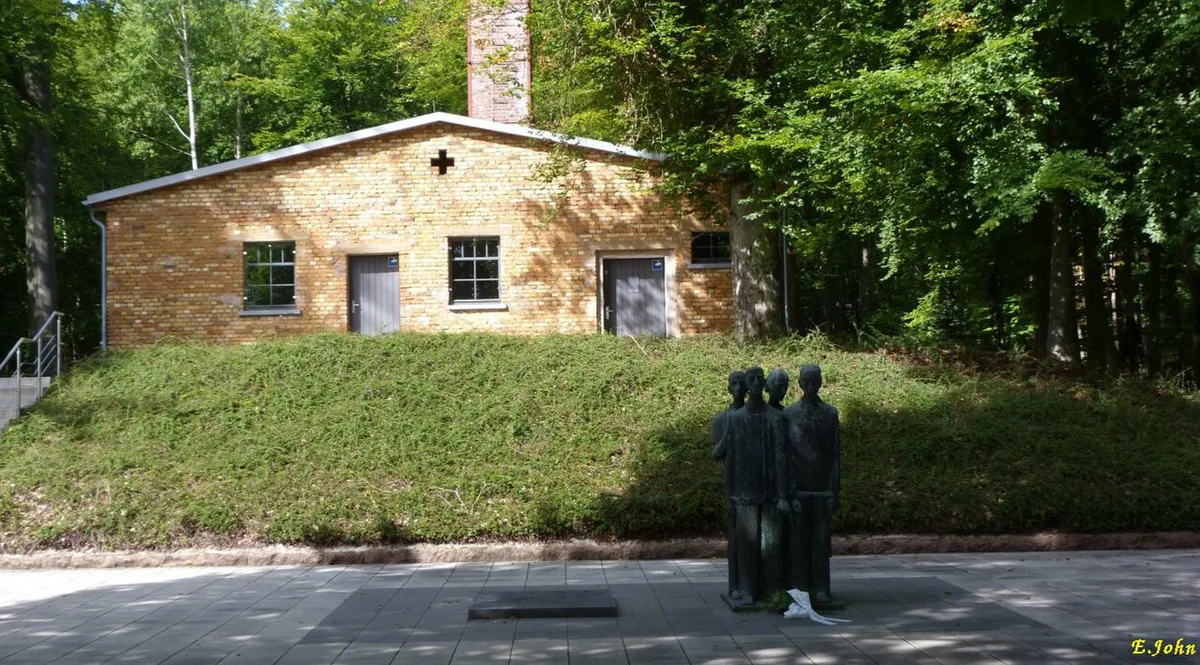
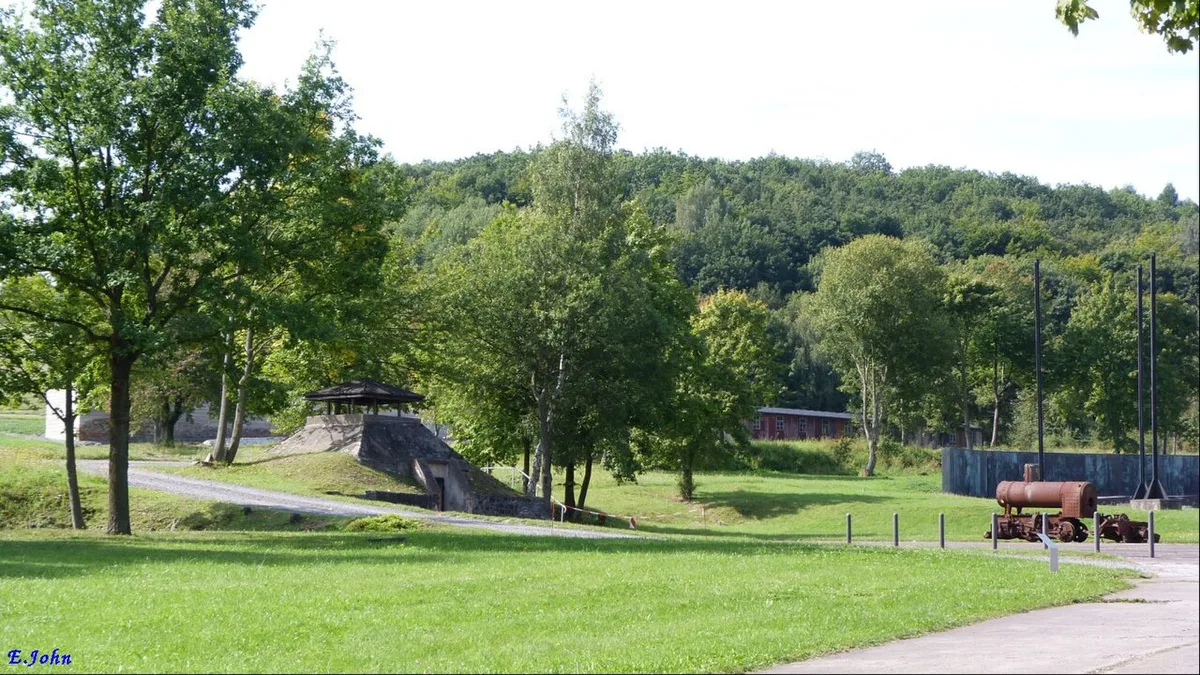
The permanent exhibition, titled "Mittelbau-Dora concentration camp, 1943–1945", examines the network of relationships between the camps and their social surroundings. It also addresses perpetration and the responsibility of accomplices and bystanders, as the memorial's own description explains. A special exhibition called "Flight" is housed in the firehouse. It follows escapes by prisoners of the Mittelbau-Dora camp complex and shows that the local German population was directly confronted with Nazi mass crimes. Part of the historic tunnel system, where prisoners performed forced labour, is open to the public. That section links the history above to the physical place. Pick up the memorial's "What Is Where?" service map to separate the exhibitions, the underground section and the outdoor grounds. Do not expect rows of standing barracks, and let the map show you what remains of the above-ground camp.
- Permanent exhibition: indoor display on the camp's history from 1943 to 1945.
- "Flight" special exhibition: in the firehouse, on prisoner escapes.
- Historic tunnel section: underground, so check access on the day of your visit.
- Service map and grounds: outdoors, for orientation across the site.
Tickets, Opening Hours and Tours
Prices and hours checked November 2026. The memorial site states that the museum is open from 10:00 to 16:00. Hours can change, so read the opening hours and practical information page before you travel. Guided tours run with trained memorial staff. Some tours may be cancelled, so write to information@dora.de or call +49 (0)3631 495 820 before you set out. At the time of writing, no guided tours were scheduled on 26 and 28 November 2026. Visitors who prefer to explore alone can use the free "Mittelbau" app, available through the Apple Store or Google Play. This guide does not quote an admission fee, so confirm any entry cost on the official site.
How Long to Allow for a Mittelbau Dora Visit
Because the museum closes at 16:00, a late arrival cuts into your time quickly. The ranges below are our own estimates rather than figures from the memorial. Tour length is listed on the official tours page, so adjust the table once you choose a tour.
| Visitor type | Suggested time (estimate) | What to prioritise | What to check beforehand |
|---|---|---|---|
| History-focused visitor | 3–4 hours | Permanent exhibition, then the "Flight" display | Tour times and exhibition availability |
| First-time visitor with tunnel | 2–3 hours | Tunnel section, then highlights of the main exhibition | Tunnel access and tour cancellations |
| Group or student visit | Half day | An educational offer matched to the group | Booking details for group programmes on dora.de |
Getting There and Around
Nordhausen is the nearest town, and the memorial's address is Kohnsteinweg 20, 99734 Nordhausen. Reach Nordhausen by rail, then plan the last leg by bus, taxi or car. Deutsche Bahn and the local Nordhausen transport operator publish current routes, and this guide does not quote times or fares. The site is rural, and weekend services may be limited. A taxi from Nordhausen is the simplest fallback when no bus fits your tour time. Drivers can enter the Kohnsteinweg address into a navigation app.
- Check tours and tunnel access on dora.de in the week before you travel.
- Arrange a taxi or car for the final leg if no bus fits.
- Leave time for the tunnel section.
- Decide in advance whether to use the free app.
Accessibility and What to Expect
Part of the historic tunnel system is open to visitors, and that section is underground and enclosed. Expect confined space, which can be difficult with limited mobility or claustrophobia. Do not assume the tunnels are fully accessible. Read the memorial's accessibility information before you go, and email information@dora.de with specific needs. Children and teenagers should be prepared for this section as well.
Visiting Respectfully
Mittelbau-Dora is a place of mourning for people forced to labour and die here. Keep your voice low, follow the memorial's visitor rules and signs, and treat photography as something the memorial regulates. Read its visitor information on arrival rather than assuming photos are allowed everywhere. The history includes executions and mass death, so the content is heavy for younger visitors. Decide by the maturity of each child. Teenagers visiting with a school can use the group programmes that dora.de lists under educational offerings.
Where to Stay and Combine With Other Stops
Nordhausen is the practical base because it is the nearest town. Historians record that Allied bombing on 3 and 4 April 1945 destroyed around 75% of the town, so expect a rebuilt centre. Check current accommodation listings for Nordhausen and book around your tour time. Treat the memorial as the main purpose of the day, not a rushed stop on a Harz road trip. Pair it with one other memorial at most. Buchenwald, its parent camp, is run by the same foundation.
Other Memorials in Germany
Mittelbau-Dora stands out for its underground rocket-production tunnels and its link to Buchenwald and Bergen-Belsen. Our guide to main memorial sites across Germany places it among the others. Each site below has a different focus.
- Bergen-Belsen memorial: transports from Mittelbau arrived here between 8 and 11 April 1945, and British forces liberated the camp on 15 April. Its foundation site publishes visitor information.
- Route from Hanover to Bergen-Belsen: transport context if you plan that visit.
- Sachsenhausen camp memorial: evacuation trains from Mittelbau also left for Sachsenhausen in April 1945.
- Sachsenhausen day trip from Berlin: the practical route for that site.
- Ravensbrück: another destination for trains leaving Mittelbau in early April 1945.
- Neuengamme: prisoners from Neuengamme and Mittelbau subcamps were among more than 1,000 murdered at Gardelegen in April 1945.
- Flossenbürg: another concentration camp memorial in the cluster, with its own history and visitor information.
- Hadamar: a Nazi-era killing site that differs in purpose from a forced-labour camp.
- Wannsee Conference site: covers the policy-making side of Nazi persecution.
Keep planning
Guides on the same trip