Bunker Valentin, Bremen: History and Visitor Guide
Understand Bunker Valentin's forced-labor history and plan a memorial visit in Bremen-Farge, with the site route, tour options and pre-trip checks.
In this guide
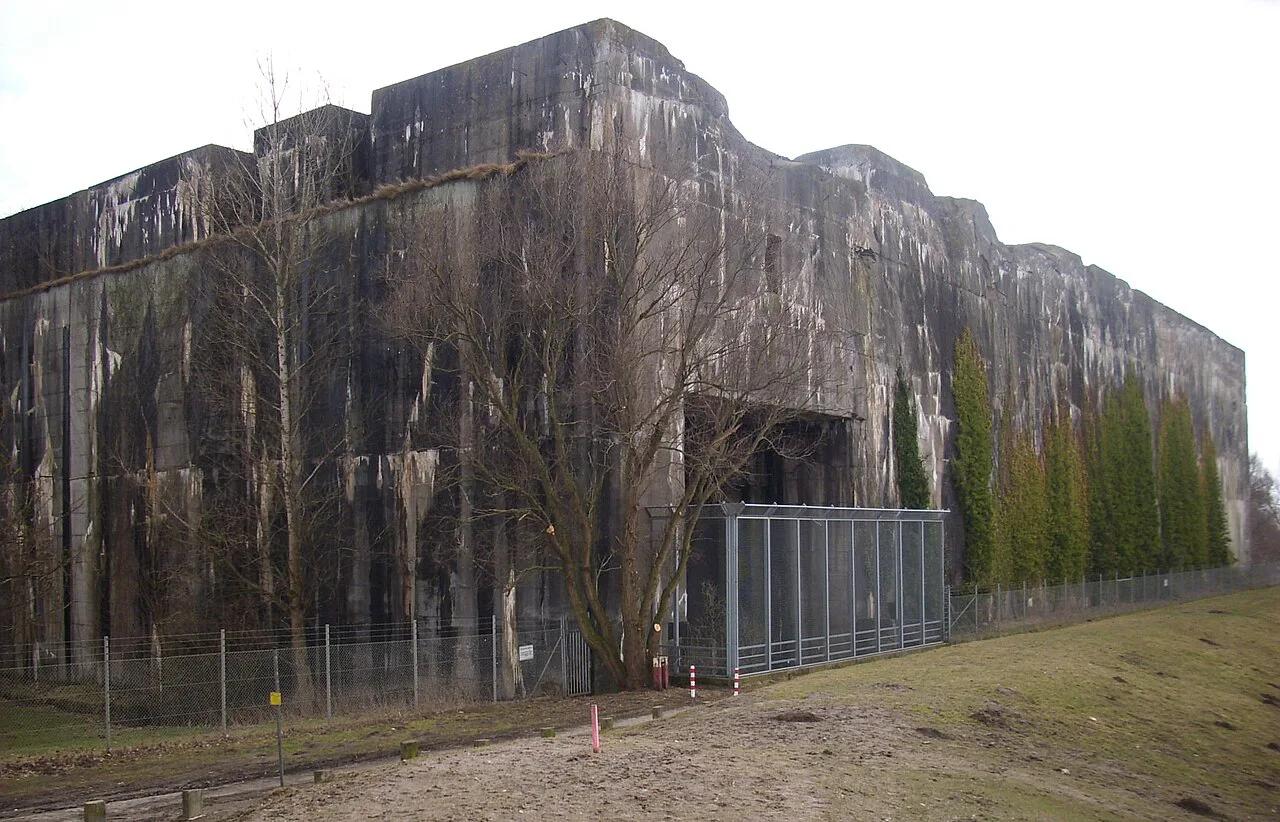
Last updated November 2026: Bunker Valentin is a former U-boat assembly shipyard project in Bremen-Farge, now the Denkort Bunker Valentin memorial. Forced laborers built this German Navy bunker during the Second World War, many of them died, and no submarine was ever completed there.
Featured image: C.Mezzo-1 at de.wikipedia, Public domain, via Wikimedia Commons.
What Was Bunker Valentin?
German Navy construction began in mid-1943, when Allied forces held air superiority over most German-held territory. Building submarines in largely unprotected shipyards had become almost impossible. Planners therefore intended to use new assembly-line techniques here, behind meter-thick walls and ceilings. Nazi leaders hoped the new boats would disrupt Allied supply routes across the Atlantic.
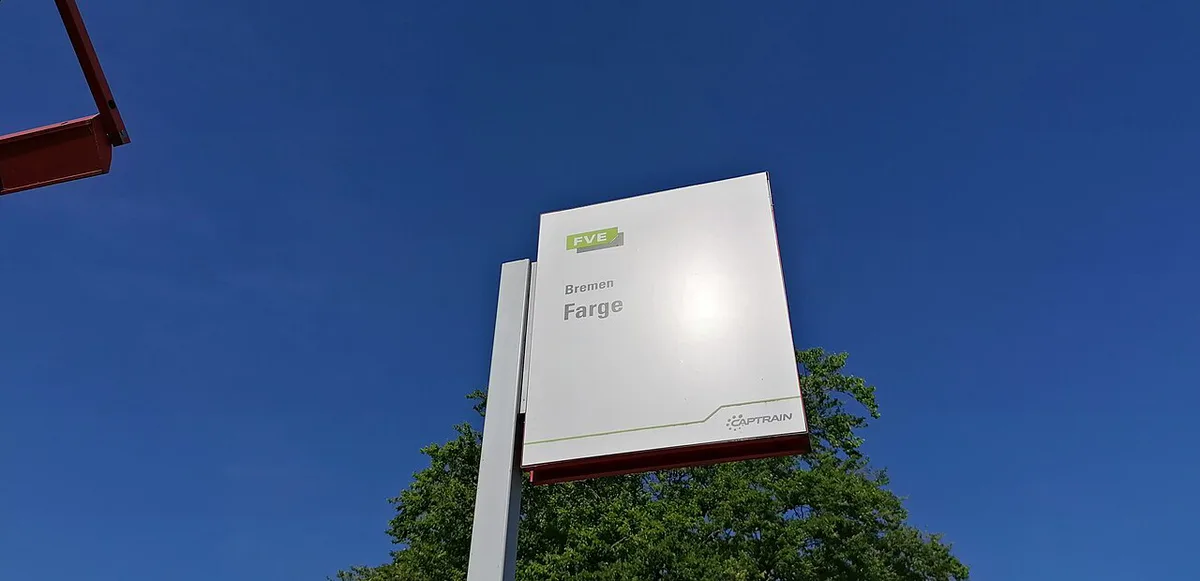
Earlier military projects had already reshaped this largely agricultural area. In 1935, a state front company called WIFO began an underground fuel depot between Farge and Neuenkirchen. The Navy added fuel bunkers nearby in 1938. From mid-1943, the shipyard project used the existing infrastructure and labor camp.
Denkort, the memorial, describes the structure as Europe's second-largest above-ground bunker. Its planned role was construction, which is useful context when reading about other U-boat bunkers and pens.
Who Was Forced to Build the Bunker?
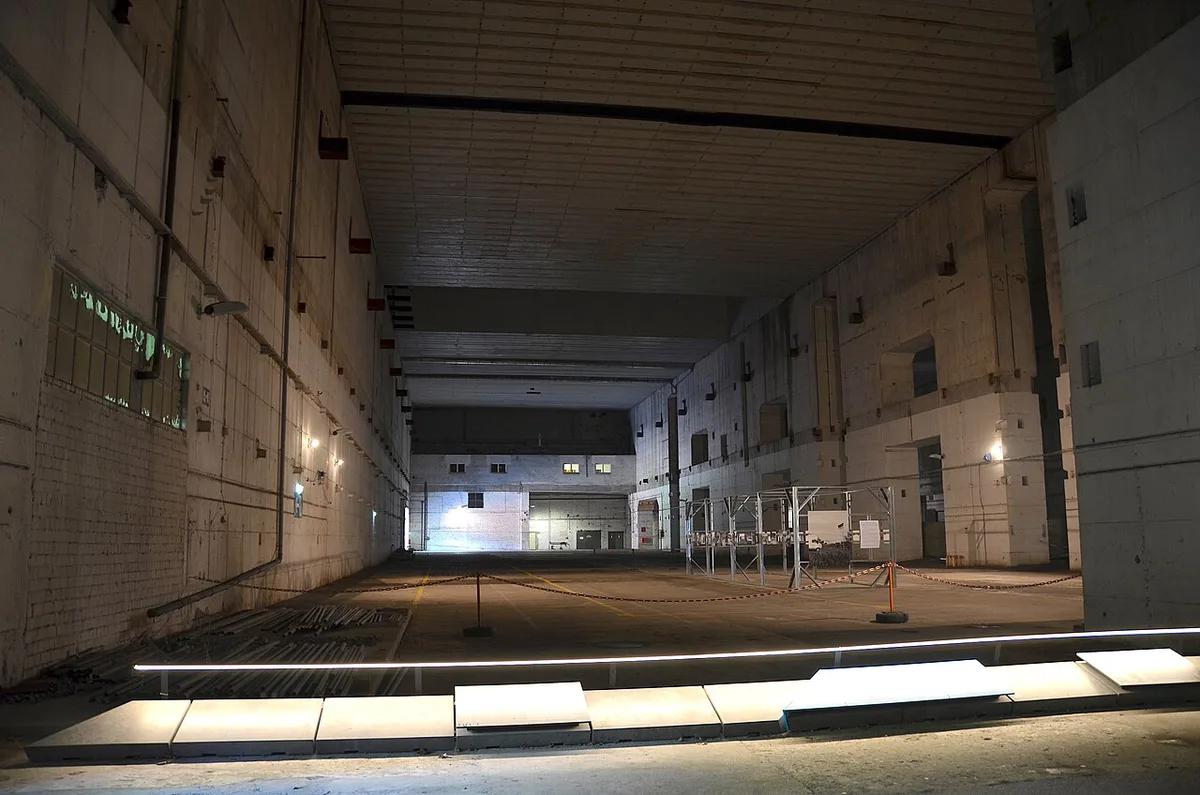
According to Denkort, up to 10,000 forced laborers worked on the site under extreme pressure, day and night. Malnourished and weakened people labored in 12-hour shifts. They were housed in various camps within 6 kilometers (about 3.7 miles) of the bunker. Work ran for 20 months, from summer 1943 to spring 1945.
Denkort puts the death toll at approximately 1,600 forced laborers. It attributes the deaths to physically punishing work, inadequate care and inhumane camp conditions. Only 1,144 victims are known by name, so that figure is not the total death toll.
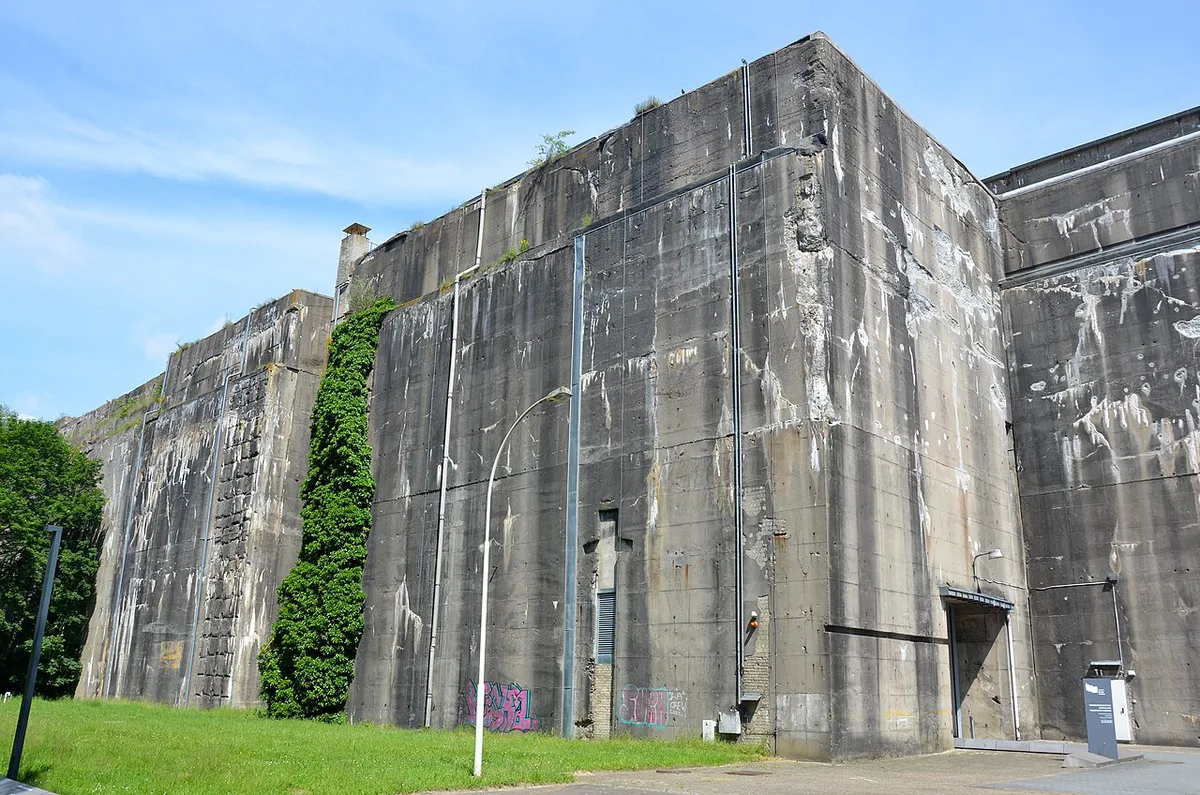
The City of Bremen's portal, bremen.eu, gives a different formulation: more than 1,100 people died during construction. It cites starvation, illness and arbitrary killings. Their suffering is central to understanding the concrete structure that remains. Forced laborers on the project included these groups:
- Civilian forced laborers from Eastern and Western Europe
- Soviet prisoners of war
- Italian military internees
- Concentration camp prisoners
- Inmates of the Bremen Gestapo's labor re-education camps
What Happened in 1945 and Afterward?
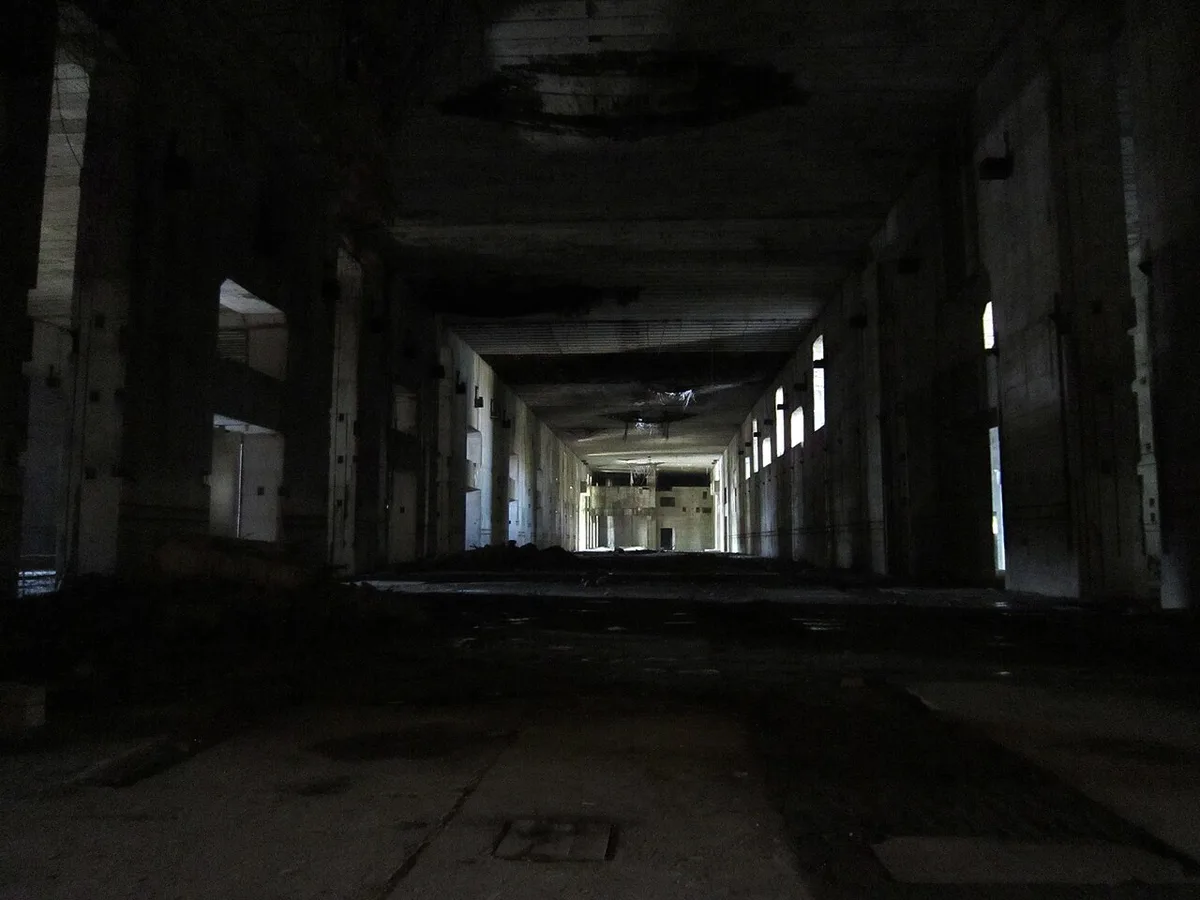
A British Royal Air Force attack in late March 1945 destroyed an unfinished section of the bunker. Construction stopped shortly afterward. No submarine was ever built inside.
Work ran for 20 months, from summer 1943 to spring 1945. A late March 1945 raid then hit a section still unfinished.
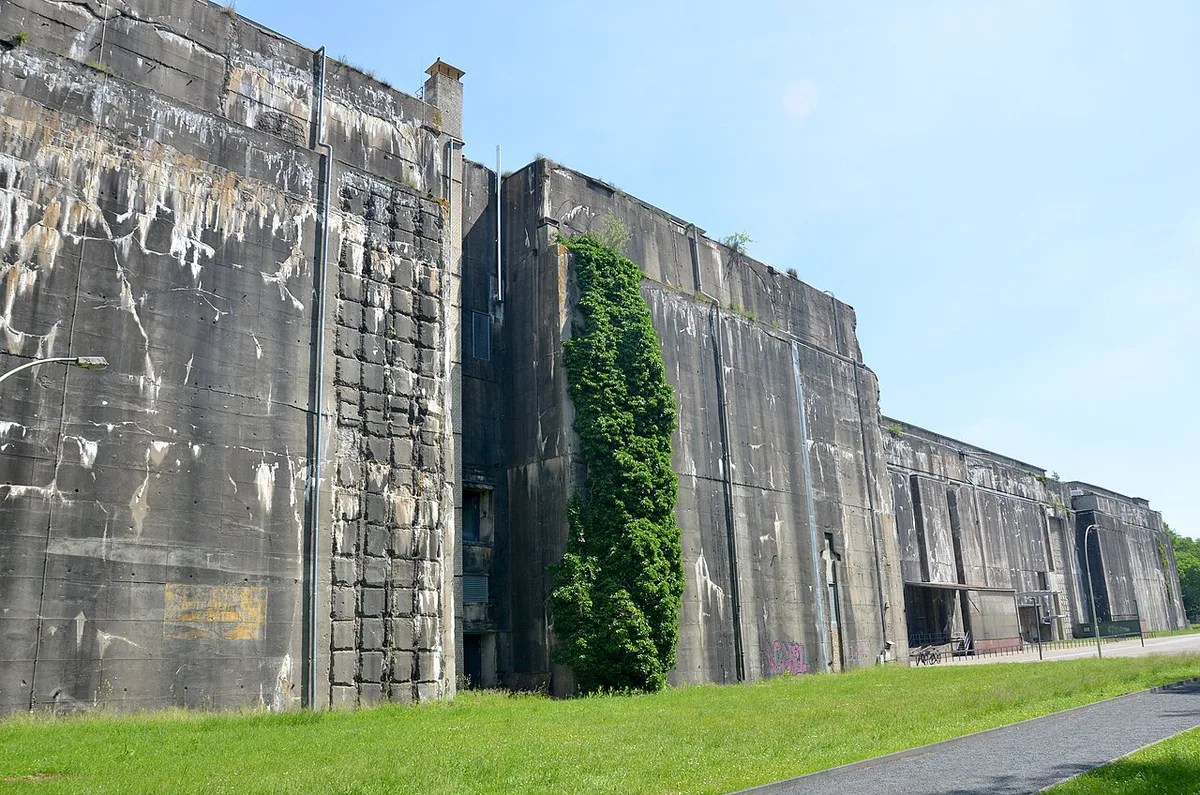
Postwar use changed several times. Debate over the structure's future continued for decades, and demolition was among the options. Denkort took on a civilian function in January 2011. Bremen.eu separately dates the public opening of the redesigned grounds to November 2015. That opening included a visitor center, information trail and exhibition.
- After the war: the Allies used the bunker as a target for bomb tests.
- Later: demolition plans failed, and local children used the site as a playground.
- Late 1950s: the German Army began using it as a training ground.
- 1960s to 2010: the German Navy used the bunker as a supply depot.
- 2010: Bremen's Senate commissioned the state civic education agency to create and run the memorial.
- January 2011: the site became Denkort Bunker Valentin.
- November 2015: the redesigned memorial grounds opened to the public.
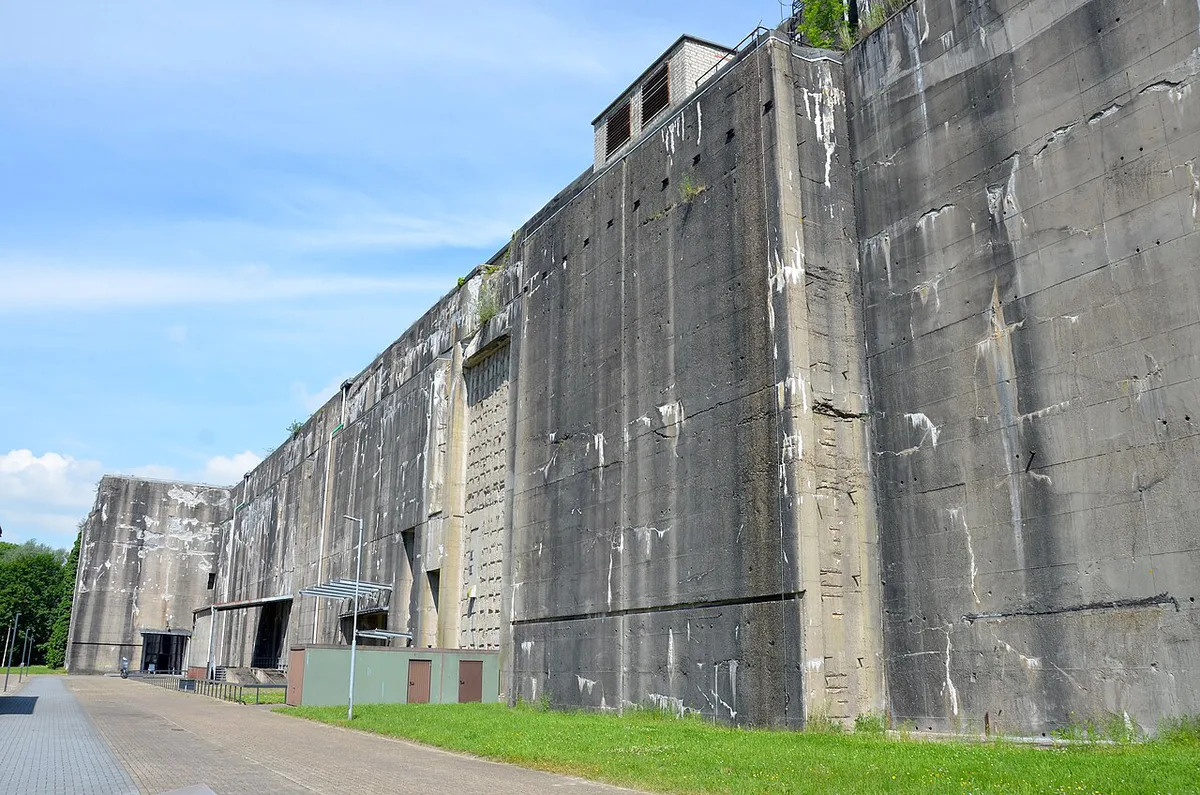
What Can You See at the Bunker Valentin Memorial?
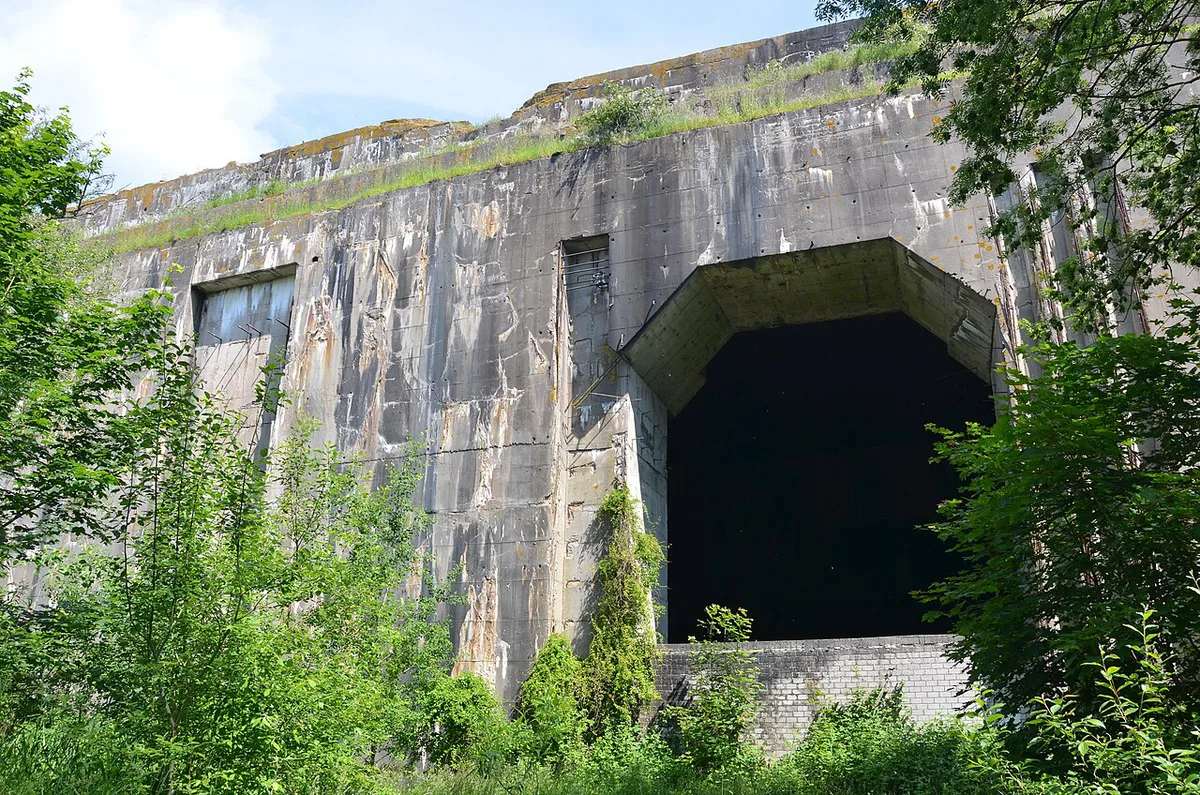
A 1.5 km (about 0.9-mile) path crosses the grounds and goes into the bunker. It starts at the memorial that Denkort calls “Extermination through Work”; bremen.eu translates the name as “Annihilation through Work.” Along the way, 25 stations explain the site's history. Historical photos, eyewitness accounts and short texts connect the surviving structure with people's experiences.
Visitors pass through the main entrance to the Information Centre on the bunker's south side. An in-depth exhibition is shown there. Its media table traces the surrounding armaments landscape from the 1930s to the present. You can also get a multimedia guide at the center, with extra information for each station in German or English. This is a place of remembrance, so read the memorial's site rules, listed as “Hausordnung” on its website, before arriving.
Self-Guided or Guided: Which Visit Fits?
Choose a self-guided visit if you want to set your own pace. English speakers can use the Denkort Bunker Valentin app, available for iOS and Android in English or German. Search the App Store or Play Store for the memorial's name. Bremen.eu also lists free audio guide loans in English, German and a German version for children.
Group tours need advance booking and have a listed maximum of 25 people. Without a group, a small party can still use the app and audio guide loan.
Guided visits offer a set format but require more planning. Bremen.eu lists a German public tour on Sundays from 11 a.m. to 1:30 p.m. Group tours need advance booking and have a listed maximum of 25 people. Foreign-language tours also require advance booking. If you are traveling alone or as a small party, ask whether you can arrange one. Denkort's group booking site is buchungsportal-denkort.de, and its telephone number is +49 (0)421 69 67 36 70.
| Visit format | Language | Advance planning | Cost | Best fit |
|---|---|---|---|---|
| Self-guided with app or loaned guide | App and multimedia guide: English or German; audio guide also has a German children's version | Check opening hours and guide availability | Site admission free; audio and multimedia guide loans listed as free by bremen.eu | Independent pace |
| Sunday public tour | German | Check your date and booking requirements | Tour fees apply at the memorial; check this tour's price | German speakers visiting on a Sunday |
| Arranged group or foreign-language tour | Multilingual tours on request | Advance booking; group maximum listed as 25 | Fee charged for tours; check the amount when booking | Groups or visitors needing a live guide in another language |
Plan Your Visit: Hours, Costs and Access
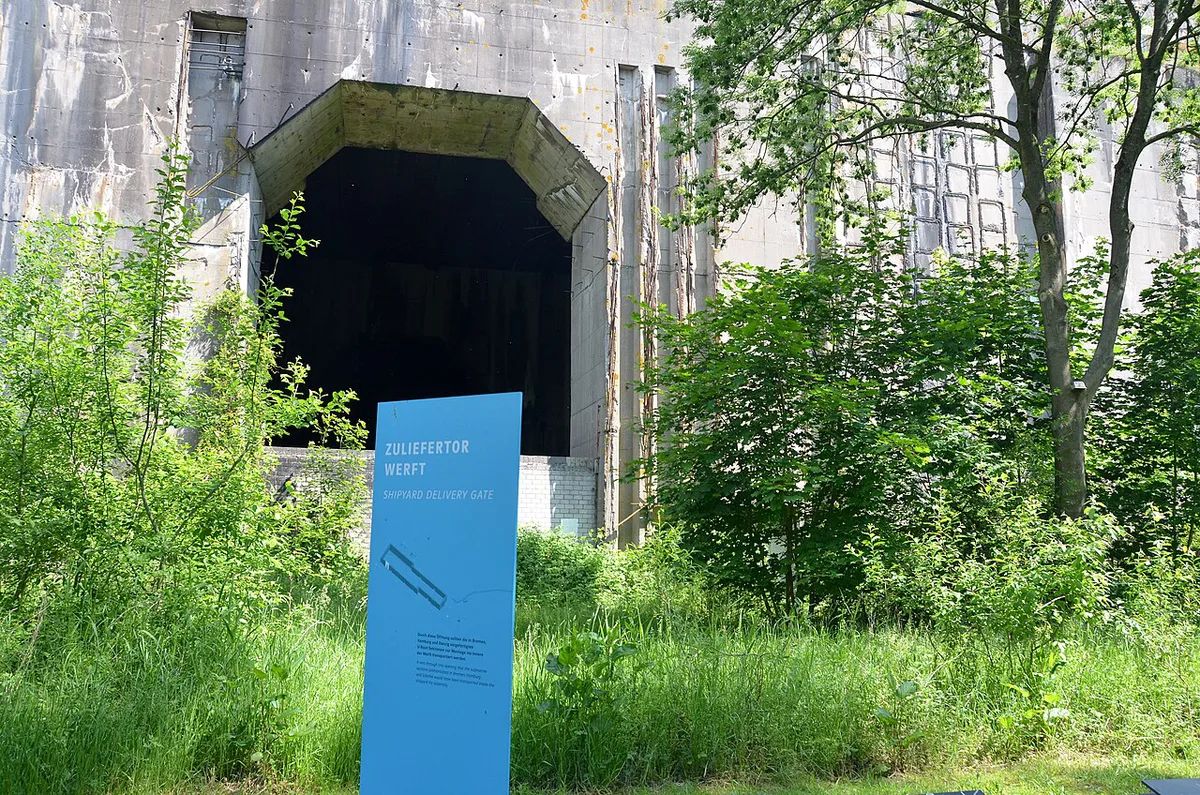
Denkort lists admission as free but charges a fee for tours (visitor details checked November 2026). For opening hours, the memorial directs visitors to its Google information box; search “Denkort Bunker Valentin.” Check holiday and event dates before setting out.
For travel to Bremen-Farge, use the memorial's “Öffnungszeiten, Preise, Anfahrt” page for hours, prices and directions. Plan your outward and return journeys with a current local transit planner.
If access needs affect your visit, consult “Barrierefreiheit,” the accessibility page, and ask about both the grounds and bunker interior. Families should read “Besuch mit Kindern,” the page about visiting with children. To plan another site visit, browse our guide to WWII bunkers open to visitors. For related wartime history, continue with our Atlantic Wall guide.
- Opening hours on your intended date
- Tour date, language, fee and booking
- Guide loan or app availability
- Travel route and last return connection
- Access along the outdoor path and inside the bunker
- Site rules and guidance for children
Keep planning
Guides on the same trip