Valley of the Fallen from Madrid: How to Get There (Cuelgamuros)
How to get from Madrid to the Valley of the Fallen (Valle de Cuelgamuros): the transport options, bus 660A timing pitfalls, tickets, and who should choose a tour.
In this guide
Last updated November 2026. You can reach the Valley of the Fallen from Madrid in roughly an hour on the first leg, but the trip runs in 2 stages: Madrid to San Lorenzo de El Escorial, then a single onward bus or a car. Spain officially renamed the site Valle de Cuelgamuros in 2022, and signs, tickets and timetables may use either name. Our recommendation is a guided tour or a car for most visitors, and the public bus only if you can plan around one fixed return departure. Everything here sits within our wider Spanish Civil War sites guide.
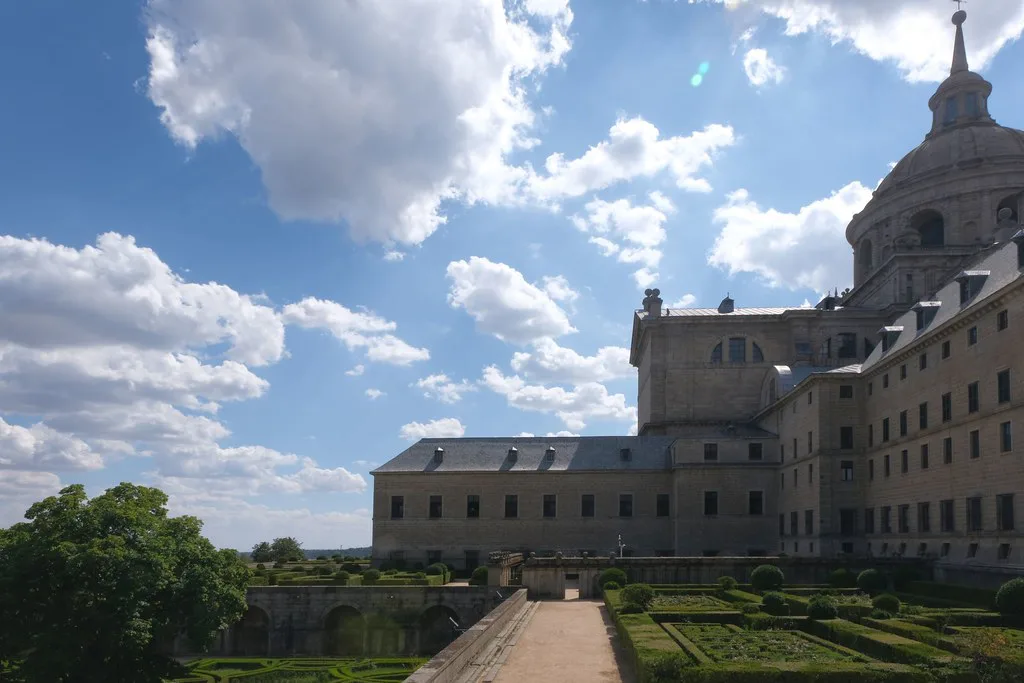
Featured image: santiagolopezpastor, CC BY-SA 2.0, via Flickr.
Valley of the Fallen from Madrid: the quick answer
Getting there is a two-leg journey. Leg one is Madrid to San Lorenzo de El Escorial, which takes about 1 hour by bus 661 from Moncloa or 45 to 60 minutes by Cercanías train. Leg two is the climb into the Sierra de Guadarrama, about 10 km northeast of El Escorial. Public transport on that leg has historically meant one bus up and one bus down each day. Readers report that the bus is numbered 660A. Prices and timetables below were checked November 2026, and the 660A schedule has changed before, so read the notice at the bus station on the day. Anyone with a car, or a seat on a tour, avoids that constraint. For the site's own history, see our page on the monument's history and symbolism.
Options compared: bus, tour, taxi or car
Four realistic ways exist to make the trip. They trade money against flexibility, and the table sets them side by side. Fares for tours, taxis and rentals vary by operator and date, so only the published public transport figures appear here. Ask for a quote before you book anything else. A missed return bus is the biggest risk on the public route, because the last departure down is the only one of the day.
| Option | Cost | Door-to-door time | Flexibility | Best for |
|---|---|---|---|---|
| Public transport (bus 661 or Cercanías, then bus 660A) | Lowest; bus 661 reported at about €2.50 | Long; the 660A departure fixes your day | Low; one return bus | Budget travelers who can commit to the timetable |
| Guided tour from Madrid | Highest per person; compare quotes | Fixed by the operator | Low on timing, high on certainty | Short stays and no-planning days |
| Taxi or private transfer | Mid to high; agree the price and waiting time first | Shortest | High if the driver waits | Small groups wanting more time on site |
| Rental car | Fuel, parking and rental fee | About 1 hour on the first leg, then the climb | Highest | Combining El Escorial and the Valley freely |
Step 1: Madrid to San Lorenzo de El Escorial
Two routes serve this leg, and they end at different places. Pick the one that matches your pass and your starting point. The bus station and the train station are not the same location, which matters because bus 660A leaves from the bus station only.
Journey time is 45 to 60 minutes on the Cercanías, so budget that against the fixed departure time from the separate bus station.
- Bus 661: take Metro Line 3 or Line 6 to Moncloa, about €1.50 in Zone A as listed. Board bus 661 at the Moncloa interchange. Fares are listed at about €2.50, with one reader noting more than €5; the Madrid transport consortium publishes the current fare. The ride takes about 1 hour and ends at the San Lorenzo de El Escorial bus station, roughly a 10-minute walk from the monastery.
- Cercanías C-3 or C-3a: trains run from central stations such as Atocha, Sol, Nuevos Ministerios and Chamartín. Journey time is 45 to 60 minutes, with a listed frequency of about 1 train per hour. You arrive at Estación El Escorial, about a 20-minute walk from the monastery.
- Transfer note: from the train station you must still reach the separate bus station for the 660A. Leave extra time for that walk or a local taxi.
Step 2: San Lorenzo de El Escorial to the Valley by bus 660A
Bus 660A leaves from the San Lorenzo de El Escorial bus station, down the ramp at the back where the buses depart. Readers report a paper ticket that covers the return trip. A timetable posted at the station in March 2024 listed the departures below. Treat them as a guide, because schedules change by season.
- October 1 to March 31, Tuesday to Sunday: departs 15:15, returns from the Valley at 17:30.
- April 1 to September 30, Tuesday to Friday: departs 16:00, returns at 18:00.
- April 1 to September 30, Saturday, Sunday and public holidays: departs 15:15, returns at 17:30.
- Mondays: no 660A departure appeared on the posted timetable.
Bus 660A boarding, tickets and the missed-bus plan
Arrive at the bus station about 15 minutes before departure so you know the exact stop. Around 15 minutes into the ride, the bus stops at the park gate and everyone gets off to buy an entry ticket. The walk from the car park to the basilica entrance then takes a few minutes, per reports from past riders. Return buses load at the drop-off point, and drivers are said to stress the return time on boarding. If you miss the descent, you have no public option that evening, so keep a taxi number from El Escorial and a card for payment. For more help planning, read our guide to pairing the monastery with the Valley.
Tickets, opening hours and what is included
Entry has been paid since the site reopened on 1 June 2012, at €5. It rose to €9 on 2 May 2013. A reader-reported 2024 price lists €9 general admission and €4 reduced. Patrimonio Nacional owns and operates the complex, so its site is the place to confirm the current fee, closing days, any timed-entry rule and booking requirements. Entry is paid at the park gate, so keep cash or a card ready. Note that the base of the cross has been closed to ascent since the 2012 reopening for restoration work, so ask whether the funicular is running before you plan your visit around it.
Sample day plans
Each plan balances the same hard limit. Roughly 2 hours separate the 660A going up and coming down, and the ride and gate purchase consume part of that.
Around 15 minutes into the ride the bus stops for gate tickets, which eats into the roughly 2 hours between up and down departures.
- Bus day: spend the late morning at the monastery in San Lorenzo de El Escorial, eat early, reach the bus station about 15 minutes before departure, and treat the return departure as non-negotiable.
- Tour day: join a tour from Madrid, let the operator handle timing, and ask in advance how long the group stays on site.
- Taxi day: take the train or bus 661 to El Escorial, then hire a taxi up to the Valley and agree the waiting time and return fare before you go.
- Car day: drive from Madrid, visit El Escorial or the Valley first, and set your own pace within the opening hours posted by Patrimonio Nacional.
What you'll see at Valle de Cuelgamuros
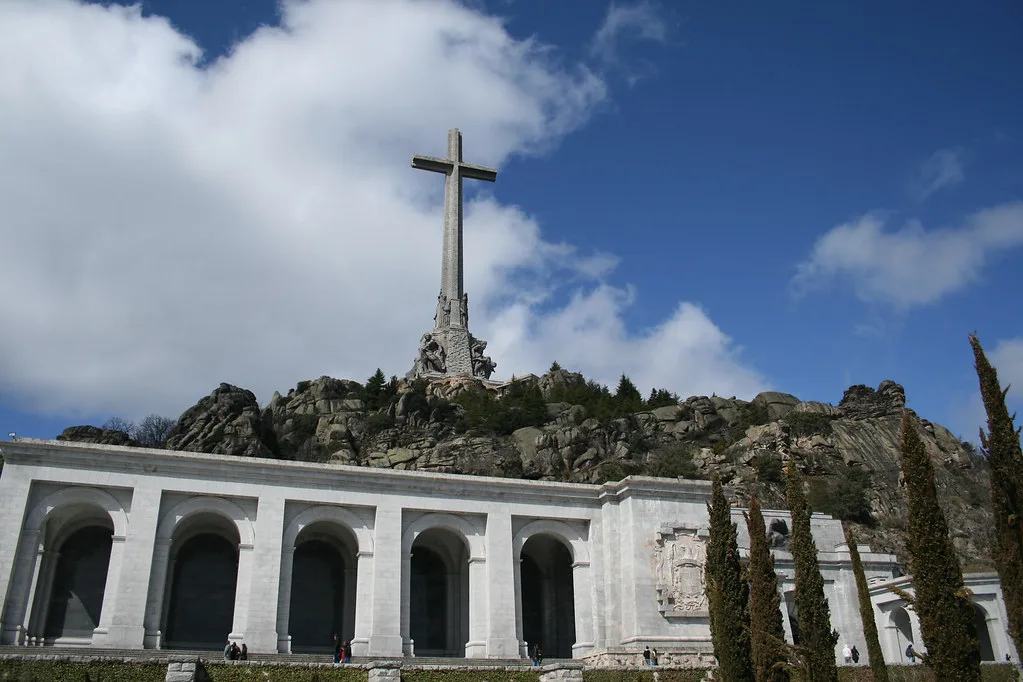
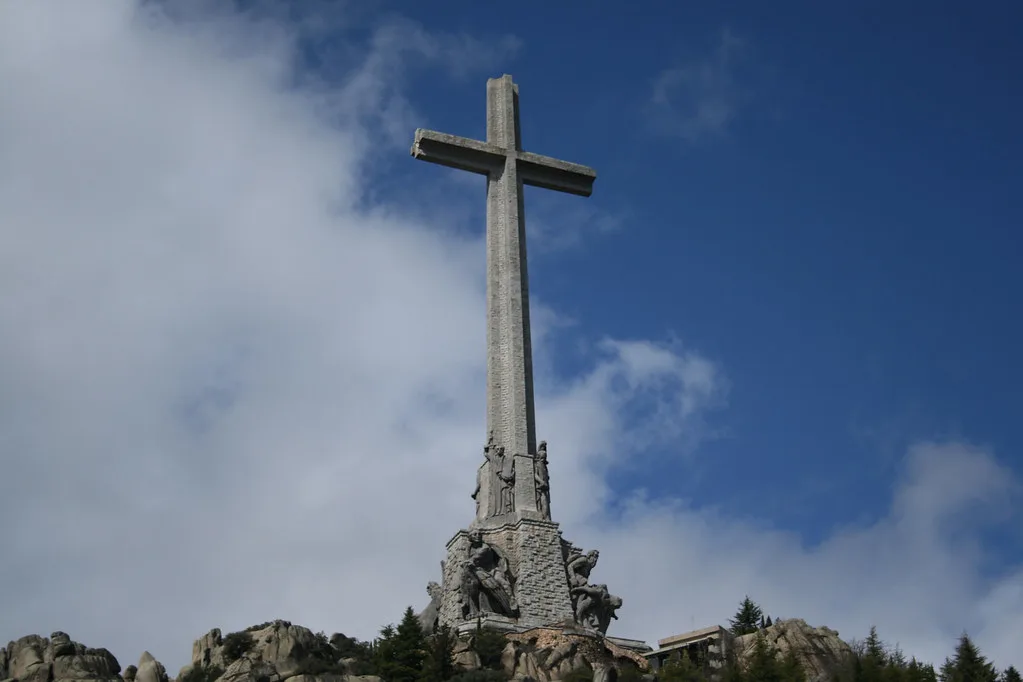
The memorial covers over 13.6 square kilometres of woodland and granite at more than 900 m above sea level. Main features are the basilica cut into the rock, the esplanade with views toward Madrid's outskirts, and a stone cross 150 m high. That cross is visible from over 30 km away, according to published descriptions. A funicular links the basilica to the cross base, though its operation needs checking. A Benedictine abbey sits on the far side of the mountain, and public access should be confirmed with Patrimonio Nacional. Expect steps and open ground on the esplanade, and ask the site about step-free access to the basilica. Weather can be cooler and windier than in Madrid, so pack a jacket.
Context and visiting respectfully
Construction began in 1940, and the site was inaugurated on 1 April 1959. Its remains include about 40,000 people, according to the monument's register. Some were Republican prisoners' fellow dead interred without their families' knowledge. The site stayed closed from 2009 to 2012. Franco's remains were exhumed on 24 October 2019. In 2025, Spain announced changes to the complex including an interpretation centre, so check what has opened since. Visitors come for many reasons, including mourning, so keep voices low, avoid political displays and follow any rules posted at the gate or on the Patrimonio Nacional site. The basilica is also an active place of worship.
Who should skip this trip, and common mistakes
Skip the public bus if you have only half a day, have no firm plan for the return, or find the subject too heavy for a long trip. Most mistakes are logistical. Travelers go to Estación El Escorial instead of the bus station, or arrive on a Monday when no 660A is listed. Others assume cards are accepted at the gate. Allow for a 2-hour window, and pack layers.
Combine with other Civil War sites
Madrid is a base for a wider trail. For the Madrid-area fighting, read about the Jarama Valley fighting. Farther afield, Belchite's ruined old village and the Ebro battle sites need longer trips. In the north, Gernika's peace museum is its own journey, and Teruel's winter battle suits a longer route. Plan each as a separate trip rather than a day add-on.
Frequently Asked Questions
Can you visit the Valley of the Fallen?
Yes. The site reopened on 1 June 2012 after closing in 2009 and now charges an entry fee. Patrimonio Nacional operates it, so check its official site for current hours and any booking rules.
Is Franco still buried in the Valley of the Fallen?
No. Franco's remains were exhumed on 24 October 2019 and moved to Mingorrubio-El Pardo cemetery. Others who died in the Civil War remain interred at the site.
Why is the Valley of the Fallen controversial?
Franco ordered it built in 1940, and some labor came from prisoners. Franco was buried there from 1975 to 2019, and Republican dead were interred without their families' consent. Spain has since sought to recast the site as a place of democratic memory.
Is the Valley of the Fallen worth visiting?
It suits visitors interested in Spanish 20th-century history who can plan the 2-leg journey. Skip it if you are short on time or have no return transport.
Keep planning
Guides on the same trip