Guernica Peace Museum: Visit Guide, Hours & Tips
Is Gernika's Peace Museum worth it? What's inside, how long to allow, tickets and hours, language tips, and how to combine it with the town sights.
In this guide
Last updated November 2026: the guernica peace museum, officially the Gernika Peace Museum (Gernikako Bakearen Museoa), sits in the centre of Gernika-Lumo in Biscay. It covers the 26 April 1937 bombing and wider peace themes, and the museum gives about 1 h 30 min for a visit. We place it in our Civil War sites across Spain coverage as the Basque-north stop.
Featured image: Adam Jones, Ph.D. - Global Photo Archive, CC BY 2.0, via Flickr.
Is the Guernica Peace Museum worth visiting?
Yes, if you want survivor testimony and a wider look at peace and reconciliation. Allow 1 h 30 min, the visit length the museum gives on its own site. Visitors wanting a pure Civil War artefact museum may find the scope broader than expected. Reports differ on the split: one forum poster put the bombing at about 25% of the content, while another recalled most of it. Our view is to treat the bombing as one strong thread among several. That framing sets the right expectations before you pay. Peace, human rights and reconciliation fill much of the rest of the 2 floors.
What's inside, floor by floor
Permanent displays fill 2 floors, according to the Gernika-Lumo tourism office. A semi-basement level hosts 3 to 4 temporary exhibitions per year. Our table follows the floors in visiting order, and the list below turns it into a time plan.
| Floor | What you see |
|---|---|
| First floor | What is Peace? Ideas of peace that go beyond the end of conflict |
| First floor | What happened in Guernica: town history, the Civil War and survivors' reconciliation with their assailants |
| First floor | 3D audiovisual recreation of 26 April 1937, set in a Gernika dining room |
| First floor | In memoriam: an audiovisual pointing to reconciliation in Northern Ireland and South Africa |
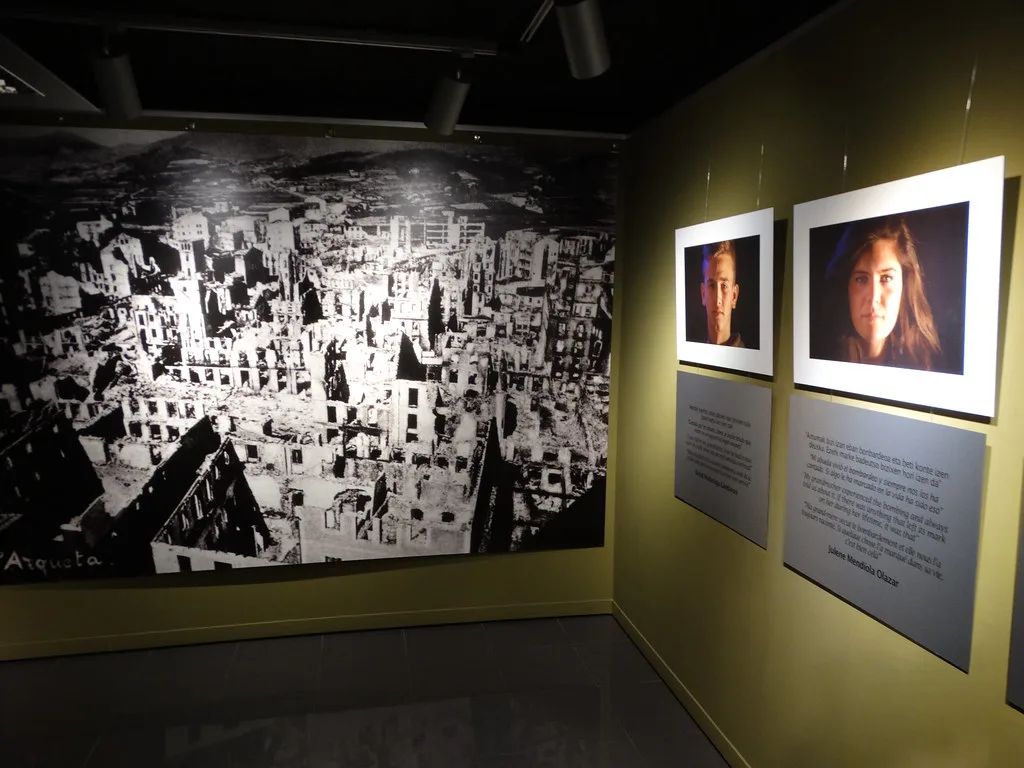
| Second floor | Survivor testimonies collected by William Smallwood in the 1970s and by GOGORA in 2018 |
| Second floor | Human rights today, seen through Picasso's Guernica |
| Semi-basement | Temporary exhibitions |
- 45 minutes: What is Peace?, the 3D recreation of 26 April 1937, and the second-floor survivor testimonies.
- 90 minutes: add What happened in Guernica, In memoriam and the human-rights section.
- 2+ hours: add the temporary exhibition and read the translated sheets in full.
How much of the museum covers the 1937 bombing?
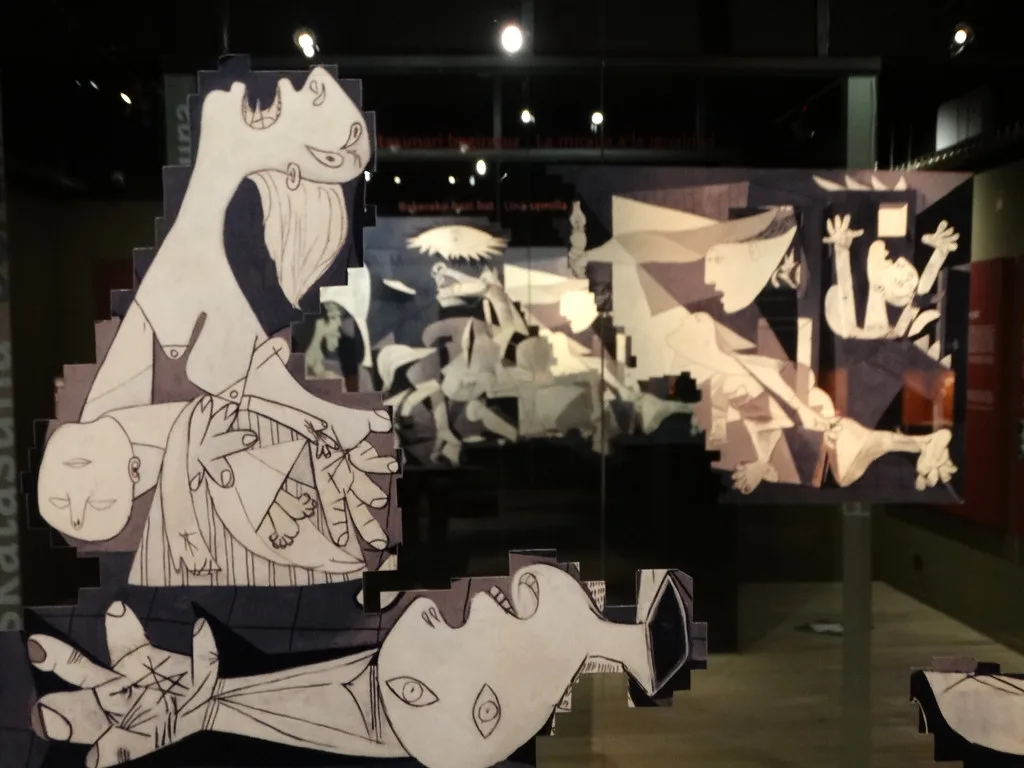
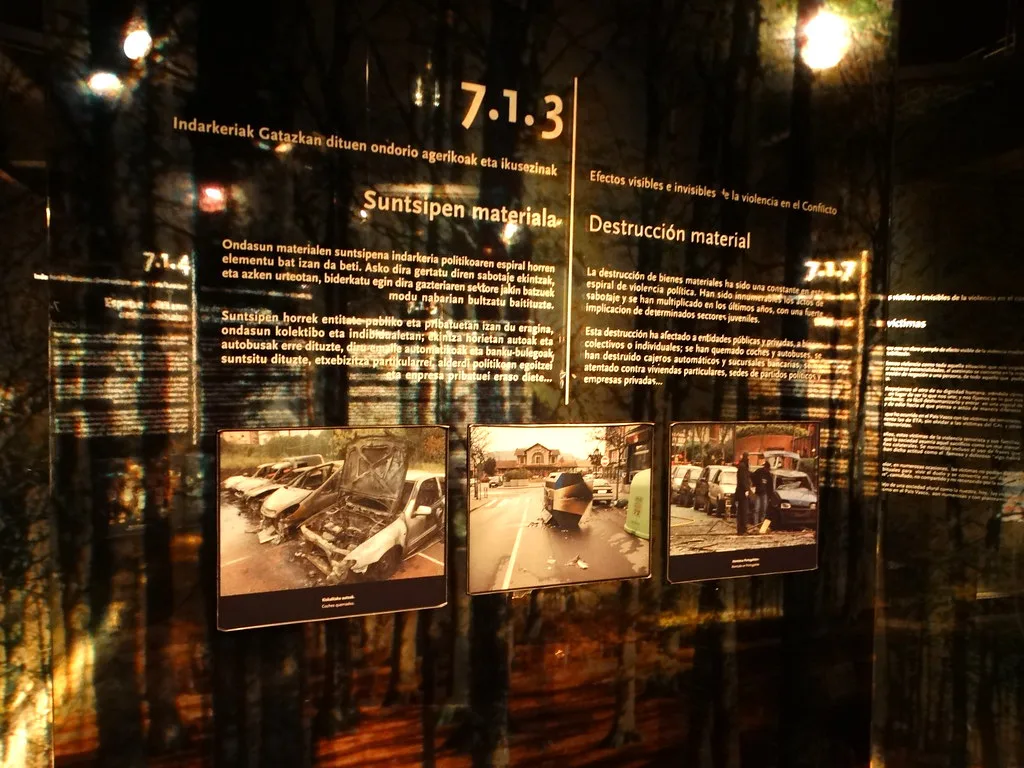
Enough to anchor the visit, though not enough to define it. Bombing material includes the dining-room audiovisual and the survivor testimonies, plus, per visitor reports, aircraft models and bomb casings. Peace and reconciliation take the broader share. Picasso's Guernica appears as a fragmented installation hanging from the ceiling, according to visitors. Germany's president Roman Herzog issued an official apology to Gernika in 1997, and visitor accounts mention a section on it. Near the exit, visitors report a section on the Basque conflict, covering ETA violence and state violence until 2011. On the toll, Basque authorities reported 1,664 deaths, and the exact figure remains contested. The foundation behind the museum began in 1998, and study facilities now sit alongside the exhibits.
Tickets, opening hours and booking
Prices and hours checked November 2026. The tourism office lists admission at €6.5, reduced entry at €4.5, and free entry on Saturday afternoons. Museum agenda pages list free admission on 10 November 2026, Basque Remembrance Day. It may not be an annual rule. A combined ticket covers the Peace Museum and the Euskal Herria Museum. English guided tours for groups must be pre-booked through the official museum site. Seasonal hours from the tourism office are in the table. From 20 October to 28 December, Monday is closed. Meanwhile, the museum's own page shows a simpler Tuesday-to-Friday 10:00 to 18:00 pattern, so confirm your date.
| Period | Hours |
|---|---|
| 17 March to 19 October | Mon 10:00-14:30; Tue-Sat 10:00-19:00; Sun 10:00-14:30 |
| 28 January to 16 March, 20 October to 28 December | Mon closed; Tue-Fri 10:00-18:00; Sat 10:00-14:30 and 16:00-18:00; Sun 10:00-14:30 |
| 5 to 8 December | Thu-Sat 10:00-19:00; Sun 10:00-14:30 |
| Closures | 1 to 28 January (maintenance); 24-25 and 29-31 December |
Language, accessibility and what to know before you go
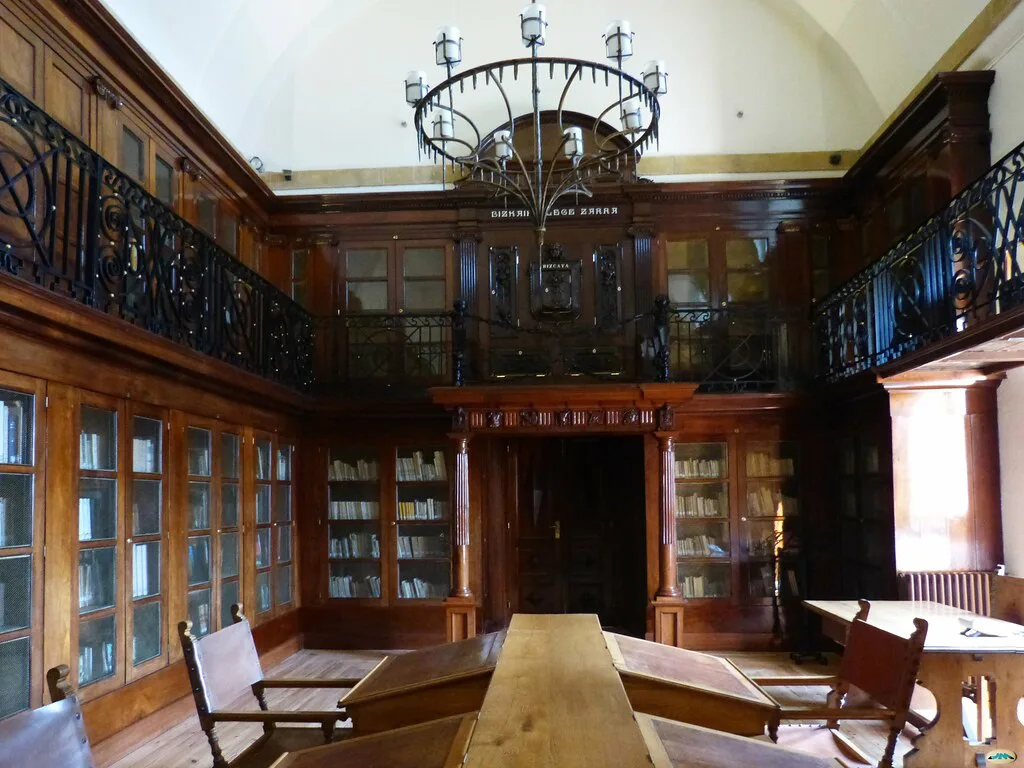
Exhibition text is in Basque and Spanish, according to visitor reports. Ask at reception for the folder of laminated English sheets. Only main texts are translated, not every object label, so expect some gaps. Audiovisual testimony carries much of the story, and one projection has English subtitles per visitors. Sound and light effects fill the 3D recreation room, which is darkened. Visitors call it moving, and one found it somewhat theatrical. We'd think twice about very young children, and the museum's age guidance is worth a look. Contact the museum through its official site about step-free access before you travel.
- Arriving on a Monday outside 17 March to 19 October, when the museum is closed.
- Assuming all text is in English.
- Expecting a museum only about the bombing.
- Stacking the Euskal Herria Museum without adding time beyond the 1 h 30 min baseline.
- Arriving late on a Sunday, when the museum closes at 14:30.
How to get there and where to park
Find the museum at Foru Plaza 1, opposite the town hall. Gernika's tourist office is across the street at Artekalea 8. From the train station, allow about 3 minutes on foot via Geltoki Plaza and Adolfo Urioste Kalea. There is no parking at the museum itself. Free parking is said to be available on the western side of Europa Park, about 5 minutes away. Coming from Bilbao, a forum poster suggests taking a bus to Gernika. For timetables, check operators through the Gernika-Lumo tourism site. Overnight stays are tight, since visitor reports say the town has few beds. Some visitors base themselves in Bilbao instead.
Combine it with the rest of Gernika
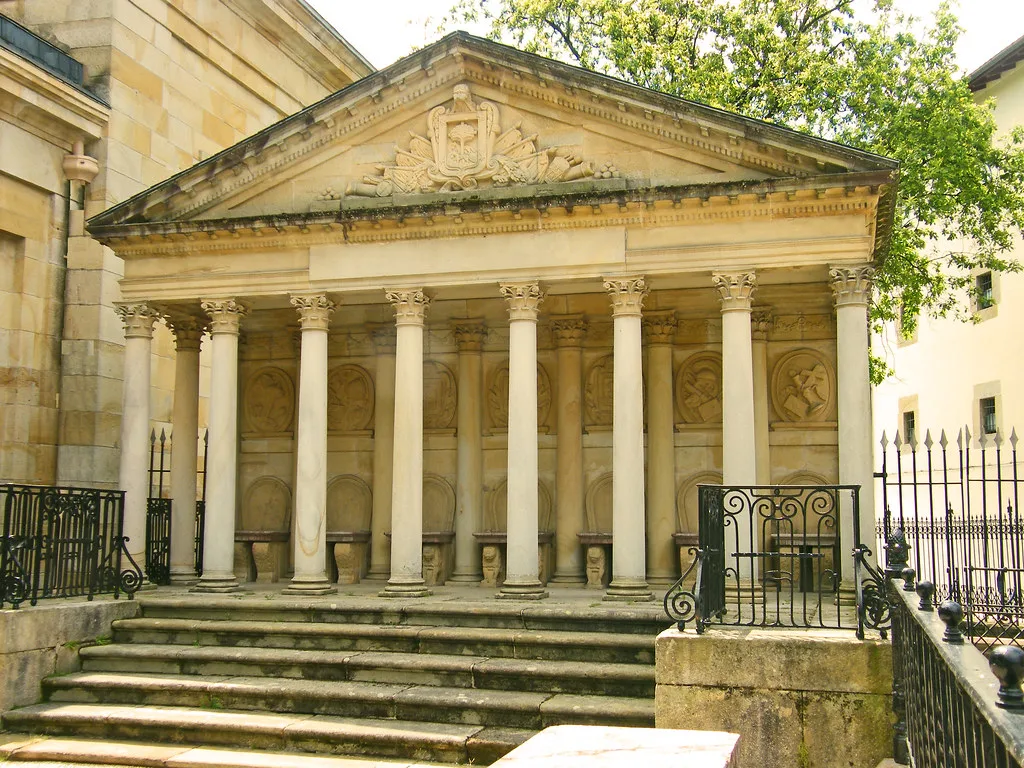
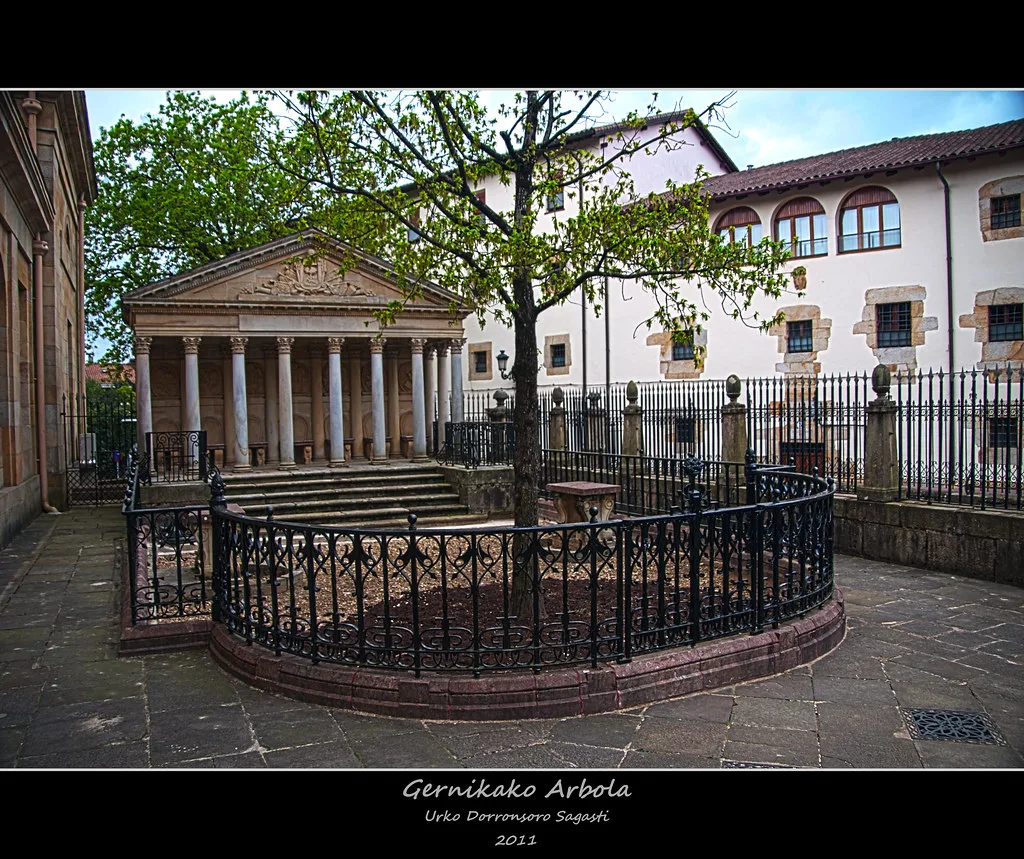
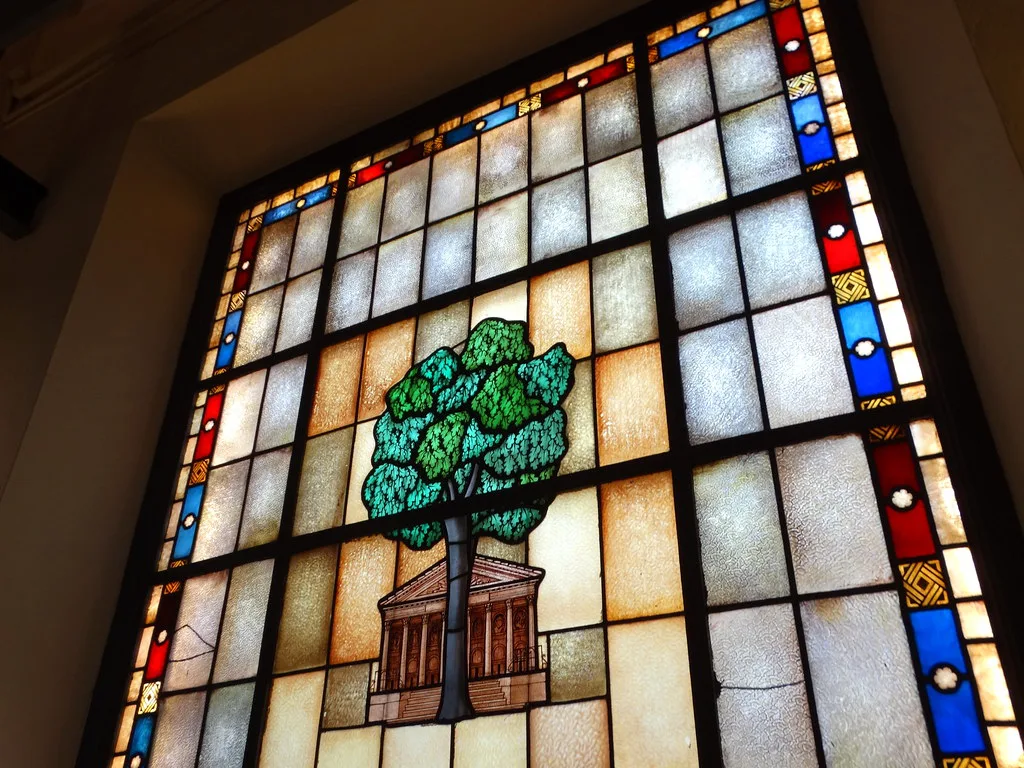
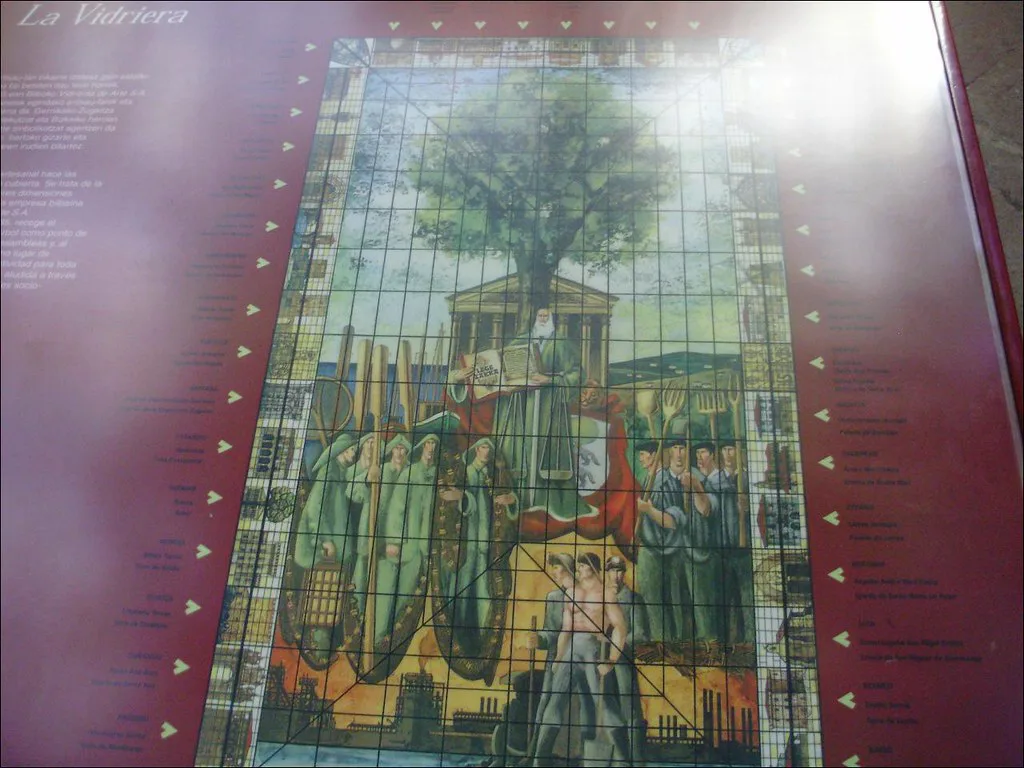
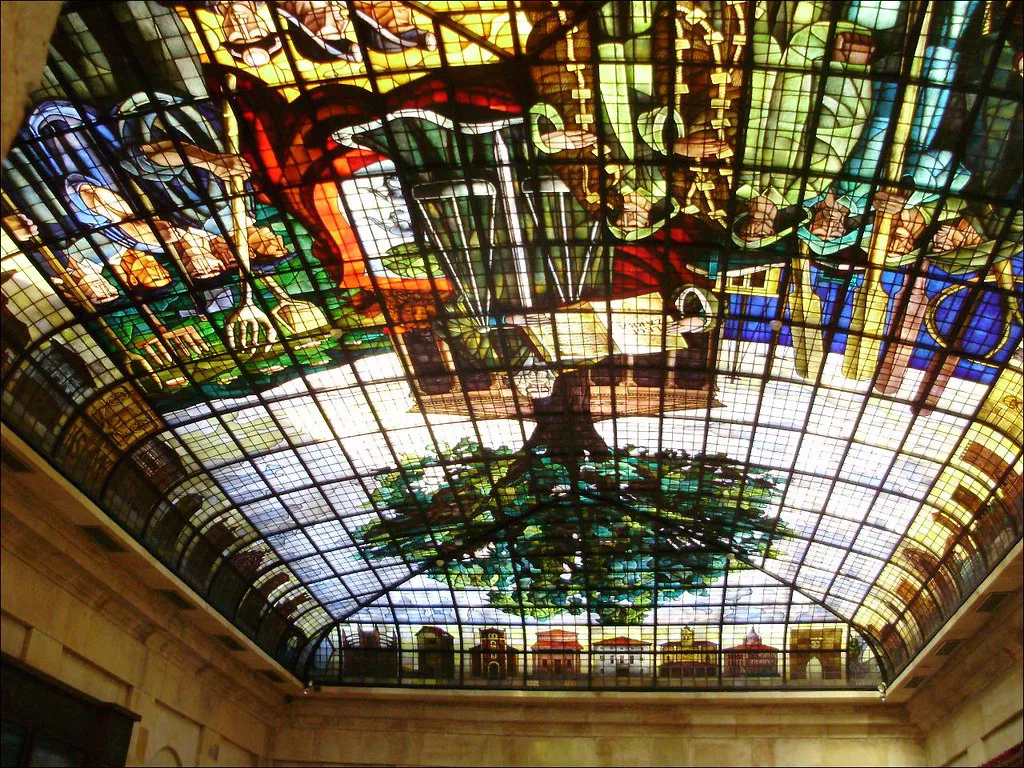
Gernika is compact, and the Peace Museum sits at its centre. Start there while your energy is highest. Then walk to the Euskal Herria Museum, housed in the Alegria Palace, built in 1733 in a part of town spared in 1937. Follow the Bombing Route, a self-guided trail of 11 panels across the centre. Finish at the Casa de Juntas and the Tree of Gernika. Market day matters to the story, since the 1937 bombing fell on a Monday market. The tourism site lists a First and Last Monday of October tradition in Gernika. Look up current market dates before planning around either. On 26 April, one visitor described an air-raid siren and church bells in the main square.
| Sight | Time and cost note |
|---|---|
| Peace Museum | About 1 h 30 min; €6.5 admission |
| Euskal Herria Museum | Combined ticket with the Peace Museum; price on the tourism site |
| Bombing Route | Self-guided; 11 panels in the centre |
| Picasso mural | Listed by the tourism office; details on its site |
| Casa de Juntas and Tree of Gernika | Listed top sights; check visiting hours |
| Air-raid shelters | Listed by the tourism office; check access |
Gernika in the wider Spanish Civil War story
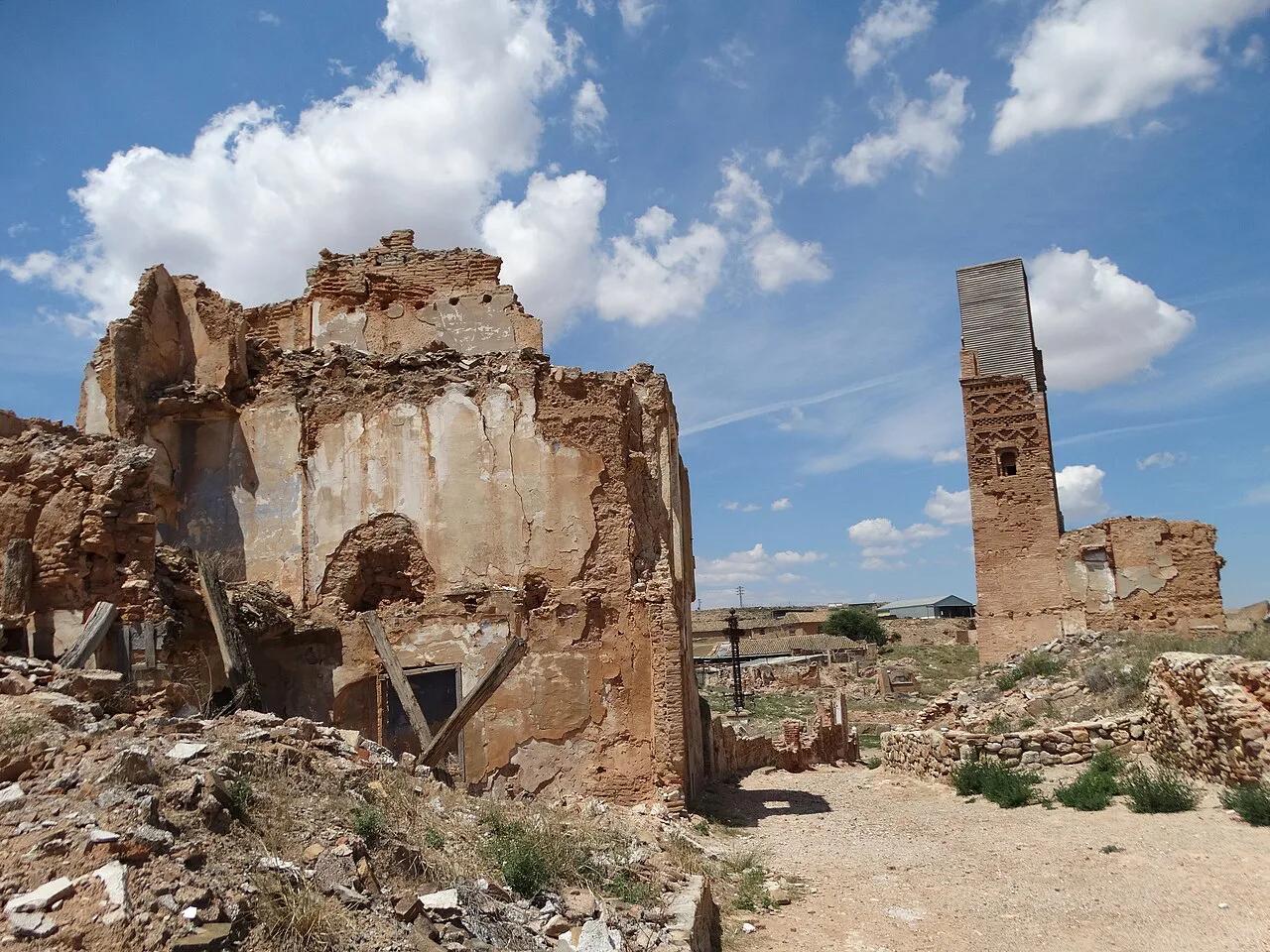
Gernika sits in the Basque north, so the other sites in our coverage are separate trips. For a contrast in how Spain remembers the war, read about the Franco-era memorial near Madrid. Belchite is a preserved ruined town, which makes it a natural comparison for wartime destruction. Our guide to the preserved ruins at Belchite covers it. Building a longer battlefield route? Add the Ebro battlefield sites. Consider the Jarama front lines as well. Teruel also fits, with Teruel's wartime sites to round it out.
Frequently Asked Questions
Is Guernica worth seeing?
Yes, for the Peace Museum, the Bombing Route and the rebuilt town centre. Allow a half day, since the museum alone takes about 1 h 30 min.
How many people were killed at Guernica?
Basque authorities reported 1,664 deaths after the 26 April 1937 bombing. Its exact figure remains contested and may be significantly lower, so attribute it when you cite it.
What happened during the Guernica massacre?
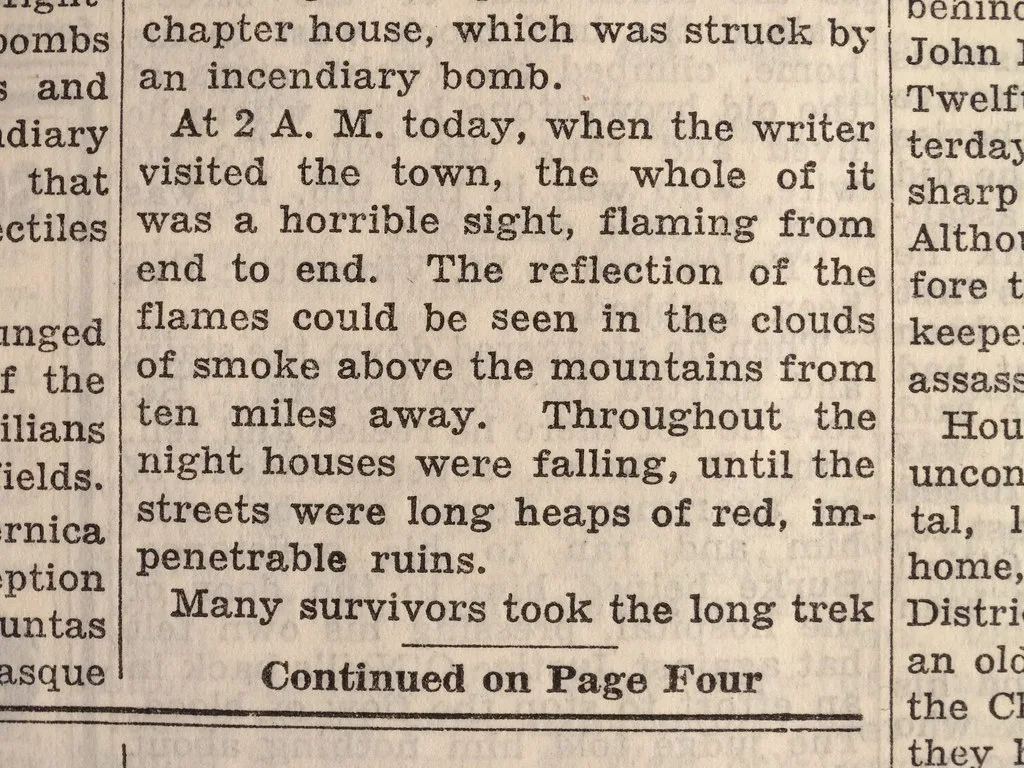
On Monday 26 April 1937, a market day, bombers struck Gernika from about half past four in the afternoon. Raids lasted around 3 hours, and fires burned for days. Inside the museum, a 3D audiovisual recreates the day in a dining room.
Keep planning
Guides on the same trip