
Meuse-Argonne American Cemetery: Visit Guide & Hours
Plan a visit to Meuse-Argonne American Cemetery in Romagne-sous-Montfaucon: free entry, hours, how to get there without public transport, and what to see.
In this guide
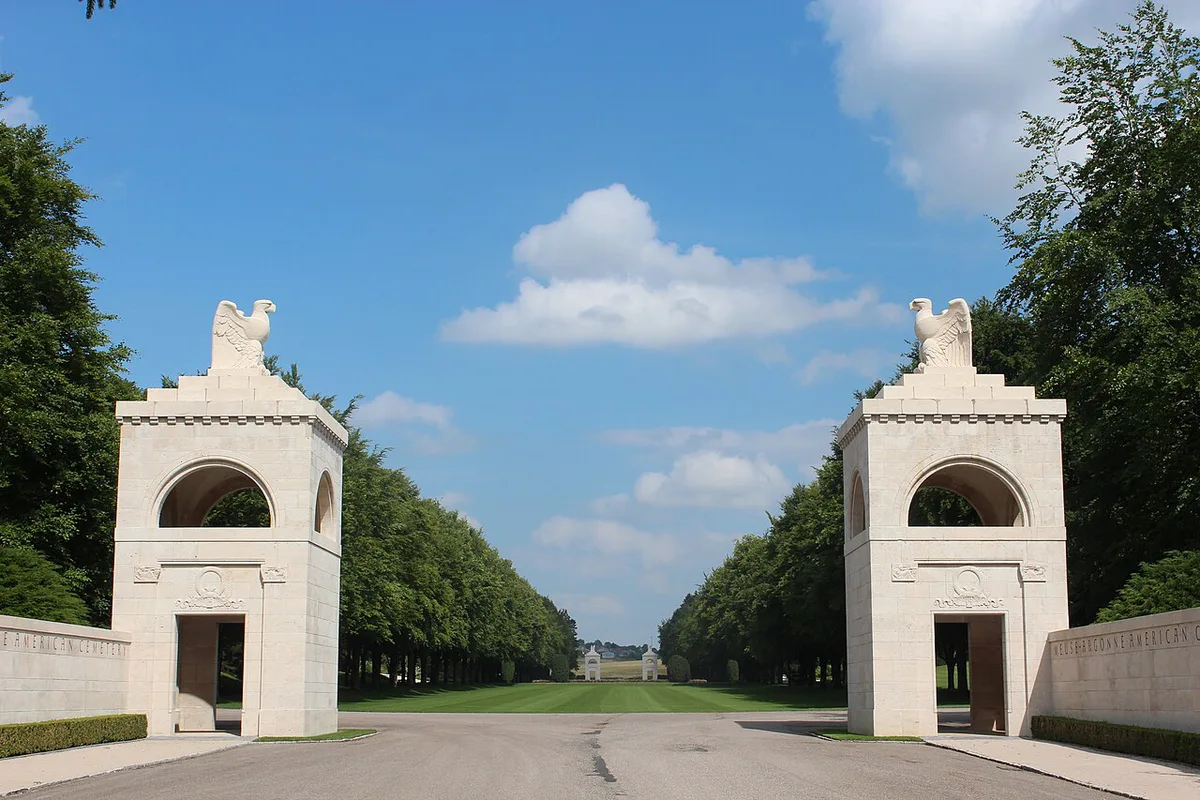
Last updated November 2026: Meuse-Argonne American Cemetery, at Romagne-sous-Montfaucon in the Meuse department, is the largest American military cemetery in Europe and is run by ABMC. Admission is free with no booking, it opens 9:00 to 17:00, and you need a car. This guide is for drivers from Verdun or Paris and for anyone planning a Western Front trip among the American WWI sites across France.
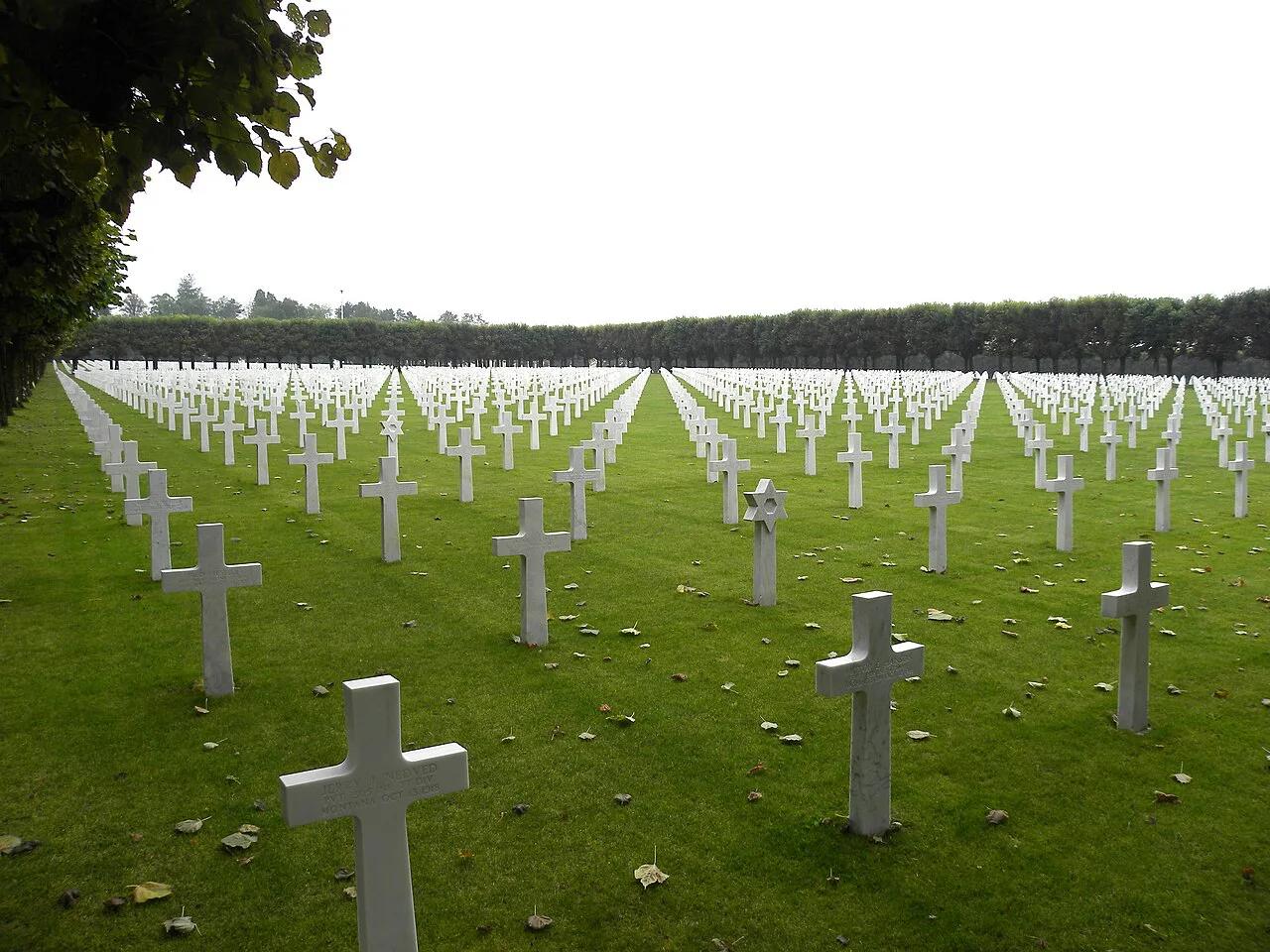
Featured image: Wilson44691, CC0, via Wikimedia Commons.
Meuse-Argonne American Cemetery at a glance
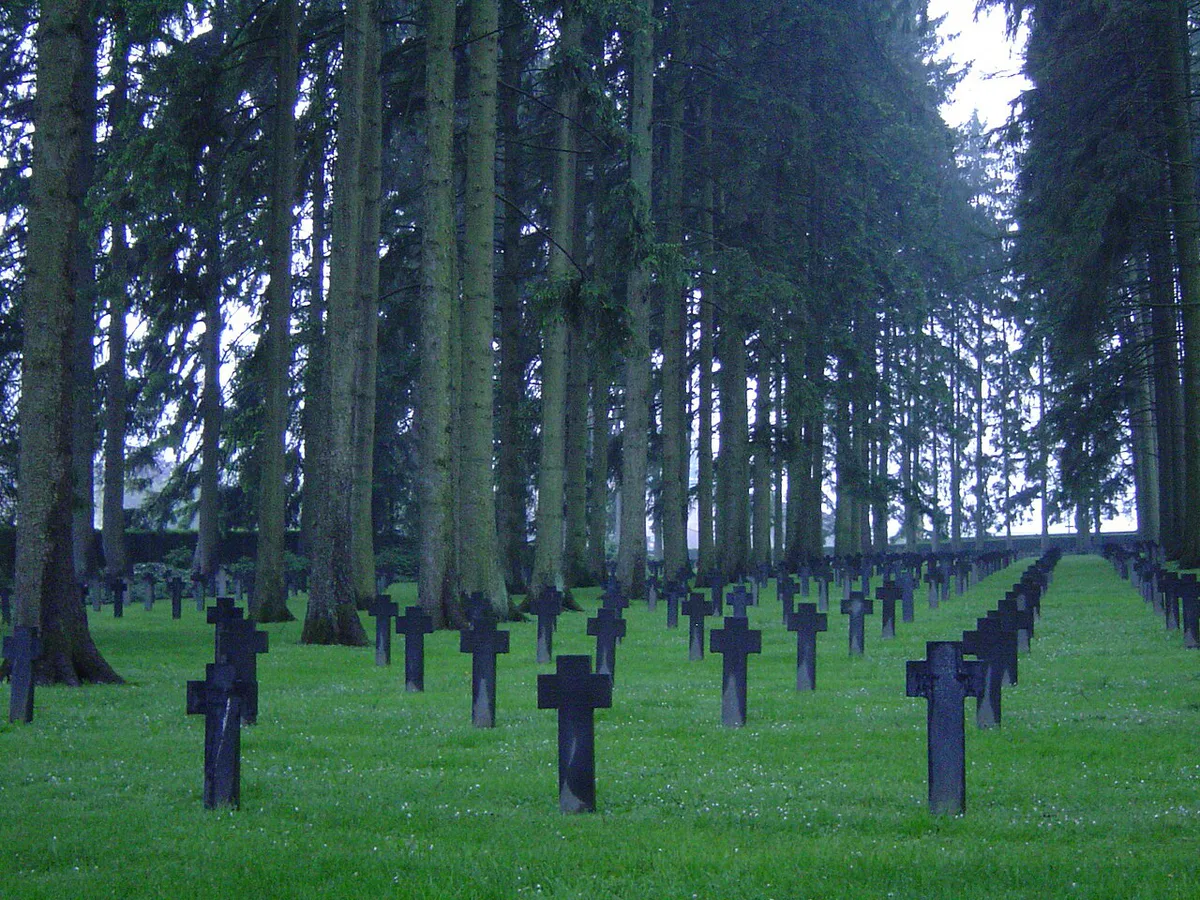
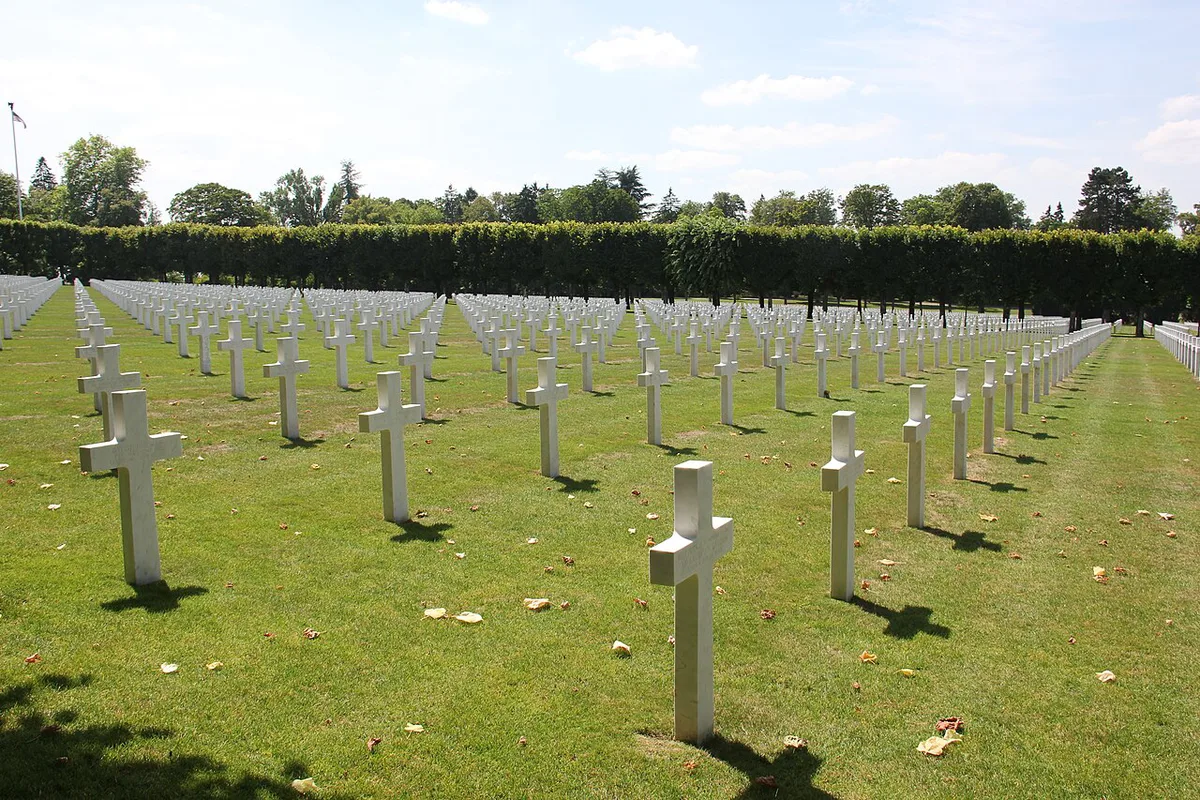
The cemetery covers 130.5 acres and was dedicated in 1937. It holds 14,246 burials and records 954 missing on its Tablets of the Missing. Most of those buried died in the Meuse-Argonne Offensive of World War I. Our advice is to treat it as the anchor of an Argonne day, not a quick photo stop. ABMC hours and access details were checked in November 2026.
- Address: Rue du Général Pershing, 55110 Romagne-sous-Montfaucon
- Distance: 26 miles northwest of Verdun
- Hours: 9:00 to 17:00 daily, last admission 16:45
- Cost: free, no advance booking
- Transport: car only, with no public transport to the gate
Hours, admission and etiquette
ABMC publishes daily hours of 9:00 to 17:00, including host-country holidays. Only December 25 and January 1 are closed. Admission ends at 16:45, 15 minutes before closing. In a rural area with short winter days, we'd arrive well before that. Entry is free and needs no booking. A staff member in the visitor building answers questions and escorts relatives to graves. ABMC asks visitors to treat the site as a sacred burial ground and to behave with respect and solemnity. We read that as quiet voices and no conduct that disturbs the peace of the rows.
How to get there (and why you need a car)
From Paris, the drive is about 152 miles via the A4 and takes roughly three hours. Leave at exit 29.1 near Clermont-en-Argonne, then head north through Varennes-en-Argonne. From Verdun, 26 miles away, drive via Consenvoye or Dun-sur-Meuse. ABMC states that public transport to the cemetery is not available. If GPS coordinates fail, enter Rue du Général Pershing instead. Mistakes we'd steer you away from: expecting a bus, arriving after 16:45, and assuming a grave search is staffed without notice.
Driving from Paris covers 152 miles, so an early start leaves room before the 16:45 last admission.
| Starting point | Route | Time | Last leg |
|---|---|---|---|
| Verdun | Via Consenvoye or Dun-sur-Meuse | 26 miles | By car |
| Paris, by car | A4 to exit 29.1, then Varennes-en-Argonne | About 152 miles, about 3 hours | By car |
| Paris, by train | TGV from Gare de l'Est to Meuse-TGV, then shuttle bus to Verdun | About 1 hour by TGV | Car, hire or local taxi from Verdun |
| No car | Base in Verdun and arrange a local driver | Check locally | Arrange in advance |
How long to spend and what to see
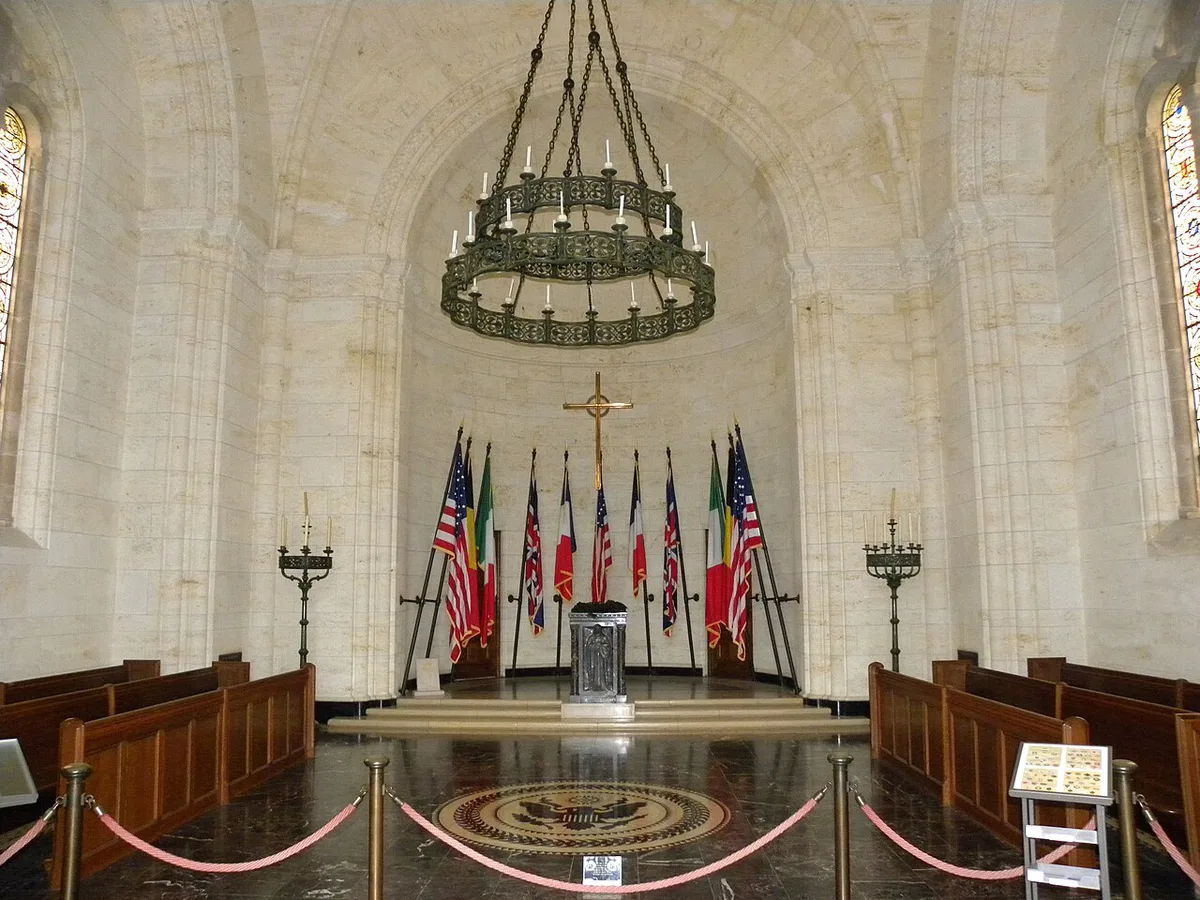
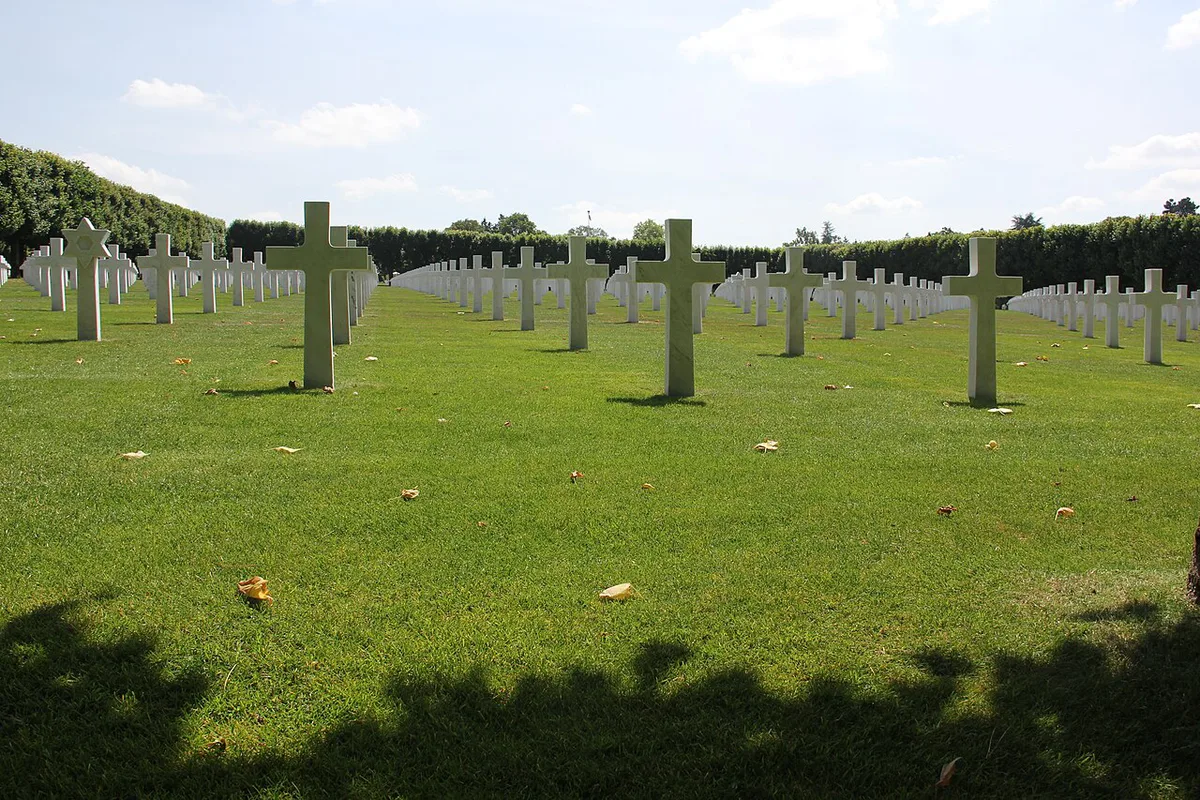
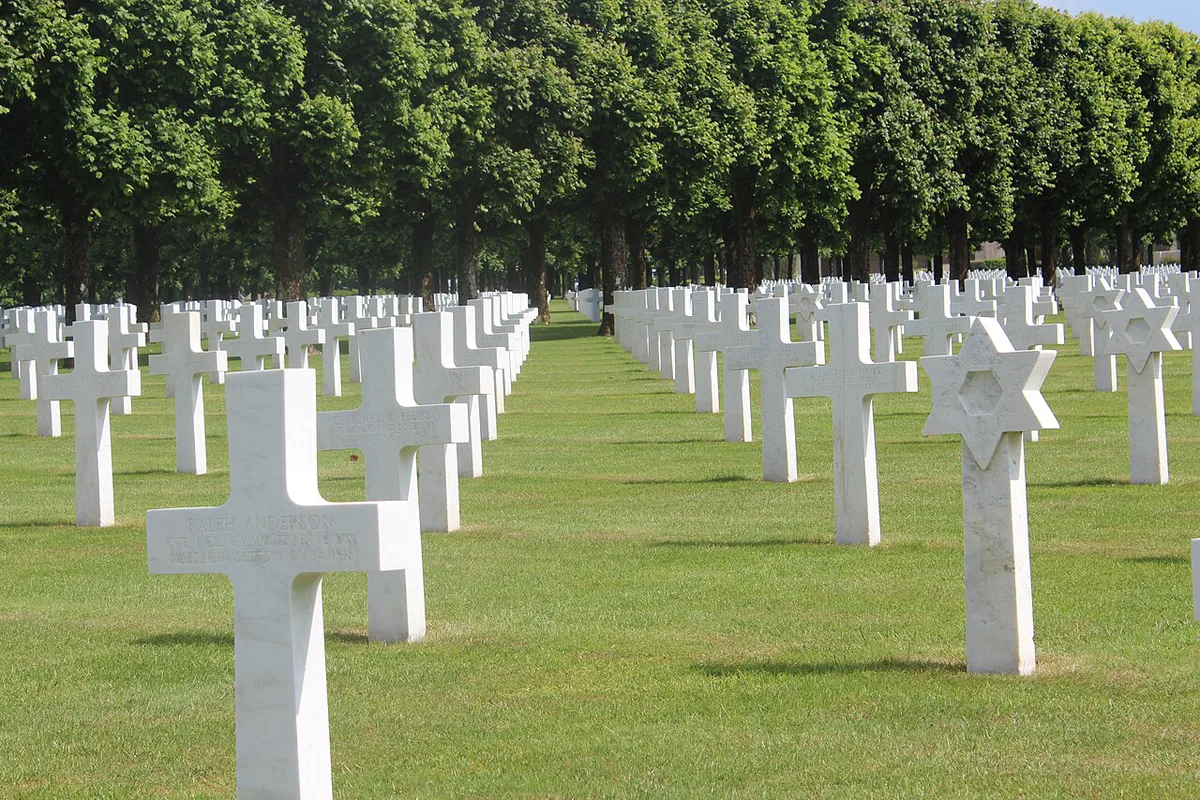
Rows of headstones rise beyond a wide central pool to the chapel on the ridge. A bronze screen separates the foyer from the interior, where stained glass shows American unit insignia. Loggias flank the chapel, and one panel of the west loggia carries a map of the offensive. Tablets of the Missing, with almost 1,000 names, fill the remaining panels, including the 1918–19 North Russia expedition. Rosettes mark names since recovered and identified. A renovated 1,600-square-foot visitor center reopened in November 2016, with personal stories, photographs and films. These durations are our editorial estimates, not ABMC figures.
| Visit type | Editorial estimate | What it covers |
|---|---|---|
| Quick pass | About 30 minutes | Central pool, headstone rows, chapel |
| Standard visit | About 1.5 hours | Visitor center, chapel, loggias and offensive map |
| Deep visit | 2.5 hours or more | Standard visit plus a grave visit with staff help |
The 1918 Offensive Behind the Headstones
Knowing how the fighting unfolded gives the rows and the loggia map more meaning. The Meuse-Argonne Offensive opened on 26 September 1918 and lasted 47 days, until the Armistice on 11 November. General John J. Pershing's American forces attacked northward between the Meuse River and the Argonne Forest, working alongside French armies on the wider front. A central aim was to threaten the German rail network around Sedan, a vital supply route.
About 1.2 million American service members took part over the course of the campaign, and more than 26,000 were killed. The ground favored the defenders, with wooded ridges, ravines, fortified lines and high points that overlooked the American advance.
| Date in 1918 | What happened |
|---|---|
| 26 September | The American attack begins |
| 27 September | US troops take the hilltop village of Montfaucon |
| Early October | Hard fighting in the Argonne Forest, including the ordeal of the Lost Battalion |
| Mid-October | American divisions break into the main German defensive line, including the heights near Romagne |
| 1 November | A renewed assault drives through the German positions and the advance accelerates |
| 11 November | The Armistice ends the fighting |
The campaign's scale helps explain why this burial ground is so large. Its 14,246 graves do not represent every American who died in the offensive, as many families chose to have their relatives returned to the United States. If you are comparing it with burial grounds from both world wars, our guide to the largest American cemetery in Europe puts that ranking in context.
Notable burials and finding a grave
Several Medal of Honor recipients are buried here. Second Lieutenant Frank Luke Jr., an airman, lies among them. Sergeant Matej Kocak received both Army and Navy medals. Corporal Freddie Stowers received his medal in 1991. Second Lieutenant Erwin Bleckley earned his for service near Binarville, and our Lost Battalion Argonne guide covers that ground. For family visits, contact ABMC before you travel. Bring the full name, unit and date of death. Staff escort relatives to graves, and ABMC's burial search on its site can confirm a location first.
Plan a Meuse-Argonne day around it
ABMC's driving routes place the Montfaucon American Monument: Hours, Climb & Visit Guide south of the cemetery. Check the drive time locally before you commit. Our sample day starts from Verdun and reaches Romagne-sous-Montfaucon by late morning. Spend the middle of the day at the cemetery, then visit Montfaucon with daylight to spare. Keep the Aisne-Marne sites for a separate trip. Belleau Wood: Battlefield, Cemetery and Visitor Guide (France) and the Château-Thierry monument lie in another region. The Lafayette Escadrille Memorial: Visitor Guide & History also belongs to a different itinerary.
Where to stay: Verdun base
ABMC lists hotels in Verdun, 26 miles from the cemetery, and no lodging at the site. Check Meuse tourism for current options. Verdun is also where the TGV shuttle bus from Meuse-TGV ends.
Verdun sits 26 miles from the cemetery, so budget that drive into each day before a standard visit begins.
Seasonal tours and events
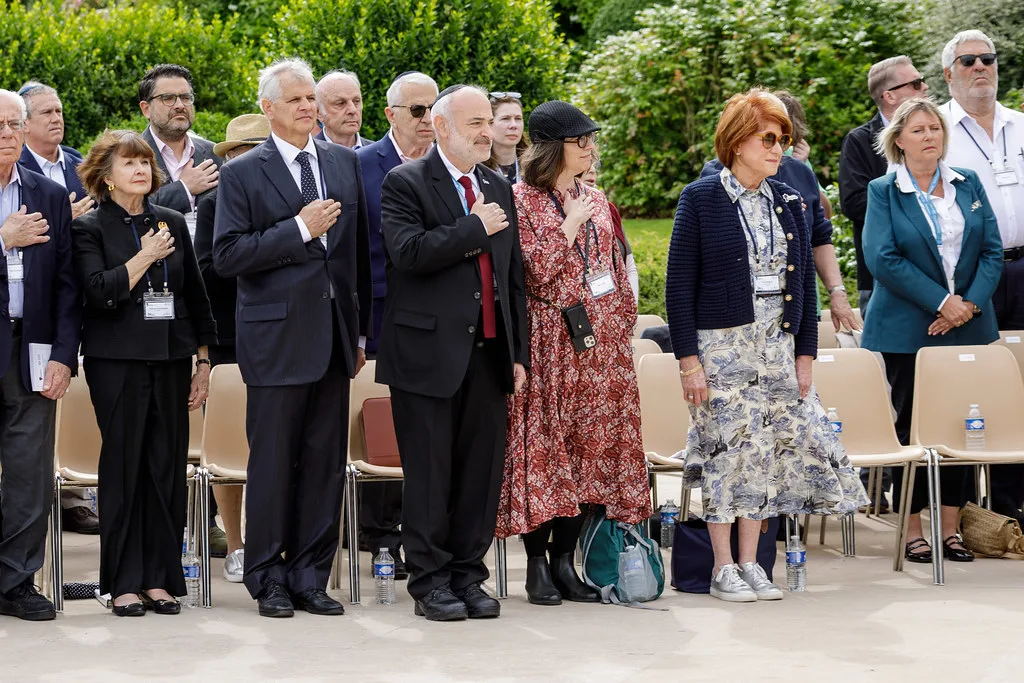
ABMC has offered free summer guided tours here. It has also taken part in European Heritage Days in September. Programming and dates change each year, so see ABMC's events listing for the next season.
Related American WWI cemeteries compared
Meuse-Argonne is the largest in Europe. Three other ABMC World War I sites can fit a wider trip.
| Cemetery | Location | Best for |
|---|---|---|
| Meuse-Argonne | Romagne-sous-Montfaucon, Meuse | Largest burial count, Argonne battlefield trip |
| Aisne-Marne American Cemetery | Belleau | Belleau Wood and Château-Thierry area |
| Oise-Aisne American Cemetery | Seringes-et-Nesles | Visitors working through the Aisne sites |
| Suresnes American Cemetery: Visiting Guide From Paris | Suresnes, France | Shorter trip from Paris |
Frequently Asked Questions
What is the largest American cemetery in France?
Meuse-Argonne American Cemetery, at Romagne-sous-Montfaucon, holds the largest number of American military dead in Europe, with 14,246 burials. It covers 130.5 acres and is administered by ABMC.
What happened in the Battle of Meuse-Argonne?
The Meuse-Argonne Offensive was a major American operation in World War I, and most of those buried here died in it. A panel in the west loggia shows a map of the offensive. The visitor center's exhibits explain how it fits into the Great War.
Keep planning
Guides on the same trip






