
Lafayette Escadrille Memorial: Visitor Guide & History
What the Lafayette Escadrille Memorial is, where it stands near Paris, how to plan a visit and how it fits with other American WWI sites in France.
In this guide
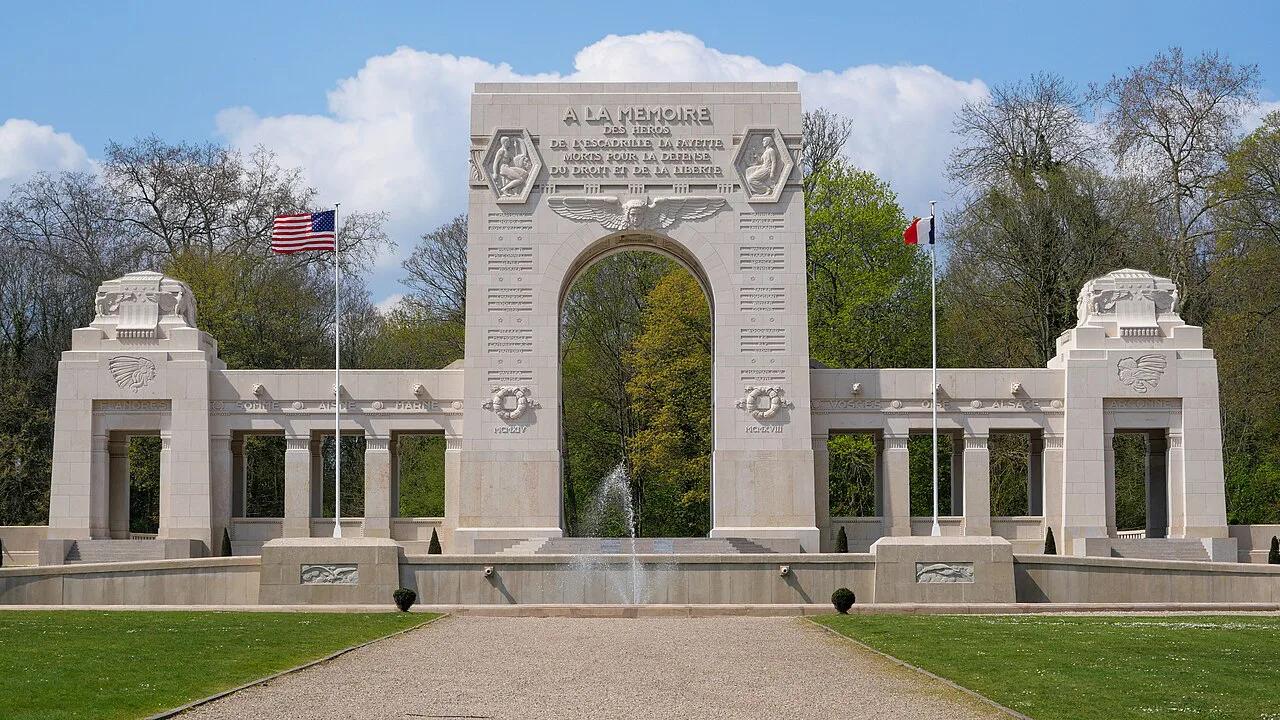
Last updated November 2026. The Lafayette Escadrille Memorial stands at Marnes-la-Coquette, west of Paris, and honors the American volunteer pilots of the Lafayette Escadrille. It contains a crypt with remains, and the American Battle Monuments Commission (ABMC) administers it. This guide covers what the site is, how it differs from nearby American sites, and what to check before you go.
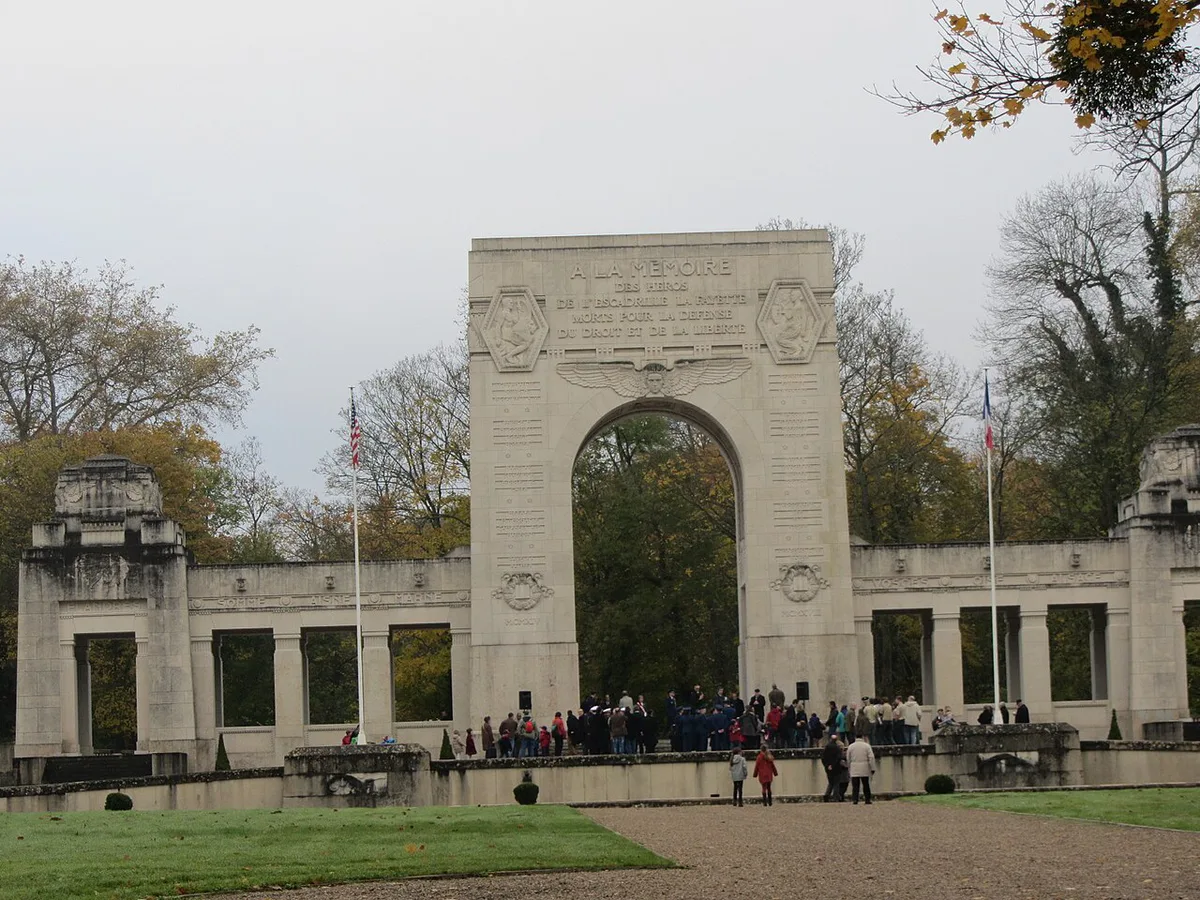
Featured image: Asticoco, CC BY-SA 4.0, via Wikimedia Commons.
What the Lafayette Escadrille Memorial Is
The memorial commemorates the Americans who flew for France in the Lafayette Escadrille. It sits at Marnes-la-Coquette, west of Paris, and includes a crypt with remains. ABMC lists the site as the Lafayette Escadrille Memorial Cemetery, so you will see both names online.
Congress established ABMC in 1923. The commission now administers 26 overseas military cemeteries and 32 memorials, monuments and markers. This is one of them, and it is a place of remembrance rather than a conventional attraction.
Who the Lafayette Escadrille Were
The Lafayette Escadrille was a squadron of American volunteer pilots who flew in the French air service during the First World War. They served before the United States entered the war. The memorial exists to honor those airmen.
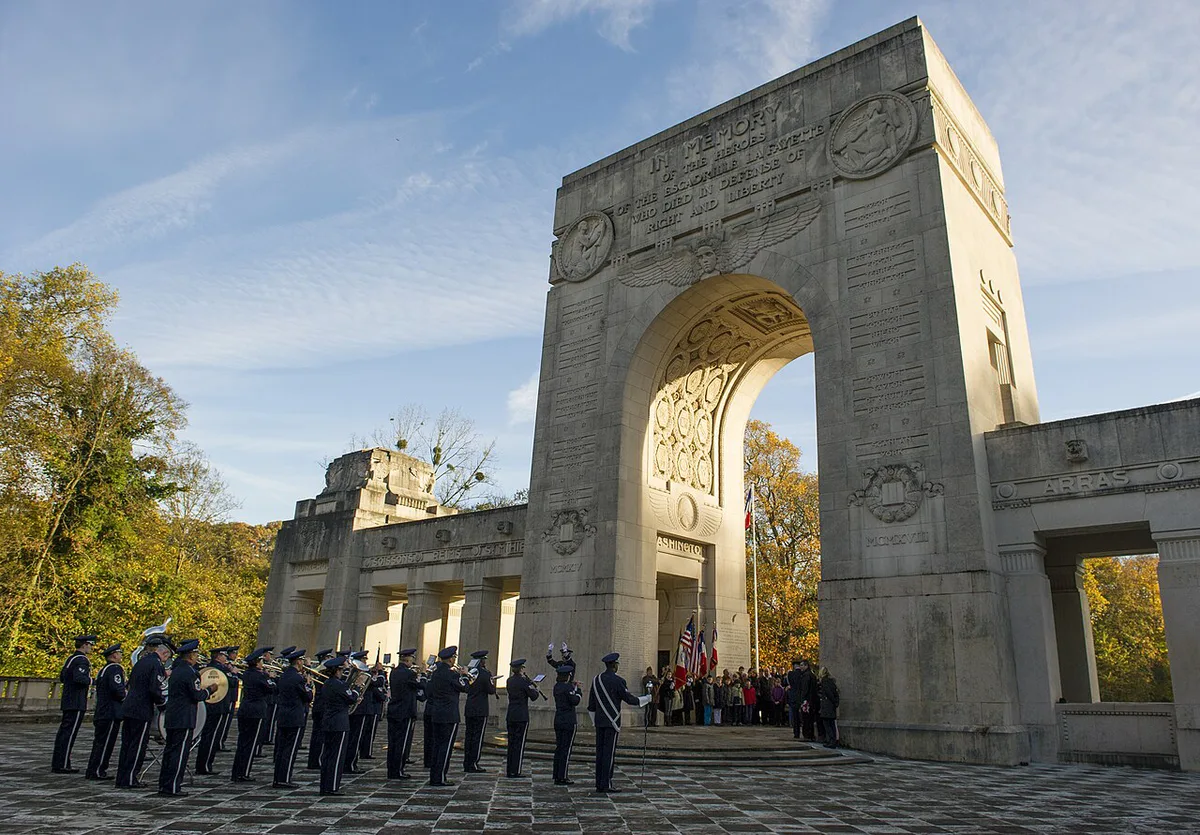
For the wider story of American forces in France, start with our overview of American WWI sites in France. It shows how this small Paris-area memorial relates to the large battlefield cemeteries further east.
Escadrille vs Flying Corps: Names to Know Before Visiting
Two similar names cause confusion. The Lafayette Escadrille was a single French fighter squadron. The Lafayette Flying Corps is the broader term for the Americans who trained and served as pilots in French aviation, many of them in other French squadrons. Every American in the squadron belongs to that wider story, but most Flying Corps pilots never flew with the Escadrille. Keep this in mind when you compare names or casualty figures from different sources.
The squadron, numbered N.124 when it was formed, was first known as the Escadrille Américaine. The name changed after Germany objected that it advertised American involvement while the United States was still neutral. French officers led the unit, with Georges Thénault as its commander. After the United States joined the war, the squadron passed into American service as the 103rd Aero Squadron.
These names are useful to know:
- William Thaw: a founding member who later led the 103rd Aero Squadron.
- Norman Prince: one of the main advocates for an all-American squadron. He died of injuries from a flying accident during the war.
- Kiffin Rockwell: scored the squadron's first aerial victory and was later killed in combat.
- Victor Chapman: the first of the squadron's pilots to be killed.
- Raoul Lufbery: the squadron's best-known ace, who died after moving to the US Air Service.
- Eugene Bullard: a pioneering Black American military pilot. He flew in French aviation as part of the wider Flying Corps, not in the Escadrille itself.
The squadron also kept two lion cubs, Whiskey and Soda, as mascots. For more background, see the Lafayette Escadrille history on Wikipedia.
What You Will See On Site
The central feature is the crypt that holds the remains of the pilots honored here. ABMC maintains the grounds as it does at all of its sites.
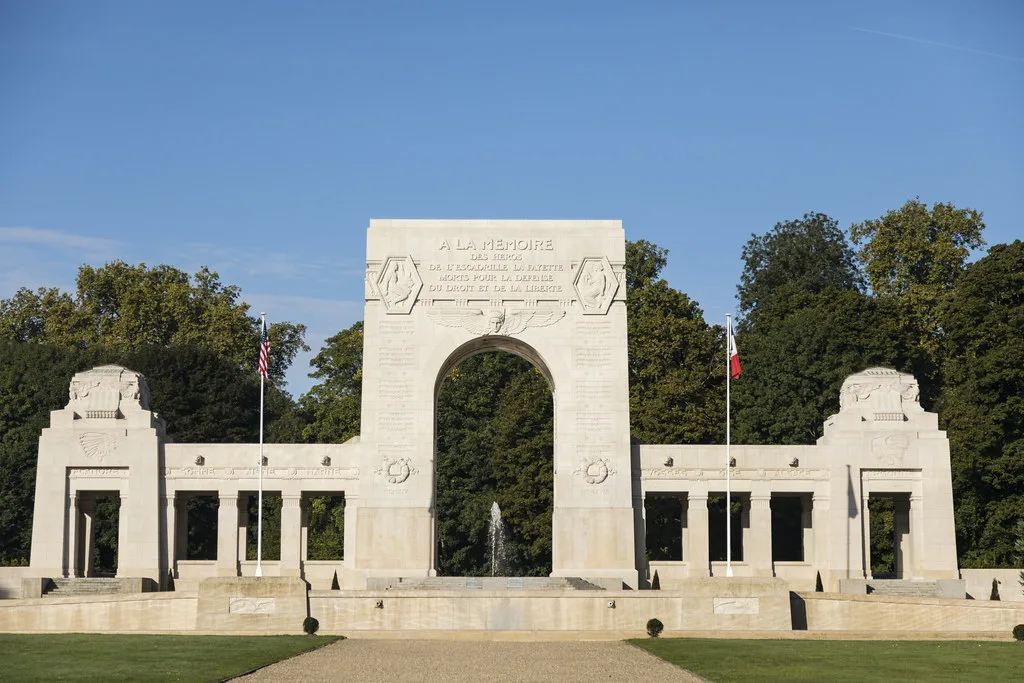
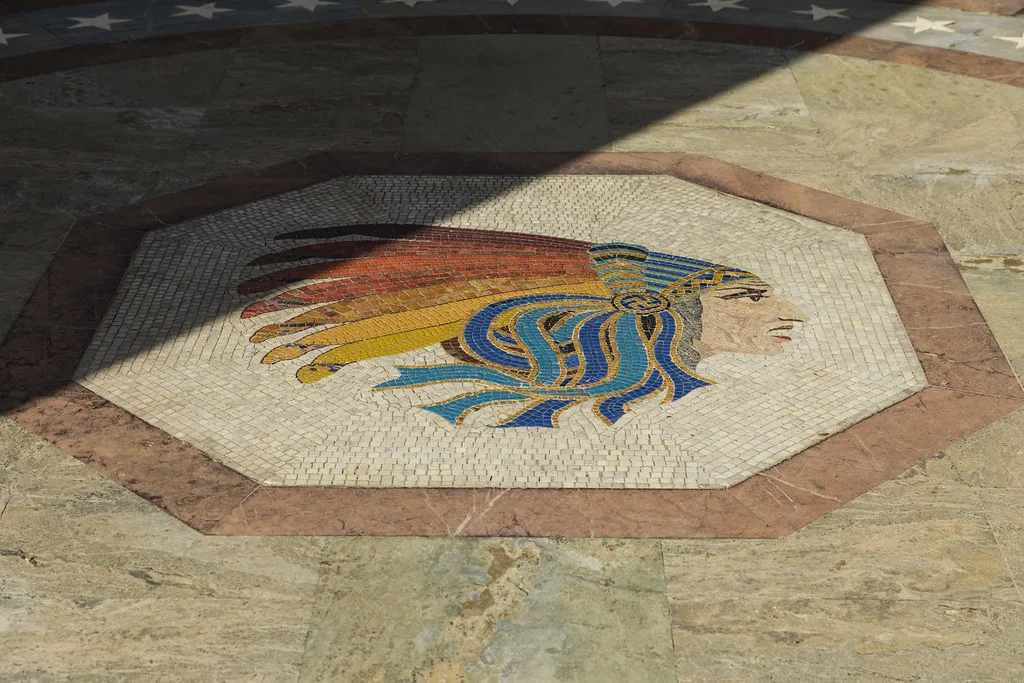
Details such as architecture, inscriptions and the number of burials are best taken from ABMC's own site page. If you cannot travel, ABMC runs a 360° virtual tour of the memorial.
- Crypt with remains of the honored airmen
- Grounds maintained by ABMC
- Remote option: the ABMC 360° virtual tour
The Memorial's Design and Dedication
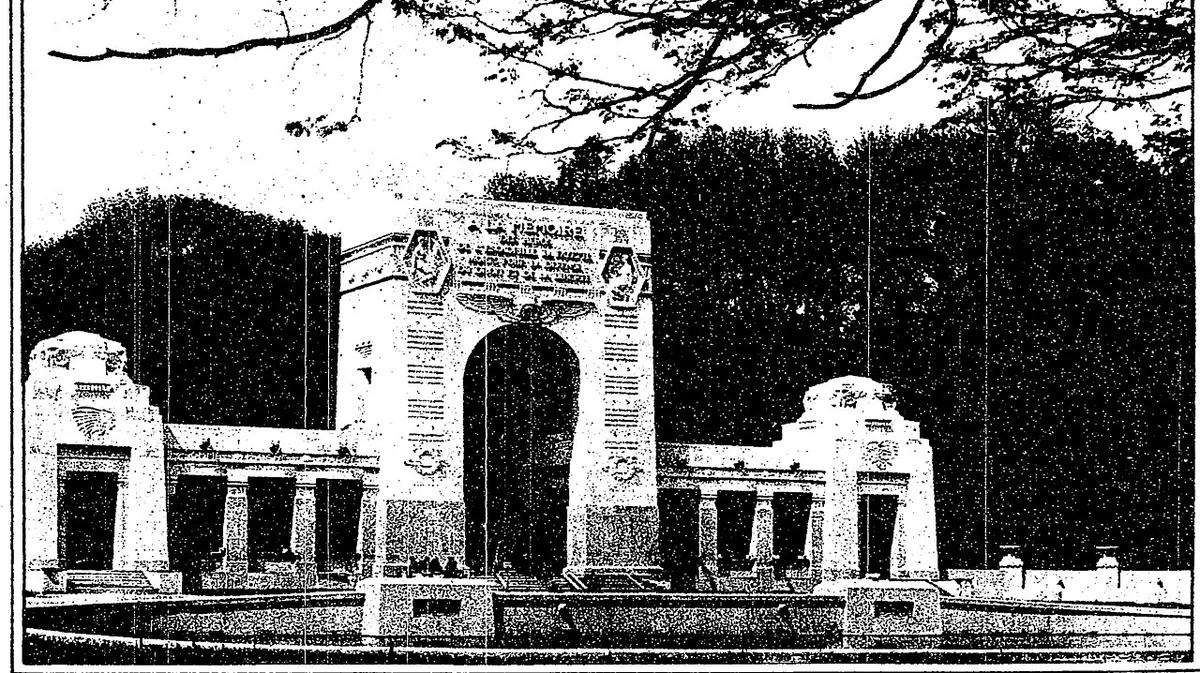
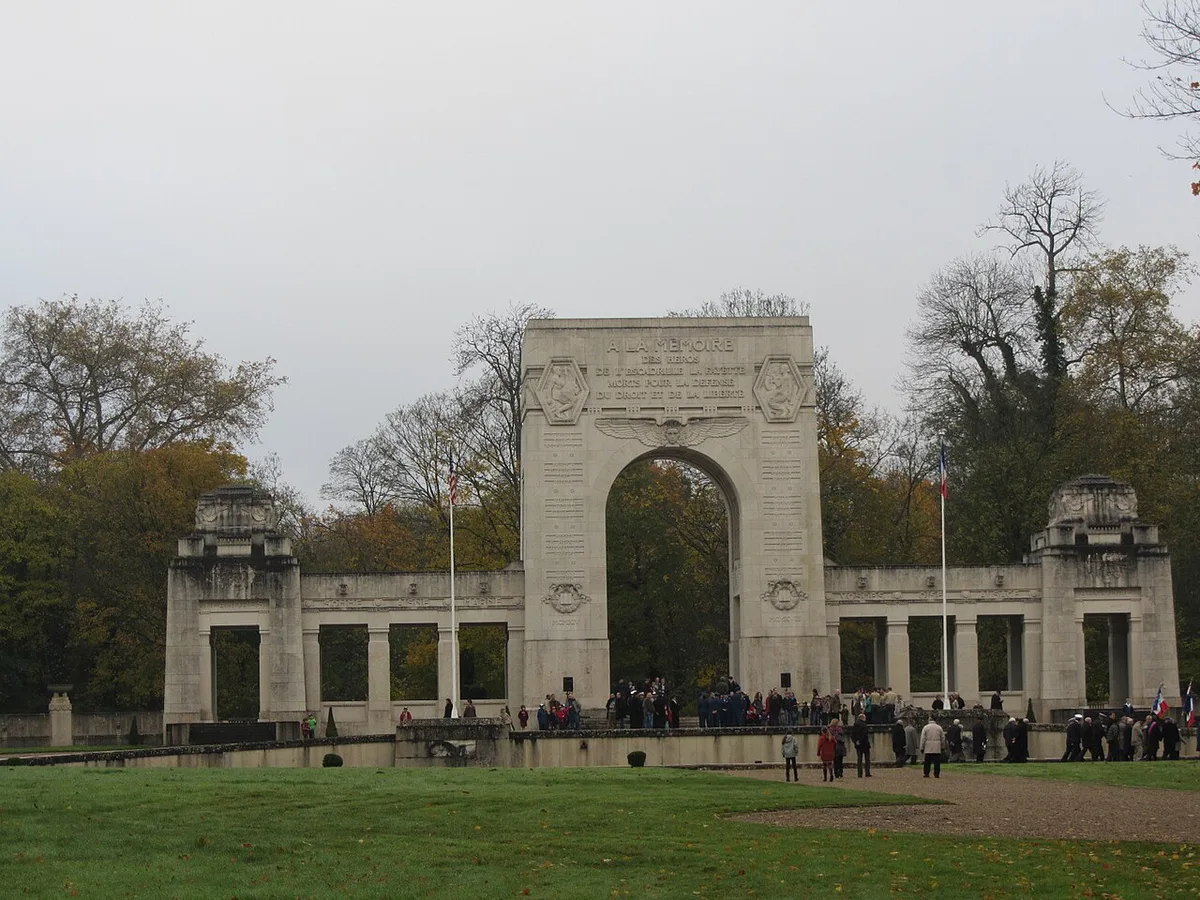
Knowing the background helps you read the monument when you stand in front of it. French architect Alexandre Marcel designed it. Its centerpiece is a monumental stone arch that recalls the Arc de Triomphe in Paris on a smaller scale, with colonnades extending to either side and a pool in front. The crypt lies beneath the monument.
The memorial was dedicated on the Fourth of July, a decade after the war's final year. It was conceived both as a tribute to the American volunteer airmen and as a burial place for those who died, and its scope reaches beyond the single squadron in its name to the wider Lafayette Flying Corps. A name connected with the memorial may therefore belong to a pilot who never served in N.124.
The design also speaks to the link between France and the United States. The squadron's name honors the Marquis de Lafayette, the French officer who fought for the American side in the Revolutionary War. The American volunteers' service in French uniform was widely seen as a return of that support.
The American Battle Monuments Commission took on responsibility for the site long after its dedication, so older books and photo captions may describe it without mentioning the commission. For current information on what visitors can enter, including the crypt, rely on the commission's own site page.
Getting There From Paris
Marnes-la-Coquette lies west of Paris, so this is a short trip out of the city. We have no verified route, journey time or parking details to quote here. Check ABMC's site page and a current Île-de-France transit planner before you travel.
No route or journey time is verified here, so the 360° virtual tour is the remote option if the trip out from Paris does not suit you.
Opening Hours, Entry And Visitor Rules
We have no confirmed opening days, hours or entry rules to state here. Check the ABMC site page for current hours, closures, photography rules and whether crypt access needs an appointment.
Pair It With Other WWI Sites
Many visitors link this memorial with other American sites. Photo archives tag the memorial under Suresnes, which is why it gets confused with the Suresnes American Cemetery: Visiting Guide From Paris. They are separate ABMC sites, so plan each as its own stop.
The table shows how the other sites in our guides differ. A short visit near Paris suits a half day. The Argonne sites are further out and are better planned as a dedicated day or an overnight stay.
| Site | Area | Best for | Effort from Paris |
|---|---|---|---|
| Lafayette Escadrille Memorial | West of Paris | A short, quiet stop honoring the airmen | Low |
| Suresnes American Cemetery: Visiting Guide From Paris | Paris area | A larger ABMC cemetery close to the city | Low |
| Aisne-Marne American Cemetery, Belleau Wood: Battlefield, Cemetery and Visitor Guide (France) and Château-Thierry monument | East of Paris | The 1918 fighting near the Marne | Medium, a day trip |
| Oise-Aisne American Cemetery | North-east of Paris | An alternative day trip | Medium, a day trip |
| Meuse-Argonne American Cemetery, Montfaucon monument and Lost Battalion site | Meuse and Argonne | The largest American offensive of the war | High, a full day or overnight |
Visitor Etiquette And Mistakes To Avoid
Treat the memorial as a burial place. Keep voices low and follow any rules posted at the entrance. Check ABMC's site page for the memorial's own photography and drone rules.
- Confusing it with the Suresnes American Cemetery: they are separate sites.
- Assuming it is open at all times: check ABMC for current hours.
- Treating it as a sightseeing stop: it is a memorial with a crypt.
- Skipping the remote option: the 360° tour works if you cannot visit.
Keep planning
Guides on the same trip






