Monte Cassino: Abbey, Battle and How to Visit
A practical guide to Monte Cassino: the rebuilt abbey, the 1944 battle, how to get there from Rome, and how to plan your visit.
In this guide
Last updated November 2026: Monte Cassino is the Benedictine abbey on a rocky hill above the town of Cassino, about 80 miles (130 km) southeast of Rome. Allied bombers left it in ruins on 15 February 1944 during the second of 4 battles for the Gustav Line, and it was rebuilt after the war. Our guide shows how to visit, how the abbey, battlefield and cemeteries fit together, and where the WWII sites across Italy continue.
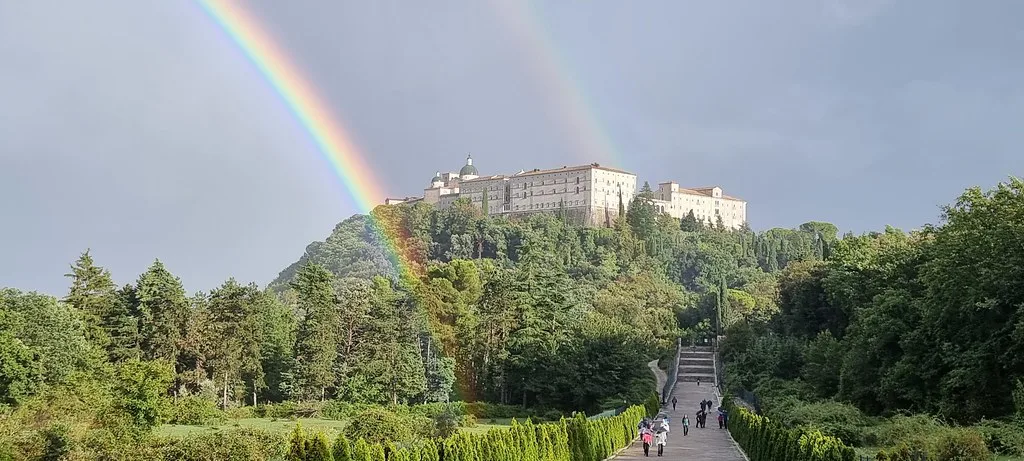
Featured image: avinashkunnath, CC BY 2.0, via Flickr.
Monte Cassino at a glance
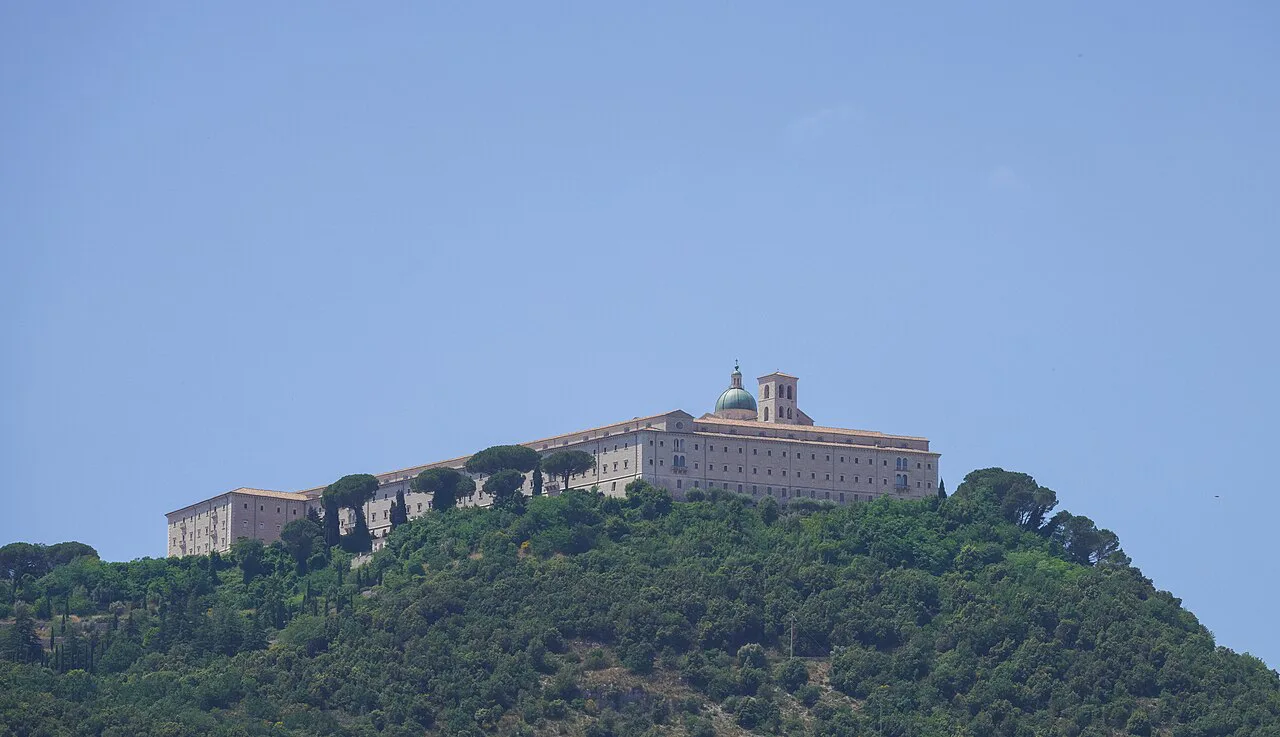
Monte Cassino, also written Montecassino, is the first house of the Benedictine Order. Benedict of Nursia established it around 529, and the Rule of Saint Benedict was composed for its community. Its hill overlooks Cassino and the southern entrance to the Liri Valley. Highway 6 (the Via Casilina) runs through that valley toward Rome.
Three different things share the name, and visitors often blur them. Separate them before you plan your day.
- The abbey: a working Benedictine monastery with a museum, open to visitors on published hours.
- The battle: 4 Allied assaults on the Gustav Line between 17 January and 18 May 1944.
- The battlefield: the ground around Cassino, including the river crossings, ridgelines and war cemeteries.
Which Monte Cassino visit fits you
Pick the visit first, then the transport. Effort and cost levels are relative, because guide fees and fares change by season and operator. Most first-time visitors fit the second row. Adding Anzio turns any row into a 2-day trip.
| Visit | Time | Effort | Cost level | Best for |
|---|---|---|---|---|
| Abbey and museum only | Half day | Low: 1 hilltop stop | Lowest | First-time visitors, pilgrims and history readers |
| Abbey plus cemeteries | Full day | Medium: several stops | Medium | Visitors who want to pay respects at war graves |
| Full battlefield with a guide | Full day | Medium to high: terrain walking | Highest | Readers of the Gustav Line, river crossings and ridgelines |
| Veteran-family research visit | 1 to 2 days | High: research before you travel | Medium to highest | Descendants tracing a unit's sector |
Visiting the Abbey of Monte Cassino
Visitors find the abbey on Via Montecassino in Cassino. Published listings checked in November 2026 give hours of 9:30 a.m. to 4:50 p.m. Monday through Saturday and 9:30 a.m. to 5:15 p.m. on Sunday. Seasons change those hours, so confirm them on the abbey's official site before you go. Entry fees, separate museum hours and any dress code are posted there too.
Abbey hours run 9:30 a.m. to 4:50 p.m. Monday through Saturday. Add the 1.5 to 2 hour train from Rome before you set a start time.
Treat the hilltop as a monastery first and a sight second. Dress modestly, keep your voice low, and ask staff about photography before you raise a camera.
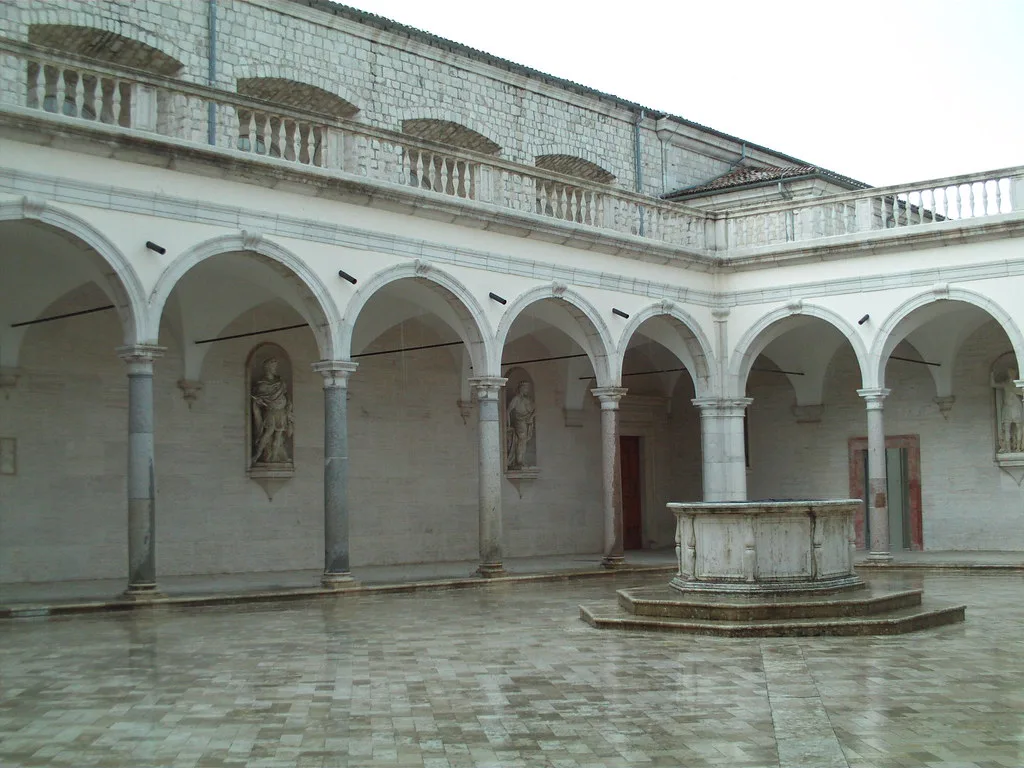
A museum founded in 1980 fills 14 exhibition rooms. Two surviving fragments of Byzantine mosaic from the 11th-century church, both showing greyhounds, are on display there. Other highlights are listed below.
- Archaeological material from the Bronze and Iron Ages
- Architectural fragments from the medieval monastery
- Illuminated manuscripts and books from the abbey archive and library
- A Longobard cross in gold filigree and an ivory casket of Norman art
- A painting of the Madonna of the Cintola by Brescianino
- Gifts from donors who helped fund the post-war reconstruction
A rebuilt abbey, not a medieval one
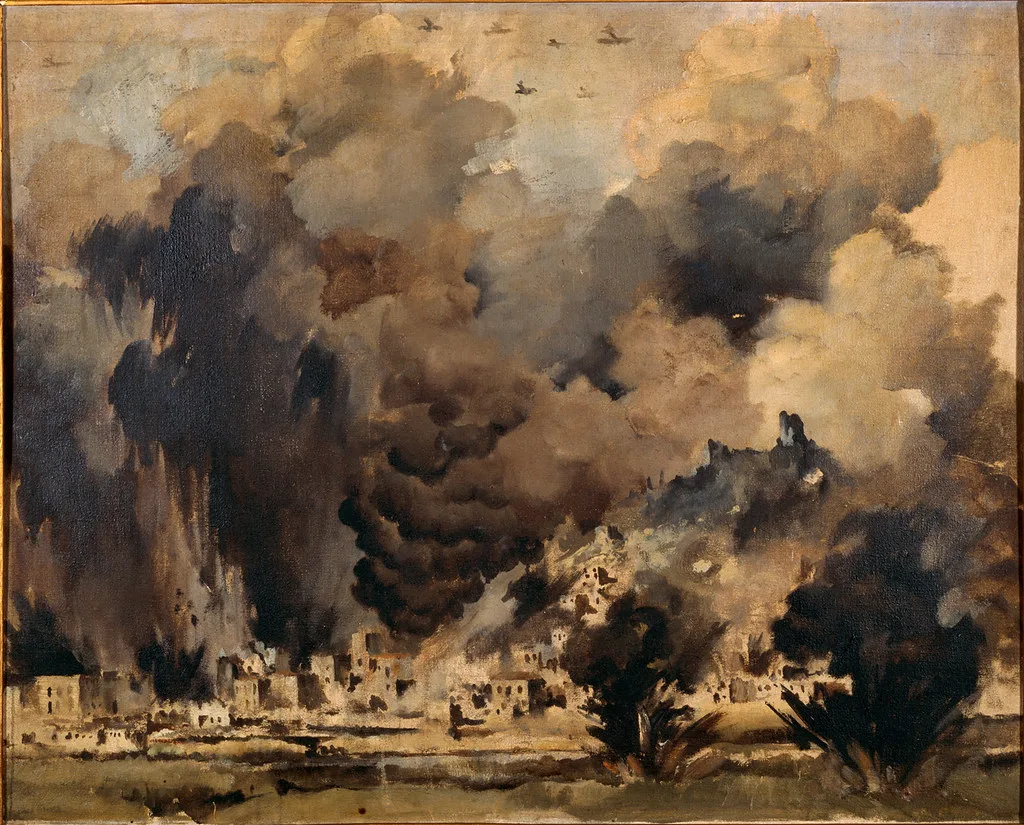
Allied bombers dropped 1,400 tonnes of high explosives on the abbey on 15 February 1944. Field Marshal Albert Kesselring had told the Vatican and the Allies in December 1943 that German units would not use it. Commanders still ordered the raid after reports from British Indian Army officers suggested German troops were inside. No German troops were present during the bombing. Later investigations found that the only people killed in the monastery were 230 Italian civilians seeking refuge there. German paratroopers then occupied the ruins, which gave better cover than an intact building.
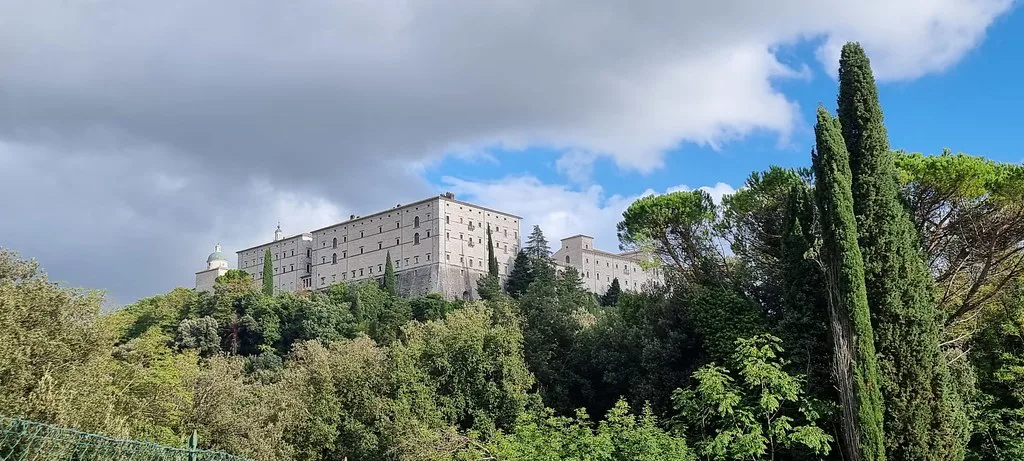
Rebuilding took about 20 years. President Luigi Einaudi gave considerable support in the early 1950s. Pope Paul VI consecrated the rebuilt basilica on 24 October 1964. Excavations after 1944 also exposed traces of the oratories of St. Martin and St. John the Baptist, which match the account of Benedict's foundation. Expect careful reconstruction, not medieval stonework.
The abbey in brief: from Benedict to the rebuilding
Benedict founded the community on a hill that had held the Roman settlement of Casinum. Gregory the Great's account places an older temple of Apollo on the summit. Abbot Desiderius (1058 to 1087) later led the abbey to the peak of its fame, and three popes came from its monks. Destruction in 1944 was the latest of several; the dates below set out the sequence.
- Around 529: Benedict of Nursia establishes the monastery.
- Around 718: Abbot Petronax re-establishes it after the first monastery was abandoned.
- 1071: Pope Alexander II consecrates the church rebuilt under Desiderius.
- 1349: an earthquake damages the abbey.
- 1799: French troops sack it.
- 1866: the Italian government dissolves the abbey, and it becomes a national monument.
- 15 February 1944: Allied bombing destroys most of the buildings.
- 24 October 1964: Pope Paul VI consecrates the rebuilt basilica.
The Battle of Monte Cassino in plain terms
German forces anchored the western half of the Winter Line on the Rapido-Gari, Liri and Garigliano valleys. Together with surrounding peaks and ridges, those features formed the Gustav Line, which stretched about 100 miles (161 km) from the Tyrrhenian to the Adriatic coast. Monte Cassino overlooked Highway 6 and blocked the direct road to Rome. Observers on the heights could direct accurate artillery fire at any Allied movement below. Use the table below as a map of the 4 assaults, which ran from 17 January to 18 May 1944.
| Assault | Name | What to know |
|---|---|---|
| First | Not named | British X Corps crossed the Garigliano on 17 January 1944. US II Corps attacked across the Gari on 20 January, and the US 36th Division lost 2,100 men killed, wounded and missing in 48 hours. |
| Second | Operation Avenger | Includes the bombing of the abbey on 15 February 1944. |
| Third | Operation Dickens | Allied attacks against German paratroopers who held the ruins. |
| Fourth and final | Operation Diadem | Final Allied push, with the Polish II Corps assault on 16 May and the Polish flag raised over the ruins on 18 May 1944. |
The fourth battle and the Polish flag
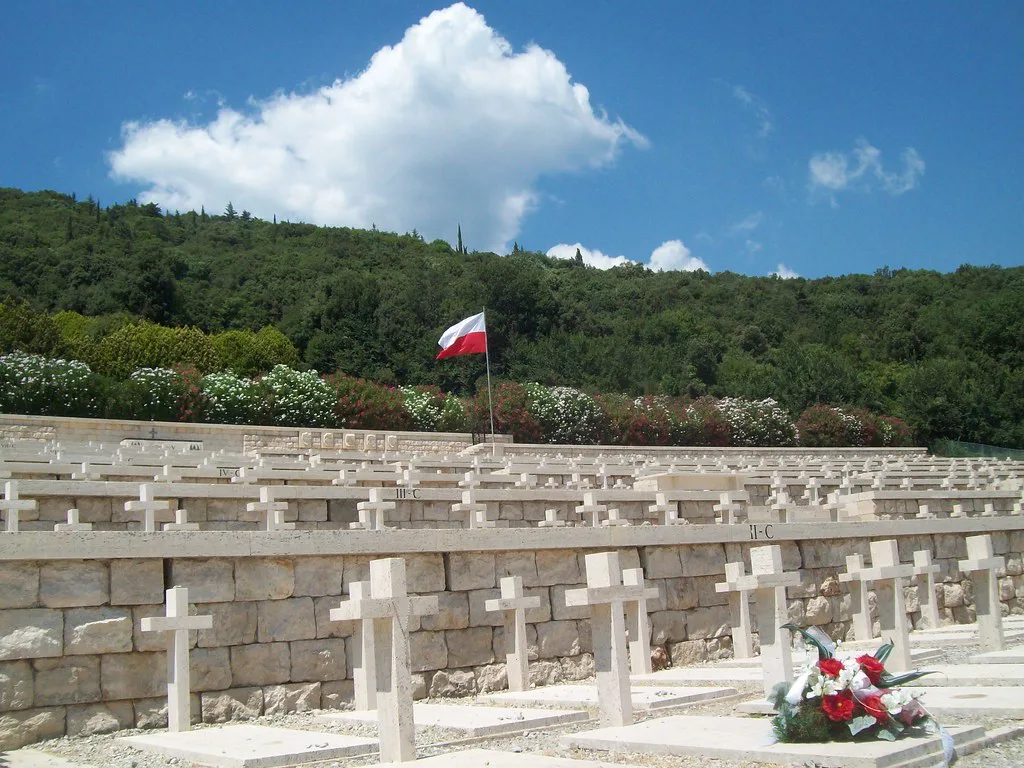
Polish II Corps soldiers launched one of the final assaults on 16 May 1944. It formed part of a 20-division attack along a 32 km (20-mile) front. The first flag raised over the ruined monastery, at 10:20 a.m. on 18 May 1944, was Polish. A British flag followed shortly after. German defenders were then driven from their positions, and the Senger Line collapsed on 25 May.
Casualty estimates differ widely between historians, so treat any single total with caution. The Allied side drew on troops from many nations, listed below.
- US Fifth Army and British Eighth Army commands
- United Kingdom, India and Newfoundland
- United States
- Free France
- Poland
- Canada
- New Zealand
- South Africa
- Italy
The battlefield and war cemeteries
Ground reading beats any summary at Cassino. From the town you can see how Monastery Hill commands the Liri Valley and Highway 6. The same view explains why river crossings on the Rapido-Gari proved so costly. Point 593 is among the most fiercely contested positions of the battle.
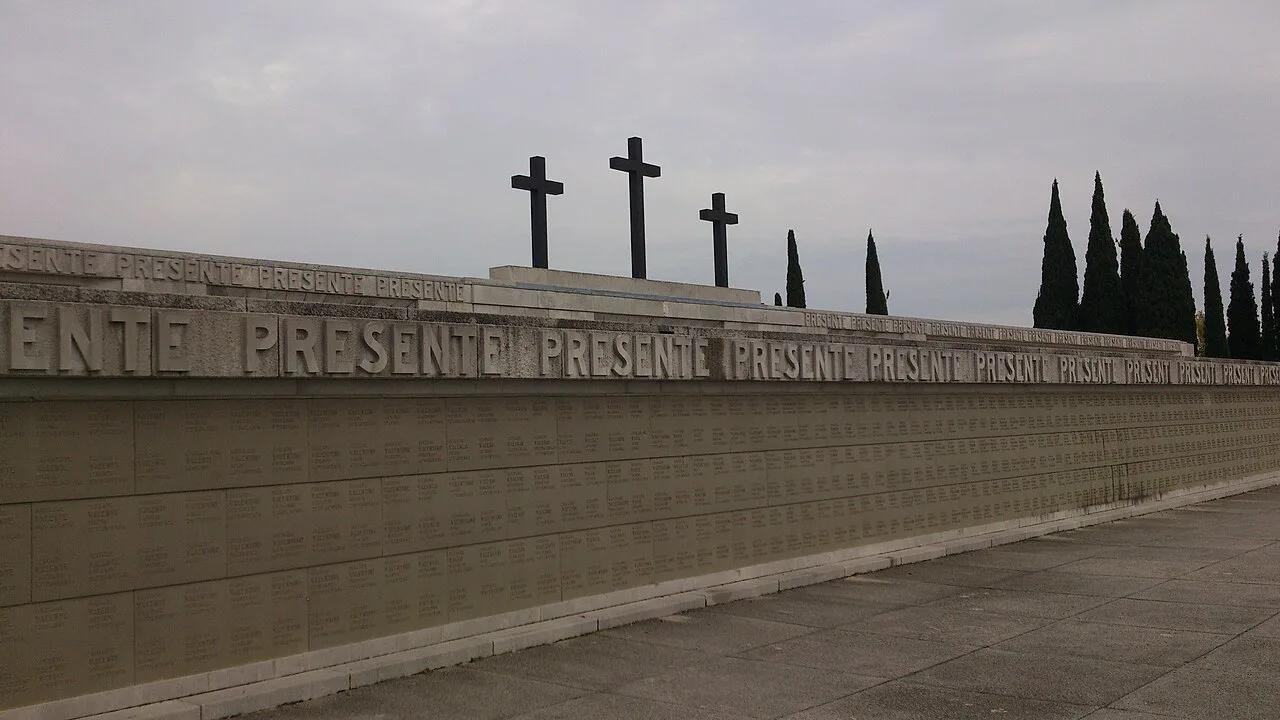
War graves lie around Cassino for several nations, including Commonwealth, Polish and German dead. Our guide to the war cemeteries at Cassino covers each cemetery and its visiting rules. German burials are documented by the Volksbund war graves service.
Cemeteries are places of mourning. Keep your voice low, and follow each cemetery authority's published conduct rules.
- Monastery Hill and the rebuilt abbey
- Highway 6 (the Via Casilina) through the Liri Valley
- The Rapido-Gari river crossings
- Point 593
- The war cemeteries
Planning a veteran-family research visit
Descendants get the most from a visit when the research comes first. Gather unit records, morning reports and letters before you travel, then identify the division and sector. US families often start with the 34th Infantry Division north of Cassino or the 36th Infantry Division at the Rapido-Gari crossing. Match that sector to the cemetery where your relative's unit or nationality is commemorated. The ordered plan below keeps the day calm.
- Identify the unit and sector from records before you book anything.
- Visit the relevant cemetery first, while the day is quiet.
- Walk the sector on the ground: a river crossing, ridge or town street.
- Finish at the abbey and museum, leaving time before the published closing hour.
How to get to Monte Cassino
Direct regional trains run from Rome or Naples to Cassino station in roughly 1.5 to 2 hours. Regional tickets are sold on the day, so you rarely need to reserve ahead. Naples lies 65 miles (105 km) south of Cassino. For timetables and the train day itself, read our Rome-to-Cassino trip guide.
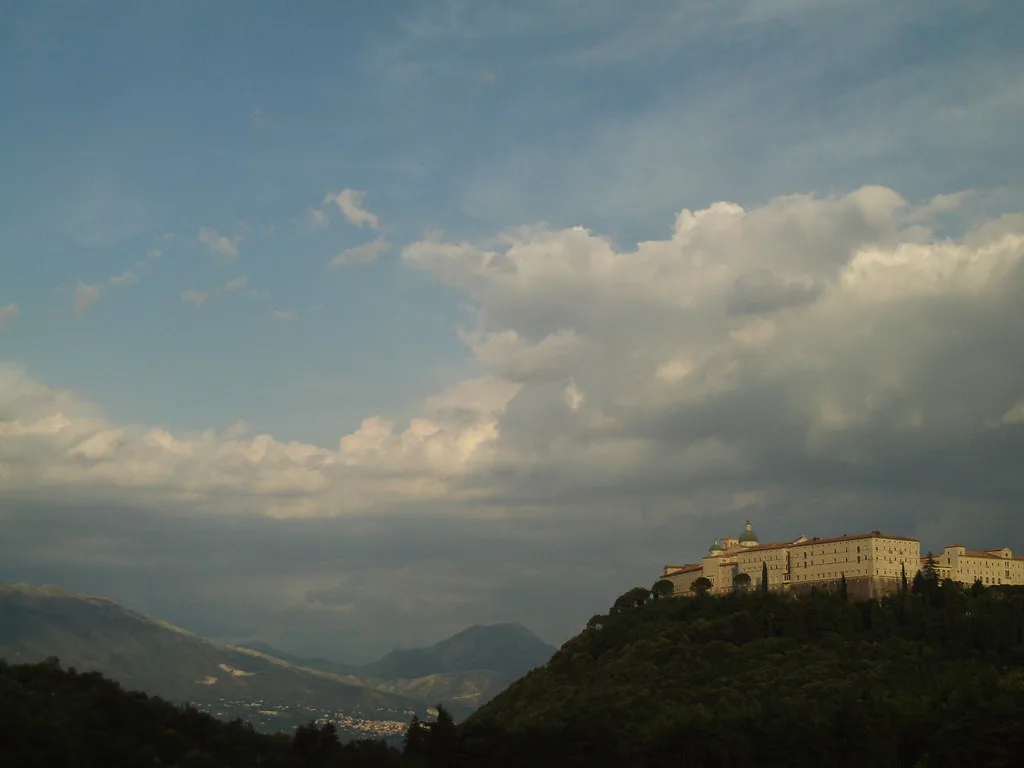
Cassino station is not within walking distance of the abbey. The hill rises above the town, so plan a taxi or a tour transfer for the climb. No verified bus timetable is available for that stretch, so agree the fare and pickup with a local operator before you travel. Start with Lazio's regional tourism pages for local contacts.
| Option | How it works | Trade-off |
|---|---|---|
| Train plus taxi | Regional train to Cassino station in about 1.5 to 2 hours, then a taxi or arranged transfer up the hill | No car needed, but train and transfer times set your day |
| Guided private tour | Pickup arranged in advance, with a guide who reads the terrain | Highest cost, fewest logistics, and it reaches cemeteries and sectors |
| Rental car | Drive to Cassino, where Highway 6 (the Via Casilina) runs through the Liri Valley below the hill | Most flexible for scattered sites; check parking at the abbey first |
How much time to plan, and combining it with Anzio
Cassino and Anzio are about 3 hours apart by road. Squeezing both into 1 day leaves too little time at either. Allied planners linked the two fronts, because the Anzio landing of 22 January 1944 was meant to unsettle the Gustav Line defenders from behind.
Our Anzio landing beaches and beachhead guide covers that sector. Day-trip logistics sit in the Anzio day trip from Rome page. Split the 2 sectors across 2 days, as set out in the table.
| Time available | What it covers | Notes |
|---|---|---|
| Half day | Abbey and museum | Suits a train day from Rome with a pre-arranged transfer |
| Full day | Abbey, cemeteries and 1 or 2 battlefield sectors | Best fit for most first-time visitors |
| 2 days | Day 1 at Cassino; day 2 at Anzio and Nettuno | Stay overnight between the 2 sectors to shorten the road leg |
Guided tour or independent visit
A guide earns the cost when terrain is the point. Elevation, sight lines and river crossings explain why the Gustav Line held for about 4 months, and a map alone rarely shows that. Independent visitors can still do the abbey and cemeteries well with preparation. Our guided battlefield visit page covers formats and what to ask a guide.
- Choose a guide to read terrain and sight lines on the ground.
- Choose a guide for veteran-family research tied to a specific unit.
- Choose a guide to reach scattered sectors without a car.
- Go independent for the abbey and museum on a half day.
- Go independent for a short, quiet cemetery visit at your own pace.
Mistakes to avoid at Monte Cassino
Four mistakes cost visitors the most time. Check them against your plan before you book.
- Assuming the abbey is within walking distance of Cassino station. It is not, so arrange a taxi or transfer.
- Combining Cassino and Anzio in 1 day. The 3-hour road gap makes it a 2-day plan.
- Arriving without checking abbey hours. Published weekday closing is 4:50 p.m., and seasonal changes apply.
- Expecting medieval fabric. The basilica was reconsecrated on 24 October 1964 after reconstruction.
Practical tips and what to see next
Book the return train and the hilltop transfer together, so the abbey's closing time sets your schedule. Cassino is one chapter of a longer campaign. Allied forces landed in Sicily in July 1943 and at Salerno that September.
Start with the Sicily invasion beaches for the July landings. Read about the Salerno beachhead for the September landings. Later fighting moved north, as covered in the Gothic Line battles.
Graves from the Sicily and Rome campaigns lie at the American cemetery for Sicily and Rome. Florence has its own American cemetery at Florence. Both are maintained by the American Battle Monuments Commission.
In Rome, the Ardeatine Caves memorial is a place of mourning. Its visiting details are published by the Italian Ministry of Defence.
Frequently Asked Questions
Is Monte Cassino still a monastery?
Yes. A Benedictine community still lives at the abbey, which remains a territorial abbey. In October 2014 Pope Francis removed 53 parishes from its jurisdiction, limiting it to the abbey itself. A community of 13 monks was reported as of 2015.
Who finally took Monte Cassino?
Polish II Corps soldiers launched one of the final assaults in Operation Diadem. A Polish flag was the first raised over the ruins, at 10:20 a.m. on 18 May 1944. A British flag followed shortly after, ending 4 assaults that began on 17 January.
Keep planning
Guides on the same trip