Florence American Cemetery: How to Visit and What to Know
Visiting the Florence American Cemetery: how to get there from Florence, how long to allow, what to expect, etiquette and how it fits into WW2 Italy.
In this guide
Last updated November 2026: the Florence American Cemetery is an American Battle Monuments Commission (ABMC) burial ground in the Tuscan hills south of Florence, near Falciani. It is a working memorial and a place of mourning, not a city-centre sight. Plan your transport before you go, because the site sits well outside the old town.
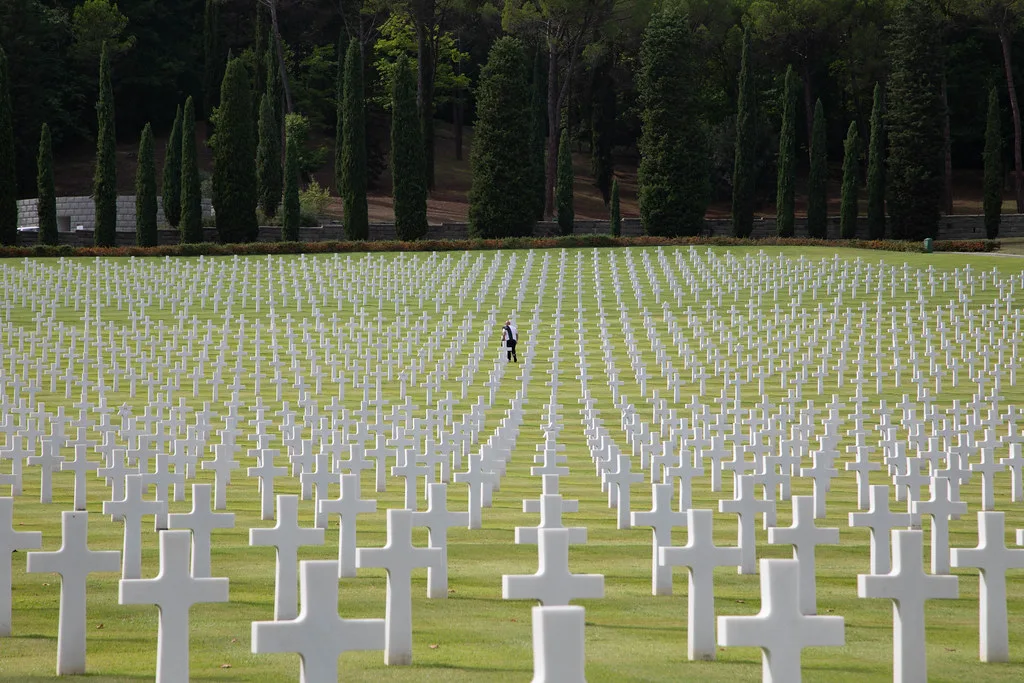
Featured image: SETAF-Africa, CC BY 2.0, via Flickr.
What the Florence American Cemetery is
The ABMC page for Florence American Cemetery describes a burial ground for US service members who died in the Gothic Line and Apennine campaigns. Rows of white marble headstones follow the curve of the hillside. Many graves are marked "Known but to God".
The cemetery also holds Tablets of the Missing and a chapel. Staff maintain the grounds daily, and families still visit. Treat the visit as a quiet pause in the day, not a photo stop. Our guide to WW2 sites in Italy shows where it sits in the wider story.
Cemetery Size, Burials and Design Background
The figures help you picture the place before you arrive. The American Battle Monuments Commission (ABMC) describes a site of about 70 acres (roughly 28 hectares), beside the Via Cassia south of Florence. The Greve stream and wooded hills frame much of it.
| Feature | What to know |
|---|---|
| Burials | More than 4,300 US war dead |
| Missing | More than 1,400 names commemorated |
| Campaign | Mostly those who died in the fighting after the capture of Rome |
| Architects | McKim, Mead & White |
| Managed by | ABMC, a US government agency |
The site began as a wartime burial ground. In the permanent cemetery, families' decisions shaped who stayed: next of kin could have a relative's remains returned to the United States or buried overseas. This means the headstones here don't represent every American who died in this part of Italy. If you are tracing a relative and can't find a grave, they may have been buried at home.
The same agency cares for American war cemeteries in other countries. For a sense of how they compare in scale, see our guide to the largest American cemetery in Europe.
Is it worth visiting?
Give a plain yes if the war in Italy interests you or you have a family link to someone buried here. Skip it if you have only 1 or 2 days in Florence and want the art museums. A visit needs a half-day with the transport included, so it rarely fits a rushed schedule.
Expect 1 or 2 days in Florence to leave little room: the visit takes a half-day once transport is counted.
- Worth the trip: you follow WW2 history, you have a relative or unit connection, or you have a spare half-day.
- Worth the trip: you are driving between Florence and Rome and can stop on the way.
- Safe to skip: your time is short and your priority is the Uffizi, the Duomo and the Oltrarno.
- Safe to skip: you expect a museum with guided exhibits, since this is a memorial, not a visitor centre.
How to get there from Florence
Florence American Cemetery is not in the city centre, and that is the biggest planning point. Choose the option that fits your day, then check current routes and timetables with the transit operator or the ABMC page. Fares and journey times change, so this guide gives none.
| Option | Effort | Flexibility | Best for | Check first |
|---|---|---|---|---|
| Own car or rental | Low once you are out of the city | High; you set your own time | Drivers combining Tuscany stops | Parking at the site and limited-traffic zones in Florence |
| Taxi or private driver | Low | Medium; agree a waiting time | Families and small groups | Return pickup arrangements |
| Public transport plus a walk | High | Low; depends on timetables | Independent travelers on a flexible day | Route, last return service and the final walk |
| Organized tour | Low | Low; fixed itinerary | Visitors without a car | Whether the cemetery is a real stop, not a drive-by |
What you'll see on site
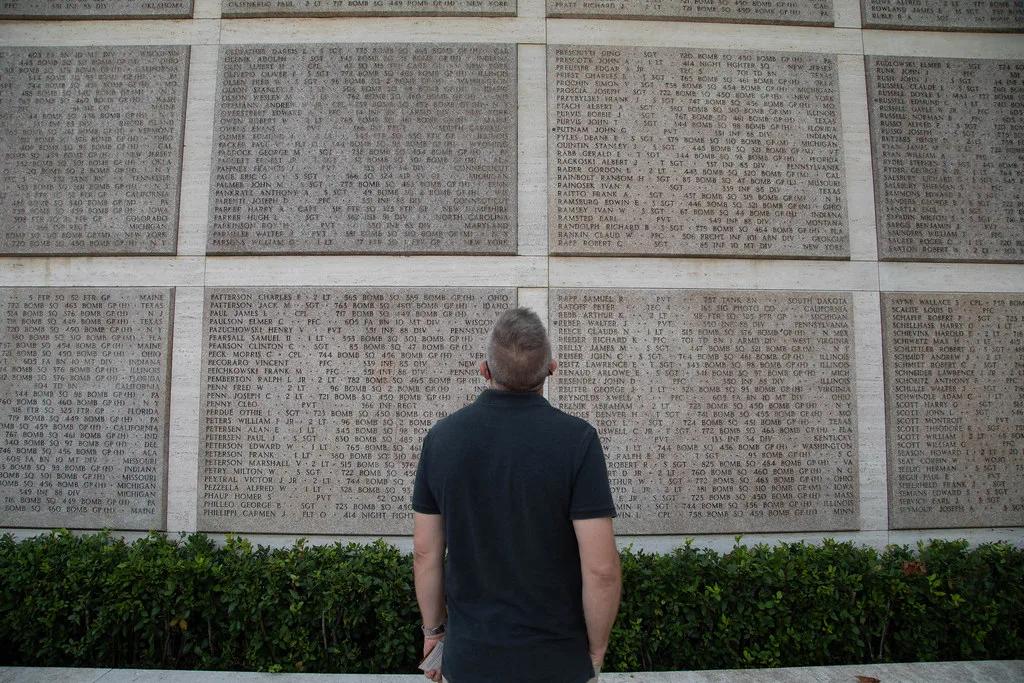
Expect an open, landscaped hillside with curved grave plots, the chapel and the Tablets of the Missing. The Tablets record names of Americans who have no known grave. You can preview the layout on the ABMC 360° tour before you leave. Walk slowly, read a few names and let the setting set the pace.
A Walking Route Through the Memorial and Graves
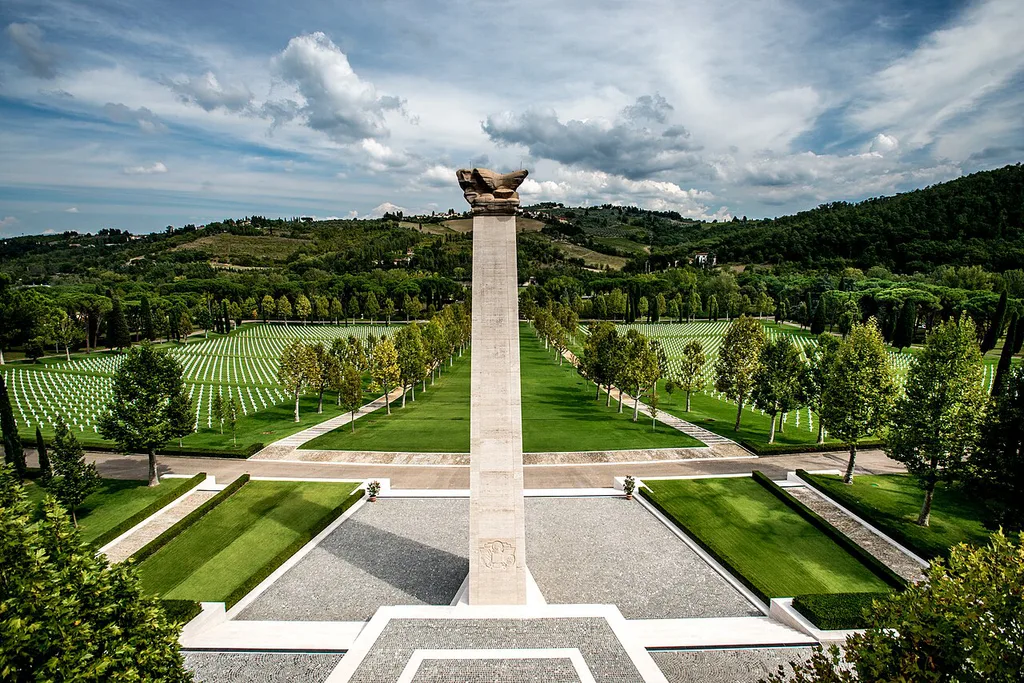
Knowing how the parts connect helps you avoid walking past the details. From the entrance, a bridge leads toward the burial area. The graves are set out in curving rows across the slope, with the memorial on higher ground beyond them.
- Headstones: Latin crosses and Stars of David mark the graves. Read across a row to see names, ranks, units, home states and dates of death. The people buried side by side often came from very different parts of the United States.
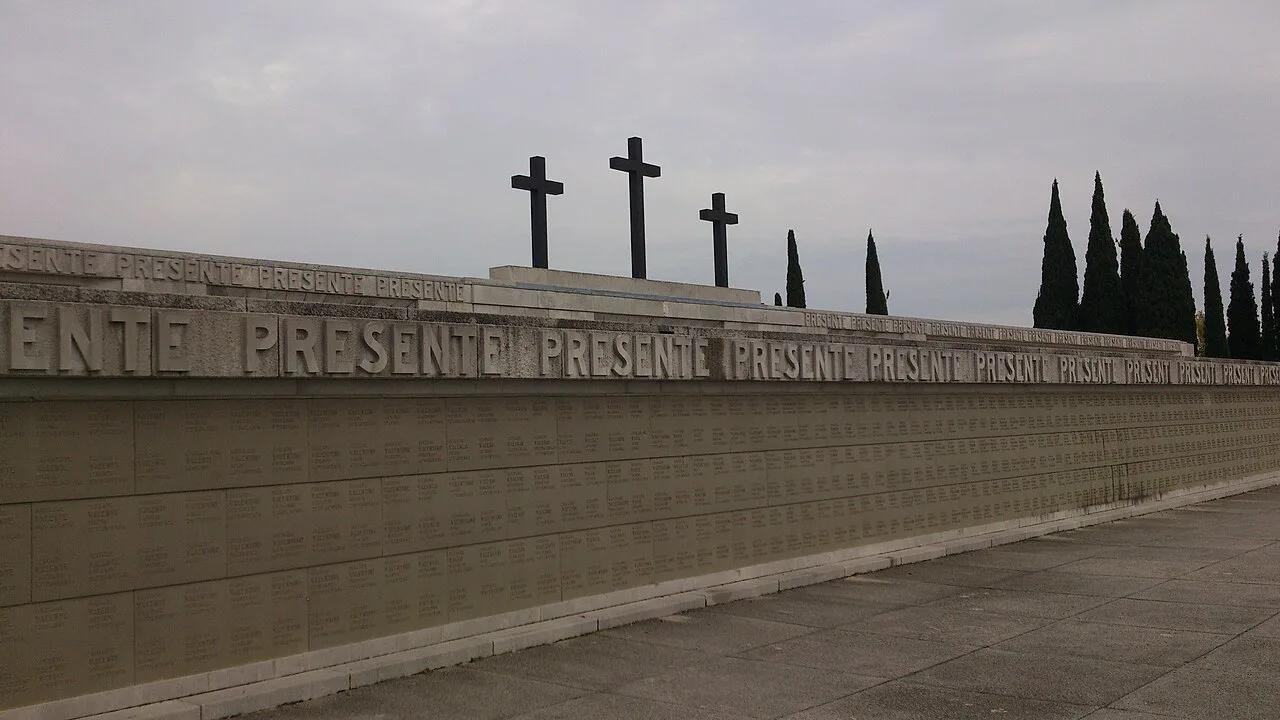
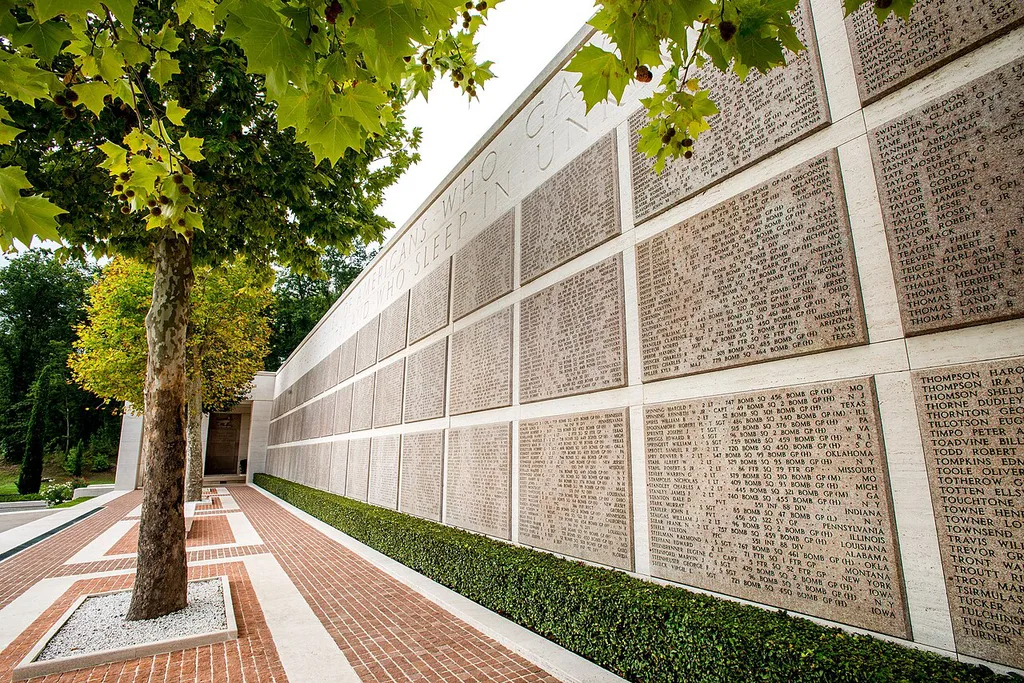
- Tablets of the Missing: The inscribed memorial wall links two open courts. A small rosette beside a name means that the person's remains were later recovered and identified.
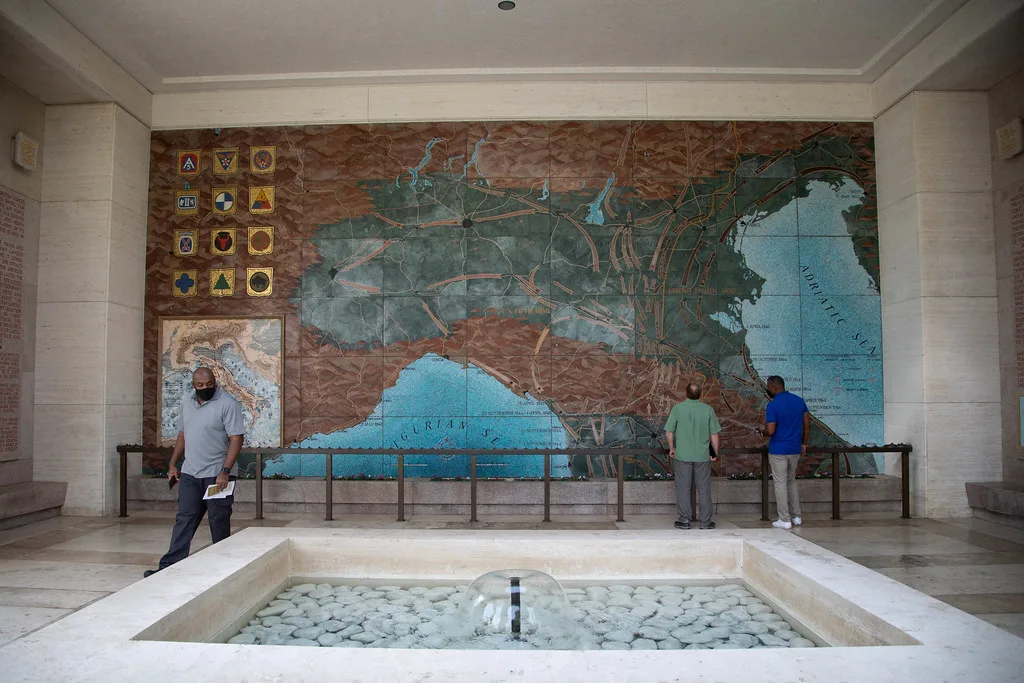
- Operations maps: Look for the large inlaid marble maps in the memorial. They show how American forces advanced through Italy, which is useful if you haven't read up on the campaign.
- Chapel: Step inside quietly to see its marble and mosaic decoration. People may be using it for private reflection.
- Pylon: The tall shaft topped by a sculpted figure is the memorial's main vertical landmark. Look back over the graves before you leave.
The ground rises, so wear comfortable shoes. In summer, bring water and a hat because the open burial area can feel exposed. If anyone in your group has limited mobility, ask the cemetery staff about access and vehicle assistance before the visit.
If you have also visited the Normandy American Cemetery in France, don't expect the same coastal setting or visitor facilities here. Plan around the memorial and the graves themselves.
Opening hours, entry and etiquette
Opening days, hours and holiday closures are set by the ABMC, so read the current notice on the official Florence page before you travel. Arriving close to closing time cuts your visit short. Public holidays can change access.
Dress as you would for a place of worship and keep your voice low. Photography of the grounds is common, but keep it discreet and never pose on or touch the headstones. Follow any rules posted at the entrance.
- Mistake: expecting a city-centre location. Fix: arrange transport in advance.
- Mistake: arriving just before closing. Fix: allow a full morning or afternoon.
- Mistake: travelling on a public holiday without checking. Fix: read the ABMC notice first.
- Mistake: treating it as a viewpoint. Fix: stay on paths and keep behavior respectful.
Finding a specific grave or family record
Use the ABMC burial search on its official site to locate a name, plot and section before you arrive. On site, staff can help you find a grave or a name on the Tablets of the Missing. Bring the full name, service number or unit if you have them. Email or call ahead if you want help from the staff during your visit.
The wider story: Gothic Line and the liberation of Florence
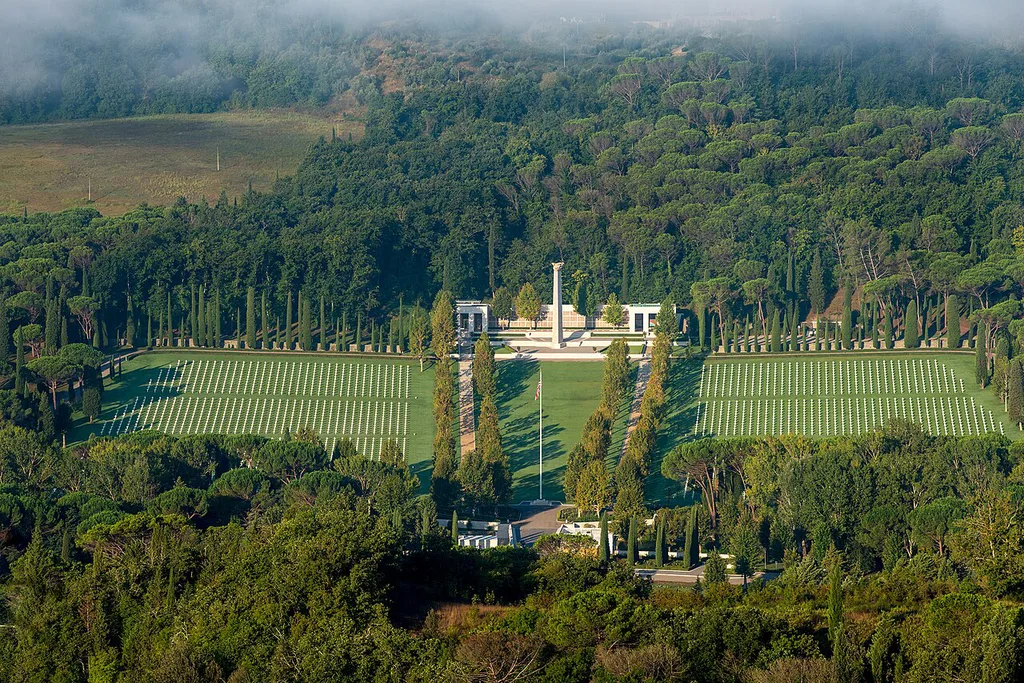
Most of the dead buried here fell in the fighting of 1944–45 in the northern Apennines. Our Gothic Line guide covers that campaign and where it ran. Reading it first makes the rows of headstones easier to place. Verify any figure against ABMC before you quote it, because published burial counts differ between sources.
Combine it with other WW2 sites in Italy
Pair the cemetery with a Florence day or a drive through Tuscany, and keep the visit as the quiet half of that day. Italy has other American burial grounds, and each tells a different campaign. The Sicily-Rome American Cemetery covers a separate set of operations.
Pair this stop with Monte Cassino and Anzio knowing that most of this cemetery's dead fell in 1944–45.
If you are heading south toward Rome, read about the Monte Cassino War Cemeteries: Which to Visit and How. Those are Commonwealth, Polish and German burial grounds, not American ones. Our Monte Cassino guide covers the abbey and the battle. For the Anzio landings, see the Anzio beachhead guide.
Keep planning
Guides on the same trip