Italian Chapel Orkney: Visitor Guide to Lamb Holm
Plan a visit to the Italian Chapel on Lamb Holm, Orkney. Learn its POW history, how to get there, what to look for inside and who should combine it with other stops.
In this guide
Last updated November 2026. The Italian Chapel Orkney visitors come to see stands on Lamb Holm, a small island linked by causeway to the Mainland. Italian prisoners of war built it from huts on the island while they worked on the Churchill Barriers, and it is open to visitors. Expect a short, memorable stop rather than a full-day attraction.
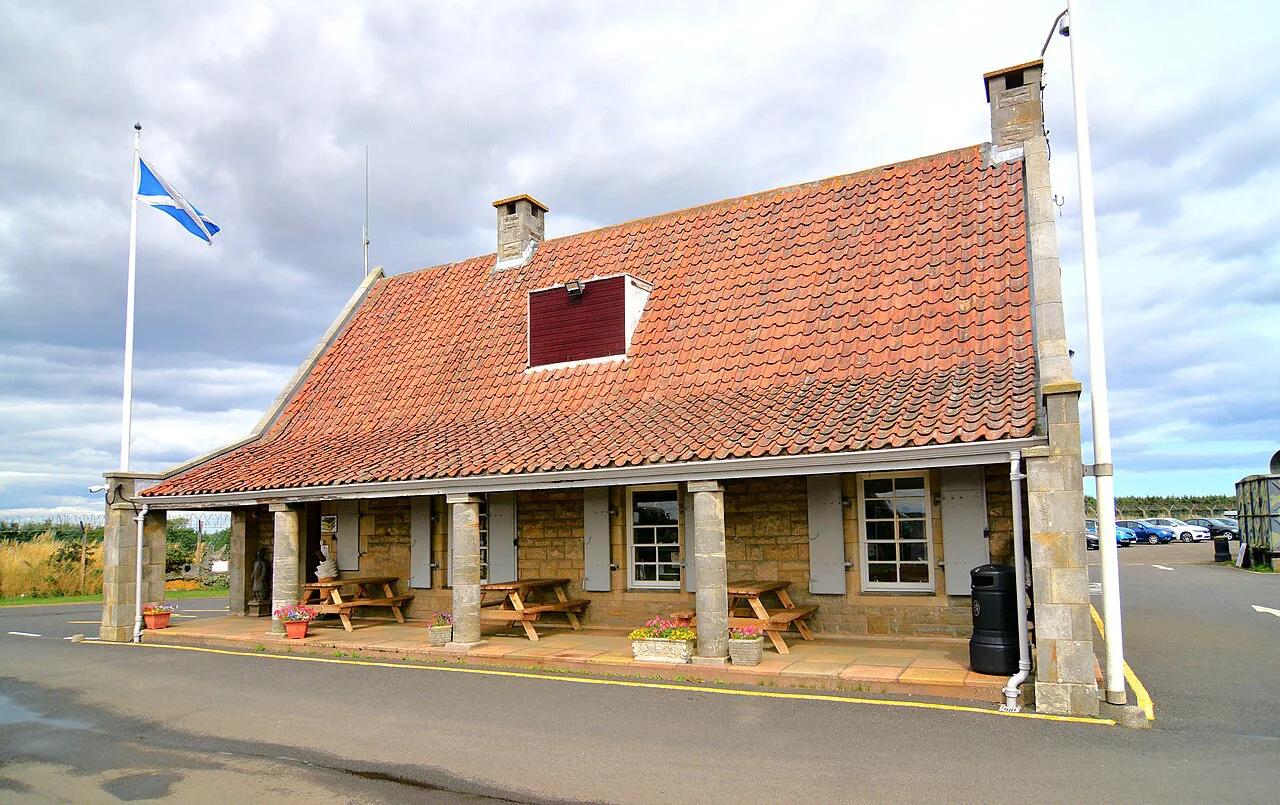
Featured image: Richard Szwejkowski, CC BY-SA 2.0, via Flickr.
Italian Chapel Orkney at a glance
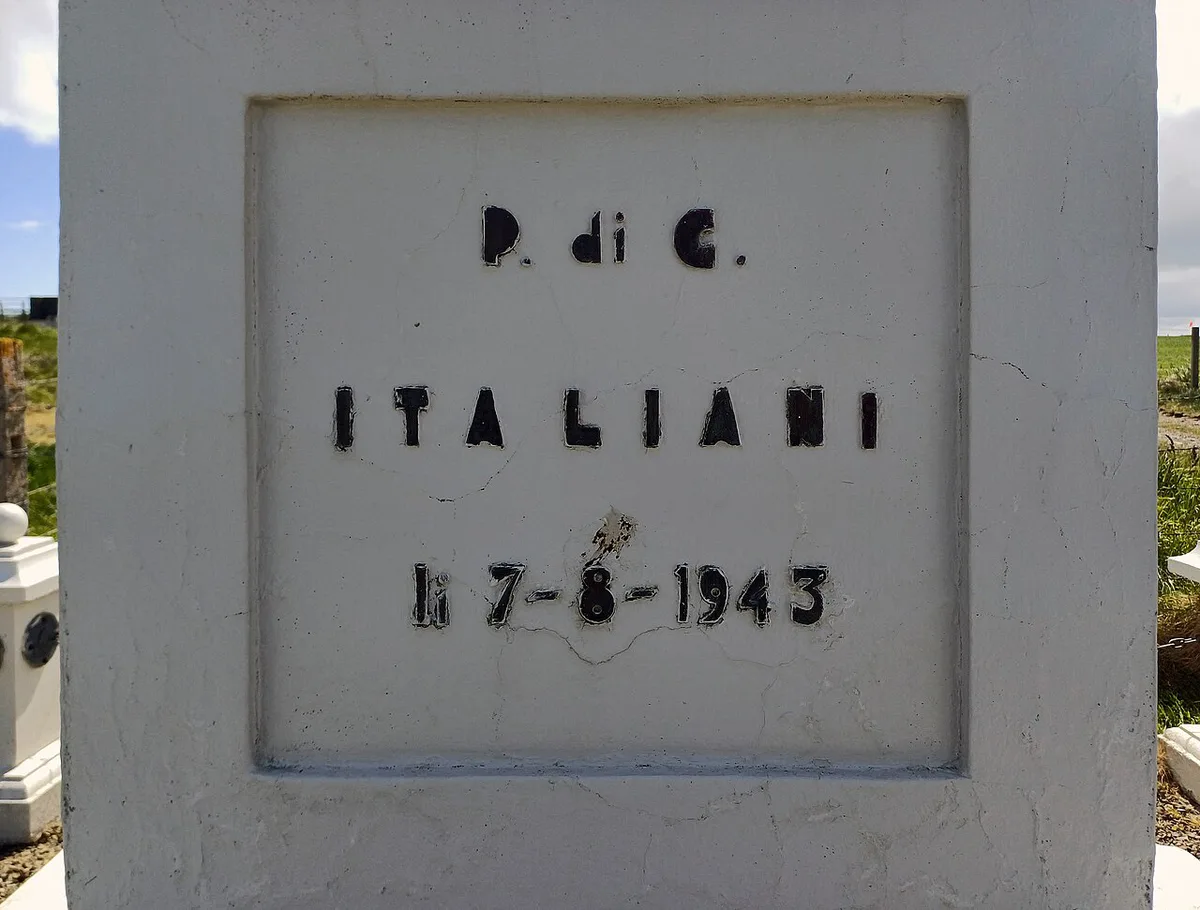
Verdict: worth the detour for anyone already crossing the Churchill Barriers. Few other sites in Scotland show so clearly how wartime prisoners turned bare huts into a place of worship. Most visitors need a short stop, and the chapel is small enough to see in one visit. Pair it with other sights rather than building a day around it.
- What it is: a decorated chapel on Lamb Holm, built by Italian prisoners of war.
- Where it is: Lamb Holm, one of the Churchill Barriers islands between the Orkney Mainland and South Ronaldsay.
- Best for: WW2 travellers, art and architecture fans, families and cruise or day visitors.
- Time needed: a short stop, longer if you add the nearby Barriers.
What the chapel is and why it exists
Italian prisoners were held on Lamb Holm during the war and worked on the Churchill Barriers. Those barriers closed off eastern approaches to Scapa Flow, the anchorage where the fleet was based. Our guide to Scapa Flow and its wrecks explains why the anchorage needed that protection.
- Builders: Italian prisoners of war working on the Barriers.
- Materials: huts from the camp on Lamb Holm, adapted into a chapel.
- Today: a preserved heritage site that welcomes visitors. The official Italian Chapel site carries its current visitor information.
Domenico Chiocchetti and the Prisoners Behind the Artwork
The painter most closely linked with the chapel is Domenico Chiocchetti, a prisoner held at Camp 60 on Lamb Holm. He led the decoration, but it was a team effort that drew on other prisoners' skills in cement work, metalwork and electrics.
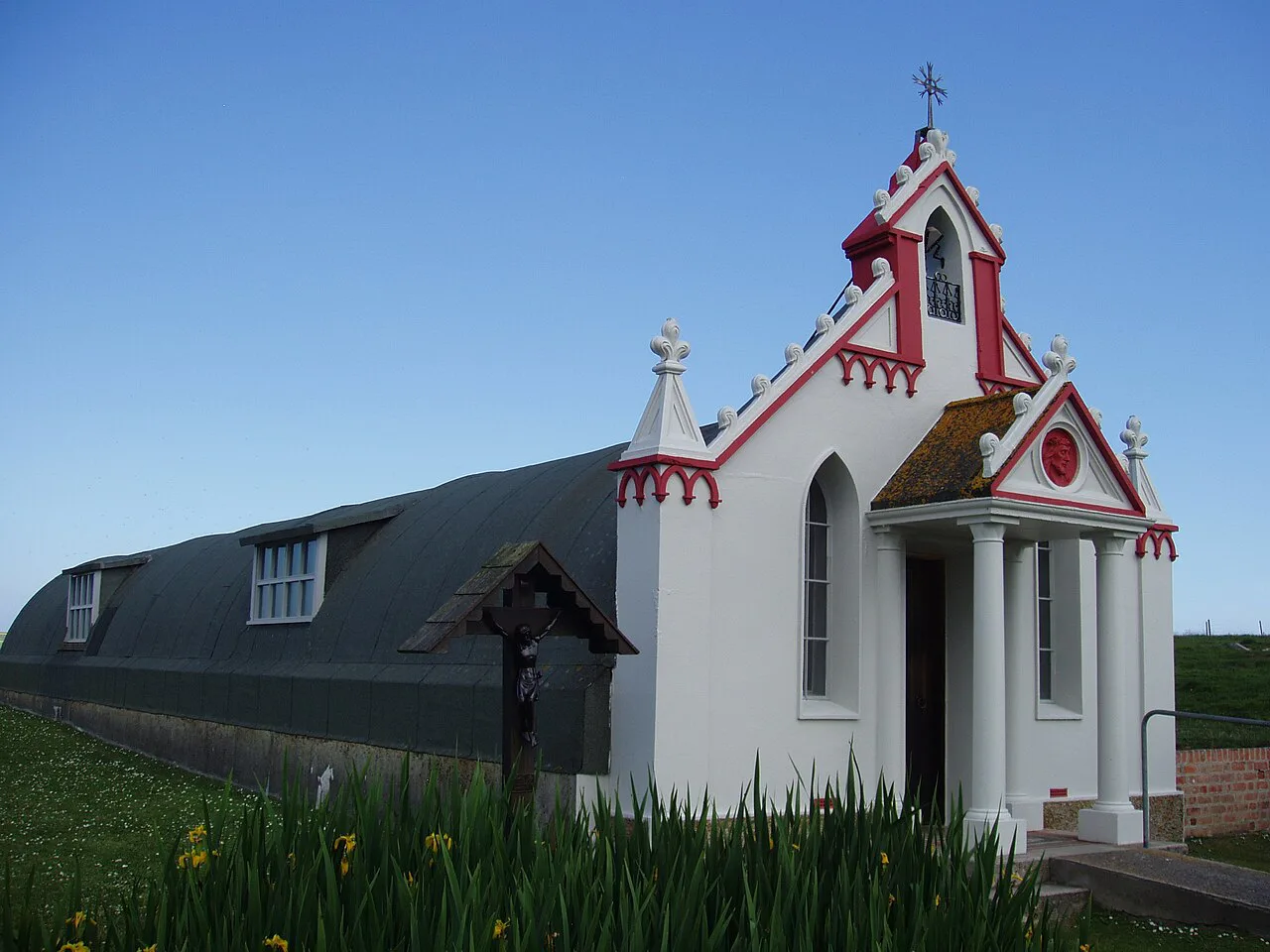
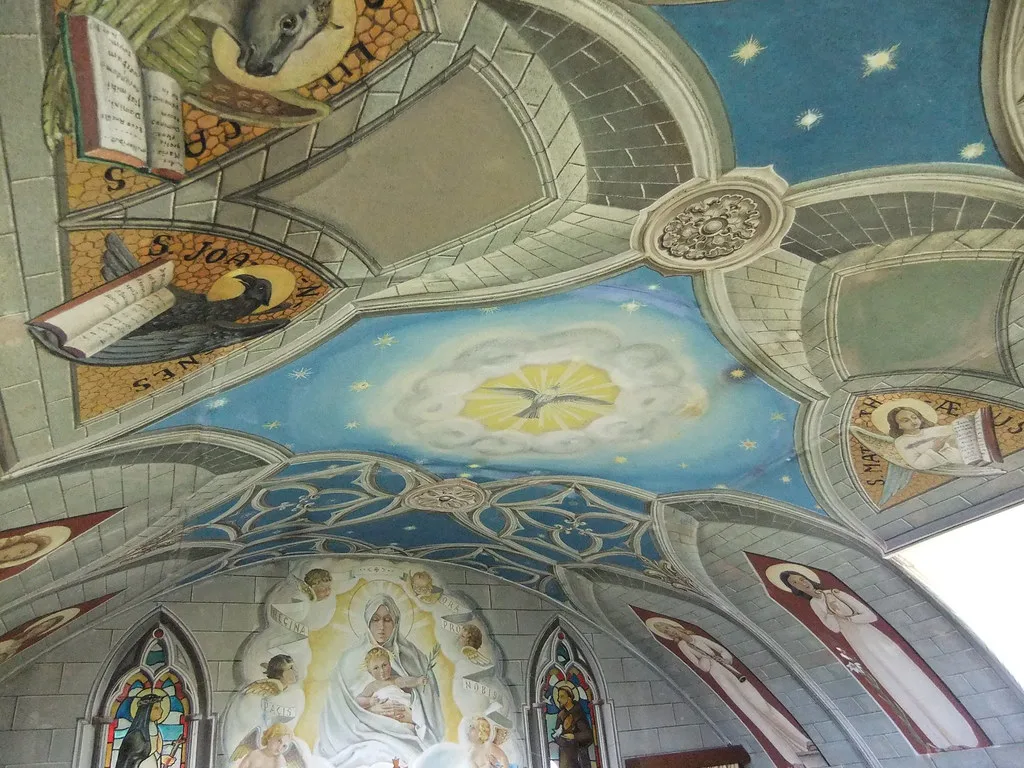
The shell is two Nissen huts joined end to end. Plasterboard lines the curved interior, and paintwork imitates stone, tile and carved detail. At the front, a new façade hides much of the hut shape behind it.
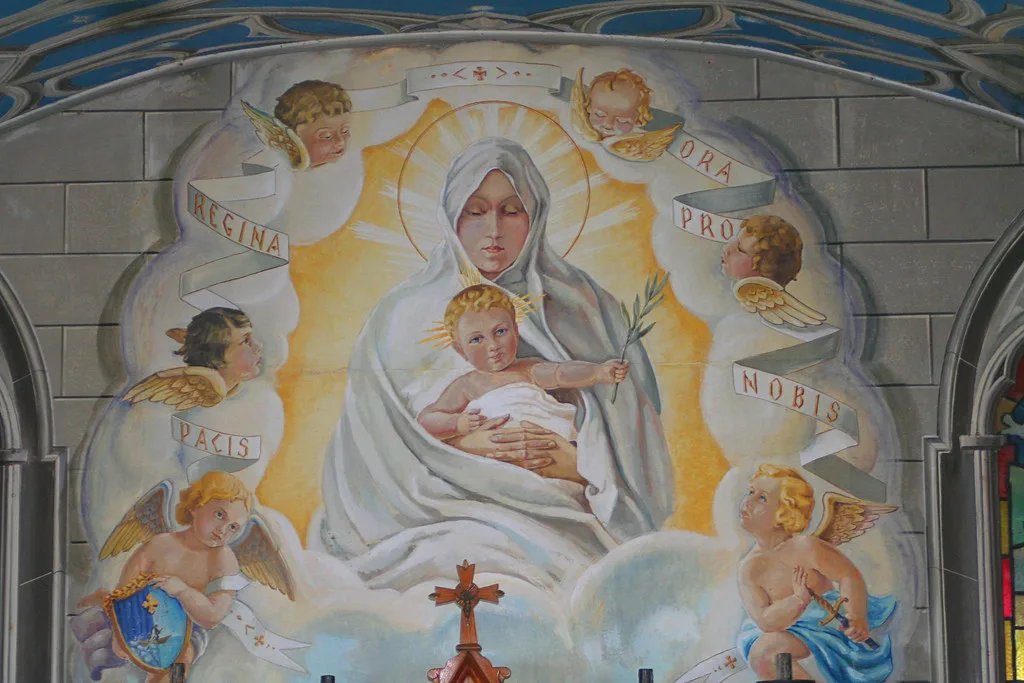
- Sanctuary painting: Chiocchetti's Madonna and Child was based on a small holy picture he had carried with him during the war.
- Metalwork: Giuseppe Palumbi, who had worked with iron, made the wrought-iron screen that separates the sanctuary from the rest of the chapel. Look at it closely before you leave.
- Saint George: Chiocchetti also made a statue of Saint George and the dragon for the camp, using a framework of barbed wire covered in cement.
- Salvaged materials: the prisoners made use of scrap and leftover material, which is worth remembering when you study the fittings.
Chiocchetti stayed on for a time to finish work on the chapel after other prisoners left Lamb Holm in 1944. He returned to Orkney in 1960 to help restore the paintwork. That later link between his family, his home town of Moena in northern Italy and the islands is a large part of why the building is remembered as a symbol of reconciliation as well as a wartime relic. For more background before your visit, see the Italian Chapel overview on Wikipedia.
How to get to the Italian Chapel
From Kirkwall, head south on the road to South Ronaldsay. That road crosses the Churchill Barriers, and Lamb Holm is one of the islands you cross. A hire car gives the most flexibility, because you can stop at the Barriers on the way. Bus services and organised tours also serve the route, but timetables change. VisitScotland's Orkney pages are the place to check current options. Cruise passengers should look at excursion lists for Lamb Holm stops, since coach timings control how long you get on site. Parking, toilets and café facilities should be confirmed locally before you plan around them.
When to visit and how long to allow
Orkney weather shapes this stop more than any schedule. Wind can make the causeway crossings exposed, and daylight shortens sharply in winter. Opening times vary by season, so read the current notice on the chapel's official site before you set out. Most visitors spend a short time inside, then walk around the exterior. Allow longer if you want to photograph the facade, read the interpretation and look across the Barriers.
Cost, access and etiquette
Check the current entry or donation policy on the official site, because it can change. Step-free access has not been verified for this guide, so ask the preservation committee if you need it. Treat the building as a place of worship and a heritage site. Keep your voice low and follow any photography notices posted at the door. If a service or event is under way, wait outside. Historic Environment Scotland publishes heritage and listing information for sites like this.
What to see inside and outside
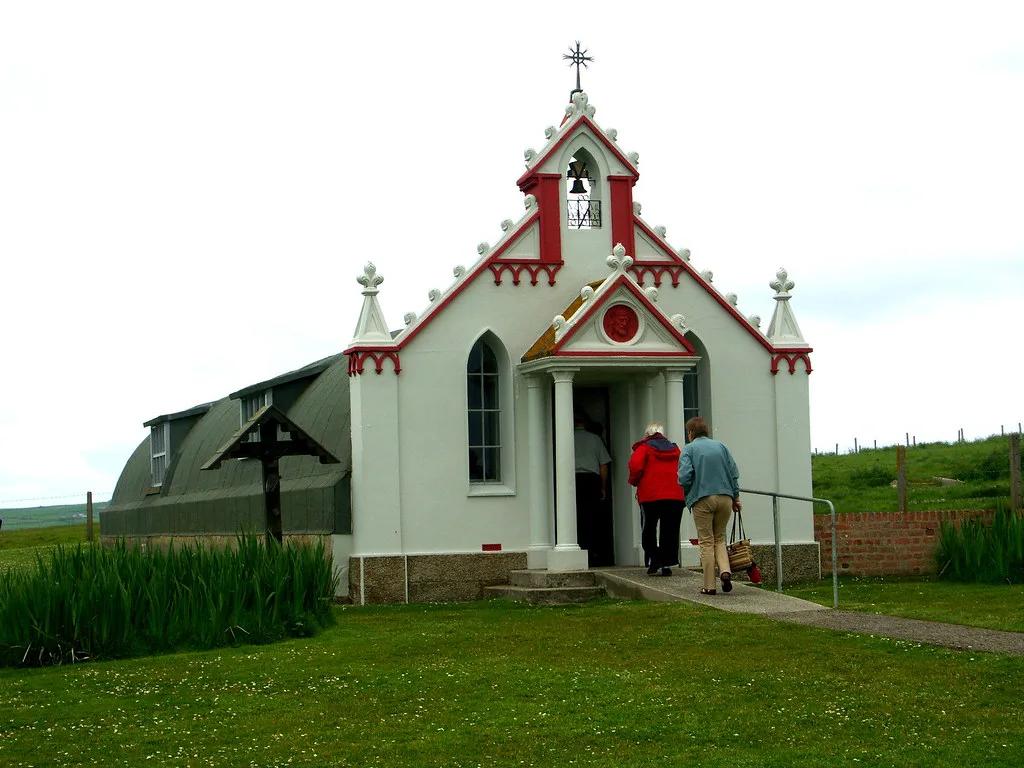
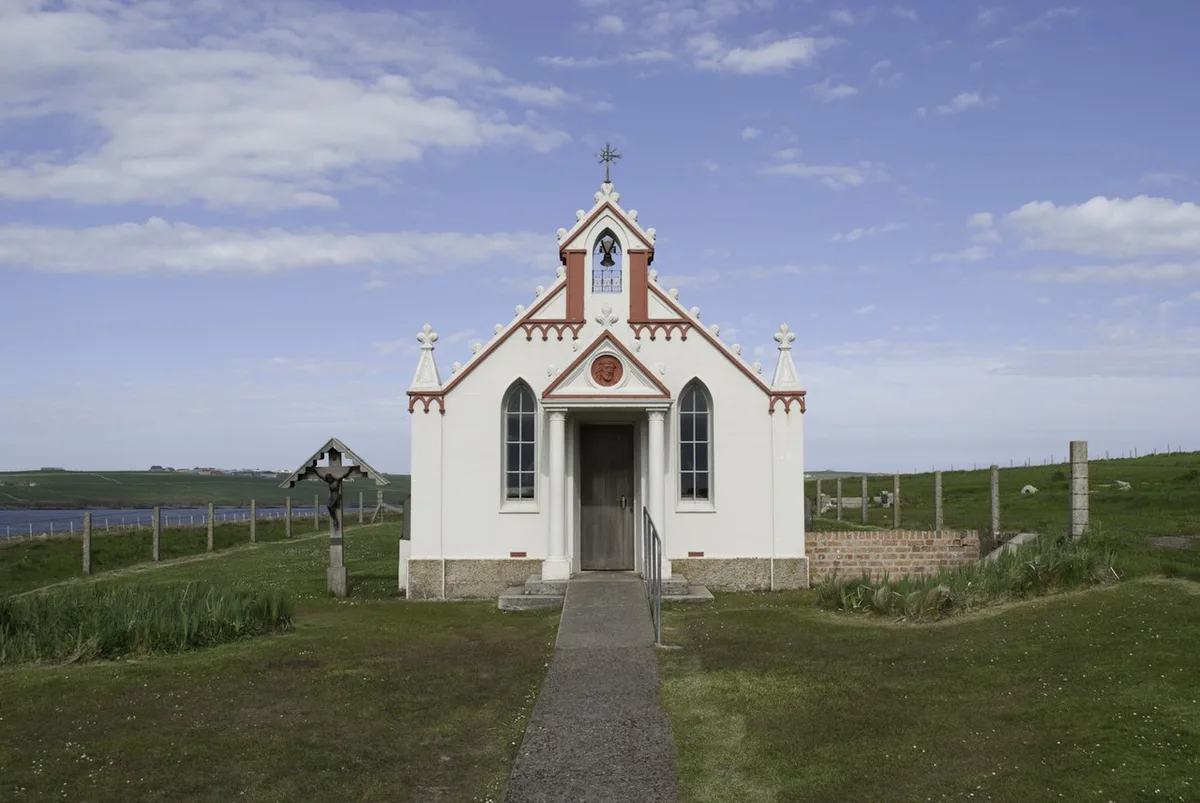
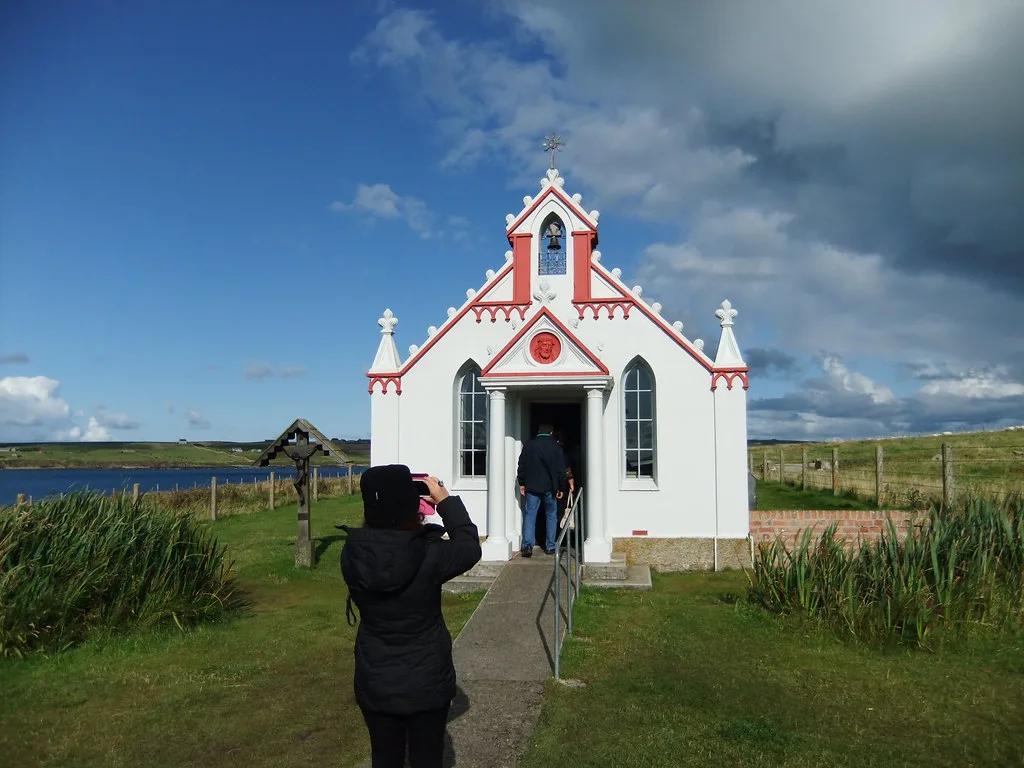
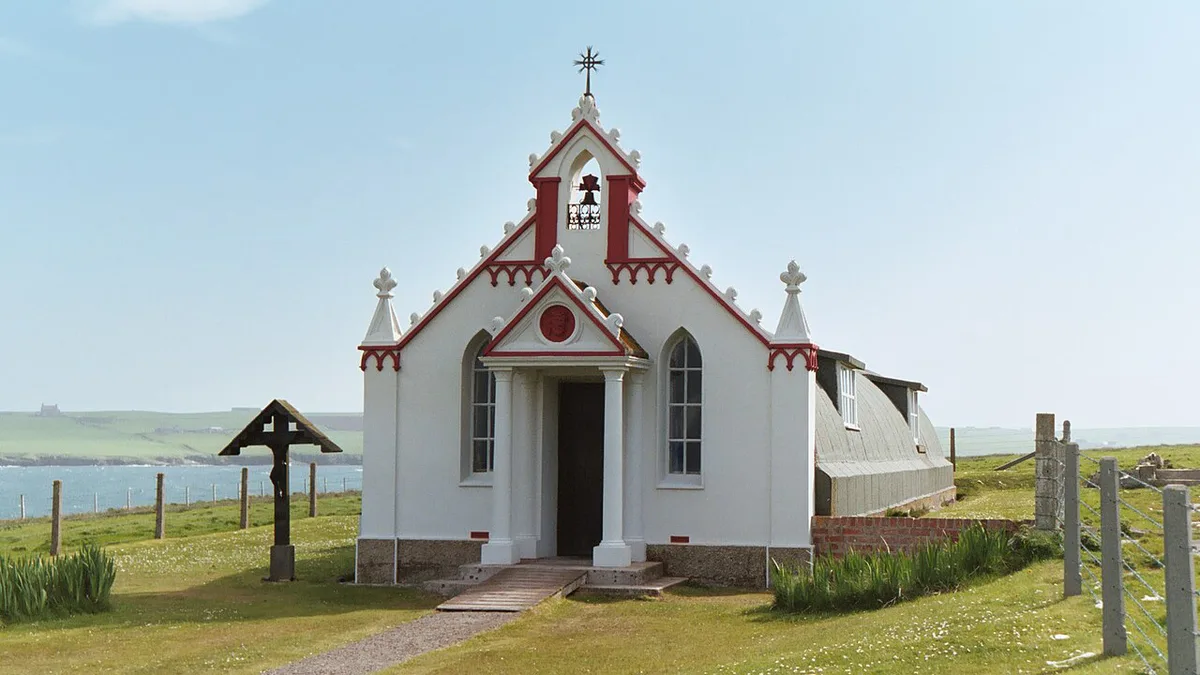
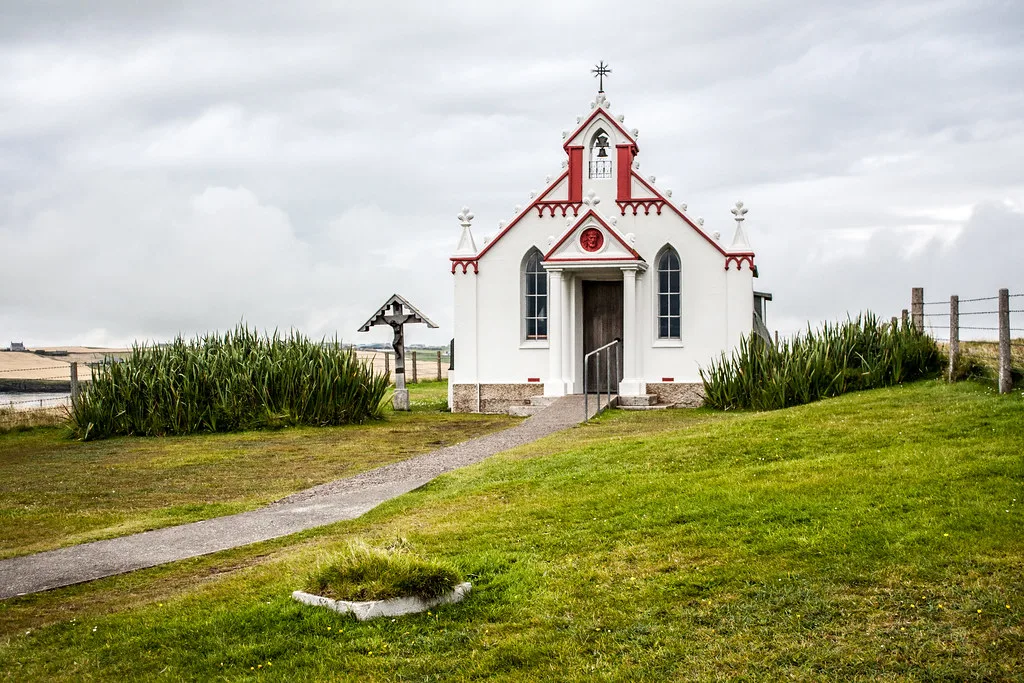
Start outside, where the facade and statue show how much work went into a building made from huts. Inside, look at the painted surfaces and the sanctuary painting. Many walls and ceilings carry decoration that gives the plain interior an ornate finish. Give your eyes a minute to adjust, since the room is small and the detail is dense.
- Exterior facade and statue at the entrance.
- Painted interior surfaces, including the vaulted effect.
- Sanctuary painting at the east end.
- Causeway view back over the Churchill Barriers.
Making a day of it
For a half-day, drive from Kirkwall, stop at the chapel, then continue across the Barriers and return the same way. For a full day, add other Orkney WW2 sights and a Kirkwall stop at the end. In strong wind, keep the chapel as your main stop and shorten any exposed coastal walks. Wet weather suits the interior and Kirkwall museums. Extend the trip across mainland Scotland with the Loch Ewe Arctic convoy story. The Clydebank Blitz history adds the home-front side of the war. The Commando Memorial at Spean Bridge is another stop on a wider Scottish route.
Churchill Barriers and Blockships to Look for Nearby
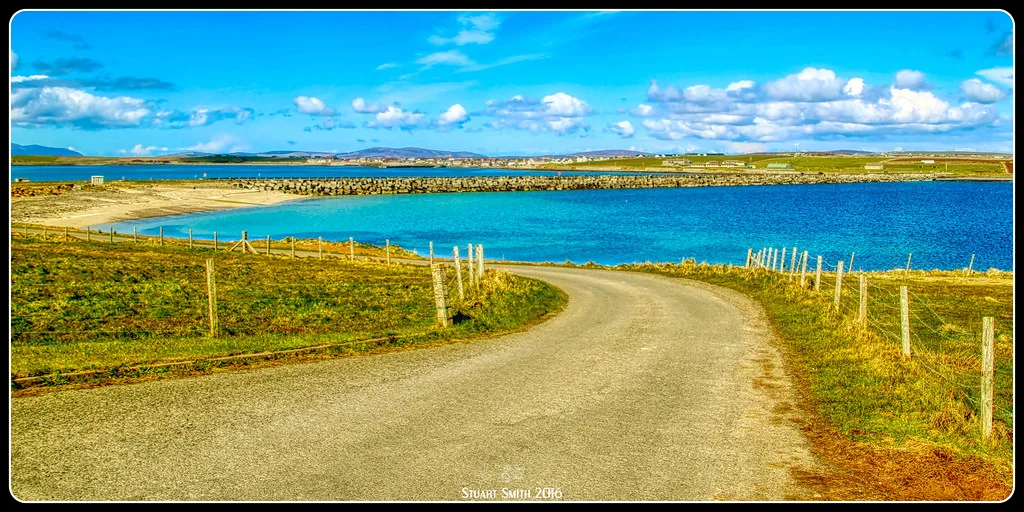
The road to the chapel is part of the story. Four Churchill Barriers link the Mainland with Lamb Holm, Glimps Holm, Burray and South Ronaldsay. Work began in 1940, after a German U-boat entered Scapa Flow in October 1939 and sank the battleship HMS Royal Oak with the loss of more than 800 lives. The barriers were formally opened in May 1945.
If you continue south from the chapel, watch for these:
- Barrier construction: large concrete blocks are piled along the sides of the causeways, above a base of rock.
- Blockships: before the barriers were built, old ships were sunk to obstruct the channels. Rusting remains can still be seen beside parts of the route, and how much shows depends on the tide and sea conditions.
- Changing shoreline: sand has built up beside the southernmost barrier, between Burray and South Ronaldsay, changing the look of that crossing considerably since the war.
- Local history on Burray: the Orkney Fossil and Heritage Centre is a possible extra stop. Check its current opening days before including it.
Stop only in proper parking places, never on the causeway road itself. View the wrecks from the shore: the metal is corroded, and tides and surf can make the water around it dangerous. In rough weather, stay well back from the exposed seaward side, where waves can break over the edge.
Is it worth it? Who should skip or combine it
Yes, if you are already on the Barriers road or following Orkney's wartime story. Art and architecture fans will get the most from the interior. Families will find it easy to fit in. Visitors short on time, or hoping for a large site with long walking routes, may find it brief. In that case, combine it with Scapa Flow sights. Our 5 WW2 Sites in Scotland to Plan Your Trip Around guide helps you place it in a longer trip. Before you go, check opening times, the entry policy, weather and your transport plan.
Keep planning
Guides on the same trip