Netherlands American Cemetery (Margraten): Visitor Guide
Visiting the Netherlands American Cemetery at Margraten near Maastricht: how to get there, what to see, grave adoption, and etiquette. Check the current hours before you go.
In this guide
Last updated November 2026. The Netherlands American Cemetery and Memorial at Margraten lies about 9 km (5.6 miles) southeast of Maastricht in South Limburg. It is run by the American Battle Monuments Commission (ABMC) and honors U.S. servicemen who died in the Netherlands and the nearby fighting of 1944–45. Plan on roughly one to two hours, and treat the visit as a quiet one at a burial ground. For the wider picture, start with our guide to WW2 sites in the Netherlands.
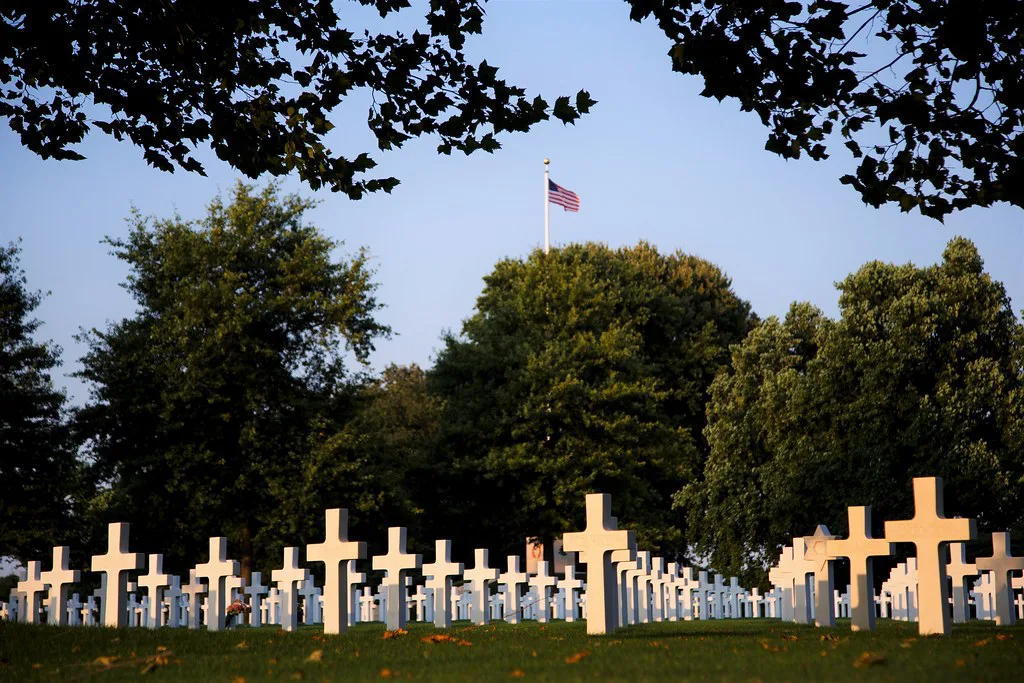
Featured image: Frans Berkelaar, CC BY 2.0, via Flickr.
What you'll see at Margraten
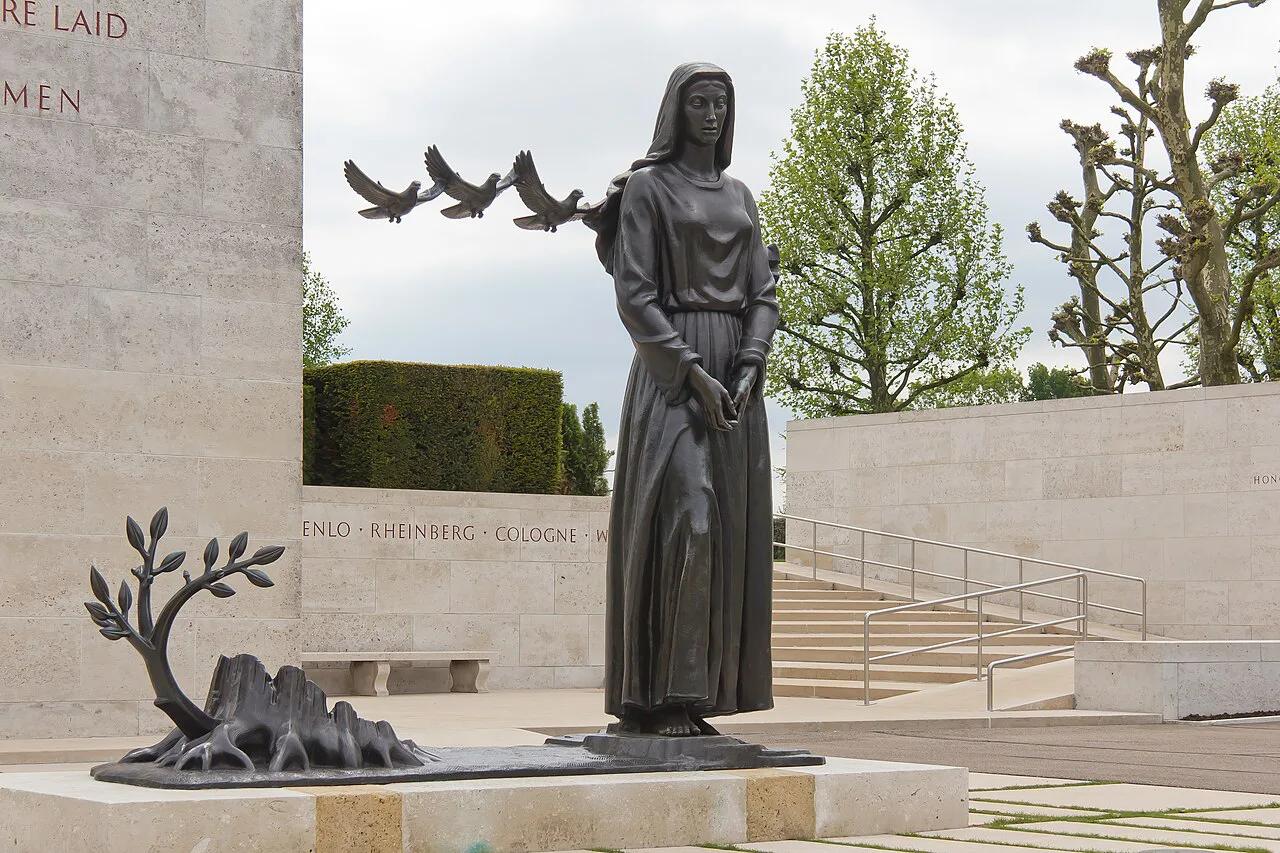
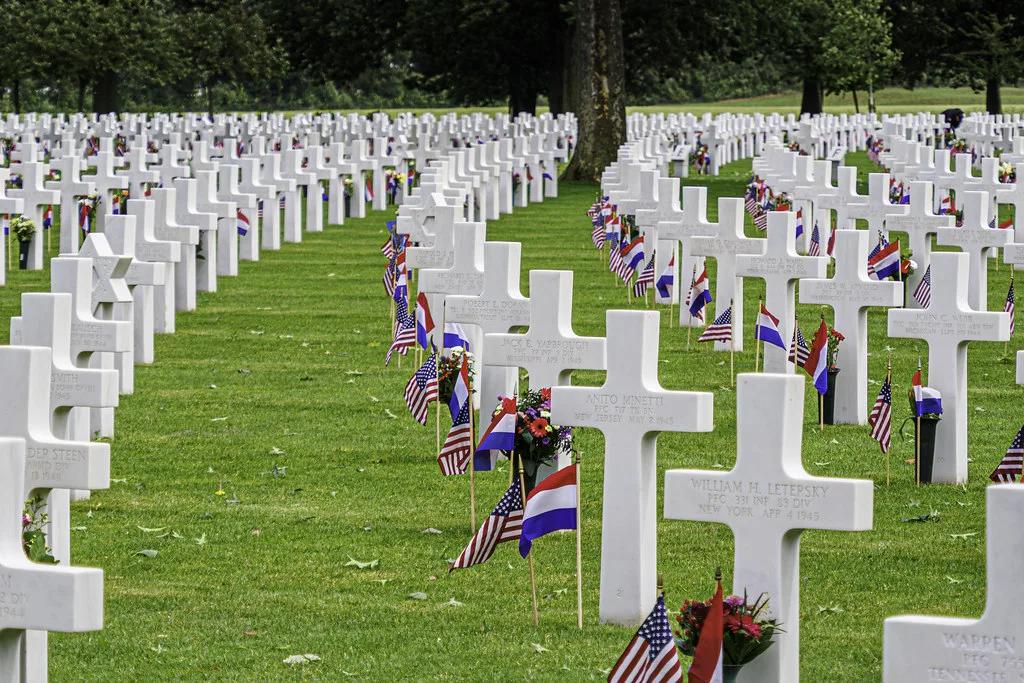
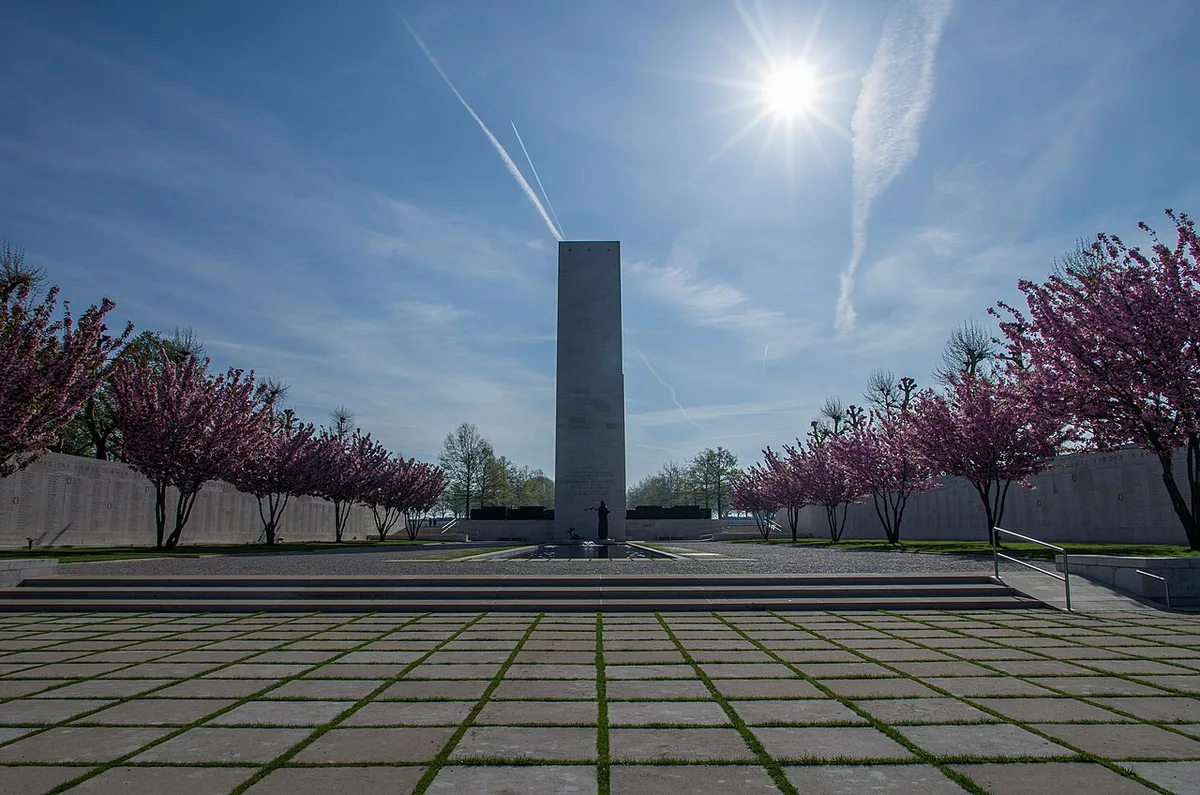
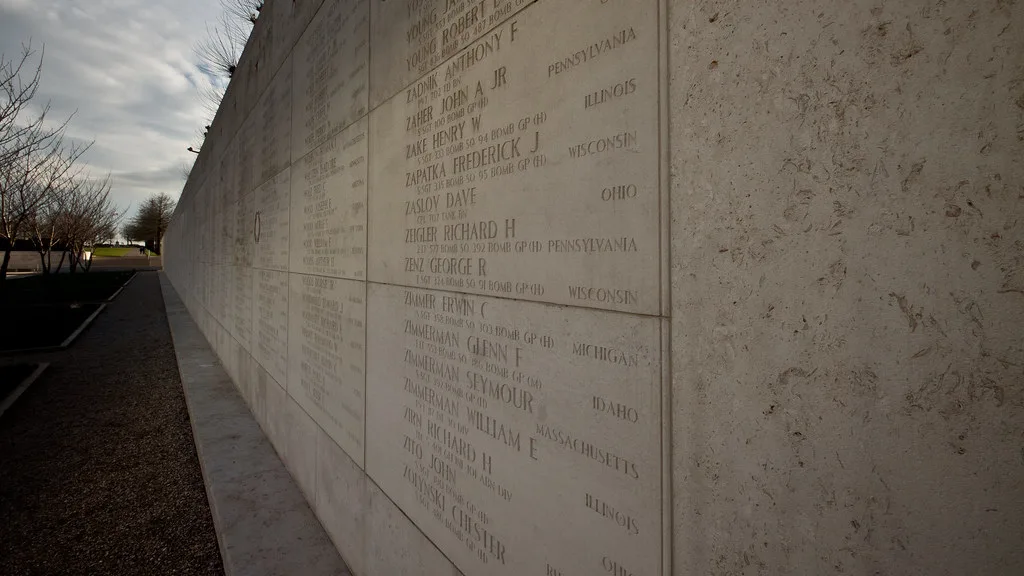
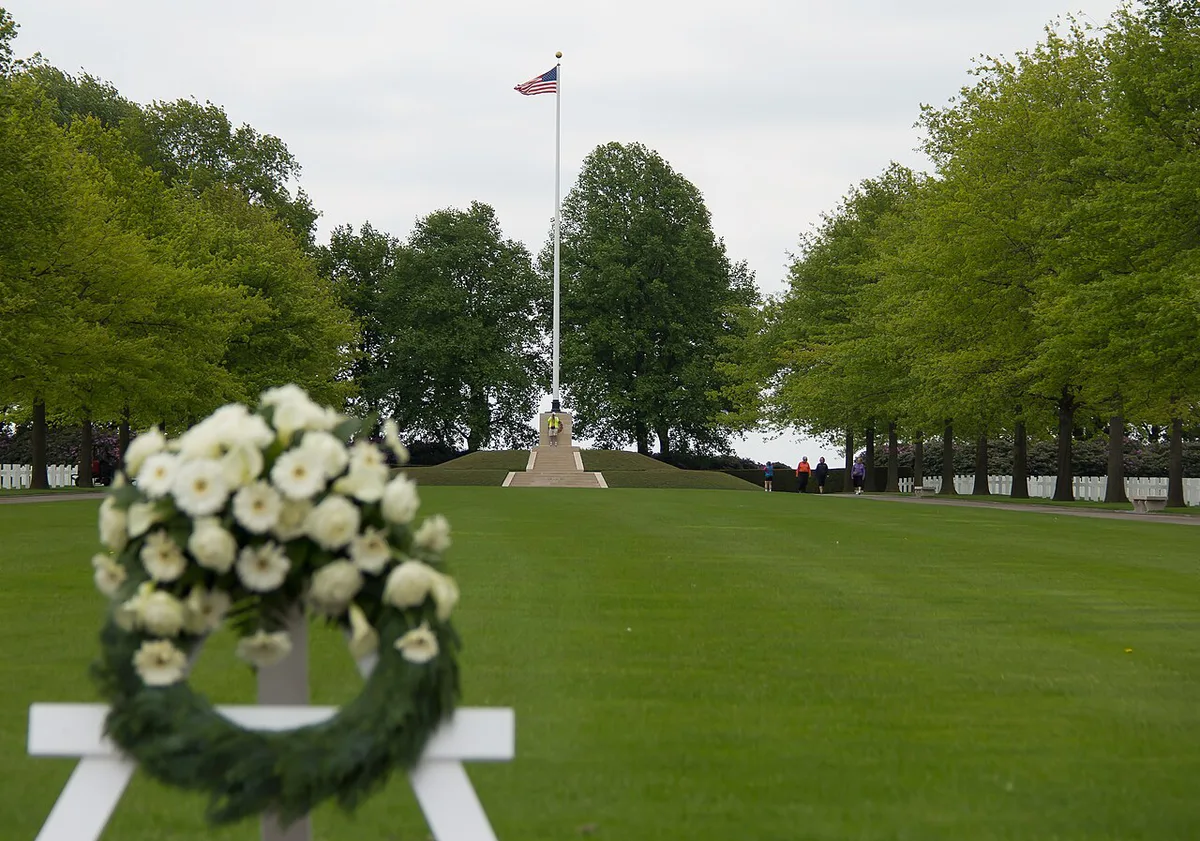
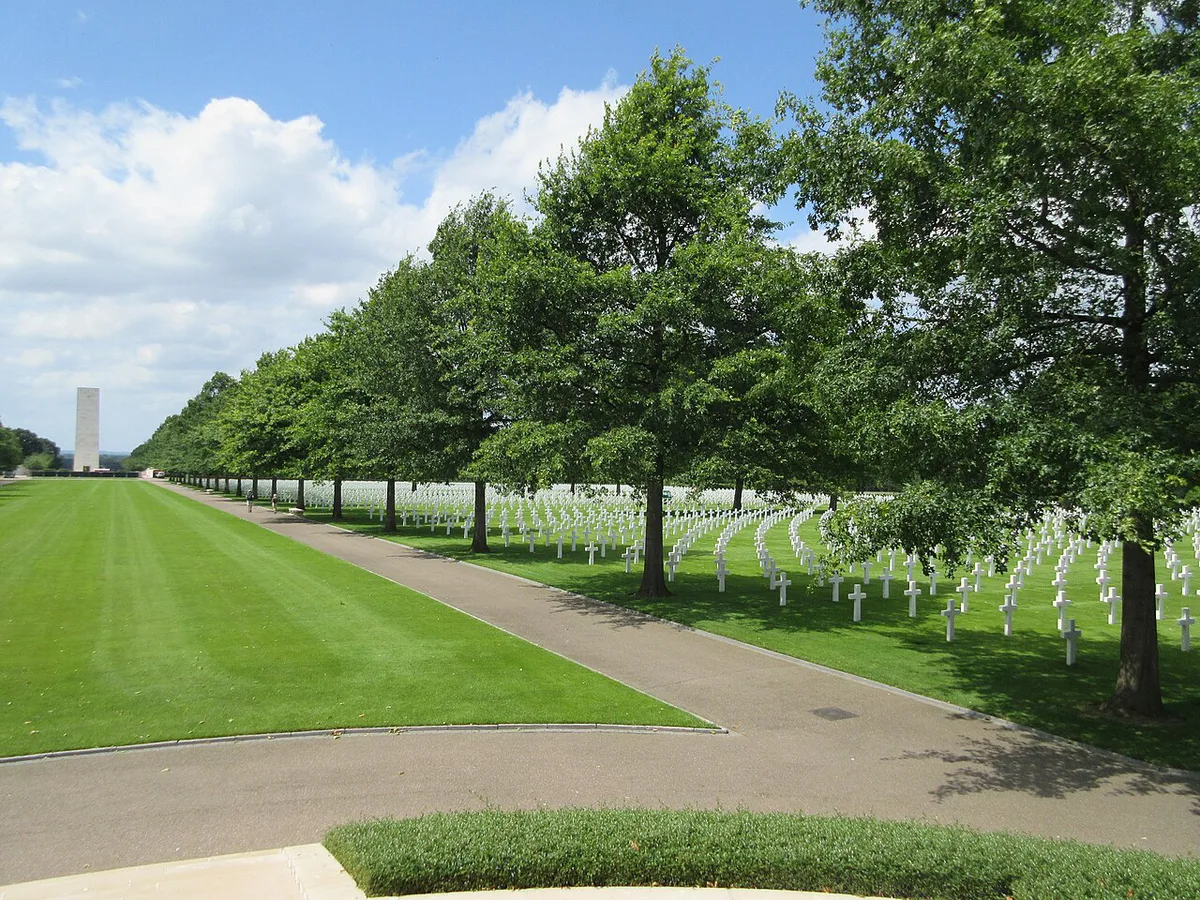
Rows of white headstones curve in long arcs across lawns framed by oak trees and azalea bushes. A white chapel and memorial tower stands behind the graves. ABMC gives 8,301 burials, with a further 1,722 names inscribed on the tablets of the missing. Those are U.S. servicemen who died in the Netherlands during the closing campaigns of the war, including Operation Market Garden. Reports also describe a reflecting pool, a statue of a grieving mother at the base of the tower, and maps listing the battles and operations fought by U.S. forces. The site is said to cover about 65 acres, so allow time to walk it.
- Headstone arcs: the graves of the buried dead, laid out in curved rows.
- Chapel and memorial tower: the focal point at the head of the grounds.
- Tablets of the missing: 1,722 names of those with no known grave, per published figures.
- Reflecting pool and grieving mother statue: set near the base of the tower.
- Battle maps: the campaigns that brought U.S. forces to the Netherlands.
Why the Dutch tend these graves
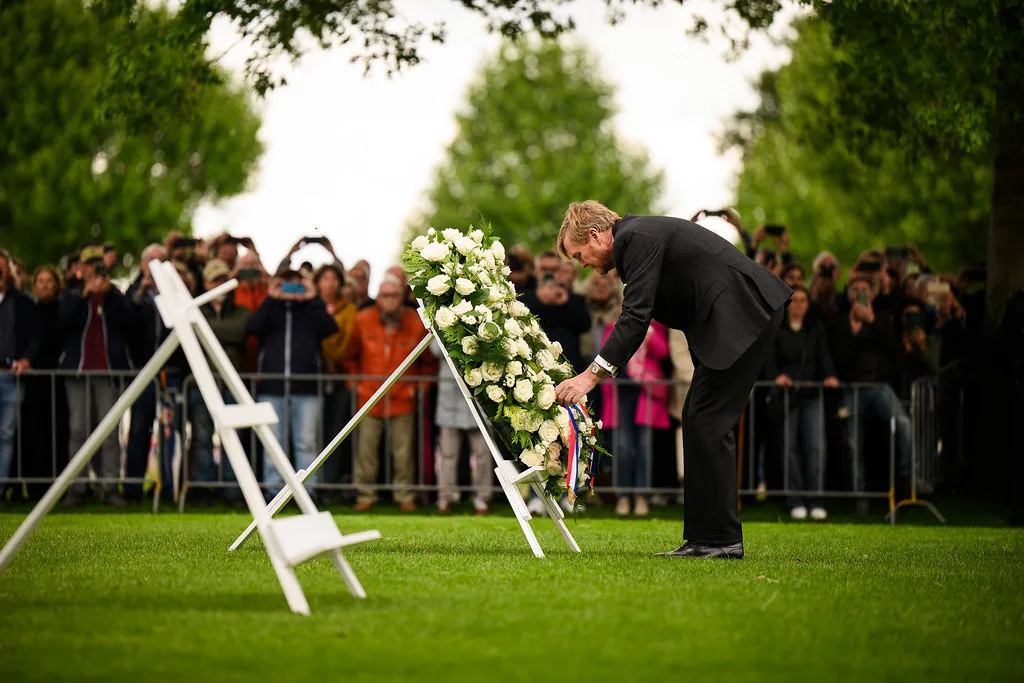
What sets Margraten apart is who cares for it. Since 1945, local Dutch families have adopted individual graves. They lay flowers, research the life of the soldier, and keep the name remembered. Some people adopt more than one. A foundation for adopting graves at Margraten is said to keep a long waiting list, so do not plan on adopting during a single trip. A related project, Faces of Margraten, collects photographs of those buried or commemorated here. Reports say more than 3,000 portraits are shown on Dutch Memorial Day. Each spring, commemoration also ties into Liberation Day in the Netherlands.
Black American Soldiers at Margraten and the Display Dispute
Margraten's story includes Black Americans who served in a segregated US Army. Soldiers of the 960th Quartermaster Service Company, a Black unit, dug many of the first graves here during the war. They worked by hand in cold, wet conditions. First Sergeant Jefferson Wiggins spoke about that work decades later, and his account, recorded with Dutch help, drew wider attention to the unit's part in the cemetery's history. Black service members are also among those buried at Margraten.
The way the site presents this history became a public dispute. News reports that surfaced shortly before 2026 said two displays about Black servicemen had been removed from the visitor center:
- George H. Pruitt: one panel told of a Black soldier who died while trying to save a comrade from drowning.
- Segregation and service: another addressed Black Americans who fought for freedom abroad while facing discrimination in their own military and at home.
The removal drew objections in the Netherlands, including from Limburg politicians, as well as from people in the United States. Reporting linked it to the US administration's wider rollback of diversity, equity and inclusion material. The American Battle Monuments Commission (ABMC), which runs the site, was quoted in news reports as saying that one panel was out of rotation and the other had been retired after review.
Displays can change, so don't count on seeing either panel. If this history is a main reason for your visit, ask ABMC what is currently on show before you travel, using the contacts on its official cemetery page. On the grounds, you can keep these soldiers in mind as you walk past the headstones: the work of burying the dead was part of the war too, and the men who did it are part of why this place exists.
Getting to the Netherlands American Cemetery from Maastricht
Without a car, bus 350 is the usual route from Maastricht station. It is said to run four times hourly and takes about 20 minutes. Its stop is on the N278, roughly 300 m (about 1,000 ft) north of the cemetery, so expect a short walk. Aachen is also linked by the same line, in about 40 minutes. Bus numbers and frequencies change, so check the regional operator's journey planner for 2026 timetables and fares. The address is Begraafplaats 1, Margraten. Valkenburg visitors should also plan by bus or car, since no rail stop is listed for the cemetery.
| Option | Cost | Time from Maastricht | Last stretch | Best for |
|---|---|---|---|---|
| Bus 350 | Lowest; check current fare | About 20 minutes | About 300 m on foot along the N278 | Solo and budget visitors |
| Car | Fuel only; check parking on site | Short drive of about 9 km | Parking at the grounds | Families and mixed-mobility groups |
| Taxi | Highest | Short drive of about 9 km | Drop-off at the entrance | Small groups wanting a direct ride |
Hours, entry, visitor center and facilities
Entry is expected to be free, as with other ABMC sites. Hours, parking, accessibility and facilities are published on the ABMC page for the cemetery. Check it before you travel, since older guides said a visitor center was planned by 2021; ABMC can tell you its current status. The ABMC phone number listed for the site is +31 43 458 12 08.
How long to spend and how to behave
Many visitors spend 45 minutes to 2 hours on site. Walking the grounds, reading the tablets and finding one grave fills most of that time. Dress simply and speak quietly. Treat the lawns and headstones as a cemetery, not an attraction. Check ABMC guidance on photos, drones and picnics before you arrive. Ceremony days, such as Memorial Day, draw large crowds and can close areas.
| Visit length | What it covers | Suits |
|---|---|---|
| 45 minutes | Chapel, tower, tablets, headstone arcs | Day-trippers short on time |
| 90 minutes | Full walk, reflecting pool, battle maps, one grave | Most first visits |
| Half day | Slow reading of names, a grave search, nearby Margraten | Family visitors and history readers |
- Do not fly a drone or treat the grounds as a photo shoot.
- Do not assume hours and facilities match older guides.
- Do not arrive on a ceremony day without checking ahead.
- Do not picnic on the grounds unless ABMC rules allow it.
Finding a specific grave
Family visitors can search the burial and missing lists on the ABMC site by name before they travel. Bring the full name, service number and unit if you have them. Staff on site can help locate a headstone or a name on the tablets of the missing. Photographs of the headstone are a common request from relatives, but keep the same quiet conduct while you take them.
Combine it with other WW2 sites
Margraten sits in the far south, so pair it with sites in the same region rather than the north or the coast. For contrast, the Canadian war cemetery at Holten is another Allied burial ground, but it lies in the east and needs a separate trip. The Overloon War Museum covers the fighting in the south as a museum visit. Our page on visiting Overloon has detail. Farther afield, the Dutch Resistance Museum (Verzetsmuseum) Amsterdam Guide and the Atlantikwall museum at Scheveningen suit a longer itinerary. Holland.com's WWII listings help with planning, and our Zeeland WW2 guide covers the southwest coast.
Keep planning
Guides on the same trip