Kalavryta Massacre (1943): Museum, Memorial Sites and Visitor Guide
What happened in Kalavryta on 13 December 1943, what the Holocaust Museum and memorial sites show, and how to visit respectfully.
In this guide
Last updated November 2026: the Kalavryta massacre took place on 13 December 1943, when German troops killed the male population of the town and burned it. Kalavryta now has a memorial on the hillside above town and the Municipal Museum of the Kalavryta Holocaust in the rebuilt school. This guide explains what happened, what each site shows and how to visit with care.
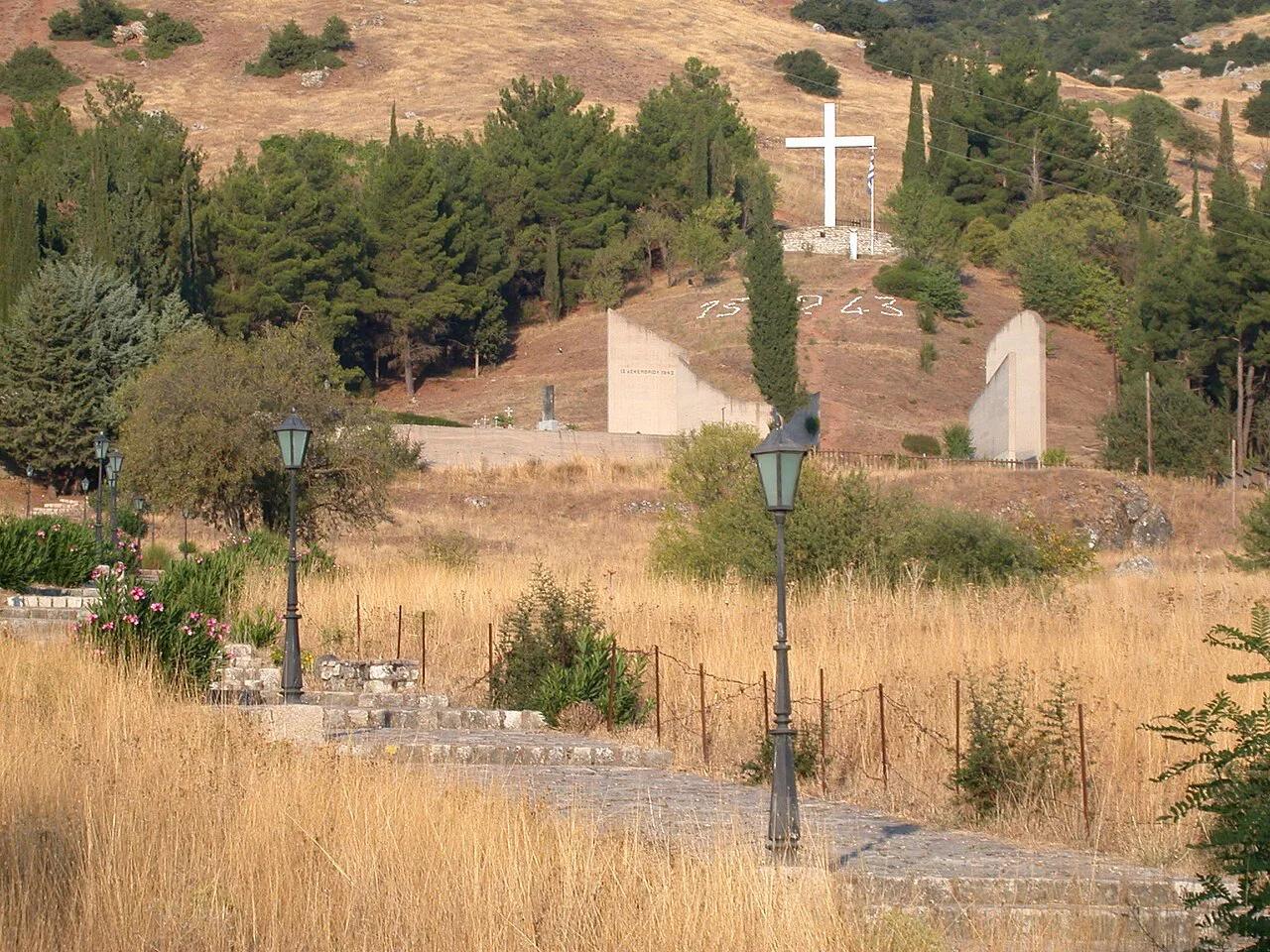
Featured image: Konstantinos Dafalias, CC BY-SA 3.0, via Wikimedia Commons.
What happened in the Kalavryta massacre on 13 December 1943
On the morning of 13 December 1943, soldiers of the 117th Jäger Division (Wehrmacht) gathered the residents of Kalavryta in the town school. Men and boys from around 12 years upward were separated from their families and led to a hillside overlooking the town. They were shot there. Women and children were held in the school as hostages while the town burned, and survivor accounts describe them breaking out of the burning building. Local usage calls the event the Holocaust of Kalavryta (Ολοκαύτωμα, "burnt offering"). That Greek term names this massacre and is separate from the Nazi genocide of Jews. The killings targeted civilians and were a war crime.
- Date: 13 December 1943, in the Achaea region of the Peloponnese.
- Unit: 117th Jäger Division, commanded by General Karl von Le Suire.
- Order: the "severest measures" were ordered on 10 December 1943.
- Victims: 693 to 696 across the whole operation, depending on the source.
- Survivors from the town: 13 men.
How many people died: the figures and their sources
Sources give slightly different totals, so no single flat number is reliable. The German final report, shown in the museum's online exhibit, records 696 executed. A tally drawn from German records puts the total at 693 across the operation, with 438 men and boys killed in Kalavryta itself. A descendant's account published in 2025 rounds the figure to about 700. "Nearly 700 civilians" is a fair summary. Names of the executed and the survivors are held in the museum, which is the best place to consult them.
Operation Kalavryta: the days before 13 December
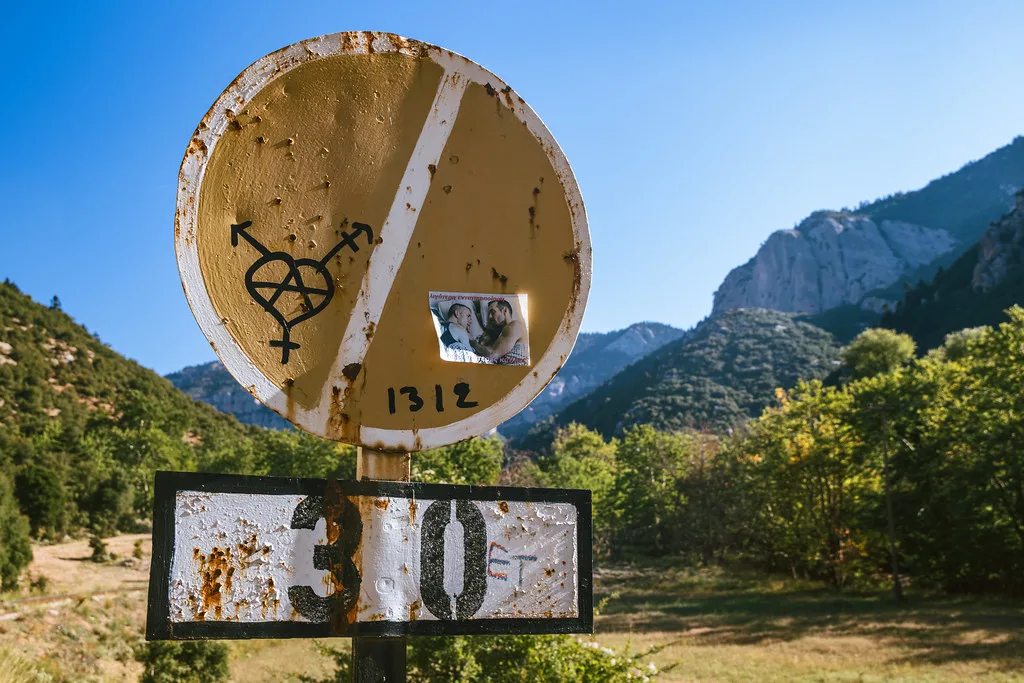
The operation was not a single-day event. A classified order signed by von Le Suire on 25 November 1943 set it in motion. On 5 December, columns left Patras, Aigio, Corinth, Pyrgos and Tripolis along planned routes, all aimed at Kalavryta. Executions began in Kerpini, Zachlorou, Souvardo, Vrachni and the Mega Spilaio monastery before the troops reached town. Kerpini lies 6 km from Kalavryta, and it was there in October 1943 that German soldiers had been captured by guerrillas. Troops from Patras and Aigio marched into Kalavryta on 9 December. The German final report lists 28 destroyed places, including Rogoi, Kerpini and the Agia Lavra monastery. Agia Lavra was burned the day after the massacre.
The Municipal Museum of the Kalavryta Holocaust: what the rooms hold
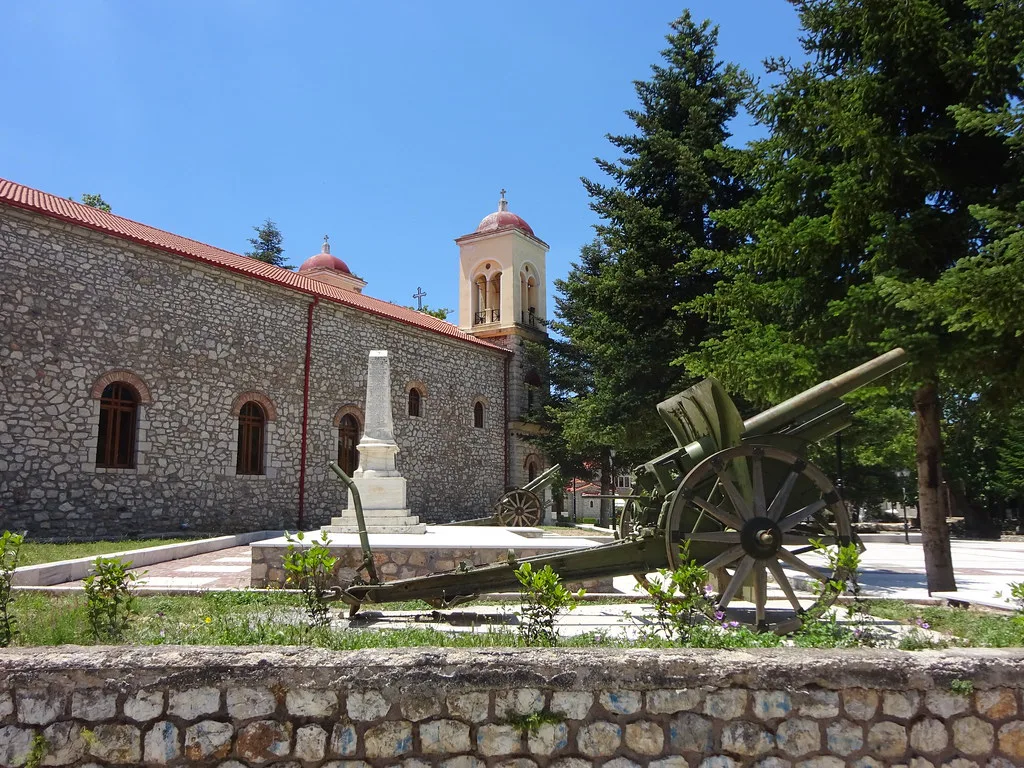
The museum stands in the rebuilt primary school where families were gathered on 13 December. A descendant who visited in May 2025 described the hallway with two doors. Families entered through one, and the men and boys were taken out through the opposite one. Her account is published by Southern Methodist University. The 5th exhibition room holds the Pantheon of Executed men, covering the executions of 5 to 14 December 1943. Names of the executed appear in black and survivors in red. Beside them are photographs of 28 survivors, 13 from Kalavryta and 15 from surrounding villages. Other displays include German operation documents, photographs of the ruined town in 1945 and 1946, and a group portrait of orphans sent to American donors. Exhibits can be rearranged, so the museum's own channels are the final word on what is on show.
Visit the museum's fifth room expecting more than one day: its Pantheon covers 5 to 14 December 1943, so the executions in surrounding places are included.
- Most useful for: understanding the sequence of events and finding a named relative.
- Also on site: a bookstore with short survivor publications in Greek.
Memorial sites around Kalavryta: which one tells which part
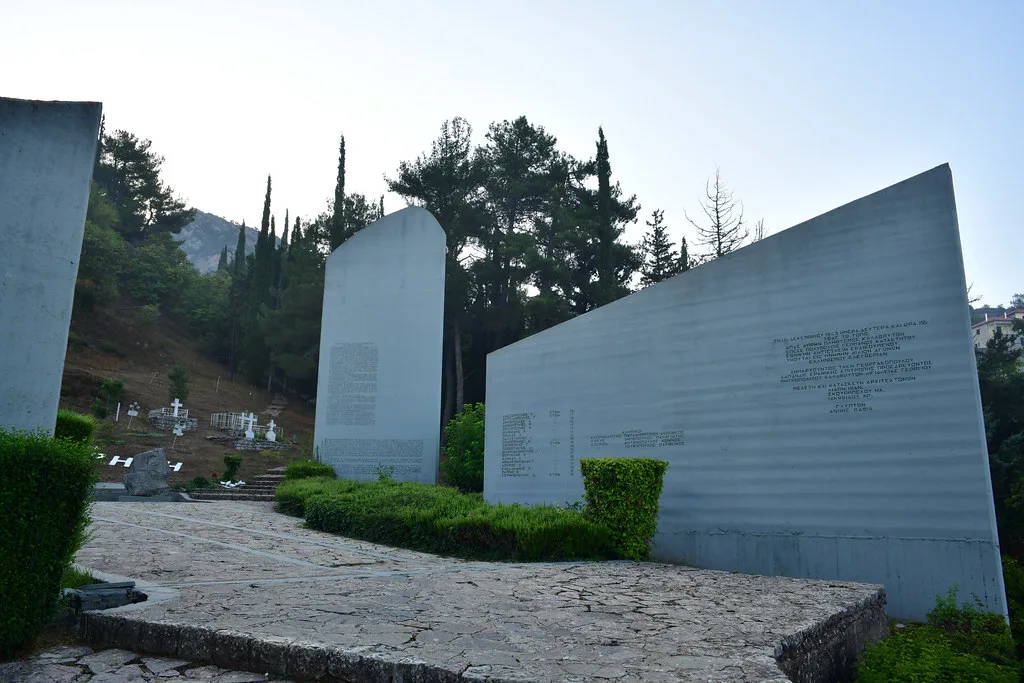
The story is spread across several places, and they are not interchangeable. Kapi Hill and the Place of Sacrifice memorial look down on the town where the men were taken. Rogoi is a separate memorial and execution site, and some victims died there rather than on Kapi Hill. Visitors sometimes confuse the two, so name the one you want when asking for directions.
| Site | What it tells | Best suited to |
|---|---|---|
| Municipal Museum of the Kalavryta Holocaust | The school, the doors, names, survivor photographs and German documents | First stop for context, or for finding a family name |
| Kapi Hill and the Place of Sacrifice | Where the men and boys of the town were taken on 13 December 1943 | A quiet visit to the memorial with the town in view |
| Rogoi memorial and execution site | A separate site where other victims were killed | Readers who want the wider geography of the operation |
| Agia Lavra monastery | Burned on the day after the massacre; a landmark of the Greek War of Independence | Placing the destruction in a wider Greek history |
Planning your visit to Kalavryta
Opening days, admission, exhibit languages, accessibility and the road to Rogoi are not covered here. Check the Municipality of Kalavryta and the museum's official channels before you travel. Commemorations are held each December, centred on 13 December. Expect ceremonies, crowds and possible changes to normal access on that date. Kalavryta is a mountain town, so winter weather around the anniversary deserves a margin in your plans.
- Short on time: choose the museum first, then the Place of Sacrifice.
- Longer stay: add Rogoi and the monastery sites, and allow time between stops.
- Day trip or overnight: an overnight stay avoids rushing, but confirm distances and transport on official sources.
Visiting respectfully
Treat Kalavryta as a place of mourning and not as a quick photo stop. Many visitors come to find the name of a relative. Follow any photography or conduct rules the museum posts, and keep your voice low at the memorials. Children can attend with preparation: explain beforehand that the town lost most of its men and boys. Leave time between sites so the day does not feel hurried.
- Do not rely on a single casualty figure when you quote the history.
- Do not confuse Kapi Hill with Rogoi.
- Do not arrive without checking opening days.
- Do not expect an ordinary visit on or near 13 December, when ceremonies are held.
Aftermath and remembrance
About 1,000 houses in Kalavryta were looted and burned, and photographs from 1945 and 1946 show a town in ruins. The museum's archive also holds images of the first Memorial Day in 1958 and of the Place of Execution in 1964. In April 2000, German President Johannes Rau visited and expressed shame and sorrow. A reviewer of a 2014 documentary argued that the German government has made no official apology. That is the reviewer's view and not a finding. For another massacre by German forces in Greece, see the memorial at Distomo.
Where Kalavryta fits among Greece's WW2 sites
Kalavryta is a civilian massacre site, which sets it apart from military cemeteries and battlefield trails. Our overview of Second World War sites across Greece helps you build a wider route. Crete has its own set, described in Battle of Crete locations. Islands add further history, such as wartime Rhodes.
| Site | Type |
|---|---|
| Kalavryta | Civilian massacre, museum and memorial sites |
| Distomo Massacre Memorial: History and Visitor Guide | Civilian massacre memorial |
| German war cemetery at Maleme | Military cemetery |
| Allied cemetery at Souda Bay | Military cemetery |
| Allied cemetery at Phaleron | Military cemetery |
| War museum on Leros | Island war museum |
Keep planning
Guides on the same trip