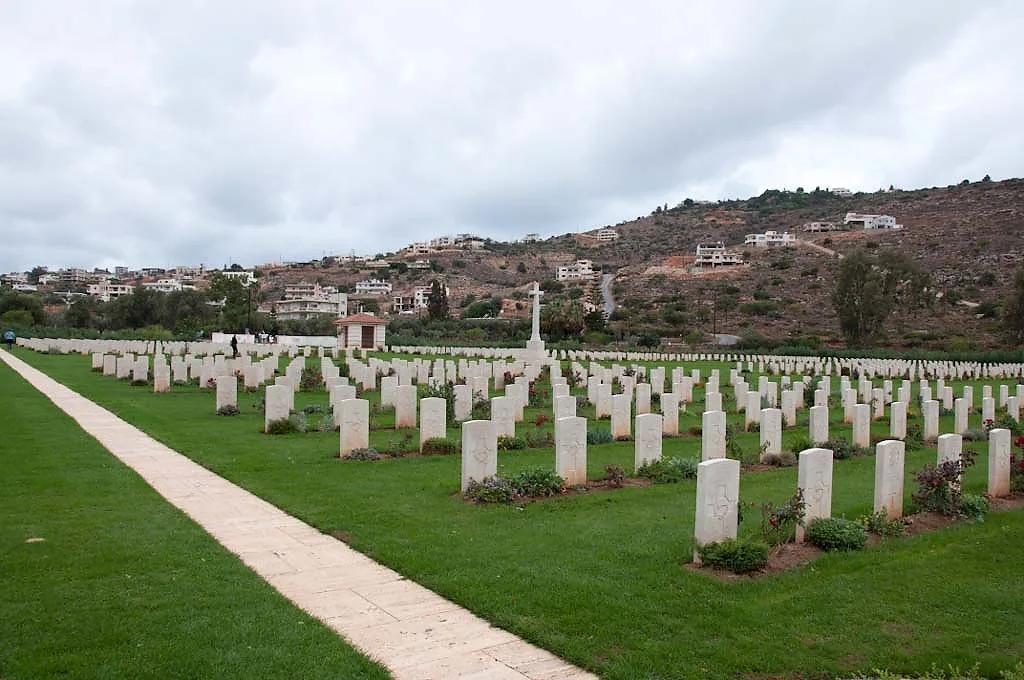
Maleme German War Cemetery, Crete: Visitor Guide
Visit Maleme German War Cemetery near Chania, Crete: who is buried here, its history, how to get there and how to visit respectfully.
In this guide
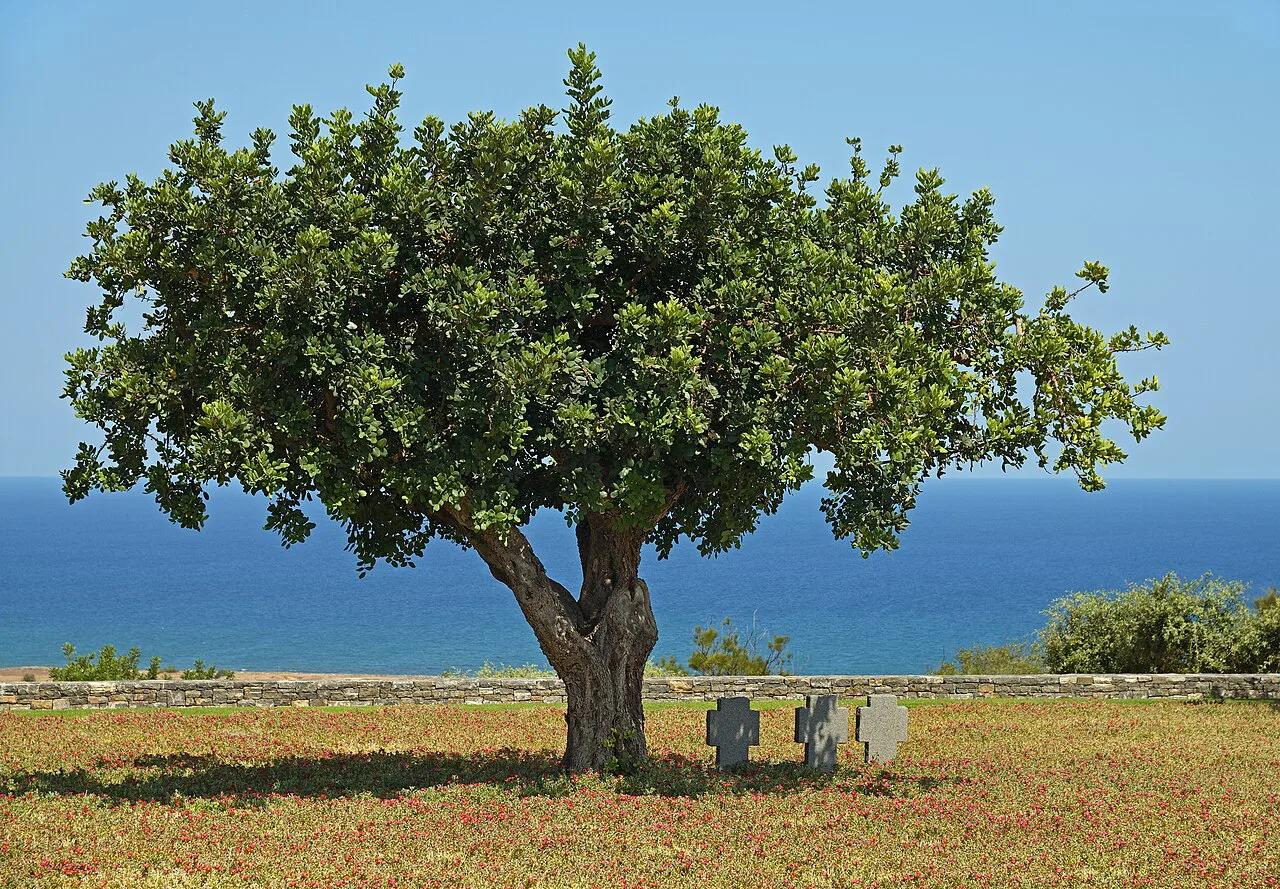
Last updated November 2026: Maleme German War Cemetery sits on Hill 107 above Maleme airfield, west of Chania, and the Volksbund maintains it. It holds 4,468 German dead from the Second World War and lies 20 km from Chania. Our guide to WW2 sites in Greece places it among the country's other memorials.
Featured image: Ввласенко, CC BY-SA 3.0, via Wikimedia Commons.
Quick answer: what Maleme German War Cemetery is
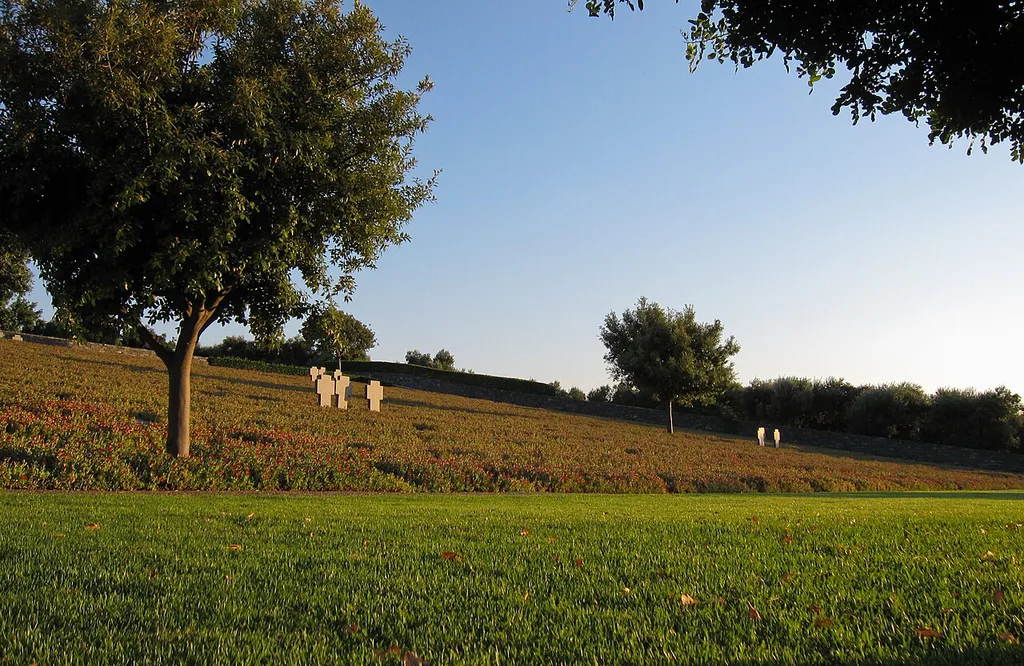
Maleme German War Cemetery (Germaniko Nekrotafio, Μάλεμε in Greek) is a Second World War military cemetery on Crete's north coast. Maleme village is 1 km away. Hill 107 overlooks the airfield that was a central objective in the fighting of 20-21 May 1941. Germany later gathered its dead from across the island into this one plot. Per the Volksbund's Maleme page, the coordinates are 35°31'22.45"N; 23°49'52.27"E. It suits history readers, genealogy researchers and anyone who wants the German and Cretan perspectives together. Visitors who only want scenery, or who have 1 hour in the Chania area, can skip it.
Who is buried here and how the cemetery is laid out
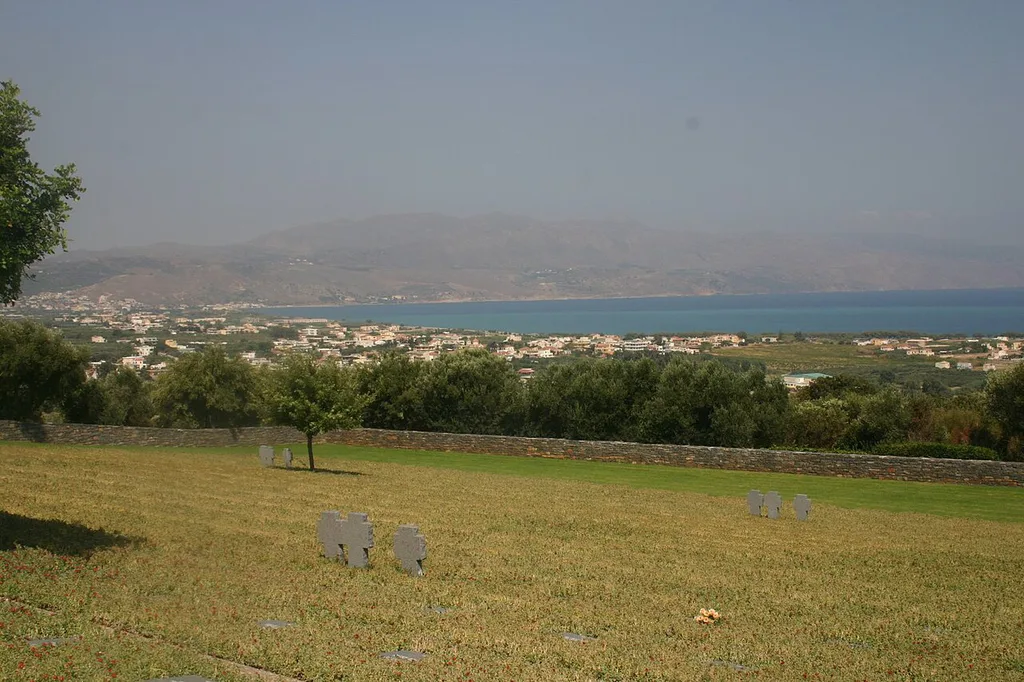
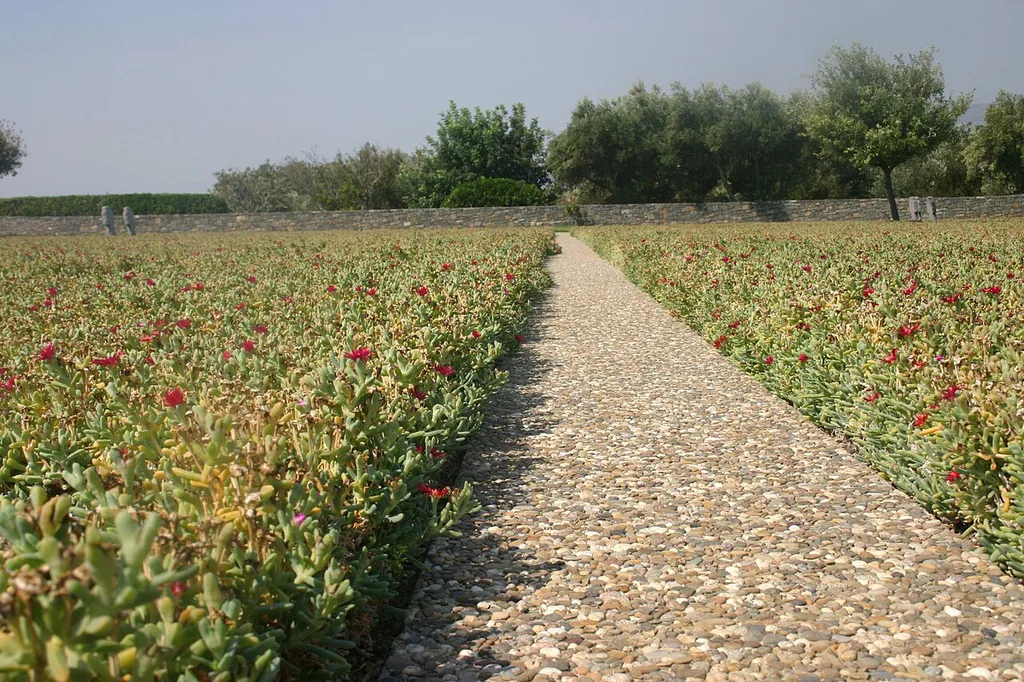
The cemetery holds 4,468 fallen soldiers, originally buried in 62 locations across Crete. Its layout makes the 4 main combat areas visible: Chania, Maleme, Rethymnon and Iraklion. A memorial square carries the names of 360 soldiers who fell on the island but were never recovered.
- 4,468 German dead from the Second World War
- 62 original burial locations on Crete
- 360 missing soldiers named on metal plaques in the memorial square
- 4 combat areas reflected in the layout: Chania, Maleme, Rethymnon, Iraklion
History in brief: from Operation Mercury to consecration
German paratroopers and mountain troops captured Crete at the end of May 1941, and occupation lasted 4 years. Recovery of the dead began only after the war. For wider route context, see our Battle of Crete Sites to Visit: Cemeteries and Memorials.
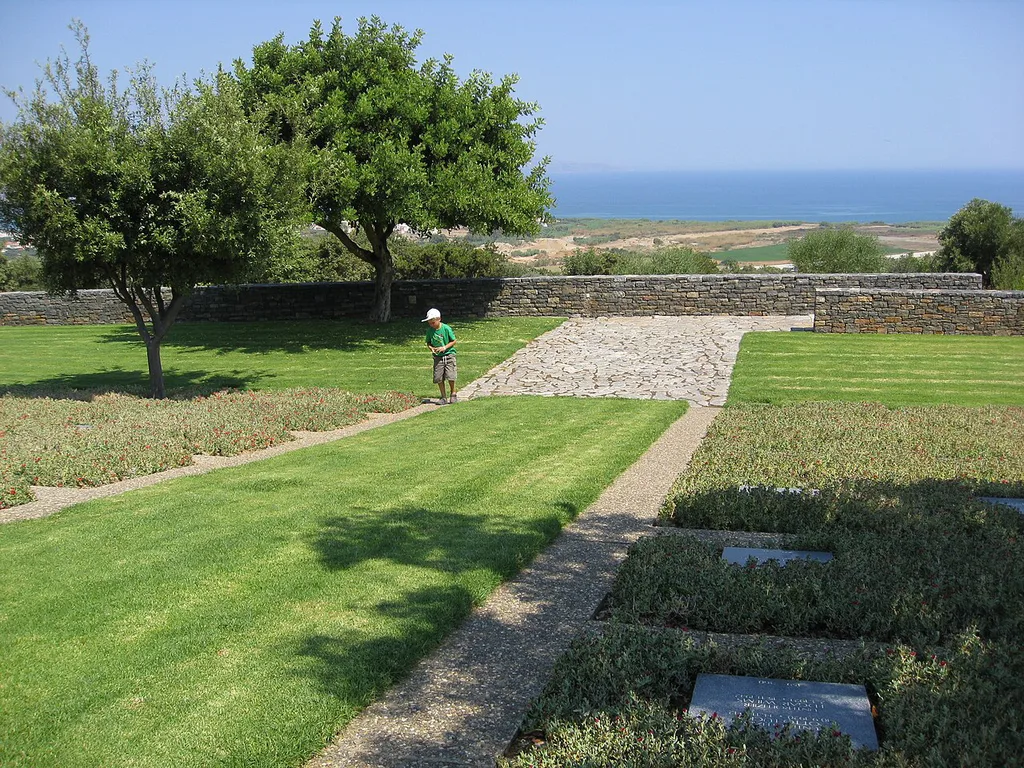
- April to November 1960: the Volksbund's reburial service recovered German dead from isolated field graves and provisional graves, with Greek government permission.
- Until a war graves agreement was ratified: coffins were stored at Gonai Monastery.
- 1971: reburial at Maleme began.
- 6 October 1974: the cemetery was consecrated.
- 1975: the 1st Airborne Division of the German Armed Forces took over sponsorship.
Reading the site: remembrance, the exhibition and the contested record
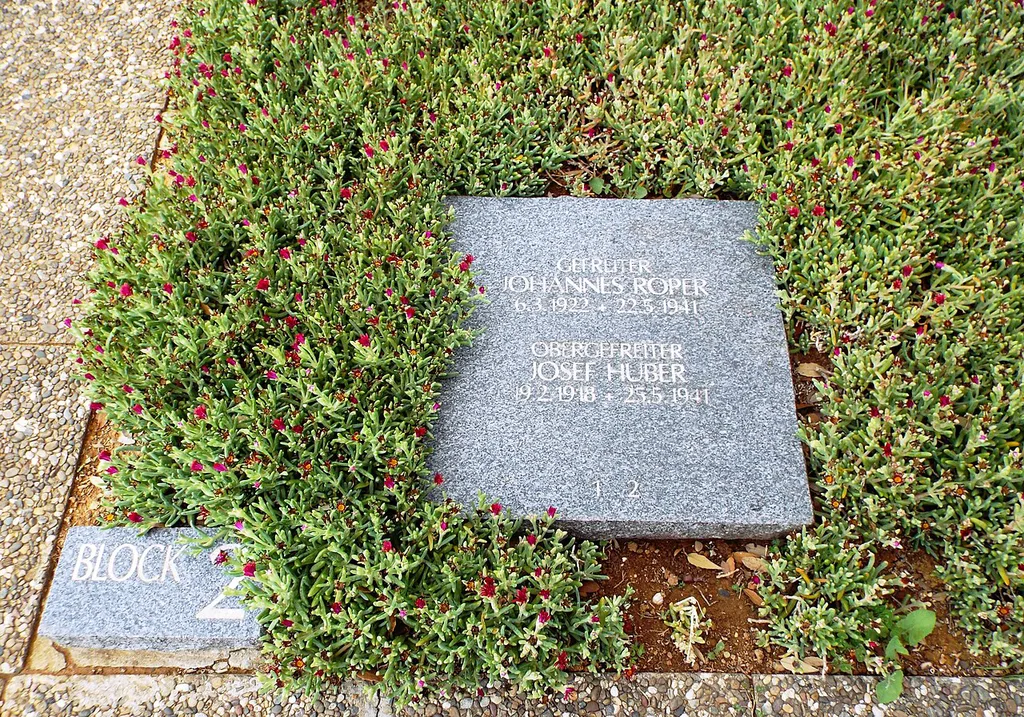
Volksbund describes Maleme as a place of mourning and remembrance. Its permanent exhibition sets out the perspectives of the different warring parties. Cretan survivors, German soldiers and Commonwealth soldiers all appear through testimonies, letters and photos. The exhibition also addresses crimes against the civilian population. Volksbund notes that for many years after 1945, senior German officers who had fought on Crete denied atrocities by the Wehrmacht. Its biography list includes Bruno Bräuer (1893-1947), tagged as a professional soldier, prisoner of war and crimes under international law. That entry shows why a German war cemetery needs context and not only quiet reverence. For the island's own memory of the fighting, see Galatas and the Battle of Crete. Civilian atrocities elsewhere in Greece are covered at Kalavryta. Another example is the Distomo Massacre Memorial: History and Visitor Guide.
Visiting: directions, timing and etiquette
By car, Maleme is about 20 km west of Chania along the north coast. Check KTEL Chania for current bus stops and frequency before relying on public transport. Opening hours, fees and exhibition times are not published in a form we can quote, so read them on the Volksbund page. Treat the exhibition as a separate part of the site, not a generic museum. Midday sun on the hill is strong in summer, so plan an early or late visit.
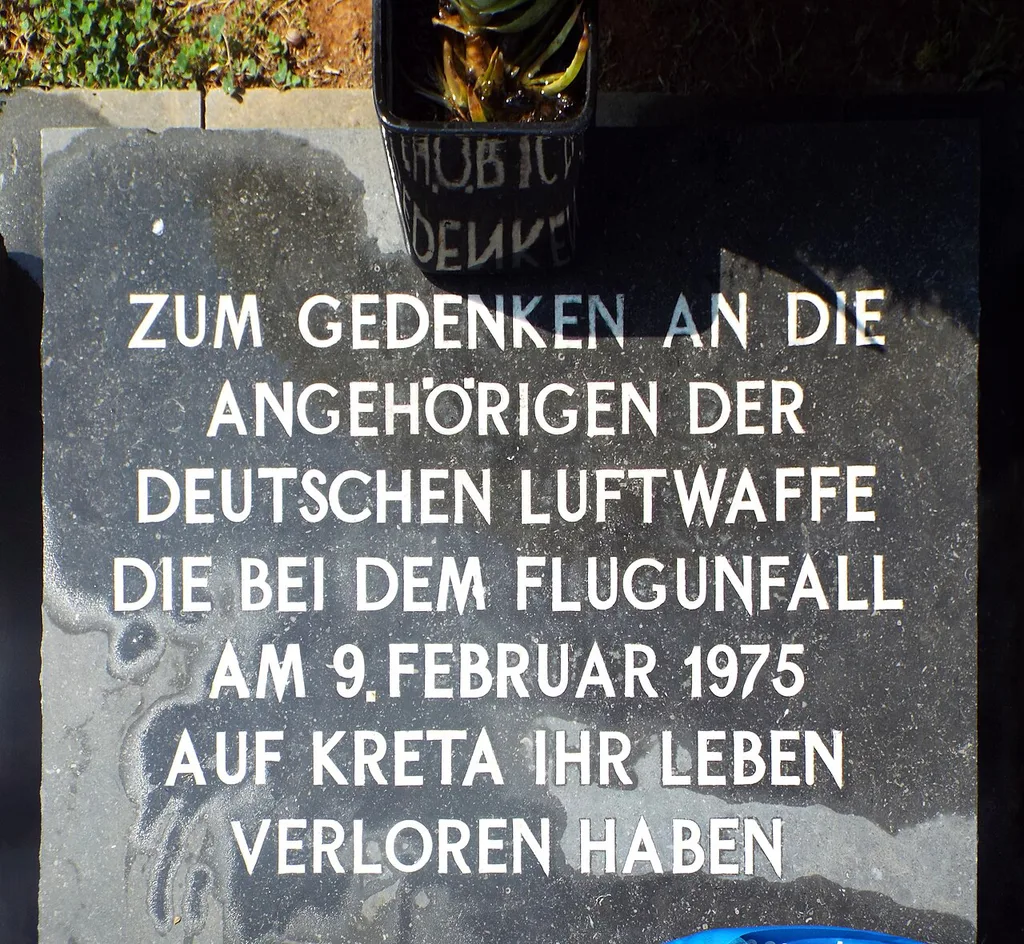
- Dress and behave as you would in any cemetery: speak quietly and keep to paths.
- Photograph graves with restraint and never pose on or against them.
- Check Greek rules before flying a drone, and avoid casual use at a place of mourning.
- Descendants can use the Volksbund's grave-search service through its official site.
Combine it with other Crete and Greece WW2 sites
Maleme tells the German side of the Battle of Crete. Souda Bay War Cemetery, Crete: Visiting Guide and History holds Commonwealth dead, so the two give different narratives. Anyone wanting only Commonwealth graves should prioritize Souda Bay. For other cemeteries in Greece, see Phaleron War Cemetery Athens: Visiting Guide.
| Site | Focus | Best for |
|---|---|---|
| Maleme German War Cemetery | German dead, 4,468 burials, permanent exhibition | German and Cretan perspectives, genealogy |
| Souda Bay War Cemetery | Commonwealth dead | Commonwealth graves |
| Galatas | Battle of Crete memory | Battle context and local history |
For trip-planning details, see Volksbund Maleme.
Keep planning
Guides on the same trip